

What are plantation shutters?
Wide louvres, a solid frame, and one question nobody answers honestly: whether timber survives a Queensland summer.
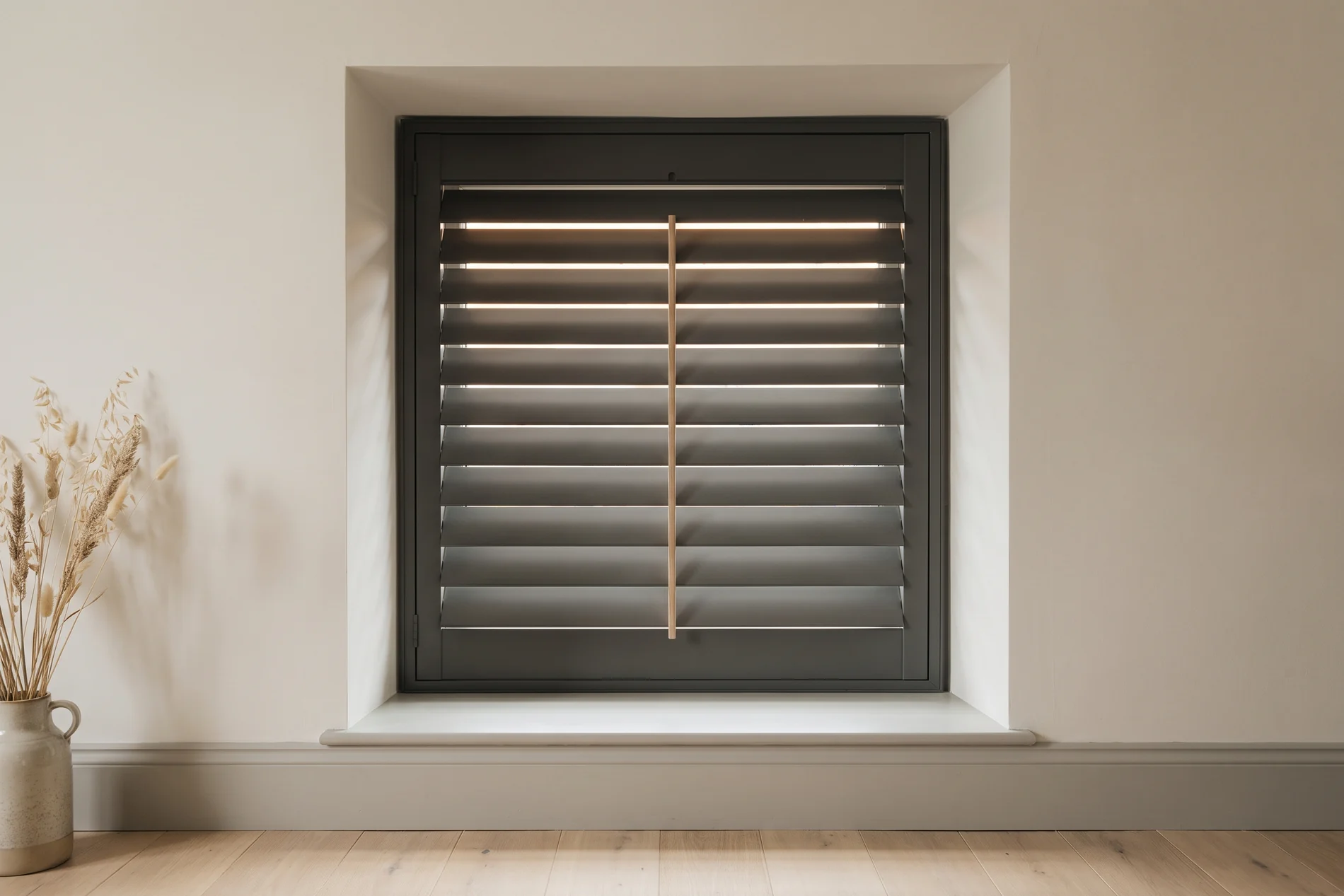
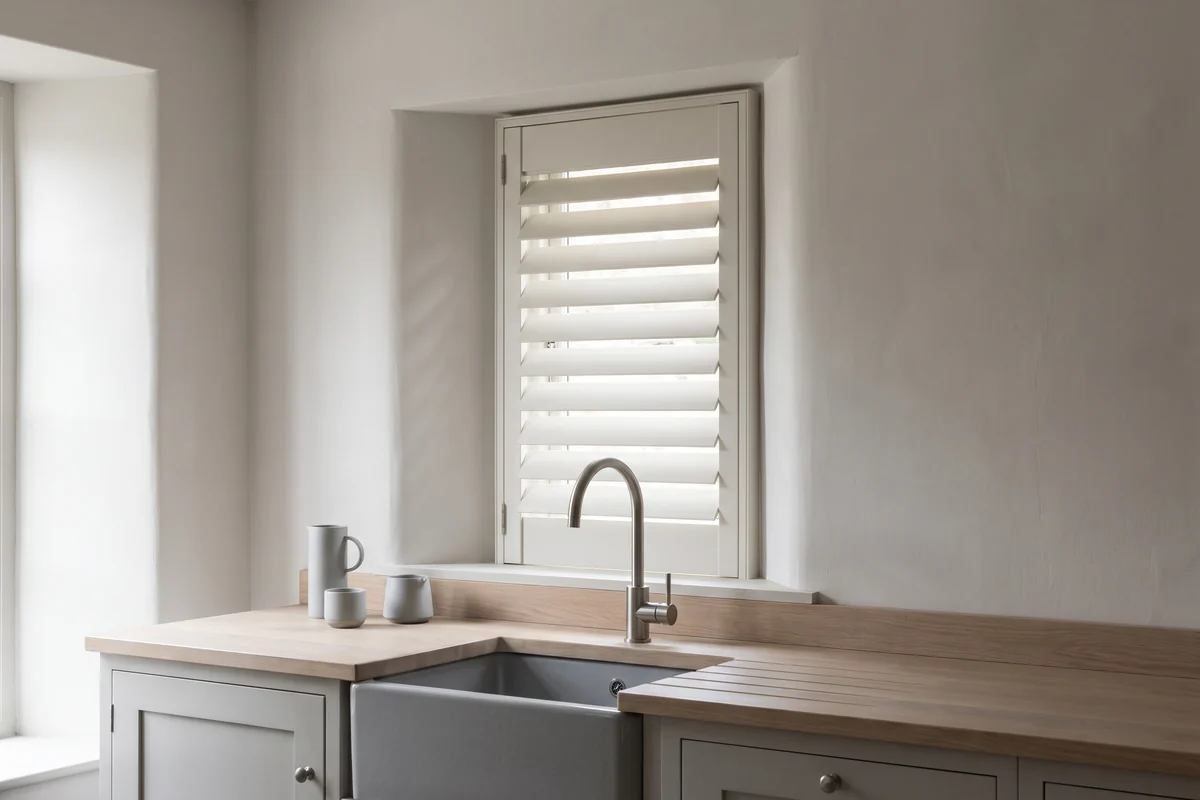
Plantation shutters are interior shutters with wide, adjustable louvres set in a solid frame fixed to the window. You tilt the louvres for light and privacy, and swing, slide or fold the whole panel to clear the glass. The name describes the look — wide blades — not the material.
Worth saying before you read any further: we do not sell plantation shutters. We fit Thermalite polymer shutters, which are the same wide-louvre product in a material that survives this climate.
Almost every page answering this question is written to sell you timber, and most of them are written for a northern hemisphere winter. The product is genuinely good. The advice around it is mostly imported. So here is what a plantation shutter actually is, what it does and does not do, and the two things about buying one in Queensland that nobody seems willing to put in writing.
What the name actually describes
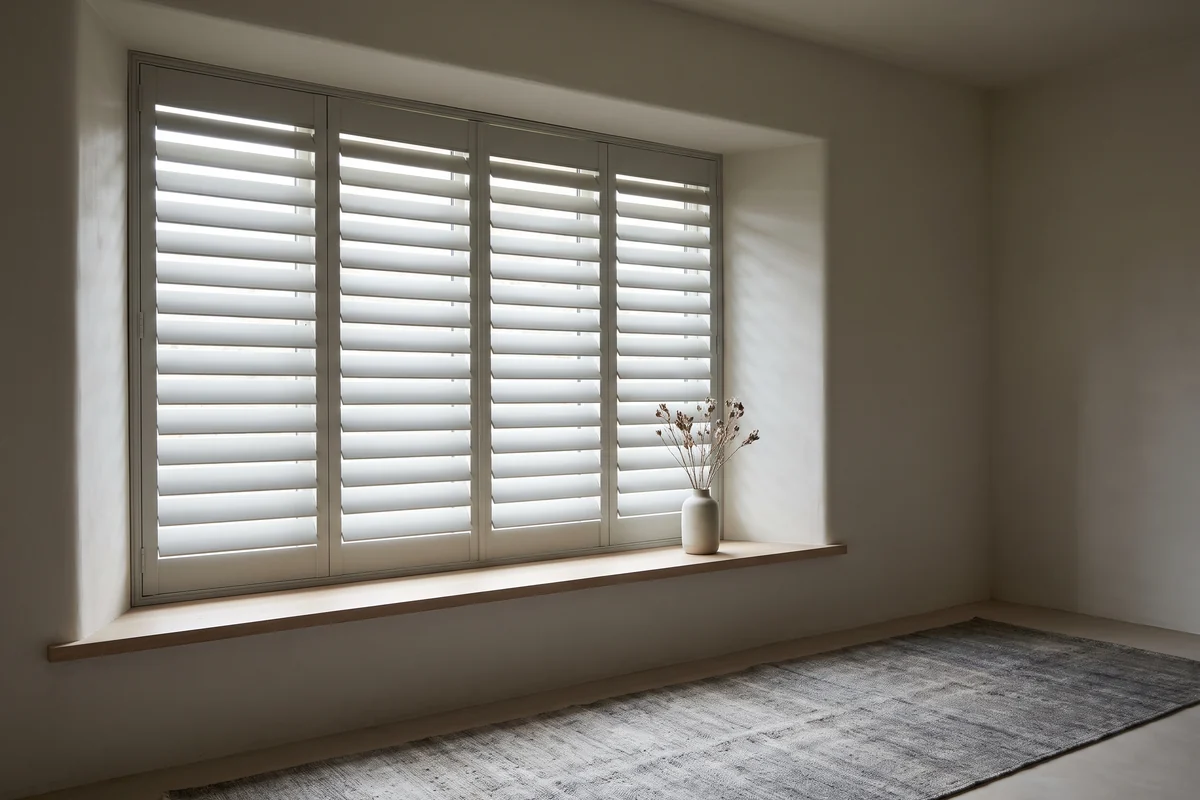
A plantation shutter is defined by one thing: the width of the louvre. Traditional shutters used narrow blades, closely spaced. Plantation style opened them out, which meant fewer blades across the opening, more glass visible when they are open, and a cleaner line when they are shut.
The Australian market works in three louvre widths, and the choice changes the room more than the colour does.
- 63mm. The traditional proportion. Suits narrow reveals, period cottages and small windows, where a wide blade would look heavy.
- 89mm. The most commonly specified size, and the safe answer in an average room with an average ceiling.
- 114mm. The widest in general use. Fewer blades, more view, and the right call where the window is doing something — a water outlook, a garden aspect, a tall stairwell.
The historical name comes from wide louvred shutters used in warm-climate architecture, where the job was moving air and cutting glare rather than keeping a room warm. That origin is the useful part. A shutter is a shading device first, which is why it does its best work here and its least impressive work in a cold climate.
One clarification, because the export data says people search for both: a plantation blind is not a separate product. It is the same shutter, described by someone who thinks of anything on a window as a blind.
The four ways a shutter opens
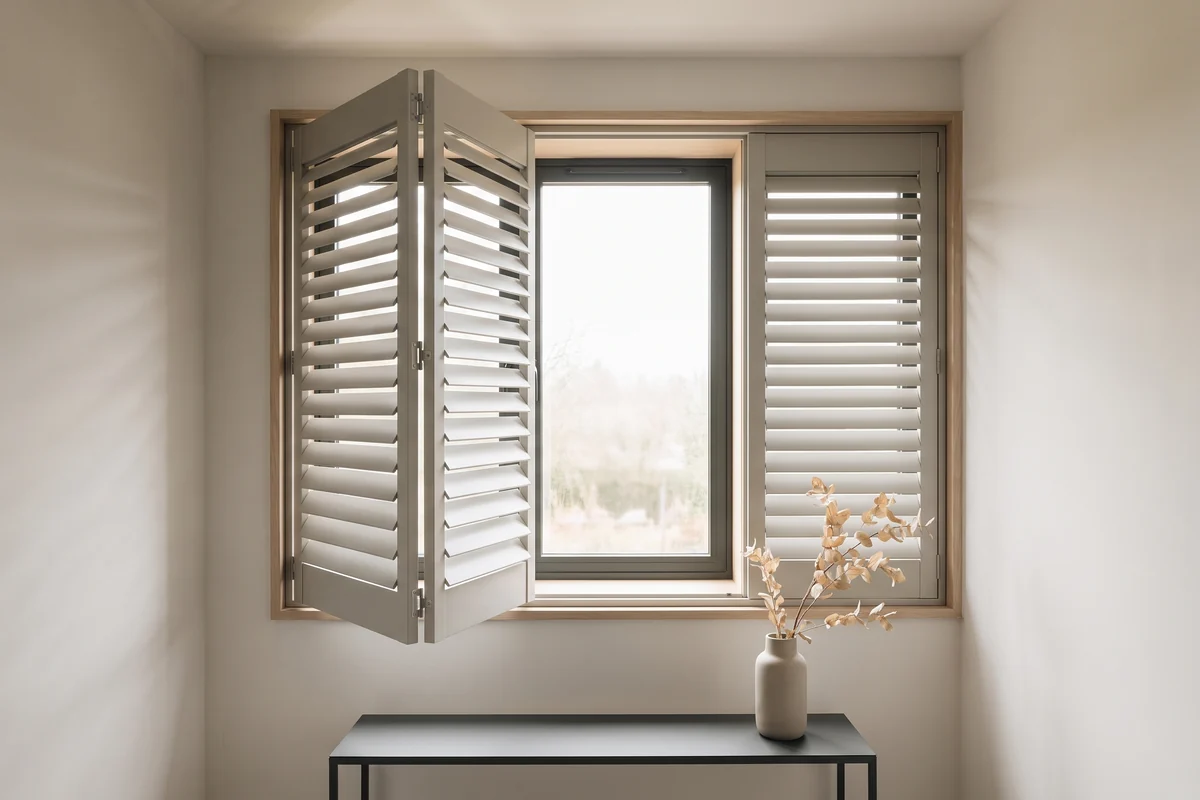
The louvres handle light. The panel handles access — getting to the window, the handle, the flyscreen or the door behind it. These are two separate decisions and people routinely make only the first one.
- Hinged. Panels swing open like doors. The standard fit for an ordinary window, and the one that gives you complete, unobstructed access to the glass.
- Sliding. Panels run on a track across the opening. This is the answer for a sliding glass door or a wide span, where a swinging panel would need floor space you do not have.
- Bi-fold. Panels hinge to each other and concertina to one side. Useful across a wide opening where you want the whole thing cleared rather than half of it.
- Fixed. No opening at all — the panel is mounted permanently and only the louvres move. Right for a window you never need to reach, and the most rigid of the four.
Two practical notes that get missed. A sliding configuration always leaves one panel's worth of the opening covered, because the panels have to go somewhere — so a two-panel slider clears half the glass, not all of it. And if the window has a winder handle, tell whoever measures it before the panels are made rather than after.
Thermalite is made in hinged, sliding and fixed panels. That is the range, and it covers the great majority of Australian windows.
What they block, and what they don't
Shutters are the best light-control device on the market and they are not a blockout. Both halves of that sentence matter.
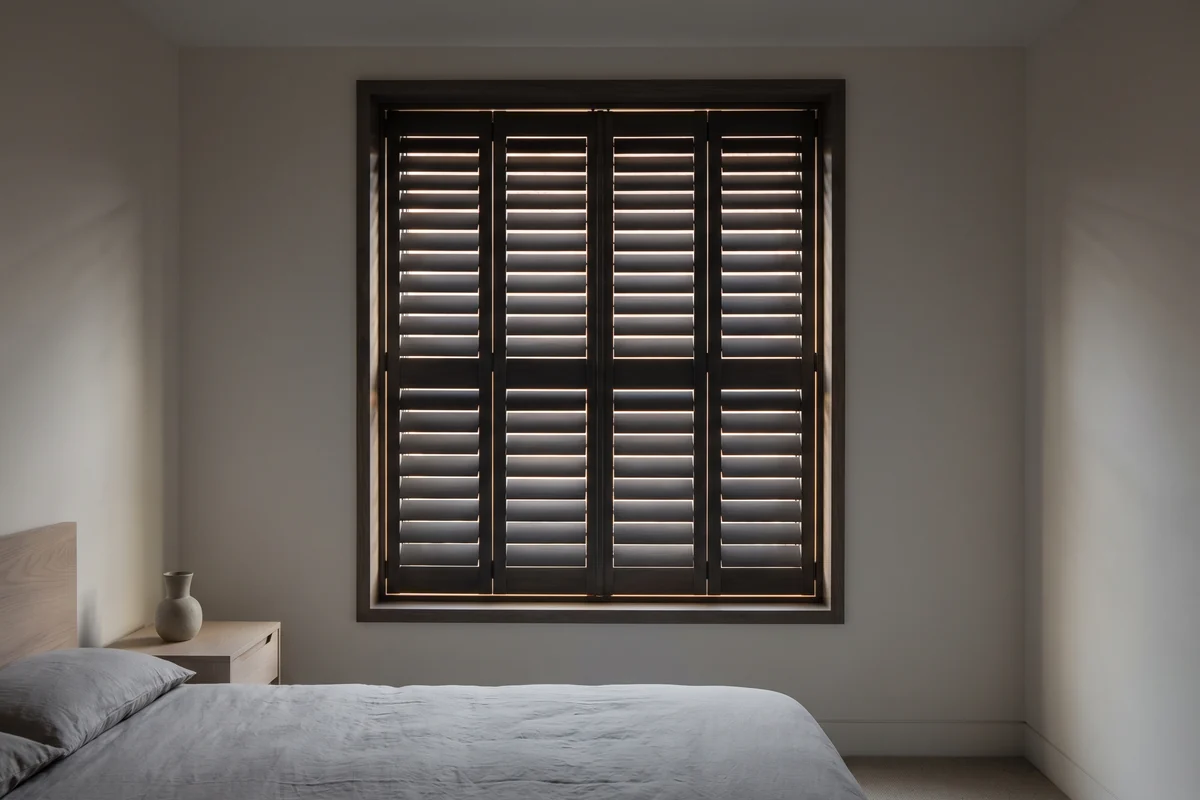
The control is genuinely excellent. Tilting the louvres gives you a continuous range from full daylight to almost none, and unlike a curtain you can take the glare off a screen while keeping the view. Angled up, you get light on the ceiling and privacy at eye level from the street — which is the single most useful thing a shutter does and the reason people put them in a front room.
What they will not do is make a room dark. Closed louvres still leave a fine line of light between each blade and a glow around the frame, and no amount of money changes that — it is a stack of overlapping slats, not a sealed panel. If you sleep past sunrise, the honest fix is a shutter for the day and a blockout roller blind behind it for the morning. Searching for the US spelling, blackout, will find you plenty of pages promising otherwise; the physics is the same in both spellings.
On being seen from outside: closed louvres block the view in from the street in daylight, comfortably. After dark, with a lamp on, the room is lit and the street is not, and light escapes between the blades exactly the way it comes in. That is true of every slatted product, venetian blinds included. It is physics, not a fault.
Timber, polymer, and a Queensland summer
Plantation shutters are made in painted timber, in composite, in aluminium and in polymer. The marketing argues about grain. The climate argues about water.
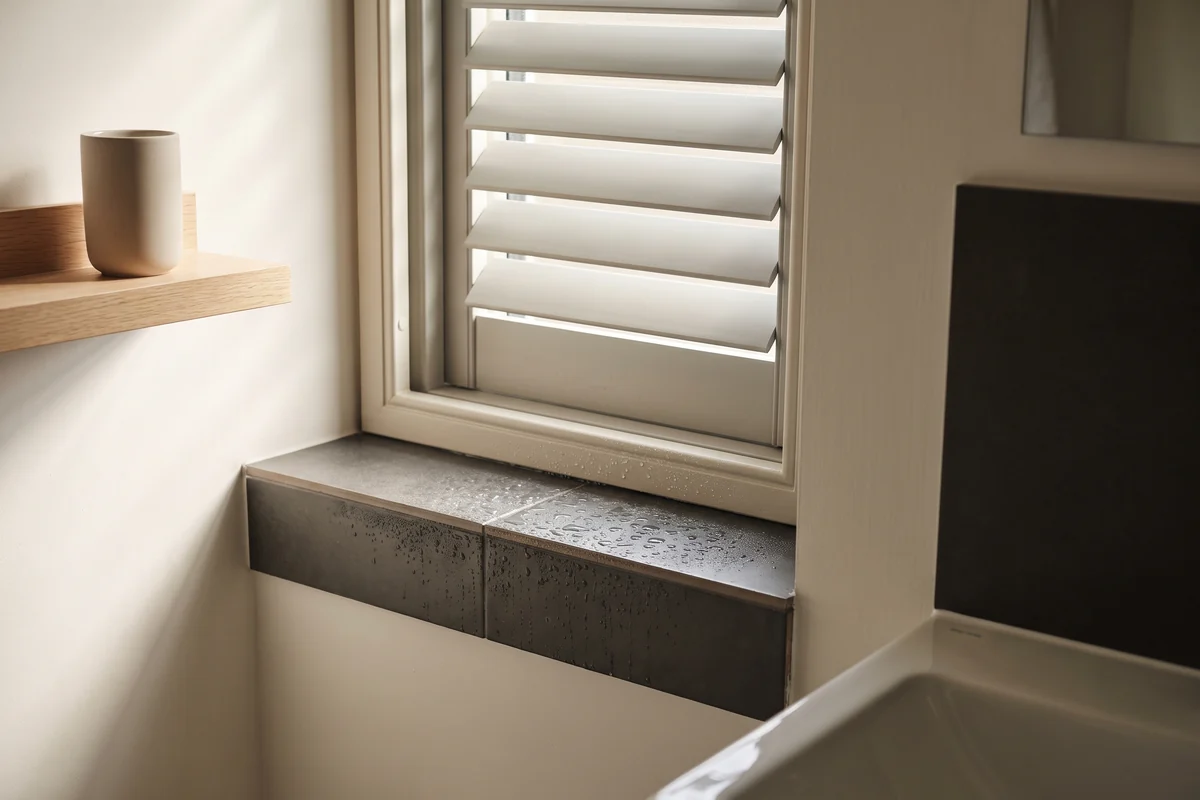
Timber moves with humidity. In a dry, air-conditioned formal room that movement is small enough to ignore, and painted timber genuinely looks better in that room — anybody telling you otherwise is selling polymer. In an ensuite, a laundry, or a west-facing bedroom that stays shut all week through a Brisbane February, the same movement is the difference between a louvre that closes and one you have to force.
That is the whole reason Lusso fits Thermalite and not timber. It is an advanced polymer: it does not swell, stick or split its finish when the air sits at eighty per cent for a fortnight, and it can be cleaned with water rather than treated with care. What it will not give you is the grain of cedar. That is a real trade-off and we would rather name it than pretend it away.
| Painted timber | Thermalite polymer | |
|---|---|---|
| Dry, air-conditioned room | Best looking | Very good |
| Bathroom or ensuite | Poor | Made for it |
| Within a few streets of the water | Poor | Good |
| Movement in humidity | Yes | No |
| Cleaning | Careful | Water |
| Visible grain | Yes | No |
| Sold by Lusso | No | Yes |
If you have your heart set on cedar in a dry lounge room, buy cedar. We would rather tell you that than sell you the wrong thing and see it back in three years.
What actually fails first, and it isn't the blade
Here is the part no shutter page will tell you, because every shutter page is an argument about material.
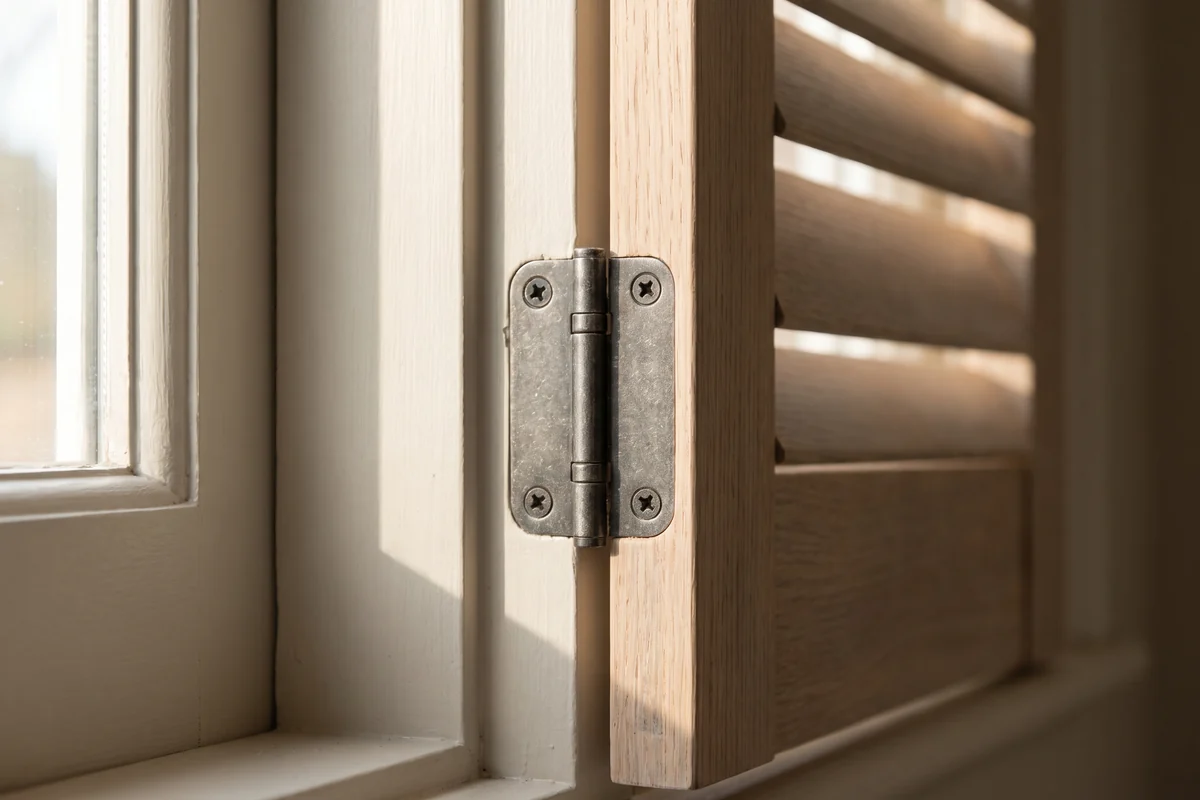
Airborne salt reaches a good deal further inland than people expect, and it does not go for the panel. It goes for the hinges, the magnets and the screws. A polymer blade will happily outlive the hardware holding it to the wall, and when a shutter starts sagging, sticking or refusing to sit closed, that is almost always what has happened — not the thing everybody spent the consultation discussing.
So ask what the hardware is made of, not what the blade is made of. If you are within a few streets of the water, that one question tells you more about how long the shutters will last than the entire material conversation that preceded it. It is also a question most salespeople are not expecting, which is a reasonable test in itself.
The same logic applies to the frame fixing. A shutter frame is heavier than a blind and it carries the load of a swinging panel every time somebody opens it, so it needs to reach something structural. Fixed into plasterboard alone, it will fail — it is a matter of when.
No cords, no chains, and why that's a regulation
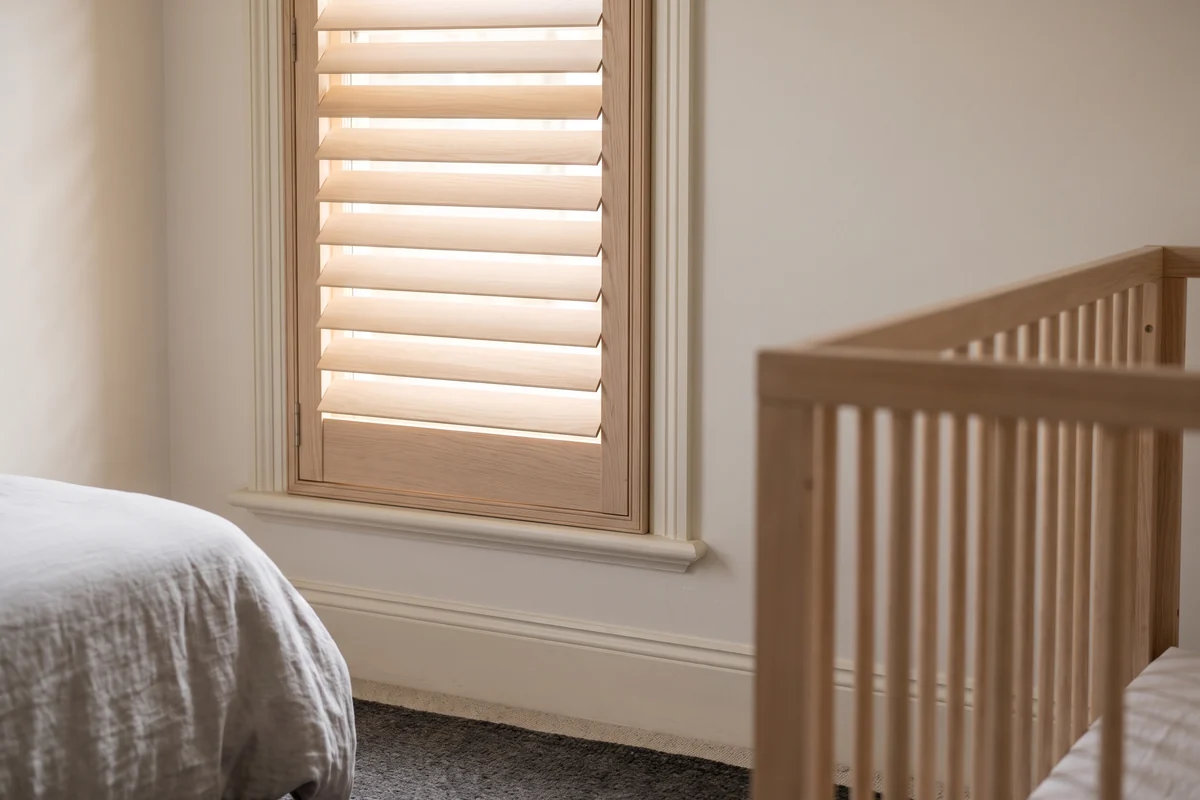
Shutters have no cord, no chain and nothing hanging within reach. Every competitor page lists this as a feature bullet. It is worth more than that.
Corded internal window coverings are governed by a mandatory Australian safety standard, and the reason it exists is the strangulation risk a loose cord poses to a small child. It is not a box-ticking rule. A shutter sidesteps the whole category, because there is nothing to reach in the first place.
If you have a toddler and a window seat, that is worth more than any fabric, and it is the one argument for shutters that has nothing to do with how they look. Where a blind genuinely suits the room better, ask for a compliant chain rather than accepting whatever comes in the box.
What they cost, and why there is no number on this page
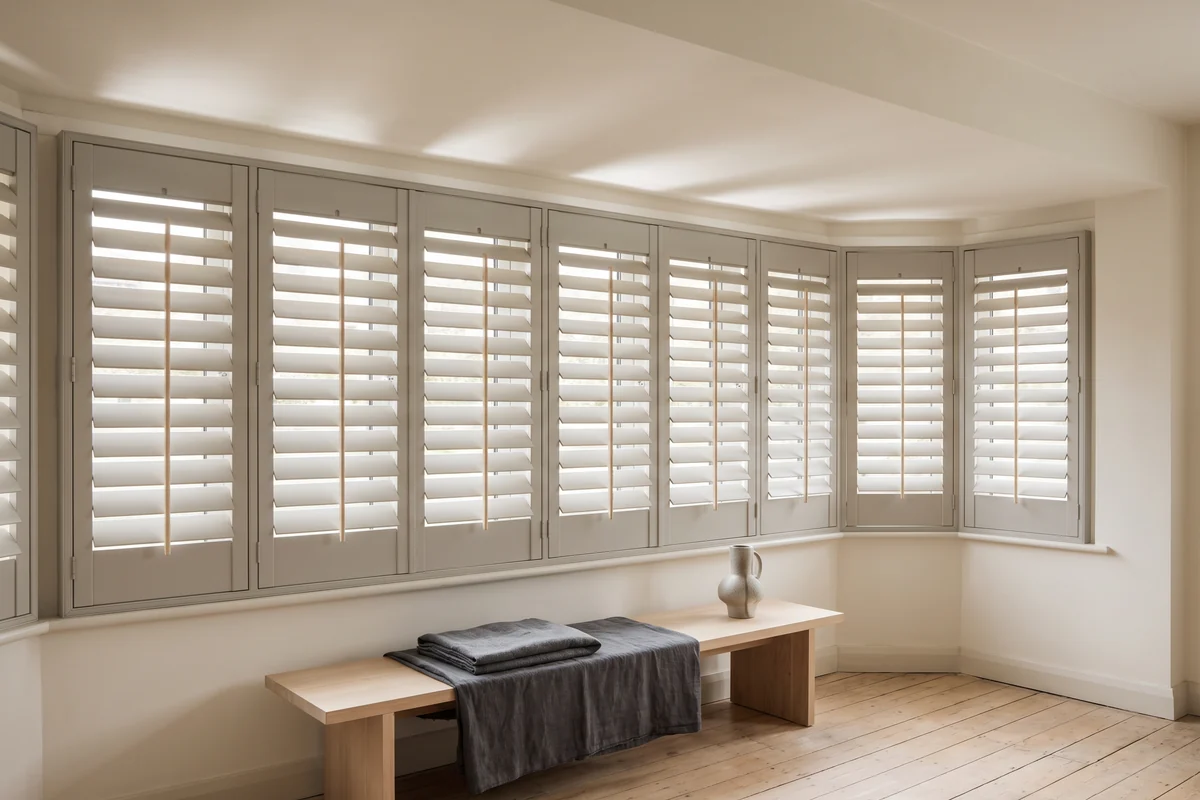
Shutters are the most expensive thing on most window furnishing quotes, and there is a reason for that: you are buying a joinery item, made to the millimetre, that gets fixed to the building rather than hung in front of it.
Five things move the price, and knowing them is more useful than a number you cannot rely on:
- Total area. Shutters are priced by the square metre, with a minimum charge per panel. Lots of small windows cost more than the same area in one large one.
- Material. The single biggest lever, and the one most quotes differ on.
- Configuration. Sliding and bi-fold carry track and hardware that hinged panels do not.
- Louvre width. Wider blades mean fewer of them, which is not the same as cheaper — each one is larger.
- Frame type and the shape of the opening. A square reveal is straightforward. An angle, an arch or an out-of-square wall is not.
We have not published a plantation shutter price here, and that is deliberate rather than coy. We do not sell them, so any figure we quoted would be somebody else's, guessed at — and a made-to-measure price that has not seen the window is worth nothing anyway. Get two itemised quotes on your actual openings and compare them line by line.
Want the wide-louvre look in something that survives the humidity?
We fit Thermalite polymer shutters from Byron Bay to Brisbane, in hinged, sliding and fixed panels — four to six weeks from check-measure to installation, with an itemised quote inside 24 to 48 hours.
Where they earn their money, room by room
Shutters are not the right answer everywhere, and a whole-house quote is usually the wrong shape.
- Bathrooms and ensuites. The room polymer exists for. Steam, poor ventilation and a window you want covered permanently — and unlike fabric, nothing here holds moisture. See what else works on a bathroom window.
- Living rooms. Where the tilt earns its keep. Glare off a television at four in the afternoon is a light-angle problem, and a louvre solves it without shutting the room down.
- Bedrooms. Excellent, with the blockout caveat above. Pair them if you sleep in.
- Kitchens. Good over a sink, where a curtain would be permanently damp and permanently in the way — and easier to wipe than most of the alternatives for a kitchen window.
- West-facing anything. A shutter is shading the glass before the heat arrives, which is the only place that battle is winnable.
Where we would talk you out of them: a rental you are improving for somebody else, a window you open twenty times a day, and any room where the budget would be better spent getting the rest of the house covered properly first. Shutters in one room and bare glass in five is a worse outcome than a consistent house.
Frequently asked questions
Do plantation shutters block out light?
They block most of it, but they are not a blockout. Closed louvres still leave a fine line of light between each blade and a glow around the frame, because it is a stack of overlapping slats rather than a sealed panel. For a living room or a study that is plenty. For a bedroom you sleep past sunrise in, pair the shutter with a blockout roller blind behind it.
Can you see through plantation shutters from the outside?
Not in daylight with the louvres closed — the street is brighter than the room, so you can see out far better than anyone can see in. After dark that reverses. With a lamp on, light escapes between the blades the same way daylight enters, and the room becomes visible in outline. Every slatted product behaves this way.
What is the difference between plantation shutters and normal shutters?
Louvre width. Traditional shutters use narrow, closely spaced blades; plantation style uses wide ones — 63mm, 89mm or 114mm in the Australian market. Fewer blades means more glass visible when they are open and a cleaner line when they are shut. The name describes the look, not the material.
Are plantation shutters worth it?
In the right rooms, yes. They are the best light-control device available, they carry no cords or chains, and they are a physical layer over the glass rather than a fabric one. They are also the most expensive line on most quotes. If the choice is shutters in one room or proper coverings through the whole house, do the house first.
Does Lusso sell plantation shutters?
No. We fit Thermalite, an advanced polymer shutter in the same wide-louvre style, in hinged, sliding and fixed panels. We do not supply timber or aluminium shutters, because timber and a Queensland summer are a poor combination and we would rather not fit something we expect to see back.
How long do plantation shutters last?
Longer than anything fabric, and the limit is usually the hardware rather than the panel. Airborne salt goes for hinges, magnets and screws well before it touches the blade, so within a few streets of the water the honest question is what the hardware is made of. Our installation workmanship is warranted for 12 months, and the product carries its manufacturer's warranty — between 12 months and 7 years depending on the system, componentry and fabric.
Sources Australian Government Your Home — Glazing · ACCC blinds and window fittings mandatory standard · Sleep Health Foundation
Back to the journalKeep reading
Related from the journal
 Guides
Bathroom window coverings that survive humidity
A Queensland bathroom is humid for months, not for twenty minutes. That rules out timber, and it rules out the cellular blind half the internet recommends for wet rooms.
Read more Guides
Types of curtains and blinds
Nine kinds of blind, three curtain headings, two fabric families and one shutter — what each is genuinely good at, and the two categories we deliberately do not sell.
Read more Guides
Blinds vs curtains, room by room
The choice is not really about taste. It is about what the window has to do — and there are three rooms where the answer is genuinely both.
Read more