Local conditions
Brisbane houses are not built like other houses
The Wall Decides The Curtain
Brisbane's housing stock runs from 1920s Queenslanders in Paddington and Bulimba to slab-on-ground new builds out past the airport, and the two want completely different curtains. A Queenslander hands you three-metre ceilings and casement windows that swing outward, so a curtain has to clear the sash or it never really closes. It also hands you a verandah that already shades the north face — which is why, nine times out of ten, it is the west-facing rooms that need the work.
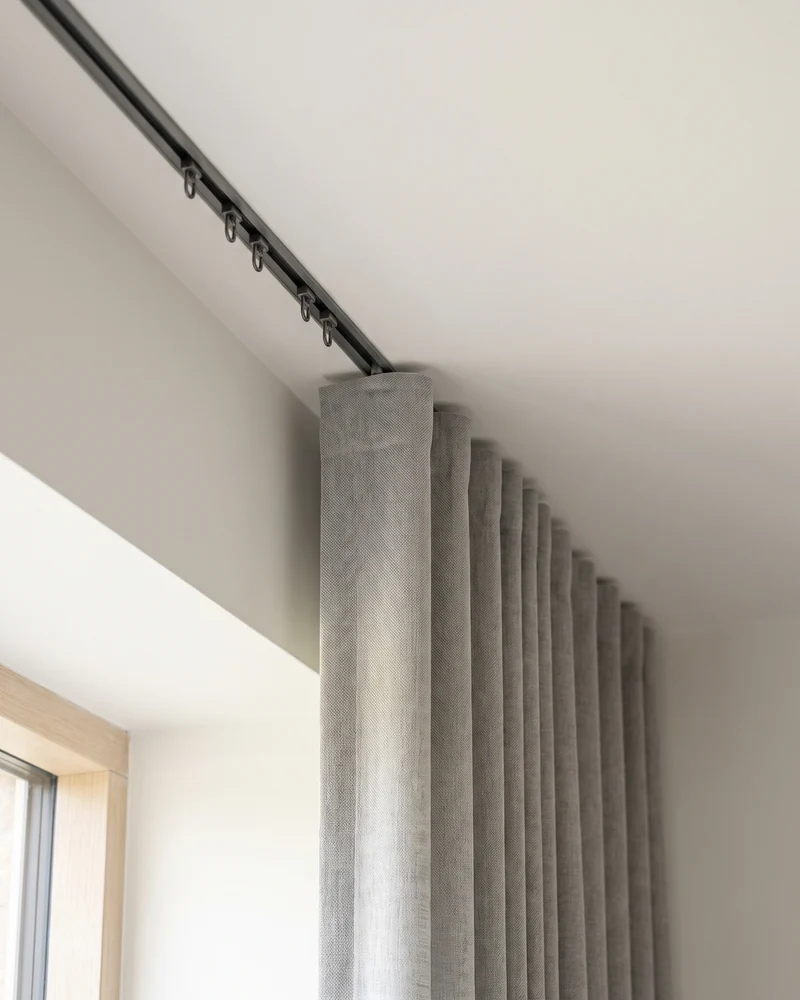
The part people forget is what sits behind the lining. VJ boards over hardwood studs will hold a track all day. The plasterboard ceiling of a newer build will not, at least not on its own, and a lined blockout curtain spanning a wide opening is heavier than it looks. Finding the stud or the noggin is the difference between a track that stays straight and a track that lets go in year two.
Then there is the humidity. Brisbane's mean 3pm relative humidity is 59% in February and 43% in July — a swing you can feel, and one that a heavy lined curtain pressed against a cold pane in a closed-up room will happily hold onto. Leave the fabric somewhere it can dry out. Curtains are more forgiving than most window furnishings, but they are not waterproof, and a bathroom is still a job for Thermalite shutters rather than fabric.