

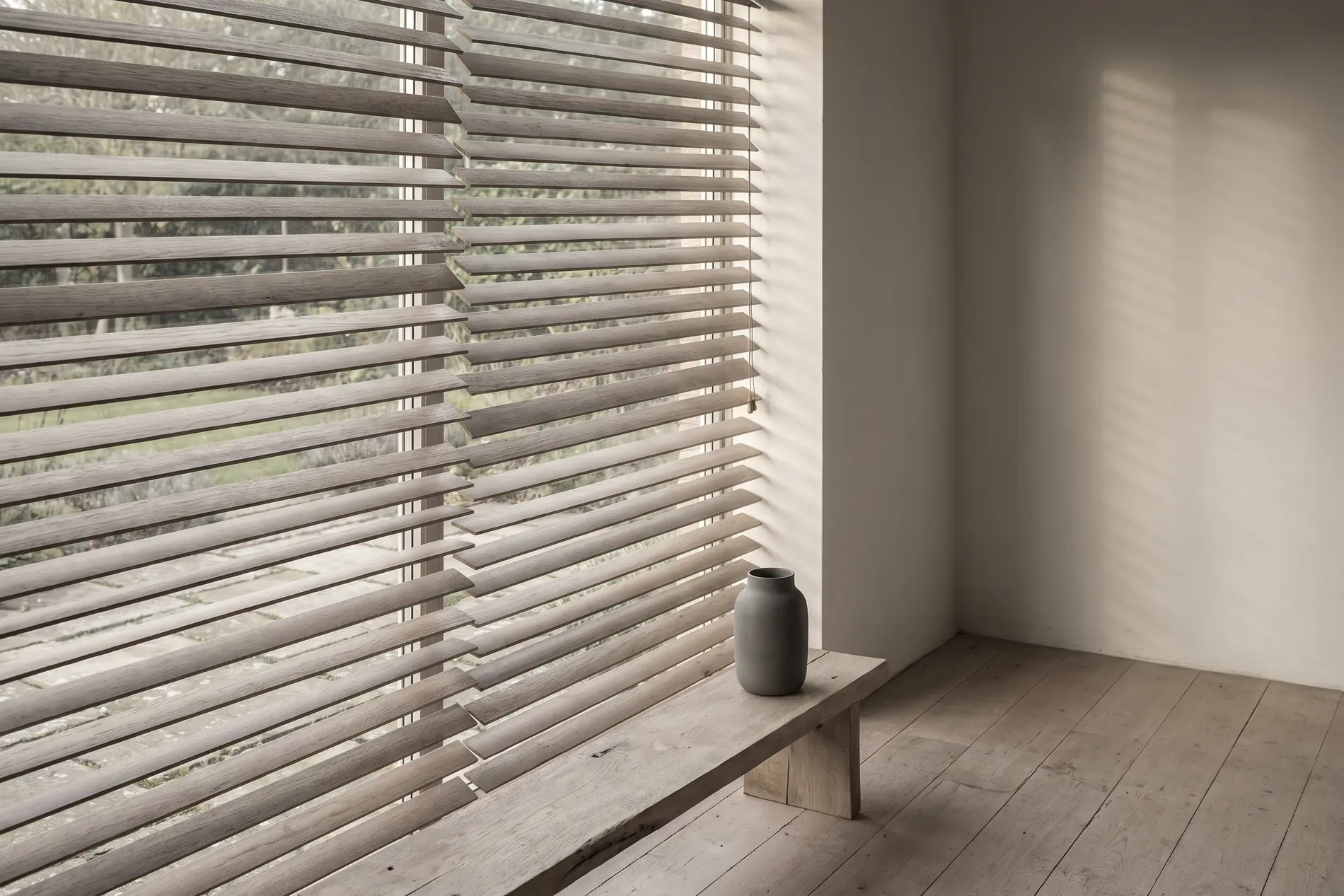
Venetian Blinds
Timber, aluminium or PVC — what each one is genuinely good at, which slat width suits your window, and the one job a venetian blind will never do properly.
Venetian blinds are horizontal slats on a ladder cord that tilt to aim daylight rather than simply block it. That tilt is the point: it's the only common window furnishing that lets you keep the view, kill the glare and stay private at once. Slats come in aluminium, real timber or PVC, at 25mm or 50mm.
Forced to pick one: 25mm aluminium for wet and working rooms, 50mm PVC for everything else, and real timber only where it will stay dry.
Venetians are the blind people think they already understand, so they order on autopilot and get the material and slat width wrong. Both mistakes are permanent — you can't re-slat a finished blind. Here's what each material does in an Australian house, and the one job no venetian does properly.
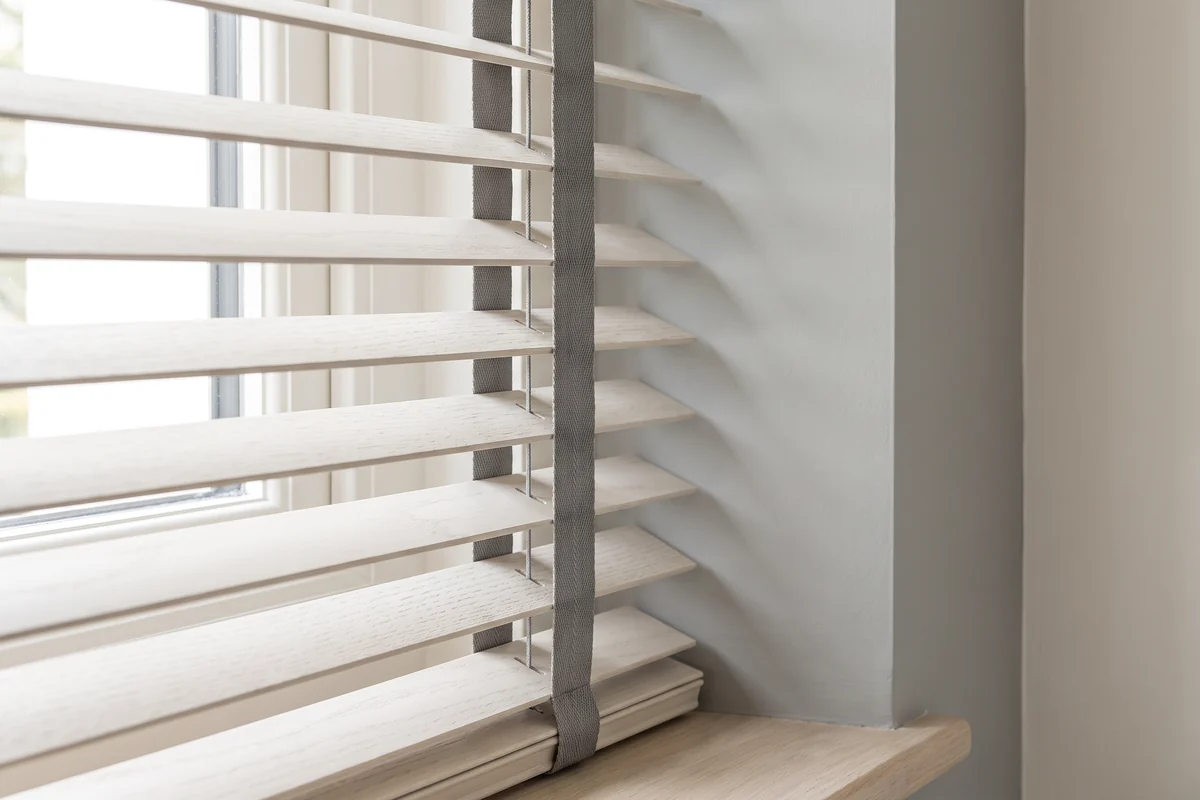
The parts of a venetian blind
Worth knowing the vocabulary before you're quoted, because the parts that fail are never the parts people ask about.
- Headrail. The box at the top holding the mechanism. Everything else hangs off it.
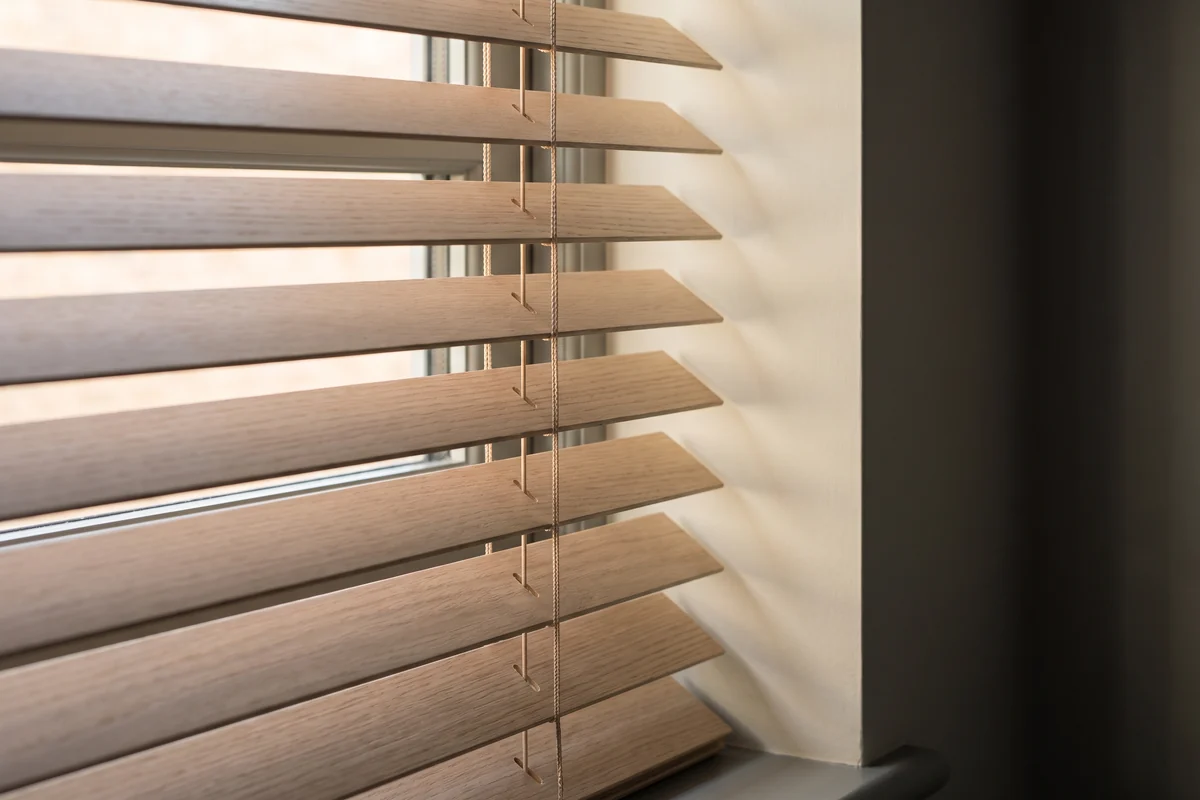
- Slats. The horizontal blades, punched with two holes each for the ladder cord. Remember those holes.
- Ladder cord or ladder tape. The two-string ladder the slats sit in. Tape is a wider fabric version that hides the holes and looks better on a 50mm blind.
- Tilt wand or tilt cord. What you twist or pull to angle the slats. A wand is the safer choice and the nicer one to use.
- Lift cord and cord lock. What raises the blind and holds it up. This wears out, and it is the part the safety standard covers.
- Bottom rail. The weighted rail keeping everything hanging straight.
If you need a repair, the useful sentence is "the cord lock is slipping", not "the blind is broken". One is fixable. A warped slat isn't.
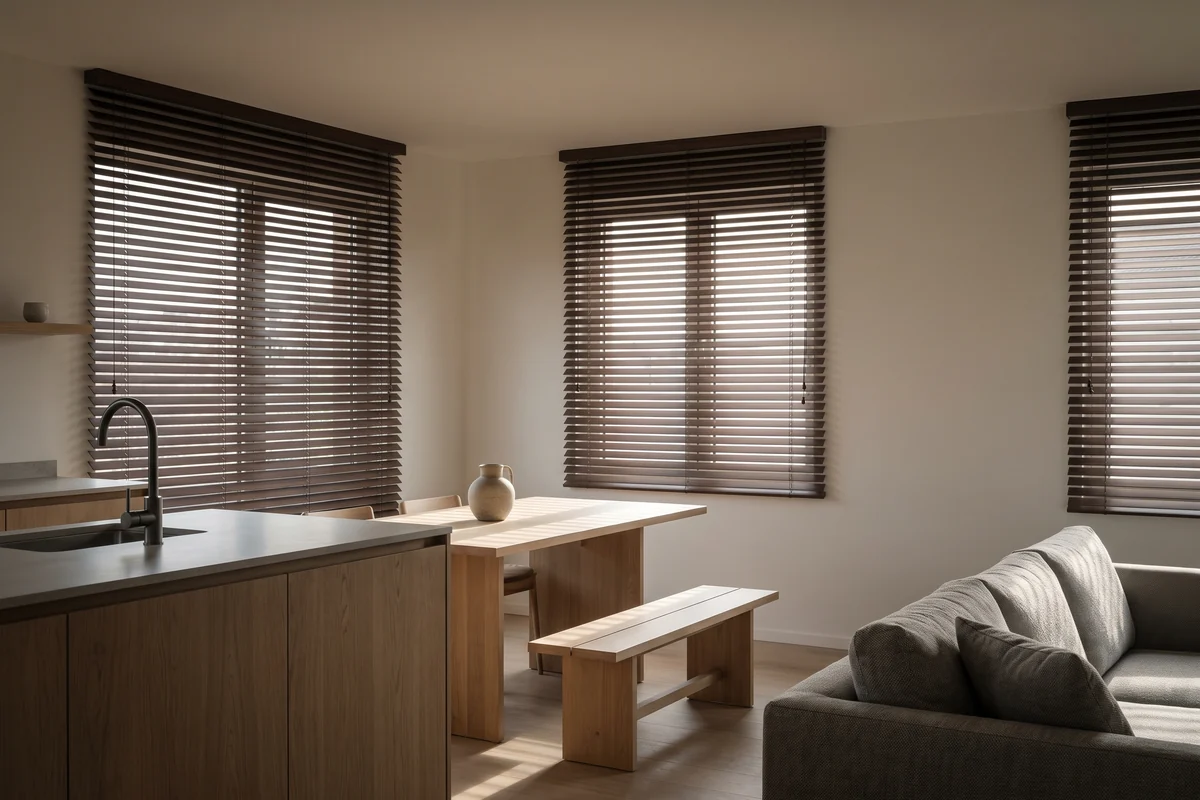
Timber, aluminium or PVC
Three materials, and the room decides, not your taste.
Aluminium venetian blinds are thin, light and indifferent to moisture. They come in the widest range of finishes — including the metallics people mean when they search for gold venetian blinds — and they're the only material that works at 16mm and 25mm. They also dent, and a slat bent by a vacuum cleaner stays bent forever.
Timber venetian blinds are the ones you actually want to look at. Real basswood or cedar has a warmth no printed finish matches, and the thicker slats close down harder and block more light than aluminium. The catch is that timber is a plant that has been persuaded to lie flat, and steam un-persuades it. Keep them dry and they'll outlast the room.
PVC venetian blinds — sold as faux timber, Visionwood, or a dozen brand names — are moulded to look like painted timber and don't care about water at all. They're heavier than both, which matters on wide windows: a 2.4-metre PVC venetian is a genuinely heavy thing to lift every morning. At that size, split it into two blinds on one headrail.
The venetian blinds we make come in all three, and the conversation at the measure is almost entirely about which room they're going in.
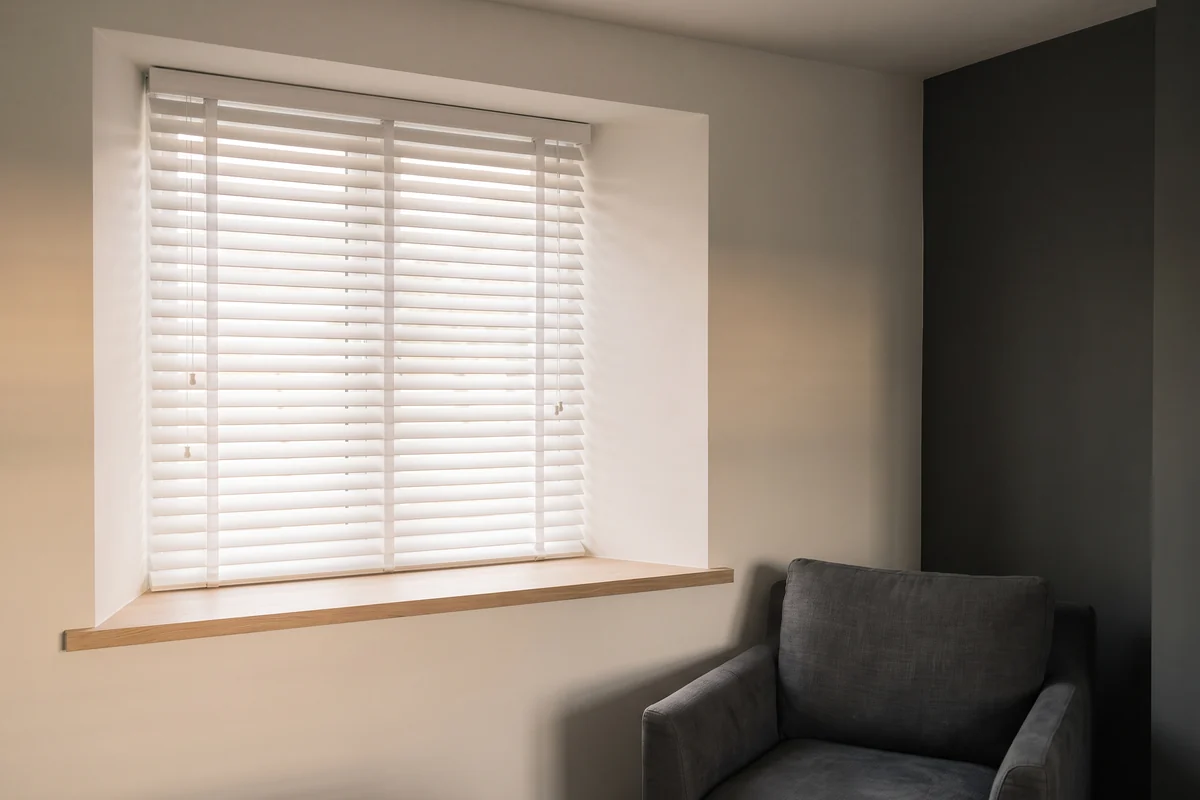
Venetian blind materials at a glance
| Aluminium | Timber | PVC / faux timber | |
|---|---|---|---|
| Slat widths | 16, 25, 50mm | 50mm, some 25mm | 50mm, some 25mm |
| Handles moisture | Yes | No | Yes |
| Light blocked when closed | Good | Best | Best |
| Weight on a wide window | Lightest | Middle | Heaviest |
| Finish range | Widest, including metallics | Stains and natural grain | Painted looks only |
| Fails by | Denting | Warping and fading | Sagging on long runs |
| Belongs in | Kitchens, bathrooms, laundries, studies | Living rooms, bedrooms, studies | Anywhere, including wet rooms |
Venetians won't black out a room
This is the thing to know before you spend anything, and why people end up disappointed by an otherwise excellent blind.
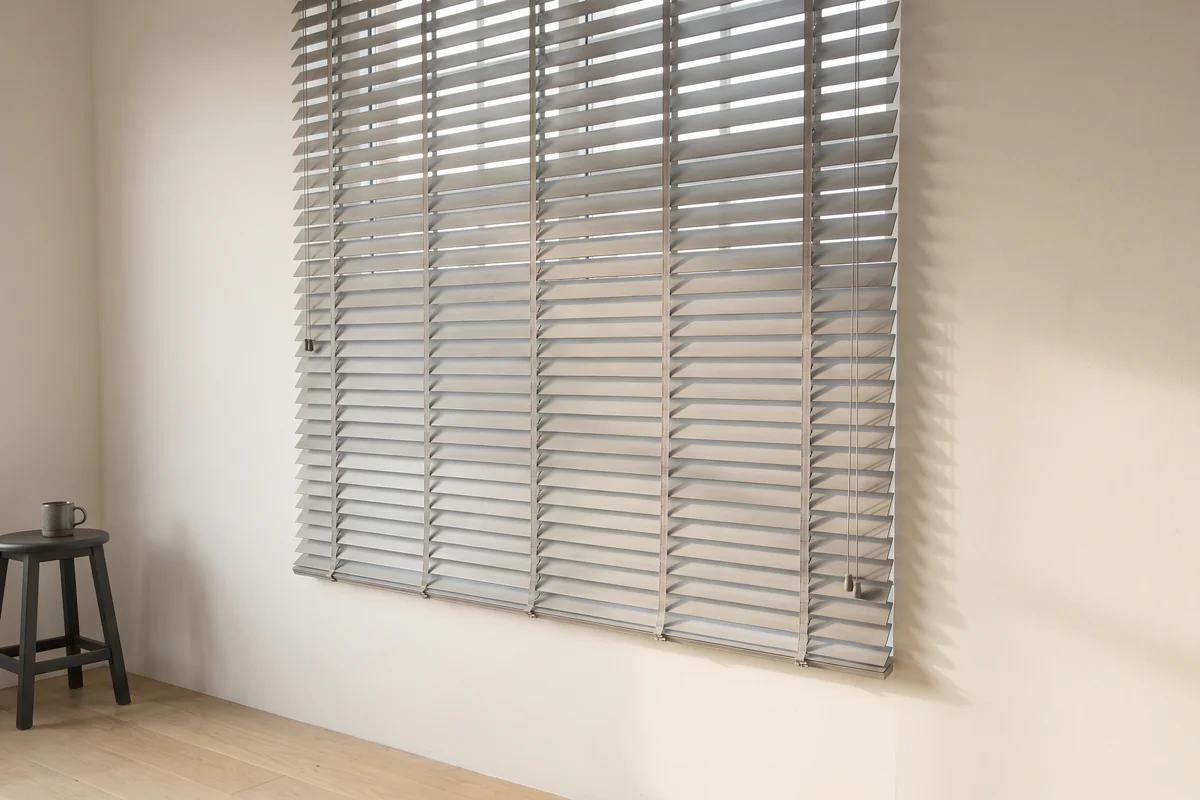
Remember the two holes punched in every slat. Close the blind fully and they line up into two neat rows of pinholes down the window, daylight coming straight through. Add the hairline gap where each slat overlaps the next, plus the gap at the architrave, and a closed venetian at 6am reads as dim, not dark.
You can't engineer it out. Ladder tape hides the holes from your eye, but the cord still has to pass through the slat. So blackout venetian blinds — the US spelling that turns up constantly in searches — aren't really a product. Anyone selling you one is selling a very good blind and a slightly optimistic adjective.
Layering is what works. Put the venetian on the window for daytime glare and view control, and hang a blockout curtain over it for sleep — our guide to sheer and blockout curtains covers how. The Australian Government's Your Home guidance on shading makes the same point thermally: adjustable shading beats fixed shading, and the best result comes from combining two things rather than asking one to do everything.
Choosing a slat width
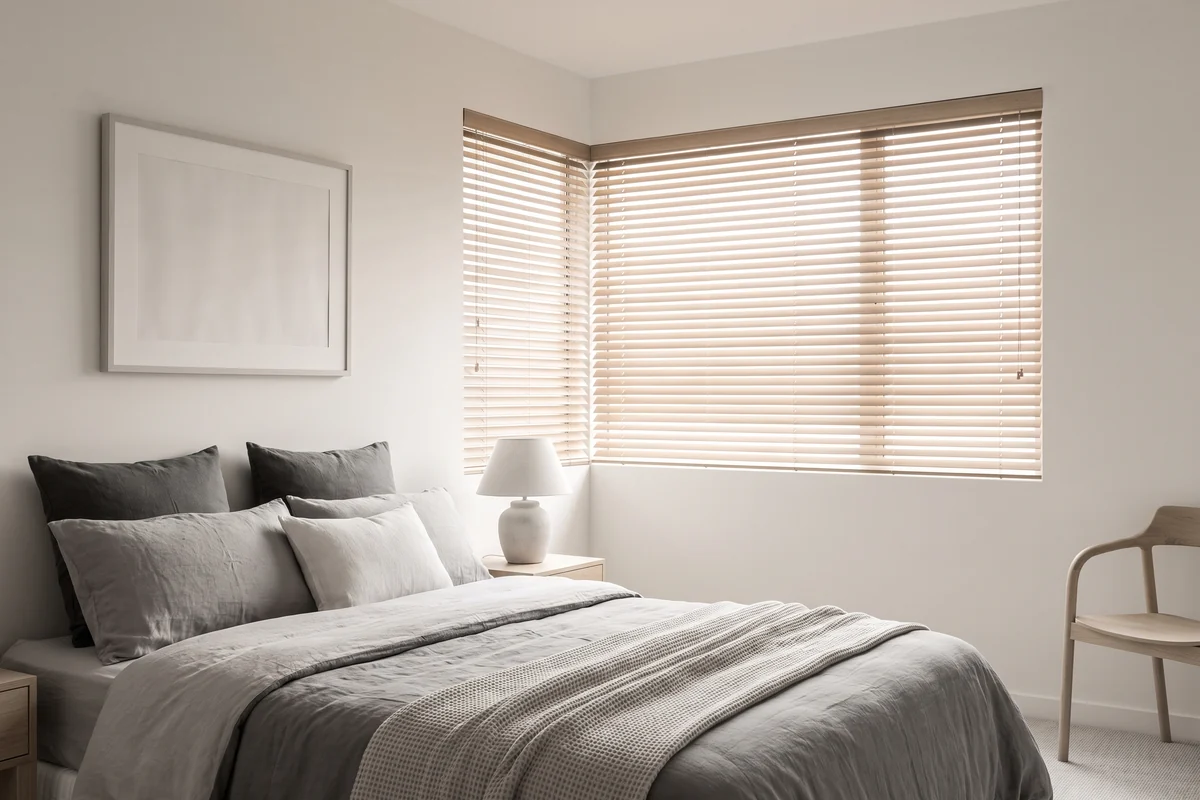
You'll mostly be offered 25mm and 50mm. Both are correct — for different windows.
- 25mm. More slats, finer lines, a tighter close. Right for small windows, bathrooms and anywhere the blind should read as utility rather than feature. Aluminium also does 16mm if you want it almost invisible.
- 50mm. Fewer slats, so more glass and more view when the blind is tilted open, and much less to dust. Right for big windows and living areas, and the only width where ladder tape looks properly considered.
The mistake I see most is 50mm slats on a small window. On a 600mm bathroom pane you get about eight slats, each a visible band across a small opening. Go the other way — 25mm on a three-metre living room window — and you've built yourself a lot of dusting.
And a wider slat gives you a better view out, but also more of a view in. If the window faces a footpath, take the narrower slat.
Humidity, steam and salt air
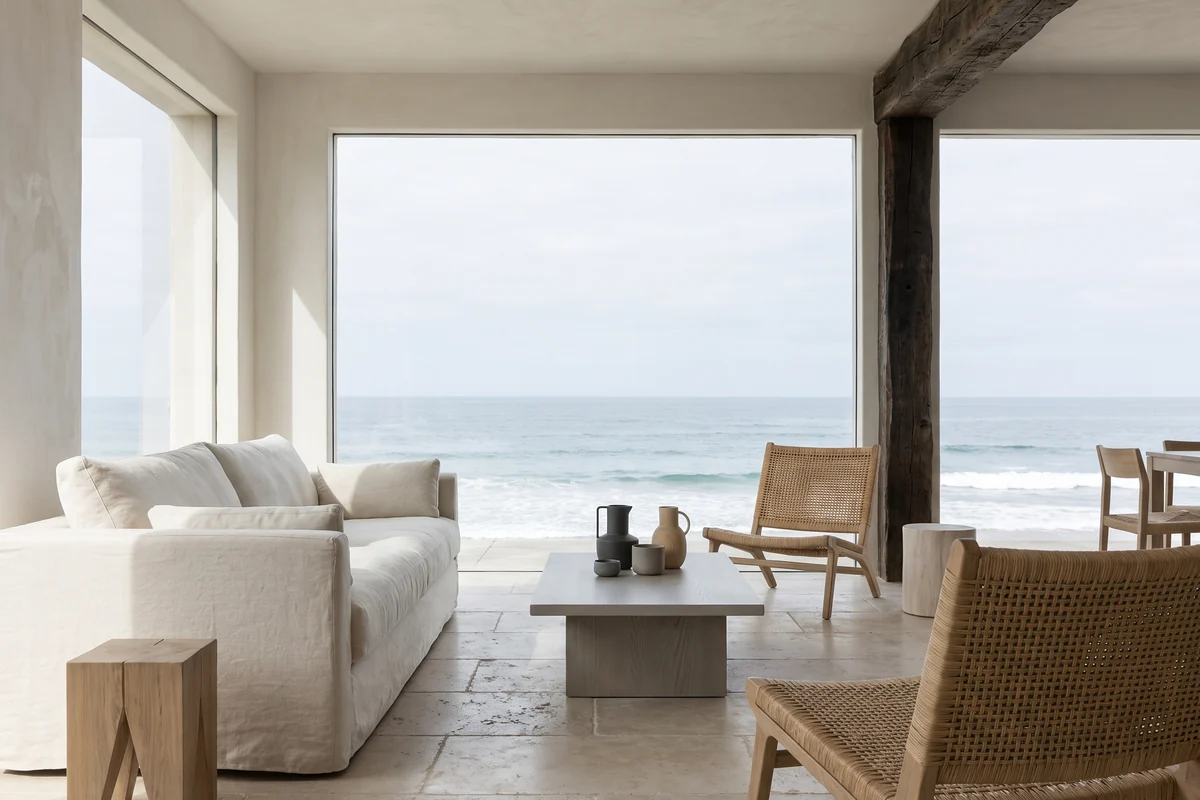
Most venetian advice online is written for a temperate climate and assumes your house is dry. Ours mostly aren't.
In a Gold Coast or Brisbane summer, ambient humidity does slowly to timber slats what a bathroom does quickly. A real timber venetian in a steamy room, or a beachfront apartment where the sliding door stays open, will cup — the slat curls along its length, and once a few curl the blind never closes flat again. That isn't a manufacturing fault, and it isn't covered by any warranty I've seen.
So: no real timber in bathrooms, laundries, or above a kitchen sink. PVC in a faux-timber finish gets you close to the look and is unbothered by any of it. In a bathroom I'd usually rather sell you Thermalite shutters than a venetian at all — no cords to corrode, no ladder to rot.
Salt air is the other one. Within a few streets of the beach, a standard aluminium venetian marks at the cut slat edges and the headrail fixings. Powder-coated slats and stainless fixings hold up far better — specify them at the quote, not in year three.
Not sure which material your room can actually take?
We measure the window, look at the aspect and the moisture, and come back with an itemised quote in 24 to 48 hours. We'll tell you if a venetian is the wrong call.
Where you mount them changes how much light you keep out
Two ways to hang a venetian, and the neater-looking one performs worse.
- Inside mount, or reveal fit. The blind sits inside the recess, flush with the frame. Tidy, architectural, leaves the sill clear — and it needs a deduction so the blind can move without scuffing the reveal. That deduction is also a light gap down both sides, because the blind has to be narrower than the hole it sits in.
- Face fit. The blind mounts on the wall above the window and overlaps the architrave. Less elegant, considerably better at light and privacy, and the only sensible option where the reveal is too shallow or the window is out of square.
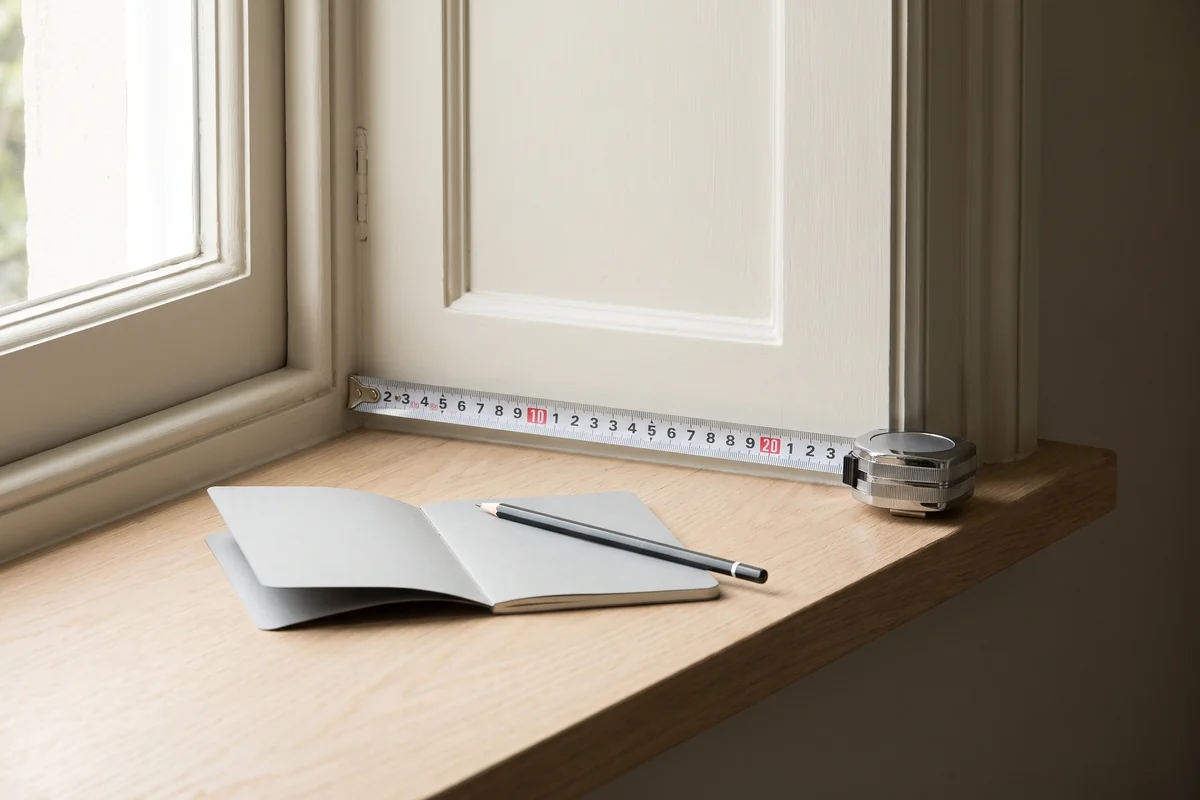
Older Queenslanders are rarely square, and a reveal 12mm wider at the bottom than the top shows as a wedge of daylight down one side of an inside-mounted blind. Measure width and drop in three places each. Use the smallest width and the largest drop.
This is the part I'd rather you didn't do yourself — not because measuring is hard, but because the deduction depends on the exact headrail and bracket, and a blind cut 8mm too wide is scrap. It can't be trimmed. If you're ordering made to measure venetian blinds online, read that supplier's deduction table twice before you send the numbers.
Cords, children and the mandatory standard
Venetians are one of the last blind types still commonly sold with a cord, so this is worth spelling out rather than burying in a disclaimer.
Corded internal window coverings are covered by a mandatory safety standard. Under the ACCC's corded internal window coverings standard, a loose cord must not be able to form a loop of 220mm or longer at less than 1,600mm above floor level. Cleats and cord guides have to sit above that line, the installer must attach a label with their name and contact details, and warning labels stay on the product.
In a child's room, skip all of it and specify cordless or motorised. Cordless venetians lift by hand from the bottom rail, so nothing hangs. On a high window, motorisation earns its keep — though don't motorise a blind you walk past every morning, because you're paying for a remote to do something your hand already does well.
Cleaning them without losing an afternoon
The honest downside of a venetian is that it's mostly horizontal surfaces, and horizontal surfaces collect dust. There's no clever trick here. There are just a lot of slats.
What makes it manageable: tilt the slats fully closed, wipe the face in long horizontal passes with a microfibre cloth, then tilt to the opposite closed position and do the other side. Two passes instead of fifty. A vacuum brush head on low suction handles the dust between wipes.
Aluminium and PVC take a damp cloth with a little detergent. Real timber doesn't — damp it lightly, dry it immediately, and never let water sit in the ladder holes. And don't do what the internet occasionally suggests and take timber slats into the shower. That's how a straight blind becomes a wavy one.
Frequently asked questions
What are the disadvantages of venetian blinds?
Three real ones. Every slat collects dust, so they need wiping more often than a roller blind. They can't fully black out a room, because light passes through the ladder-cord holes. And the slats are vulnerable — aluminium dents, timber warps, and neither can be fixed without replacing the slat.
Do venetian blinds block out light?
Most of it, not all. Even fully closed, daylight comes through the punched holes the ladder cord runs through and the small overlap between slats. Expect a dim room, not a dark one. For a genuinely dark bedroom, layer a blockout curtain over the venetian.
Timber or aluminium venetian blinds — which is better?
Timber looks better and blocks more light; aluminium survives moisture and comes in narrower slats and more finishes. Choose by room, not preference: timber for living rooms and bedrooms, aluminium for kitchens and bathrooms. PVC faux timber is the compromise if you want the timber look in a wet room.
What slat width should I choose?
50mm for large windows and living areas, where fewer slats mean more view and less dusting. 25mm for small windows and bathrooms. Aluminium also comes in 16mm for very small panes. A wider slat gives a better view out and a slightly better view in, so take the narrower slat on a street-facing window.
Can venetian blinds go in a bathroom?
Aluminium and PVC venetians are fine in a bathroom and a common choice there. Real timber isn't — steam makes the slats cup and the blind stops closing flat, usually within a couple of Queensland summers. We'd often suggest a shutter instead, since it has no cords or ladder tape to deteriorate.
Are venetian blinds child safe?
Only if they're cordless, motorised, or installed to the mandatory standard. Australian law requires that a loose cord can't form a loop of 220mm or longer below 1,600mm from the floor, and that cleats and cord guides sit above that height. In a child's bedroom, specify cordless and remove the question.
Are venetian blinds outdated?
No, though the 1980s dusty-pink aluminium version deserved its retirement. Current venetians run wider 50mm slats, ladder tape instead of exposed cord, cordless or motorised control and matt finishes. The tilt that made them popular is still the only way to kill glare without giving up the view.
How long do venetian blinds last?
A well-made venetian in the right room lasts decades. The cord lock and lift cord fail first, and both are replaceable. What ends a blind early is the wrong material in the wrong room: timber in steam, or unprotected aluminium in salt air.
Sources Australian Government Your Home — Shading · ACCC blinds and window fittings mandatory standard
Back to the journalKeep reading
Related from the journal
 Guides
A plain-English guide to blind openness factors
1%, 3%, 5%, 10% — the number on a screen fabric sample tells you how much you will see out, how much glare gets through, and how much privacy you keep after dark. Here is how to pick.
Read more Styling
Measuring up: five mistakes we see every week
Measuring the frame instead of the finished wall. Forgetting cornice depth. Ignoring stack space. If you are getting quotes from more than one supplier, these are the errors worth checking for.
Read more Guides
Is motorisation worth it? An honest assessment
For high windows, wide spans and anything above a stairwell, yes — comfortably. For a single bedroom window you walk past every morning, probably not. Where the money is genuinely well spent.
Read more