

Blinds vs Curtains
Two products, one opening — and the honest answer is usually both. Here is how the choice actually gets made, window by window.
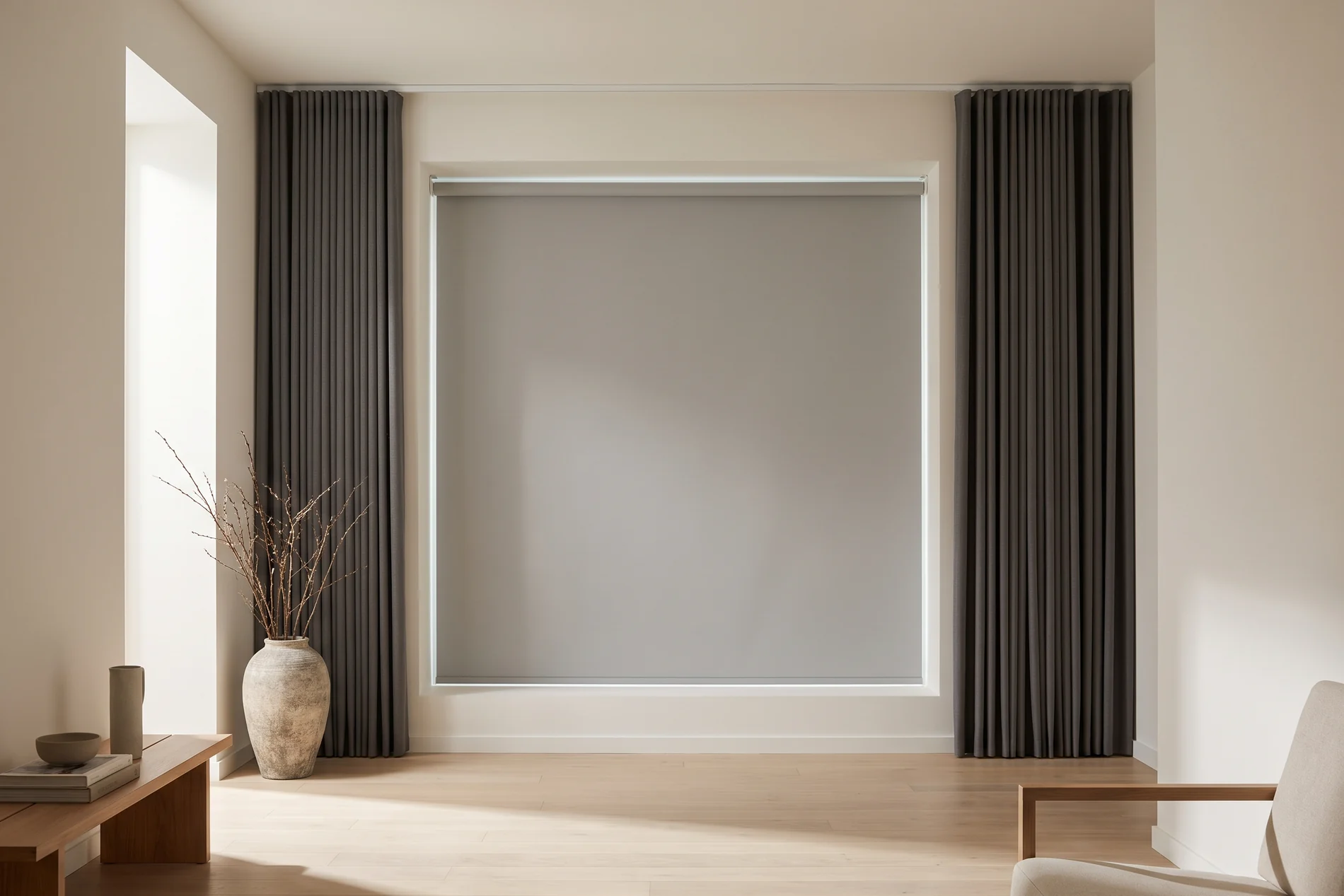
Blinds vs curtains is decided by the opening, not the product. Blinds sit inside the reveal, cope with moisture and give precise control over daylight. Curtains cover the whole wall, seal far better against heat and draughts, and soften a room that echoes.
Forced to pick one for a whole house: blinds, because they go anywhere. That is still a compromise in the two rooms you care about most.
Five years of measuring windows between Byron Bay and Brisbane, and this almost never arrives as a genuine either/or. It arrives as "we have been told curtains are warmer" or "blinds are easier". Both true, both incomplete. What decides it is where the covering sits relative to the hole in the wall — a duller answer than fabric swatches, and a far more useful one.
What each one actually is
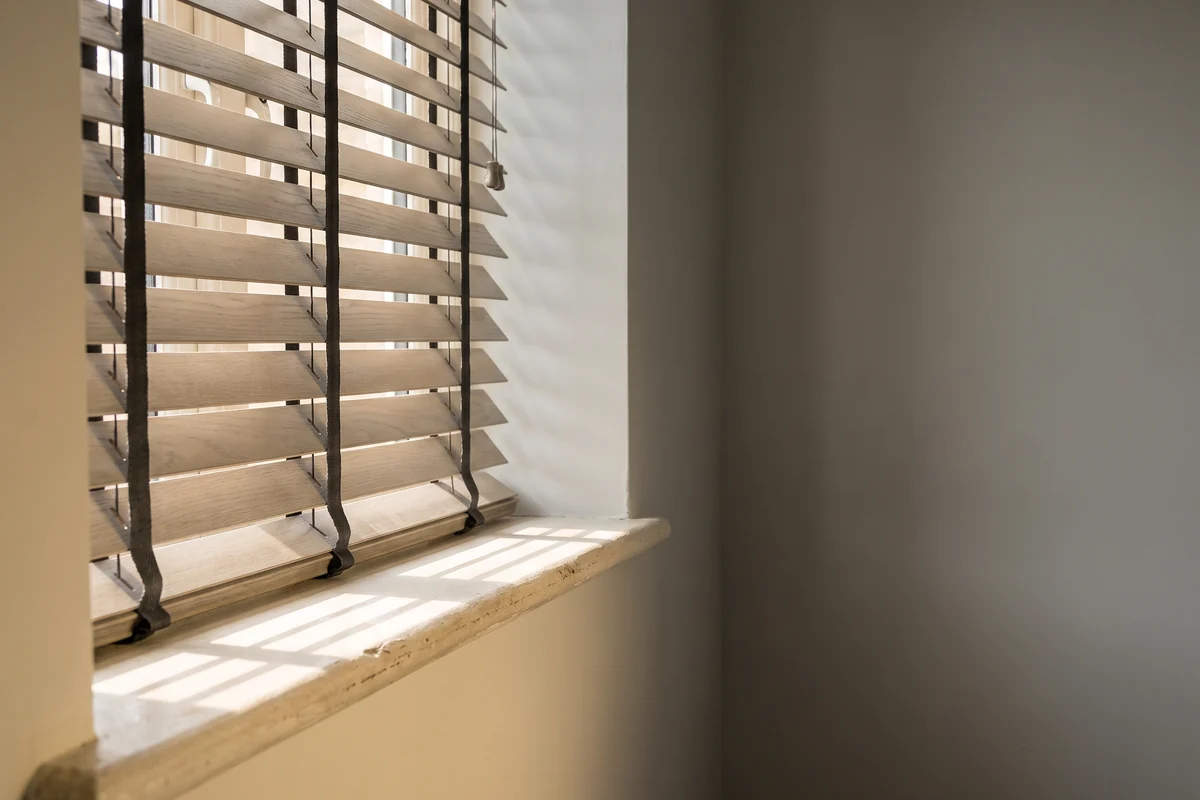
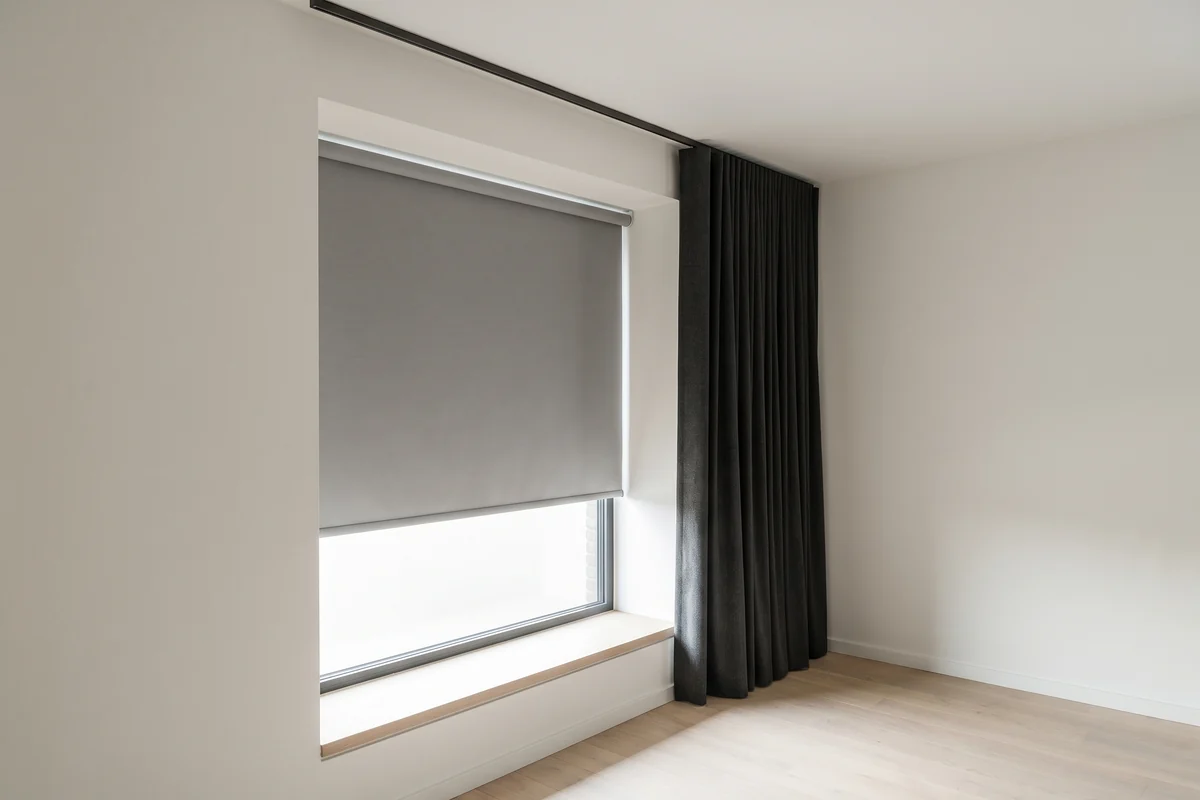
A blind is a rigid or semi-rigid covering fixed to the opening itself. It stacks, rolls or rotates: roller blinds wind onto a tube, venetians tilt on a ladder cord, honeycombs collapse into their own cells, and roman, pleated, vertical and panel glide each do a version of the same thing. The covering is the size of the window.
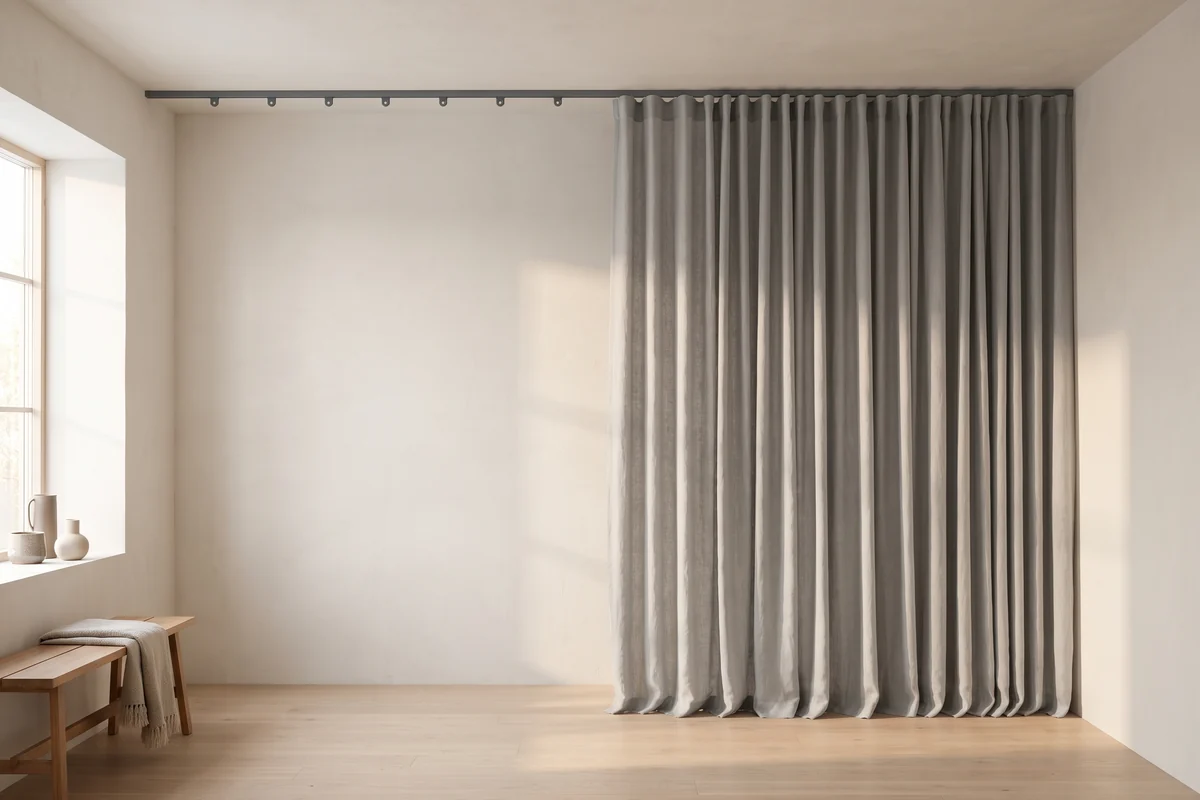
A curtain is fabric hung from a track above the opening, and it can be as wide as you like. The heading — S fold, pinch pleat or reverse pleat — decides how the fabric stacks; the fabric decides whether you get daylight diffusion or a dark room. Sheer, blockout and decorative all hang the same way, and the curtain range covers the differences. The covering is the size of the wall.
The trade calls the whole category "window furnishings", a phrase nobody has ever used at home.
At a glance
| Blinds | Curtains | |
|---|---|---|
| Where it sits | In the reveal, or face-fixed over it | Above and beyond it, on a runnered track |
| Daylight control | Precise — tilt, part-raise, dual fabrics | Open or closed, plus a sheer for the in-between |
| Heat and draughts | Good when fitted tight to the reveal | Better, if run wall-to-wall and floor-length |
| Steam and splashes | Handles both | Fabric and moisture are a poor combination |
| Echo in a hard room | Little effect | Mass and folds absorb some reflected noise |
| Cleaning | Wipe or dust in place | Periodic professional clean |
| Lead time | 2–3 weeks: roller, venetian, vertical, honeycomb | 2–4 weeks, depending on fabric |
The heat argument is really an installation argument
Curtains do generally insulate better, and I will not pretend otherwise. But almost every article credits fabric weight for it, and that is the wrong mechanism.
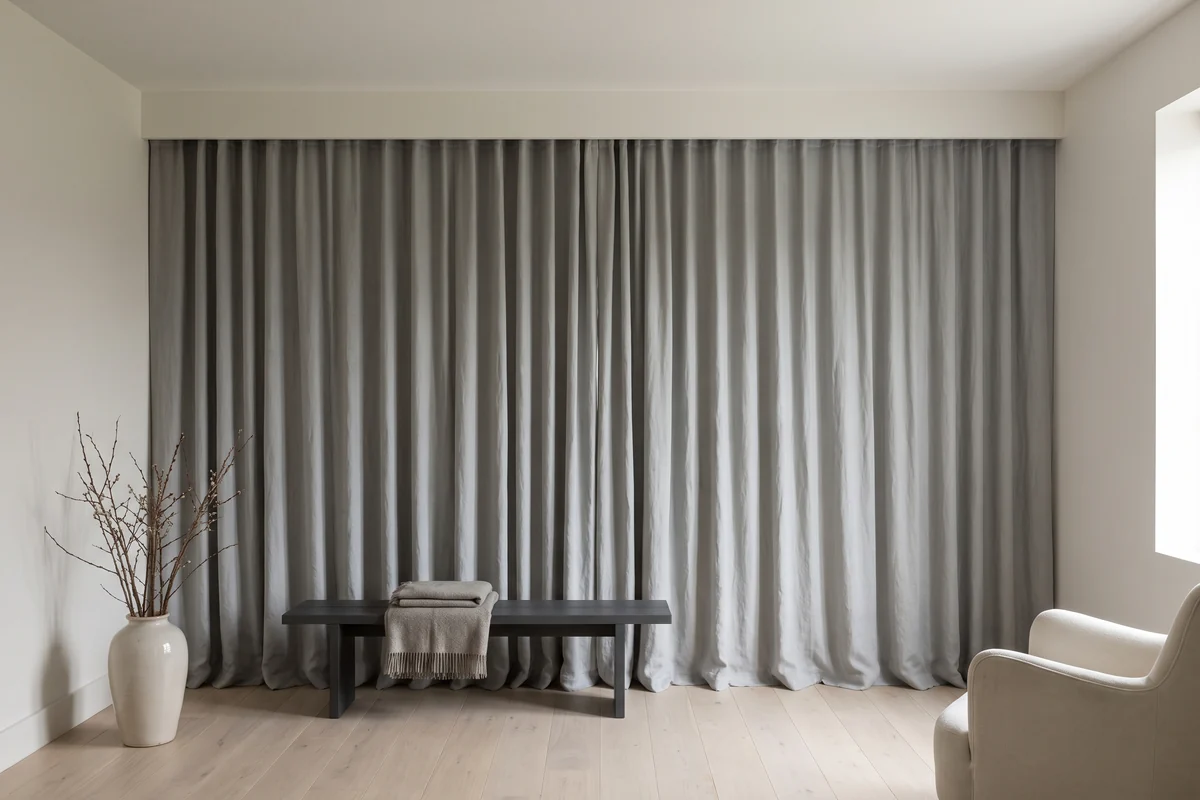
Warm air moves. A curtain that runs wall-to-wall, drops to the floor and carries a pelmet closing the gap above the track traps a layer of still air against the glass and holds it there. The Australian Government's guidance on shading and passive design makes the same point: the win comes from eliminating perimeter air gaps, not from the thickness of the cloth. Lusso supplies pelmets, and on a west-facing window they are worth more than an upgrade in fabric.
Which cuts both ways. A blind fitted snugly into the reveal beats a curtain hung 100mm above the frame and stopping at the sill — and that curtain is the one most homes actually have. Installation beats fabric weight. The long version is in whether thermal curtains work.
There is a neat proof of this in our own range. Verosol SilverScreen is a metallised fabric — the backing reflects solar radiation rather than absorbing it — and we supply it as curtain fabric and as roller and pleated blind fabric. Same fabric, two different products. The fabric was never the variable.
Why most homes end up with both
The layered window is not a designer indulgence. It is what happens when you take both problems seriously: by day you want light without being on display, at night the opposite. No single covering does both, and anyone telling you otherwise is selling something.
Two arrangements do most of the work:
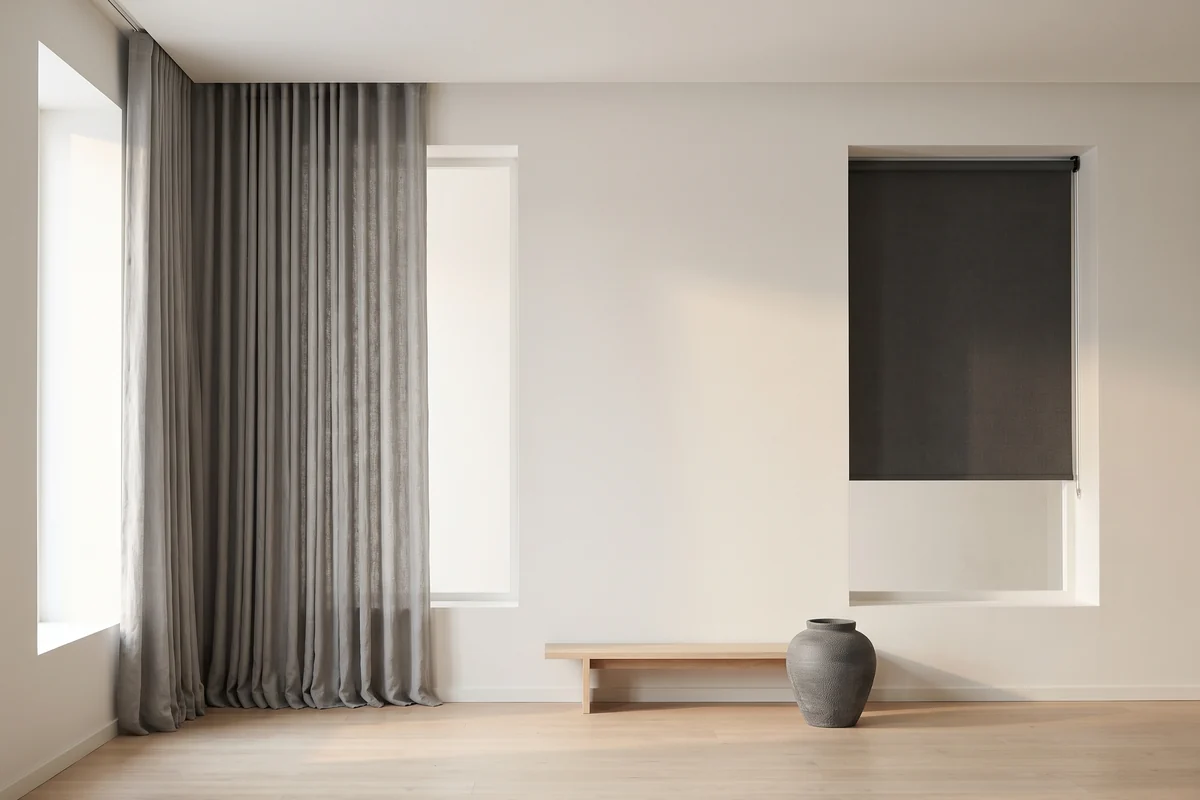
- Blind plus curtain. A roller or honeycomb blind handles the day and the glare; a decorative curtain either side handles the night, the draught and the echo. The curtain can be lighter, and cheaper, than it would need to be alone.
- Sheer plus blockout on a double track. No blind at all. The sheer runs during the day, the blockout closes over it. This is the bedroom answer, and it is covered properly in our comparison of sheer and blockout curtains.
The failure mode is specifying one covering to do everything. You end up with window furnishings that sit half-drawn all year, because no single position is quite right.
Room by room
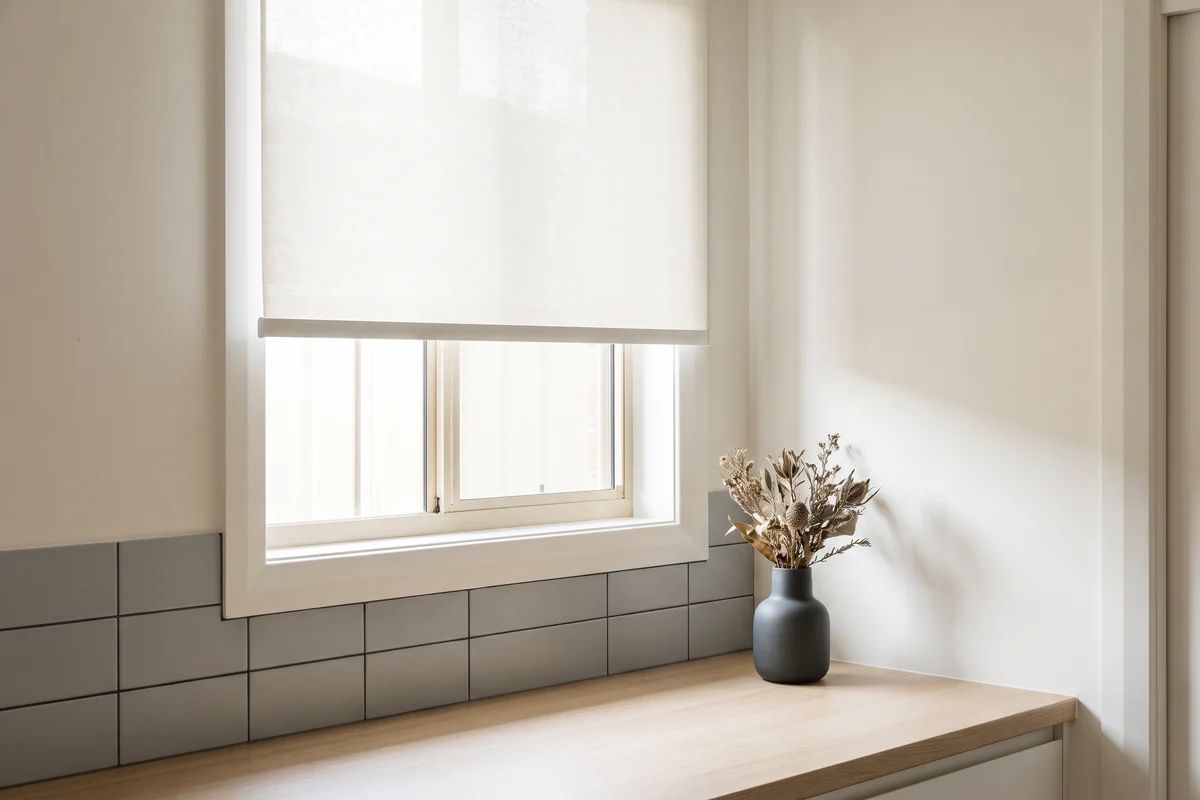
- Kitchen — blinds. Steam and airborne cooking oil settle into fabric and stay there. A wipeable roller or venetian is the honest answer here.
- Bathroom — shutters. Not curtains, and not most blinds. Our Thermalite shutters are a polymer, so condensation is a non-event.
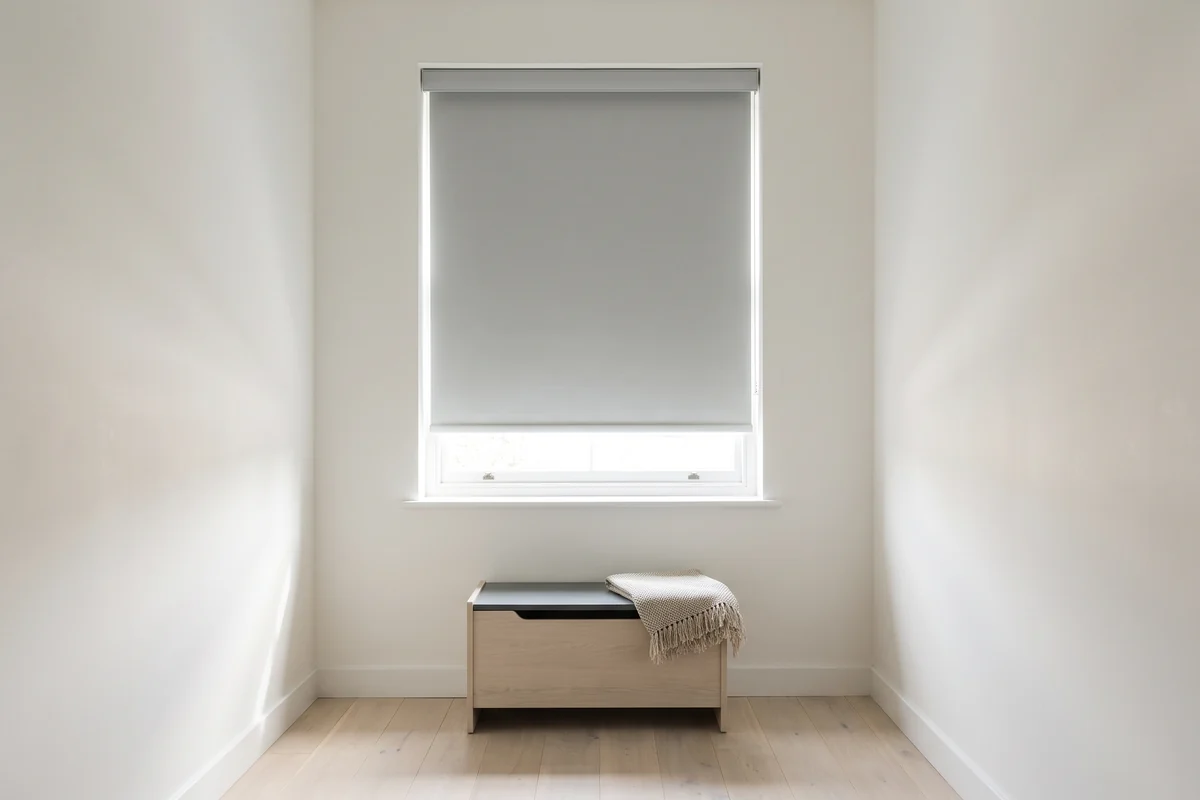
- Bedroom — curtains, usually. Blockout on a track that extends past the frame, because light does not come through a blockout fabric, it comes around the edges of one.
- Living areas — either, often both. A wall of glass onto a deck wants curtains for the scale of it. A single punched window is happier with a blind.
- Home office — blinds. Screen glare is a directional problem, and tilting slats solve directional problems.
The cord question, which nobody else mentions
Here is a real difference no comparison article seems to raise. Blinds have historically been operated by a corded loop. Curtains on a wand or track have no loop at all.
A loose cord near a cot is a strangulation hazard, and Australia treats it as one. Corded internal window coverings fall under an ACCC mandatory standard covering installation, labelling and cord tensioning, and there is a plain-English consumer guide worth five minutes. Lusso is a member of the Window Shading Association of Australia, whose code covers exactly this.
The practical version: in a child's room, specify cordless or motorised, or specify curtains. It costs a little more and removes the question.
Not sure which windows want which?
We measure the room, note the aspect, and come back with an itemised quote inside 24 to 48 hours — blinds where blinds suit, curtains where they do not.
Frequently asked questions
Which is cheaper, blinds or curtains?
Blinds are usually the lower number on a like-for-like window: a curtain needs two to three times the window width in fabric plus a track, where a blind needs one width plus a tube. The gap narrows once you compare a quality blind against a simple curtain. Ask for the quote itemised component by component.
Are curtains or blinds better for keeping heat out?
Curtains, if they are installed to beat the heat rather than to frame the window — wall-to-wall, floor-length, and with a pelmet closing the gap above the track. A blind fitted tight inside the reveal will outperform a short, narrow curtain. The perimeter seal matters more than what the covering is made of.
Can you have blinds and curtains on the same window?
Yes, and it is the most common thing we install. The blind sits inside the reveal and does the daytime work; the curtain hangs on a track above and outside the frame, and closes at night. Set the track forward enough and the two never touch.
Are blinds or curtains better for a bedroom?
Curtains, in most bedrooms. Light escapes around a covering rather than through it, and a curtain extends past the frame on all four sides in a way a blind fitted to the opening cannot. If you want the blind too, run a blockout roller behind the curtain rather than instead of it.
Why are blinds better than curtains in a kitchen or bathroom?
Fabric holds moisture and cooking oil, and neither leaves on its own. A roller or venetian blind wipes down in place, and in a bathroom a polymer shutter handles condensation better than anything textile. These are the few rooms where the answer really is one product, not both.
Which lasts longer, blinds or curtains?
It depends far more on aspect than product — western sun degrades both. We warrant our installation workmanship for 12 months, and the products carry their manufacturer's warranty: 12 months to 7 years depending on the system, componentry and fabric. Sun fading is excluded either way, an argument for external shading on the worst windows.
Sources Australian Government Your Home — Shading · ACCC blinds, curtains and window fittings mandatory standard · ACCC consumer guide to blinds and window fittings
Back to the journalKeep reading
Related from the journal
 Guides
What is a window treatment?
The American word for window furnishings, and the four families explained for an Australian house.
Read more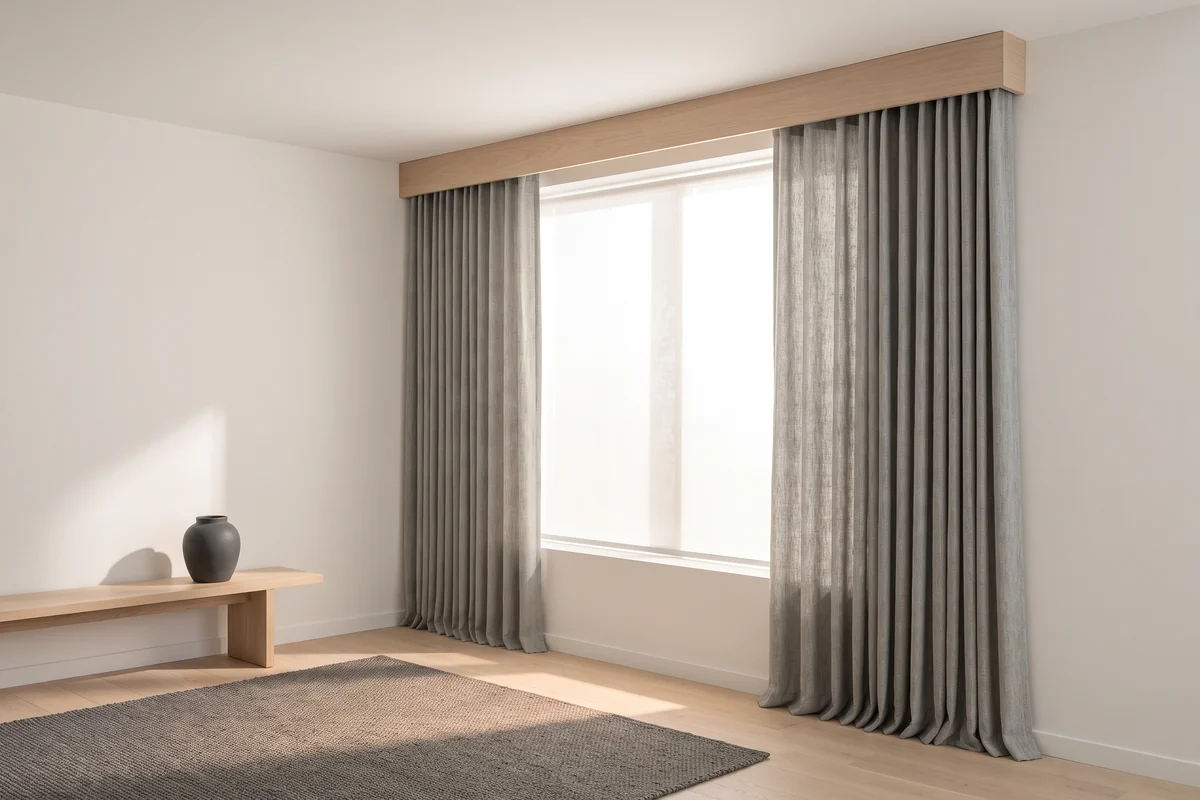 Guides
Do thermal curtains actually work?
What the lining actually contributes, and why the pelmet matters more than the fabric.
Read more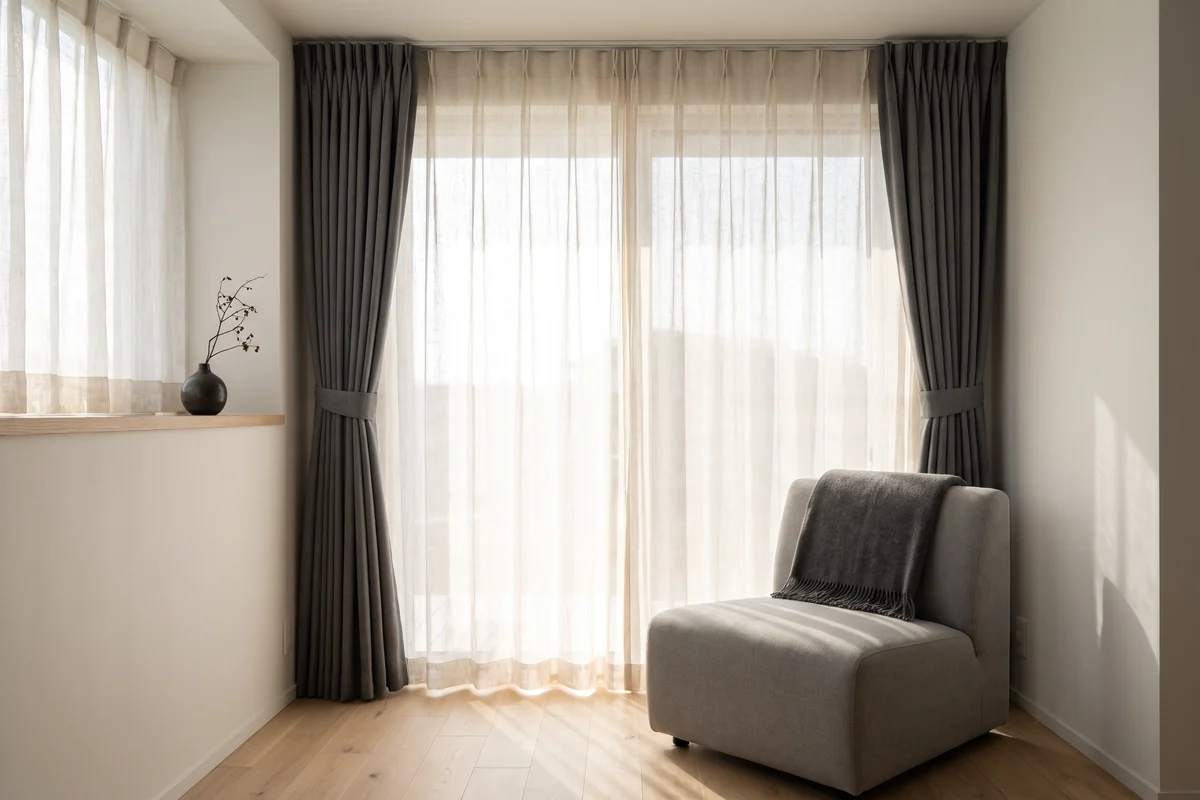 Styling
Sheer vs blockout curtains: which should you choose?
How each handles light, privacy, heat and noise — and why most rooms want both on a double track.
Read more