

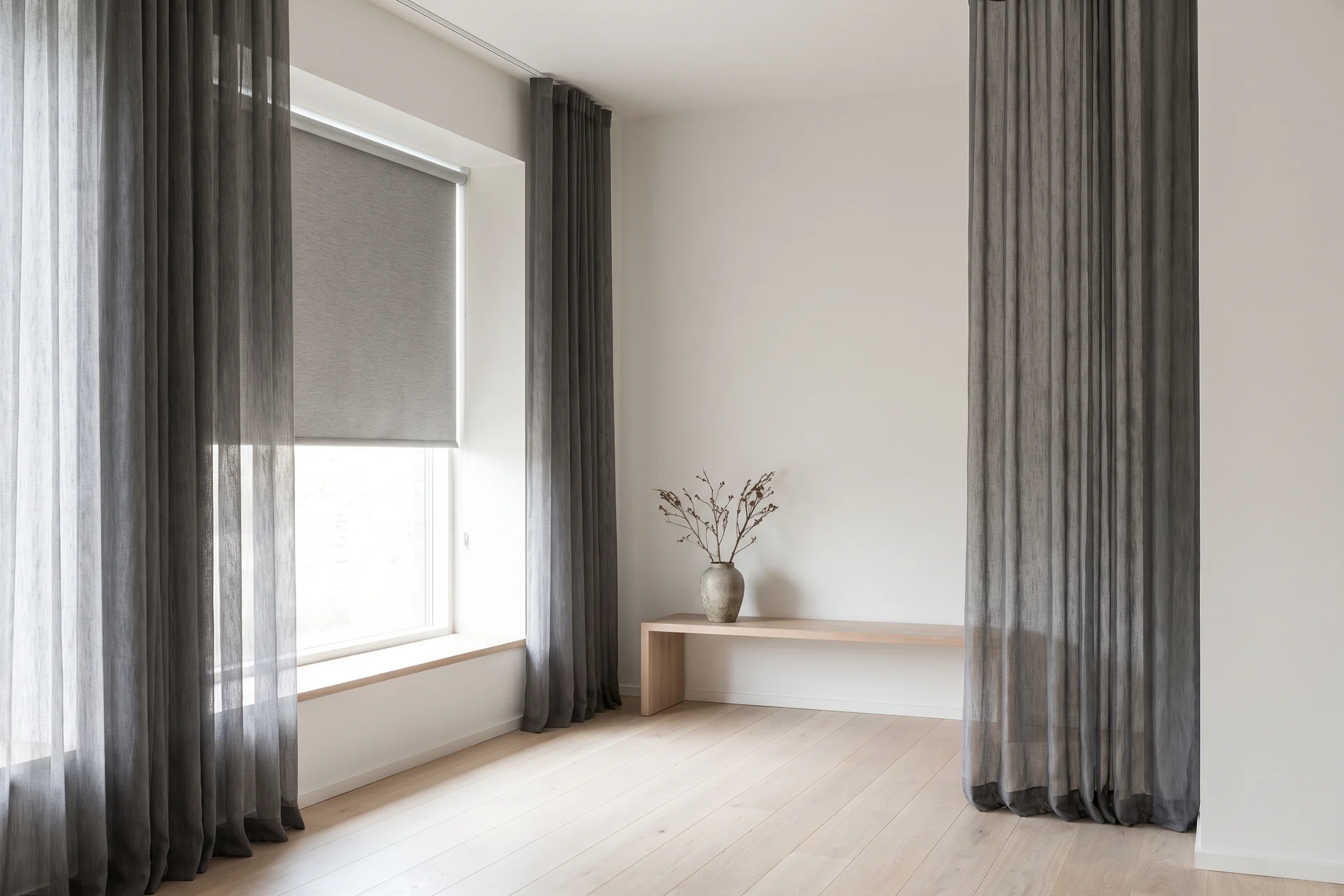
Types of curtains and blinds
Nine kinds of blind, three curtain headings, two fabric families and one shutter. What each one is genuinely good at, and the two categories we do not sell at all.
The main types of curtains are defined by their heading — S-fold, pinch pleat and reverse pleat — and by fabric: sheer, blockout or decorative. The main types of blinds are roller, roman, venetian, vertical, panel glide, honeycomb and pleated, plus shutters and outdoor blinds.
Forced to generalise: blinds control light precisely, curtains make a room feel finished, and most good rooms use both.
Nearly every guide to this question is American, which matters more than it sounds. Their vocabulary is different, their sun comes from the other direction, and half the products they list are not sold here. This is the Australian version — what these things are actually called, what each one does well, and the two categories we deliberately do not sell.
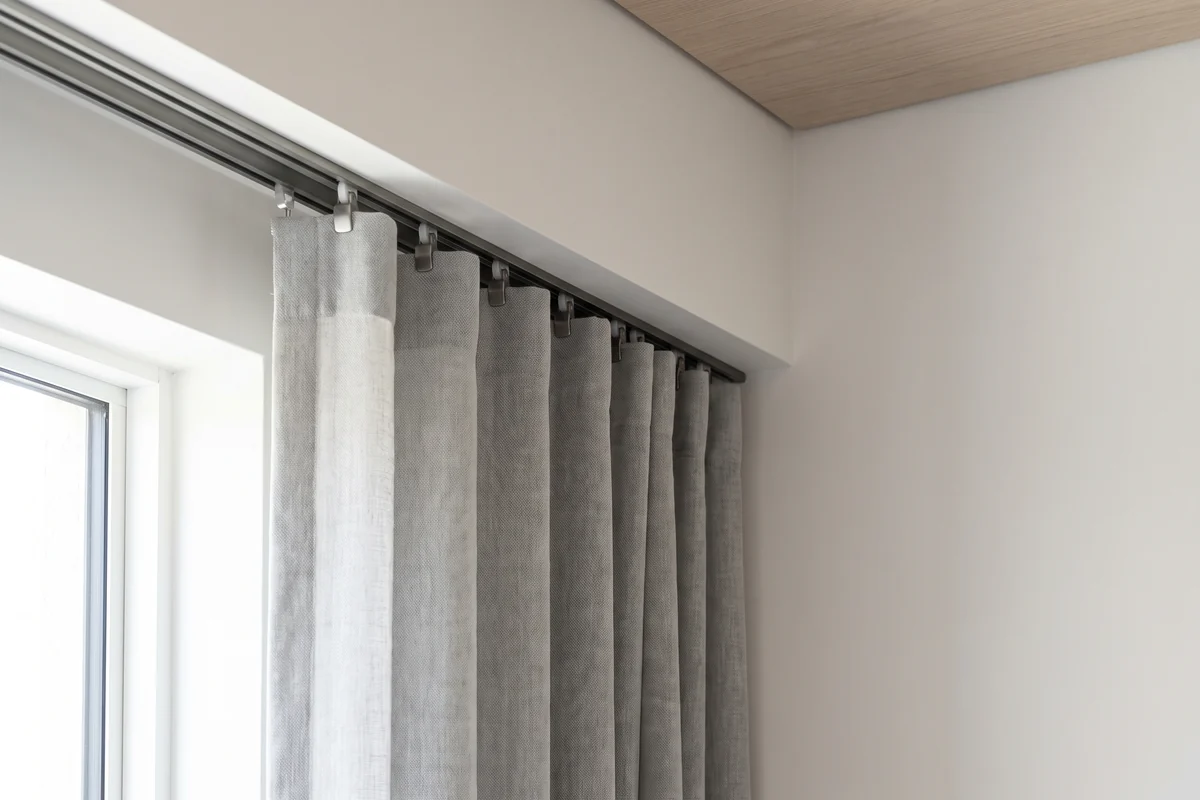
Curtains, by heading
The heading is the top of the curtain — how the fabric is gathered onto the track. It decides how the folds fall, how much wall the curtain covers when it is open, and how formal the room reads. It is the first decision, ahead of fabric and well ahead of colour.
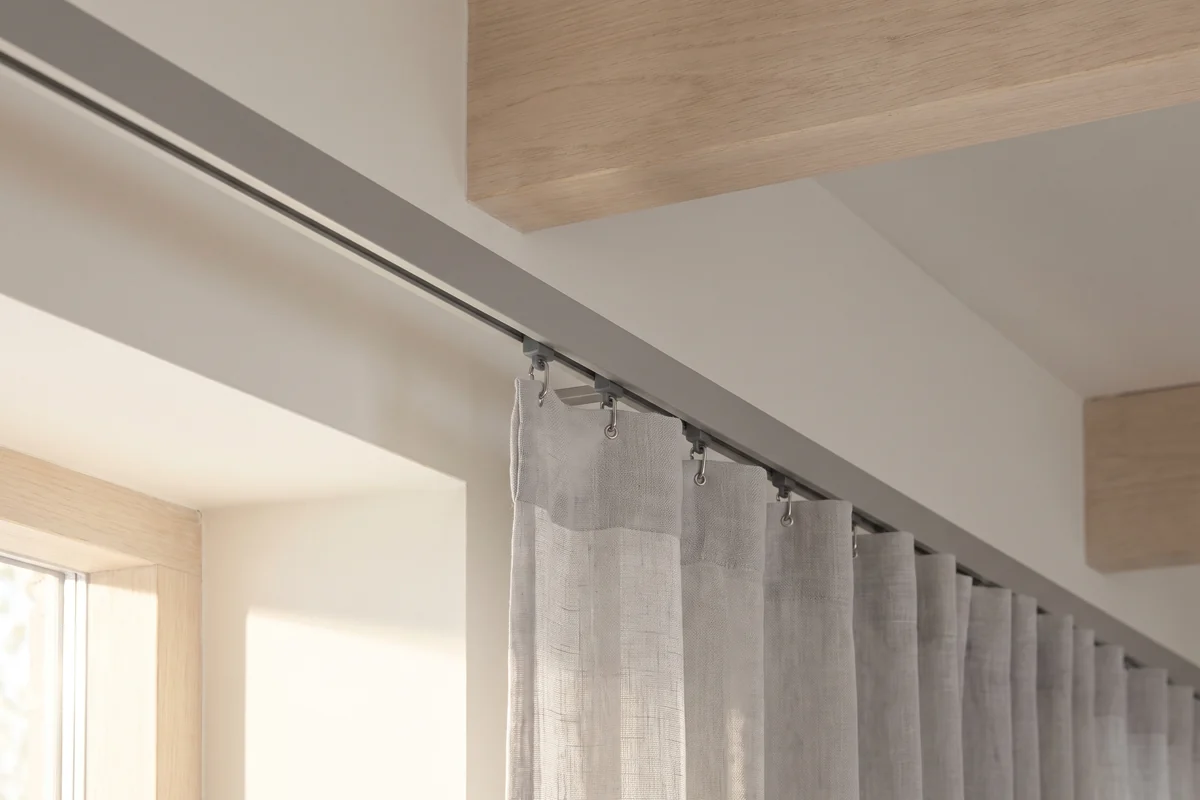
- S-fold, also called wave or ripplefold. One continuous wave with no stitched pleats and nothing visible at the top — the shape is made by the track carriers rather than by sewing. The contemporary default, and the one that stacks tightest.
- Pinch pleat. Fabric pinched into groups at the heading, giving deep uniform folds. Traditional, more formal, and it holds its shape better than anything else over a long drop.
- Reverse pleat. The pleat is folded to the back, so the front reads as a clean flat panel with soft returns. Quieter than pinch pleat, less overtly modern than S-fold.
What you will not find on our list is eyelet. An eyelet curtain needs a pole threaded through the rings, and we do not supply poles — more on that below.
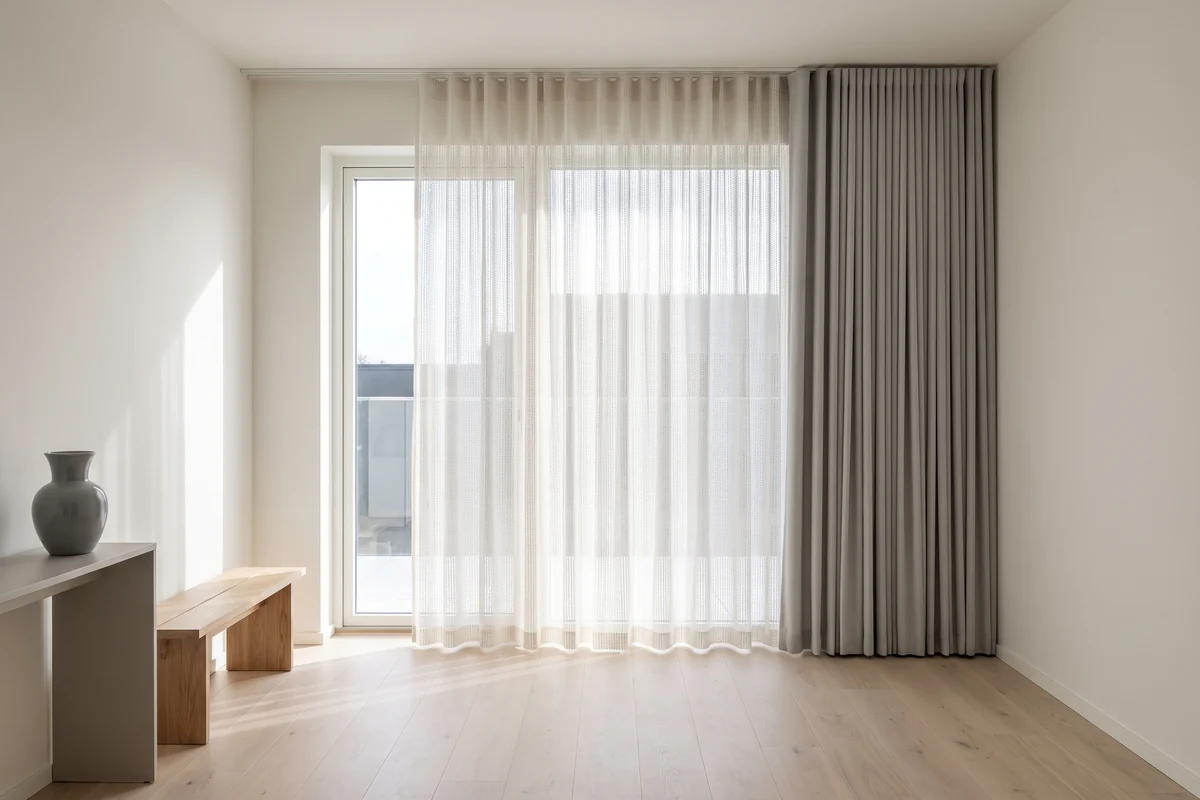
Curtains, by fabric
Three families, and they do genuinely different jobs.
- Sheer. Open weave that diffuses light and gives daytime privacy while keeping the room bright. It does not darken a room and is not meant to.
- Blockout. Coated or densely woven fabric that stops effectively all light. The bedroom answer, and the one people most often over-specify — a blockout in a living room you use at night is money spent on a problem you do not have.
- Decorative. Everything chosen for how it looks and feels rather than what it blocks — texture, weight, drape. Often paired with a blind that does the functional work.
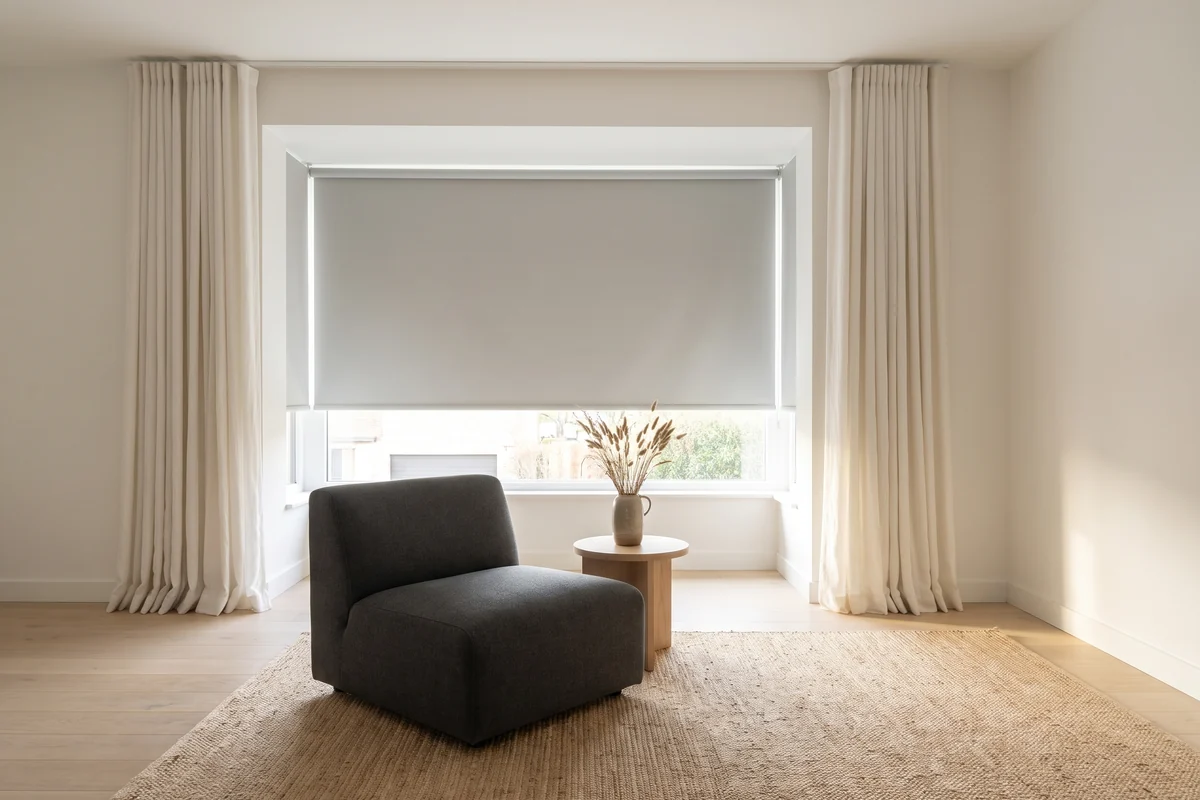
The common combination is a sheer and a blockout on one opening, on a double track, so you can run either independently. If you are weighing that up, sheer versus blockout goes through it properly.
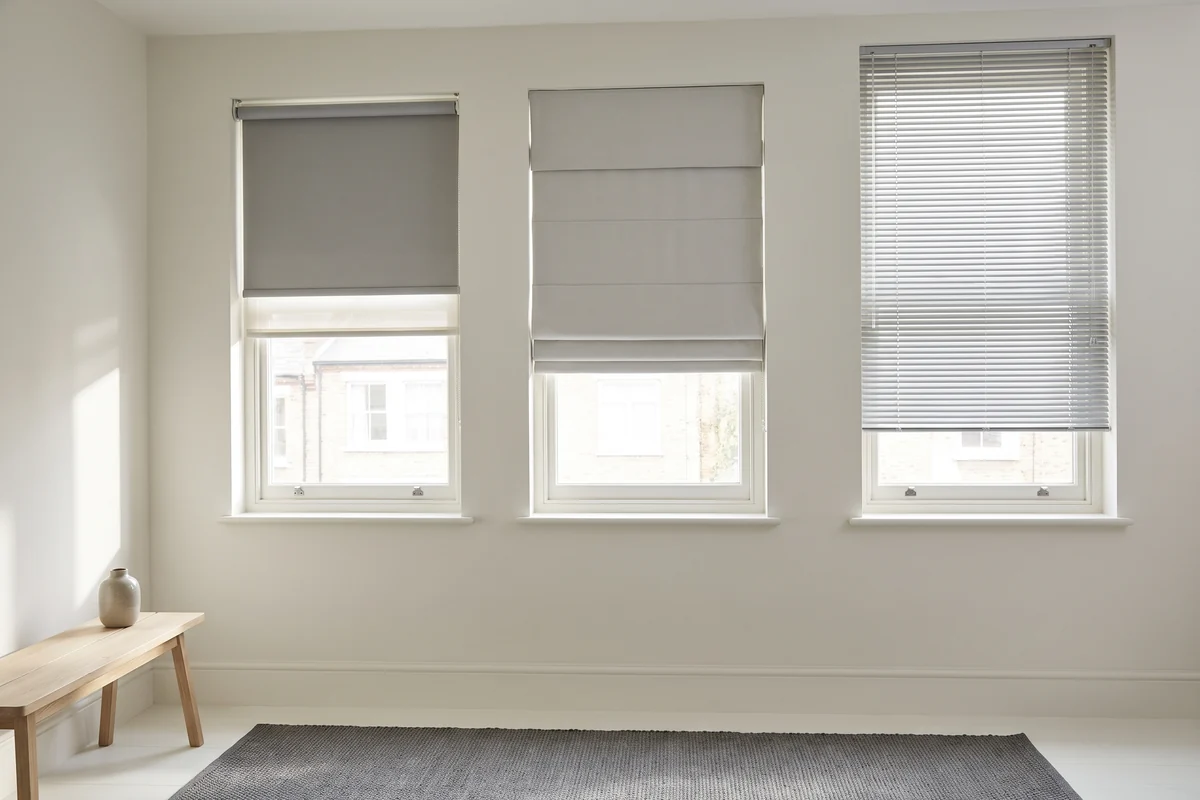
Blinds, all seven
Before the list, one piece of vocabulary that causes more confusion than it should. American guides split this category in two: blinds for anything with slats that tilt, shades for anything made from a continuous piece of fabric. By that logic a roller is a shade and only a venetian is really a blind.
We do not make that distinction here, and neither does anyone else in the Australian trade. All of it is blinds. If you are reading an overseas guide, their roller shade is our roller blind, their solar shade is our sunscreen blind, and their cellular shade is our honeycomb. Nothing about the product differs — only the word.
- Roller. One piece of fabric rolling off a single tube. The most versatile and the most common — available in sunscreen, light filtering or blockout, and the base layer under most curtains.
- Roman. Fabric that draws up into horizontal folds rather than rolling. Reads as soft furnishing rather than hardware, which is why it suits a room where a roller would look utilitarian.
- Venetian. Horizontal slats on a ladder cord, tilting to aim light. The only type that lets you throw daylight at the ceiling while keeping the street out.
- Vertical. Vanes hanging from a top track, rotating and stacking sideways. Built for wide openings and sliding doors where a roller would be unmanageably wide.
- Panel glide. Wide flat fabric panels on a multi-channel top track, sliding behind one another. The other answer to a very wide opening, and the tidier one.
- Honeycomb, also called cellular. Pleated fabric forming sealed air cells in section. The air is the point — it is the only blind whose structure is doing insulation rather than just fabric weight.
- Pleated. A single pleated fabric layer without the cell. Slimmer stack than honeycomb, less thermal benefit, and it handles awkward shapes well.
| Light control | Wide openings | Insulation | Reads as | |
|---|---|---|---|---|
| Roller | Precise | To about 3m | Fabric only | Minimal |
| Roman | Good | Limited | Fabric only | Soft furnishing |
| Venetian | Directional | Moderate | Little | Architectural |
| Vertical | Directional | Excellent | Little | Functional |
| Panel glide | Good | Excellent | Fabric only | Clean, modern |
| Honeycomb | Good | Moderate | Best | Discreet |
| Pleated | Good | Moderate | Some | Discreet |
Shutters, and everything outside the glass
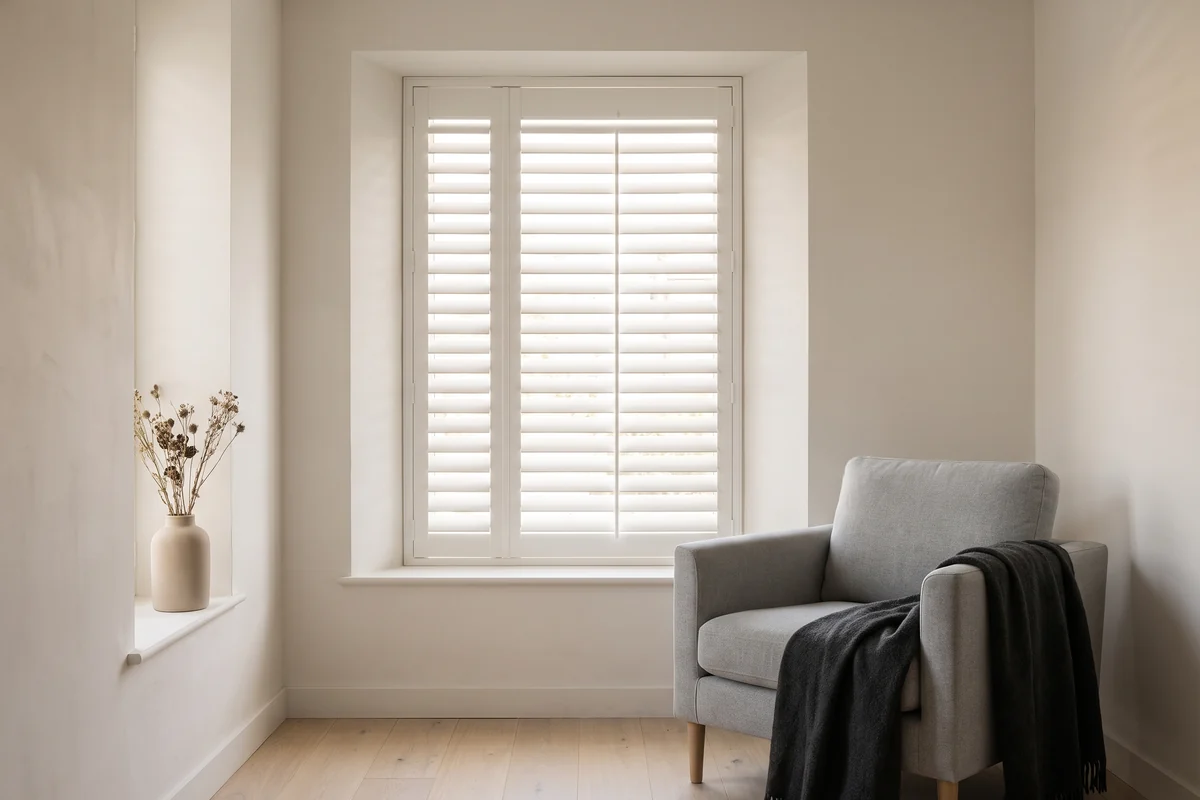
We make one kind of shutter: Thermalite, an advanced polymer, in hinged, sliding or fixed configurations. Polymer rather than timber is a deliberate choice — it does not swell in a humid bathroom and does not need refinishing after a few years near salt air.
Outside the glass there are three broad formats, and the difference between them is how the fabric edge is held: straight drop hangs free with a weighted bar, café blinds use a rope-and-pulley with open sides, and zip track runs the fabric edge captive inside a channel. The last of those is the only one that seals the sides, which is why it handles wind and insects when the others do not, and why it spans furthest — up to 7 metres wide and 5 metres down in a single blind, where a straight drop is asked to do far less. We fit ZipScreen for that job, and the outdoor range in Brisbane covers the rest.
Too many options?
That is what the measure is for. We look at the opening, the aspect and what the room is used for, then narrow this list down to two.
Two things that are not on this list
Most guides list everything the industry makes. This one lists what we make, and the omissions are deliberate enough to be worth stating.
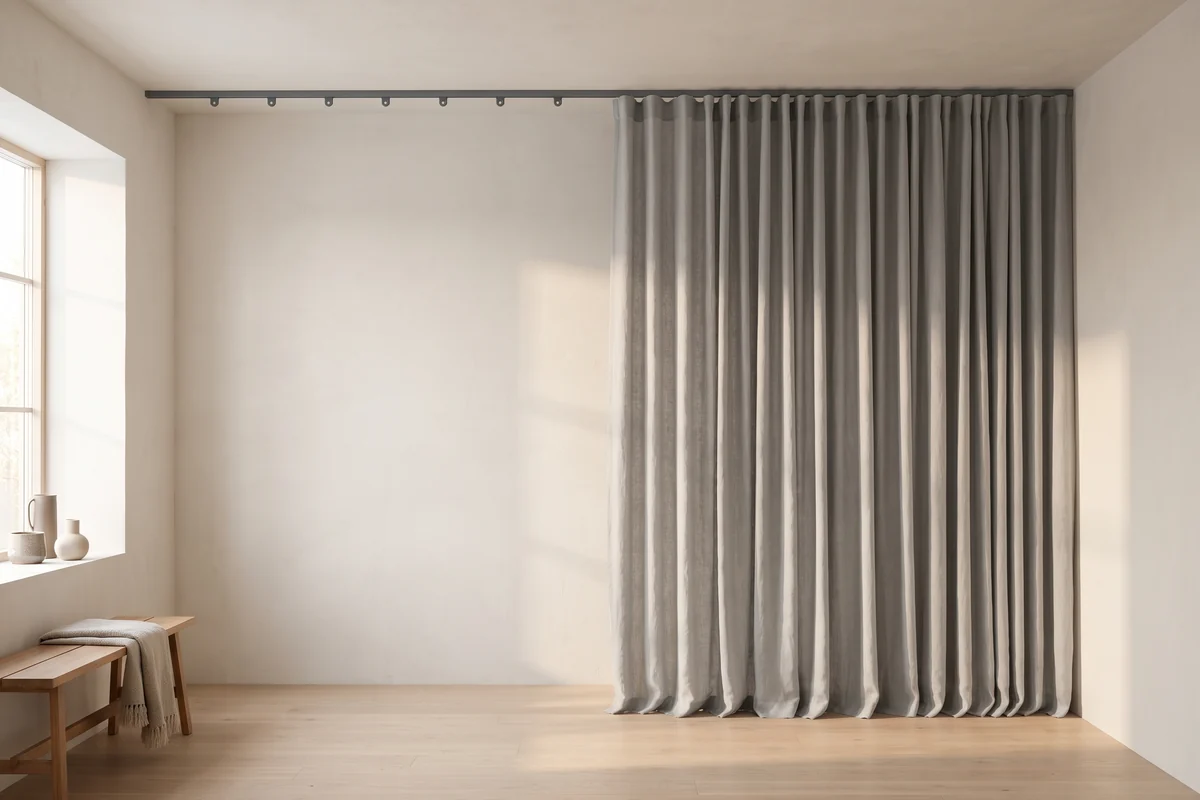
No rods, poles or eyelet curtains. Every track we supply runs on runners, without exception. A runnered track pulls more smoothly under weight, stacks tighter and can be ceiling-fixed so the fabric starts at the ceiling line. If you want the look of a pole, a decorative track gives you exactly that appearance with a runner mechanism underneath — which is the answer we give, rather than fitting a rod. The full comparison is in rods versus tracks.
No plantation or timber shutters. These carry more search volume than anything else in the category, and we still do not sell them. Timber moves with humidity, and a Queensland bathroom is about the least forgiving place you could install it. Thermalite polymer does the same job and keeps doing it.
Saying no to both costs us enquiries. It also means everything above is something we will still stand behind in year seven, which is the trade we would rather make.
How the choice actually gets made
Not by browsing a list. In practice four things decide it, roughly in this order.
- The opening. A three-metre slider rules out a single roller and points at vertical, panel glide or curtains. A small high window rules out most curtains. This is the constraint that removes the most options fastest.
- The aspect. Which way the glass faces changes the fabric more than the product. West-facing is a different brief from south-facing, and orientation drives how much sun a window actually takes.
- What happens in the room. Sleeping, working on a screen, or sitting down once a week. Each one wants a different amount of darkness and a different tolerance for glare.
- Whether children use it. This one can override the other three. Corded blinds are covered by a mandatory Australian standard, and in a child's room we will generally steer to cordless or to curtains.
Nobody needs to know all fifteen product categories an American retailer lists. They need the two that suit their opening, and that is a shorter conversation than the internet suggests.
One last framing that saves people money. Almost nobody needs to choose from this whole list — they need to work out whether the window's problem is light, heat, privacy or looks, because each of those points at a different half of it. Light and privacy are usually a blind question. Heat is usually a glass and shading question that a blind only partly answers. Looks are usually a curtain question. Rooms that feel wrong despite having something at every window are almost always rooms where one of those four was solved twice and another not at all.
Frequently asked questions
What is the difference between a blind and a curtain?
A blind is a single piece of material that moves as one unit within or across the opening — rolled, folded, tilted or stacked. A curtain is loose fabric gathered onto a track, so it stacks sideways and hangs in folds. Blinds give more precise light control; curtains give softness, insulation and the impression of a taller window.
What is the difference between a blind and a shade?
In Australia, almost nothing. Americans call fabric units shades and slatted units blinds; here we call all of them blinds. If you are reading a US guide, their roller shade is our roller blind and their solar shade is our sunscreen blind.
Which type of blind is best for a bedroom?
A blockout roller in the reveal is the most reliable, because it seals against the recess and stops light better than fabric that hangs. Honeycomb is the alternative if the room is also thermally uncomfortable. Add a sheer curtain in front if you want the room to look finished during the day.
What are the most popular types of curtains in Australia?
S-fold, also called wave fold, is the one most people ask for now — a continuous wave with no stitched pleats. Pinch pleat and reverse pleat are the traditional alternatives and still suit a formal room. All three run on a track here, not a pole.
Do you make plantation shutters?
No. We make Thermalite polymer shutters — hinged, sliding or fixed — and we do not sell plantation or timber shutters at all. It is a deliberate decision rather than a gap, and polymer holds up better than timber in a Queensland bathroom or anywhere near salt air.
What is the cheapest type of blind?
A basic roller is usually the least expensive per window, which is why it is the default in rentals and new builds. Cheapest per window and best value are not the same question though — the fabric, the tube diameter and the fixing decide whether it is still working in five years.
Sources Australian Government Your Home — Glazing · ACCC blinds and window fittings mandatory standard · Sleep Health Foundation
Back to the journalKeep reading
Related from the journal
 Guides
Blinds vs Curtains
Two products, one opening — and the honest answer is usually both. Here is how the choice actually gets made, window by window.
Read more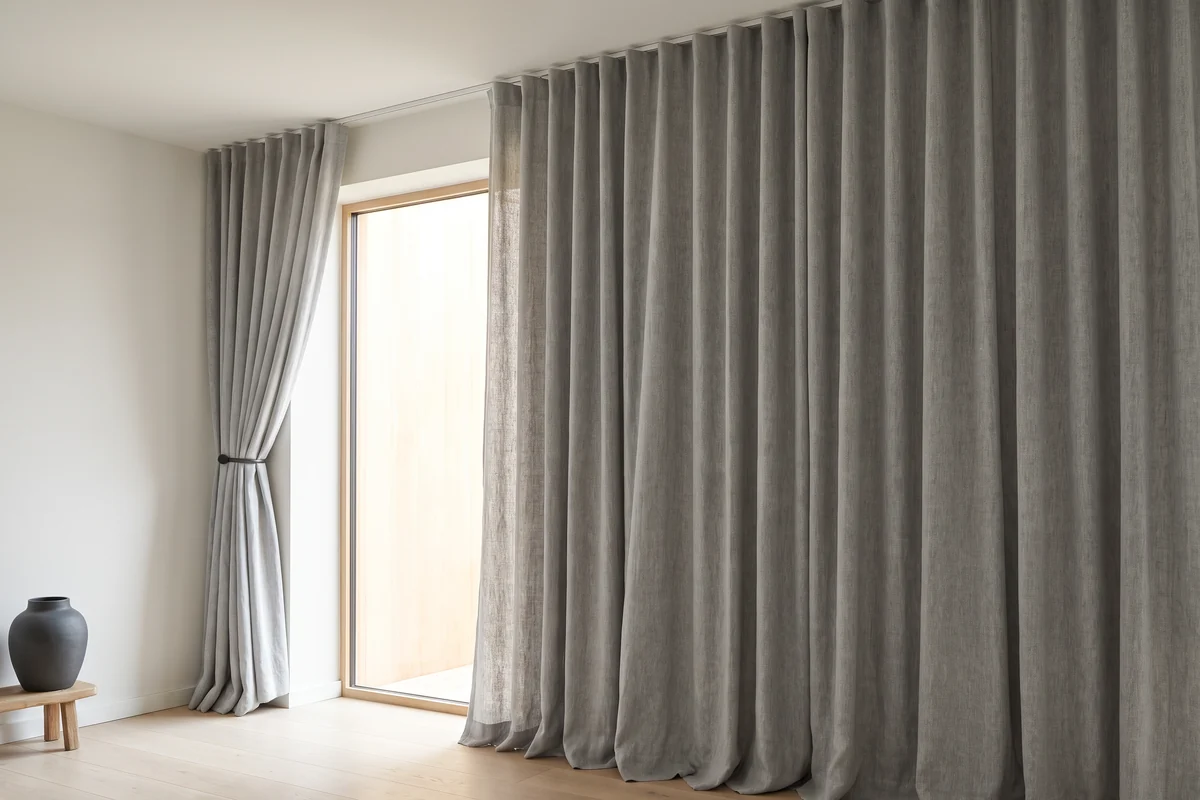 Guides
What is a window treatment?
It’s the American word for window furnishings — and the difference matters more than the spelling.
Read more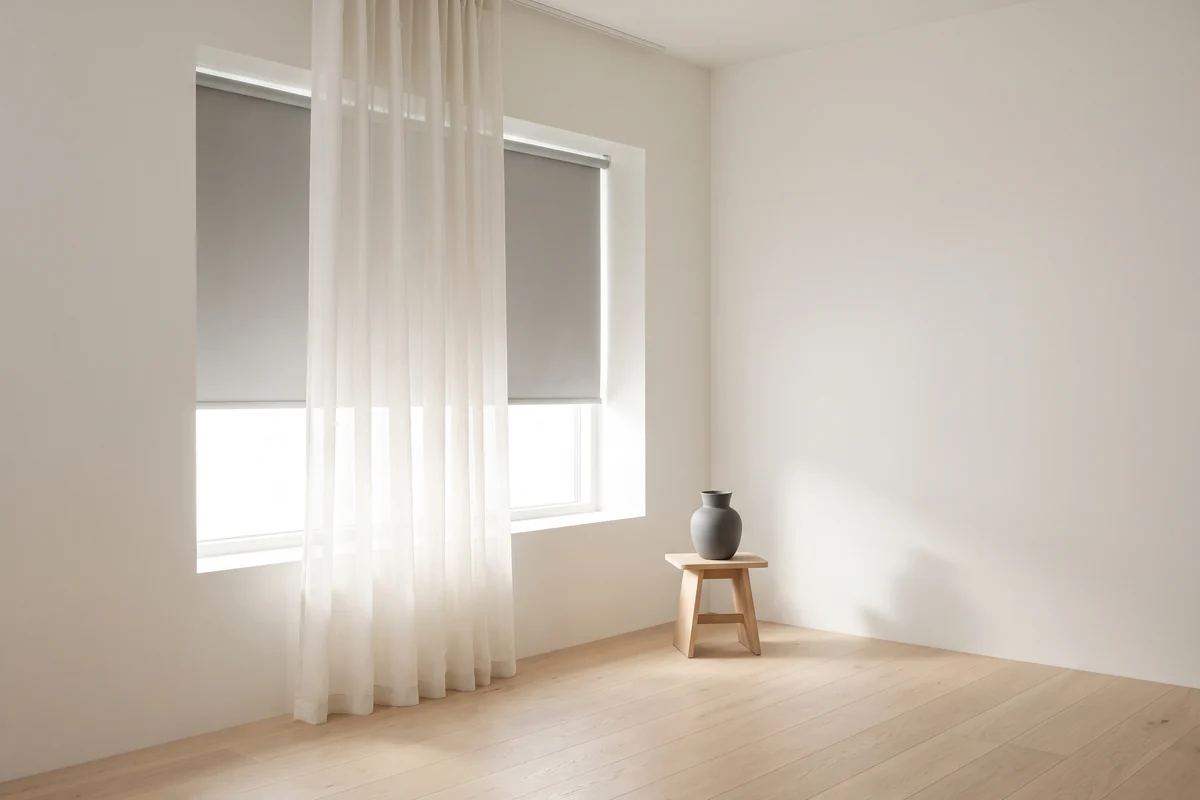 Guides
Blinds with sheer curtains
Layering a sheer over a blind is the most useful thing you can do to a window. Here is what actually goes where, and why the rod advice everywhere else does not apply.
Read more