

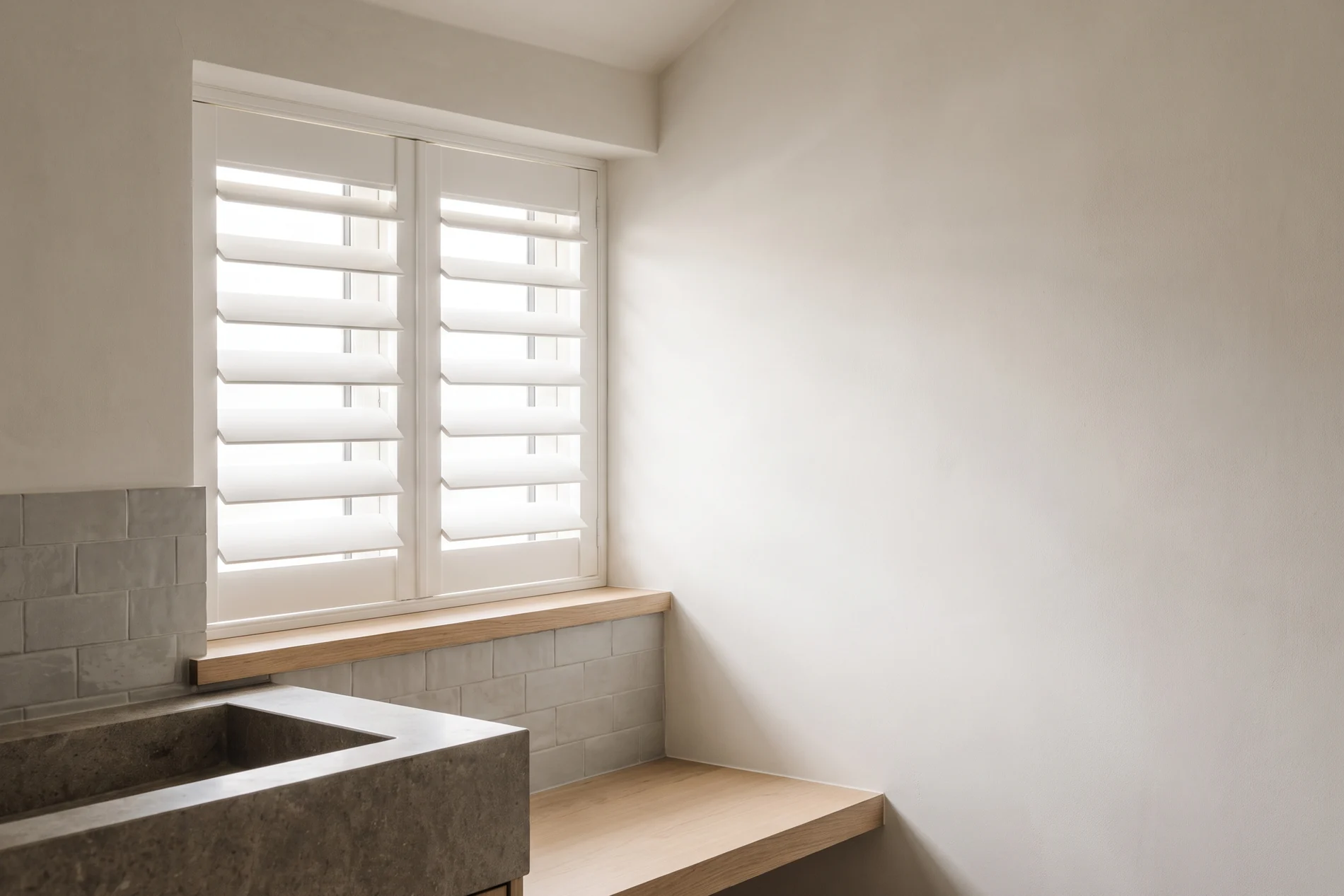
Bathroom window coverings
A Queensland bathroom is not a wet room for twenty minutes a day; it is humid for months. That changes which materials last, and rules out two that everyone recommends.
The best window treatments for a bathroom are non-absorbent and wipeable: a polymer shutter or a wipe-clean roller blind. Avoid timber, avoid fabric that hangs near a shower, and avoid anything with a sealed cavity you cannot dry out.
Forced to pick one: Thermalite polymer shutters. They handle the moisture and they let you open the window, which is what actually keeps the room dry.
Most advice on this is written for a bathroom that is wet for twenty minutes a day and dry the rest of the time. A Queensland bathroom is not that. From about November the room does not fully dry between showers, and the material choice that survives a Melbourne ensuite is not automatically the one that survives here.
The problem is not steam
Steam is the visible part and the smallest part. What actually degrades a window furnishing in a bathroom is sustained ambient humidity — air that stays damp for weeks — combined with a cold surface for it to condense on.
That distinction matters because it changes what fails. Twenty minutes of steam damages very little. Four months of damp air gets into anything absorbent, anything with a seam, and anything with a cavity. Timber swells and then does not go back. Fabric holds moisture at the hem where the air moves least. A sealed cell holds it indefinitely.
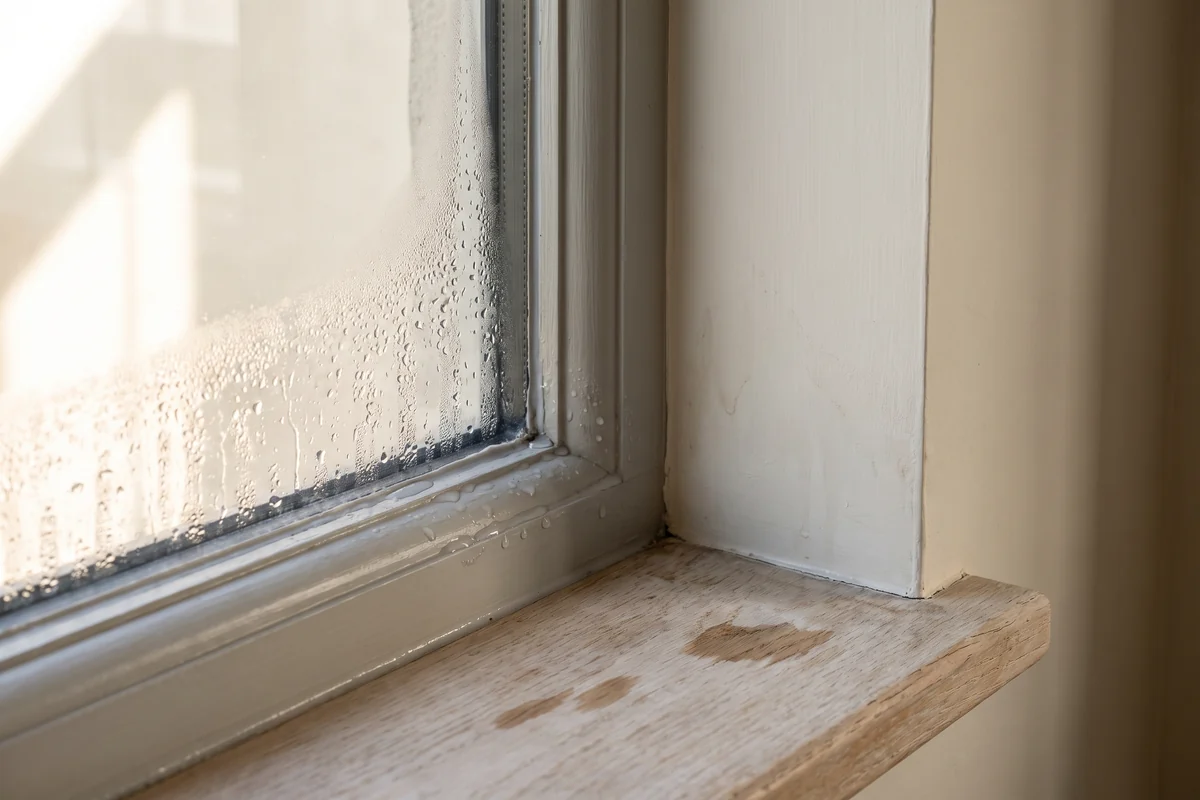
It also tells you where mould appears first, and it is almost never the blind. It is the reveal, the sill, the frame and the silicone — cold, still, and slow to dry. Condensation forms where warm moist air meets a cool surface, and a window is the coolest surface in the room. The blind gets blamed for a problem happening on the glass behind it.
What actually lasts
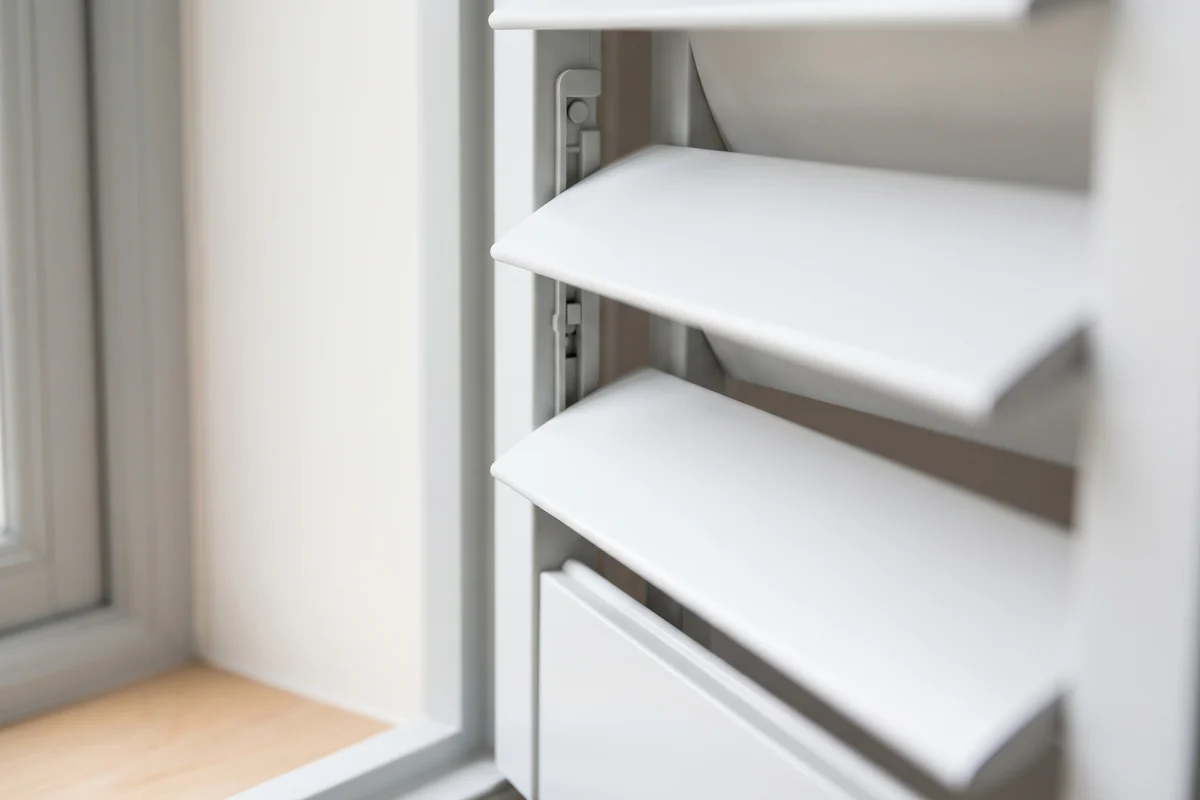
- Polymer shutters. Our answer for a wet room, and the reason we make Thermalite rather than timber. Advanced polymer does not swell, split, warp or need refinishing, and the louvres wipe with a damp cloth. They also tilt, so you get light without giving up privacy — which is the actual bathroom problem.
- Roller blinds in a wipeable fabric. One flat surface, nothing to trap air, nothing to catch water. The cheapest thing that genuinely works, and easy to replace in eight years if it has had a hard life.
- PVC or aluminium venetians. Non-absorbent and adjustable. More surfaces to wipe than a roller, but they handle a wet room and give directional light.
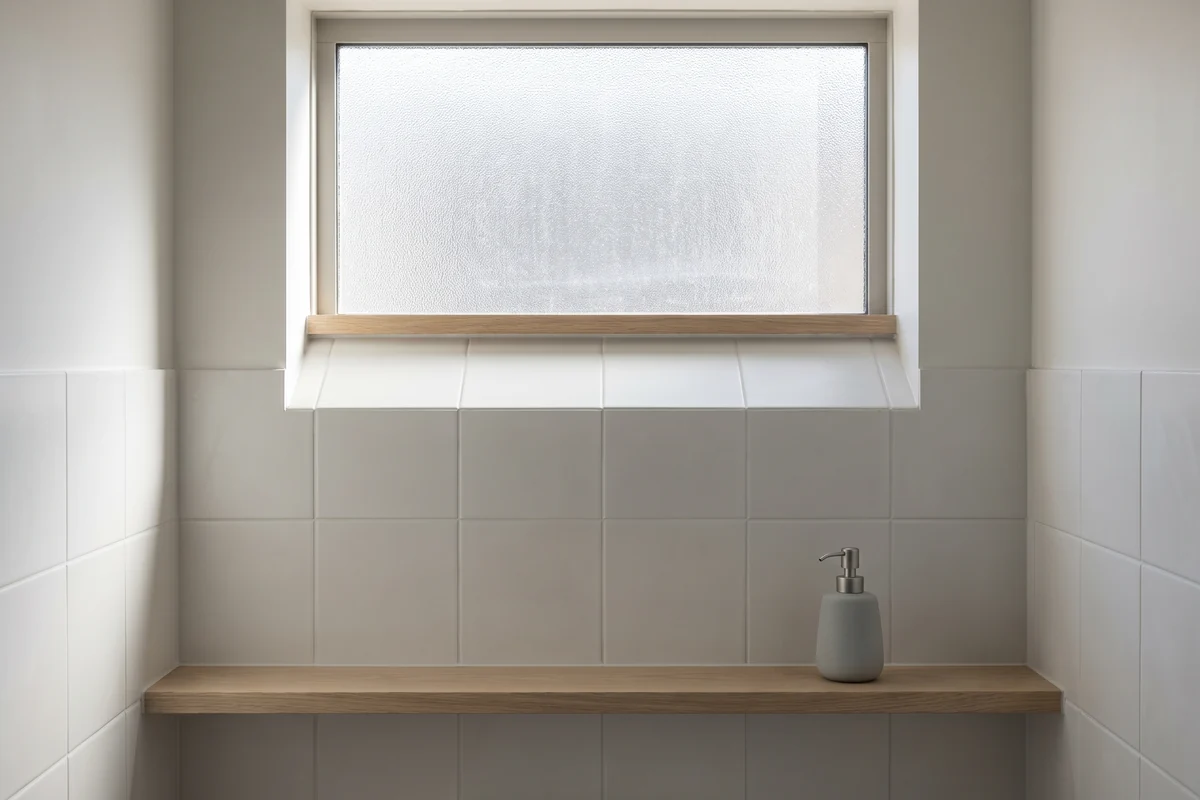
- Obscure or frosted glazing, with nothing over it. Worth saying out loud: sometimes the right window furnishing for a bathroom is none. If the glass is already obscured and the window is high, you may be solving a problem you do not have.
| Handles humidity | Wipes clean | Privacy with light | |
|---|---|---|---|
| Polymer shutters | Best | Yes | Best — tilting louvres |
| Roller blind | Good | Yes | All or nothing |
| PVC / aluminium venetian | Good | Yes, slat by slat | Good |
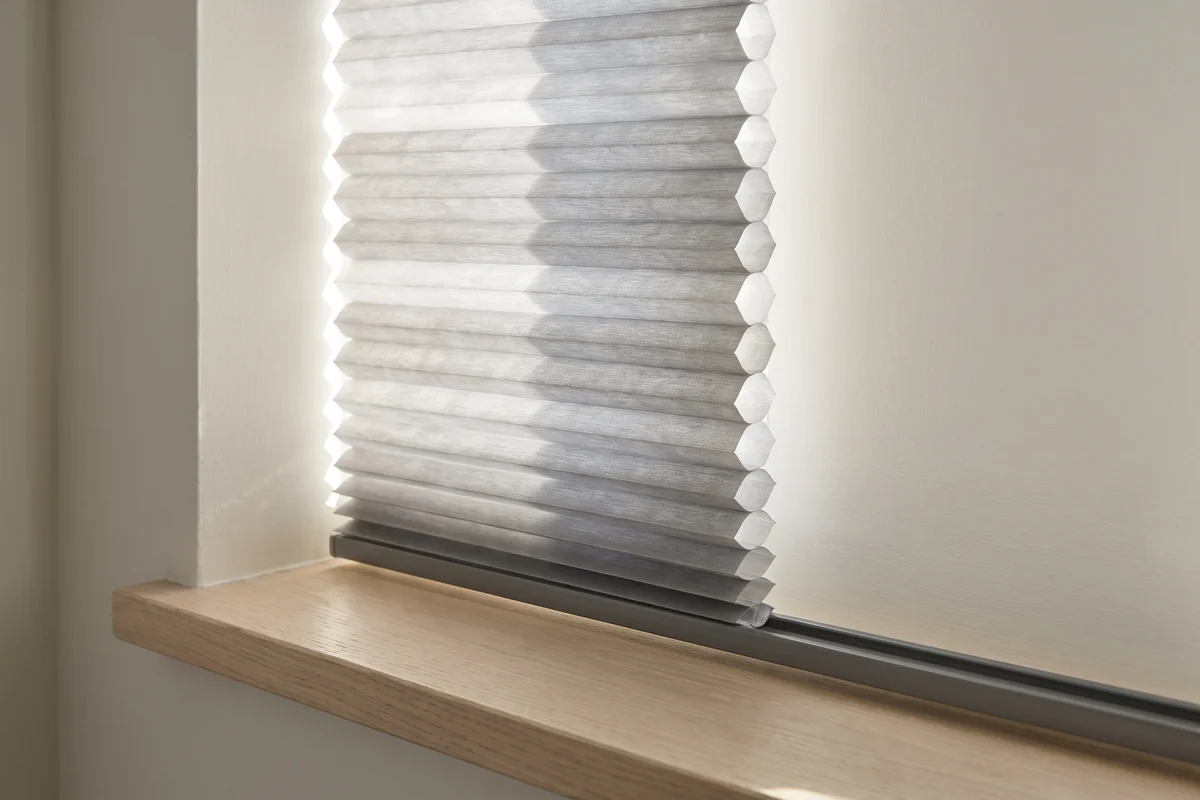
| Honeycomb / cellular | Poor in a wet room | Not inside the cells | Good |
| Timber shutters or blinds | Poor | Yes | Good |
| Curtains | Poor near a shower | No — washing only | Good |
Two things everyone recommends that we would not
Honeycomb blinds. Look up bathroom window coverings and you will find cellular shades recommended for condensation control. The cells are sealed pockets of still air — that is exactly what makes them insulate, and exactly what makes them the wrong thing in a humid room. You cannot wipe inside a cell, you cannot dry one out, and you cannot see what is happening in there until you can. Honeycombs are excellent in a bedroom that runs cold. In a wet room we would specify something else and say why.
Timber, in any form. Real timber blinds and timber shutters both swell with moisture and then do not return to shape, and the finish goes long before the substrate does. Overseas guides get around this with "faux wood", which is the right instinct. We take it further — we do not sell timber or plantation shutters at all, and the polymer we do sell was chosen for rooms like this one.
Neither of those is a criticism of the products in general. It is a criticism of putting them in a bathroom in a subtropical climate, which is a narrower and more defensible claim.
Bathroom window you are not sure about?
Send us the aspect and how close the window is to the shower. Half the time the answer is a shutter; sometimes it is nothing at all.
Privacy without turning the room into a cave
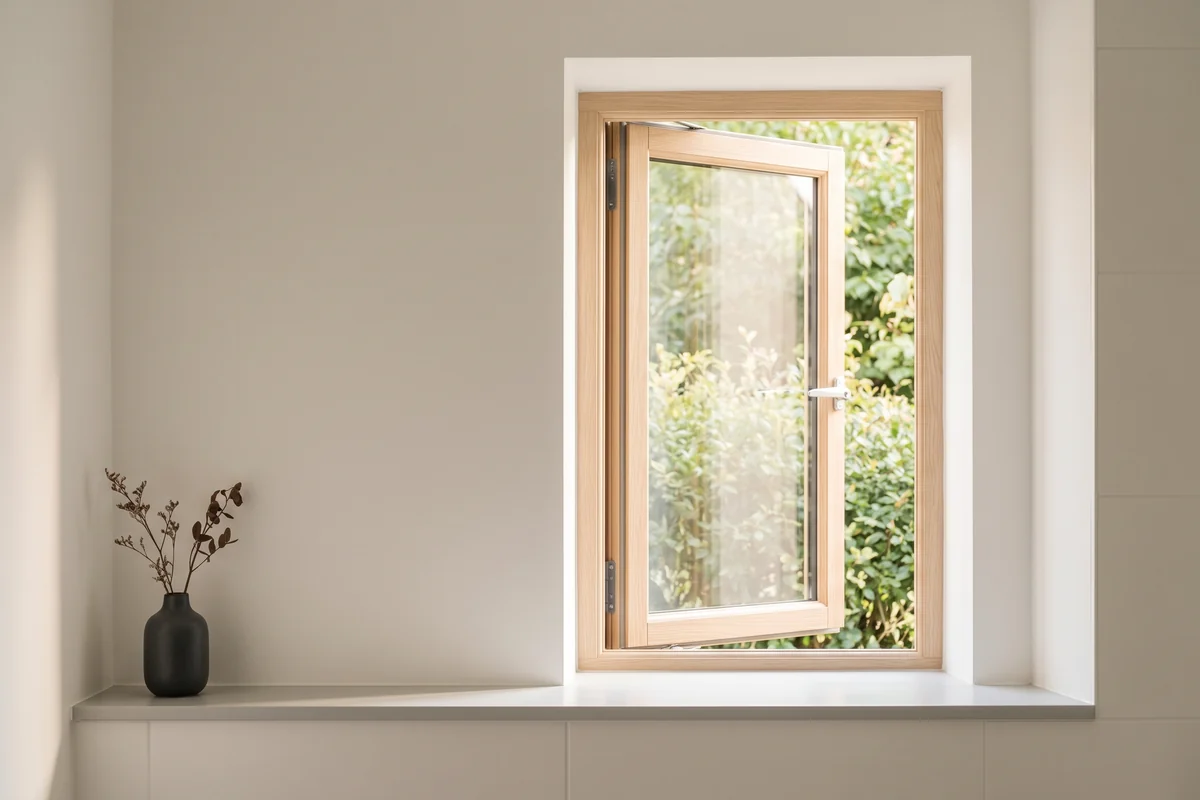
Bathroom windows are usually small, usually high, and usually facing a fence two metres away. The privacy need is real but it is almost always confined to the lower half of the glass, which means covering the whole window is over-solving it.
- Tilting louvres. A shutter angled upward throws light at the ceiling while blocking any sightline from outside. This is the reason shutters suit bathrooms beyond the material argument.
- Top-down operation. A blind that lowers from the head leaves the upper glass clear for daylight while the lower half stays covered. Ideal where the window is broad and the neighbour is close.
- Obscure glazing plus something simple. If the glass is already frosted, all you need is a roller for night privacy, or nothing at all.
What we would avoid is a blockout roller pulled fully down and left there, which is what happens in most bathrooms with a plain blind. The room becomes one you switch a light on to use at two in the afternoon, and a dark bathroom that never gets sun is a mouldier bathroom than a bright one.
One more decision worth getting right, because it is the one people change their mind about later: how far down the window the covering needs to reach. A shutter can be built as a single full-height panel, or split across the middle with the two halves tilting independently — a café style, where the bottom half stays closed for privacy and the top half opens for light. On a bathroom window that faces a neighbour, the split version is almost always the better answer, and it costs very little more than the plain one.
The same logic applies to a blind. If the window is broad, a blind that only ever covers the lower two-thirds does the privacy job without turning the room dark, and it leaves the top of the glass free to bring light deep into a room that usually has only one window. Bathrooms are the room where people most often over-cover the glass, then spend eight years switching a light on at midday.
The part that matters more than the blind
Whatever you fit, the thing that keeps a bathroom dry is moving air. A window that opens, a fan that vents outside rather than into the roof space, and the habit of leaving the door open afterwards will do more for the room than any material choice on this page.
Which is worth remembering when you specify. A furnishing that makes the window awkward to open — a fixed panel, a blind that fouls the sash, a curtain that has to be moved — is quietly working against you. On a bathroom we will ask which way the window opens before we quote, for exactly that reason. A shutter panel hinged the wrong way is a small annoyance in a bedroom and a daily one here.
And when it comes to cleaning: warm water and a soft cloth, on everything. Never a solvent or a household bathroom spray on a fabric blind — the same chemistry that lifts soap scum will strip the coating off a roller fabric, and that is not covered by anything.
Frequently asked questions
What is the best window covering for a bathroom?
A polymer shutter if you want it to last and look considered, or a wipe-clean roller blind if you want the cheapest thing that works. Both are non-absorbent, both wipe down, and neither has anything a humid room can get into. What you are avoiding is timber and anything with a cavity.
Can you put curtains in a bathroom?
You can, and in a powder room with no shower they are fine. In a bathroom that is actually showered in, fabric hanging near steam holds moisture, and in a Queensland summer it may never fully dry between uses. That is how a curtain hem goes musty.
Do bathroom blinds go mouldy?
The blind is usually not where it starts. Mould forms where moisture sits on a cold surface that does not dry — the reveal, the sill, the frame and the silicone. A non-absorbent blind that can be wiped is not the problem; a blind that stops the window being opened is closer to it.
Are honeycomb blinds good for bathrooms?
We would not put one in a wet room. The sealed cells are the whole point of the product thermally, and they are also the one part you cannot wipe out or dry properly. Plenty of overseas guides recommend them for bathrooms; we would rather not have to explain a cell full of moist air in year three.
How do I get privacy without losing all the light?
Either a top-down blind that lowers from the head and leaves the upper glass clear, or frosted or obscure glazing with something simple over it. Most bathroom windows are high and small, and privacy is usually only needed across the lower half.
Are plantation shutters good for bathrooms?
Timber ones are not, and we do not sell them. Polymer shutters are, which is why Thermalite is our answer for a wet room — the material does not swell, split or need refinishing, and the louvres wipe with a cloth.
Sources Australian Government Your Home — Glazing · ACCC blinds and window fittings mandatory standard · Sleep Health Foundation
Back to the journalKeep reading
Related from the journal
 Guides
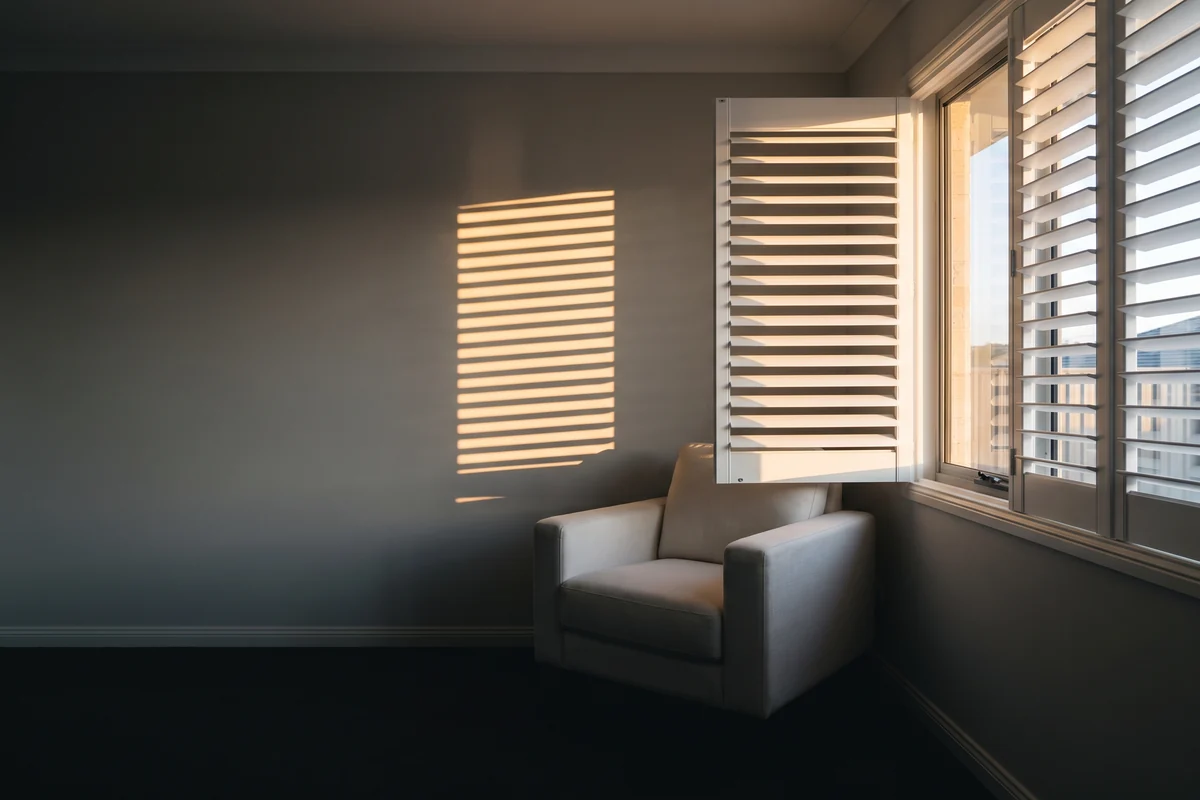
Window shutters Brisbane & Gold Coast
Thermalite is made for the rooms that finish timber off — bathrooms, ensuites, laundries, and anything within a few streets of the water. It is the answer to a humidity problem…
Read more Guides
Types of curtains and blinds
Nine kinds of blind, three curtain headings, two fabric families and one shutter. What each one is genuinely good at, and the two categories we do not sell at all.
Read more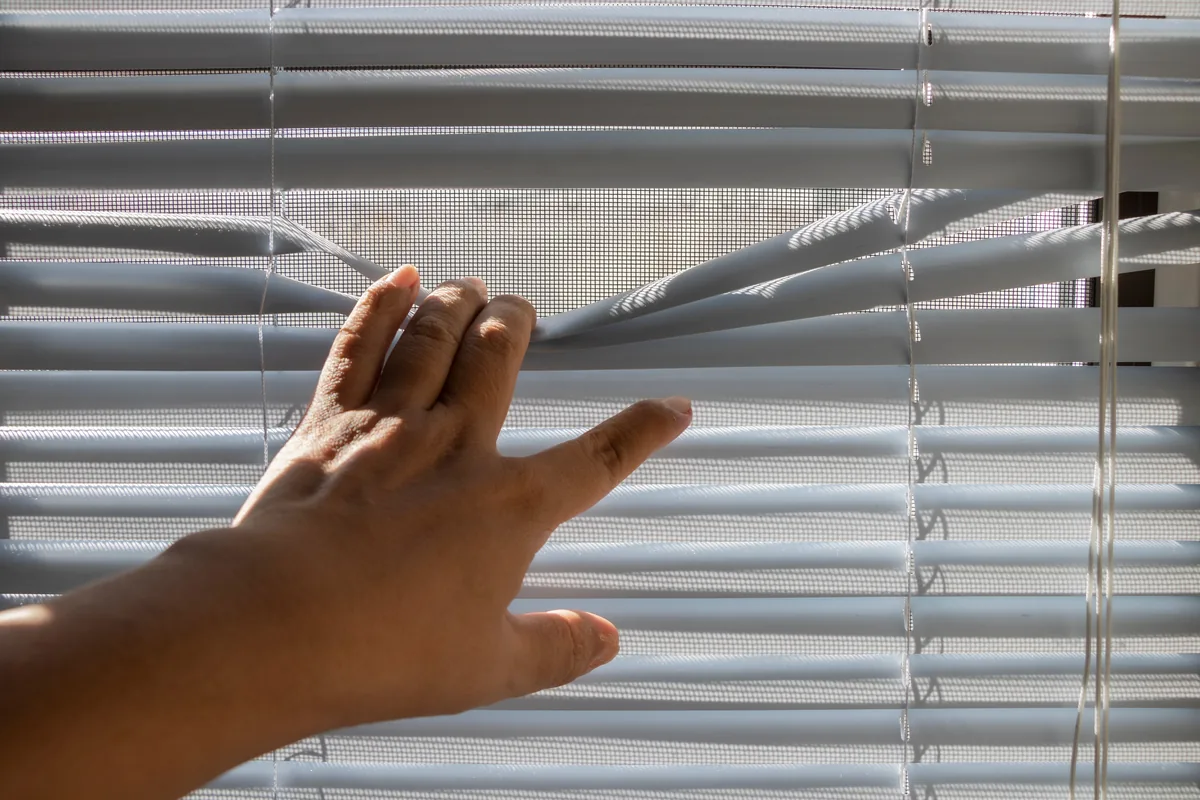 Blinds
How to clean blinds without wrecking them
Dust weekly, wash rarely, and never soak a blockout roller. A type-by-type guide from the Gold Coast.
Read more