Reviews Journal Contact
Free Measure & Quote (07) 5528 4006
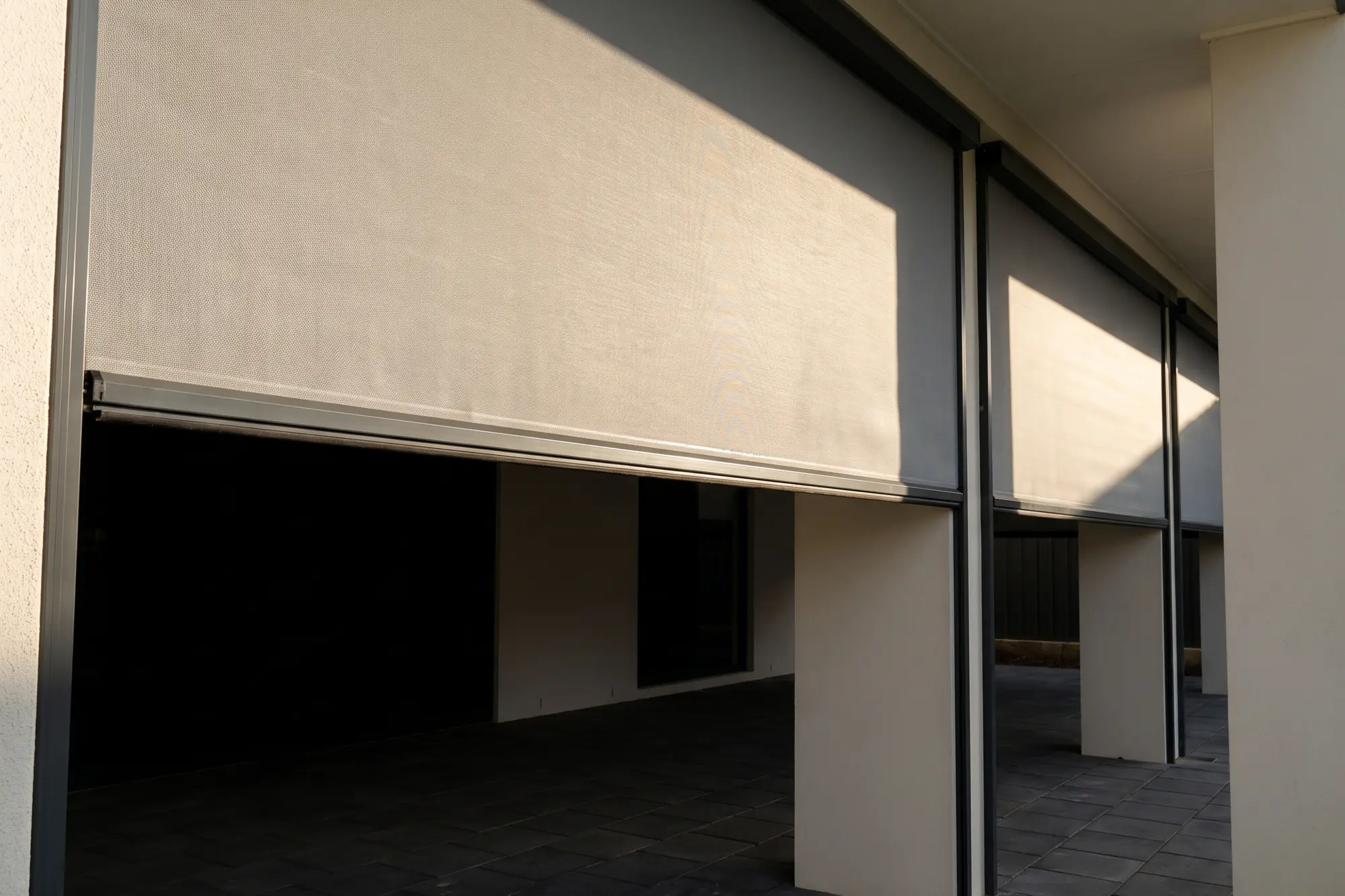
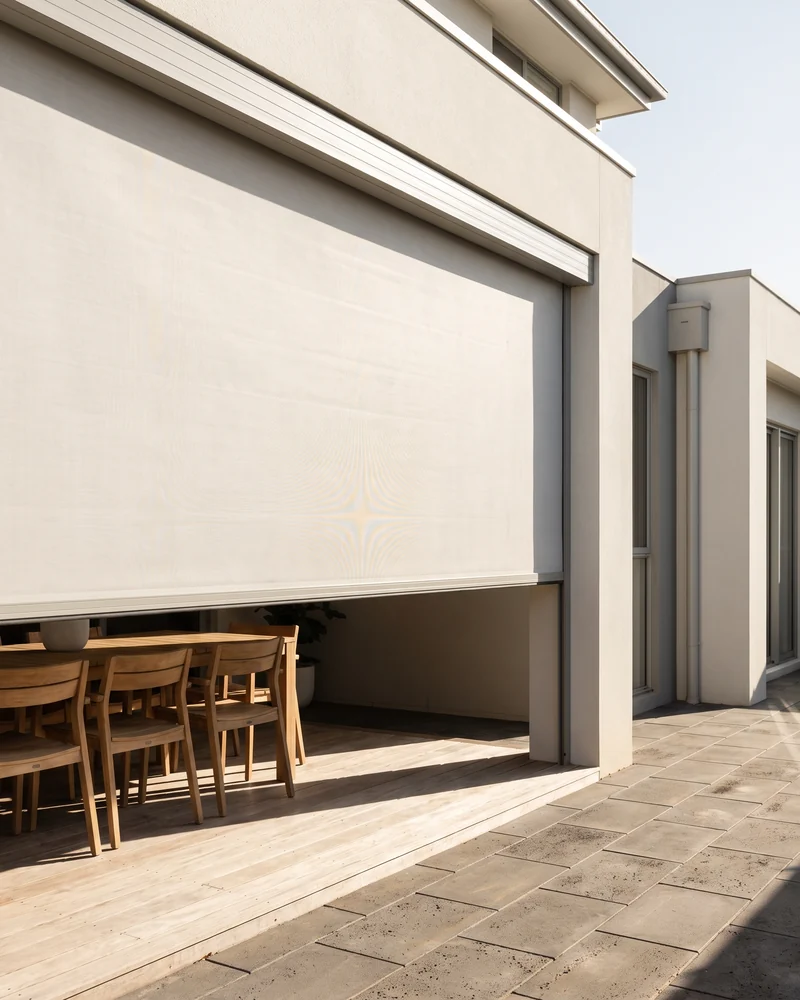
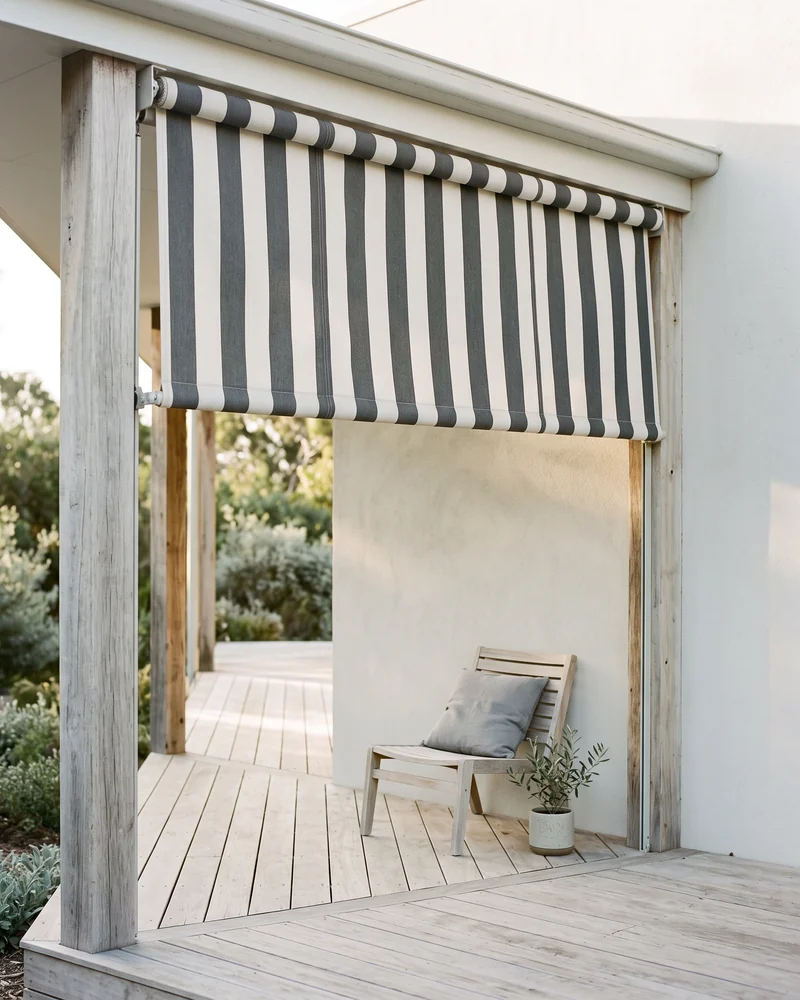
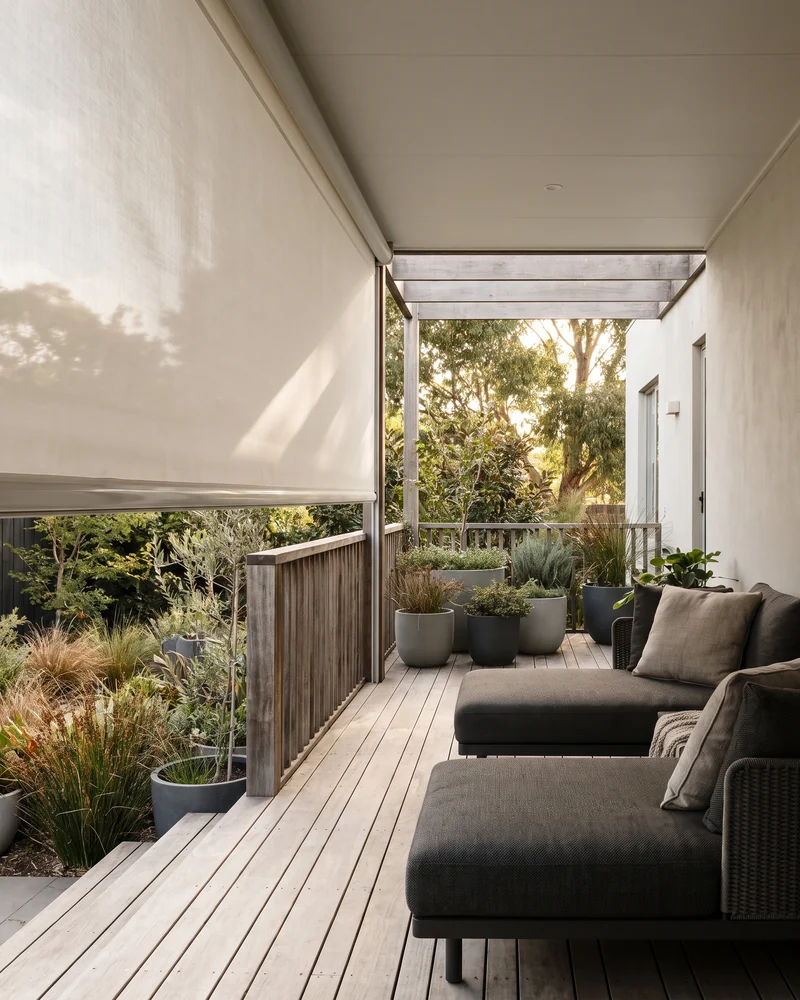
Outdoor blinds shading a covered alfresco patio and outdoor lounge setting

Outdoor blinds Gold Coast

Weather is not a reason to go inside

Custom outdoor blinds and awnings, measured by us and fitted by our regular installers, Byron Bay to Brisbane. Ziptrak track systems, café blinds in clear PVC, sunscreen mesh and motorised screens — Australian made, and specified for a coast that averages 23 km/h at three in the afternoon.

Why Lusso, Gold Coast

A claim worth arguing with

The sun isn't your problem. The wind is.

Every outdoor blind on this coast is sold on shade, and fair enough — shade is why you started looking. But shade is the easy part. Any fabric makes shade. What separates a blind still running in ten years from one you apologise for at Christmas is how it behaves on an ordinary windy afternoon, and on the Gold Coast every afternoon is an ordinary windy afternoon.

  • 01The Bureau of Meteorology records a mean 3pm wind of 23.3 km/h at the Gold Coast Seaway, in every month of the year. We specify to that number, not to a still day in a brochure.
  • 02Track-guided systems hold the fabric in a channel down both edges, at every point of its travel. That is what stops the flap, the drumming and the eventual tear — and it is why we lead with Ziptrak rather than rope and eyelet.
  • 03Australian-made componentry, and corrosion-resistant hardware within a few streets of the surf. Salt finds the cheapest metal on a blind and starts there.
  • 04We measure it, make it, fit it and repair it. Forty-eight years and three generations of the Hopkins family, still answering the same phone number.
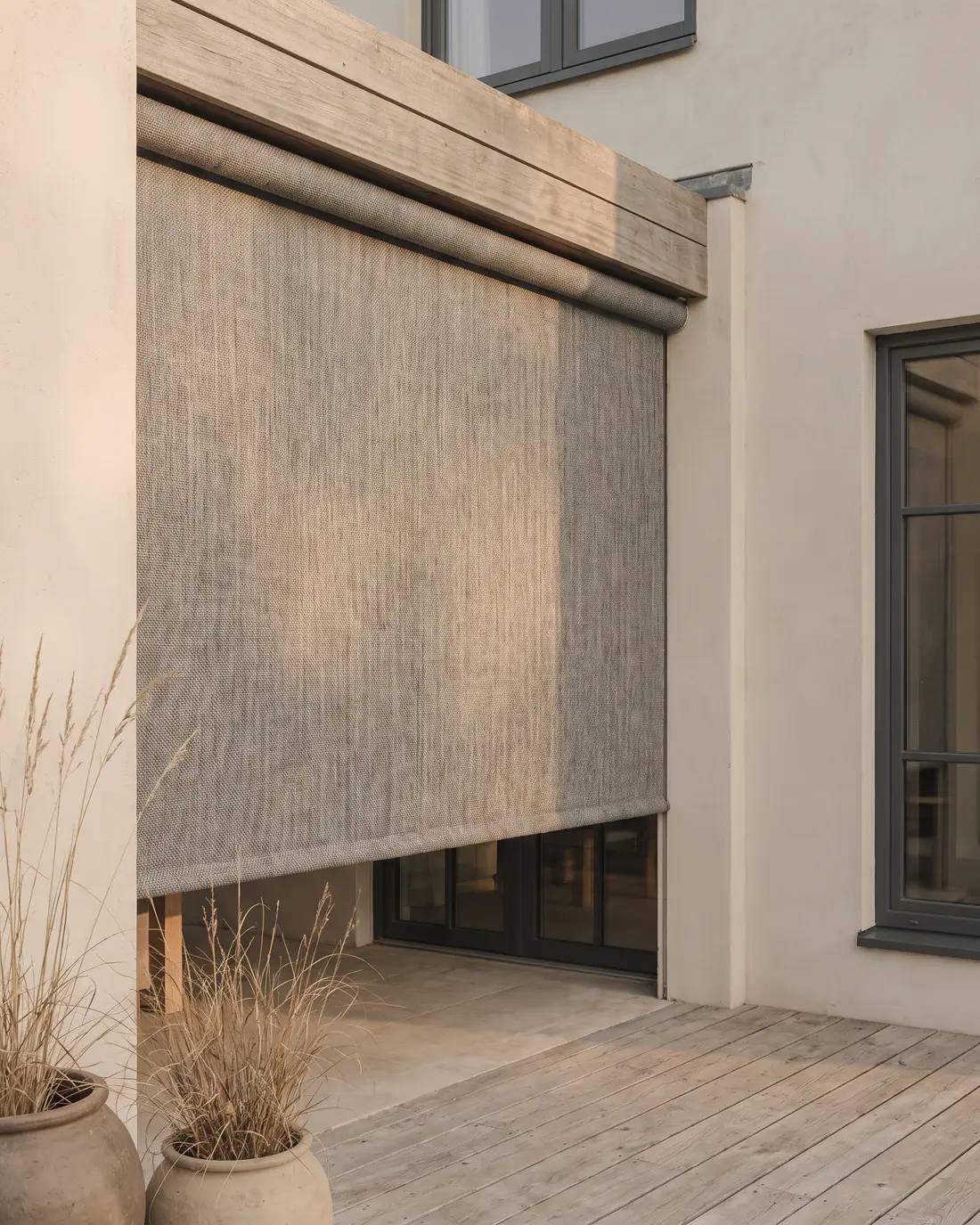
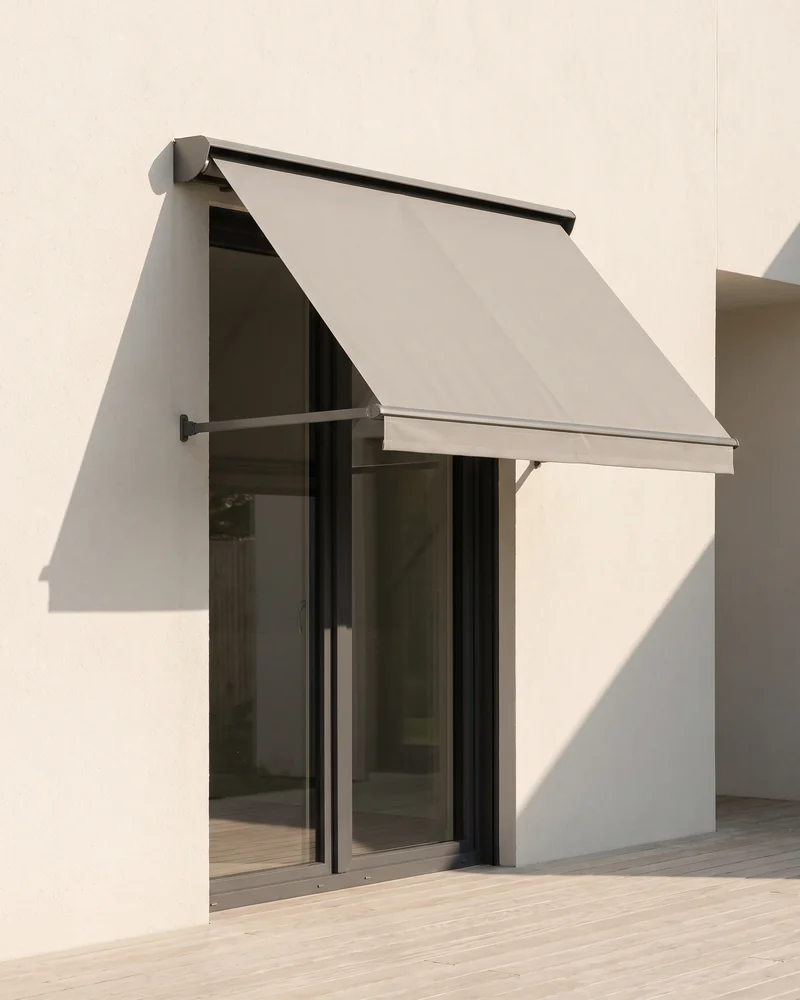
An outdoor blind rolled down over a patio in late afternoon sun
23
km/h mean 3pm wind, Gold Coast Seaway

The range

Every outdoor blind and awning we make

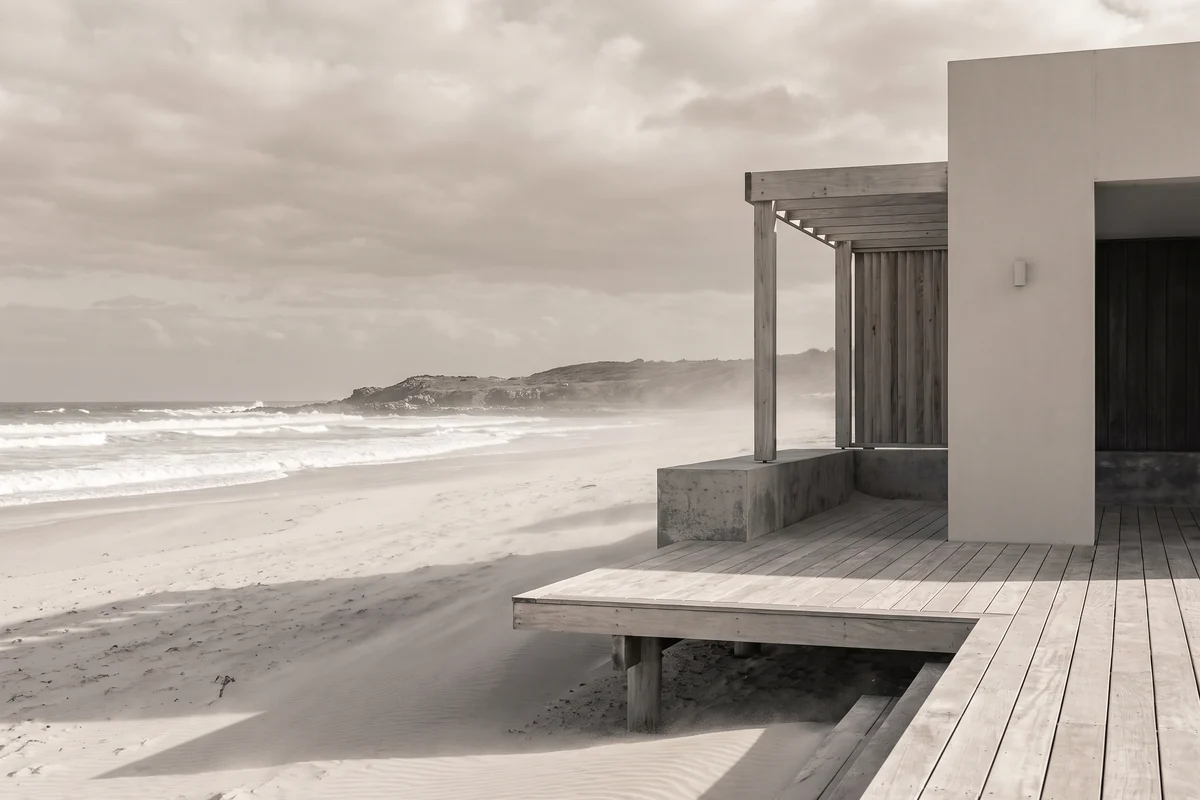
Afternoon wind and surf running along a subtropical shoreline

Local conditions

What this coast does to an outdoor blind

Twenty-three kilometres an hour, every afternoon

The Gold Coast Seaway weather station records a mean 3pm wind speed of 23.3 km/h. Not in a storm — on an average afternoon, in every month of the year, peaking at 25.6 km/h in March and never dropping below 19 even in the middle of winter. That is the number an outdoor blind here has to live with, and it is why rope-and-eyelet café blinds go slack and start drumming inside two summers.

Then there is the water. The same station logs 1,302 mm of rain across 94 days a year, and much of the summer share arrives as a late-afternoon storm out of the west — sideways, not down. A blind that stops vertical rain does nothing about that. You need the fabric sealed along its edges and a bottom rail heavy enough to stay where you left it. Salt does the quiet work in between, pitting brackets, chains and fasteners on any blind specified for Toowoomba rather than the Broadwater.

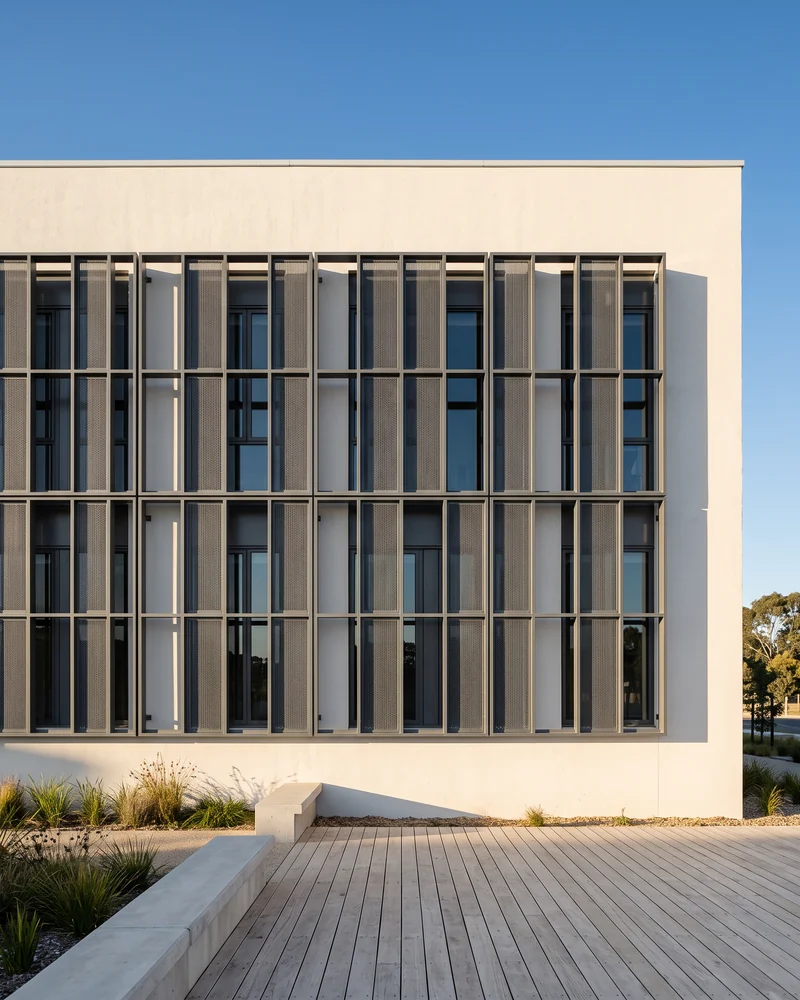
The heat is the part people underrate. Stopping the sun outside the glass beats stopping it inside, because the radiation never reaches the window in the first place — the Australian Government's Your Home design guide is blunt about the difference. An external screen on a west wall will do more for a hot living room than anything you hang on the inside of it, including a good block out blind or a well-specified venetian.

None of which shows up in week one. Every outdoor blind looks excellent in week one.

The detail that matters

It is all decided at the edges

Ask three Gold Coast suppliers to quote the same alfresco and you will get three prices for what looks like the same product. The fabric is rarely what separates them. These three things are, and only one of them tends to make it onto a quote.

01 — Guides

Track, wire or rope

A track-guided blind runs in an aluminium channel down both sides with the fabric zipped into it, so the edge is held along its whole travel and the blind stops anywhere you like. Wire guide holds it at two points. Rope and eyelet holds it wherever you last tied it off. On a still day all three look identical. At 25 km/h only one of them is quiet.

02 — Fabric

Openness factor, in numbers

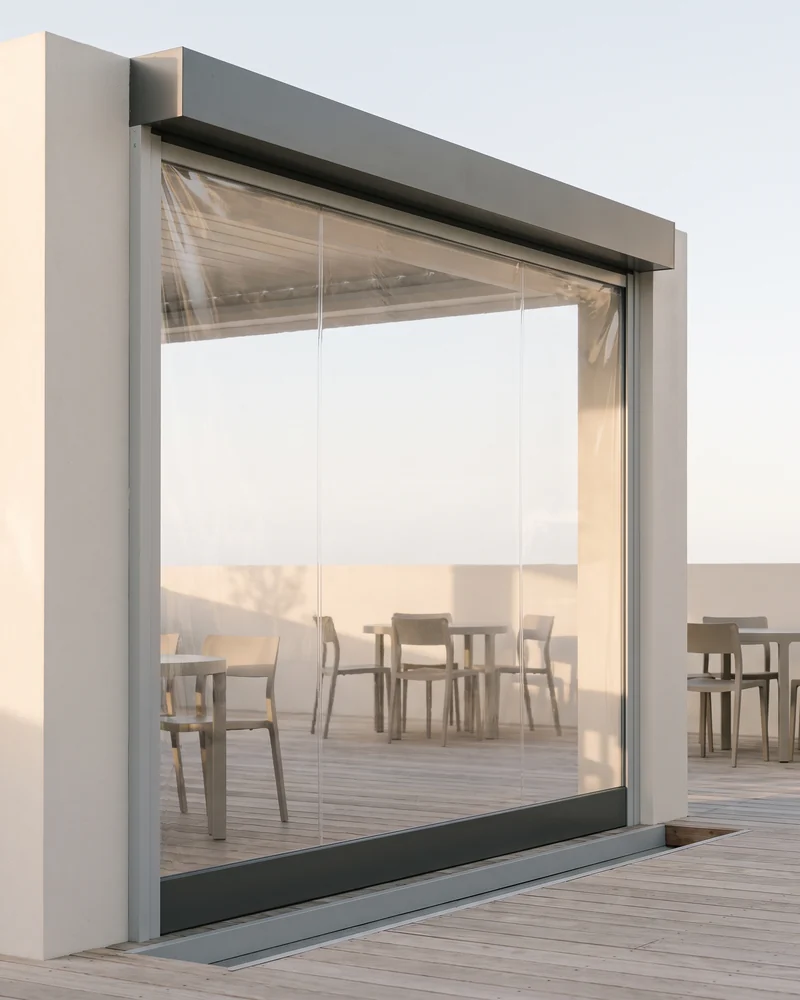
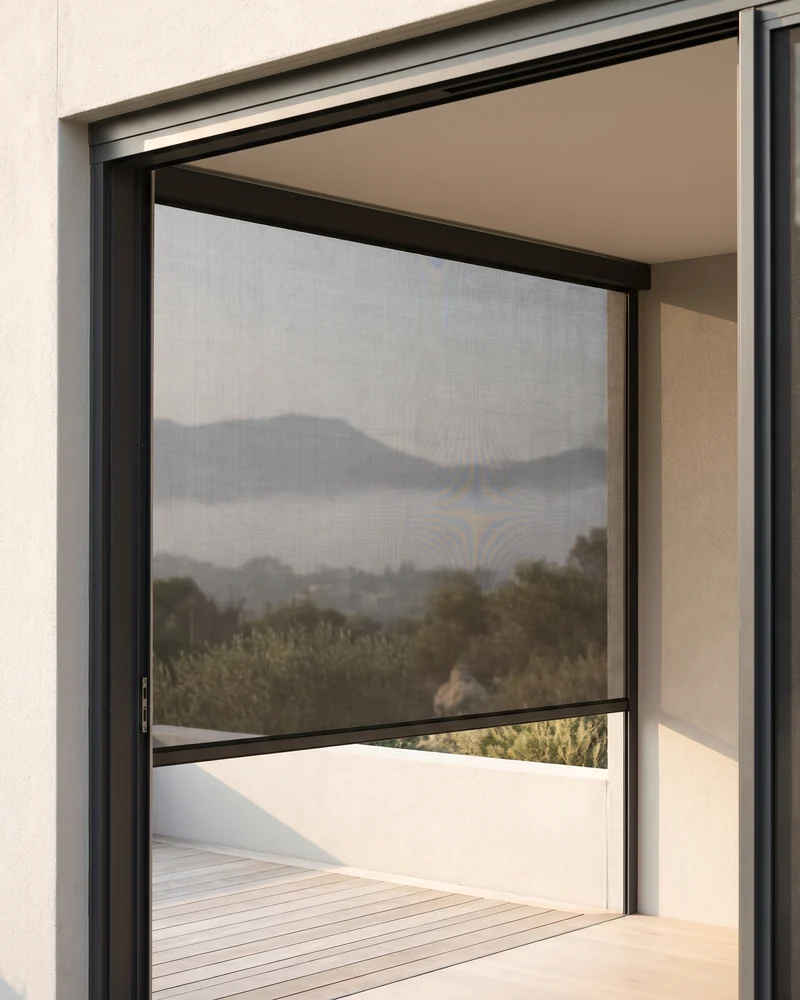
Sunscreen mesh is sold by openness — 3%, 5%, 10% — which is simply how much of the weave is hole. A 10% mesh keeps the view and the breeze and stops noticeably less heat; a 3% mesh cuts glare hard and gives up some of the water view you paid for. Clear PVC keeps the weather out completely and traps the warm air with it. Almost no deck wants the same fabric on all four sides, and a quote that specifies one for the lot was written from the driveway.

03 — Fixings

What the structure has to take

A sealed blind in a squall is a sail, and the load goes into whatever the tracks are screwed to. Timber posts, a fascia, a rendered blockwork column and an aluminium patio beam are four different fixing problems, and only one of them is straightforward. We work out where that load lands before we quote — which occasionally means telling you the span needs a centre post you were not planning on.

Gold Coast clients

Still running, fourteen years on

Anyone can sell you an outdoor blind. Fewer are still trading when it needs a service after a cyclone, or fourteen years of salt air.

Very happy with all my Lusso blinds. We have had them 14 years and not a problem at all. When we recently had to repair our outdoor blind, they were swift and very efficient in fixing and it is working perfectly again. Would highly recommend this company for all your window covering needs.

Leanne

Thank you for your great service and help with my electric blinds, after the cyclone upset the settings.

Alan

We have been very happy that we chose Lusso blinds right through our beachside unit. The quality is excellent and perfect for the climate and the salt air. On the rare occasion that we have needed a repair it has been done…

Anne-Marie

Where they go

Outdoor blinds, space by space

What we'd actually specify

01 Alfresco & patio

Track-guided, with mesh on the view side and clear PVC on the side the weather actually comes from. Most alfrescos want two fabrics and get quoted one.

Quote
02 Balconies & apartments

Motorised, and approved by the body corporate before anything is ordered. The balcony is common property in most Gold Coast schemes, so the colour and the style are usually somebody else's decision, not yours.

Quote
03 Poolside

Mesh, not clear PVC. You want air movement more than you want a seal, and a pool enclosure that traps hot still air is a room nobody sits in.

Quote
04 Cafés & restaurants

Commercial spans and commercial expectations. A blind going up and down twice a day, 360 days a year, needs a mechanism rated for that — not a domestic one being worked harder than it was built for.

Quote
05 West walls & carports

The unglamorous one, and the one that pays for itself. An external screen on west-facing glass does more for a hot house than anything hung inside it, and costs a fraction of the glazing conversation.

Quote

How it works

Three steps, quote in 48 hours

We come to you anywhere on the Gold Coast. Detailed quote within 24 to 48 hours, valid for 30 days — and no deposit to get a price.

1

We measure at your place

We need the span, the drop and which way the weather comes from before we can quote. Outdoor openings are rarely square, and none of this can be done over the phone.

2

A detailed quote in 24–48 hours

Itemised component by component, and valid for 30 days. If motorisation is a third of the price, you will be able to see that it is.

3

Made, fitted and stood behind

Australian made, fitted by the installers we have used for years, and nothing starts until you are comfortable with the selections.

Where we work

Outdoor blinds across

The whole Gold Coast

From Byron Bay to Brisbane, across the whole Gold Coast and inland to the hinterland. If you're anywhere on that stretch we'll come to you, and the measure costs nothing. Our full outdoor blinds and awnings range sits alongside the indoor work.

Before you ask

Outdoor blinds, Gold Coast — FAQs

How much do outdoor blinds cost on the Gold Coast?

No honest supplier gives you a per-blind figure before measuring, because the span is what drives the price and every alfresco is a different shape. Three things move the number: the width of the opening — past about five metres you are into heavier bottom rails and sometimes a centre post — the fabric, where sunscreen mesh is the cheapest and blockout PVC the dearest, and whether it is motorised. A motor and its wiring is usually the largest single line on the quote. We itemise component by component so you can see which of the three you are paying for, and take one out if you would rather not.

Are outdoor blinds waterproof?

Mesh is not, and nobody should tell you otherwise. Sunscreen mesh has an open weave by design — that is what lets the air through — so driving rain goes straight through it too. Clear PVC and blockout PVC are waterproof, and in a track system with a sealed bottom rail they will keep an alfresco dry through most of what a Gold Coast summer sends sideways. If keeping the rain out is the brief, say so at the measure. It changes the fabric, not the frame.

Ziptrak or café blinds — which is better?

They solve different problems. Ziptrak and the other track-guided systems hold the fabric in an aluminium channel down both edges, so the blind stays flat, seals at the sides and can be stopped at any height. Café blinds — clear PVC on ropes and eyelets — cost less and suit a sheltered courtyard where the blind lives up for nine months of the year. On an exposed deck the rope loosens, the panel drums in the afternoon breeze and the eyelets eventually win the argument with the fabric.

Will outdoor blinds handle the wind here?

Track-guided ones will, within reason. The Bureau of Meteorology records a mean 3pm wind speed of 23.3 km/h at the Gold Coast Seaway, and that figure barely moves across the year — this is an average afternoon, not a storm. A track system holds the fabric along its whole edge, which is what keeps it quiet at that speed. No outdoor blind is a storm shutter, though. Leave one down in a genuine blow and you have hung a sail off your patio, and the load goes into the structure, not the fabric.

Do I need body corporate approval for balcony blinds?

On this coastline, usually yes. The balcony is common property in most schemes and an outdoor blind changes the external appearance of the building, so it is a decision the body corporate makes rather than you. Many Gold Coast buildings already have an approved colour and style on file. Get the approval in writing before you order — a custom blind made to your opening is not returnable. We will give you the specification and a drawing to submit with the application.

How long from quote to installation?

Two to three weeks from check-measure to installation for most track-guided and straight-drop blinds, and three to four for larger commercial spans. Motorised blinds usually add a week, depending on the motor and whether power needs to be run to the opening. We tell you the lead time on the quote, not after the deposit.

How do I look after outdoor blinds near the beach?

Fresh water and a soft brush, twice a year, and more often if you are within a few streets of the surf. The point is not the fabric — it is the tracks and the fasteners, where salt collects and starts pitting anything not specified for it. Never put solvent or a household spray on clear PVC; it hazes the vinyl permanently and there is no undoing it. Warm water and a soft cloth is the whole method.

Get in touch

Free measure & quote, Gold Coast wide

Tell us what you're covering and which way the weather comes from. We'll bring the fabric range out to you, measure the opening properly, and say honestly where a mesh will do and where you genuinely need clear PVC.

Area Byron Bay to Brisbane, via the Gold Coast
We come to you; no showroom visit needed
Hours Mon – Fri, 8:30am – 4pm