Local conditions
The breeze, the glass and the air
Stack It Clear Of The Door
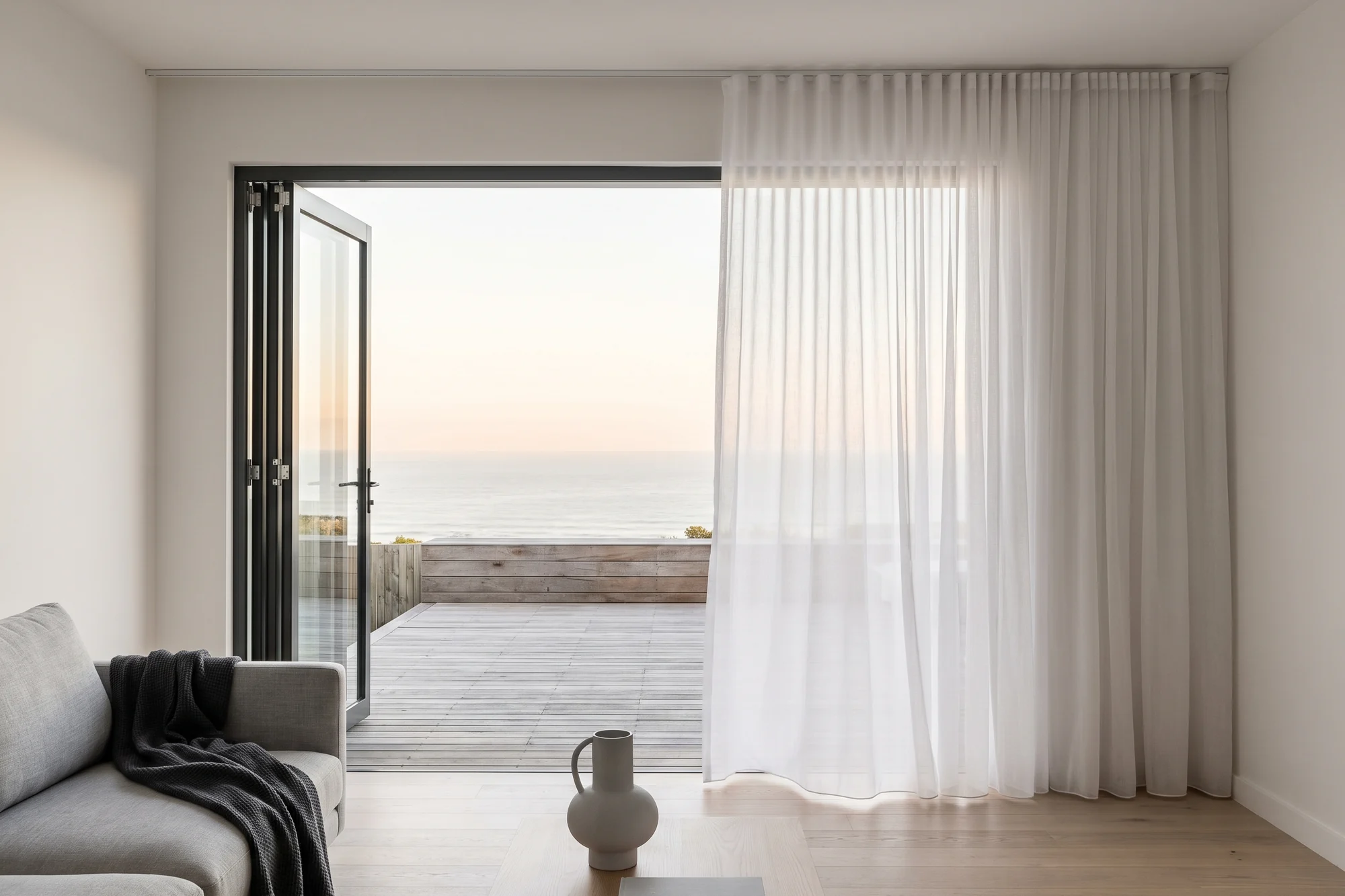
The Bureau of Meteorology’s Gold Coast Seaway station records a mean 3pm wind speed of 23.3 km/h, and it barely drops off in winter — June, the calmest month, still averages 19.1. That is an ordinary afternoon here, and it comes through an open stacking door and straight into whatever is hanging beside it. A sheer left halfway across that doorway becomes a sail. It wraps the frame, drags on its carriers and wears along the leading edge long before the rest of the fabric shows its age.
So the track runs well past the opening, far enough that the whole curtain stacks against wall rather than across glass, and in a room that lives with the doors open a tieback earns its place. The curtain does its work in the evening, once the doors are shut, and stays out of the way all day.
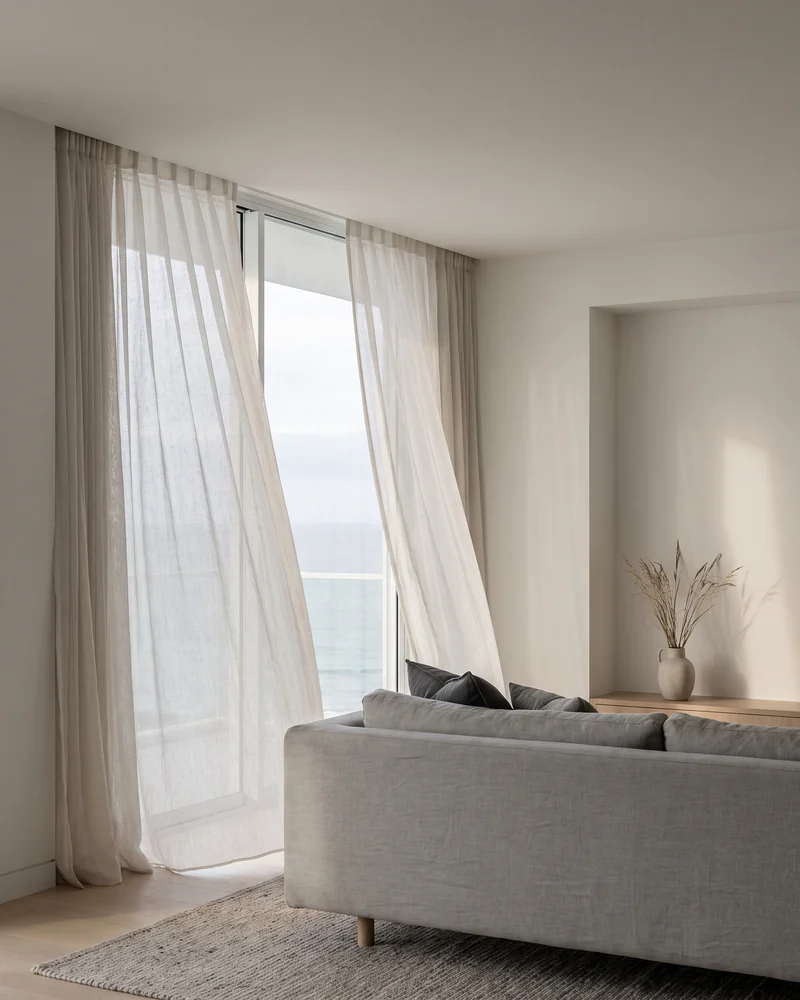
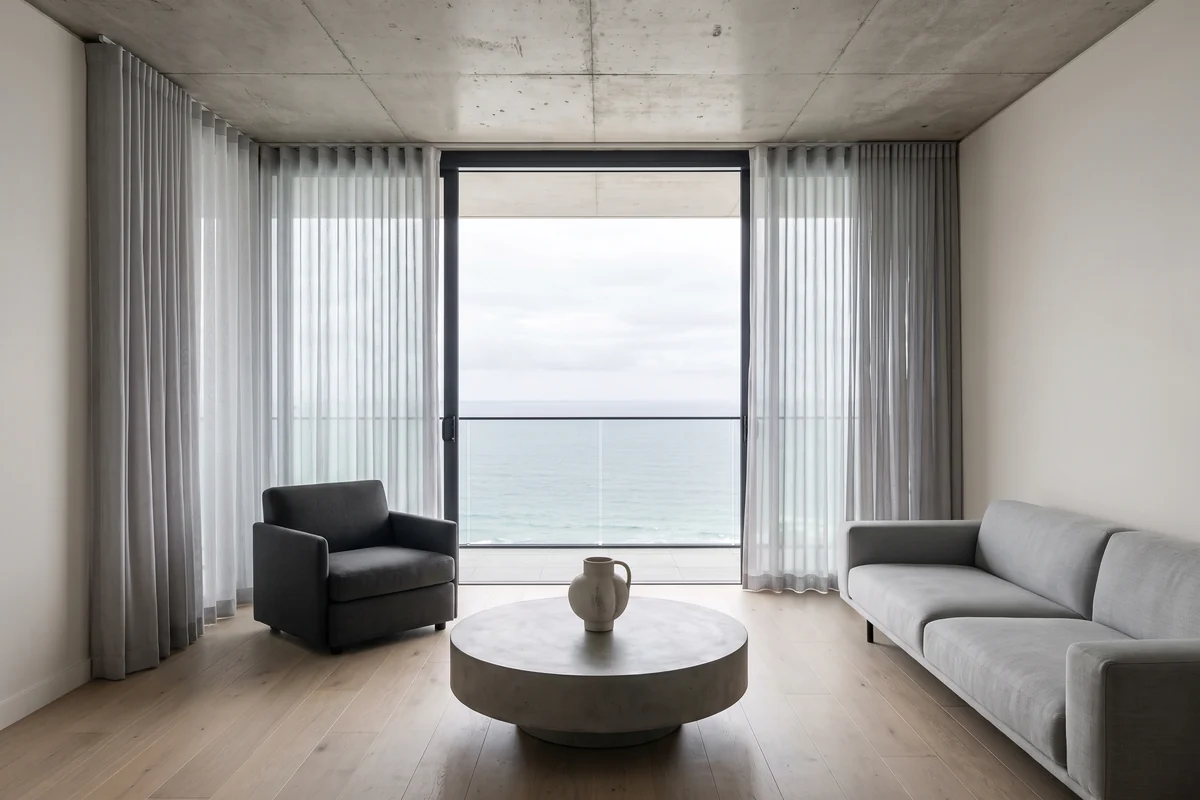
The towers in Surfers Paradise, Broadbeach and Main Beach bring the opposite problem: the glass often runs from one side wall to the other, so there is no wall to stack onto. The usual answer is a split draw, with the curtain opening to both ends so neither stack sits in the middle of the view. If your building has a by-law about how windows look from outside, it will be in the scheme’s registered by-laws, and the Queensland Government explains how to find them. Read them before you fall for a colour.
Then there is the air. Mean 9am humidity at the Seaway sits at 65% or higher in nine months of the year. Fabric copes with that as long as air keeps moving past it, which is the case for leaving a window cracked rather than locking a holiday unit up for six weeks and coming back to find out what grows on a blockout curtain in the dark.