

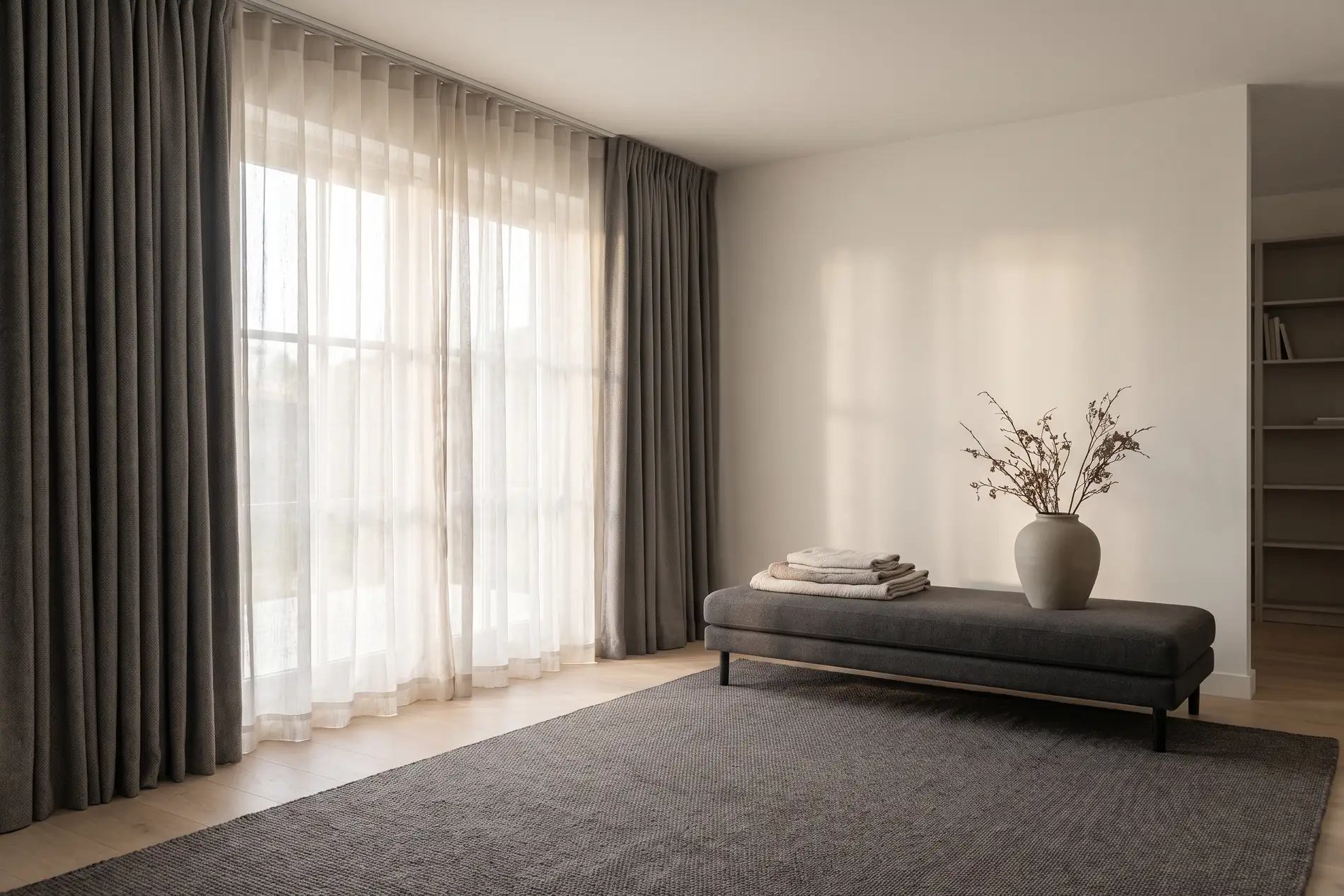
Sheer vs Blockout Curtains
Which one your room actually needs — and why the honest answer, most of the time, is both.
Sheer curtains filter daylight and give you privacy while the sun is up. Blockout curtains stop light completely, for sleep, heat control and privacy after dark. They solve different problems at different times of day, which is why most rooms want sheer and blockout curtains together on a double track rather than one or the other.
Forced to pick one: blockout in bedrooms, sheers everywhere else.
We get asked this on nearly every first consultation, almost always as an either/or. It isn't. Here's how each fabric behaves in a real Australian house.
What sheer curtains actually do
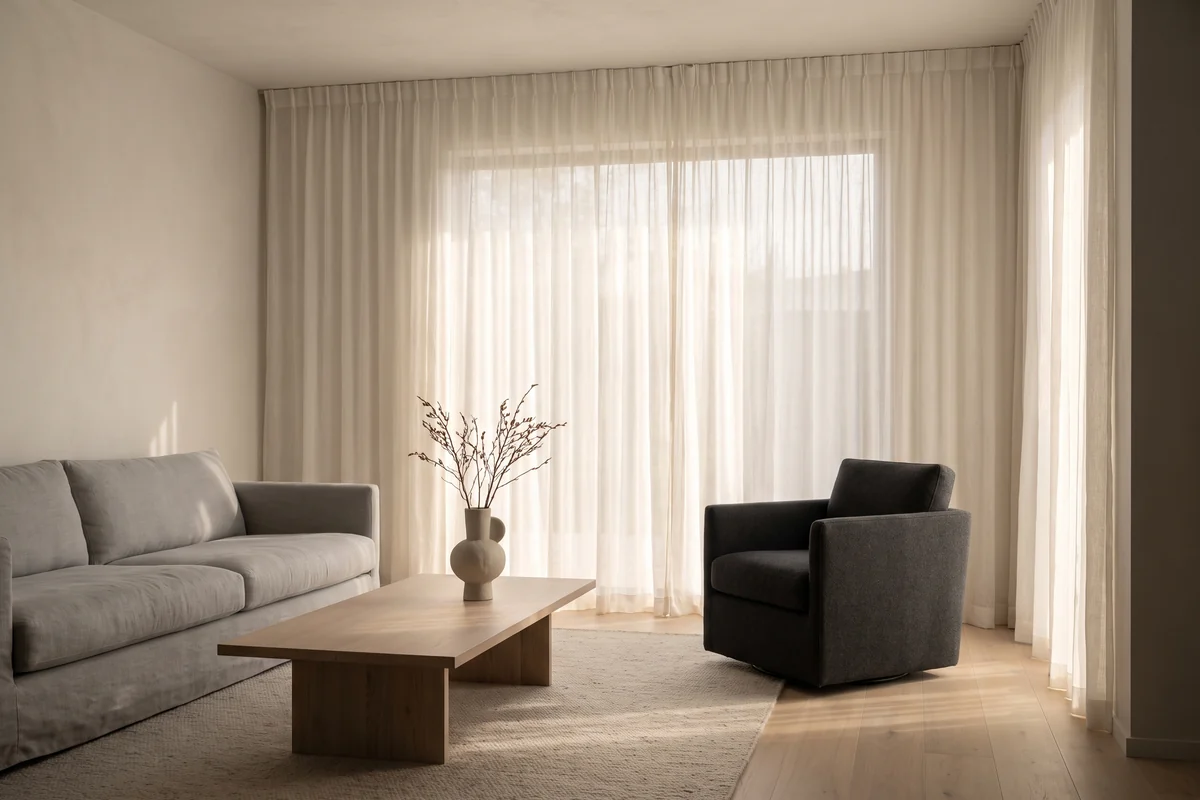
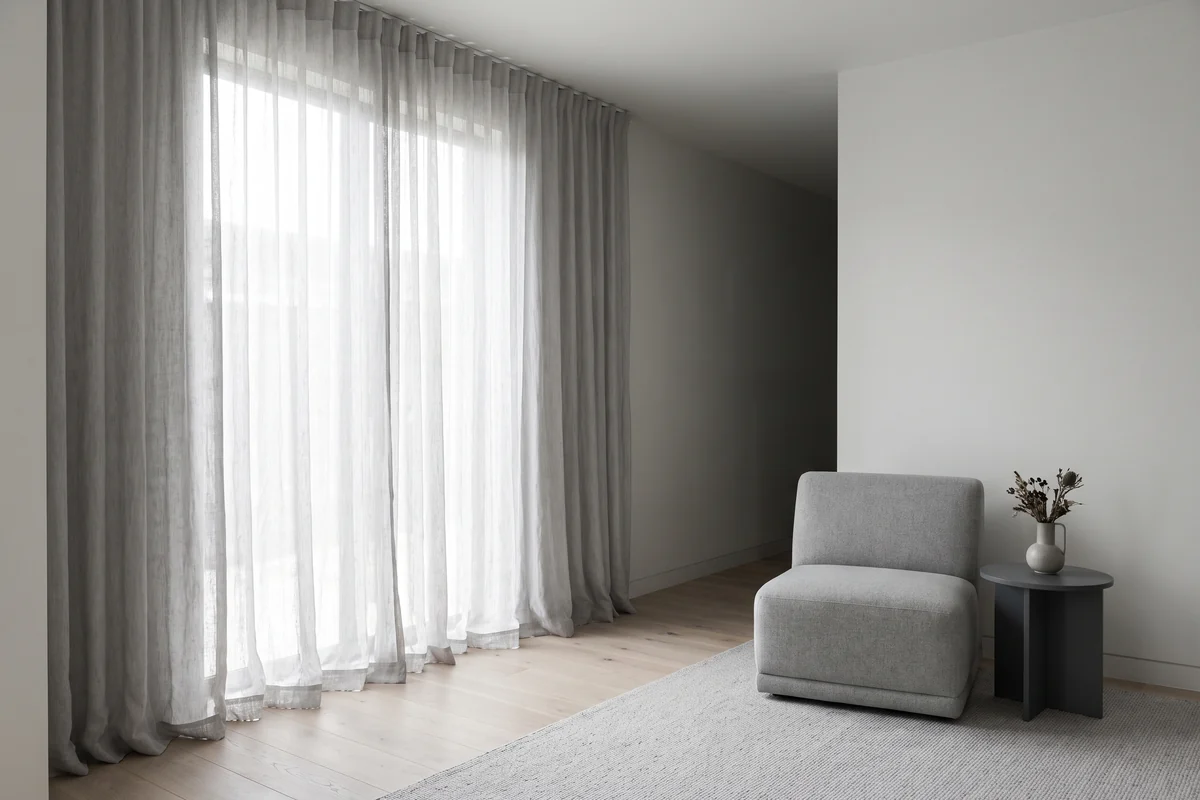
A sheer is a loosely woven, semi-transparent fabric — voile, linen sheer, textured polyester — that passes light but not detail. On a bright day you'll see the shape of the garden; your neighbour won't see you.
Expect a sheer to cut 10–30% of incoming light. That matters less than what happens to the light it lets through: hard sun becomes even, diffused brightness. It's the difference between glare on a screen at 4pm and a room that simply feels light.
What sheers won't do is give you privacy after dark. Once it's brighter inside than out the effect reverses, and a lit room behind sheers is a display window. No weave is dense enough to fix that.
What blockout curtains actually do
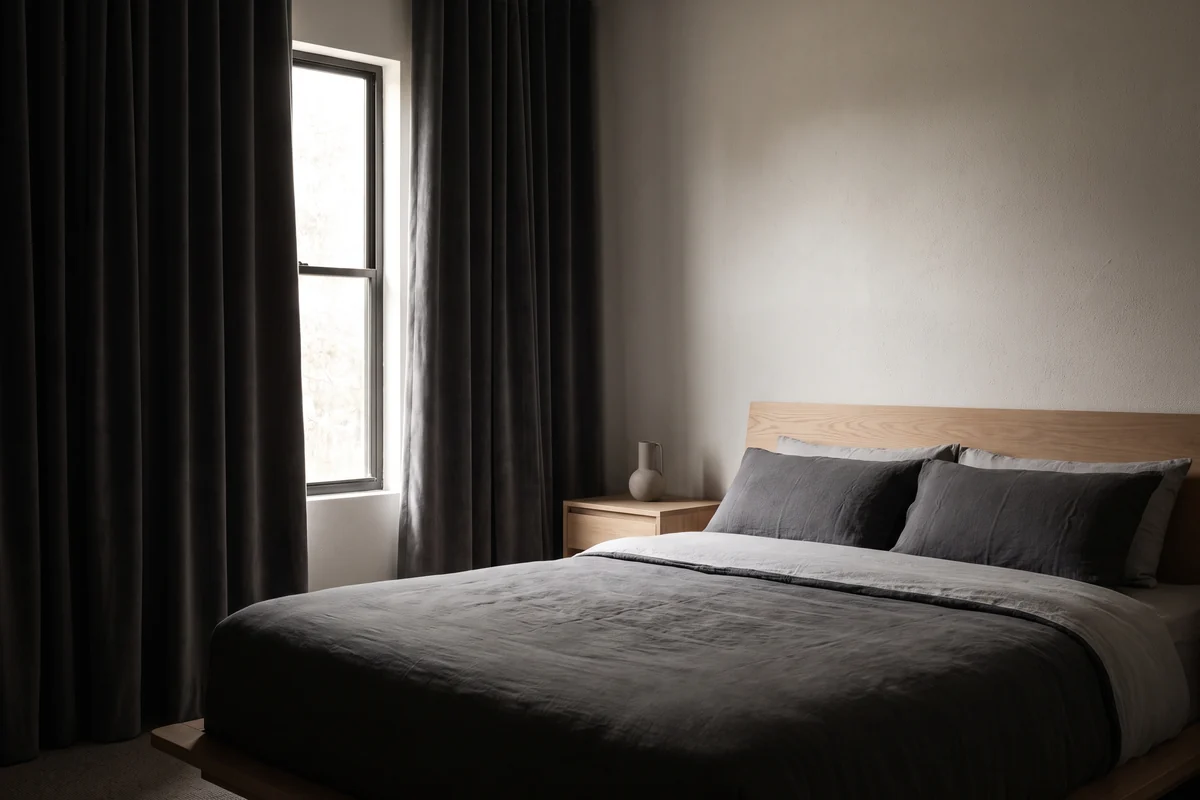
A blockout curtain is either a densely woven opaque fabric or — more often, and better — an ordinary decorative fabric with an opaque lining behind it. The lining does the work. The face fabric does the looking.
A good one blocks 90–100% of light and gives complete privacy day and night. It also does real thermal work: windows are the weakest thermal point in most Australian homes, and a lined curtain cuts summer heat gain and holds warmth overnight in winter.
On noise, be realistic. Heavy interlined fabric softens echo and takes the edge off high-frequency sound. It will not fix single glazing on a main road, and anyone telling you otherwise is selling something. What a curtain can and cannot do to sound is worth reading before you spend on it: do acoustic curtains actually reduce noise.
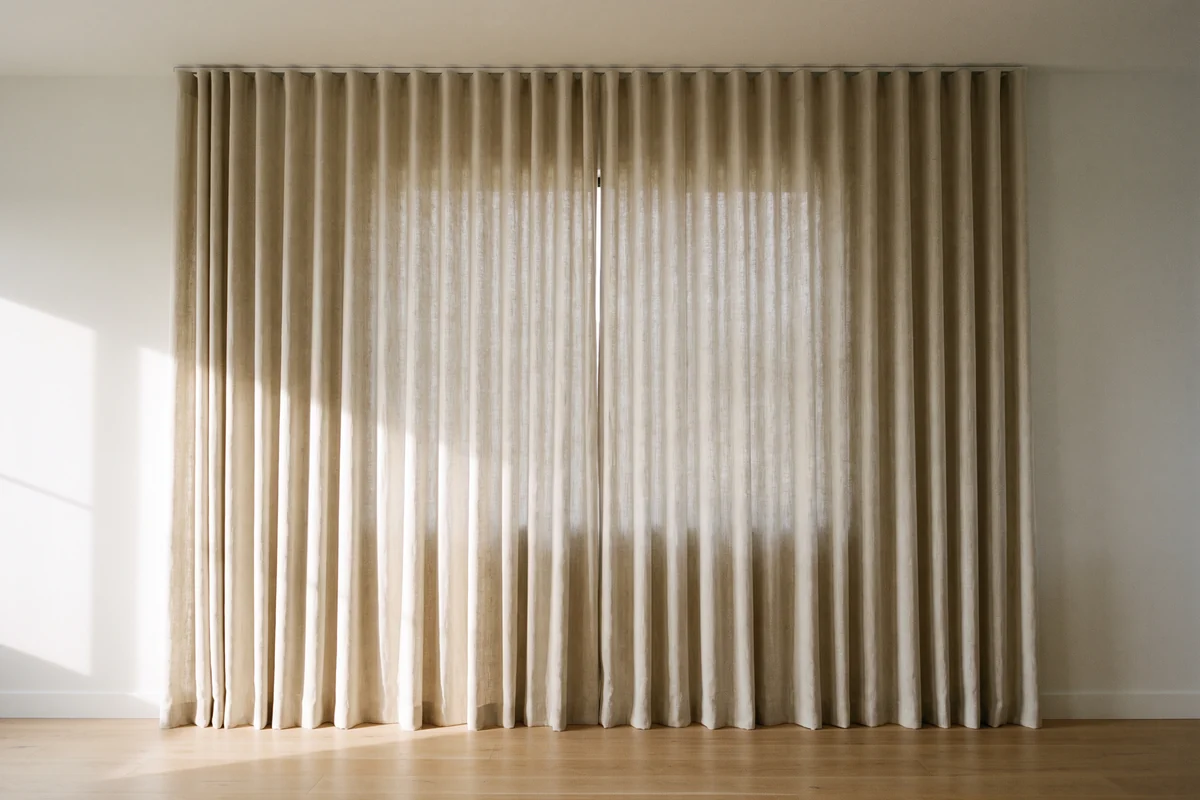
Sheer vs blockout curtains at a glance
| Sheer | Blockout | |
|---|---|---|
| Light blocked | 10–30% | 90–100% |
| Daytime privacy | Good | Total |
| Night privacy | None | Complete |
| Heat & insulation | Minimal | Significant |
| Noise | Negligible | Some, if interlined |
| Feel | Soft, light, airy | Substantial, enveloping |
| Best for | Living, kitchen, north-facing | Bedrooms, media rooms, west-facing |
Why most rooms want both
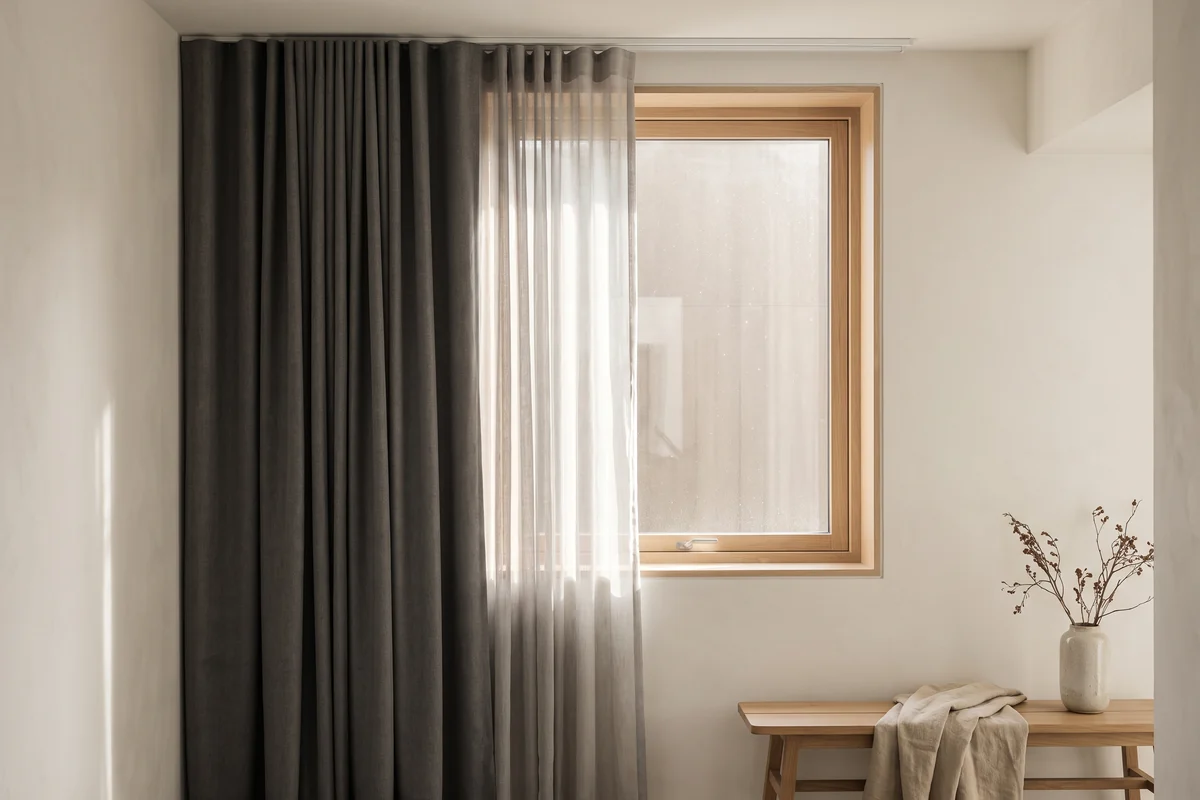
Layering removes the choice. Sheer on the window side, blockout on the room side, each on its own runner, and you get four settings instead of one compromise: both open, sheer only, blockout only, both closed. Reverse that order and the blockout can't seal against the glass.
Two constraints worth checking first. A double curtain track needs 100–120mm of depth, which some shallow reveals and cornice profiles can't take. And two layers stack to roughly twice the width when open — on a 3m window that's a lot of wall covered at each end.
Doubling up costs around 60–80% more than a single layer, not double, because the track and installation are shared. The hardware, the stack-back and the fabric arithmetic behind that are worked through in full in our guide to double curtains.
The part nobody mentions: light comes around, not through
Most light doesn't pass through a blockout curtain. It gets in around it — down the sides, over the top, under the hem. We regularly see homes where an expensive blockout still leaves a bright halo around the window, because the curtain was made to the size of the glass rather than the size of the problem.
Three details decide whether you get genuine darkness:
- Side returns. The curtain wraps back to the wall at each end. This is most of your light leak.
- A sealed top. A pelmet, or a track recessed into the ceiling or a bulkhead.
- Floor length, not sill length.
Get those right with a mid-weight lining and the room goes properly dark. Get them wrong and the heaviest fabric money can buy will still glow at the edges at 6am in January. A curtain measured to the window instead of the wall is measured wrong.
Room by room
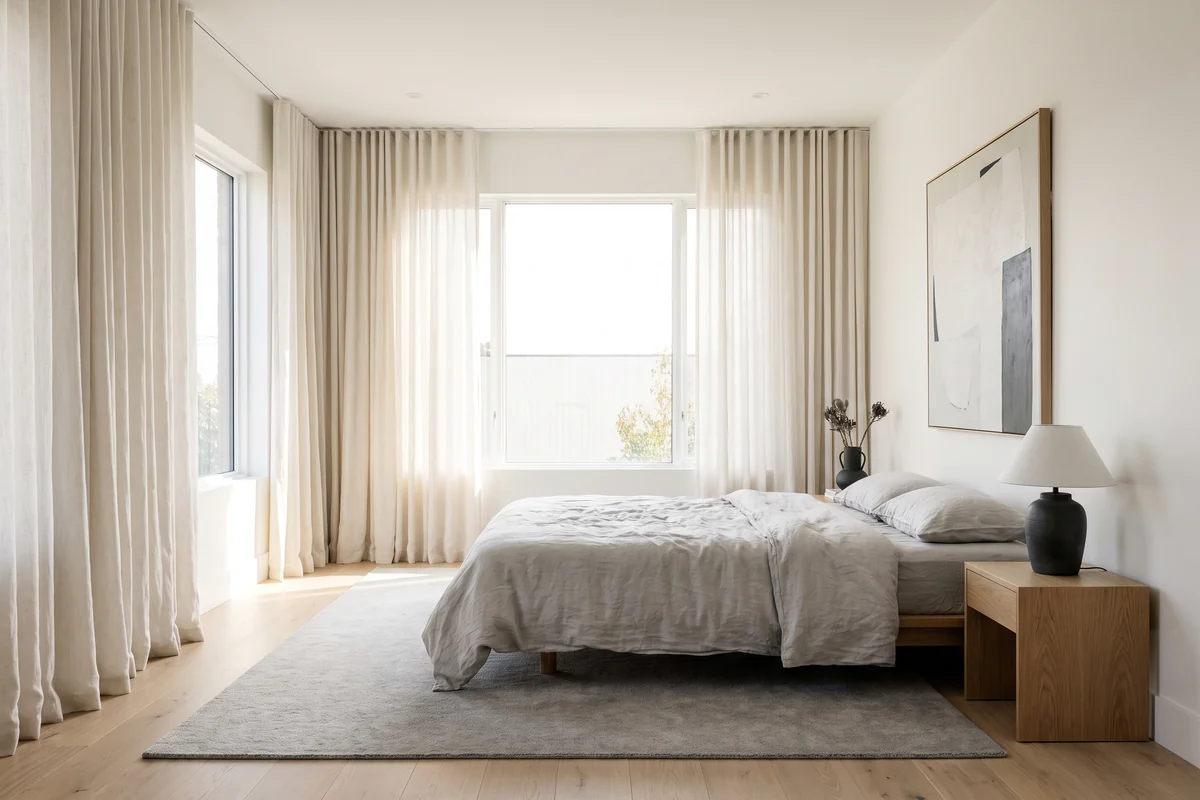
- Bedrooms — blockout, no argument; even low light levels interfere with sleep quality. Layer sheers over the top if the room gets daytime use.
- Living rooms — sheers do most of the work. Add blockout if the room faces west, is overlooked at night, or doubles as a media room.
- Kitchens — sheers, if anything. Heavy fabric near cooking holds grease and odours.
- Media rooms — blockout, and budget for a pelmet. On the Gold Coast we fit these with blockout blinds and side tracks instead.
- Bathrooms — neither. Fabric and moisture are a poor pairing; this is shutter territory.
One opinion you won't hear in a showroom: most homes over-specify blockout and under-specify sheers. People buy darkness for rooms they only ever sit in during daylight.
Nurseries and children's rooms
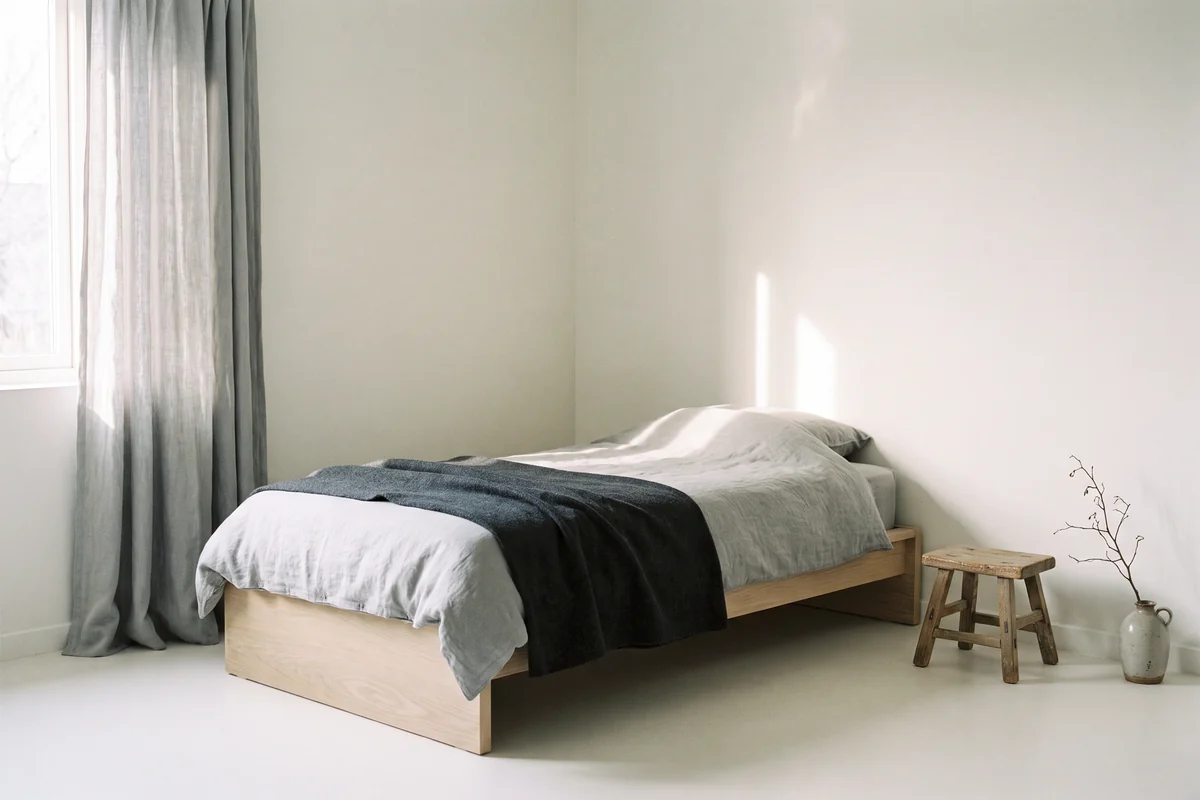
Blockout — and specify cordless or motorised. Corded window coverings are a genuine strangulation hazard for small children. The ACCC mandatory standard requires that no loose cord form a loop 220mm or longer below 1600mm from the floor. In a child's room we'd go further and remove the cord entirely. It's the one upgrade we'd never talk a parent out of.
Not sure what your room needs?
We'll bring the fabric library to you, measure properly, and tell you honestly if one layer will do.
Frequently asked questions
Can you see through sheer curtains at night?
Yes. With lights on inside, sheers become effectively transparent from the street. They give daytime privacy only, so any room overlooked after dark needs a second opaque layer.
Which is better for a bedroom, sheer or blockout curtains?
Blockout, for sleep and night privacy. If the bedroom is also used during the day, layer sheers in front so you're not choosing between darkness and daylight.
Do blockout curtains keep heat out?
They help considerably, but installation matters as much as fabric. The still air trapped between curtain and glass does much of the insulating, and that pocket only works when the curtain is full length with side returns and a sealed top.
Can you put sheer and blockout curtains on the same window?
Yes, on a double track with two independent runners — sheer on the window side, blockout on the room side. Allow 100–120mm of depth and check your reveal or cornice can take it.
What's the difference between blockout and blackout curtains?
Nothing. Blockout is the Australian term, blackout the American one. Suppliers here use both interchangeably and neither indicates a difference in performance.
Do sheer curtains block UV?
Partly. A sheer slows fading of floors and furniture but won't stop it. For real UV protection you want a blockout or a low-openness screen blind behind the sheer.
Sources Australian Government Your Home — Glazing · ACCC blinds and window fittings mandatory standard · Sleep Health Foundation
Back to the journalKeep reading
Related from the journal
 Guides
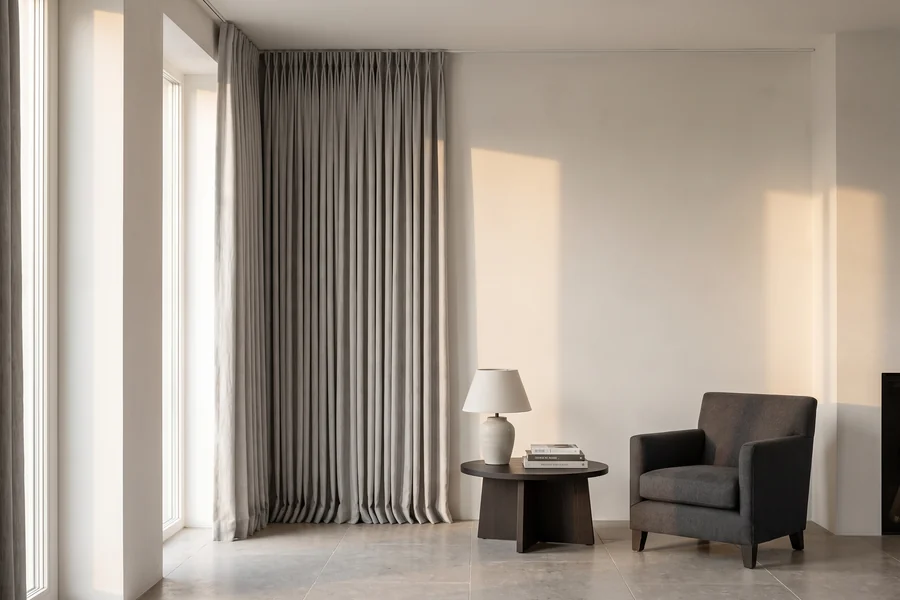
Wave fold vs pinch pleat: choosing a curtain heading
The heading decides how the fabric falls, how much wall the curtain eats when open, and how contemporary the room reads.
 Guides
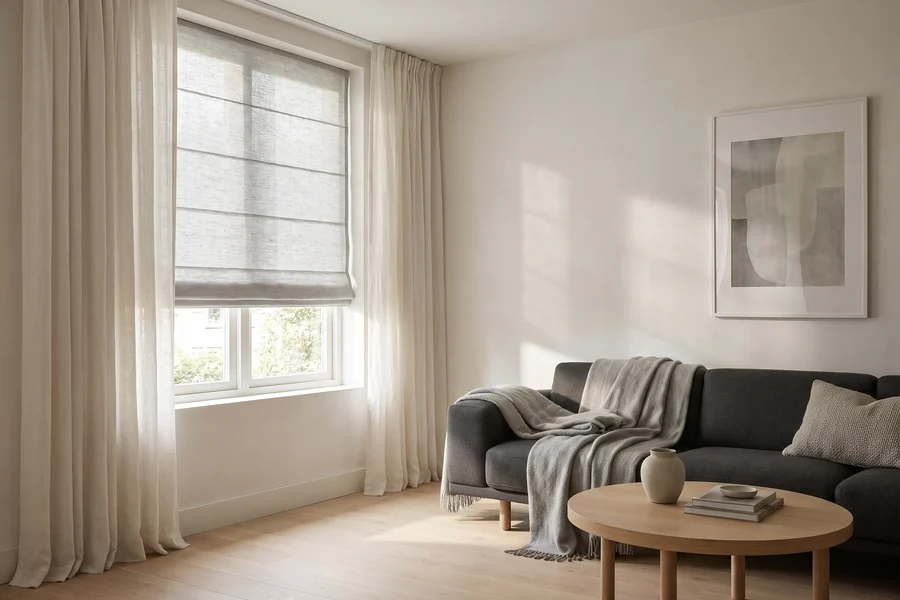
What curtains actually do for your energy bill
Windows are the weakest thermal point in most Australian homes. What lining, pelmets and side returns genuinely contribute.
 Guides
A plain-English guide to blind openness factors
1%, 3%, 5%, 10% — what the number on a screen fabric sample actually tells you about glare, view and privacy.