

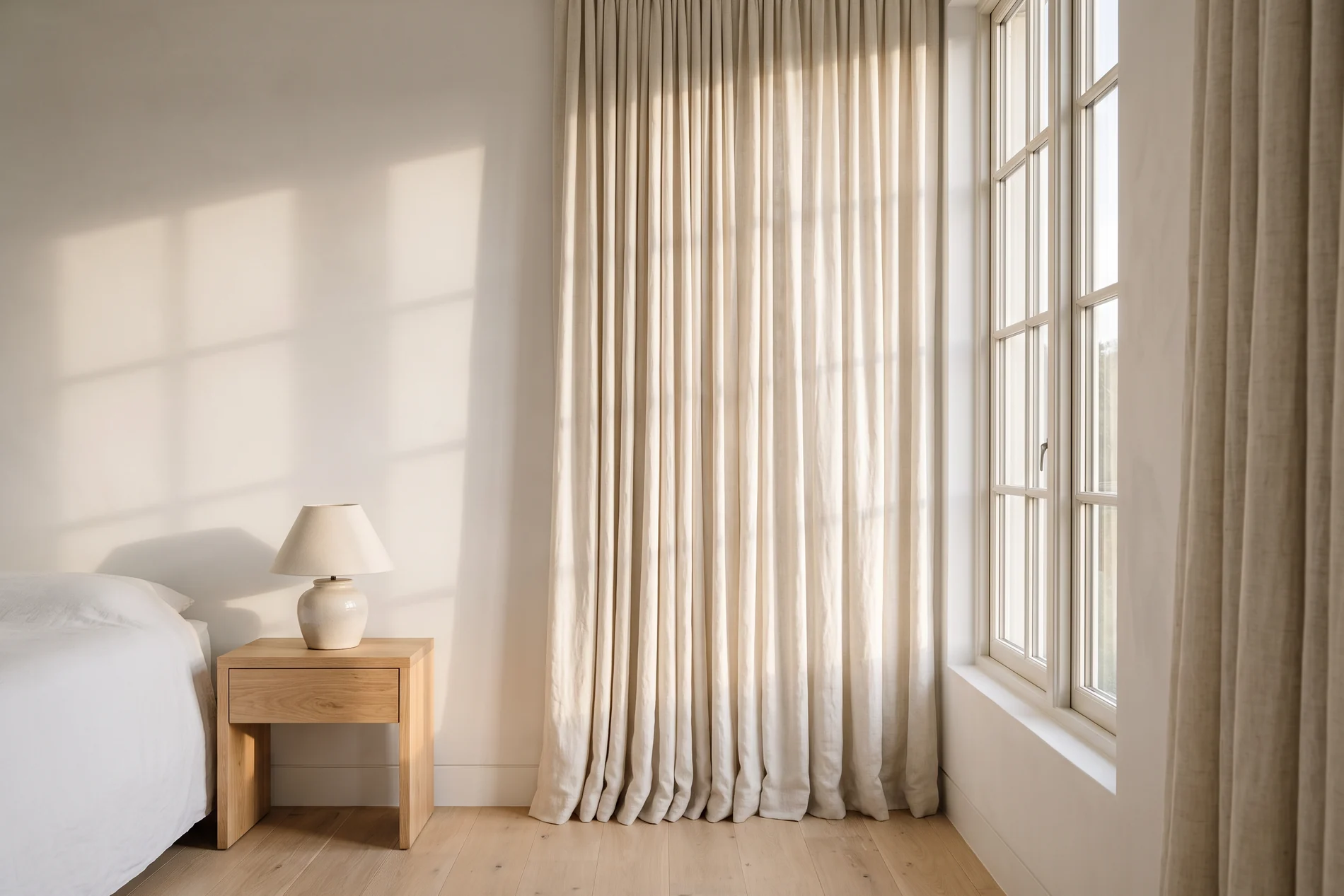
Pinch Pleat vs Pencil Pleat vs S-Fold
Three headings, one decision — and the one you pick quietly sets your track, your fabric bill and how much window you lose.
Pinch pleat curtains hang in stitched, permanent folds — tailored, formal, happy on a plain track or a decorative one. Pencil pleat curtains gather onto a drawstring tape, which is why they're the standard ready-made heading. S-fold curtains run in one continuous wave and need a track built for them.
Forced to pick one: S-fold for sheers and contemporary rooms, pinch pleat for anything that wants to look tailored.
The heading is the part of the curtain most people never think about and then live with for fifteen years. It sets how the fabric falls, how much fabric you pay for, how much window you lose when the curtain is open, and — the part nobody mentions in the showroom — what has to be screwed into your ceiling to hold it up.
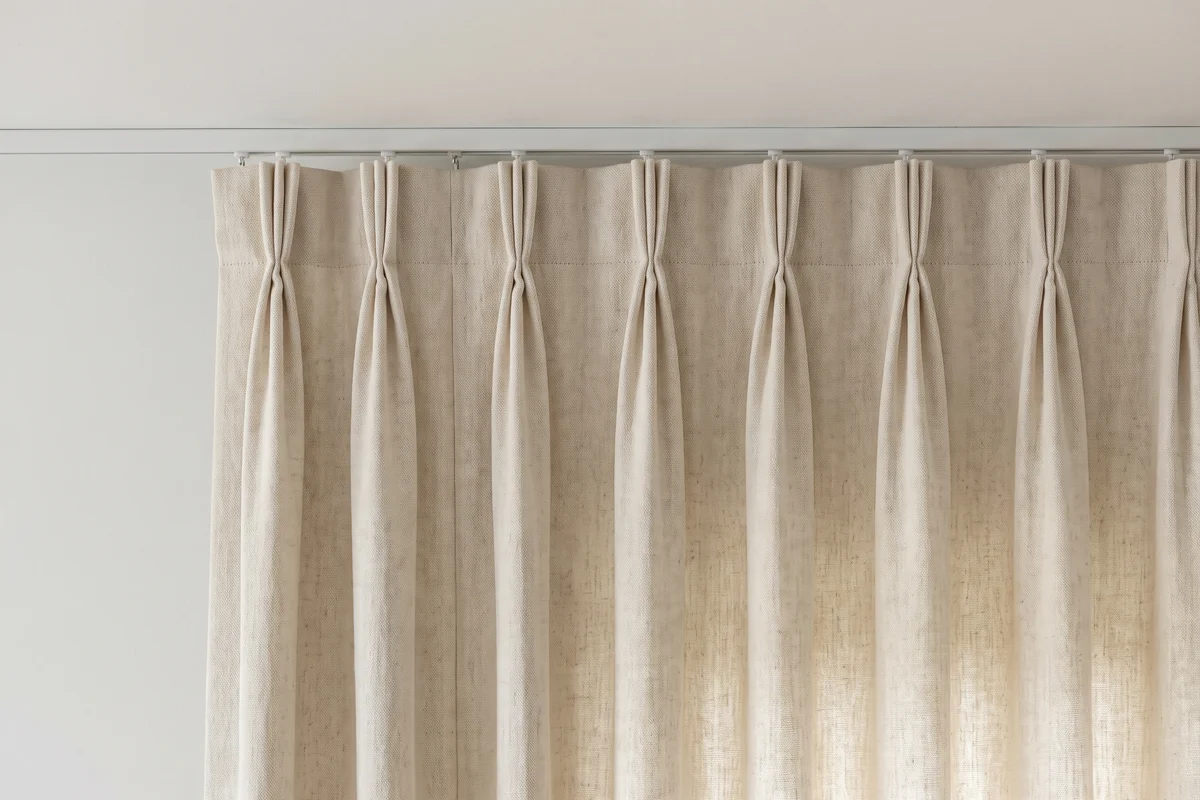
Pinch pleat: the tailored one
A pinch pleat is made by gathering the fabric into small groups at the top and stitching them permanently in place. Two folds to a group is a double pinch; three is a triple pinch. The stitching is the whole point — the pleat can't relax, so the curtain keeps the same rhythm of folds whether it was hung last week or nine years ago.
That structure costs fabric. A double pinch typically runs around 2 to 2.3 times the track width in fabric, a triple pinch closer to 2.5 to 3 times. Fabric is usually the largest line on a curtain quote, so the heading you choose moves the number more than the colour does.
Pinch pleat is also the one of the three that looks most at home on a decorative track, where the hardware is meant to be seen rather than hidden. If you want the bar above the window to be part of the room, this is your heading. A triple pinch on a fine sheer, though, is a lot of ceremony for a fabric you can see through.
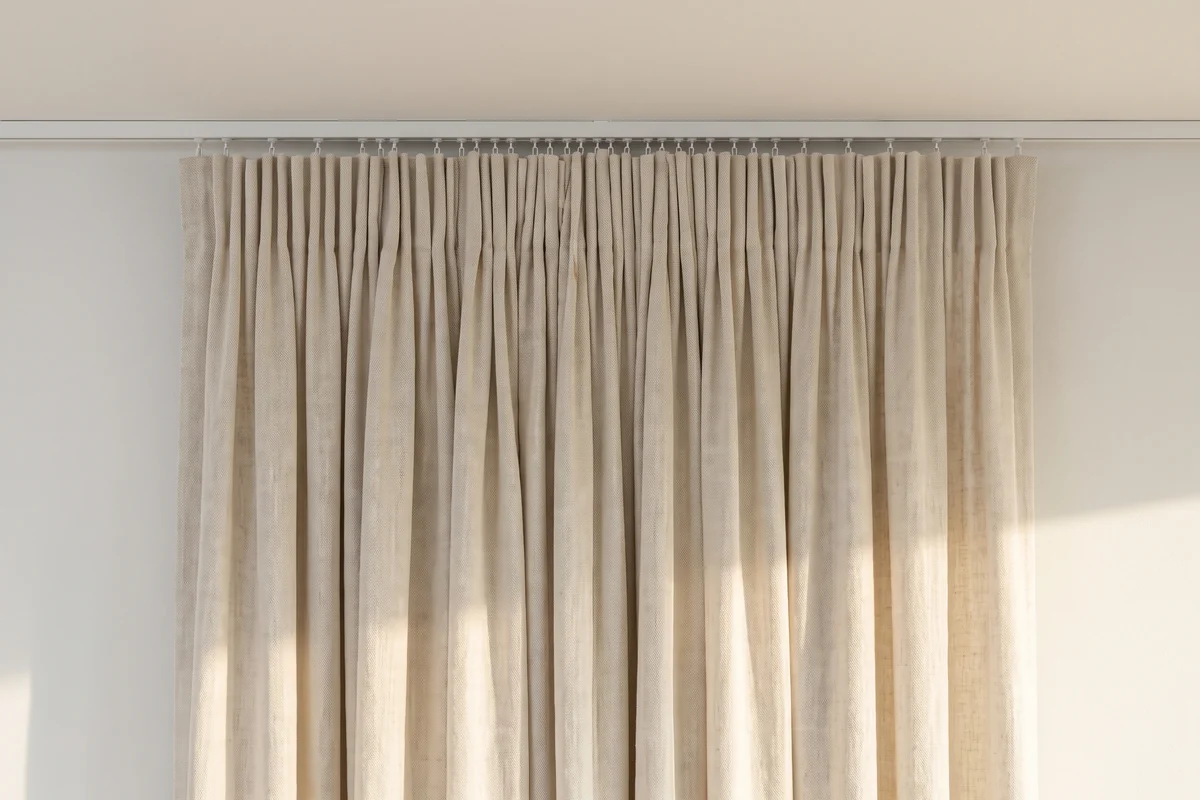
Pencil pleat: the off-the-shelf one
A pencil pleat is a tape sewn across the top of the curtain with cords running through it. You pull the cords, the fabric gathers into narrow upright folds, and you tie the cords off. Nothing is stitched, which is what makes it flexible: the same curtain can be gathered tighter or looser, and it will hang off a plain track or a decorative one without complaint.
It's the heading almost every ready-made curtain uses, and the cheapest way to dress a window. Fullness lands between 1.5 and 2.5 times the width depending on how hard you pull.
The trade-off is that the folds are gathered rather than formed, so they're never quite even and they soften over time. It's a relaxed, traditional look rather than a designed one — which is the right answer for a spare room and the wrong one for the window everybody sees. Our own made-to-measure range is S-fold, pinch pleat and reverse pleat; if you want pencil pleat, off-the-shelf is genuinely where it makes sense.
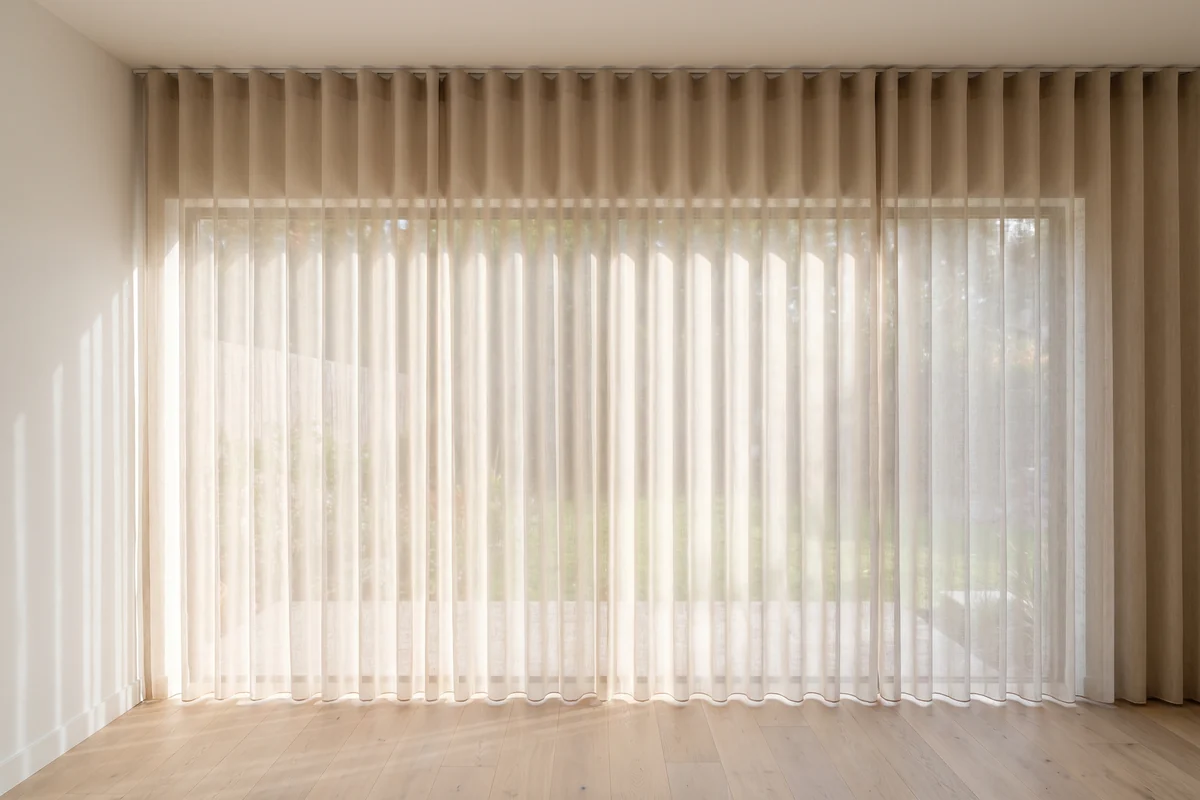
S-fold, S-wave, ripplefold: one heading, three names
These are the same thing. If a supplier says S-fold and a designer says wave and a website says ripplefold, nobody is describing a different curtain — the industry never agreed on a word. It's the heading people ask for by pointing at a photograph.
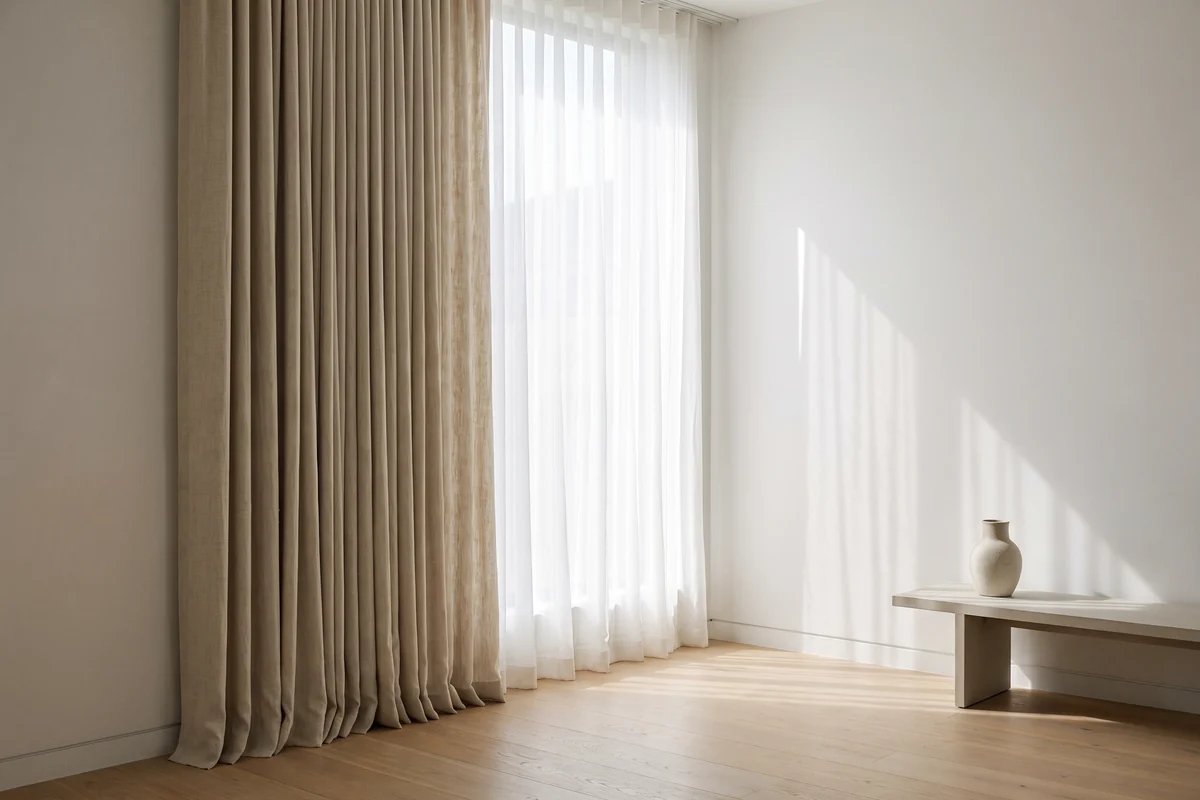
An S-fold gets its shape from the track, not from the sewing. Carriers are fixed at even spacing — commonly 80mm or 100mm — and a snap tape at the top of the curtain clips into them, so the fabric has no choice but to fall in a continuous, even S. Fullness sits around 2 to 2.5 times the width, set by that carrier spacing rather than by anyone's judgement.
Two consequences worth knowing. It looks identical from both sides, which matters for a street-facing window where the neighbours see the back of your curtains. And because the wave is regular and unstitched, it's the kindest heading to sheer curtains — the fabric is doing the one thing it's good at, which is falling. That's why most of the S-fold enquiries we take are for sheers, often as the front layer over sheer and blockout curtains on a double track.
The three headings at a glance
| Pinch pleat | Pencil pleat | S-fold | |
|---|---|---|---|
| Fold shape | Stitched, permanent | Gathered, adjustable | Continuous wave |
| Fabric needed | 2–3× width | 1.5–2.5× width | 2–2.5× width |
| Track type | Plain or decorative | Plain or decorative | Channelled track only |
| Look | Tailored, formal | Relaxed, traditional | Contemporary, soft |
| Back of curtain | Hooks visible | Hooks visible | Same as the front |
| Holds its shape | Indefinitely | Softens over time | Held by the track |
| Best for | Formal rooms, rods | Spare rooms, budgets | Sheers, wide openings |
There is also reverse pleat, which almost nobody writes about: the pleat folds to the back instead of the front, leaving a flat, uninterrupted face across the top. It's a quieter pinch pleat, and it suits a plain blockout curtain where the fabric should read as one clean plane.
How much window you lose when it's open
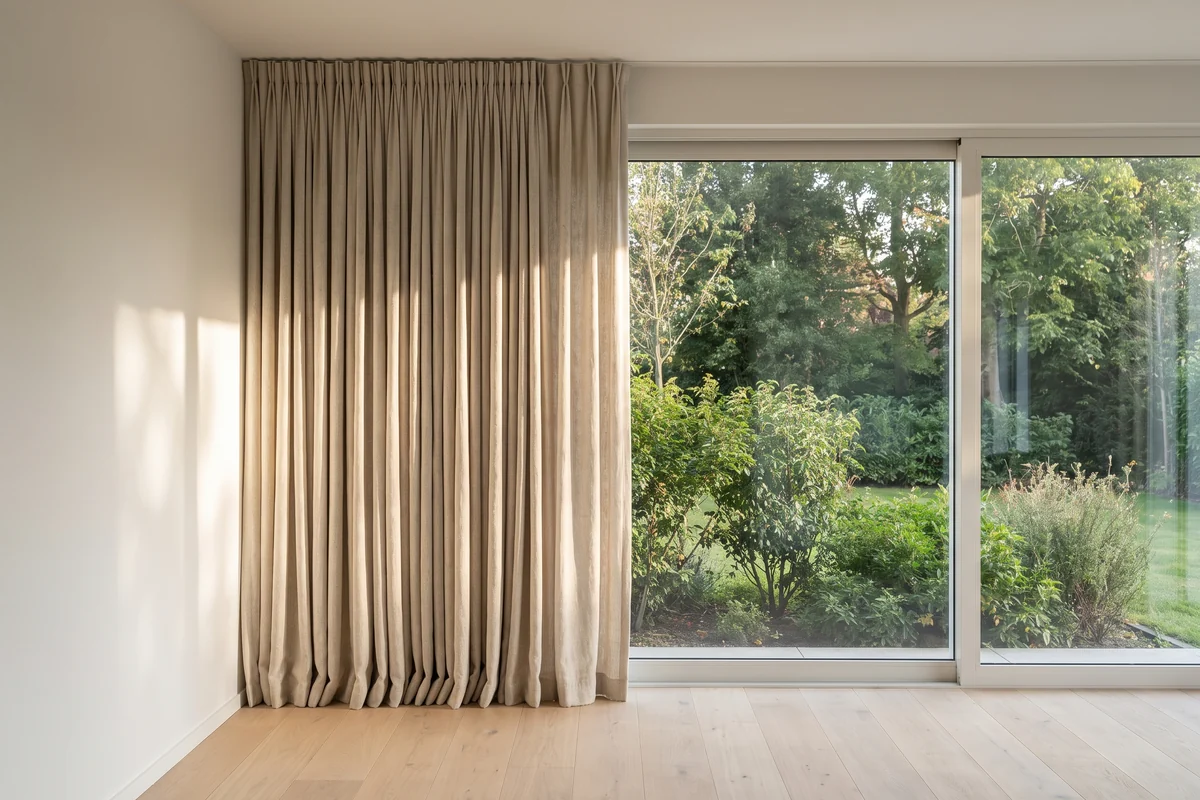
This is the question that should decide the heading on any wide opening, and the one most guides skip. An open curtain doesn't disappear. It bunches at the end of the track, and that bunch is called the stackback. As a working figure, allow 20–30% of the track width for stackback across both ends on a medium-weight fabric. On a 3-metre sliding door that's roughly 600–900mm of glass sitting behind fabric — on the view you paid for.
Three things move that number:
- Fabric weight. Lined and interlined fabrics stack wider than sheers.
- Fullness. A triple pinch is the worst offender; pencil pleat at 1.5× the tightest.
- The pleat itself. A stitched pleat carries a permanent bunch that an S-fold's snap tape doesn't, so S-fold stacks tighter at equal fullness.
The fix isn't the heading, though — it's the track. Run the track 250–400mm past each side of the opening so the curtain parks on the wall instead of the glass. That only works if there's wall there to park on, which is exactly the sort of thing worth finding out before the fabric is cut, not after. Shading works best when it clears the glass completely, and the same geometry that helps in summer helps your view all year.
Not sure which heading your window will take?
We measure the opening, the ceiling and the wall either side before recommending anything — and the quote is itemised, so you can see what the heading costs you in fabric.
Your heading picks your track — and the track has to hold
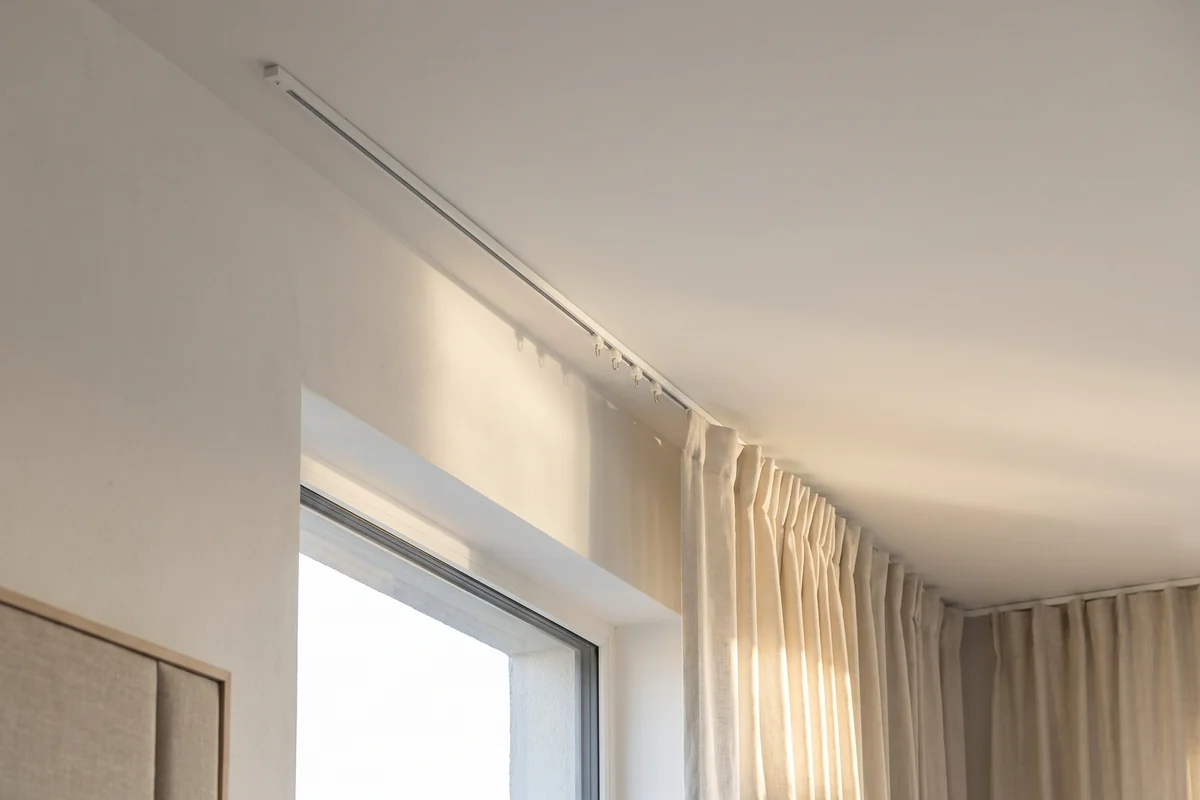
Choosing S-fold is choosing a track. There's no version that hangs from a rod, because the wave is created by the carriers; put an S-fold curtain on rings and you have an expensive pencil pleat. Pinch and pencil pleat both take a decorative track happily, so if visible hardware is part of the look, that's your short list.
Then the boring part, which is the part that fails. A full-height curtain in a lined fabric across a 3-metre opening is heavy, and all of that weight hangs off a strip of aluminium fixed to your ceiling. Plasterboard on its own will not hold it. It might hold it for a year. A track needs to be fixed into ceiling joists, or into a timber batten installed above the plasterboard before the ceiling was sheeted — and if neither exists, that has to be solved at measure, not on installation day.
Worth checking at the same time: whether your track will be cord-drawn, wand-drawn or motorised. Corded window coverings in a child's room are a genuine hazard and are covered by a mandatory Australian safety standard, so specify cordless where children sleep. And since windows are the weakest thermal point in most Australian homes, a heading that holds a deep, even fold does slightly more thermal work than one hanging flat — a small effect, but a free one.
Frequently asked questions
What is the difference between pinch pleat and pencil pleat curtains?
Pinch pleat folds are stitched permanently into groups of two or three, so they hold their shape forever. Pencil pleat folds are gathered by pulling cords through a tape, so they're adjustable but never perfectly even. Pinch pleat looks tailored and costs more in fabric; pencil pleat looks relaxed and is the standard ready-made heading.
Are S-fold and S-wave curtains the same thing?
Yes. S-fold, S-wave, wave fold and ripplefold all describe the same heading — a continuous S-shaped wave created by evenly spaced carriers on a track. The industry never settled on one name, so different suppliers use different words for an identical curtain.
How much fabric do pinch pleat curtains need?
A double pinch pleat typically needs about 2 to 2.3 times the track width in fabric. A triple pinch needs roughly 2.5 to 3 times. Since fabric is usually the biggest single cost on a curtain, dropping from triple to double is one of the more effective ways to bring a quote down.
Can you hang S-fold curtains on a rod?
No. The wave in an S-fold comes from carriers fixed at even spacing along a track, and a rod with rings can't reproduce it — which is academic for us, since we hang everything on runnered track. If you want hardware on show, a decorative track gives you that with pinch pleat or pencil pleat.
Which curtain heading is best for sheers?
S-fold, in most cases. The wave is soft and regular, it looks the same from the street side, and it lets a light fabric fall rather than forcing structure onto it. Pinch pleat on a sheer isn't wrong — it's just more ceremony than most sheers need.
Do pinch pleat curtains cost more than pencil pleat?
Usually yes, for two reasons: the pleats are stitched rather than gathered on a tape, and the higher fullness means more fabric. The fabric difference is normally the larger of the two.
Which heading takes up the least wall space when it's open?
Whichever one you specify at the lowest fullness — heading matters less than fullness and fabric weight. That said, at equal fullness an S-fold generally stacks a little tighter than a stitched pinch pleat. Allow 20–30% of the track width for stackback either way, and extend the track past the opening so the curtain parks on the wall.
Sources Australian Government Your Home — Glazing · ACCC blinds and window fittings mandatory standard · Sleep Health Foundation
Back to the journalKeep reading
Related from the journal
 Styling
Sheer vs blockout curtains: which should you choose?
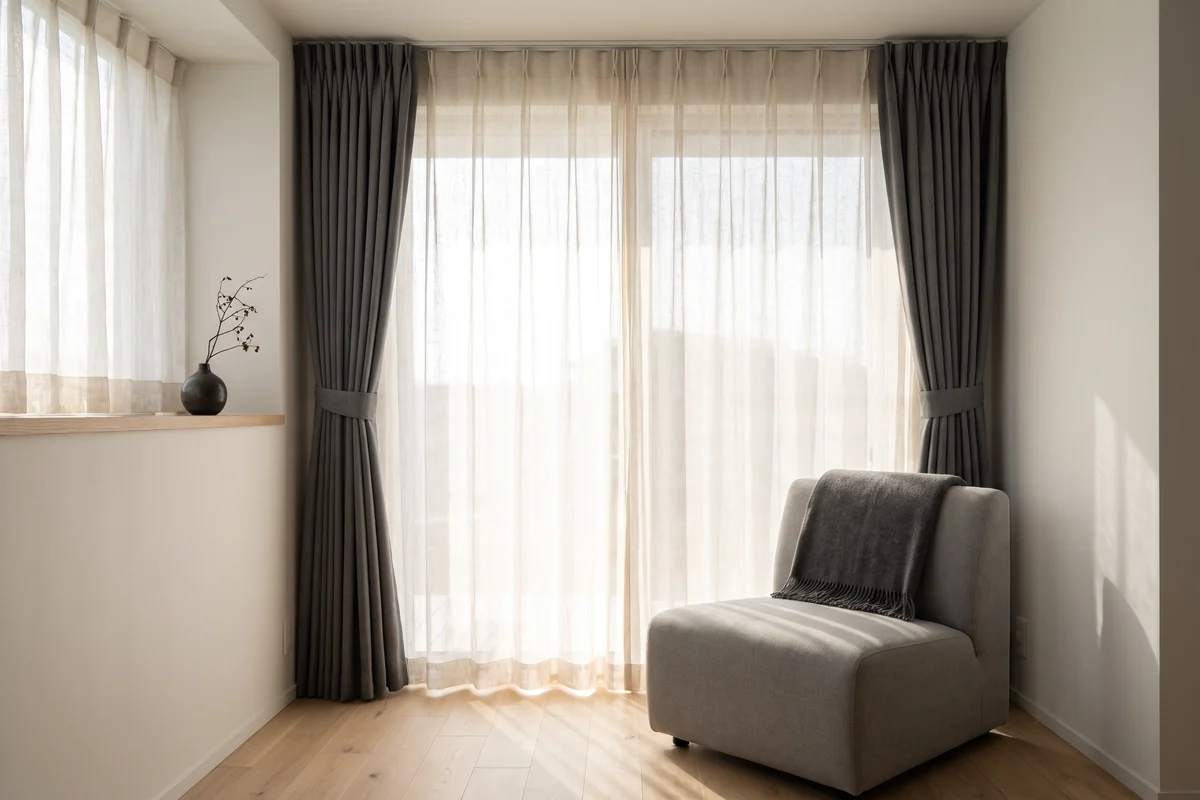
The heading decides how a curtain hangs; the fabric decides what it does. Sheers handle glare and daytime privacy, blockouts handle sleep and heat — and most rooms want both on a double track.
Read more Curtains
Sheer curtains, Brisbane & Gold Coast
The heading that suits a sheer best is S-fold, and this is where the fabric side of that decision lives — weave, colour and what a sheer will and won't do after dark.
Read more Curtains
Custom curtains, Brisbane & Gold Coast
Every heading we make, the fabrics they suit, lead times and how the measure works — the hub page for the whole curtain range.
Read more