Local conditions
South-east Queensland breeds mosquitoes by the hectare
Seal The Edges, Not Just The Middle
Brisbane City Council manages more than 20,000 hectares of saltmarsh mosquito breeding ground, and its own fact sheet says the saltmarsh mosquito travels at least 10 kilometres to feed. A house a few streets back from the water is closer than it feels. In warm weather an egg becomes a biting adult in five to six days, and a big high tide or heavy rain can set off a mass hatch. That’s why some summer weeks the alfresco just doesn’t get used.
It’s a health question as well as a comfort one. Ross River virus is spread by mosquitoes, there’s no vaccine for it, and healthdirect’s prevention advice includes flyscreens on windows, doors, vents and other entrances. An alfresco is the biggest entrance most houses have.
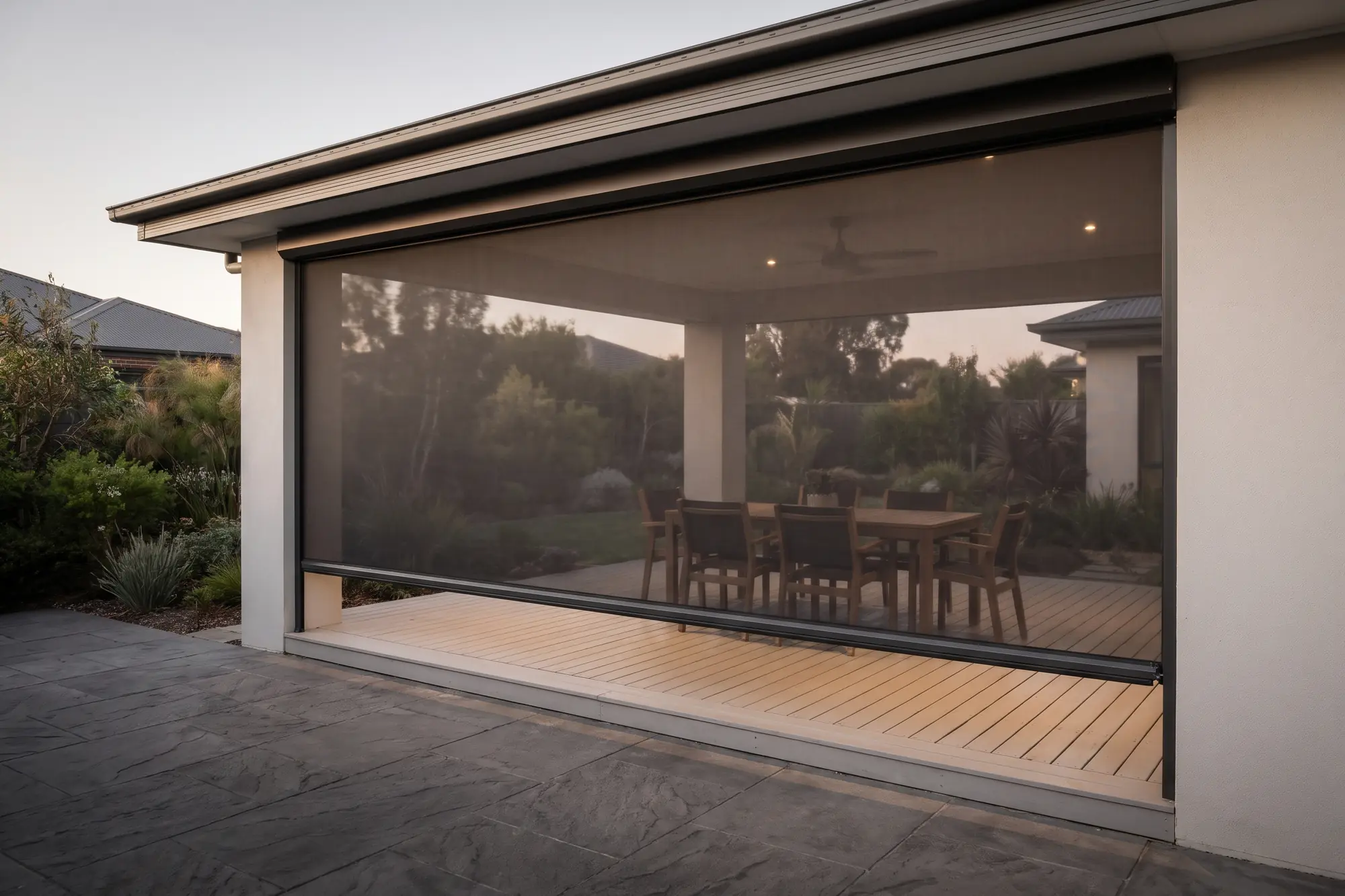
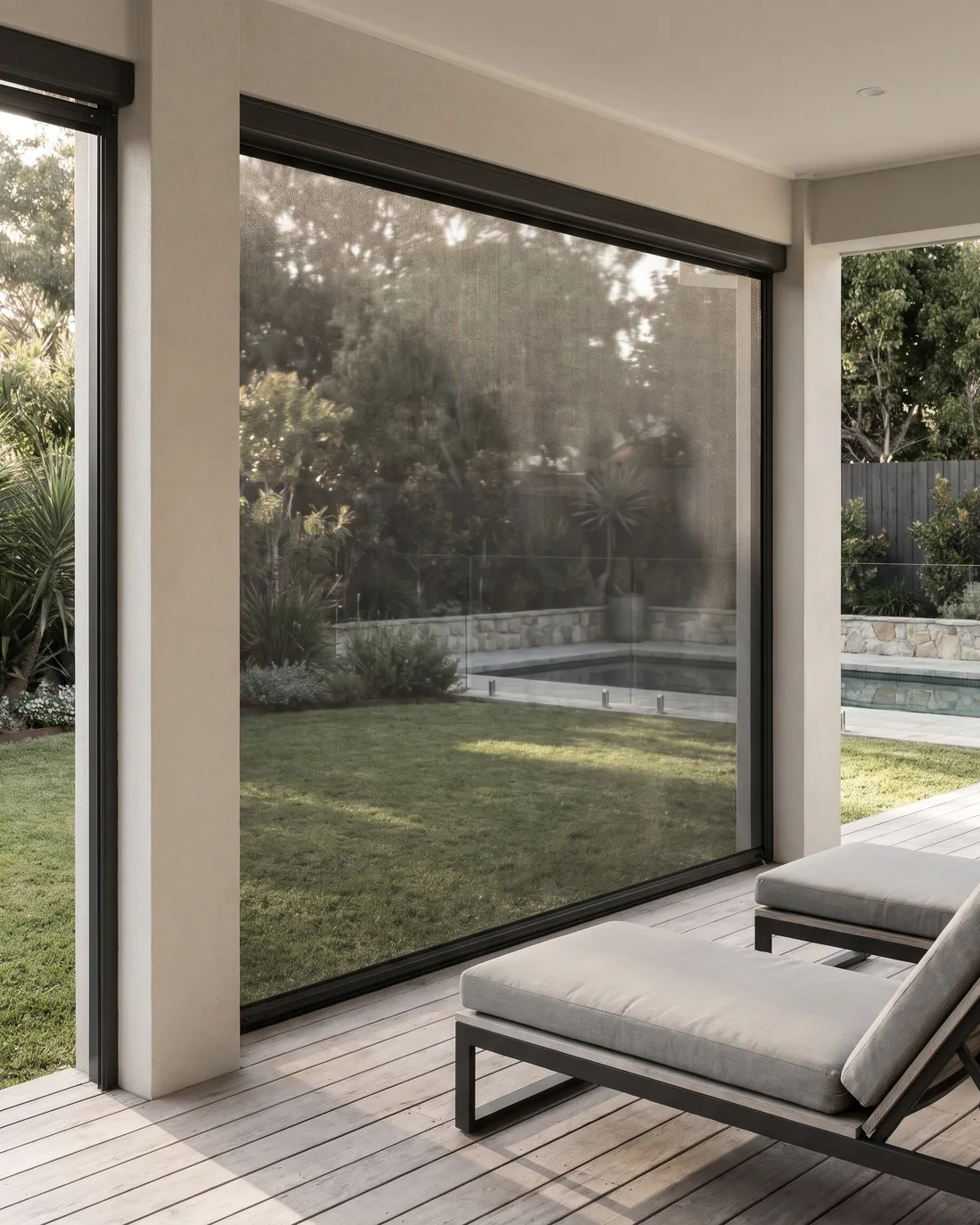
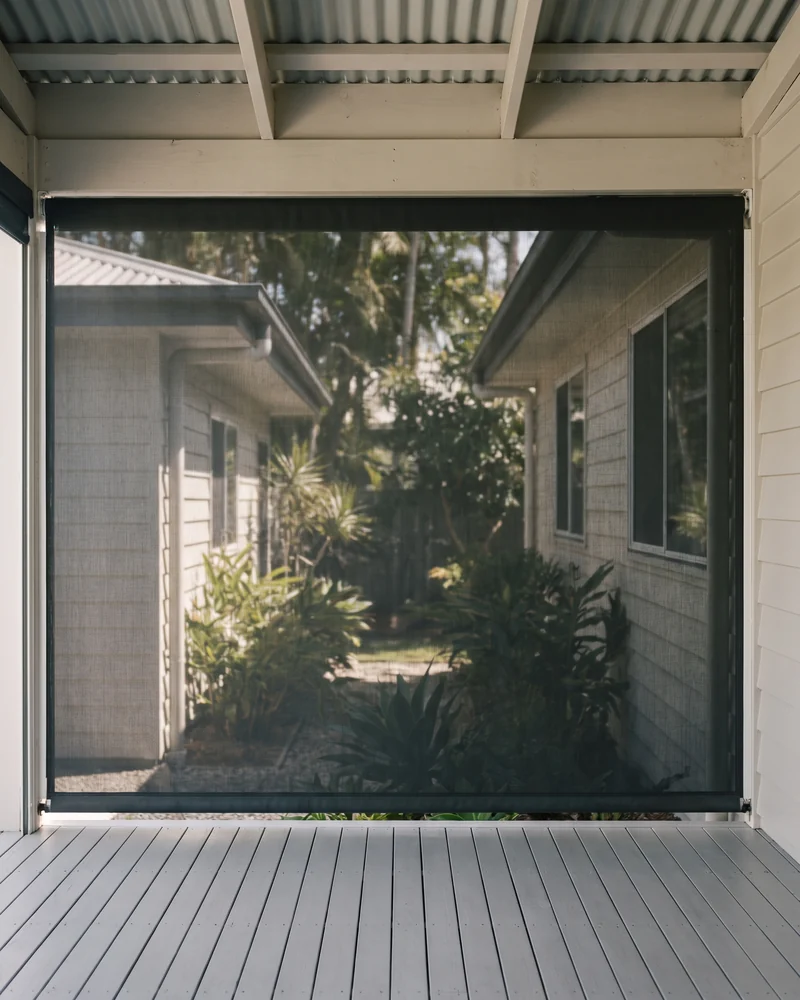
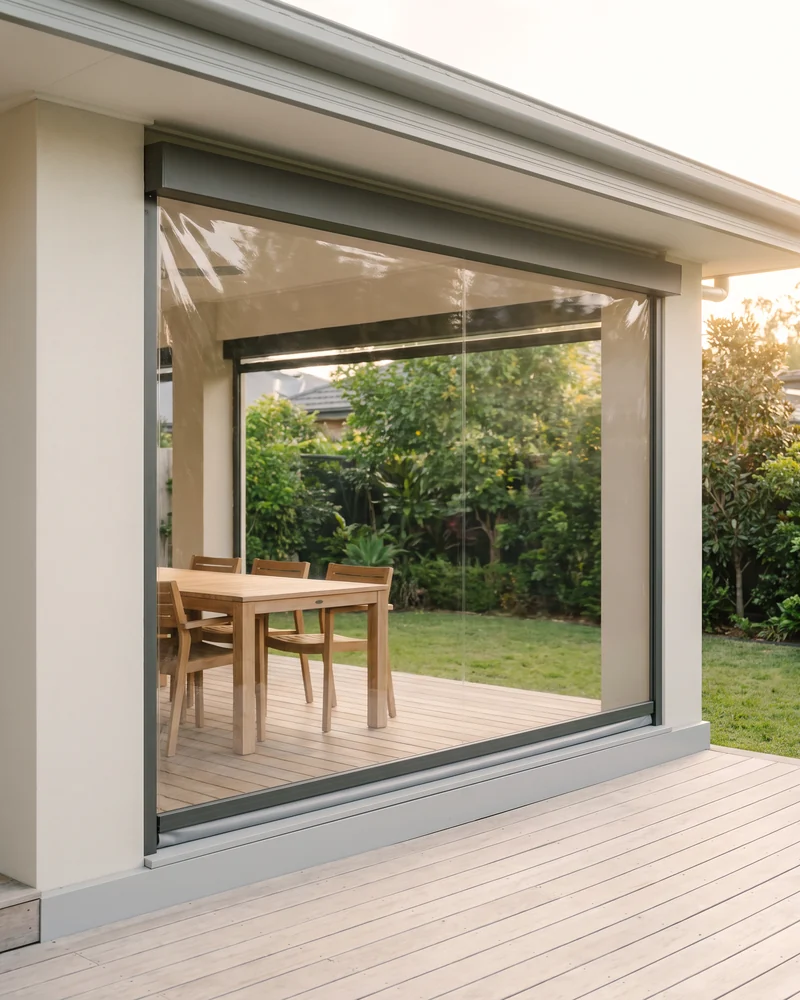
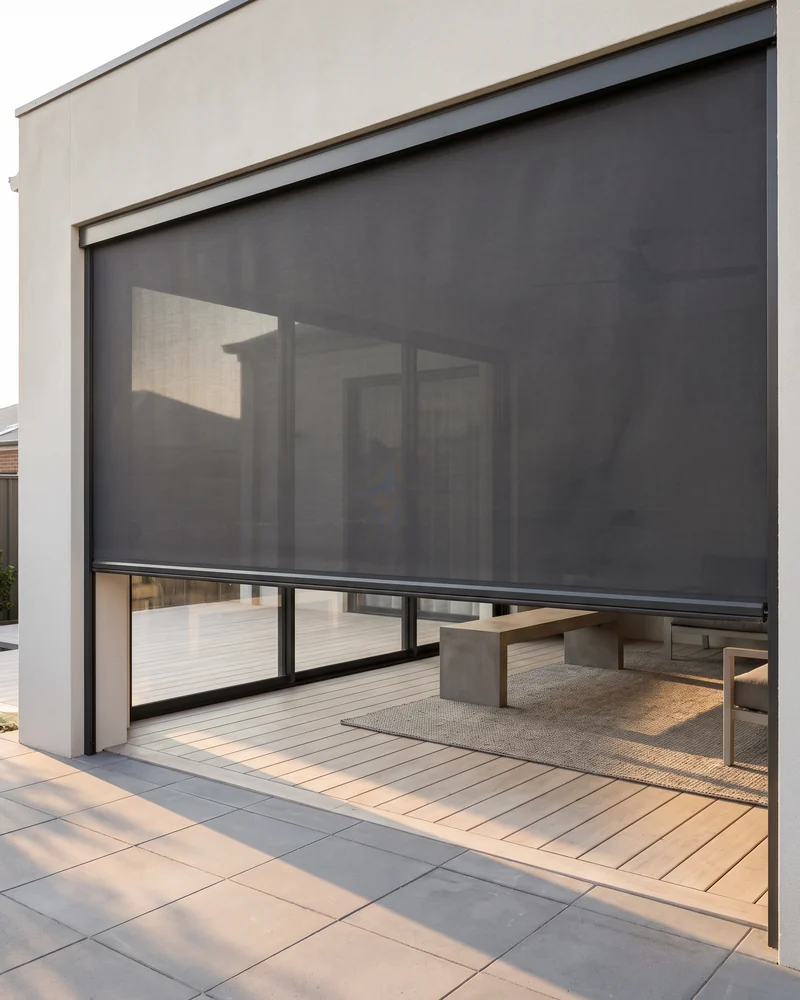
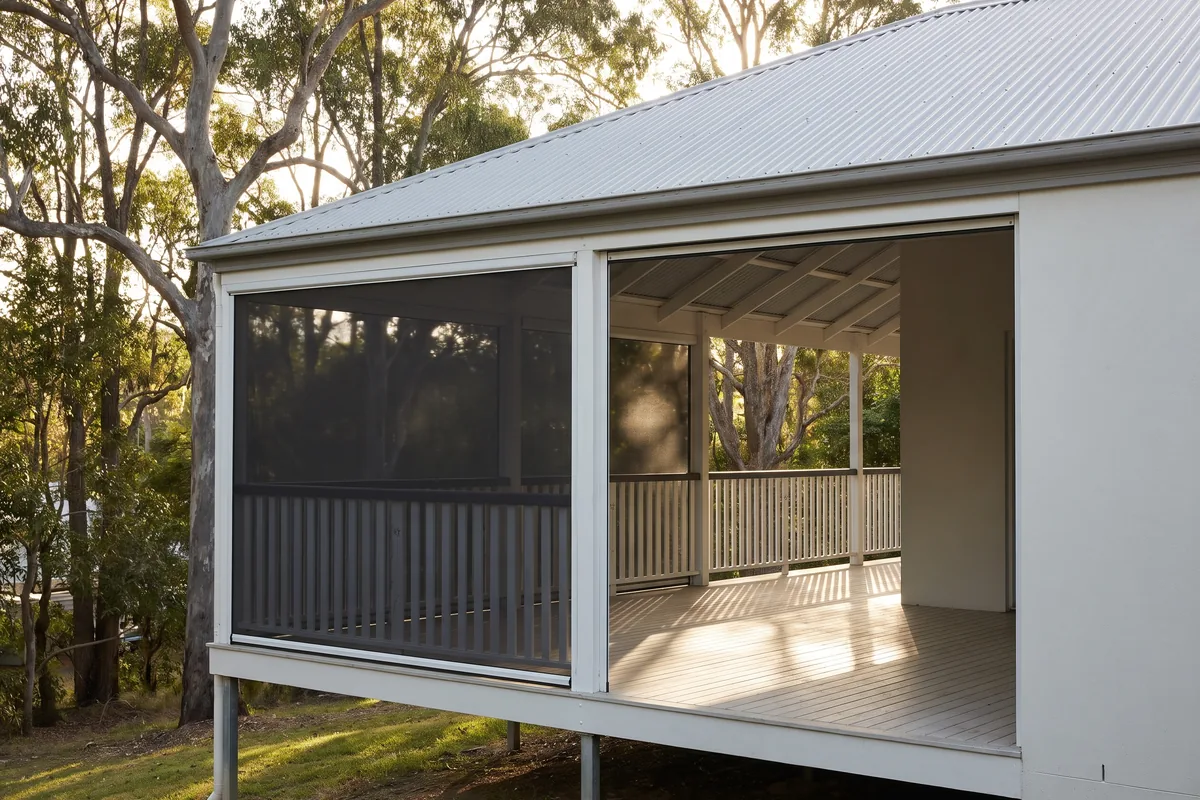
The council’s fact sheet also has the detail that matters most for a screen: a gap the size of a matchstick head is enough to let mosquitoes into a rainwater tank. A loose mesh panel, or a blind with a gap down each side, leaves far more than that. The Executive’s mesh is zipped into captured side channels, with a brush seal along the bottom bar, so the edges are closed as well as the face.
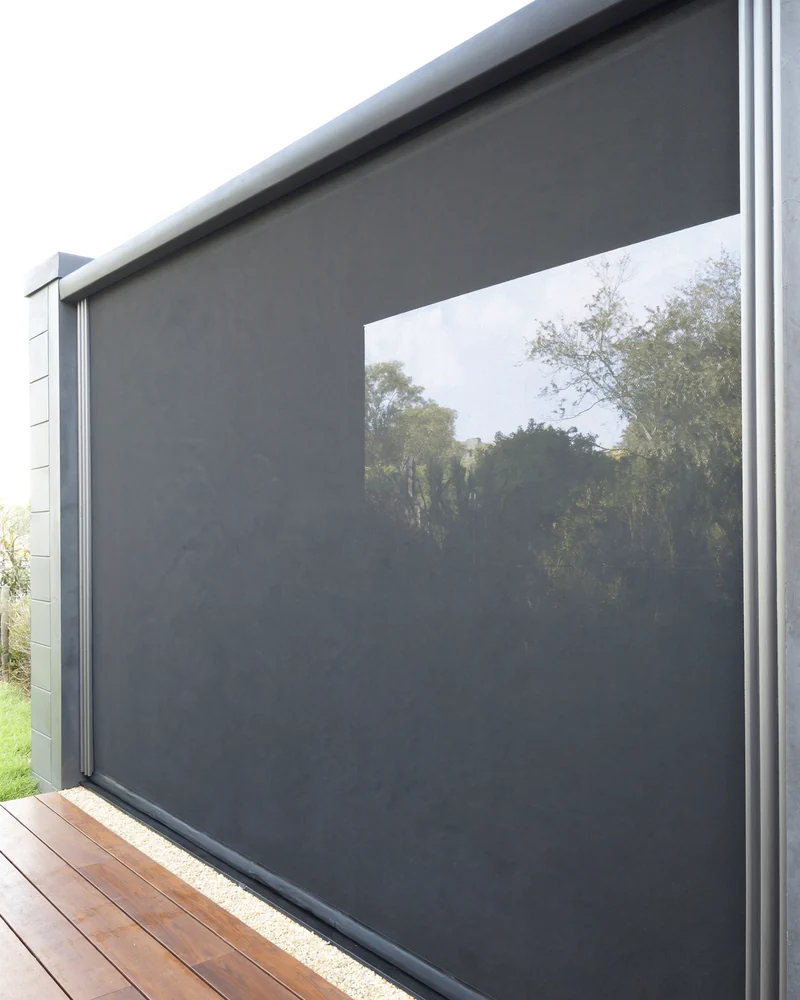
That’s also why I’d put the standard 18×14 insect mesh on most alfresco areas here, not the finer midge mesh. It keeps mosquitoes out at about 58 per cent open, against about 48 per cent for midge mesh, and that ten points is the breeze you built the outdoor room for. Canal and bayside homes are the exception, and the midge mesh guide covers who needs it.
Even the council’s fact sheet concedes that getting rid of mosquitoes is impossible, so the screen is the part you get to control.