Local conditions
What the sea breeze does to an awning
The Wind Here Keeps Office Hours
Inland, an awning’s enemy is the storm — one bad afternoon a summer, arriving faster than
anyone gets home. On this coast the problem is duller and far more constant. The
Gold Coast Seaway station
records a mean 3pm wind of 23.3 km/h, and it never drops below 19 km/h even in the middle of winter.
That is not weather. That is a schedule.
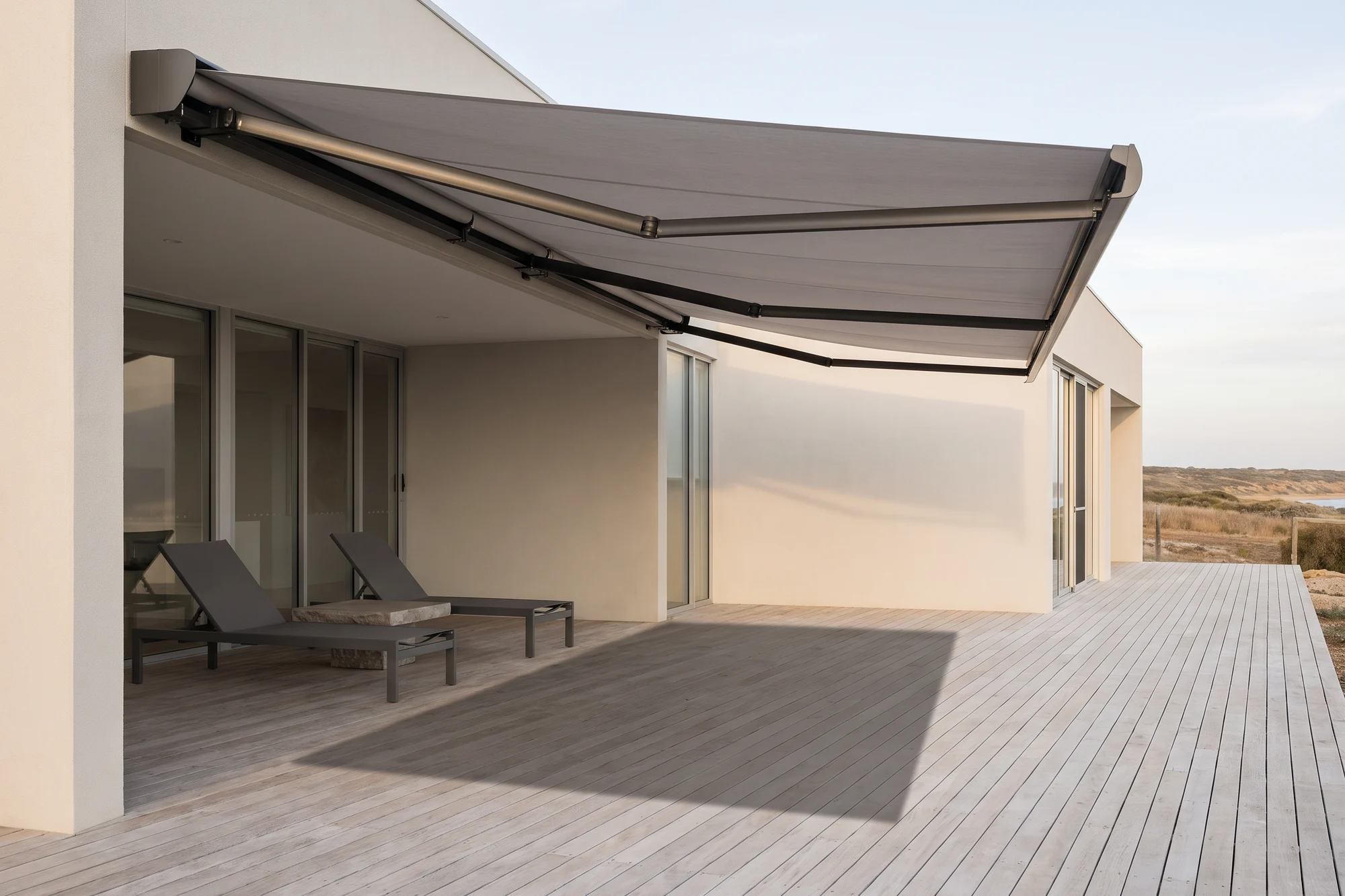
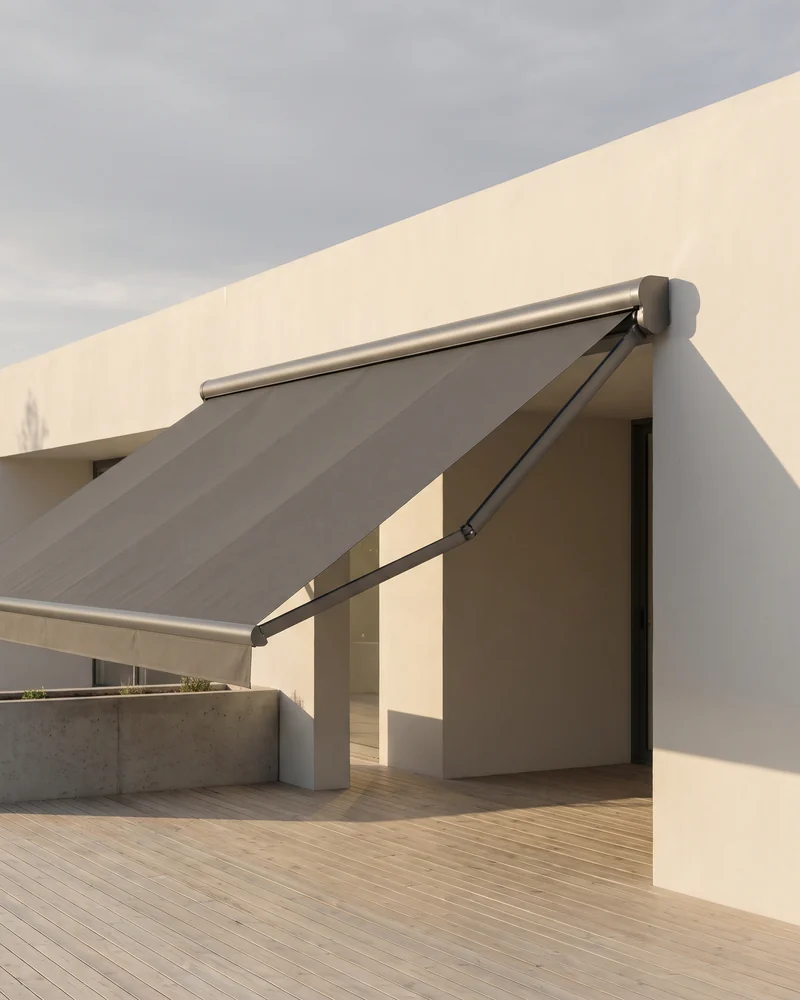
Which matters, because an awning is rated for wind the way a ladder is rated for weight. Ratings are
usually quoted on the Beaufort scale, where 6 means 39 to 49 km/h. An ordinary Gold Coast afternoon
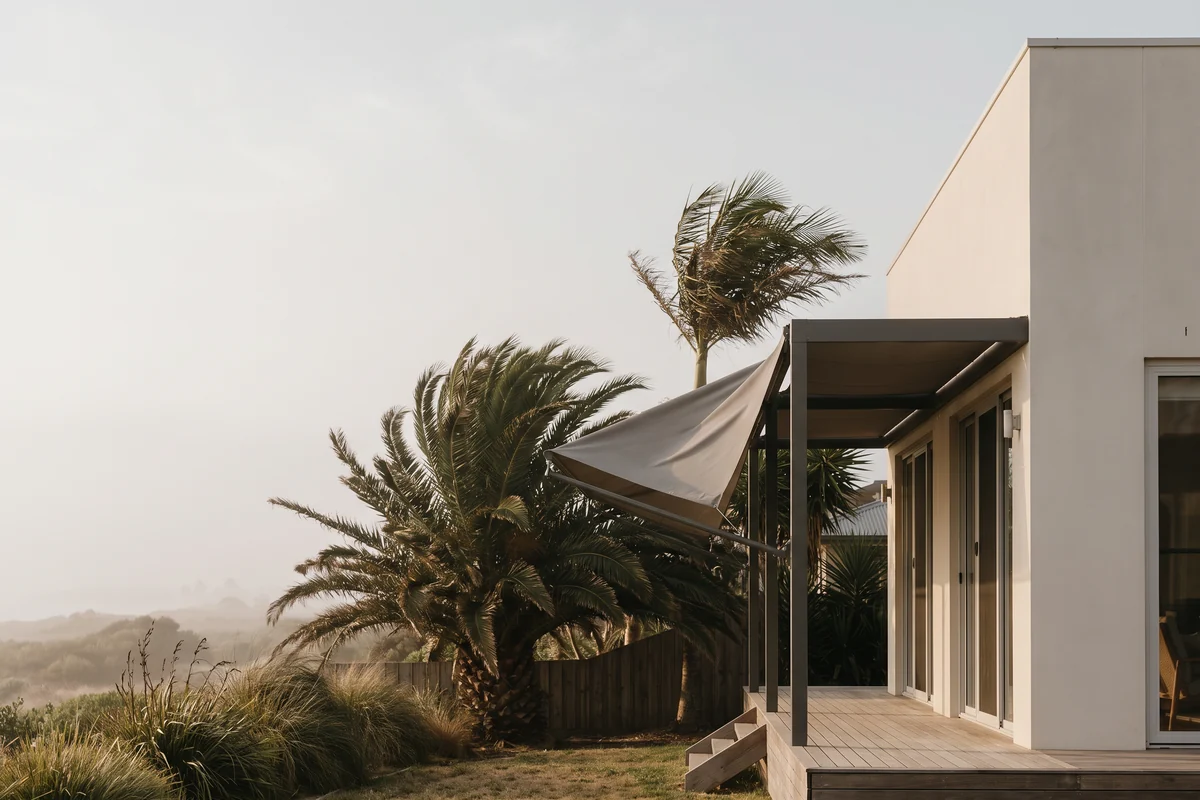
runs at about half that — comfortably inside the rating — and then does it again tomorrow,
and every afternoon through to March. Nothing fails. Things fatigue. The fabric still looks new while
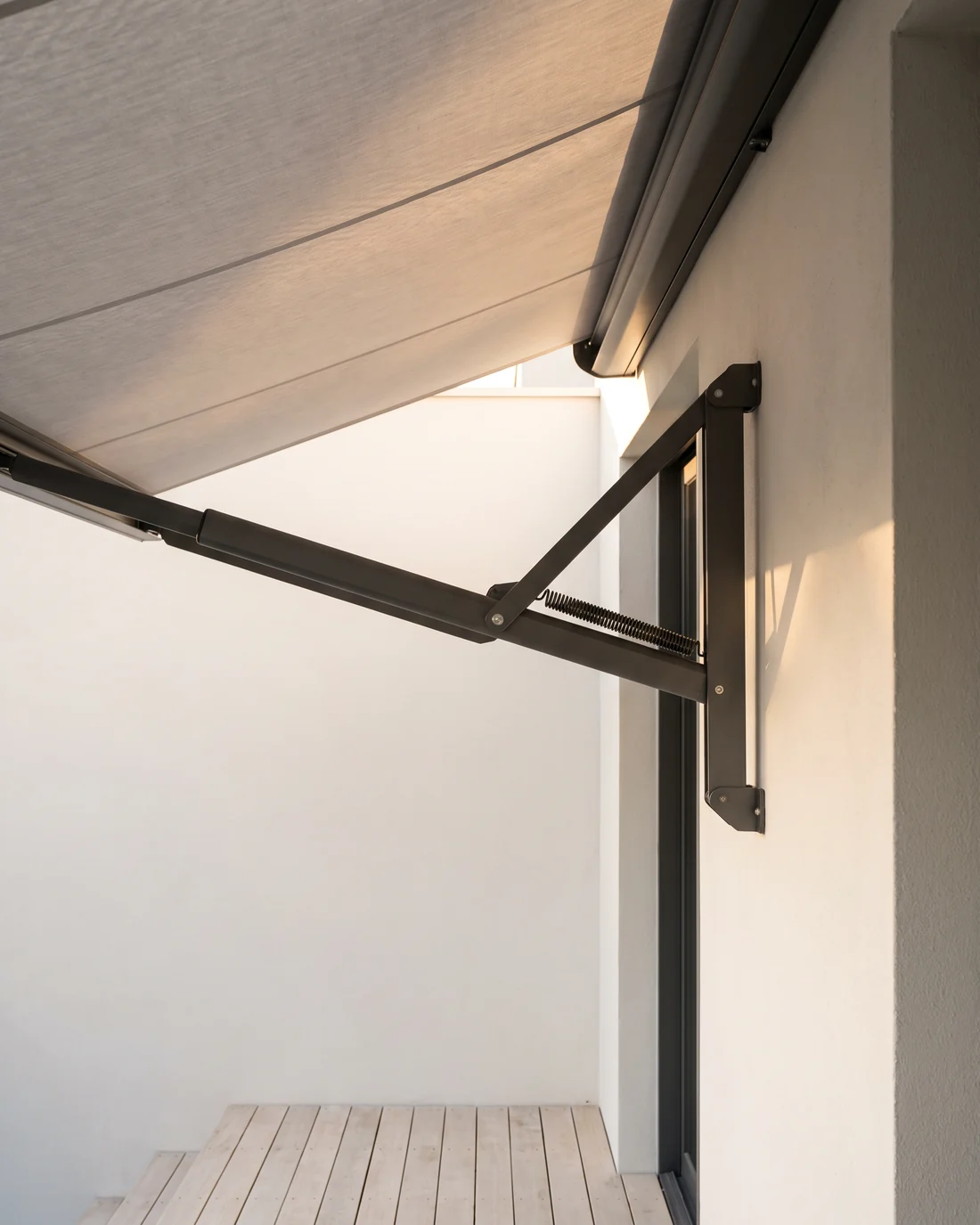
the arm joints, the springs and the fixings quietly do all the ageing, and salt in the air gets into
every one of them.
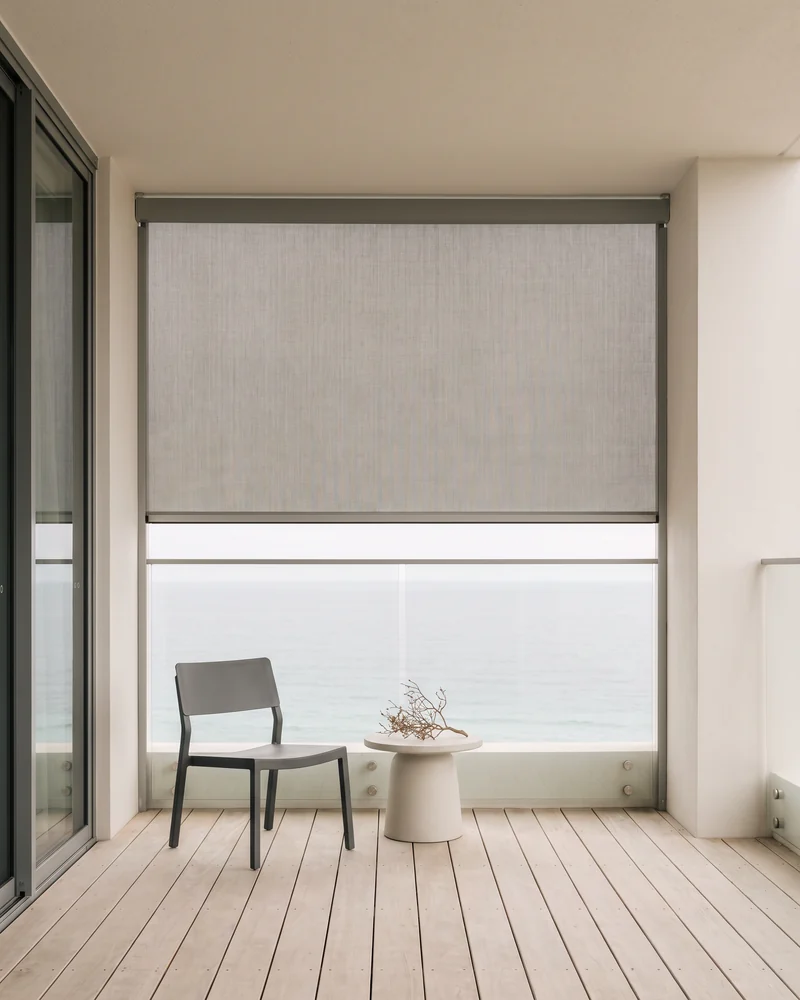
So the real question here is not which awning looks best in a brochure. It is whether the wall you
are putting it on faces the water or shelters from it, and shade is worth more outside the glass than
in — Your Home,
the Australian Government’s design guide, puts external shading well ahead of internal for
stopping summer heat. We go further into what this coast does to outdoor fabric on our
Gold Coast outdoor blinds page, and into what the wind
does to a loose one in why blinds bang in the wind.
An awning that has to be wound in every afternoon is not shade. It is a chore with a warranty.