

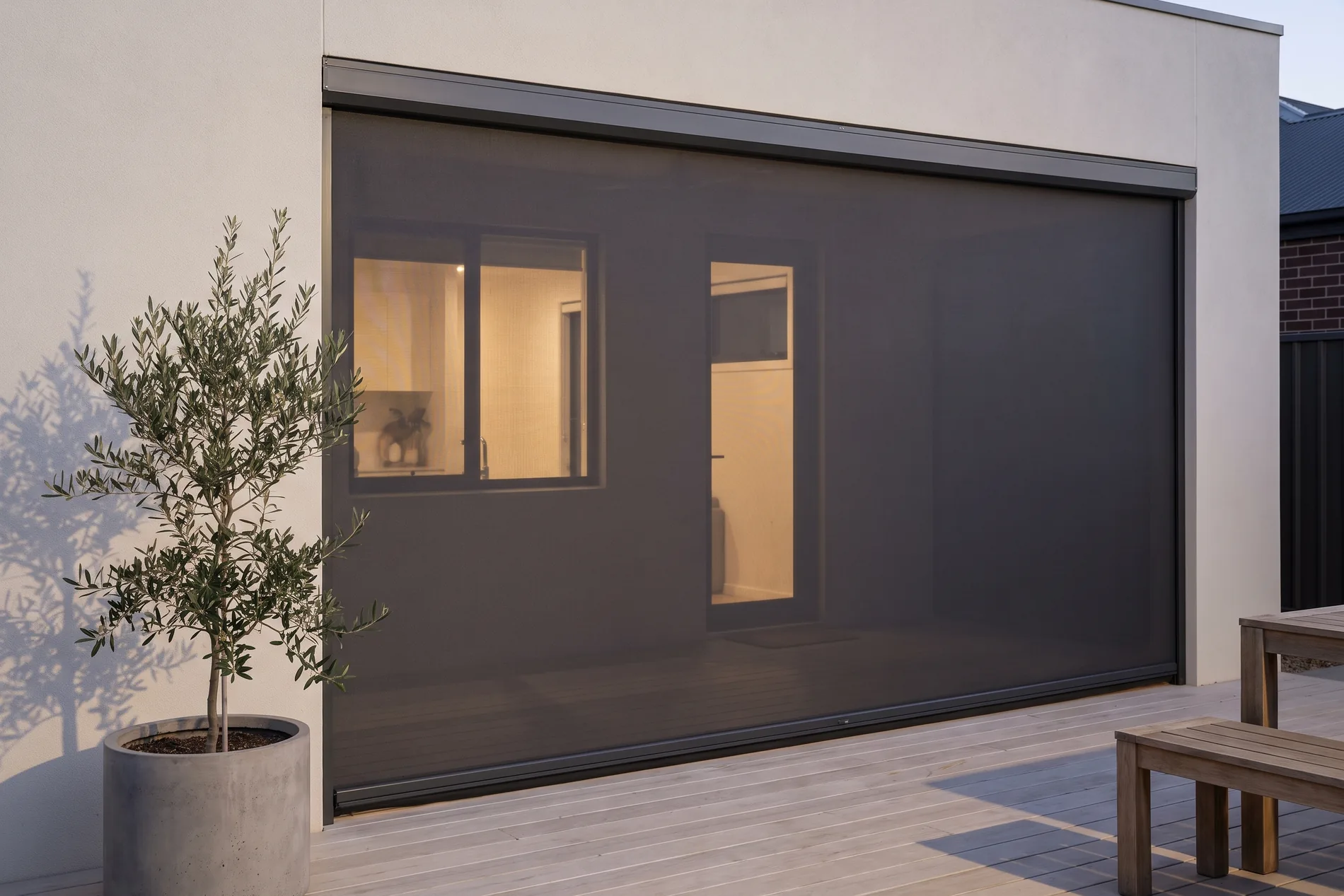
Alfresco blinds compared
Three ways to hang fabric across an outdoor opening, and only one of them seals the sides. What that changes in wind, rain and insects — with the numbers most pages leave out.
All three alfresco blinds hang fabric across an outdoor opening. The difference is how the edge is held: a cafe blind leaves the sides open, a straight drop hangs free with a weighted bar, and a zip track locks the fabric into a channel down both sides.
Forced to pick one: zip track, unless the opening is genuinely sheltered and the budget is the deciding factor.
Every guide to this compares them on looks and price. Neither is the thing that decides whether you are happy in three years. What decides it is the edge detail — and once you understand that, the rest of the comparison falls out of it.
The whole comparison is the edge
Take any outdoor blind and ask one question: what is holding the fabric at the sides? There are only three answers in common use.
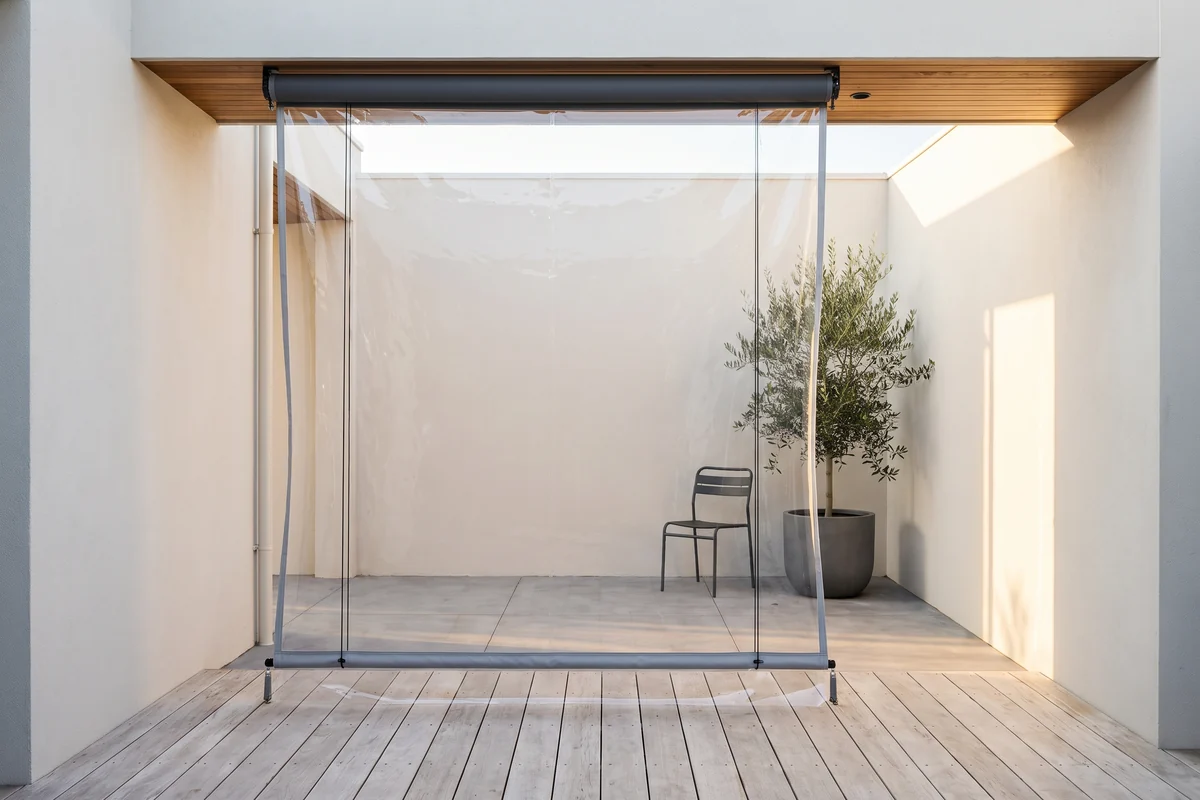
- Nothing — the cafe blind. Fabric hangs from a roll at the top with a bar at the bottom, worked by a rope and pulley, and the vertical edges are free. Usually clear PVC so you keep the view. Cheapest, simplest, and the most exposed.
- A cable or a weighted bar — the straight drop. The fabric drops vertically and is held taut top to bottom, sometimes by tensioned wire guides. Better than nothing, and still open at the edges.
- A channel — the zip track. The fabric edge carries half a zip that runs captive inside an aluminium side channel, so the edge cannot leave the track. No gap. This is the format we fit, as ZipScreen.
Everything people argue about downstream — billowing, rattling, rain blowing in, insects at dusk, how wide you can go — is a consequence of that one choice.
What a side channel actually is
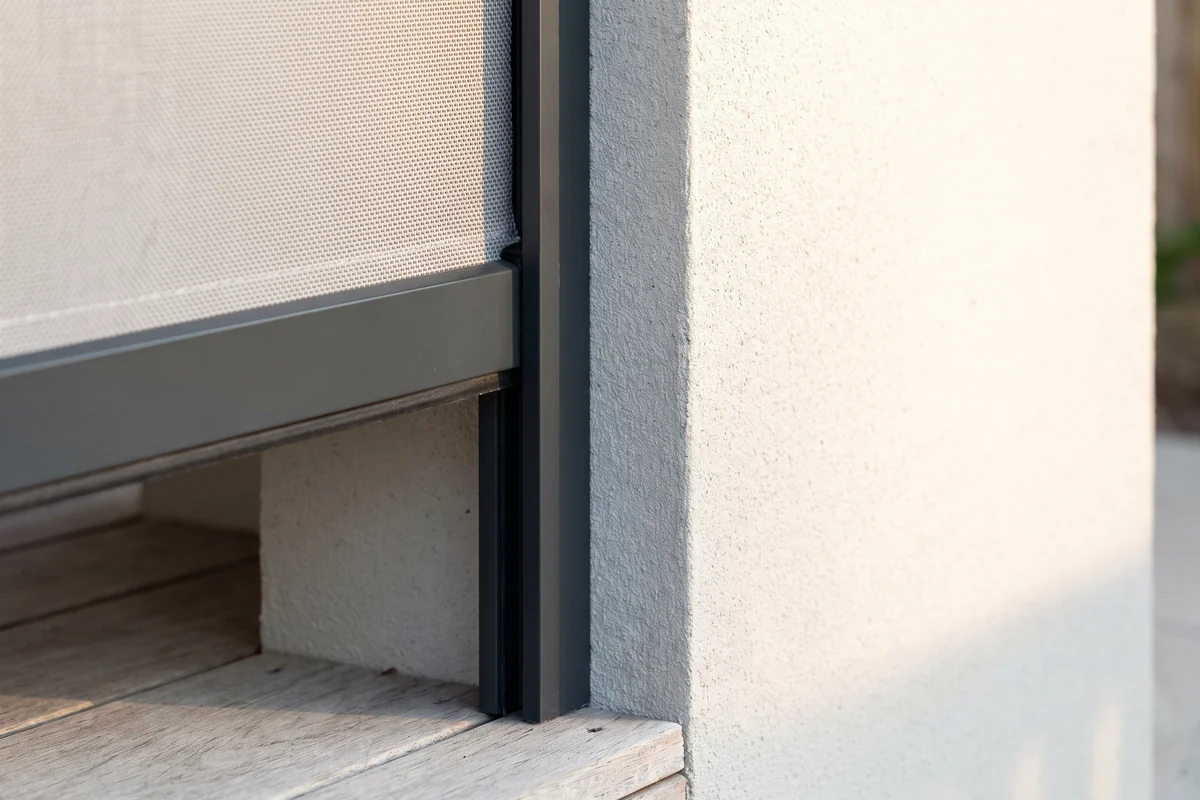
Worth being specific, because "side channel" is doing a lot of work in most marketing copy. On the system we fit it is a 52mm precision-extruded aluminium channel, and the retention is a concealed zip — z-LOCK — running inside it with zero gap between fabric and channel. The idler carries dual stainless steel bearings and has been tested beyond 10,000 cycles.
Those numbers matter for an unglamorous reason. An outdoor blind fails at the moving parts and the edges long before the fabric wears out, and the difference between a system that is still smooth in year seven and one that snatches is bearings and extrusion tolerance, not the picture on the brochure.
It is also the honest answer to the most common complaint about outdoor blinds. A blind held only top and bottom lets wind move the fabric, and the bottom bar knocks against whatever it hangs near — that is the rattle. A blind locked into a channel down both edges has nothing loose to move.
| Cafe blind | Straight drop | Zip track | |
|---|---|---|---|
| Sides sealed | No | No | Yes |
| Wind behaviour | Billows | Moves at the bar | Held flat |
| Wind-driven rain | Comes in at edges | Comes in at edges | Mostly stopped |
| Insects at dusk | No barrier | No barrier | Effectively excluded |
| Maximum span | Narrow | Moderate | 7m wide, 5m drop |
| Operation | Rope and pulley | Crank or spring | Spring, crank or motor |
| Relative cost | Lowest | Middle | Highest |
The wind number, quoted properly
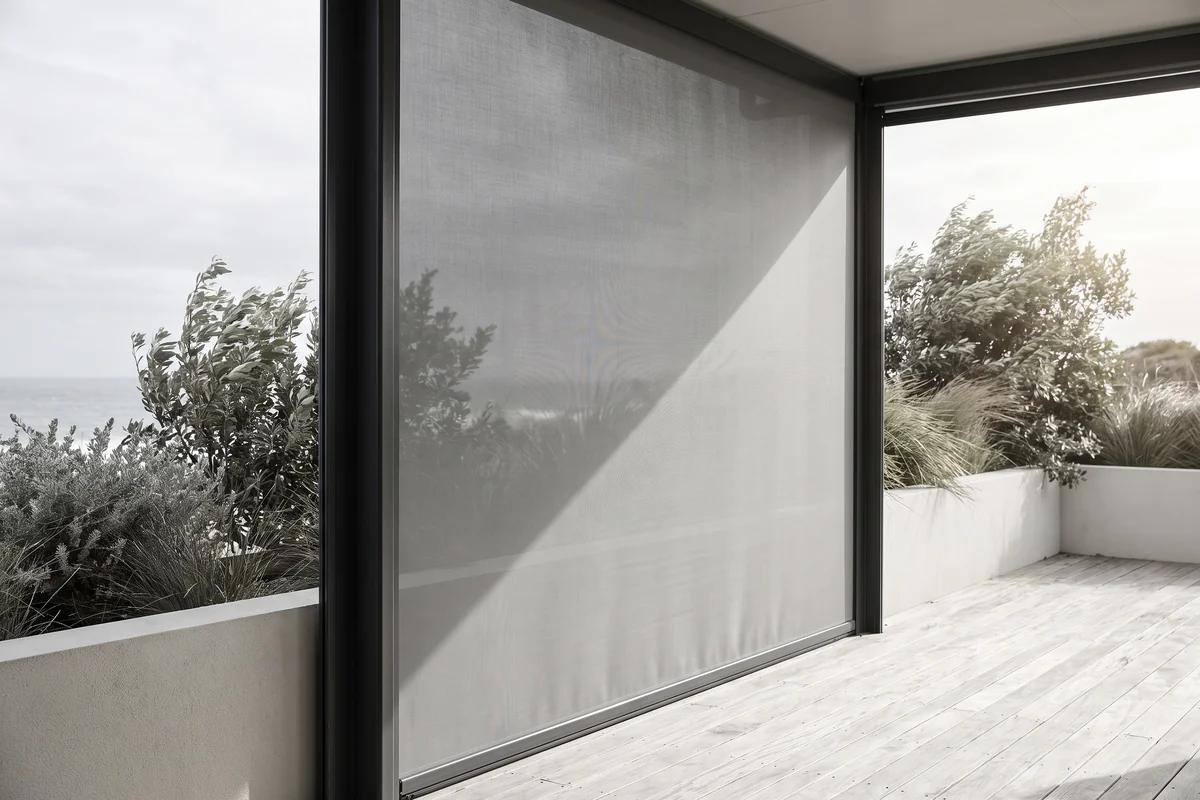
Zipscreen publishes a wind tunnel result, and it is worth reading carefully rather than as a headline. A 2.4m by 2.4m shade withstood the maximum achievable test speed of 140 km/h. Three things about that.
- It is a 2.4 by 2.4 metre panel, not a seven-metre span. Wind load rises with area, so the figure does not transfer to a big opening.
- 140 km/h is the fastest the tunnel could go, not the point at which the blind failed. "Withstood the maximum achievable speed" is the accurate phrasing; "rated to 140 km/h" is not, and you will see plenty of pages write the second one.
- The same manufacturer says to raise the blind when wind may exceed 50 km/h. That advice belongs in the same breath as the 140 figure, because quoting one without the other is how a spec sheet becomes a warranty dispute.
We did not run that test and we are not going to pretend otherwise — it is Zipscreen's, on Zipscreen's product. What we can tell you from fitting these on this coast is that ordinary conditions are not the problem. The Bureau of Meteorology puts the mean 3pm wind at 23.3 km/h at the Gold Coast Seaway and that barely moves across the year. A zip track sits through that comfortably with the blind down. It is the storm fronts you plan around. If yours already moves and knocks in ordinary wind, that is a fitting problem rather than a weather one, and how to stop blinds banging and rattling goes through the causes.
Not sure which format your opening needs?
We look at the span, the aspect and how exposed it is before quoting. Sometimes the answer is the cheaper one.
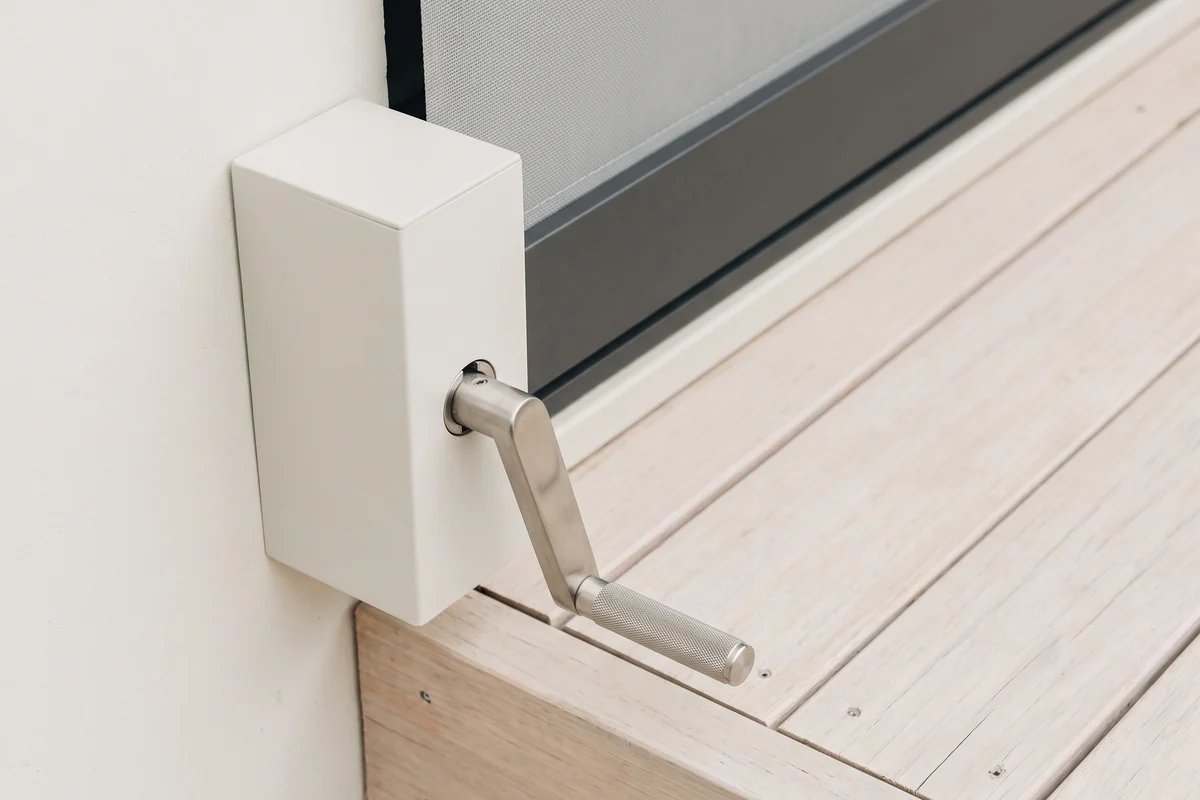
Operation, headbox and colour
Three control options, and the choice is about reach rather than luxury. A spring balance moved by hand suits most openings, with a pull stick where the blind is large or high. A crank handles a long drop without anyone stretching, and the handle either detaches or stores on a clip. A motor is worth it on anything you would otherwise stop bothering to lower — but it is specified when the blind is made, not added later.
The headbox comes in several sizes, and it is chosen by the roll diameter rather than by taste: a longer drop means more fabric on the tube, which means a deeper box. There is also an open bracket option where the roll is exposed. Standard colours run through white, Paperbark, Classic Cream, Woodland Grey, Surfmist, Black and Monument, with custom available — and four of those are Colorbond names, which is genuinely useful because it means the headbox can be matched to a roof or fascia you already have. Worth knowing that the two largest boxes are not available in every standard colour, so on a long drop the colour list gets shorter.
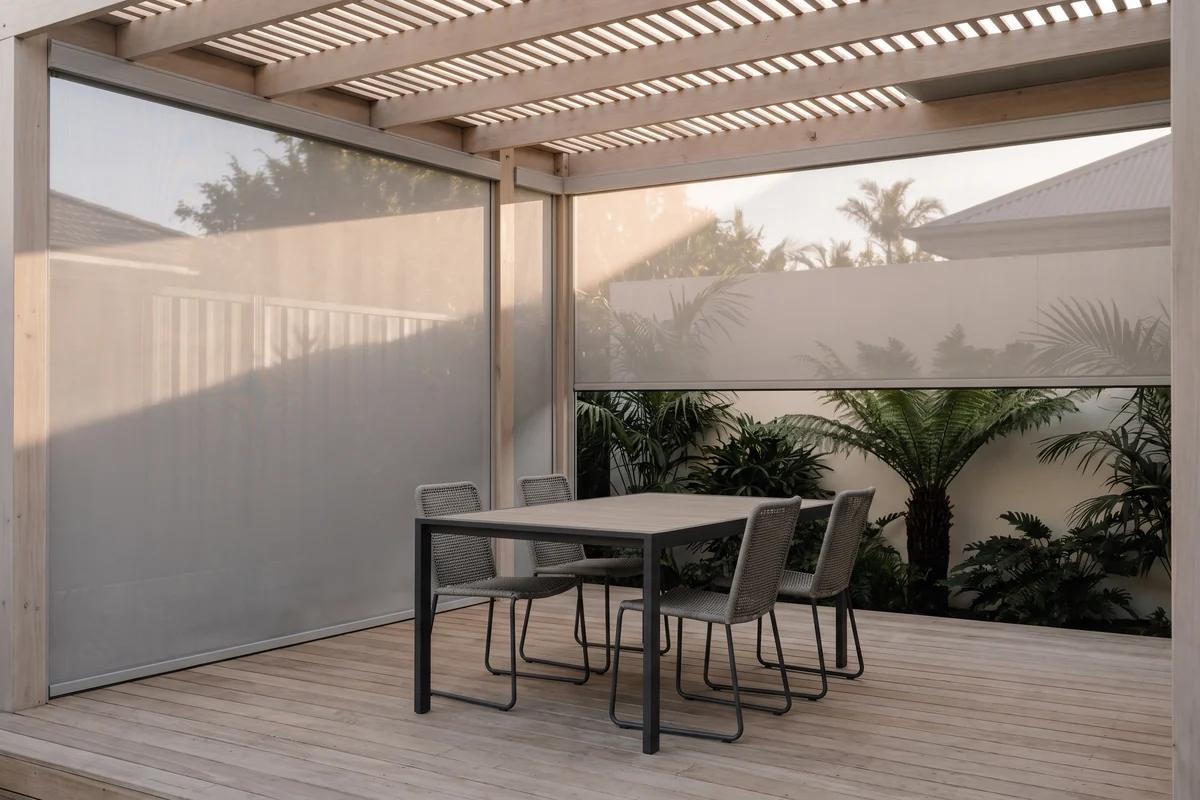
Fabric is the other axis, and it cuts across all three formats. Broadly you are choosing between an open mesh, which keeps airflow and a filtered view while stopping most of the sun, and a clear PVC, which keeps the view completely and stops the weather but also stops the breeze. Mesh is the usual answer where the space is used through summer; clear is the usual answer where the space is being closed in against wind and rain. Plenty of jobs end up with both — mesh on the sunny side, clear on the weather side — and that is a decision to make opening by opening rather than for the whole patio at once.
Which one to actually buy
Buy a cafe blind if the opening is sheltered, the budget is tight, and clear PVC with a view is what you want. A courtyard with walls on three sides is a perfectly good home for one, and we would rather fit that than talk you into something the opening does not need.
Buy a straight drop for a narrow verandah or an entry nook where you want quick shade and the span is short. It is the middle option in every sense.
Buy a zip track if the opening catches wind, if you want to use the space at dusk without insects, if the span is wide, or if you want the blind to be able to stay down in weather rather than being put away at the first gust. On the coast that is most openings, which is why it is most of what we fit — and the ZipScreen system is the one we quote against. If you are weighing the brands rather than the formats, ZipScreen versus Ziptrak covers that separately.
One thing none of the three will do is make the space warm. Shade helps in summer and does nothing in July, and if you want the area usable year-round the answer is an outdoor heater and a wind break, not a better blind. What outdoor blinds do about heat goes into the summer half of that properly.
Frequently asked questions
What is the difference between cafe blinds and zip track blinds?
The edge. A cafe blind is held at the top and bottom only, with open sides, and is usually pulled by a rope and pulley. A zip track blind has the fabric edge locked inside an aluminium channel down both sides, so there is no gap. That one difference drives everything else — wind, rain, insects and noise.
Which alfresco blind is best for wind?
Zip track, and it is not close. With the fabric captive in the channel there is nothing loose for wind to move. A cafe blind with open sides will billow and a straight drop will move at the bottom bar. That said, no outdoor blind is a wall, and every manufacturer tells you to raise it in serious wind.
Are alfresco blinds waterproof?
None of them are. A zip track sheds a shower well and stops most wind-driven spray because the sides are sealed; a cafe blind lets water in at the edges. Treat any of them as something that makes the space usable in ordinary weather, not as an outdoor room sealed against a storm.
Do alfresco blinds keep mosquitoes out?
Only the zip track format comes close, because it is the only one without a gap down each side. With a mesh fabric it makes a patio usable at dusk in a way an open-sided blind never will. It is not a sealed fly screen, but on a coastal block it is the difference between sitting outside and going in.
How wide can an alfresco blind go?
Zip track spans furthest — up to 7 metres wide and 5 metres down in a single blind. Cafe blinds and straight drops are usually kept narrower because there is nothing controlling the fabric between the top and the bottom, so the wider they get the more they move.
Are cafe blinds cheaper than zip track?
Yes, generally, and on a sheltered courtyard that can be the right call. You are paying less because there are no side channels and less componentry running in them. The saving stops making sense the moment the opening catches wind, because that is the exact thing the channels are for.
Sources Australian Government Your Home — Glazing · ACCC blinds and window fittings mandatory standard · Sleep Health Foundation
Back to the journalKeep reading
Related from the journal
 Guides
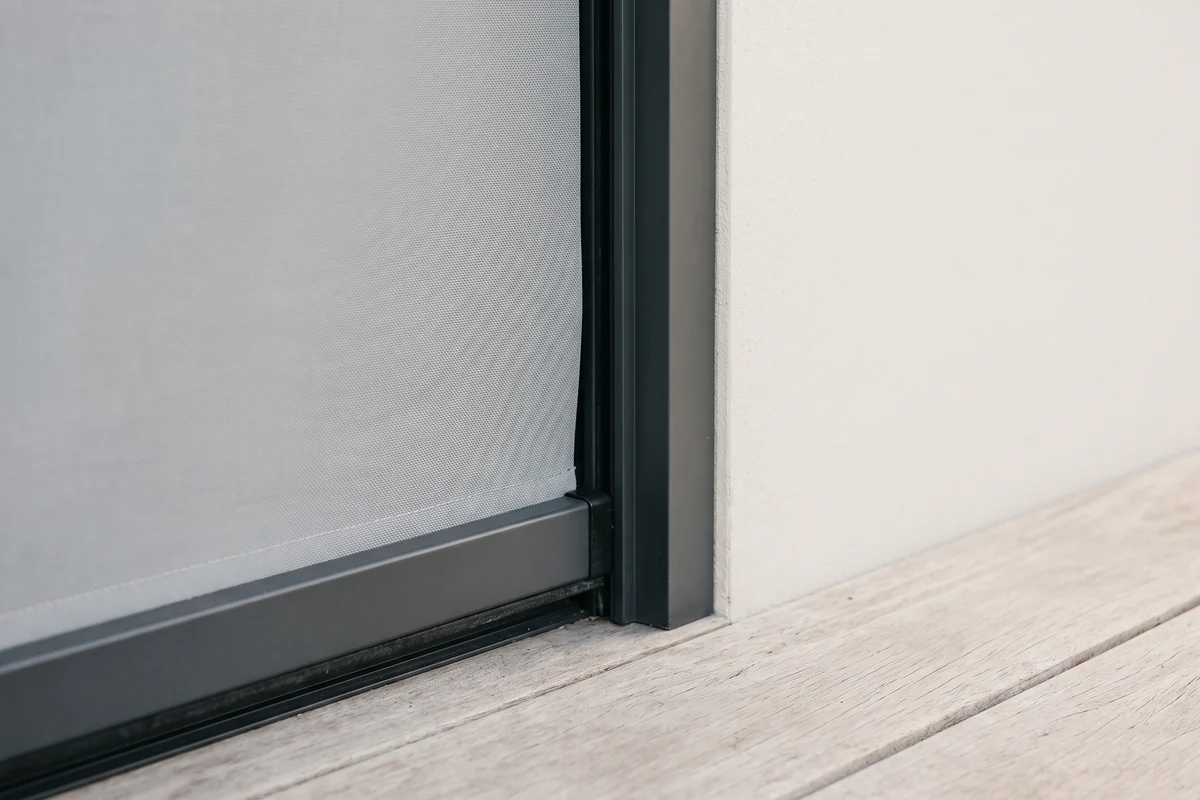
ZipScreen vs Ziptrak
Two track-guided systems, two different ways of holding the fabric — and the difference decides how the blind behaves in wind.
Read more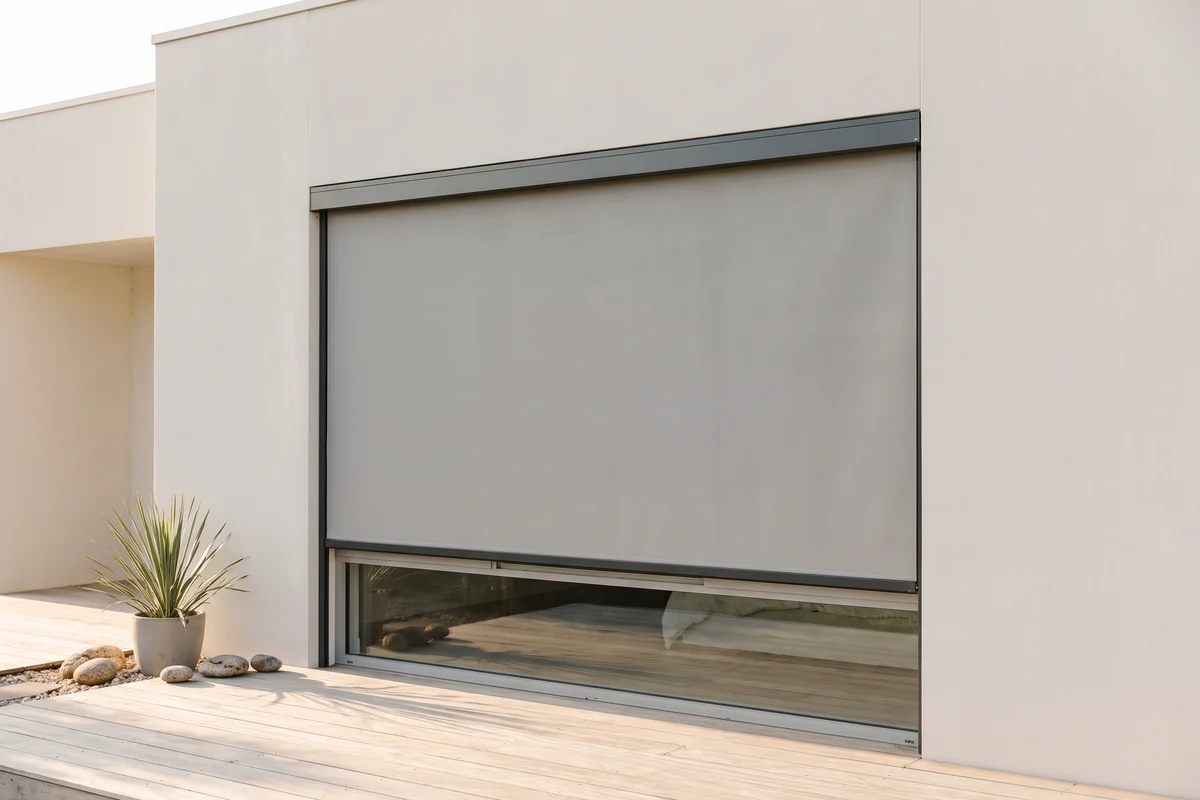 Outdoor
Do Outdoor Blinds Reduce Heat?
Stopping the sun on the outside of the glass is the whole trick. Here is what that is worth, and where it stops.
Read more Guides
Types of curtains and blinds
Nine kinds of blind, three curtain headings, two fabric families and one shutter. What each one is genuinely good at, and the two categories we do not sell at all.
Read more