

Midge mesh vs fly screen: which does a Gold Coast home need?
A standard fly screen stops flies and mosquitoes. Midge mesh stops the biting midges that come through it. Which one your house needs comes down to how close you live to tidal water, the edges and the breeze.
On the Gold Coast, it comes down to tidal water. Near a canal, estuary or mangroves, choose midge mesh: an 18×18 weave against the 18×14 of a standard fly screen, and it stops the biting midges most people call sandflies, which come straight through the ordinary kind. Well away from tidal sand, where the problem is flies and mosquitoes, a standard fly screen does the job and keeps more breeze. Either way, it only works if the edges are sealed, because a midge that can't get through the weave will go round it.
It costs you some breeze. Phantom puts midge mesh at about 48% open against about 58% for standard mesh, so specify it where the midges are and nowhere else.
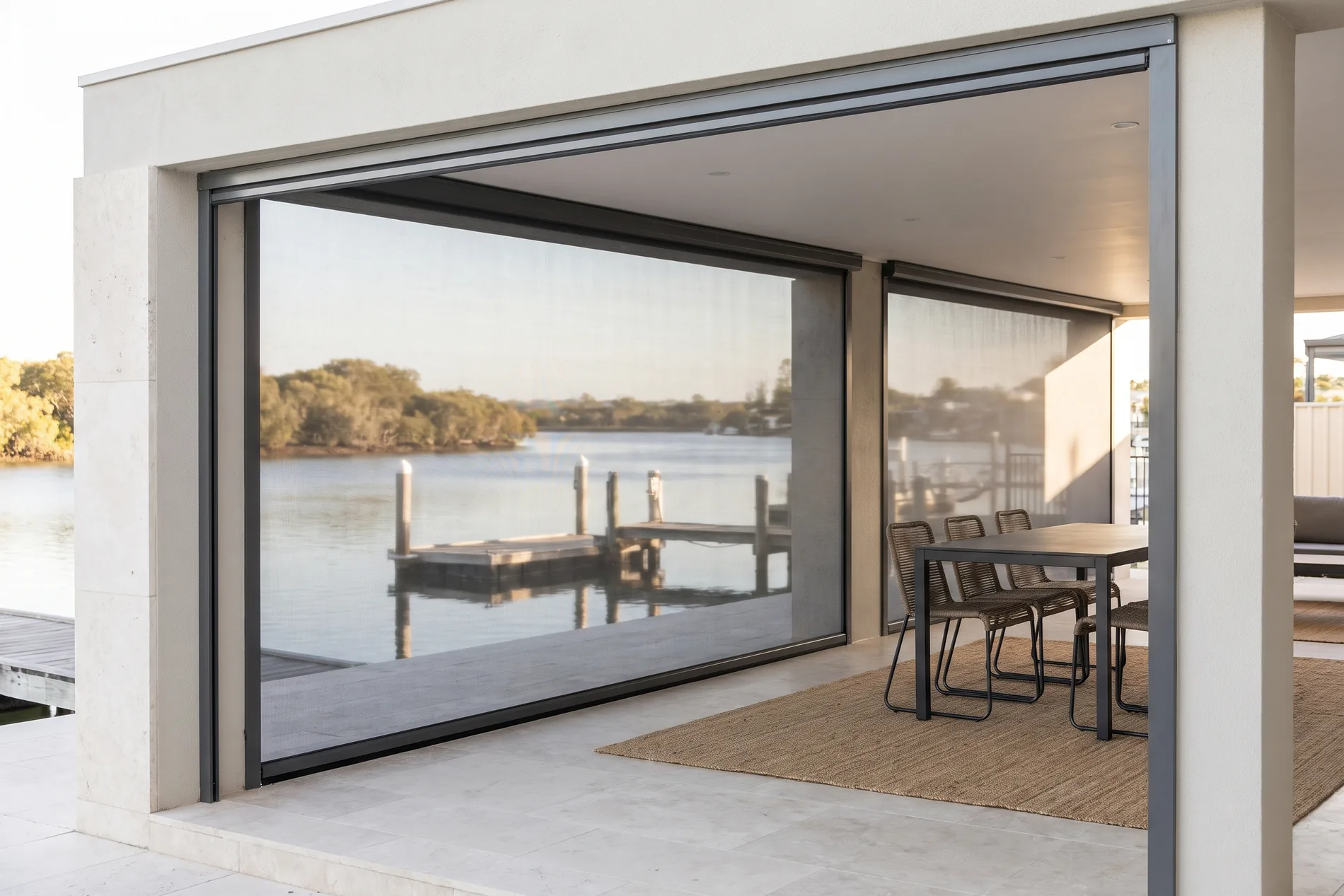
We fit midge mesh in the Phantom Executive, the motorised screen that closes patios, alfresco areas and balconies, so that's the setting for everything below. If you're after midge mesh for one window or a single back door, that's a different product and not one we supply, and I'd rather tell you now than three sections in. For a big opening, here's what decides whether the finer weave earns its place: which insect you're dealing with, the weave, the edges, the airflow it costs, and when you can skip it.
Know what's actually biting you
If you get bitten on the back deck at dusk and never see what did it, it's almost certainly a biting midge. WA Health puts them at 1 to 3 millimetres long, small enough that most people never spot one. The bite is out of all proportion to the insect.
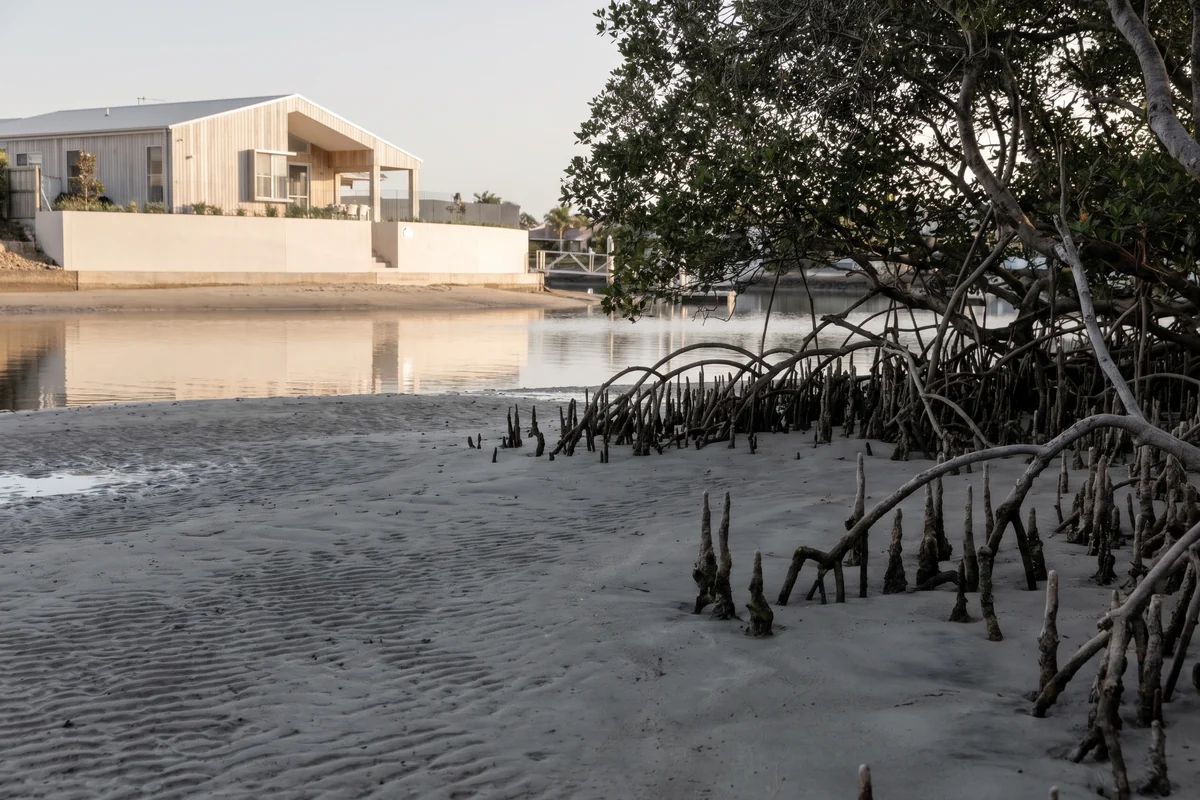
Where they live tells you whether you need the mesh. The City of Gold Coast says midges breed in moist, sandy sediment between the high and low tide marks, and not in backyard containers, freshwater ponds or long grass. That's why canal estates, estuaries and mangrove fronts get them badly and a house two suburbs inland often doesn't. WA Health notes that many species only travel a few hundred metres from where they breed, though some go several kilometres.
They also keep regular hours. Midges are most active at dawn and dusk and on humid, calm days, and the council describes them as poor flyers that largely give up when there's a breeze. Mosquitoes are a different problem. They breed in still fresh water, and standard insect mesh already stops them.
Choose the weave by the gap, not the label
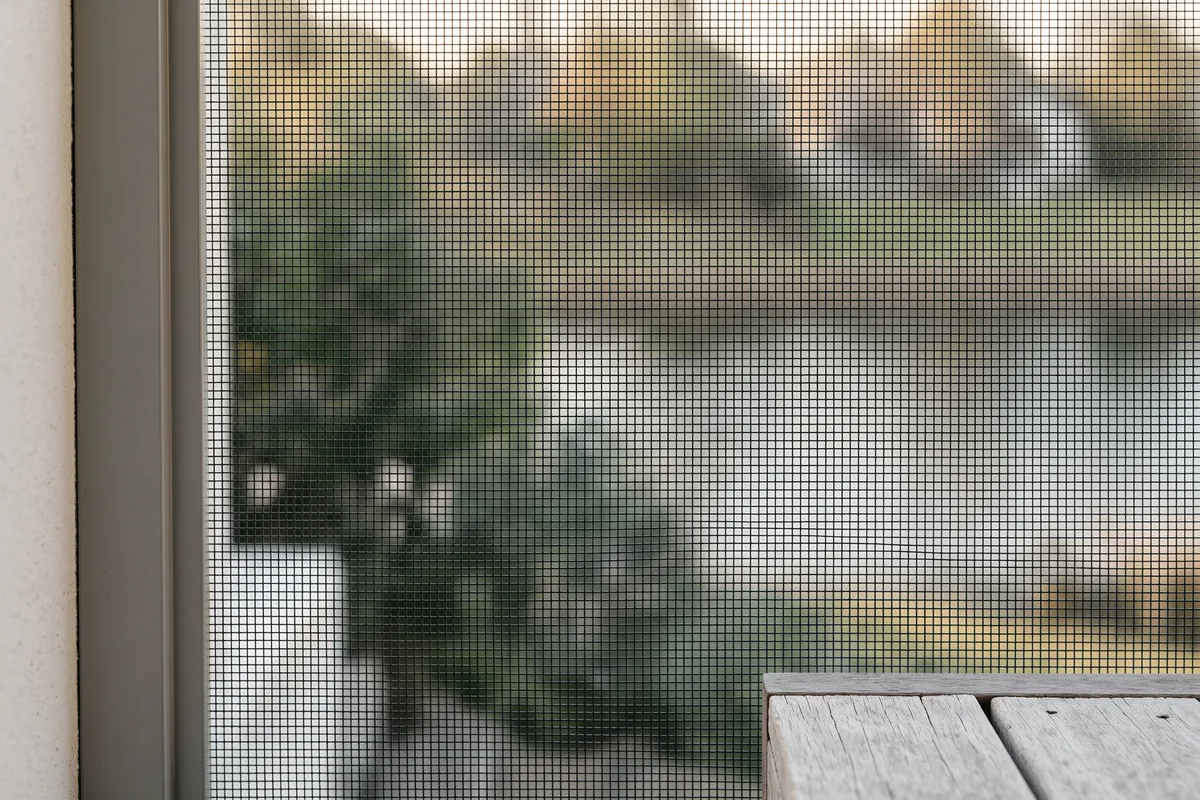
Mesh is described by its weave: how many strands run each way across the same width. More strands means smaller holes. Standard insect mesh is 18×14. Midge mesh is 18×18, so the holes close up in one direction, and that's enough to stop an insect a millimetre or two long. The City of Gold Coast is blunt about the alternative: standard insect screens will not reliably keep midges out.
You'll also see it sold as no-see-um mesh. That's the American name for the same thing, because no-see-ums is what they call biting midges. These are the three Phantom weaves that matter here, with Phantom's openness figures:
| Standard fly screen (18×14) | Midge mesh (18×18) | Dense insect mesh (30×20) | |
|---|---|---|---|
| Openness | about 58% | about 48% | about 32% |
| Flies and mosquitoes | Yes | Yes | Yes |
| Biting midges | Not reliably | Built for them | Not sold as midge mesh |
| Sun blocked (Phantom's figure) | up to 40% | — | up to 65% |
| Choose it for | Homes away from tidal water | Canals, estuaries, mangroves | Insects plus more shade |
The 30×20 is denser again, but it's sold for sun control, and Phantom doesn't position it as a midge mesh. If shade is the bigger problem than the bugs, read our guide to openness factor, which works the same way outside as in.
Seal the edges, or the weave doesn't matter
This is the part nobody selling rolls of midge mesh mentions. A screen keeps insects out only as well as its worst gap, and on a big opening the gaps are at the sides and the floor. You can stretch the finest weave on the market across an alfresco, and if it hangs loose at one column, the midges will find that column.
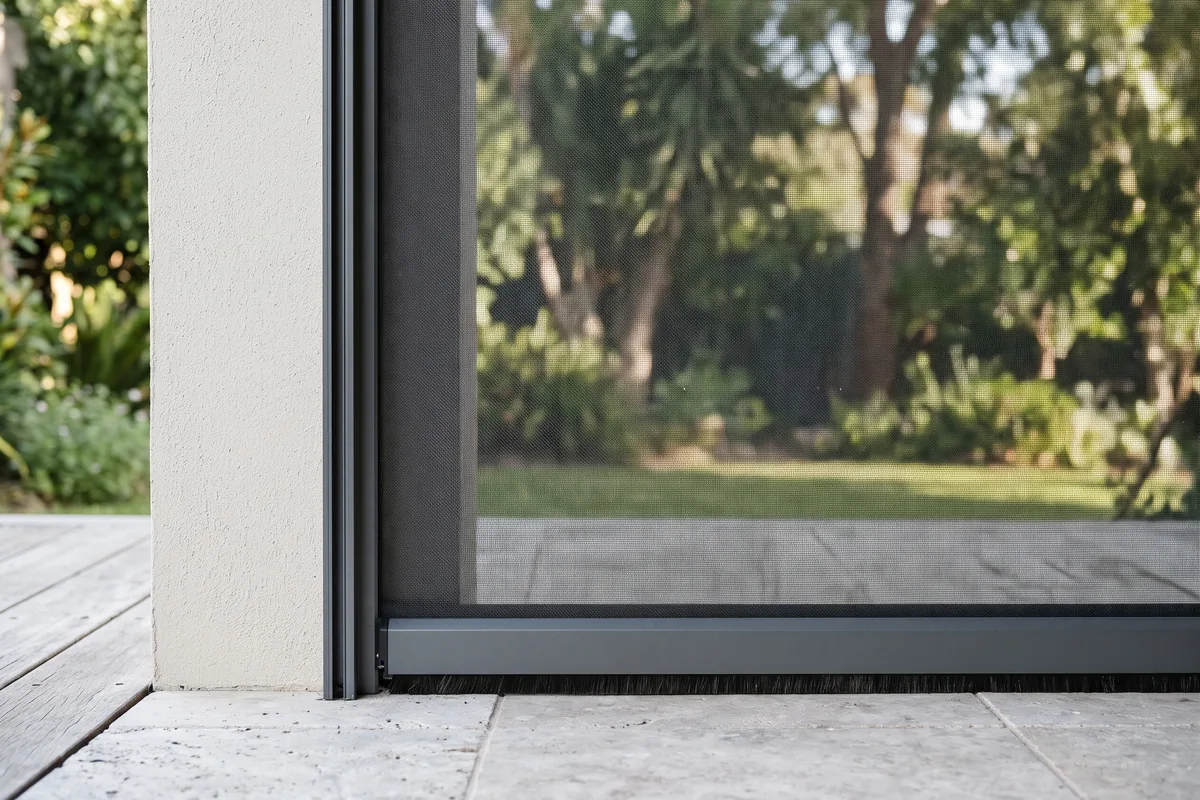
On the Executive, a zip is bonded down each edge of the mesh and runs inside a captured side channel, so the sides are closed for the full drop. A brush seal on the bottom bar closes the line at the floor. When we measure, these are the things I check, because they decide whether the mesh you paid for does its job:
- Both sides captured, top to bottom. The channel has to run the full height on a surface it can be fixed straight and true to.
- The floor is level across the span. The brush seal has to meet the floor along the whole opening. A step, a hob or a fall in the tiles needs dealing with before the screen is made, not after.
- Nothing else is open. A screened alfresco with an unscreened side door or a gap above the beam is a screened alfresco in name only.
Run the screen fully down when the midges are out. Half-down is the position a screen likes least in wind, and a gap at the bottom is an invitation.
Count what the finer weave costs you
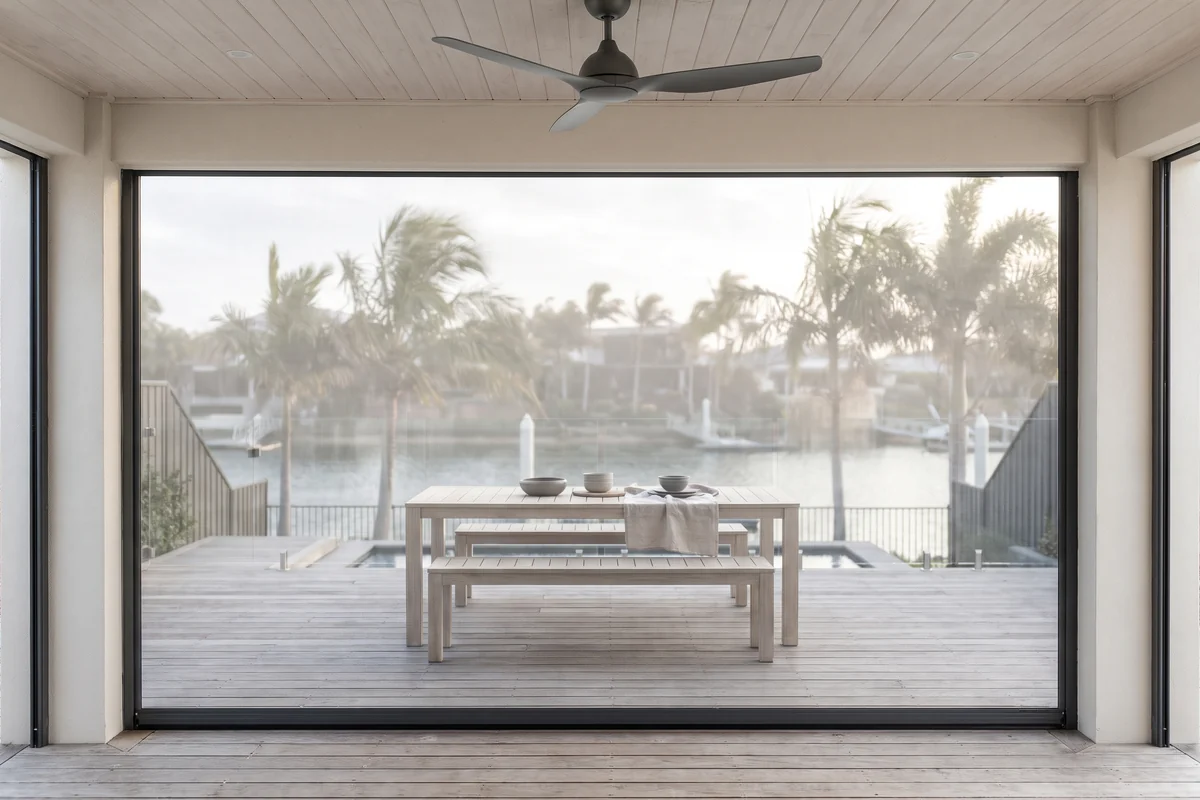
Every screen-maker ranking for this term says midge mesh has excellent airflow. It has good airflow. Going from about 58% open to about 48% takes away roughly a sixth of the open area, and on a still, humid February evening you'll feel that. The view through it is a little darker, too.
On a canal, that's a small price, and our guide to Phantom Executive screens makes the same call. The fix for the lost breeze is the same thing that helps with the midges: moving air. The City of Gold Coast suggests a fan or a breezy spot because midges are weak flyers and struggle to land and bite in moving air, and WA Health says ceiling fans may discourage them. A ceiling fan in a screened alfresco does both jobs.
Not sure your opening needs midge mesh?
We'll measure it, look at where the water is and how the breeze comes through, and quote the mesh it actually needs. Itemised, within 24 to 48 hours of the measure.
Decide by how close you live to tidal water
Midge mesh is the right answer on a lot of Gold Coast houses. It isn't the right answer on all of them, and specifying it everywhere means paying in airflow for a problem you don't have.
- Choose midge mesh if you're on a canal, river or estuary, back onto mangroves, or get bitten at dusk by something you can't see. Hope Island, Runaway Bay, Sanctuary Cove and Paradise Point are the obvious ones.
- Choose a standard fly screen if your problem is flies and mosquitoes, you're well away from tidal sand, and you'd rather keep every bit of breeze.
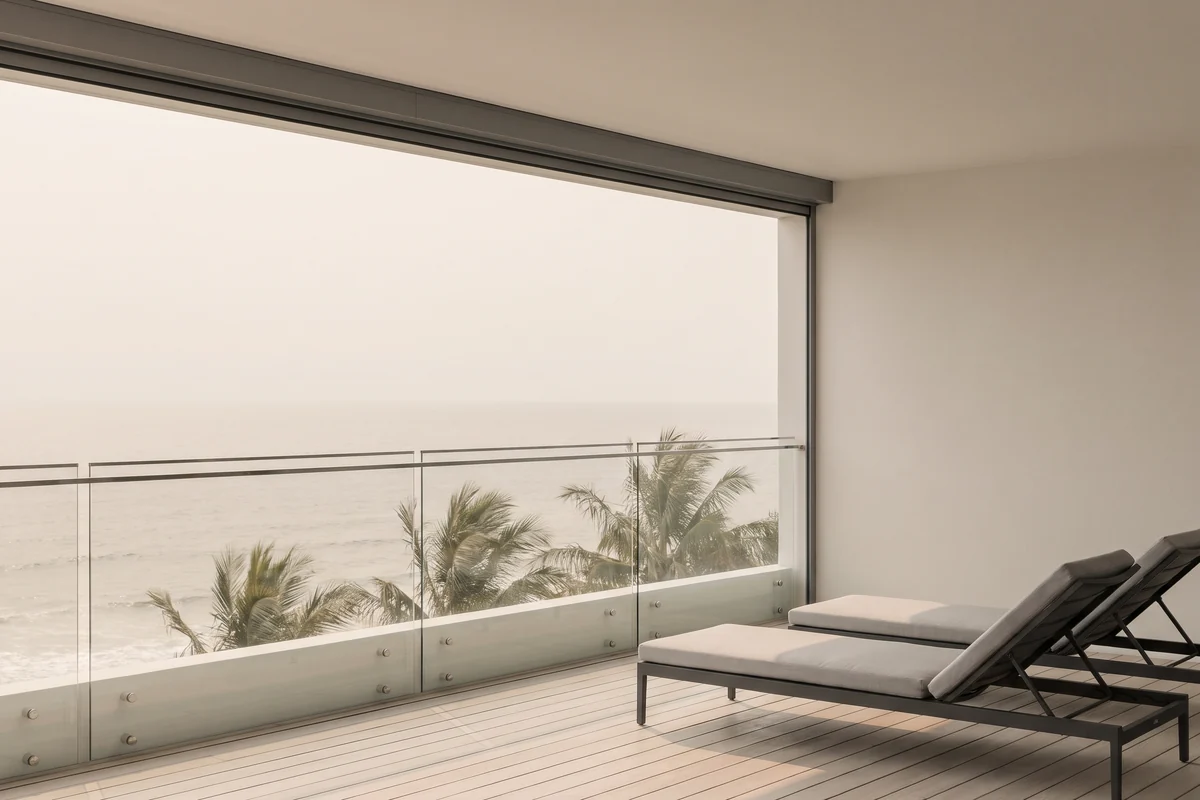
- Think twice about any fine mesh on an exposed balcony that catches a steady sea breeze. Midges largely give up in wind, so the mesh may be doing very little while the breeze you bought the apartment for comes through a sixth narrower.
If you're still unsure, the honest test is a calm evening in season. Sit out at dusk with the screen up. If nothing bites, you don't need the finer weave. Midge season and the outdoor season are the same months, which is why our retractable screens on the Gold Coast page suggests ordering before spring, not after the first bad night. The midges won't wait for the quote.
Frequently asked questions
Is midge mesh better than a standard flyscreen?
For biting midges, yes. The 18×18 weave stops them and an 18×14 fly screen doesn’t reliably. For flies and mosquitoes the two do the same job, and the standard screen keeps about 58% of the opening clear against about 48%, so midge mesh is only better where midges are the problem.
Do I need midge mesh on the Gold Coast?
If you’re on a canal, river or estuary, or back onto mangroves, probably. The City of Gold Coast says midges breed in sandy sediment between the tide marks and that standard insect screens won’t reliably keep them out. Further from tidal water, a standard fly screen usually does the job.
Does midge mesh work?
Yes, if the screen is sealed at the edges. The 18×18 weave stops biting midges that get through standard insect mesh, but any gap at the sides or the floor lets them straight past it.
What size mesh keeps midges out?
An 18×18 midge mesh, rather than the standard 18×14. Biting midges are 1 to 3 millimetres long, and the extra strands close the holes up enough to stop them.
Does midge mesh reduce airflow?
A little. Phantom puts its midge mesh at about 48% open against about 58% for standard insect mesh, so you lose roughly a sixth of the open area. A ceiling fan in the alfresco makes up for most of it, and helps keep midges off as well.
Do fans keep midges away?
They help. Midges are weak flyers, and the City of Gold Coast suggests a fan or a breezy spot because moving air makes it harder for them to land and bite. A fan works best alongside a sealed midge screen, not instead of one.
Where can I get midge mesh?
We fit midge mesh in Phantom Executive screens for patios, alfresco areas and balconies, measured and installed. A screen for a single window or door is a different product that we don't supply.
Do midges carry disease?
Not to people, as far as is known. The City of Gold Coast says biting midges are irritating but not known to transmit diseases to humans.
Sources City of Gold Coast Midges · WA Health Biting midge (sand flies) · Phantom Screens Australia mesh brochure and outdoor blinds
Back to the journalKeep reading
Related from the journal
 Guides
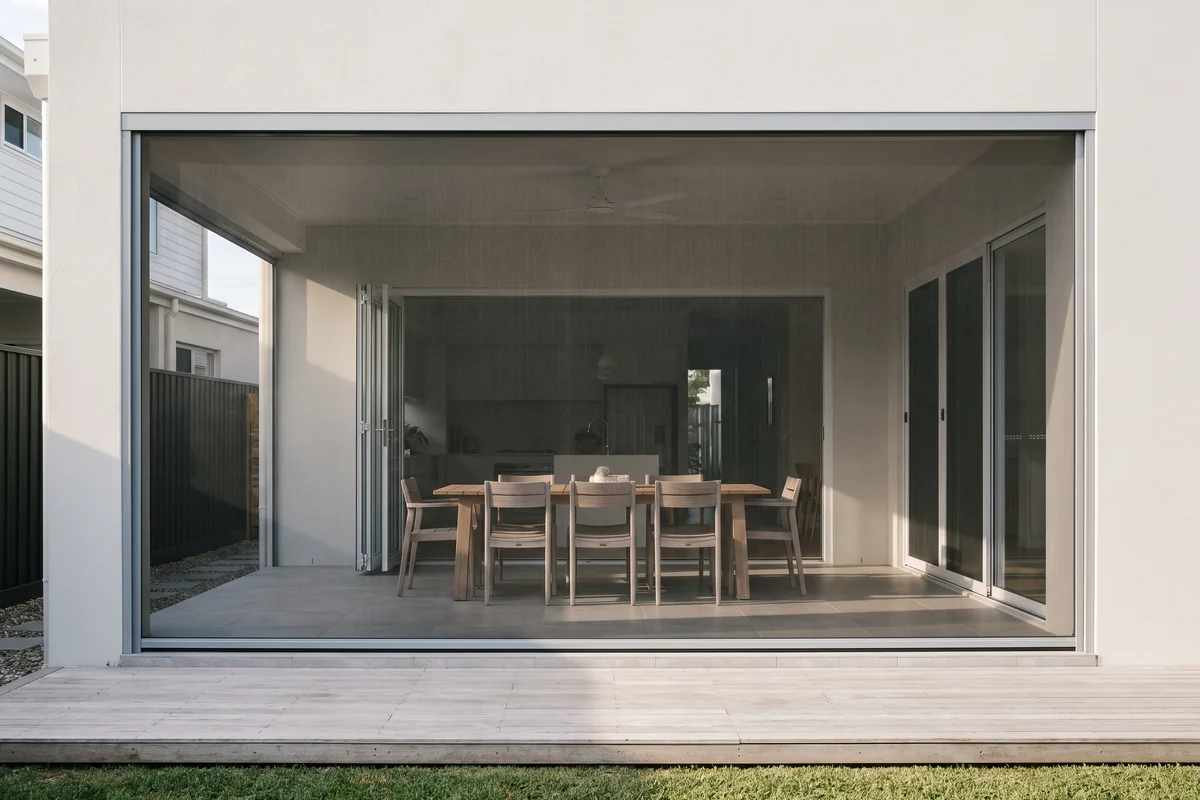
Phantom Executive screens: sizes, mesh and fitting
One motorised screen across 12 metres. Which housing, which mesh keeps sandflies out, when to plan the ceiling recess, and when a ZipScreen is the better buy.
Read more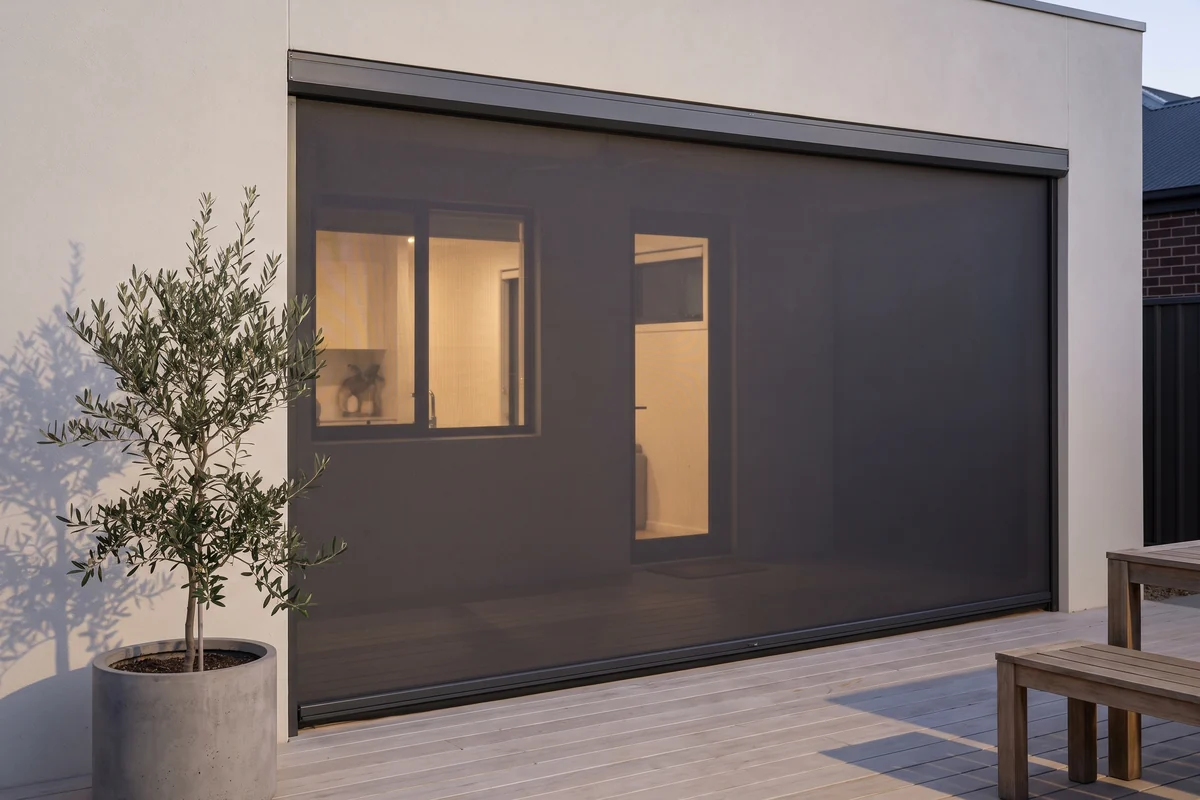 Guides
Alfresco blinds compared: cafe, straight drop and zip track
Three ways to hang fabric across an outdoor opening, and only one seals the sides. What that changes in wind, rain and insects — with the wind-tunnel figure quoted properly.
Read more Guides
Sunscreen blinds and openness factor
Openness is the one number that decides how the blind behaves. What 1%, 3%, 5% and 10% each do — and why the American advice about north-facing windows is backwards here.
Read more