

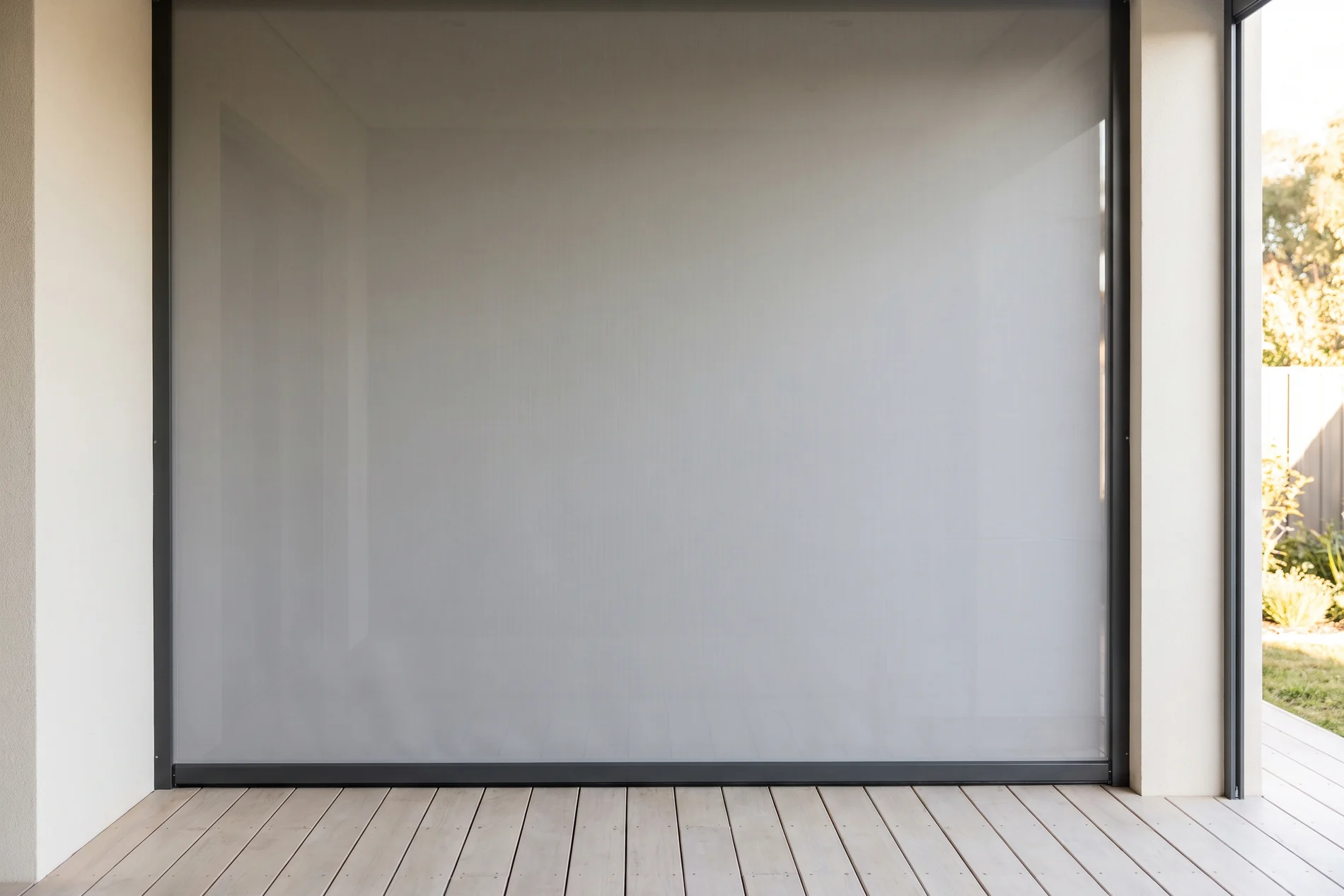
Do Outdoor Blinds Reduce Heat?
Stopping the sun on the outside of the glass is the whole trick. Here is what that is worth, and where it stops.
Outdoor blinds reduce heat better than any indoor blind, because they stop the sun before it reaches the glass. Once sunlight is through the window the heat is already inside, and a blind can only hide it.
Forced to pick one window to start with: do the west-facing one.
That much is settled. What isn't is how much you actually save, because every supplier quotes a percentage and almost none says where it came from. Here are the numbers I can stand behind — including the two that decide whether it survives a Queensland summer.
Stop the sun outside the glass
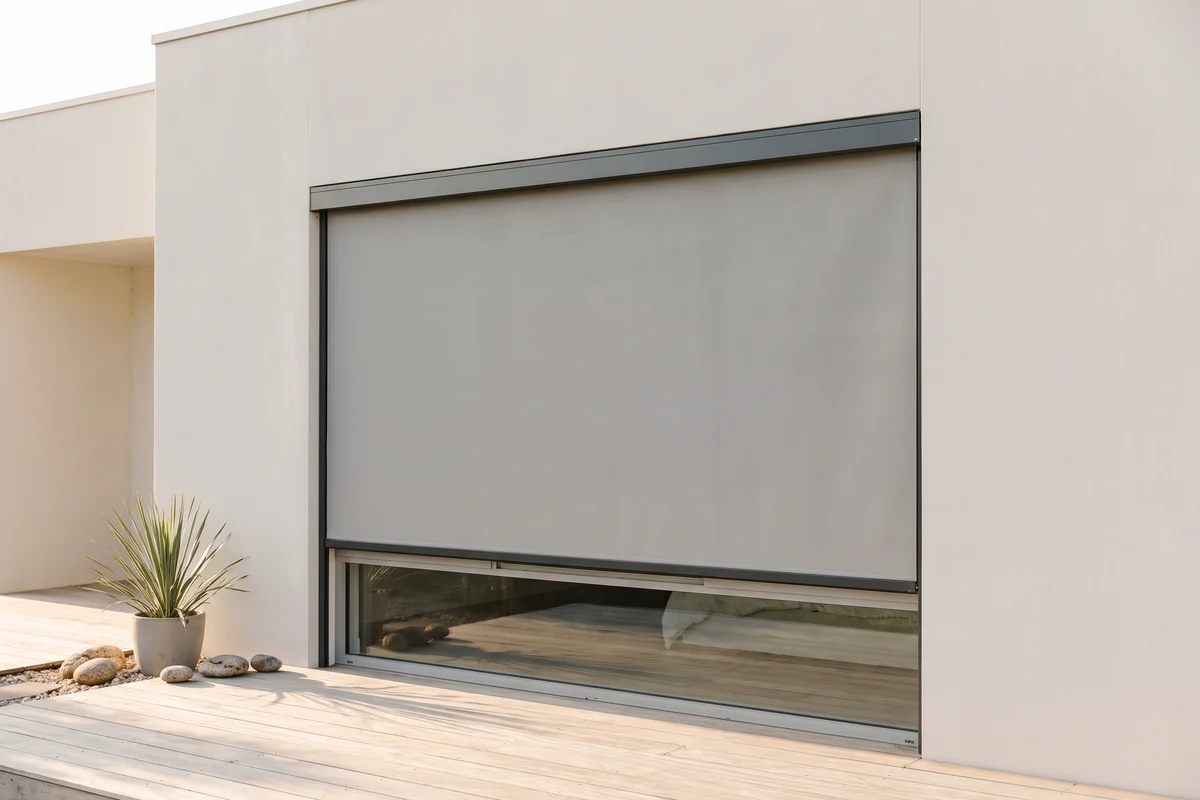
An outdoor blind is a hat, not sunscreen. It intercepts sunlight in the air, half a metre from the window, so the energy never arrives at the glass at all.
An indoor blind can't do that. By the time light has crossed the pane the heat is in the room, and the blind is a screen in front of a radiator that's already on. Pull a blockout down over west-facing glass in February and you can feel the cavity between fabric and window warm like a parked car.
The Australian Government's Your Home guide puts it plainly: for east- and west-facing openings, where low-angle sun is hardest to block, adjustable vertical shading such as external blinds is the optimum solution. Eaves handle the north elevation well. They do almost nothing about a 4pm sun arriving nearly horizontally.
What "blocks 90% of the heat" actually means
You will see 90% quoted on nearly every outdoor blinds page in the country. The source is better than the way it gets used.
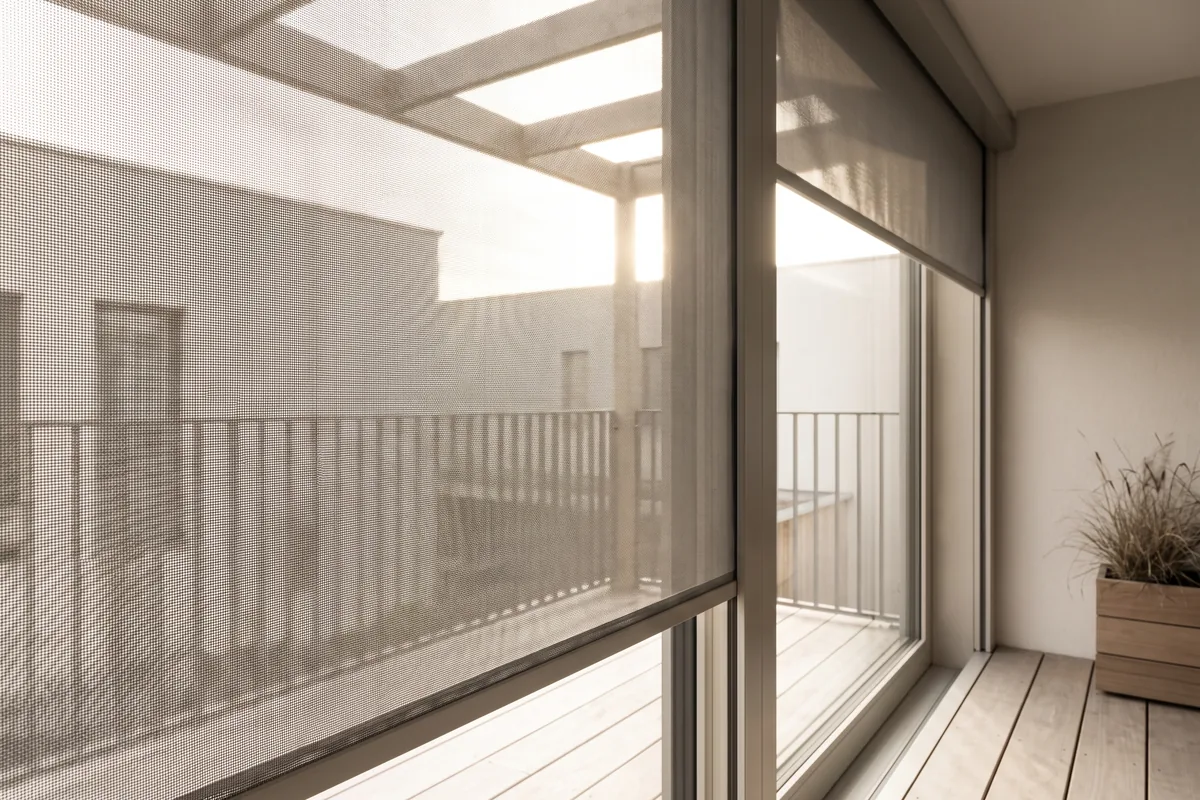
It comes from Your Home, and the full sentence is more useful than the fragment: direct sun can generate the same heat as a single bar radiator over each square metre, but effective shading can block up to 90% of it.
Note the wording. Effective shading — not a fabric, not a brand, and not a test of the blind on your quote. It is a figure about shading as a principle, and applies to a well-placed tree as much as to anything we make.
So treat any supplier quoting 90% as their own product's test result as quoting nobody. If a number will decide your purchase, ask what was tested, at what size, and by whom. Usually nobody tested it — which is fine, because the physics holds without the marketing.
| Indoor blind | Outdoor blind | |
|---|---|---|
| Stops the sun | After the glass | Before the glass |
| Heat already in the room | Yes | No |
| Best at | Privacy, glare, darkening a bedroom | East and west sun, alfresco living |
| Gains you | A darker room | A usable outdoor room |
| Exposed to weather | No | Yes — so the hardware decides everything |
Wind is the number nobody prints
Heat is the question people ask. Wind decides whether the blind is still on the wall in three years.
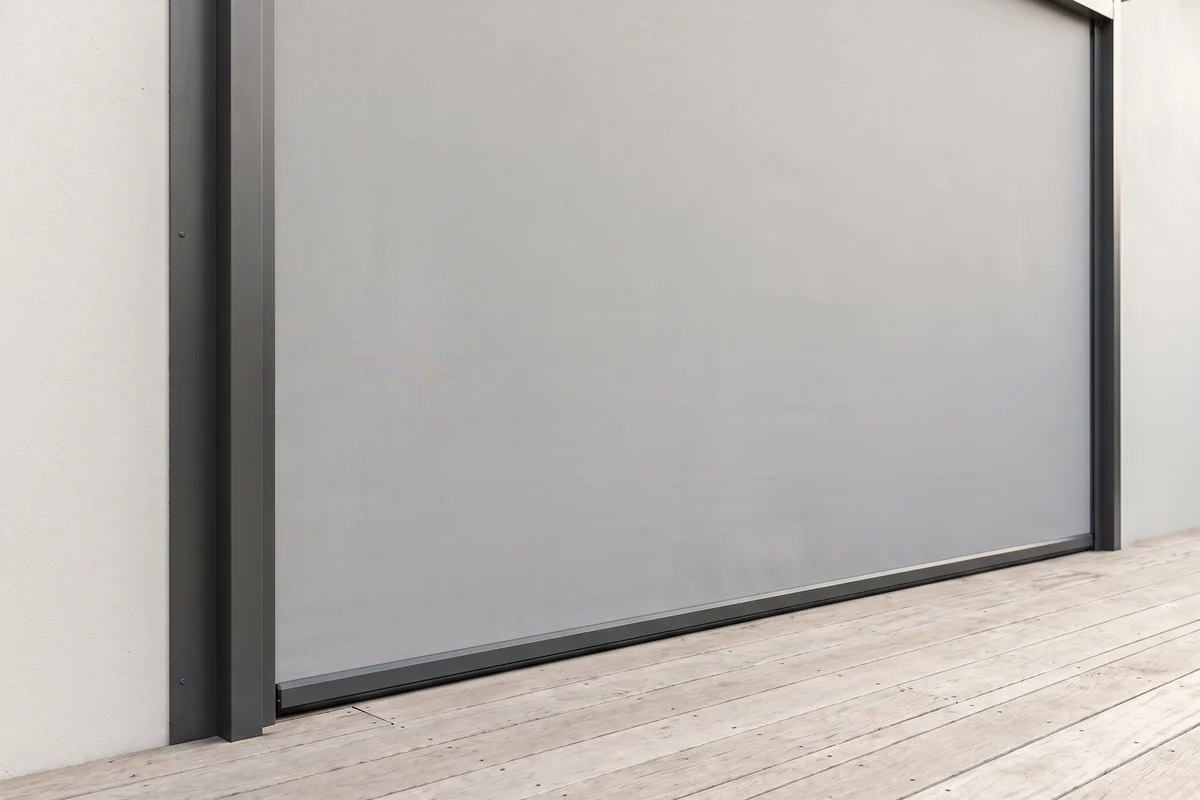
The strongest figure I can point to belongs to Zipscreen, and it deserves quoting precisely: a 2.4m × 2.4m shade withstood the maximum achievable test speed of 140 km/h in a wind tunnel, and the same manufacturer advises raising the blind when wind may exceed 50 km/h. Those two facts belong in the same sentence every time.
Read them properly. 140 km/h was the fastest the tunnel could go, not the speed at which the blind failed — nobody found the failure point. And it was a 2.4-metre square panel. Wind load climbs with area, so it is not a rating for a seven-metre span.
The 50 km/h figure is the one you'll actually use. A zip track blind left down through a summer storm is a sail bolted to your house.
Waterproof is a stronger word than it sounds
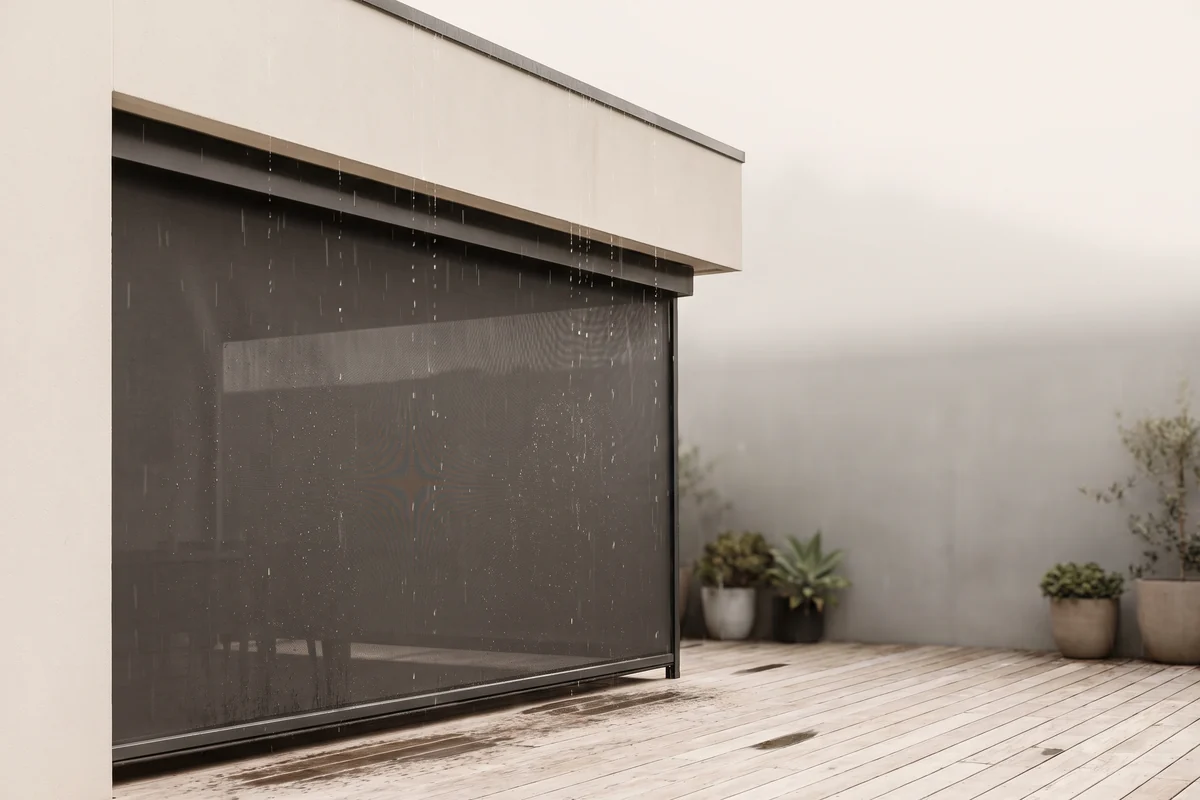
A track-guided outdoor blind will keep a vertical shower off your table. It is not a roof, and I would rather say so now than after your first proper downpour.
The fabric sheds water easily enough. What decides whether you stay dry is the edges and the angle — rain at thirty degrees finds the gap between blind and post, and run-off from the roof above has to land somewhere. A zip track closes those side gaps, which is most of the battle and the real advantage over a straight-drop blind.
Span matters too, because a wide blind gives water fewer joins to find. ZipScreen runs to 7 metres wide and 5 metres deep in one span. Many suppliers stop at four or five and split the opening, which puts a vertical seam exactly where the weather is.
Not sure whether the heat is coming through the glass or the roof?
We measure from Byron Bay to Brisbane, and we'll tell you if the answer isn't a blind. Forty-eight years in, we would rather lose the job than fit the wrong thing.
When an outdoor blind is the wrong answer
Three cases where I would tell you not to bother.
- The space is a corridor, not a room. If nobody sits on that patio, you are shading a walkway. Put the money into the windows instead.
- The heat is arriving through the roof. An outdoor blind shades glass and open sides. If the problem is an uninsulated roof over the alfresco, insulation will do more than fabric.
- You want it for winter warmth. These are a summer tool. They cut some wind chill and little else — if the goal is holding heat in, thermal curtains are a better conversation.
None of that argues against outdoor blinds. It argues for spending the budget where the heat actually is.
Frequently asked questions
Do outdoor blinds reduce heat more than indoor blinds?
Yes, and by a wide margin, because the mechanism differs, not just the strength. An outdoor blind stops sunlight before it reaches the glass; an indoor blind only screens heat already in the room. Your Home names external blinds the optimum shading solution for east- and west-facing windows.
How much heat do outdoor blinds actually block?
The widely quoted figure is up to 90%, from the Australian Government's Your Home guide, where it describes effective shading in general rather than any particular blind. No supplier we know of, ourselves included, has published a heat-reduction test of its own product. Treat it as physics, not a specification.
Are outdoor blinds waterproof?
The fabric sheds water, but the assembly is not a roof. A zip track closes the side channels and keeps out most vertical rain, a real improvement on a straight-drop blind with open edges. Angled rain and run-off from the roof above will still find a way in.
Are retractable awnings waterproof?
Folding arm awnings are built for sun, not storms. Acrylic fabric sheds light rain, but the arms and pitch are not designed to carry pooled water, and most manufacturers ask you to retract in wet or windy weather. If you need rain cover, a fixed structure is the honest answer.
What wind speed can outdoor blinds handle?
A 2.4m by 2.4m Zipscreen shade withstood 140 km/h in a wind tunnel — the maximum speed the tunnel could reach, not the blind's failure point. The same manufacturer advises raising the blind whenever wind may exceed 50 km/h. The 50 km/h figure is the one that matters day to day, and a larger blind carries more load.
How wide can a single outdoor blind span?
A ZipScreen runs to 7 metres wide and 5 metres deep in a single span, wider than most systems, which typically stop around four or five metres and need the opening split. Fewer joins means fewer places for wind and water to grip.
Sources Australian Government Your Home — Glazing · ACCC blinds and window fittings mandatory standard · Sleep Health Foundation
Back to the journalKeep reading
Related from the journal
 Outdoor
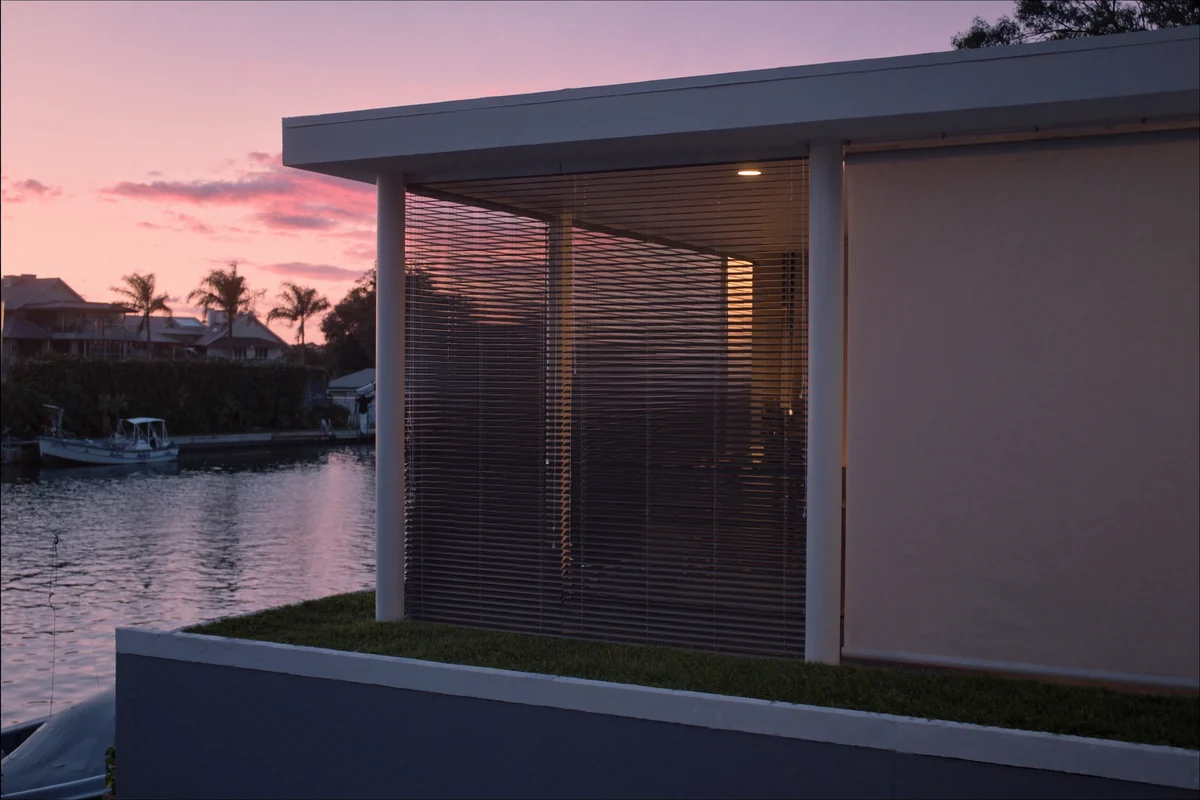
ZipScreen zip track blinds
The track-guided system behind the wind and rain numbers on this page, and how it seals the side gaps.
Read more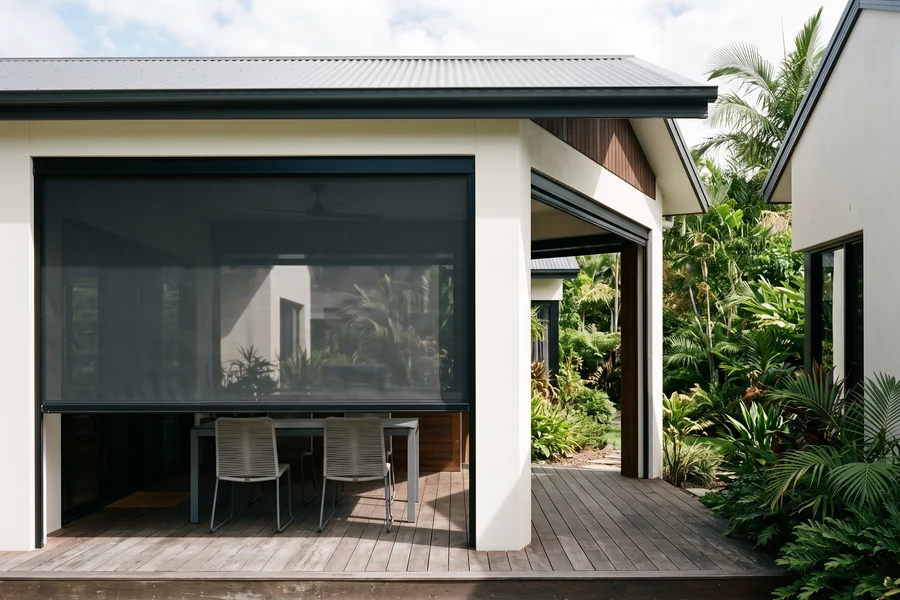 Outdoor
Outdoor blinds, Gold Coast
Roller, zip track and awning styles measured and fitted from Byron Bay to Brisbane.
Read more Guides
Do thermal curtains actually work?
The other end of the same problem: what to do about heat once it is already inside.
Read more