

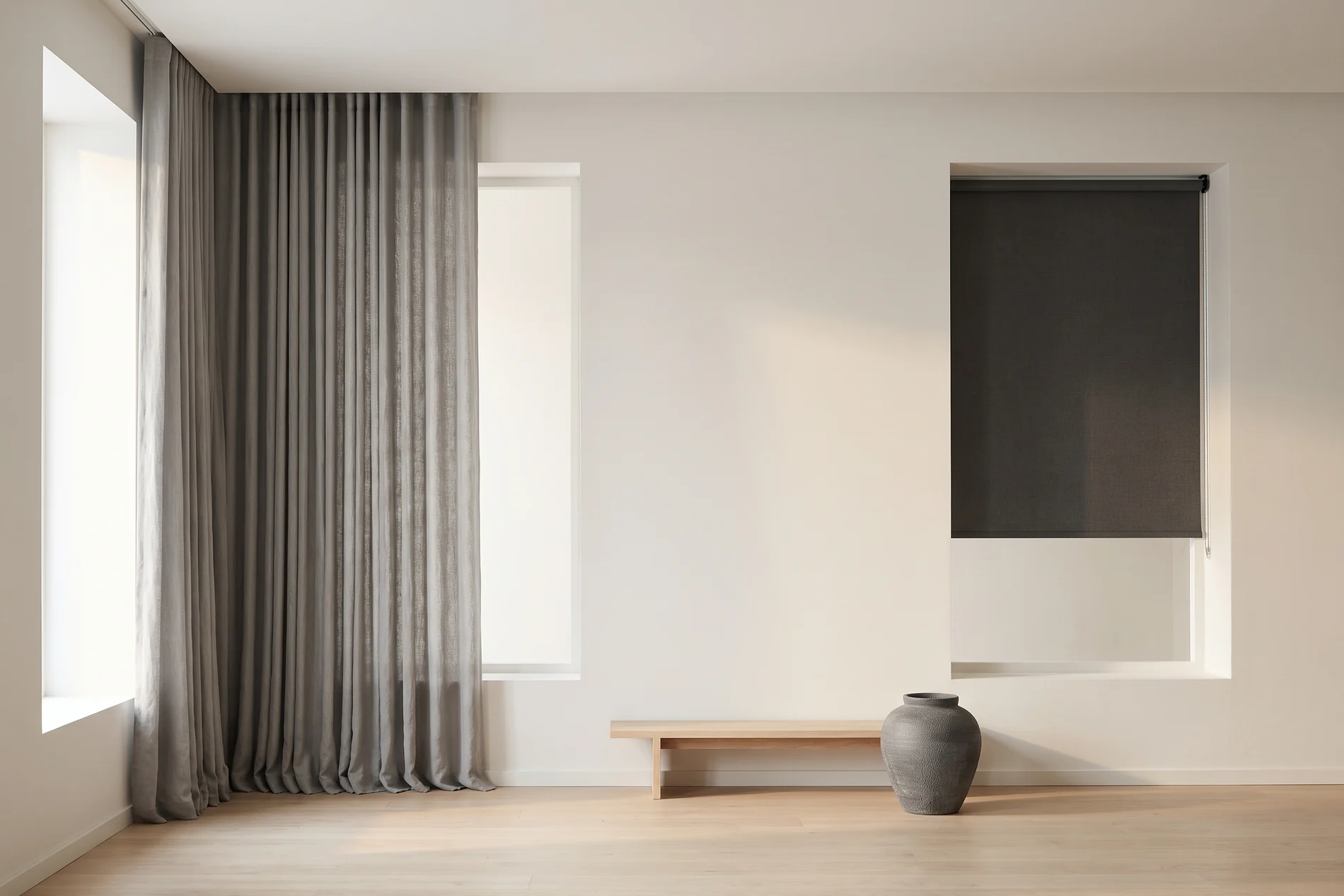
What is a window treatment?
It’s the American word for window furnishings — and the difference matters more than the spelling.
A window treatment is anything fitted to a window to control light, heat, privacy or the look of a room — curtains, blinds, shutters and outdoor blinds. In Australia the trade calls them window furnishings. American "shades" are our blinds, American "drapes" are our curtains, and "blackout" is what we spell blockout.
Pick by which way the window faces before you pick a fabric. Aspect decides the product; taste only decides the colour.
Search that phrase from an Australian address and you get Wikipedia, an American dictionary and a run of US design magazines — same products, but the advice underneath does not survive the trip. North-facing means the opposite thing here, your quote will use different words, and there is a cord law none of those pages mention.
What the phrase actually means
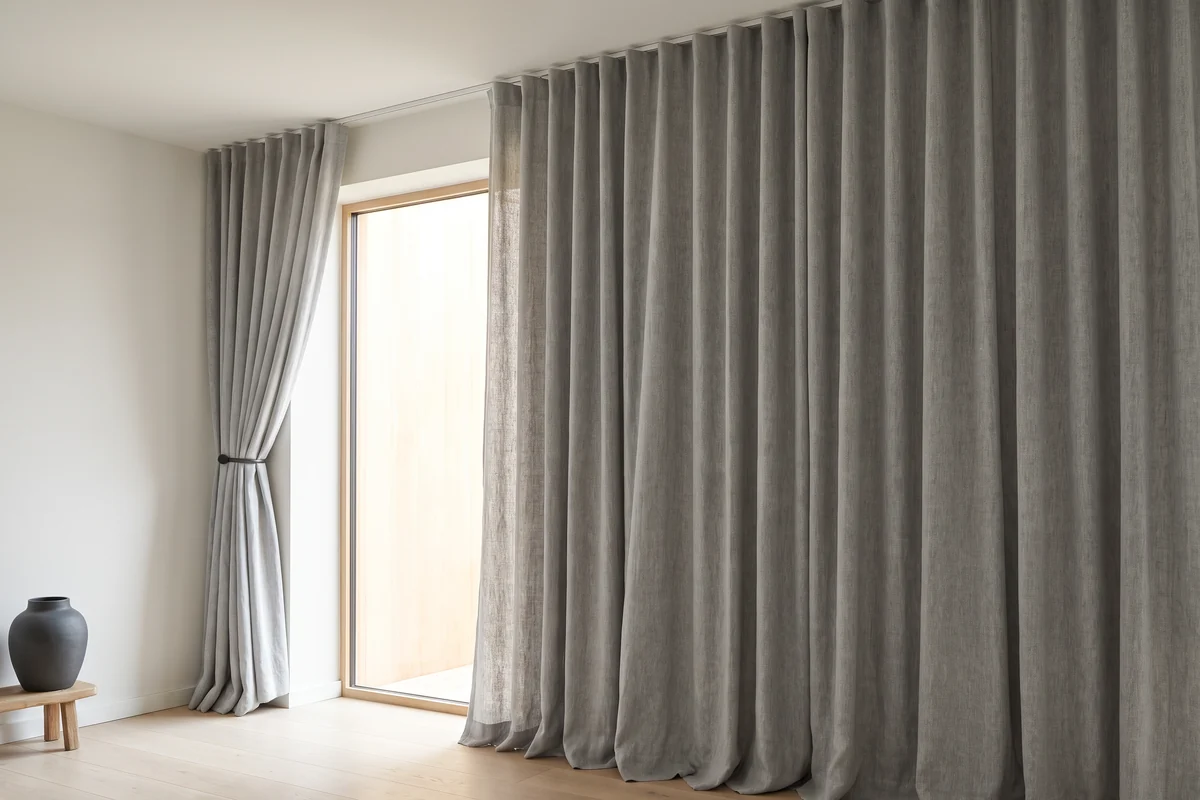
Strictly, it is anything fitted to a window opening to manage light, privacy, warmth or appearance — defined by the job it does rather than what it is made of, which is why one roller blind and a wall of pinch pleat curtains sit under the same heading.
The word is imported. Here you will hear window furnishings, and window coverings used interchangeably. Nobody here will quote you for a "window treatment" — you will get a quote for curtains, blinds, shutters or awnings, itemised component by component.
- Shades are blinds. A roller shade is a roller blind; a cellular shade is a honeycomb blind.
- Drapes are curtains. The word barely gets used here outside the trade press.
- Blackout is blockout. Same fabric, same job, one letter apart.
- Window furnishings is what your installer will say. It is the trade's own word, and the national peak body is the Window Shading Association of Australia.
The four families, and what each one is for
Everything belongs to one of four families. Get the family right and the fabric choice more or less makes itself.
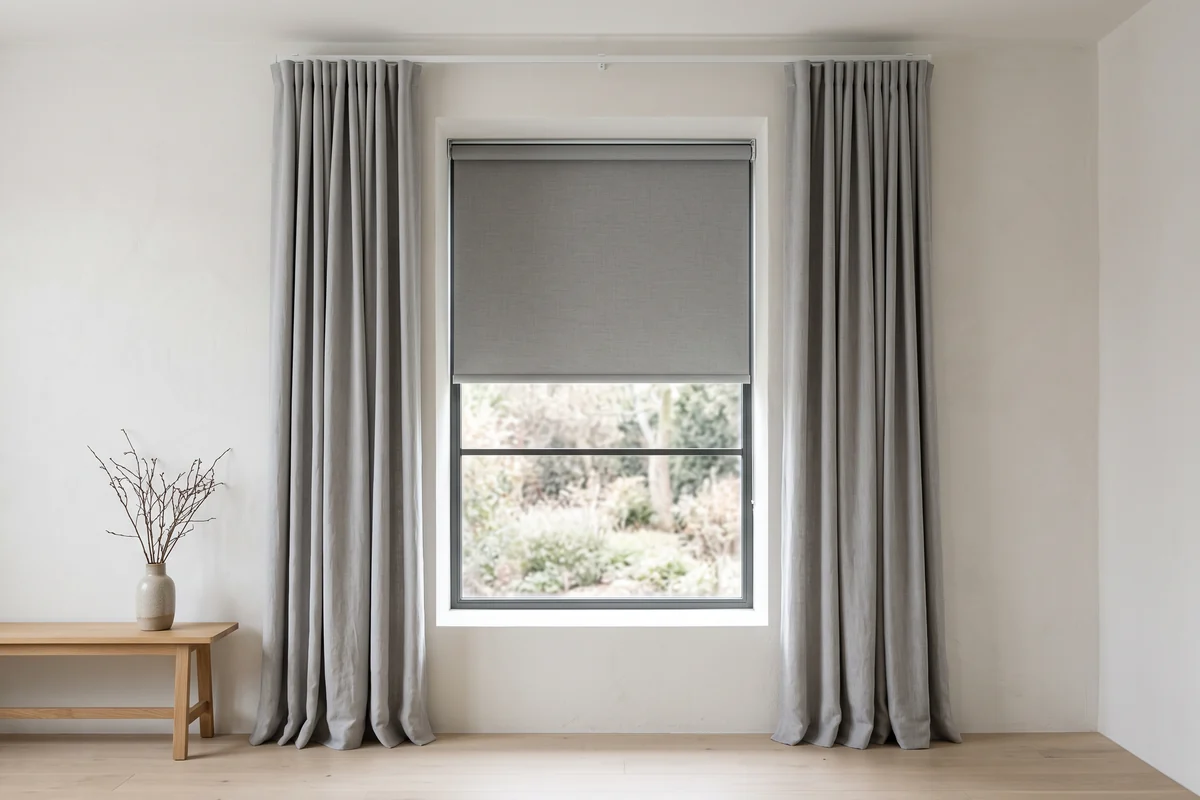
- Curtains. Fabric on a track, hanging in front of the opening — sheer, blockout or decorative, in S fold, reverse pleat or pinch pleat. They soften a room and absorb echo in a way no hard surface can.
- Blinds. Roller, pleated, venetian, vertical, Roman, honeycomb and panel glide, fitted inside or over the opening. Compact and precise — right wherever a curtain would foul a door or benchtop.
- Shutters. Louvres in a frame — hinged, sliding or fixed. Ours are Thermalite shutters, an advanced polymer rather than timber, which is what makes them sensible in a bathroom.
- Outdoor blinds and awnings. Zip track and straight-drop blinds, folding-arm awnings. The only family that deals with heat before it reaches the glass.
That last one matters more than it gets credit for. Radiant heat passes through glass, is absorbed by your floor and furniture, then re-radiated at a wavelength that cannot easily pass back out. A curtain works on heat already in the room; an outdoor blind works on heat that has not arrived — and effective shading blocks up to 90% of it.
| Curtains | Blinds | Shutters | Outdoor blinds | |
|---|---|---|---|---|
| Where it sits | In front of it | In or over it | Fixed to the frame | Outside the glass |
| Daytime light | Filtered or stopped | Adjustable | By louvre | Cut outside |
| Privacy after dark | Blockout, or layered | Yes, closed | Yes, closed | Partial |
| Heat | Once inside | Once inside | Once inside | Before it arrives |
| Typical lead time | 2–4 weeks | 2–4 weeks | 4–6 weeks | Quoted per job |
Start with the aspect, not the fabric
We will not price a room until we know its dimensions and its aspect, and the aspect is the half people are surprised by. Brisbane sits at 27° south. North-facing glass takes high summer sun, which a modest overhead projection handles. West-facing glass takes low afternoon sun — the one that makes a living room unusable from three o'clock. East is the same geometry at breakfast.
Your Home, the Australian Government's design guide, is direct: for east and west elevations, adjustable vertical shading such as external blinds is the optimum solution. Not a heavier curtain — eaves cannot catch sun at that angle, and nor can anything hanging inside.
Which is why "what colour" is the wrong first question. A west-facing window with the wrong product on it is still a west-facing window with the wrong product on it in every colour we make.
The cord rule that decides a child's room
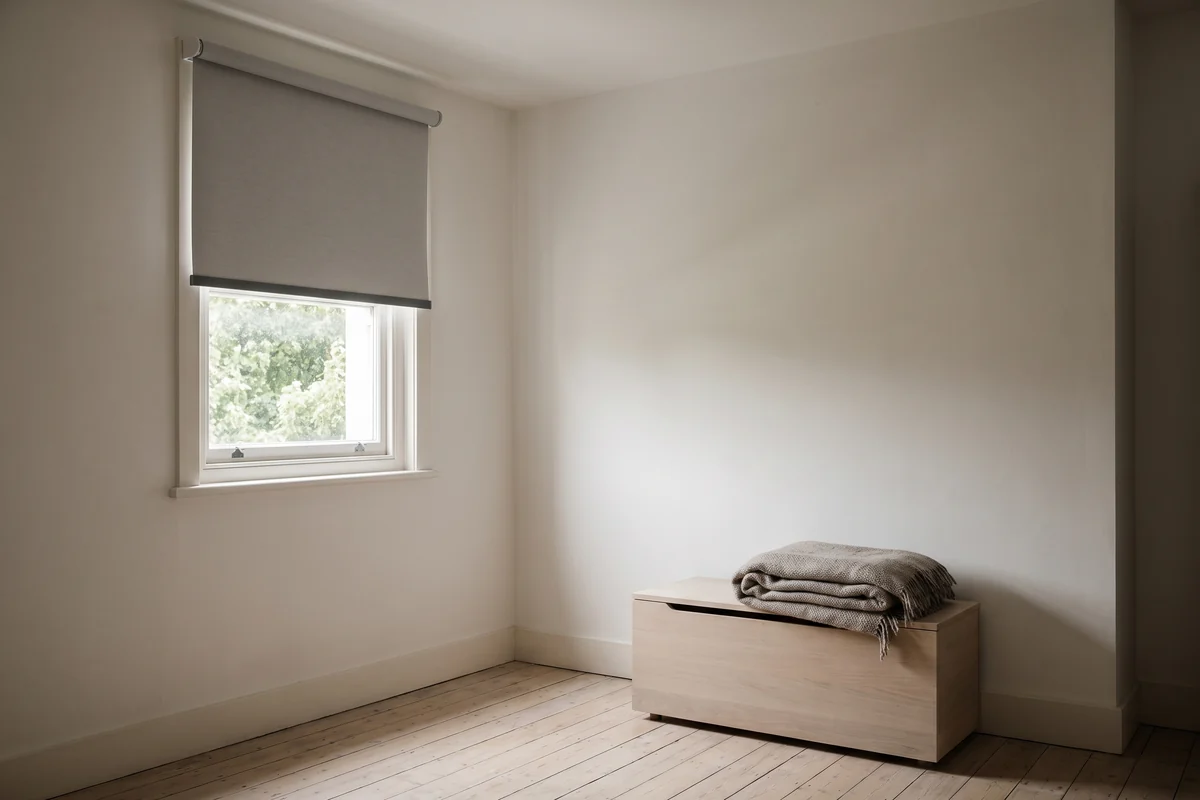
This is the part no American guide will tell you, and it is not optional. Australia has two mandatory standards for corded internal window coverings — one for supply and labelling (2010), one for how they are installed (2014). The ACCC is plain about why: young children have died in Australian homes from accidents with corded blinds and curtains.
The installation numbers are specific, and worth knowing before anyone quotes you:
- No loop below 1,600 mm. A loose cord must not form a loop 220 mm or longer anywhere under 1,600 mm from the floor.
- Cleats go high. A cleat used to wind a cord out of reach cannot sit below that same 1,600 mm.
- Guides have to hold. A cord guide fitted below 1,600 mm must stay attached under 70 newtons of tension.
Compliance is the floor, not the goal. In a nursery or a child's bedroom, specify cordless or motorised and take the cord out of the conversation. Child-safety standards are part of what our WSAA membership commits us to.
Not sure which family your room needs?
Tell us the room and which way it faces and we will bring the right samples. The measure is free, and the itemised quote lands within 24 to 48 hours.
Choosing without over-specifying
Most homes we walk into have over-specified blockout and under-specified sheers — bought for every room because it sounds thorough, and then someone is turning a lamp on at four in the afternoon. Work through it in this order instead:
- Aspect first. Which way does the glass face, and when is the room actually a problem?
- Then the job. Sleeping, working, watching a screen, or a view you paid for.
- Then privacy after dark. No fabric gives you daylight and night-time privacy at once. That is physics, and anyone telling you otherwise is selling something.
- Fabric and colour last. By this point there are usually two sensible options, not forty.
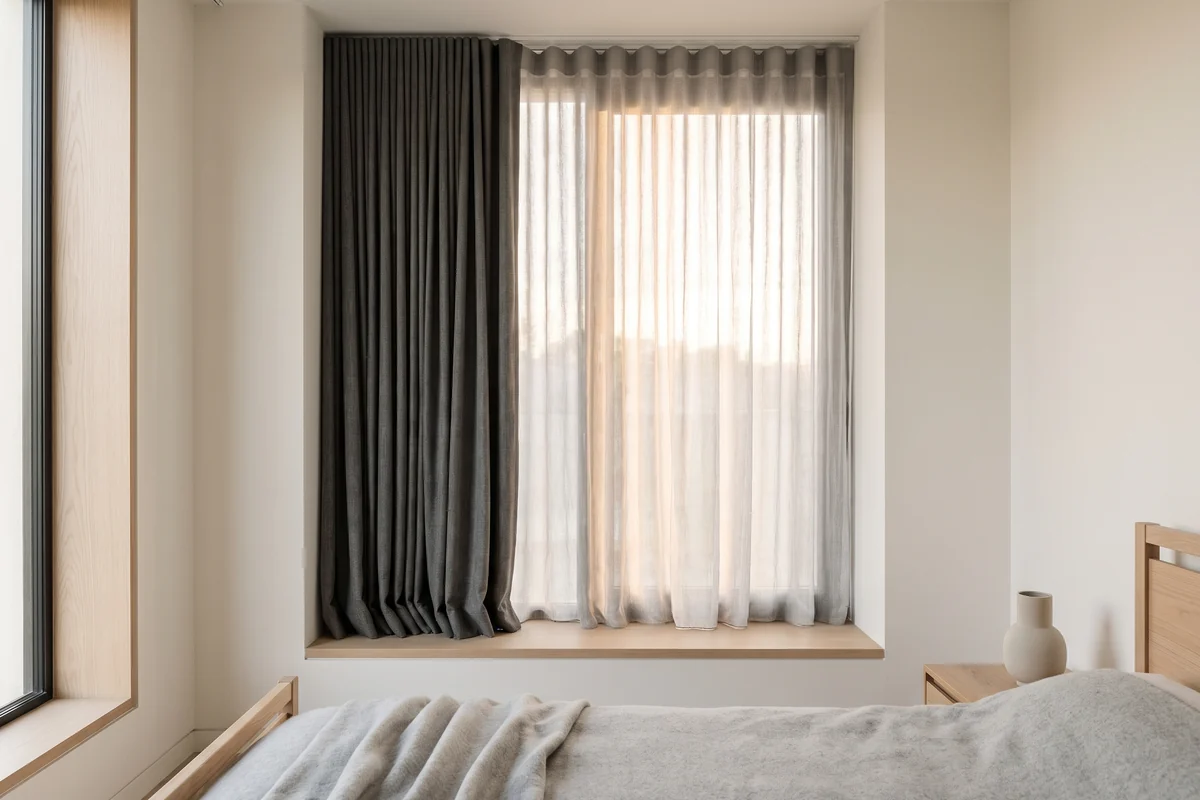
Layering resolves most of it — a sheer and a blockout on one double track gives you a soft, private room by day and a genuinely dark one at night. And no, rooms need not all match: keep the heading and hardware consistent and the house still reads as one house.
Frequently asked questions
Are blinds considered window treatments?
Yes — one of the four families, alongside curtains, shutters and outdoor blinds. American writing calls them shades: a roller shade is a roller blind, a cellular shade is a honeycomb blind.
Are curtains window treatments?
Yes, and they are the family the term was coined around. Australians rarely say drapes — here it is curtains, whether sheer, blockout or decorative, and whether the track behind them is plain or decorative.
What window treatments are best for a bathroom?
Something that does not mind humidity. Fabric and moisture are a poor long-term combination, so a polymer shutter or an aluminium venetian outlasts a lined curtain in a wet room. Thermalite shutters are the usual answer: the louvres hold privacy and ventilation at once.
What window treatments provide the best insulation?
Indoors, honeycomb blinds — the cells trap still air against the glass, the same principle as double glazing. Outdoors still beats indoors: shading before the sun reaches the glass blocks up to 90% of that heat.
Can you have different window treatments in the same room?
Yes, and often you should. A room with a window and a sliding door usually wants a blind on one and a curtain or panel glide on the other. Hold the palette and heading style steady and the mix reads as deliberate.
How do you choose the right window treatment?
Aspect, then the job the room does, then privacy after dark, then fabric. That order stops you buying blockout for a room whose real problem is afternoon glare — the most common and most expensive mistake we see.
Sources Australian Government Your Home — Shading · ACCC blinds and window fittings mandatory standard · ACCC blinds, curtains and window fittings guide
Back to the journalKeep reading
Related from the journal
 Guides
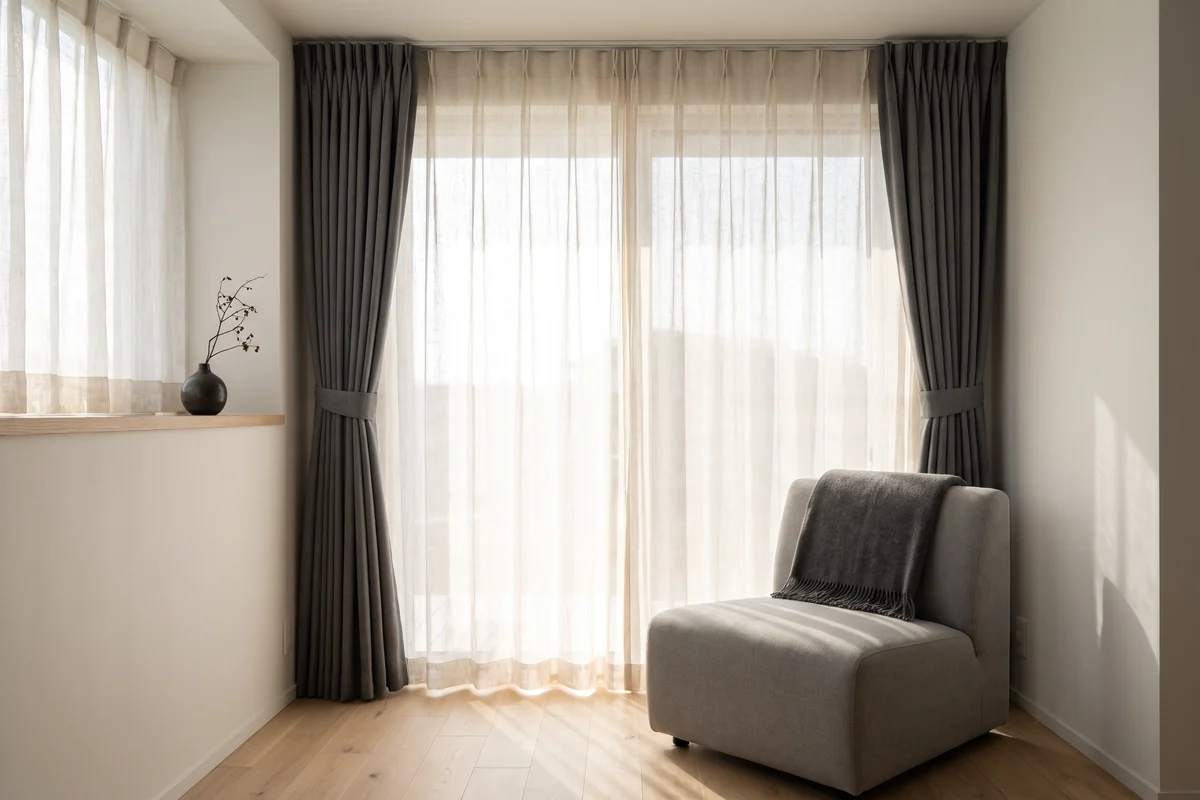
Sheer vs blockout curtains
The layering answer in full — why most rooms want both on one double track, and what each fabric actually does at each time of day.
Read more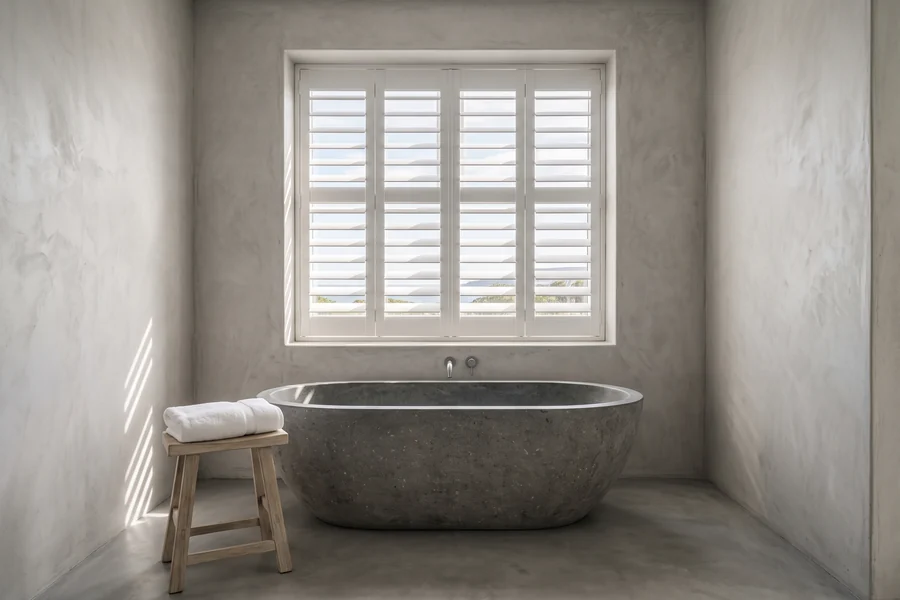 Shutters
Thermalite Shutters
The shutter family in detail — advanced polymer that takes heat, moisture and UV, which is why it ends up in bathrooms.
See the range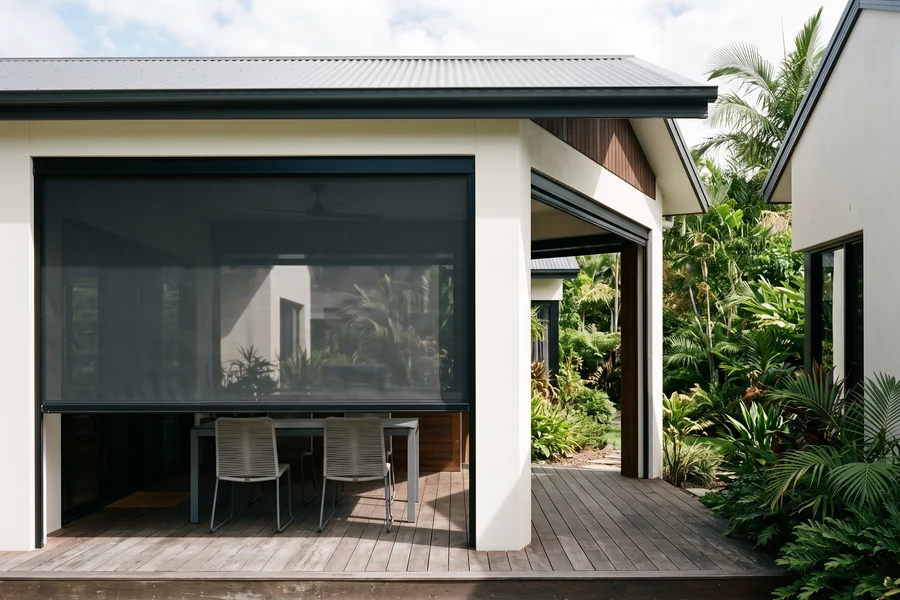 Outdoor
Outdoor Blinds Gold Coast
The only family that stops the heat before it reaches the glass. Roller, zip track and awning styles specified for salt air.
See the range