


Roller blinds vs vertical blinds
One rolls off a tube, the other stacks sideways. The width of your opening decides more than the style does.
Roller blinds run a single sheet of fabric off one tube at the top of the window and pull straight down. Vertical blinds hang separate vanes from a head track and stack sideways, like a curtain made of slats. Rollers suit windows. Verticals suit wide openings and sliding doors, because a track keeps going where a roller runs out of width.
Forced to pick one: measure the opening before you pick a look. Past about three metres, the vertical wins on its own.
Most comparisons of these two products argue about taste, which is the least useful part of the decision. Both are in our range, both get made to measure, and both are fitted by the same installers in the same week. What actually separates them is mechanical — how wide they go, which way they move, and what happens when one part of them wears out. Get those right and the styling question mostly answers itself.
Start with how each one moves
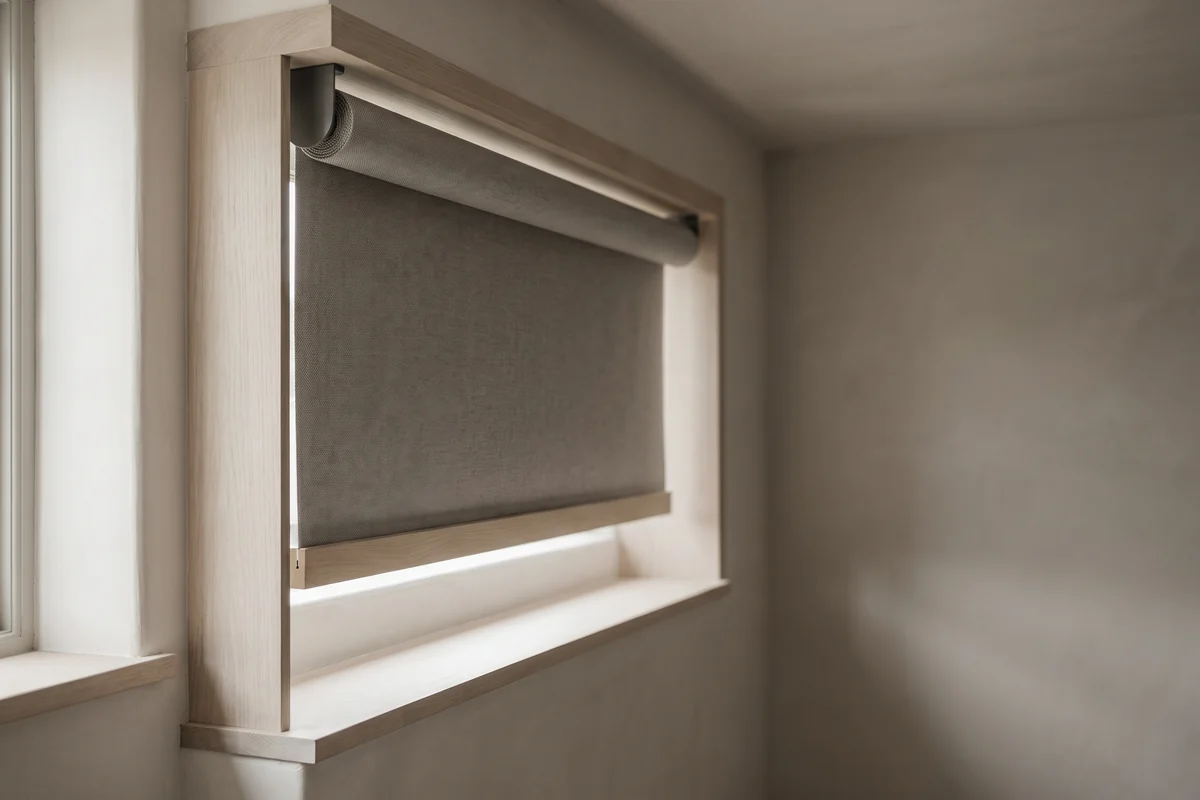
A roller blind is one piece of fabric wound onto a tube. Pull the chain or press the button, the tube turns, and the fabric comes down flat across the glass. There is nothing to align and nothing to stack — when it is up, the whole blind is a cylinder about the width of your wrist sitting at the top of the reveal. That compactness is the entire argument for it.
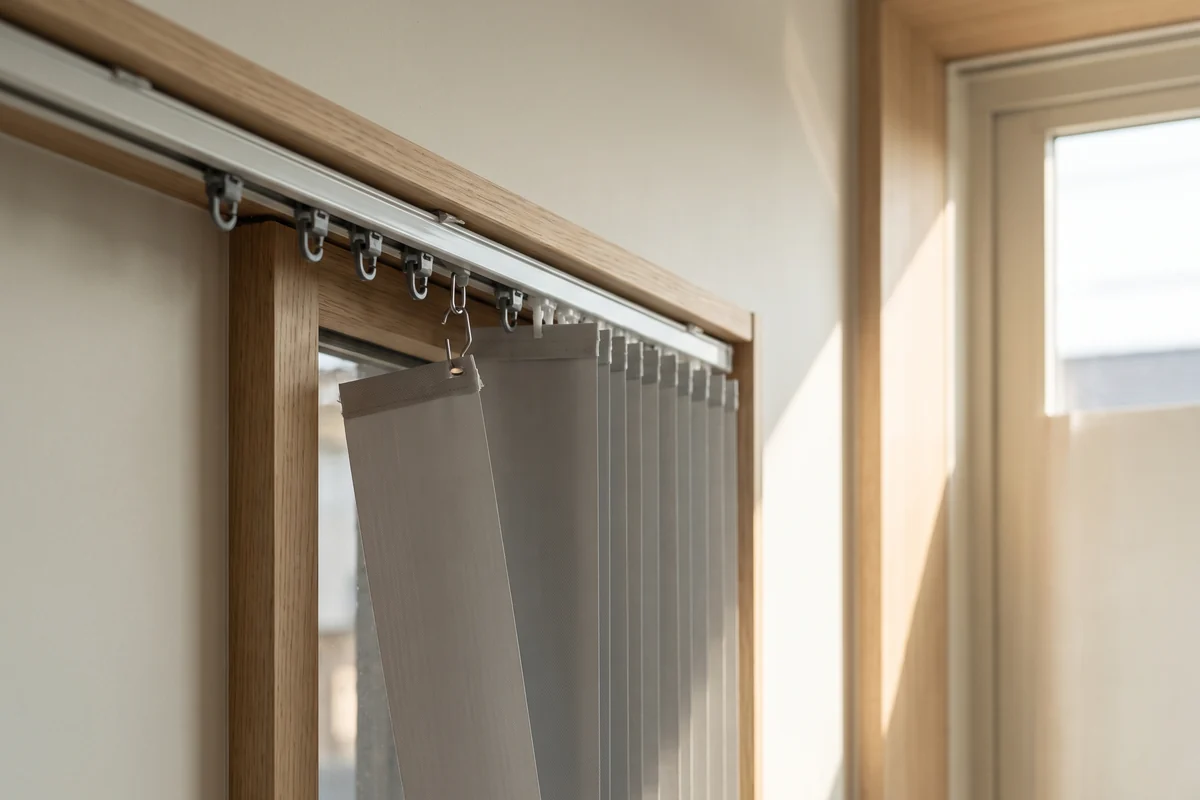
A vertical blind is a head track carrying a row of vanes, each one hanging from its own carrier. Two independent movements: you rotate the vanes to angle the light, and you draw the whole set sideways to clear the opening. When it is fully drawn back, the vanes bunch into a stack at one end rather than disappearing.
That stack is the trade. A roller gives you a clean, empty opening and no way to fine-tune the light. A vertical gives you constant control over the light and a permanent column of fabric at one end of the window. Neither is a flaw — they are the same design decision viewed from opposite ends, and which one irritates you daily is worth more thought than which one photographs better.
Measure the opening before you pick a style
This is the part competitors leave out, and it decides more jobs than every aesthetic argument combined. A standard roller blind runs to about three metres in a single blind. Past that, a roller has two options and you will not love either. The fabric can be railroaded — turned sideways so its width runs across the blind instead of down it — which only some fabrics take, because the pattern and the coating both have to survive the rotation. Or the opening gets split into two blinds with a visible join down the middle and two chains to operate.
Anything past about three metres also wants a 60mm tube rather than the standard one, because a wider blind carries more fabric weight and a thin tube will deflect in the middle over time. It is a specification detail, not an upsell — the sag shows up a year later and it is not fixable without a new tube.
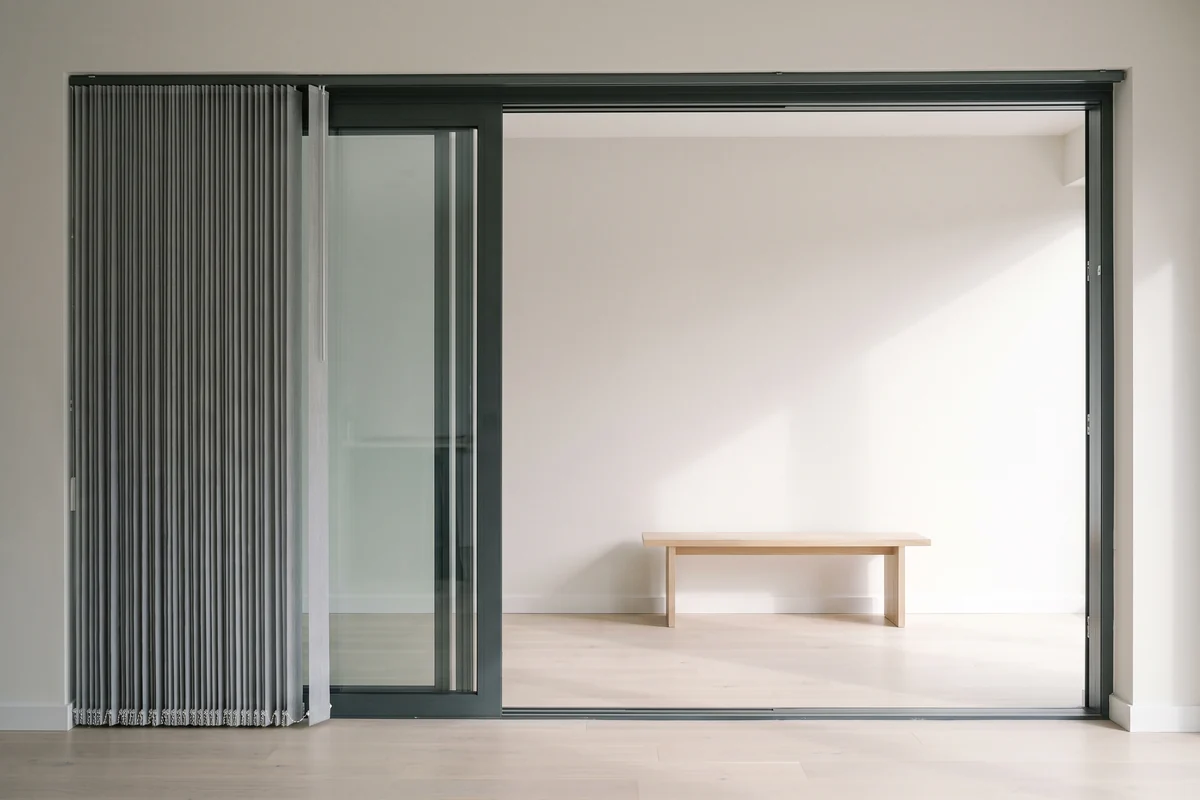
A vertical blind has no equivalent limit in the same place. The track is extruded and the vanes are individual, so a wider opening is simply more vanes on a longer track. That is why the Gold Coast is full of them: the housing stock here is built around sliding doors and stacker units, and a three-metre-plus opening is the standard case rather than the exception.
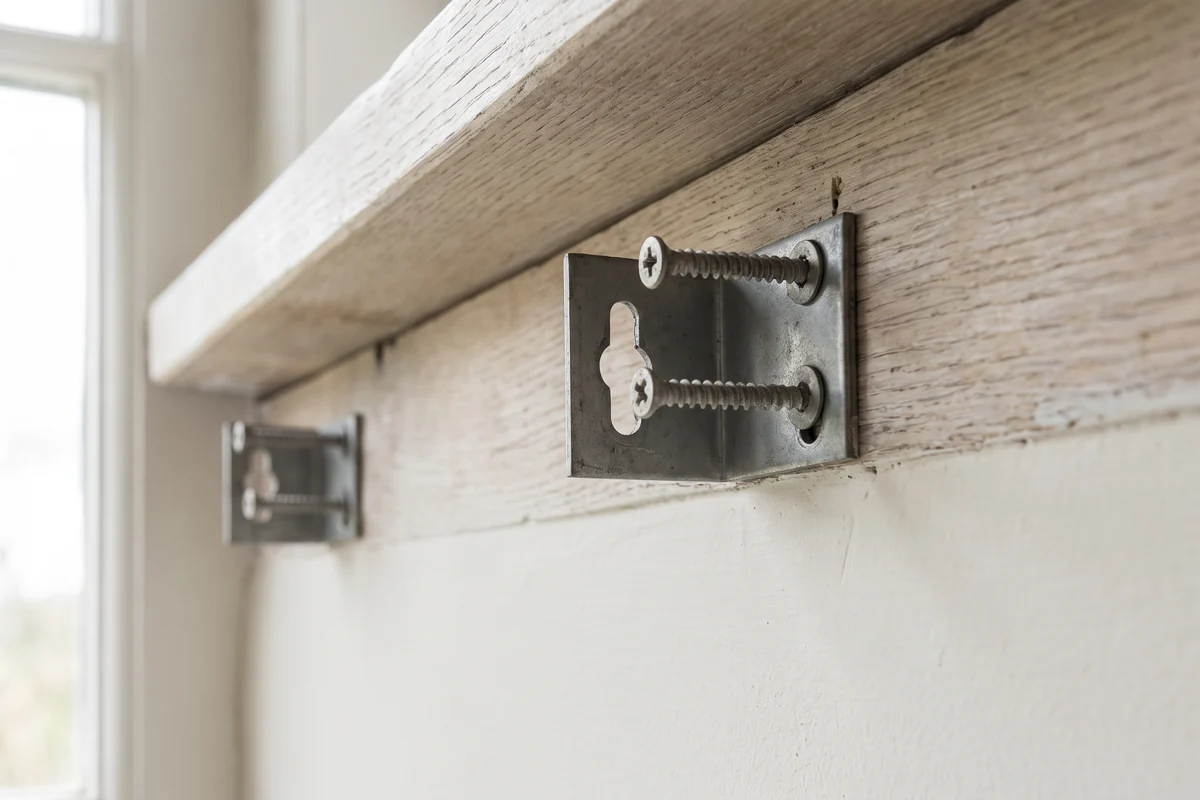
So the honest position is that the width of the opening decides this, not the style. That costs us something to say, because rollers are the more fashionable product and the easier sell. But we have been called out to more than one track that pulled out of a ceiling six months after someone else installed it, and a wide opening is exactly where a marginal fixing gets found out. Whichever product goes up, the fixing substrate has to be real timber or a proper anchor — a track or a bracket screwed into plasterboard alone will fail, and it is a matter of when.
Light control is different, not better
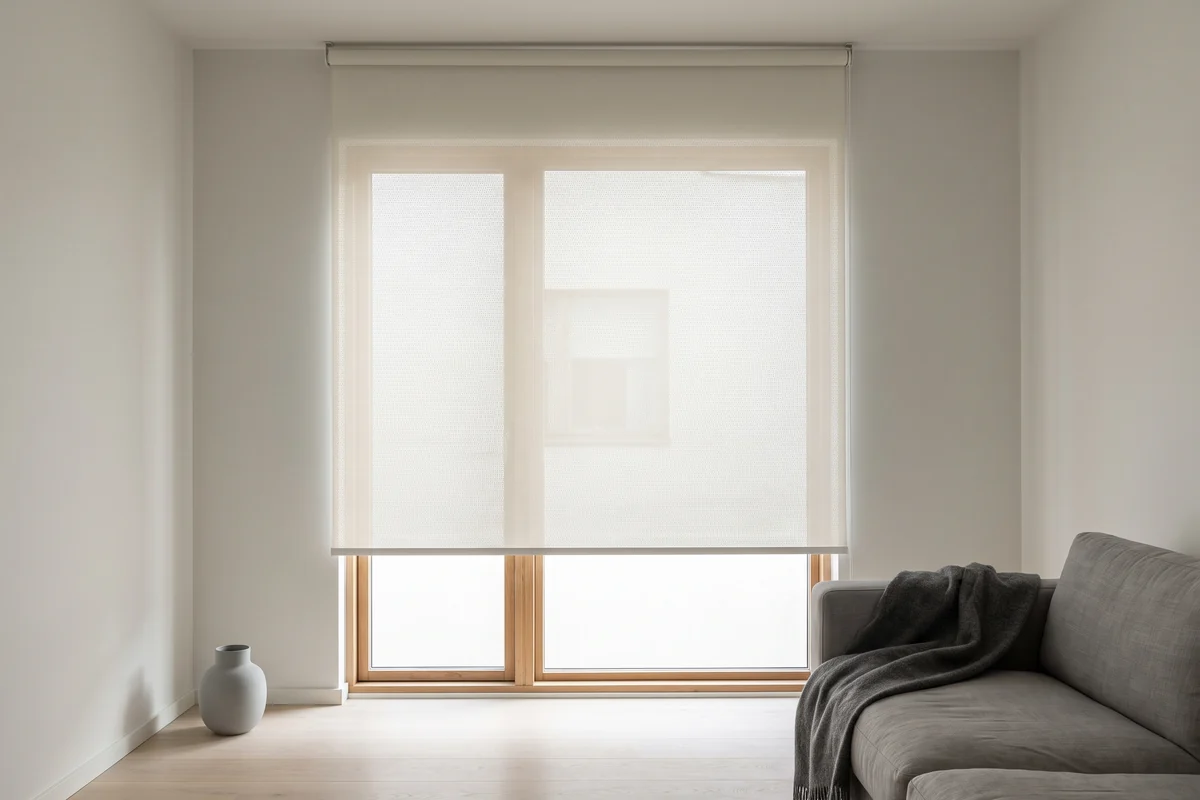
A roller controls light by fabric choice. You pick the fabric once and it does the same thing every day: blockout stops effectively all of it, sunscreen keeps the view and cuts the glare, and where it lands between the two is set by the openness factor of the weave. We carry the full range — 1%, 3%, 5% and 10% — so a west-facing wall can take a 1% and a window you actually want to look out of can take a 10%. The choice is real, but you make it at the measure, not at four in the afternoon.
A vertical controls light by angle. Rotate the vanes a few degrees and you cut the low western sun without losing the room to darkness, then rotate them back an hour later. On a west-facing living area that flexibility is genuinely worth having, because the sun moves and a roller does not.
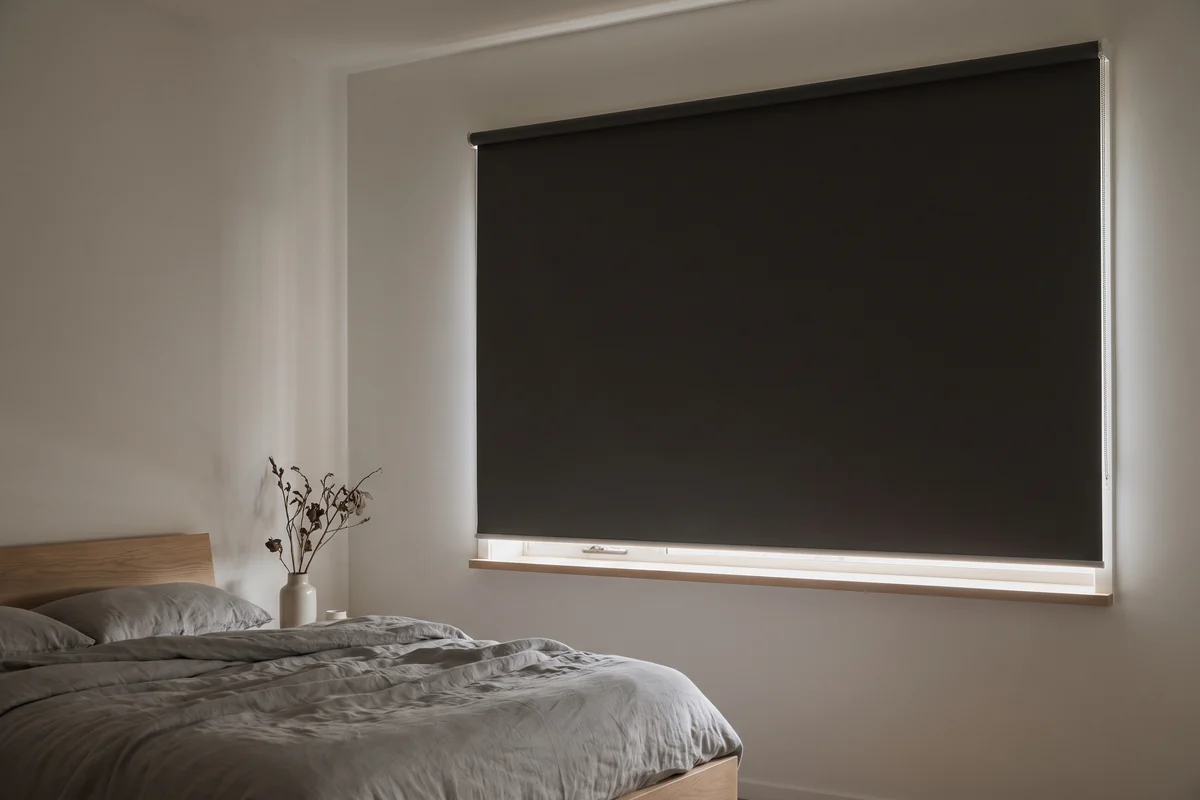
Where the roller wins outright is darkness. A blockout roller in a reveal, with the fabric wider than the glass, gets a bedroom properly dark. A vertical cannot, because there are gaps between every vane by design — closed verticals overlap, but they do not seal. Nothing hangs in front of a window and stops light at the edges by itself, which is why glazing remains the weakest thermal point in most Australian homes whatever you hang over it. If the room needs to be dark, the fabric has to be continuous.
Cleaning, wear, and the repair nobody mentions
Rollers are quicker to clean, and it is not close. One flat sheet, one wipe, done — the detail is in how to clean roller blinds without marking the fabric. A vertical is a row of separate vanes and each one needs attention, which on a wide sliding door is a genuine chore rather than a five-minute job.
But rollers lose the argument on repair, and this is the thing almost nobody publishes. When a vane on a vertical blind is damaged, you replace that vane. The track, the carriers and the rest of the set stay where they are. Sun damage tends to hit the vanes nearest the western end first, and swapping those out is a small job. A roller blind is one piece of fabric — damage anywhere on it means a new blind, because there is nothing smaller to replace.
That changes the maths over ten years in a way the sticker price does not show. It also makes verticals the more sensible choice in a rental or an office, where things get knocked and the person paying for the fix is not the person doing the knocking.
On safety, both products come down to the same standard. Corded window coverings in a child's room are a real hazard and the ACCC's guidance on blinds, curtains and window fittings is worth reading before you specify either. In a bedroom a child sleeps in, go cordless and stop thinking about it.
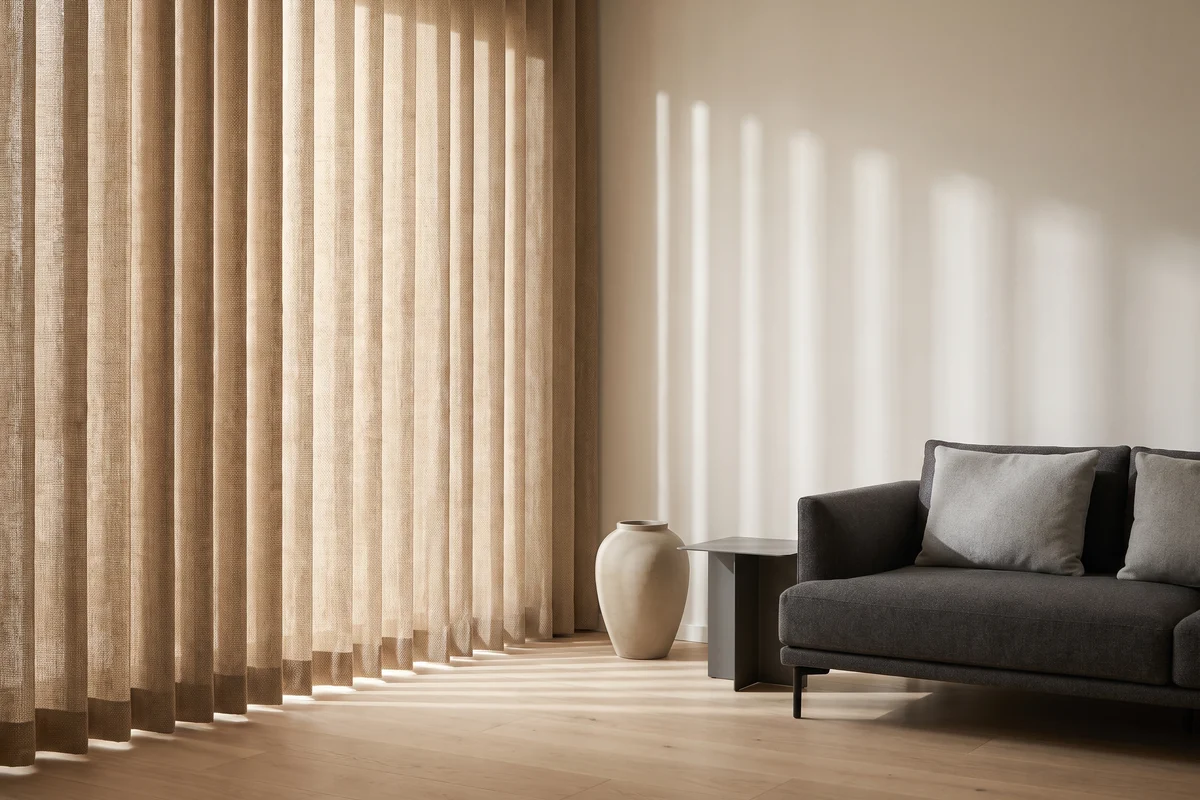
Verticals stopped looking like an office
The objection to vertical blinds is almost always visual, and almost always about a product from twenty years ago — stiff white PVC vanes with a chain rattling along the bottom, in a dentist's waiting room. That version still exists. It is not what gets specified now.
Contemporary vertical blinds are made in the same fabrics as roller blinds, because in most ranges they are literally the same fabric cut a different way. Textured weaves, warm neutrals, translucent linen-look vanes, blockout where you need it. Hung in a soft neutral against an off-white wall, a modern vertical reads much closer to a curtain than to an office fit-out, and the vanes hanging in a row give a wide opening a vertical rhythm that a single flat roller cannot.
Rollers, for their part, are the most visually quiet thing you can put on a window. Up, they are nearly invisible. Down, they are a clean rectangle of fabric with no lines across it. If the window is one element in a considered room rather than the feature of it, that restraint is the point.
Worth saying plainly: if you like the look of verticals but not the mechanism, panel glide blinds are the same sideways-stacking idea in wide flat panels rather than narrow vanes. Same track logic, fewer pieces, a different look again.
Here is the whole comparison in one table.
| Roller blinds | Vertical blinds | |
|---|---|---|
| How it moves | One fabric sheet up and down off a tube | Vanes rotate, then stack sideways along a track |
| Practical single width | About 3m, wider on some railroaded fabrics | No equivalent limit — longer track, more vanes |
| Light control | Set by fabric and openness at the measure | Adjustable by angle, any time of day |
| Full darkness | Yes, with blockout fabric | No — vanes overlap but do not seal |
| When retracted | Clear opening, tube only | A stack of vanes at one end |
| Cleaning | One flat surface, quick | Vane by vane, slower |
| Damage repair | Replace the whole blind | Replace the affected vanes |
| Best on | Windows, bedrooms, kitchens, anything under 3m | Sliding doors, stackers, wide spans, offices |
| Lead time | 2–3 weeks | 2–3 weeks |
Not sure which one your opening takes?
We measure before we recommend, because the width is the answer more often than the brief is. The quote is free, itemised component by component, and back with you within 24 to 48 hours of the measure.
Which one, room by room
- Bedrooms. Roller, in blockout, fitted outside the reveal so the fabric runs wider than the glass. Verticals cannot get a room properly dark and a bedroom is the one place that matters.
- Sliding doors and stackers. Vertical, nearly always. The blind moves the same way the door does, one track covers the whole opening, and you walk through it without lifting anything. Blinds for sliding doors goes further into the options.
- Living areas with a west aspect. Vertical, for the angle control, or a roller in a low openness factor if the view matters more than the flexibility. This is the one genuine toss-up.
- Kitchens. Roller. Fewer surfaces for cooking grease to find, and a flat sheet wipes down. A row of vanes above a benchtop is a cleaning job you will resent.
- Home offices and studies. Vertical, if there is a screen involved. Angling the vanes kills glare on a monitor without turning the lights on, which is why offices used them long before they were fashionable.
- Bathrooms and laundries. Neither, if you can help it. Fabric and moisture are a poor combination, and a wet area wants shutters.
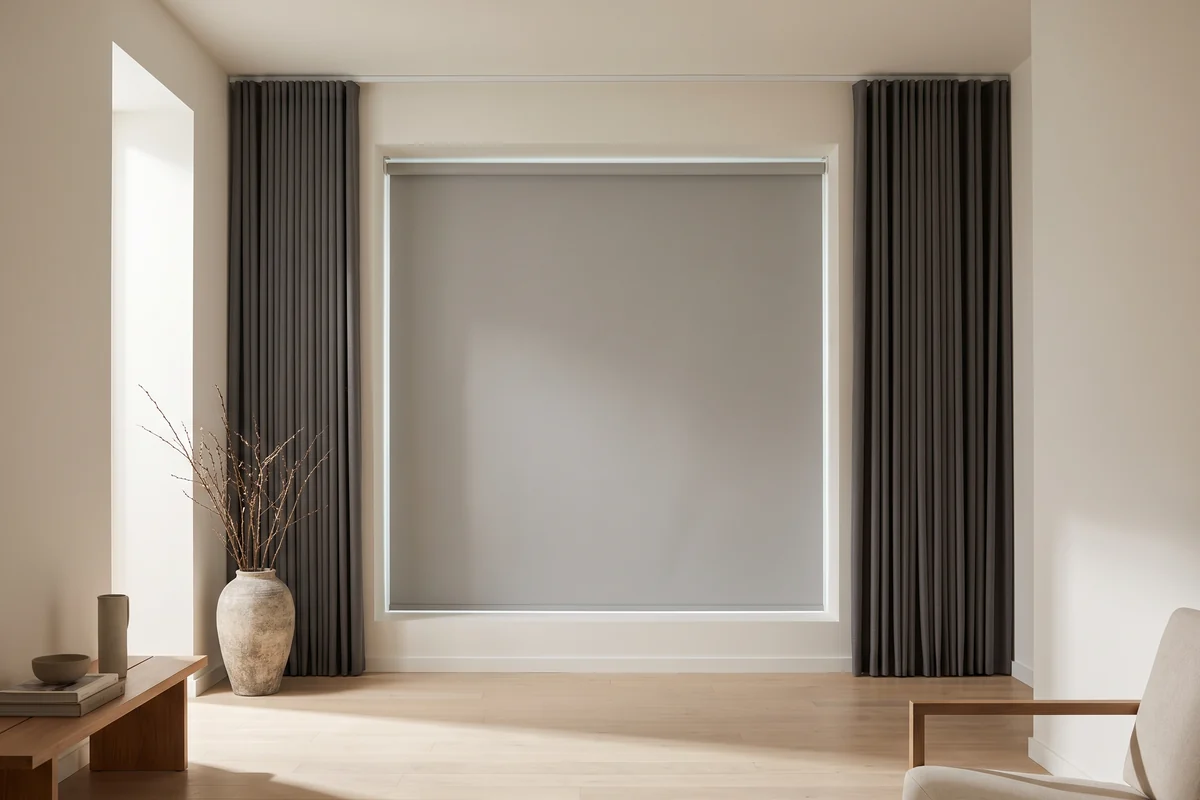
If a room genuinely wants both — darkness at night, angled light by day — the answer is layering rather than compromise, and that is a separate conversation about roller blinds paired with something else on the same opening.
What shouldn't decide it
Lead time. Both are 2 to 3 weeks from order to installation. People assume the simpler-looking product is faster and it is not, so if you have a deadline, it does not narrow the field.
Motorisation. Both motorise. It is a decision made at specification time rather than a service bolted on later, and it is worth having the conversation before the order rather than after, because retrofitting is more expensive than specifying. It is also not worth it on a window you walk past every morning — the switch is your hand.
Energy performance. Neither product is a serious insulator on its own, and any page telling you a blind will fix a hot room is overselling. What actually moves the number is stopping the sun before it reaches the glass, which is the argument for external shading rather than for one internal blind over another. Inside, a metallised fabric like Verosol SilverScreen does more than either standard option, on a roller.
Price, in isolation. On a small window a roller usually costs less. On a three-metre sliding door the comparison inverts, because the roller becomes two blinds and the vertical is still one track. Compare the opening, not the product.
Frequently asked questions
Are vertical blinds or roller blinds better for sliding doors?
Vertical blinds, in almost every case. The vanes stack sideways in the same direction the door travels, so you can walk through a part-open blind without raising anything, and one track covers an opening that would take two roller blinds and leave a join down the middle. A roller only makes sense on a sliding door if the door is narrow enough to sit inside a single blind width.
Are roller blinds cheaper than vertical blinds?
On a standard window, usually yes — a roller is a simpler assembly with fewer components. On a wide opening the comparison reverses, because past about three metres the roller has to become two blinds while the vertical stays one track with more vanes on it. Compare quotes on your actual opening rather than on the product type.
Which is easier to clean, roller blinds or vertical blinds?
Roller blinds, comfortably. A roller is one flat surface you can wipe down in a single pass, while a vertical blind has to be done vane by vane. If the blind is going somewhere that gets dirty quickly, like a kitchen window, that difference shows up every few months.
Do vertical blinds still look dated?
The old stiff white PVC version does. Contemporary vertical blinds are made in the same fabrics as roller blinds — textured weaves, warm neutrals, translucent and blockout options — and in a soft neutral they read closer to a curtain than to an office. If the vanes you are picturing are the ones from a 1990s waiting room, ask to see current fabric samples before you rule them out.
Can you replace just the vanes on a vertical blind?
Yes, and it is one of the better arguments for the product. Individual vanes can be replaced without touching the track or the carriers, which matters because sun damage usually hits the vanes at the western end first. A roller blind has no equivalent — the fabric is a single piece, so damage anywhere means replacing the whole blind.
What is the widest a roller blind can be made?
About three metres in a single blind as a working rule, and some fabrics go wider when they are railroaded — turned sideways so the fabric width runs across the blind. Not every fabric takes railroading, because the pattern and the coating have to survive the rotation, so the real maximum for your job comes off the measure and the fabric you choose. Anything over three metres should also be on a 60mm tube to stop the blind sagging in the middle.
Which is better for a bedroom?
A blockout roller blind, fitted outside the reveal so the fabric is wider than the glass. Vertical blinds cannot make a room properly dark because there are gaps between the vanes by design — they overlap when closed but they do not seal. In a bedroom that is the whole job, so it decides the choice.
Can you have vertical blinds with sheer curtains?
Yes, and it works better than most people expect. The verticals handle the glare and the privacy while the sheer softens the hard vertical lines, which is the usual objection to the product. It needs to be planned at the measure so the track and the curtain have room to clear each other, rather than added later to a blind already on the wall.
Sources Australian Government Your Home — Glazing · ACCC blinds and window fittings mandatory standard · Sleep Health Foundation
Back to the journalKeep reading
Related from the journal
 Guides
Blinds vs curtains: how to choose, room by room
The opening decides it, not the product. What each one does better, why the heat argument is really an installation argument, and the cord rule that settles a child’s room.
Read more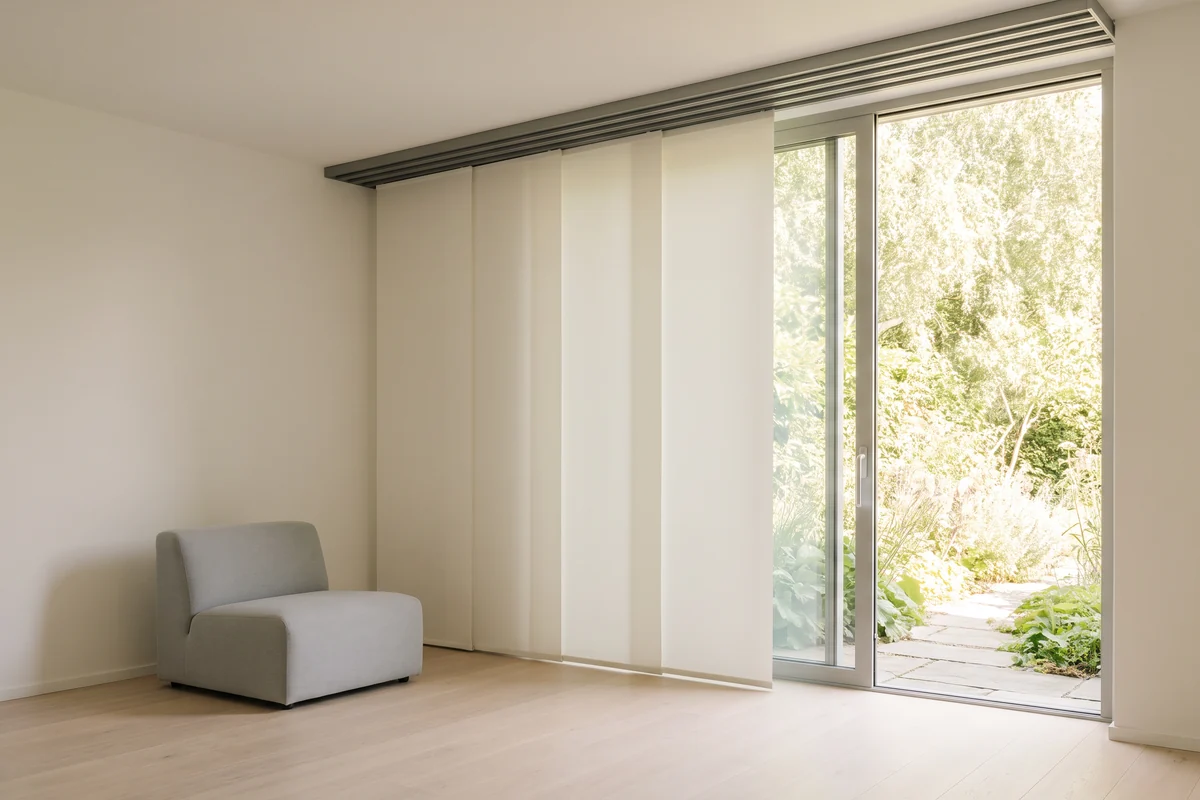 Guides
Blinds for sliding doors: what actually works
The covering has to survive being walked through several times a day. Which of the five options suits your opening, where a roller blind runs out of width, and the stackback decision nobody can fix afterwards.
Read more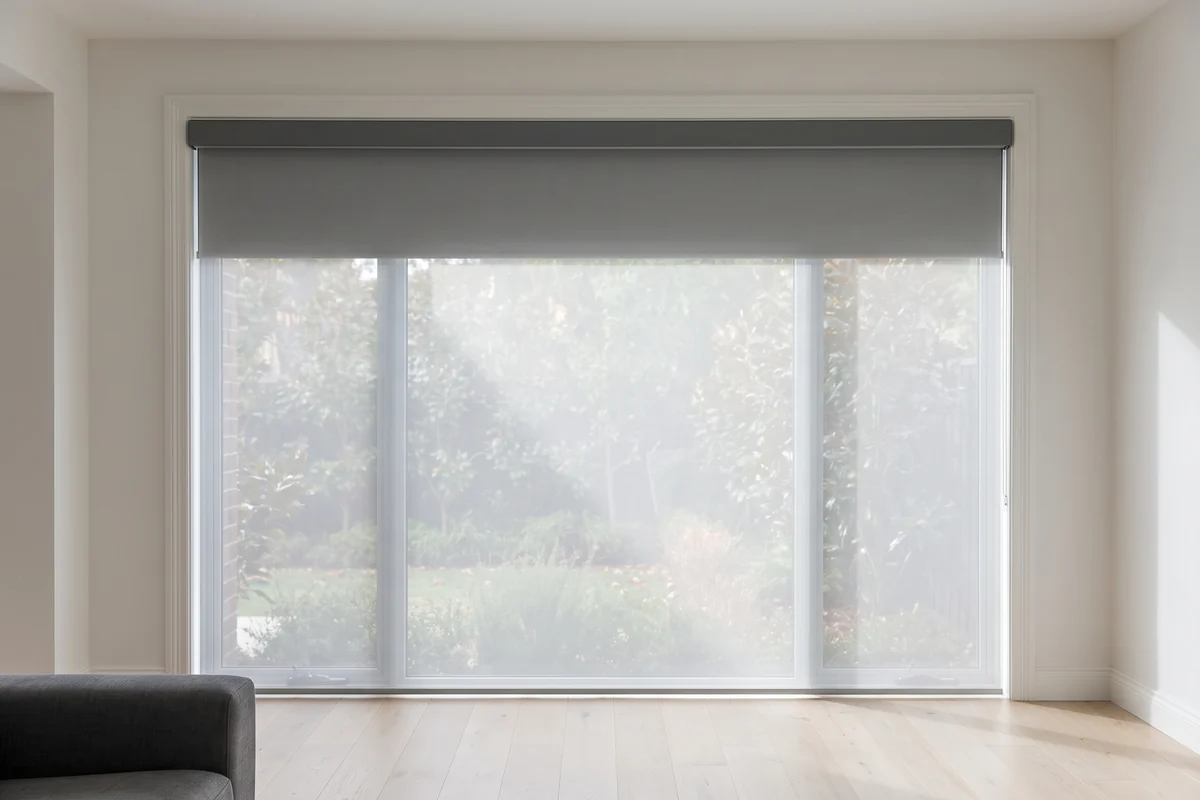 Guides
Dual roller blinds: day and night on one bracket
Two blinds, one bracket, four settings. Which fabrics to pair, the reveal-depth constraint no other page mentions, and when a sheer curtain is the better buy.
Read more