

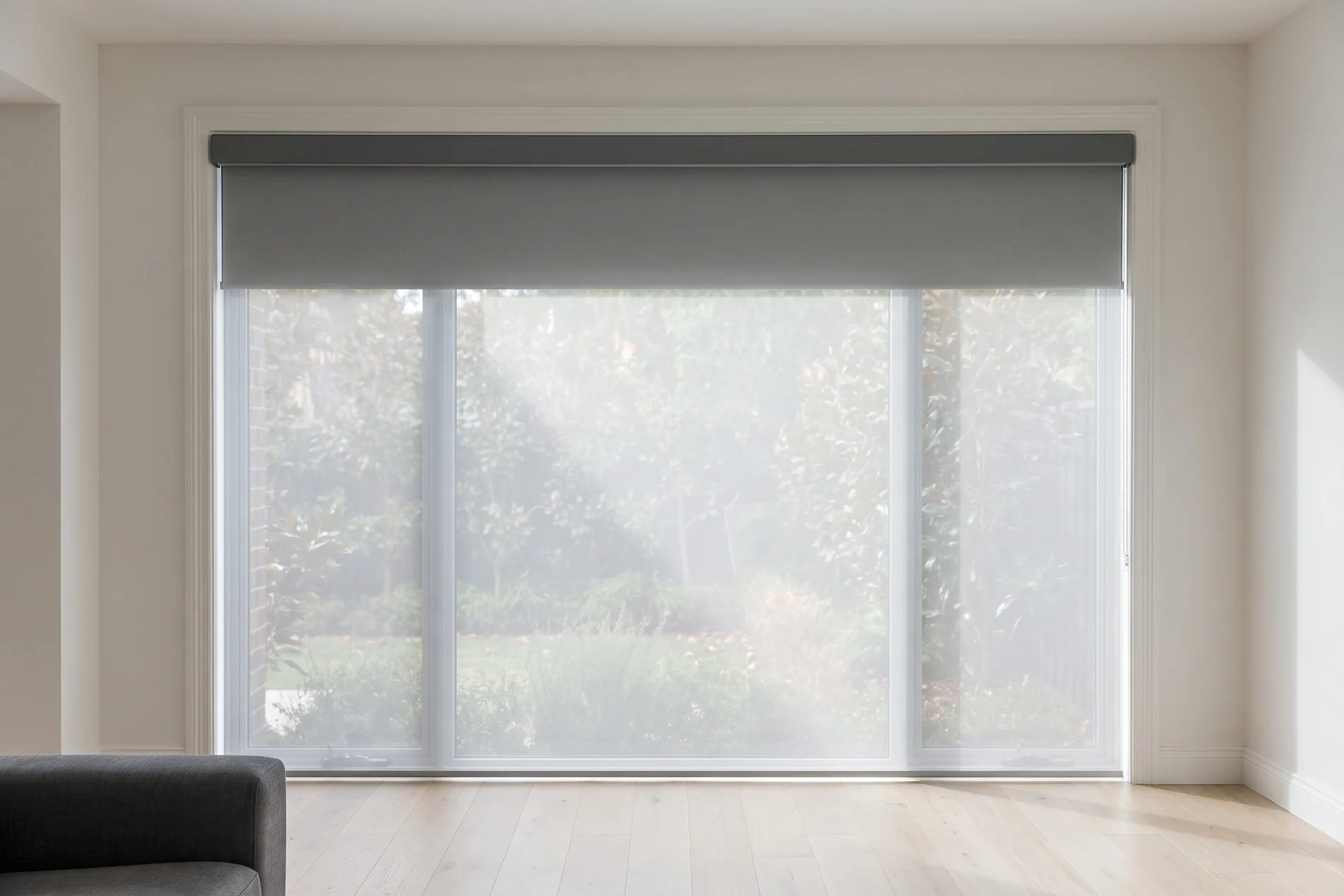
Dual roller blinds
Two blinds, one bracket, and four settings on a window that used to have two. What to pair, what it costs you in reveal depth, and when to buy something else instead.
Dual roller blinds put two blinds on one bracket at the same window — typically a sunscreen in front for daytime glare and privacy, and a blockout behind it for darkness at night. Each runs independently.
Forced to give one piece of advice: do not pair a very tight sunscreen with the blockout. You will have bought the same darkness twice.
Every page on this sells the idea, and the idea is good. What none of them mention is what the system costs you at the window, which is depth — and that is the thing most likely to decide whether you can actually have one.
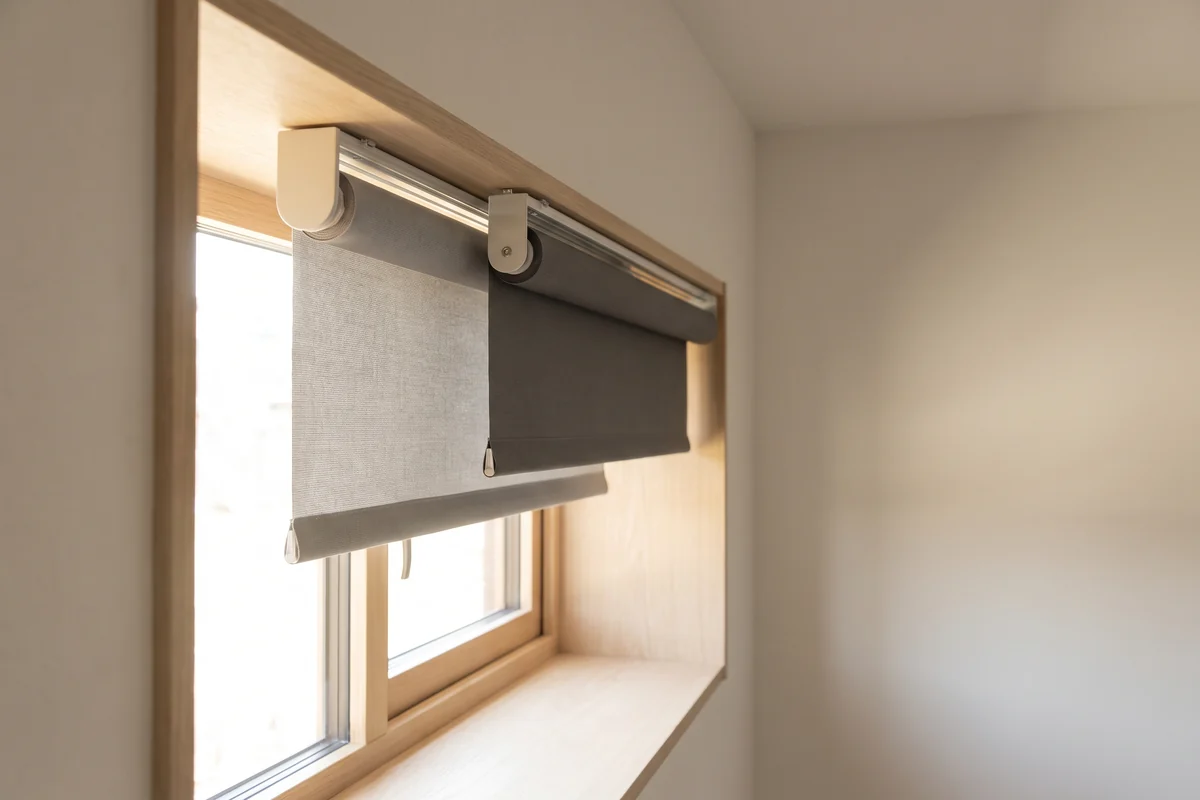
One bracket, two tubes
The whole system is the bracket. It carries two separate roller tubes, one behind the other, each with its own fabric and its own chain or motor. Both roll up into the same head, so from the room it reads as one blind that happens to do two things.
That is worth being precise about, because "dual" gets used loosely. This is two blinds on one bracket, not one fabric with stripes. A zebra or banded blind — one fabric printed with alternating sheer and solid bands that slide over each other — is a different product with a different mechanism, and it is sometimes sold under the same "day and night" label. If you are comparing quotes, check which one you are being quoted.
The practical result is four positions on a window that used to have two: both up, sunscreen only, blockout only, or both down. Most people use three of them and would notice immediately if you took the second one away.
What it costs you, and it is not just money
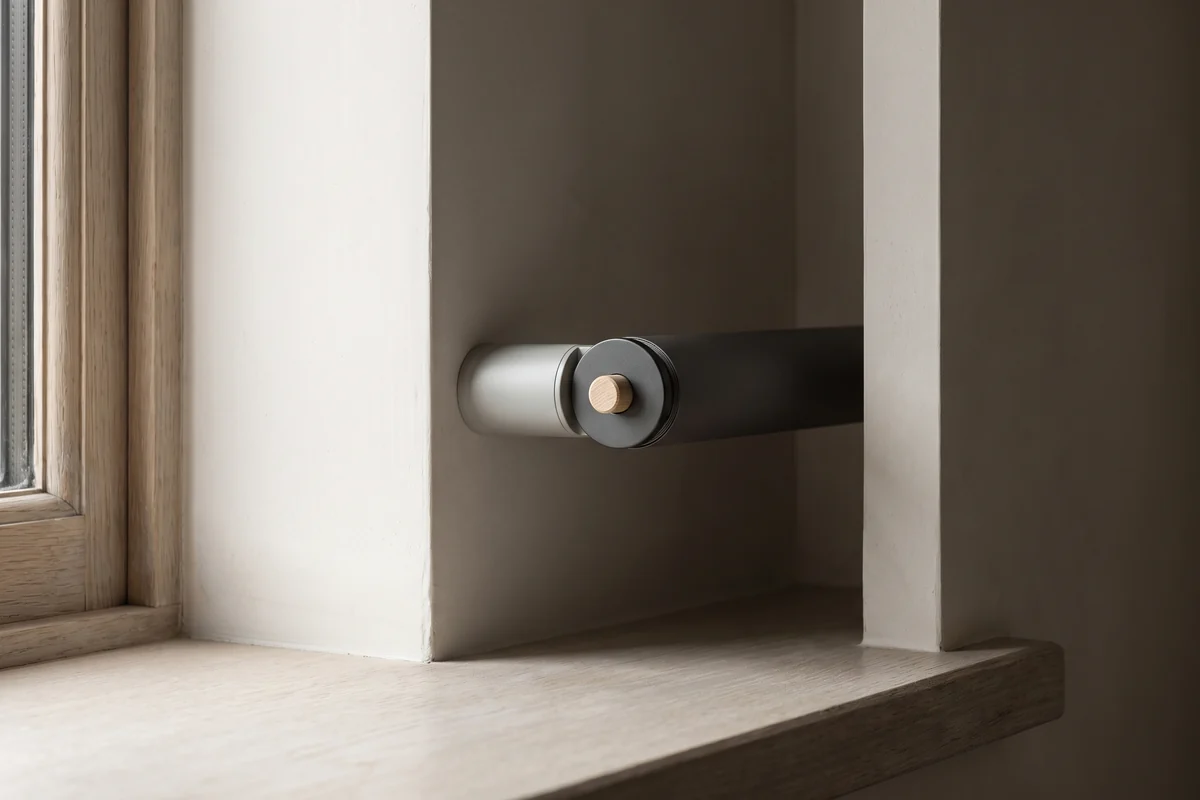
Two tubes need more room than one. They sit in line, front to back, so the assembly is deeper than a single blind by roughly the diameter of a tube plus the bracket that holds it.
In a deep reveal that is invisible. In a shallow one it is the whole conversation. If the recess is not deep enough, you have three options: fit the system on the face of the wall instead of inside the opening, drop to a single blind and put a sheer curtain in front of it, or accept that the blind will sit proud of the reveal. None of those is a disaster; all of them are better decided before anything is made.
We will not give you a recess minimum over the phone, and I would be a little wary of anyone who does. The number depends on the tube diameter, which depends on the width and the fabric, and a figure quoted blind is a figure that gets someone's order rejected at manufacture. We measure the reveal at the quote.
The other cost is the obvious one. You are buying two blinds. On a window that genuinely needs both, that is money well spent. On a window that needs one, it is not, and the next section is about telling those apart.
Which two fabrics to pair
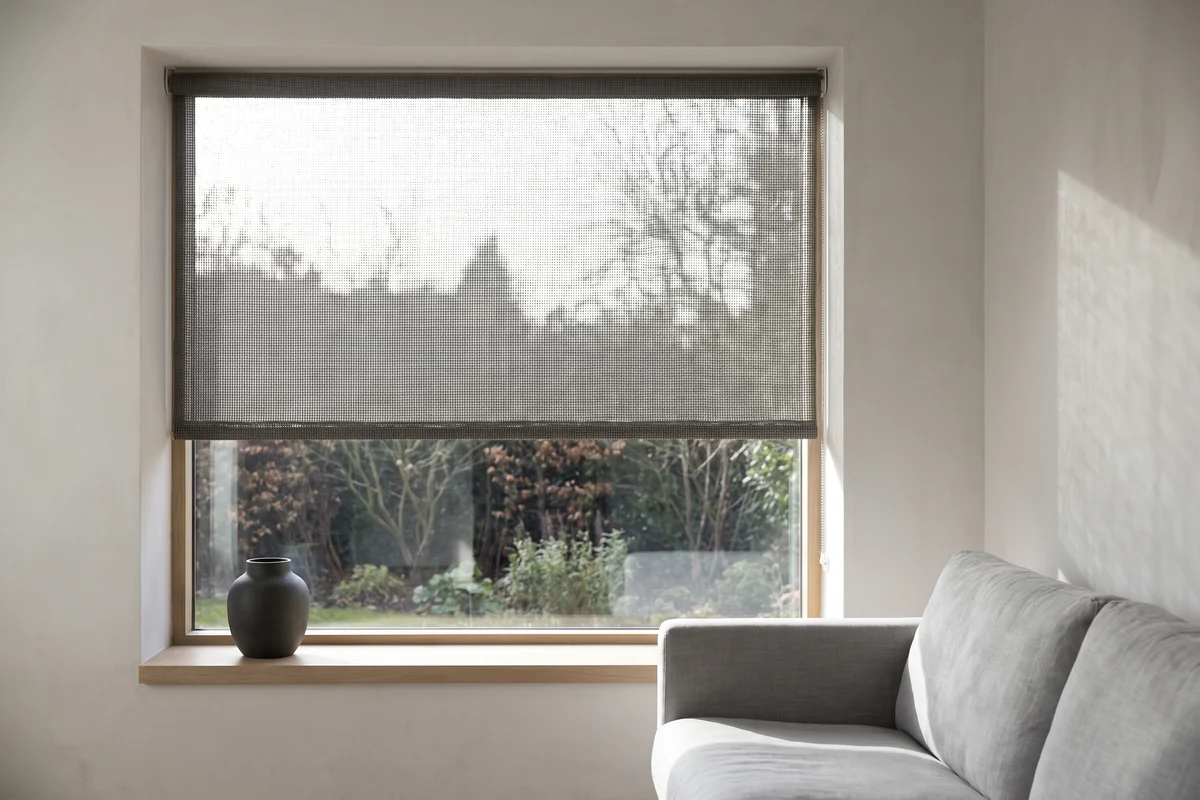
The standard answer is sunscreen in front, blockout behind, and the standard answer is right. Where people go wrong is the openness of the front layer.
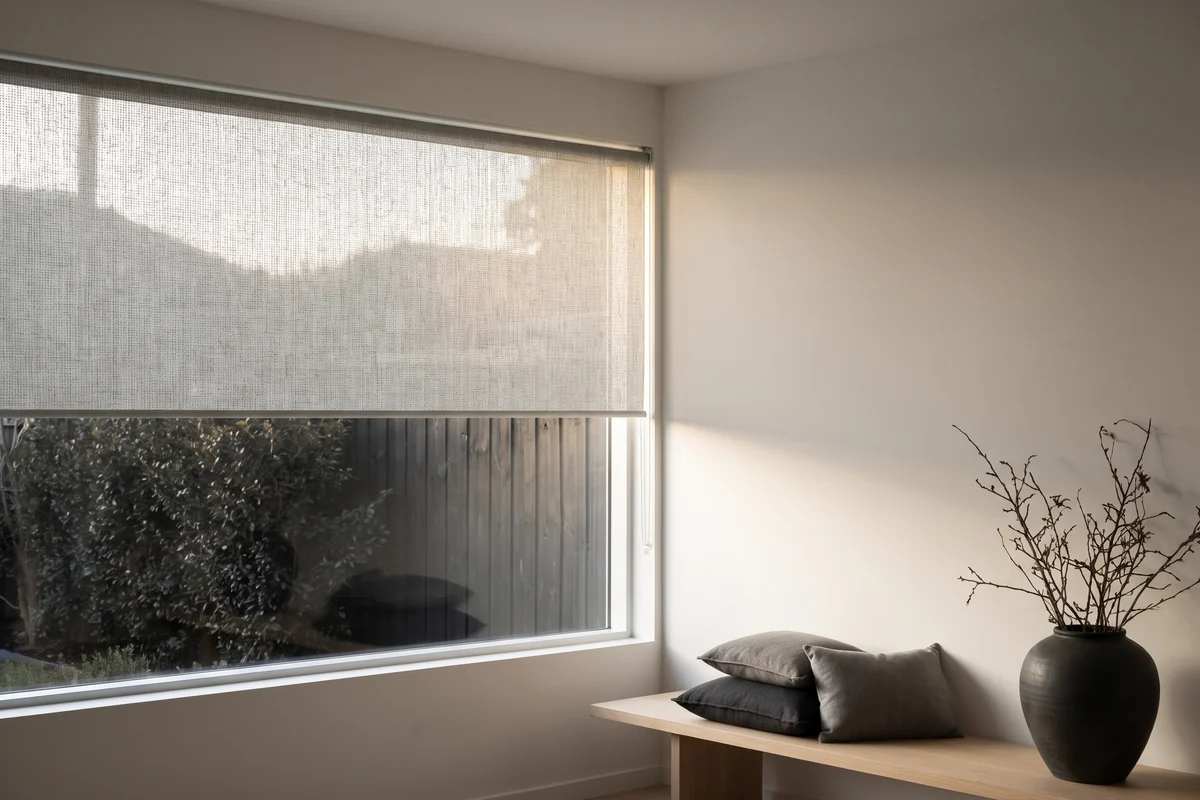
Openness is the percentage of the sunscreen weave that is actually open. We stock 1%, 3%, 5% and 10%. The lower the number, the more it blocks and the less you see out. Now think about what the front layer is for in a dual system: it is the day blind. Its job is glare control while you still have a view and daylight. Put a 1% in that position and you have a front blind that darkens the room and kills the view — which is what the blockout behind it was for.
- 5% or 10% front, blockout behind. The pairing that uses the system properly. Bright, view kept, glare handled, and full darkness available when you want it.
- 3% front, blockout behind. For a west-facing room where the afternoon glare is genuinely punishing and you accept a dimmer day setting.
- 1% front, blockout behind. Rarely the right call. If you need this much daytime blocking, the honest question is whether you want two blockouts, or whether the window needs external shading instead of a second internal layer.
The openness question is worth understanding properly before you choose, and what openness factor actually means goes through it in more detail than belongs here.
| Dual roller | Single blockout + sheer curtain | Single blind only | |
|---|---|---|---|
| Daytime privacy | Yes | Yes | All or nothing |
| Full darkness | Yes | Yes | Only if blockout |
| Reveal depth needed | Most | Least | Least |
| Wall space needed | None | Some, for the stack | None |
| Softens the room | No | Yes | No |
| Relative cost | Highest | Middle | Lowest |
Not sure your reveal will take one?
It is the first thing we check. If the recess is shallow we will say so at the measure and show you what else does the same job.
When to buy something else
Here is the version that costs us the bigger sale.
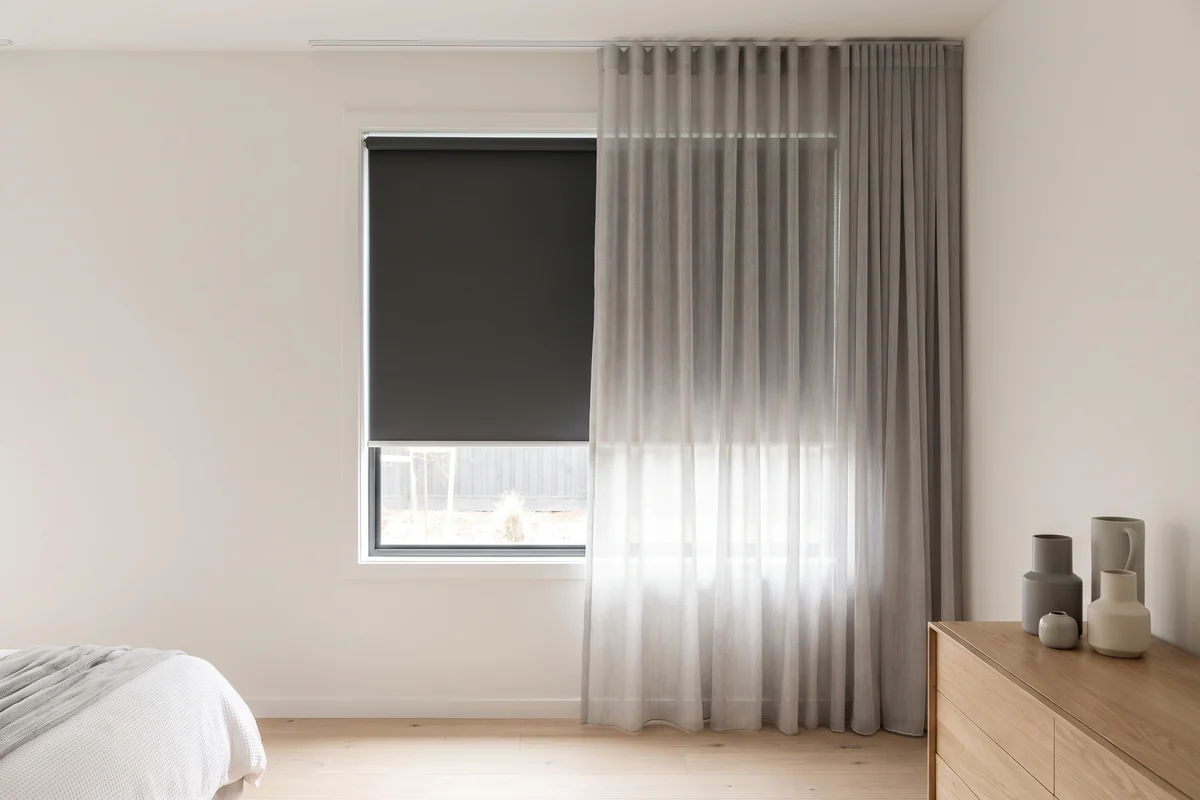
A dual roller and a single blockout with a sheer curtain in front do almost the same job. The dual is tidier, needs no wall space either side, and keeps everything inside the reveal. The curtain version is usually cheaper, needs less reveal depth, softens the room in a way no blind does, and makes the window look taller. If the room is one you sit in rather than only sleep in, the curtain version is very often the better buy, and we will say so.
Where the dual clearly wins: a window with no wall either side for a curtain to stack onto, a room where you want nothing soft near the opening, a kitchen or bathroom where fabric would collect grease or damp, and any opening where the clean line matters more than the softness.
Where neither is worth it: a window that only ever needs one setting. A laundry does not need a day mode. A hallway does not need darkness. One roller blind in the right fabric is the whole answer, and a dual system there is two blinds where one was doing fine.
Room by room
Bedrooms. The strongest case, and the one most duals are bought for. The blockout does the sleeping and the sunscreen does the rest of the day, so the room is usable at two in the afternoon without being dark. Worth pairing with a 5% or 10% front layer here rather than something tighter, because a bedroom you have to light at midday is a bedroom nobody sits in.
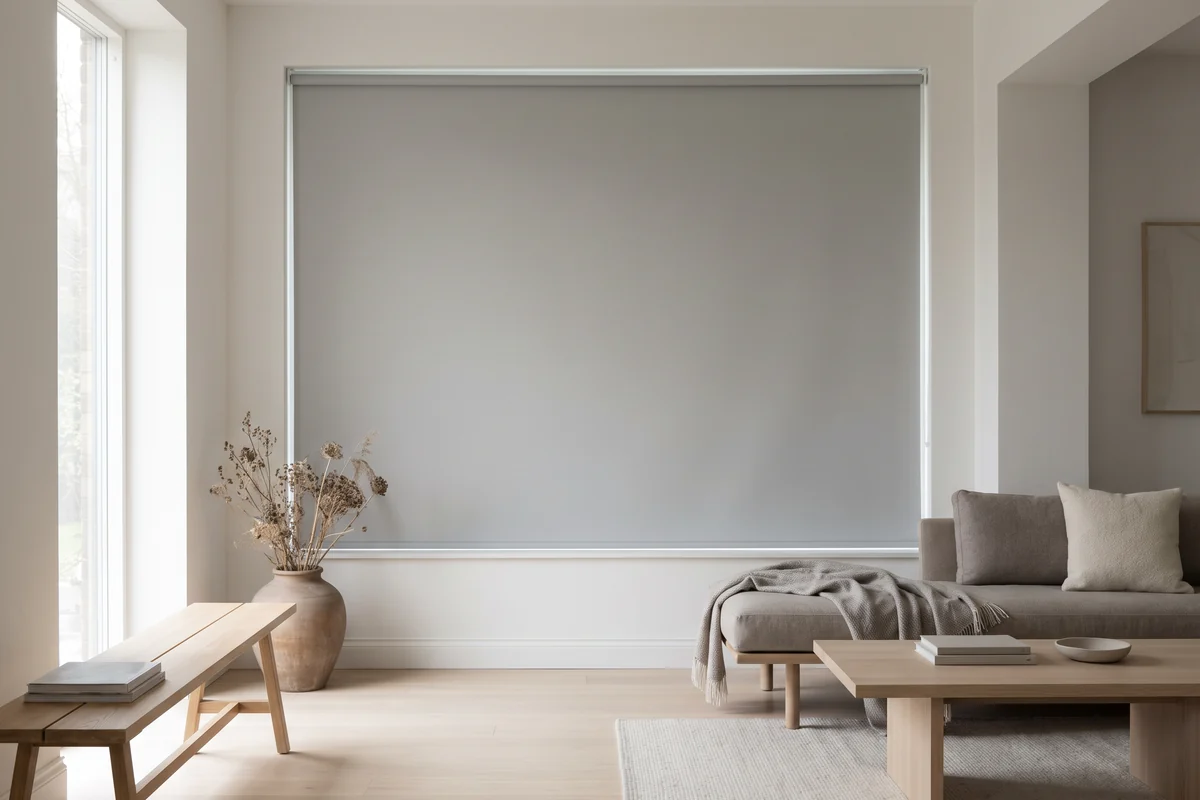
Street-facing living rooms. The other clear win. You want to see out during the day, you do not want the footpath seeing in, and after dark you want the room closed. That is three states, and a single blind gives you two. This is also the room where the night-privacy trap catches people: a sunscreen alone reverses after dark, so if there is no blockout behind it, passers-by get a better view than you do.
Home offices. Screens make this a glare problem before it is a privacy one. The sunscreen layer is doing nearly all the work, and the blockout mostly earns its place if the room doubles as a spare bedroom. If it does not, a single sunscreen and a lamp is often the honest answer.
Kitchens and dining. Duals suit kitchens for a reason that has nothing to do with light: there is no fabric hanging in folds to collect cooking grease. Two flat blinds wipe down. A curtain over a bench does not, which is the main argument for choosing the dual over the blind-and-sheer alternative in this room.
Bathrooms and laundries. Usually overkill. These rooms need privacy all the time and darkness never, so you are buying a day layer that has no job. One blockout or one light-filtering blind is the whole answer, and the money is better spent on a fabric that tolerates humidity.
Hallways, stairwells and anything you pass through. No. A window nobody stands at does not need four settings. This is the most common place we talk people out of the second layer, and it is usually the room that was added to the quote last.
Width, control and the practical limits
Each blind in a dual system is bound by the same limits as a single one. In practice that means about 3 metres is the widest we would make one, and anything past 3 metres wants a 60mm tube rather than a slimmer one, so the fabric does not sag across the span. A wider opening than that is two systems meeting at a join, which is a better outcome than one heroic blind that never rolls straight.
Control is per layer: each blind has its own chain, or its own motor if it is motorised. Motorisation is chosen when the blind is made — the motor and the tube are specified together — so on a dual system that is two decisions to make at the quote rather than something to add in a year. It is worth it on a high or awkward window where reaching two separate chains is genuinely annoying.
Cleaning is the small ongoing difference nobody weighs up at the quote. Two fabrics means two surfaces, and they get dirty at different rates — the sunscreen faces the glass and collects the dust that comes in the window, while the blockout behind it stays comparatively clean because the front layer is shielding it. In practice you will wipe the front blind two or three times for every once you touch the back one. Neither takes long, and a sunscreen weave is more forgiving than a curtain hem, which is part of why duals suit rooms where fabric would be a nuisance.
One last practical note. Two chains on one bracket is two cords near a window. If the room is a child's, that matters more than anything else on this page — corded blinds are covered by a mandatory Australian standard, and in a nursery we would push you toward motorised or toward a single blind with a curtain instead.
Frequently asked questions
What are dual roller blinds?
Two roller blinds mounted on one bracket at the same window, one in front of the other. Usually a sunscreen at the front for the day and a blockout behind it for the night. Each has its own tube and its own control, so you run either one independently or both together.
Are dual roller blinds worth it?
On a bedroom or a street-facing living room, usually yes — you get daytime privacy and full darkness from one opening without hanging curtains. On a window that only ever needs one of those two things, no. You are paying for two blinds and using one.
Which fabrics go in a dual roller blind?
The standard pairing is sunscreen in front and blockout behind. The part worth thinking about is the openness of the sunscreen: we carry 1%, 3%, 5% and 10%, and pairing a very tight 1% with a blockout means you have bought darkness twice. A 5% or 10% front layer usually makes better use of the system.
Do dual roller blinds need a deeper window recess?
Yes. Two tubes sitting one behind the other need more depth than a single blind, so a shallow reveal can rule the system out or force it to be face-fitted instead. It is the first thing we check at the measure, and it is why we will not quote a recess minimum over the phone.
Can dual roller blinds be motorised?
Yes, and both layers can run independently. As with any motorised blind it is specified when the blind is made rather than added afterwards, because the motor and the tube are chosen together. On a dual system that decision doubles, so it belongs on the original quote.
How wide can a dual roller blind go?
Each blind in the system is bound by the same limit as a single one — about 3 metres is the widest we would make, and anything past 3 metres wants a 60mm tube so the fabric does not sag in the middle. On a wider opening the answer is two dual systems meeting at a join.
What is the difference between dual roller blinds and day night blinds?
Nothing. They are the same product under different names, along with double roller blinds. Some retailers also use “day and night” for zebra or banded blinds, which are a different thing entirely — one fabric with alternating sheer and opaque stripes, not two separate blinds.
Sources Australian Government Your Home — Glazing · ACCC blinds and window fittings mandatory standard · Sleep Health Foundation
Back to the journalKeep reading
Related from the journal
 Guides
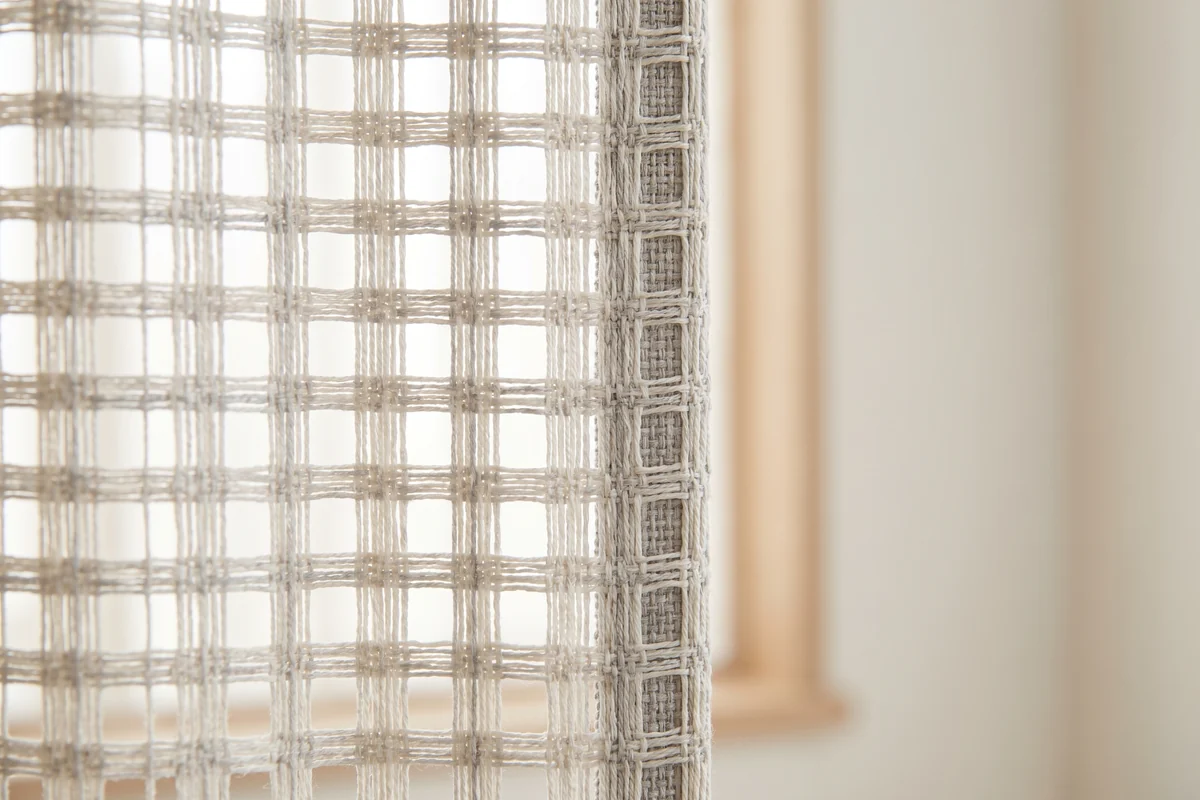
Sunscreen blinds and openness factor
Openness is the one number that decides how a sunscreen blind behaves. Here is what each percentage does, and why most of the advice online was written for the wrong hemisphere.
Read more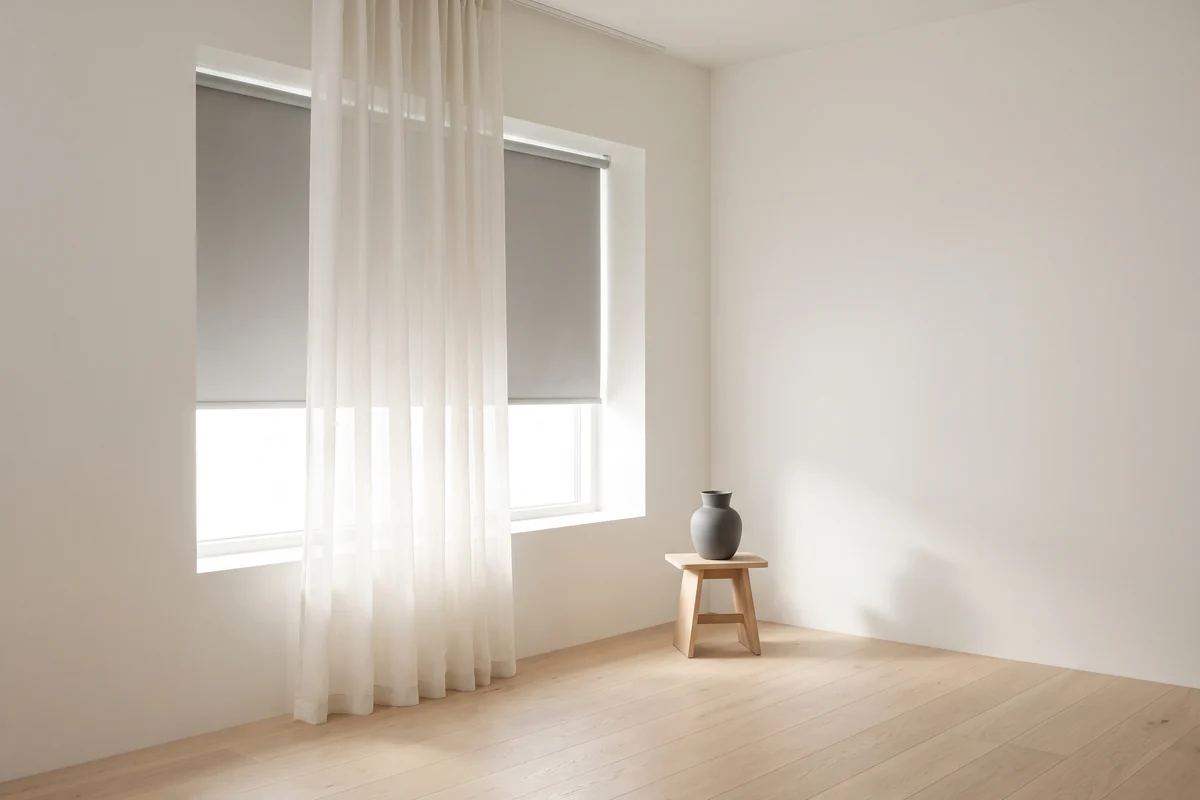 Guides
Blinds with sheer curtains
Layering a sheer over a blind is the most useful thing you can do to a window. Here is what actually goes where, and why the rod advice everywhere else does not apply.
Read more Guides
Roller blinds Brisbane & Gold Coast
A dual bracket carries both fabrics on one window, which is why it is the system we fit most often: glare control and the view during the day, full privacy after dark. Blockout on its…
Read more