

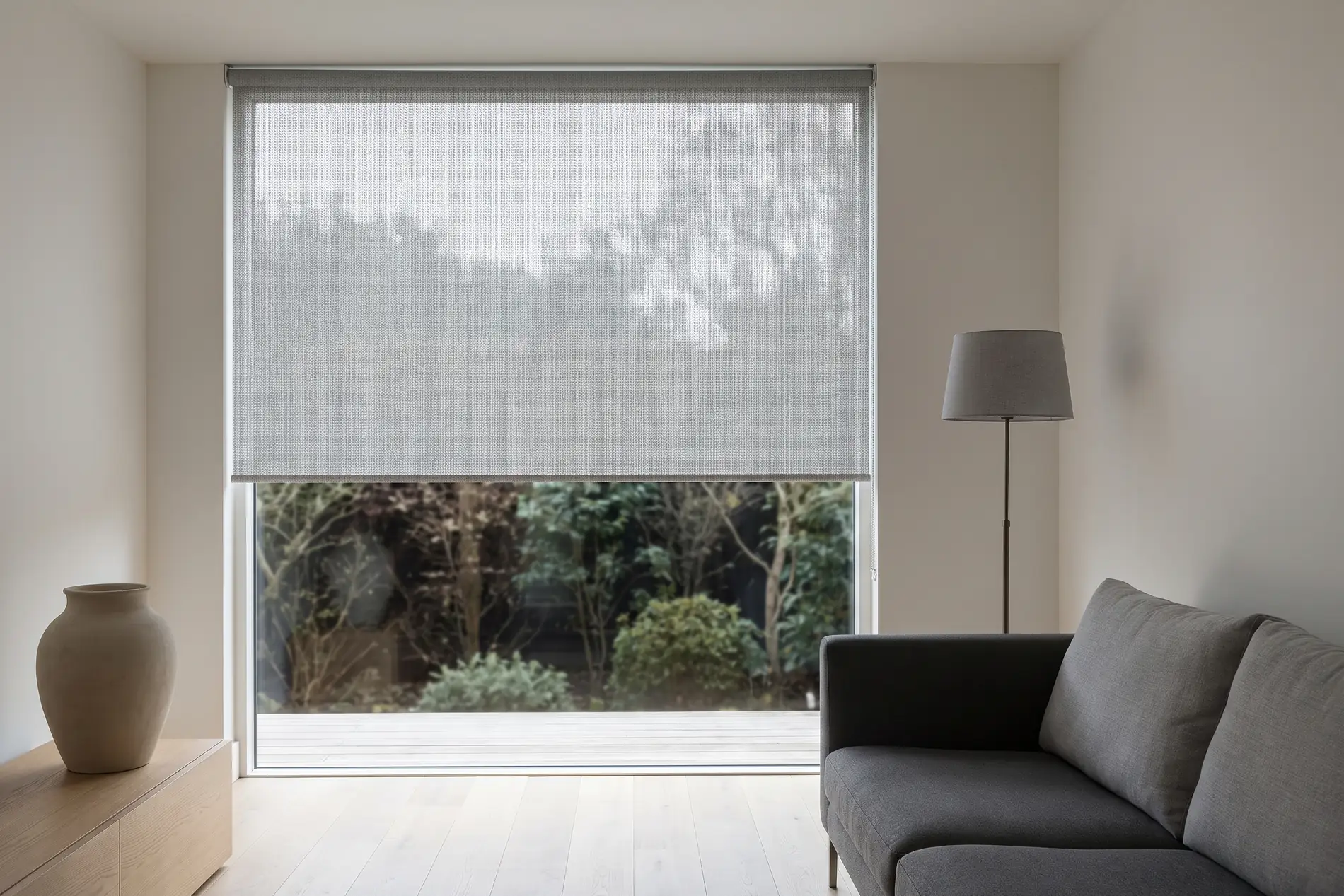
Sunscreen blinds and openness factor
Openness is the one number that decides how a sunscreen blind behaves. Here is what each percentage does, and why most of the advice online was written for the wrong hemisphere.
Sunscreen blinds are rated by openness factor — the percentage of the weave that is actually open. Lower blocks more glare and gives less view; higher keeps the view and lets more light through. We carry 1%, 3%, 5% and 10%.
Forced to pick one: 5% suits most Australian living rooms. Go to 3% or 1% on a north or west wall where the glare is the problem.
Openness is the only number on a sunscreen or sheer blind that changes how it behaves, and it is the one most quotes leave off. It is also where the advice online quietly falls apart, because most of it was written in the northern hemisphere for houses facing the other way.
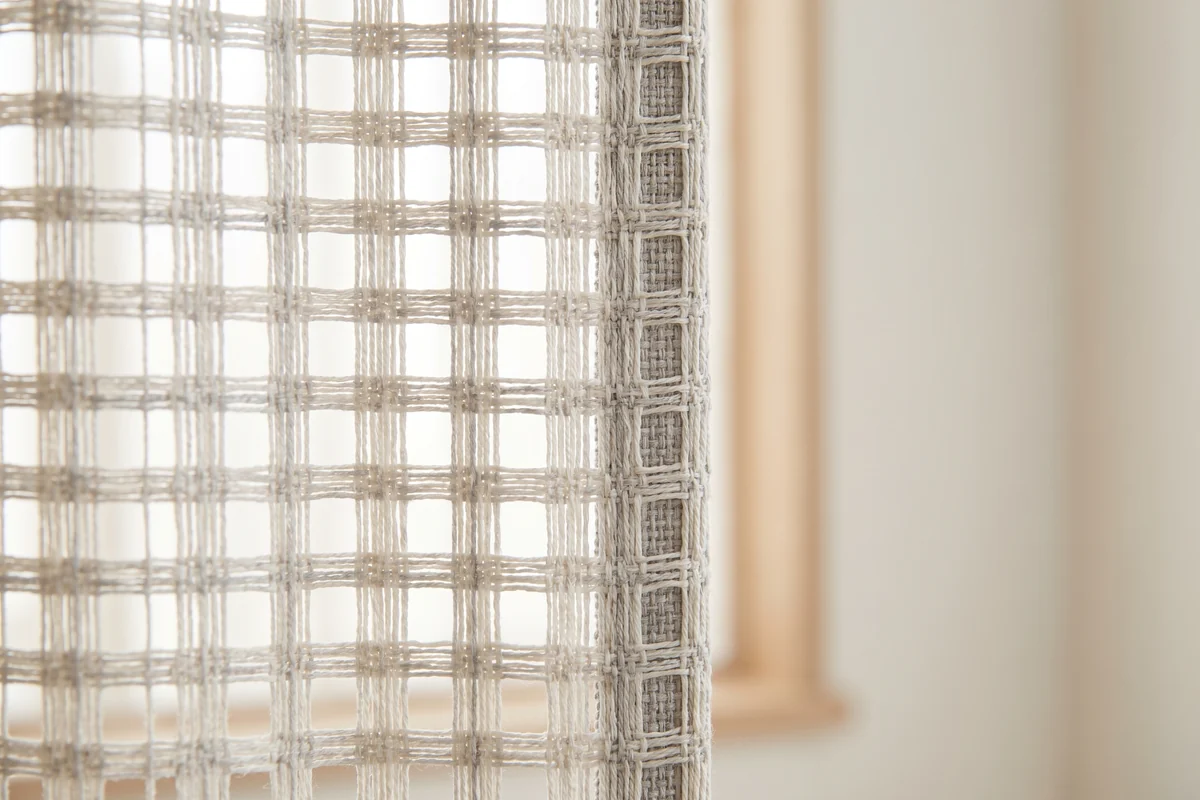
What the number actually measures
Take a sunscreen fabric and look at it under magnification and you see a grid: yarn running one way, yarn running the other, and square holes between them. Openness factor is simply how much of that surface is hole. At 5%, one twentieth of the fabric is air.
That sounds trivial and it is not, because those holes are what you see through. A tighter weave intercepts more of the light hitting the window, which means less glare on a screen, less fading on a floor, and less of the view. There is no setting that gives you all three, and any page telling you otherwise is selling a fabric rather than explaining one.
Two things openness does not tell you. It says nothing about colour, and colour changes the result substantially. It also says nothing directly about heat, which is a separate property of the coating and the backing.
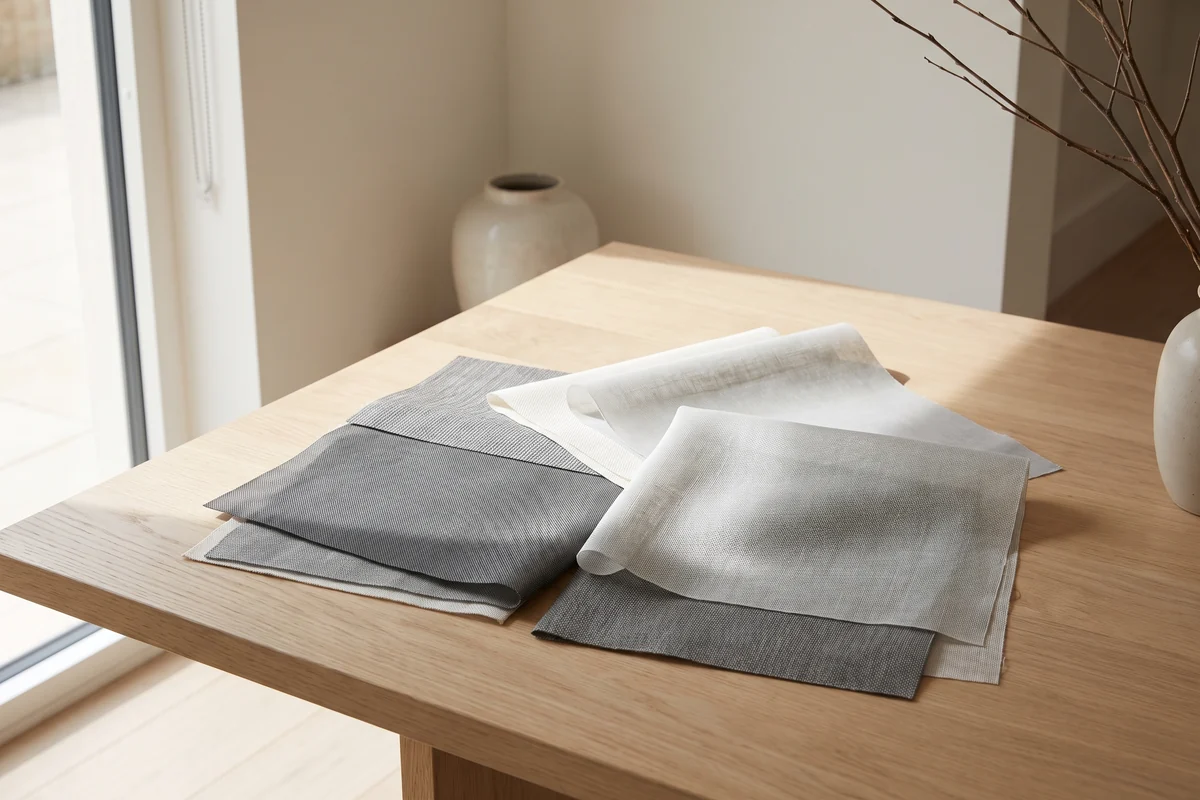
The colour trade-off is worth understanding because it catches people out. A dark fabric cuts glare better and gives a much clearer view out — your eye is not fighting a bright surface, so you look through the weave rather than at it. The cost is that dark fabric absorbs solar energy and warms up, and a warm panel hanging inside your window is radiating that heat back into the room by mid-afternoon.
A light fabric does the opposite. It reflects more energy back out through the glass, so it runs cooler, but it glows when the sun hits it and the view through it washes out. The usual answer on a window that matters is a dark fabric with a reflective backing — dark to the room for the view, reflective to the glass for the heat. That is one fabric doing both jobs, and it is why the backing matters as much as the number on the sample.
What each percentage does in a room
We stock the full range — 1%, 3%, 5% and 10% — which means the choice is a genuine trade-off you control rather than whatever one fabric the supplier had.
- 1% — glare first, view last. The tightest weave before you are into blockout territory. Right on a west-facing window where the afternoon sun is unusable, or a street-facing room where daytime privacy matters more than looking out.
- 3% — the working compromise. Meaningful glare control with enough view to keep the window feeling like a window. This is where most bedrooms and studies land if they are not getting a blockout as well.
- 5% — the default. If you told me nothing about the room, I would quote 5%. It handles ordinary glare and keeps the outlook readable.
- 10% — view first. For a window where the outlook is the point and the sun is not a problem — a south-facing living room, or a window already shaded by a verandah. It will not save you from afternoon glare, and you should not expect it to.
| 1% | 3% | 5% | 10% | |
|---|---|---|---|---|
| Glare control | Strongest | Strong | Moderate | Light |
| View retained | Minimal | Some | Good | Best |
| Daytime privacy | Best | Good | Moderate | Little |
| Night privacy | None — no sunscreen gives night privacy at any openness | |||
| Typical aspect | West | North / west | East / general | South / shaded |
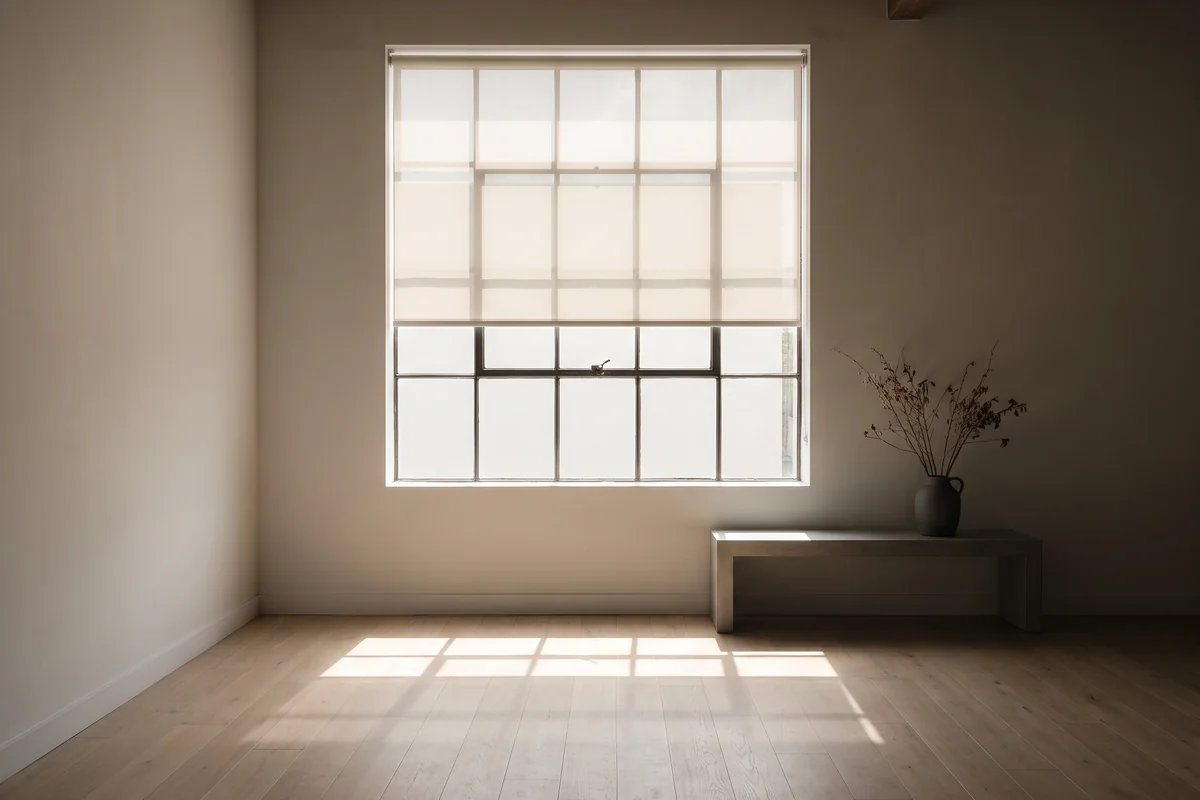
Most of the advice online is for the wrong hemisphere
This is the part worth reading twice. Search openness factor and you will find American guides recommending a high openness on north-facing windows, on the grounds that north gets the least direct sun. That is correct in Ohio and wrong in Queensland.
In the southern hemisphere the sun sits in the northern half of the sky. North is the aspect that takes the most sun across the day, which is exactly why Australian houses are designed to face that way and why northern glass is the glass that needs managing. Follow a US openness guide literally and you will put a 10% fabric on your sunniest window and a 1% on your dullest.
The Australian version, roughly:
- North. Most sun, but high in summer and low in winter. A 3% earns its keep here, and eaves or an external shade do more than any fabric will.
- West. The worst one. Low afternoon sun straight into the room, at the hottest part of the day. 1% or 3%, and genuinely consider stopping it outside the glass instead.
- East. Bright early, then done. 5% is usually enough unless someone is trying to sleep there.
- South. Little direct sun. 10% keeps the view and there is not much glare to fight.
Not sure which number your window wants?
We check the aspect at the measure, because it changes the answer more than anything you can see from inside. Samples come with us.
Openness is a light number, not a heat number
People treat the two as the same and they are not. Openness tells you how much of the weave is open. What happens to the energy hitting the closed part depends on the fabric — a dark fabric absorbs it and re-radiates a good deal of that warmth into the room, while a reflective one sends it back out through the glass.
That is the mechanism behind metallised sunscreen fabrics such as Verosol SilverScreen, which we supply. The backing reflects solar radiation rather than absorbing it, so the fabric does not become a warm panel sitting inside your window. We are deliberately not quoting a performance figure for it — the manufacturer publishes numbers we have not independently verified, and an unverified percentage on a website is how a sales claim becomes a complaint.
The larger point holds regardless of fabric: an internal blind is working on heat that is already through the glass. Shading the outside of the window stops considerably more of it, which is why on a bad western wall we will often suggest an external blind and a lighter fabric inside rather than the tightest weave we sell.
The night privacy trap
A sunscreen works on contrast. During the day it is brighter outside than in, so the weave reads as a screen from the street and a view from the sofa. After dark, with the lamps on, that reverses exactly — and the same fabric that hid you at noon shows a good deal more than you would like at eight in the evening.
No openness fixes this. Not 1%, not anything. If the room needs privacy at night, it needs a second fabric: a blockout roller on the same window, a curtain in front, or a dual blind with a sunscreen and a blockout running on one bracket. We make the dual version, and on bedrooms and street-facing living rooms it is usually the honest recommendation rather than pushing someone to a 1%.
Worth knowing before you plan a wide opening: a single roller blind is about 3 metres at the widest we would make it, and anything past 3 metres wants a 60mm tube to stop the fabric sagging in the middle. Wider than that and the answer is two blinds meeting at a join, not one heroic one.
In practice we do not pick the number off a chart. We stand in the room at the measure, look at what the window faces, note what is outside it — a fence two metres away is a different problem from a garden — and ask what the room is for. A study where someone works on a screen all afternoon gets a tighter weave than a lounge nobody sits in before six. Where two windows in the same room face different ways, they often get different fabrics, which surprises people until they see it.
Ultraviolet is a separate question again. Openness does not describe UV transmission, and Australian UV levels are high enough for long enough that fade protection is a real consideration for furniture and flooring, not a marketing line.
Frequently asked questions
What does openness factor mean on a blind?
It is the percentage of the fabric's surface that is open weave rather than yarn. A 5% fabric is 5% holes and 95% thread. The lower the number, the tighter the weave, the more glare and light it stops, and the less you can see through it.
What openness factor is best?
There is no single best one, which is why we carry 1%, 3%, 5% and 10%. The right number depends on the aspect, what is outside, and whether you care more about the view or the glare. Two windows in the same house often want different numbers.
Do sunscreen blinds give privacy at night?
No, and this is the most common disappointment. A sunscreen works on the light difference between inside and out, so once your lamps are on and it is dark outside, the effect reverses and people can see in. If the window needs night privacy, it needs a blockout layer as well.
Do sunscreen blinds stop heat?
They cut radiant heat and glare, but openness is a light number rather than a heat number — two fabrics at the same openness can perform very differently depending on colour and backing. Anything fitted inside the glass is also working on heat that has already entered the room.
Which openness works for a north-facing window in Australia?
A low one. North is the sunny aspect in the southern hemisphere, so north-facing glass takes the most sun across the day. Most openness guides online are American and say the opposite, because north faces away from the sun where they are.
Can you see out of a 1% sunscreen blind?
A little, in bright conditions, but not well. At 1% you are choosing glare control and daytime privacy over the view. If the view is the reason you bought the house, start at 5% and accept more glare.
Are sunscreen blinds the same as light filtering blinds?
Not quite. A sunscreen is an open weave you can partly see through. A light filtering fabric is usually a closed weave that glows without a view. People search for both interchangeably, but they behave differently in a room.
Sources Australian Government Your Home — Glazing · ACCC blinds and window fittings mandatory standard · Sleep Health Foundation
Back to the journalKeep reading
Related from the journal
 Guides
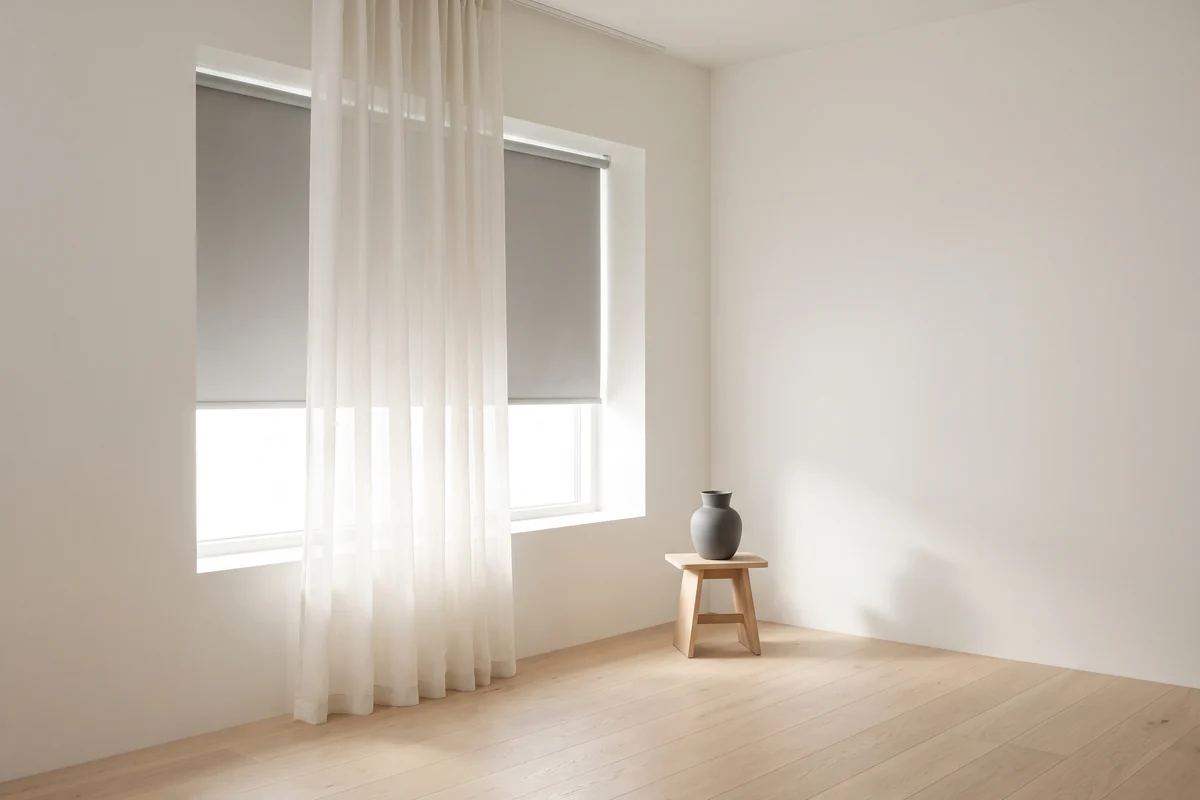
Blinds with sheer curtains
Layering a sheer over a blind is the most useful thing you can do to a window. Here is what actually goes where, and why the rod advice everywhere else does not apply.
Read more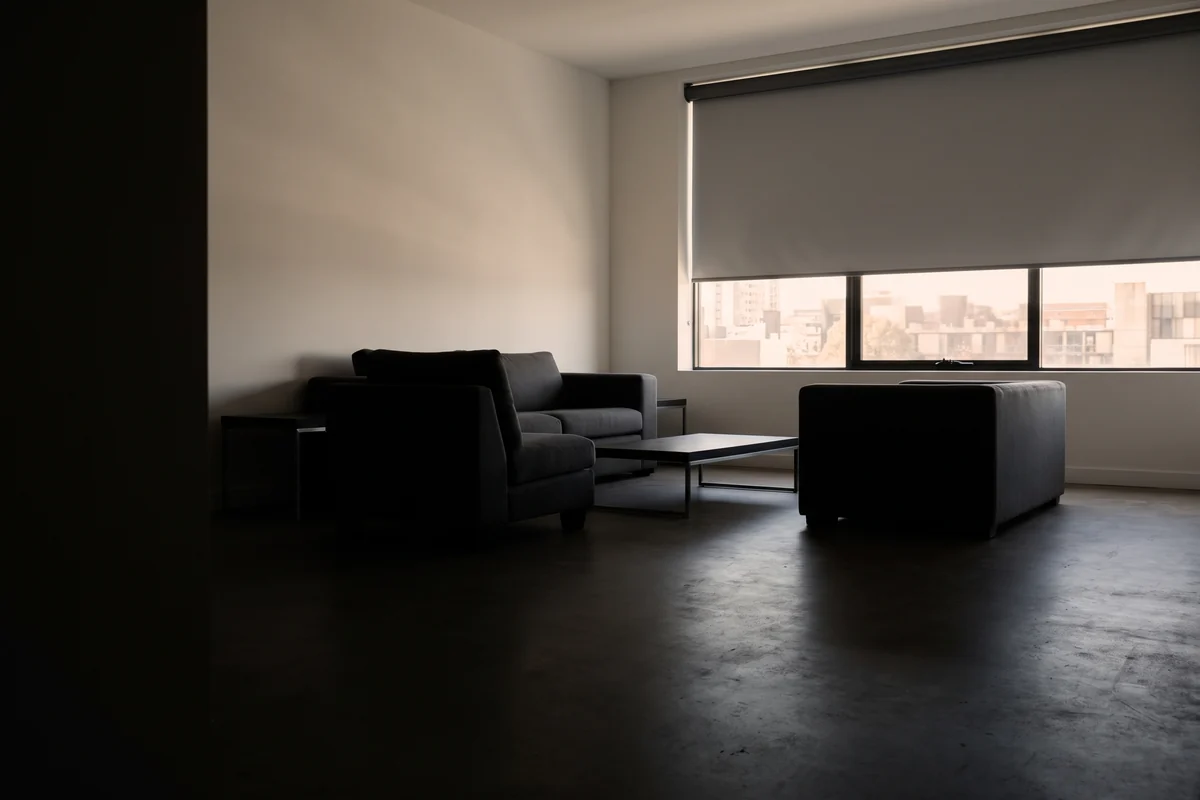 Guides
Roller blinds Brisbane & Gold Coast
A dual bracket carries both fabrics on one window, which is why it is the system we fit most often: glare control and the view during the day, full privacy after dark. Blockout on its…
Read more Outdoor
Do Outdoor Blinds Reduce Heat?
Stopping the sun on the outside of the glass is the whole trick. Here is what that is worth, and where it stops.
Read more