

Blinds for sliding doors
The covering has to survive being walked through several times a day. That rules more out than the view does.
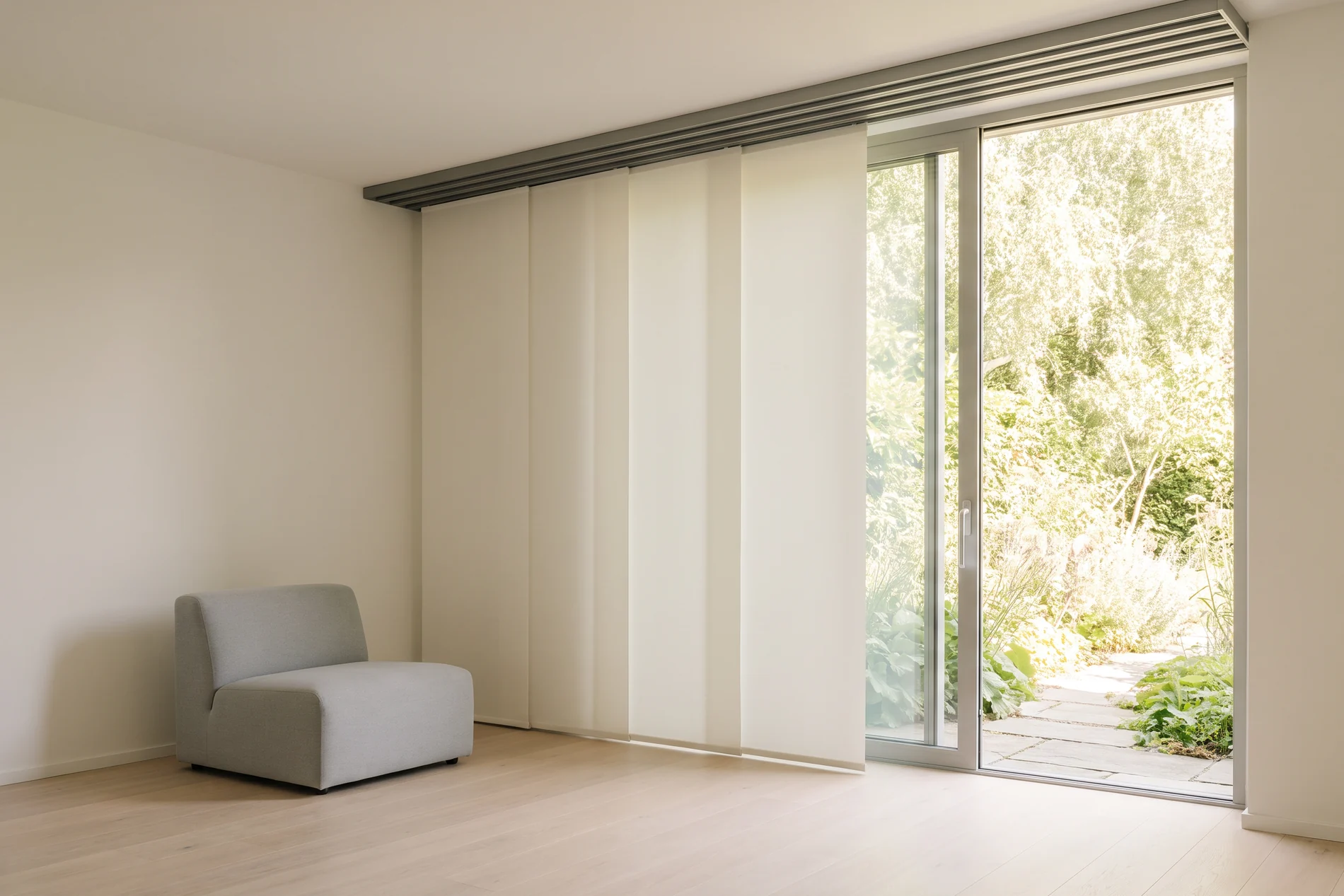
The best blinds for sliding doors move sideways, not up and down. Panel glide, vertical blinds and curtains on a runnered track all stack to one side, so the covering clears the opening you actually walk through. Roller and honeycomb blinds suit one too, but only to a point — a standard roller stops at about three metres.
Forced to pick one across a three-panel stacker: panel glide.
A sliding door is not a big window. It is the opening you carry plates through one-handed, and that rules out more coverings than the view or the fabric will. Most guides to sliding door window treatments start with style. Start with traffic.
Start with how you use the door
Count how many times a day the door gets opened. If it is the main route to a deck, anything that has to be raised and lowered to let someone through loses that argument within a fortnight. A blind you lift every time you carry a coffee outside gets left down, and then you have a wall instead of a door.
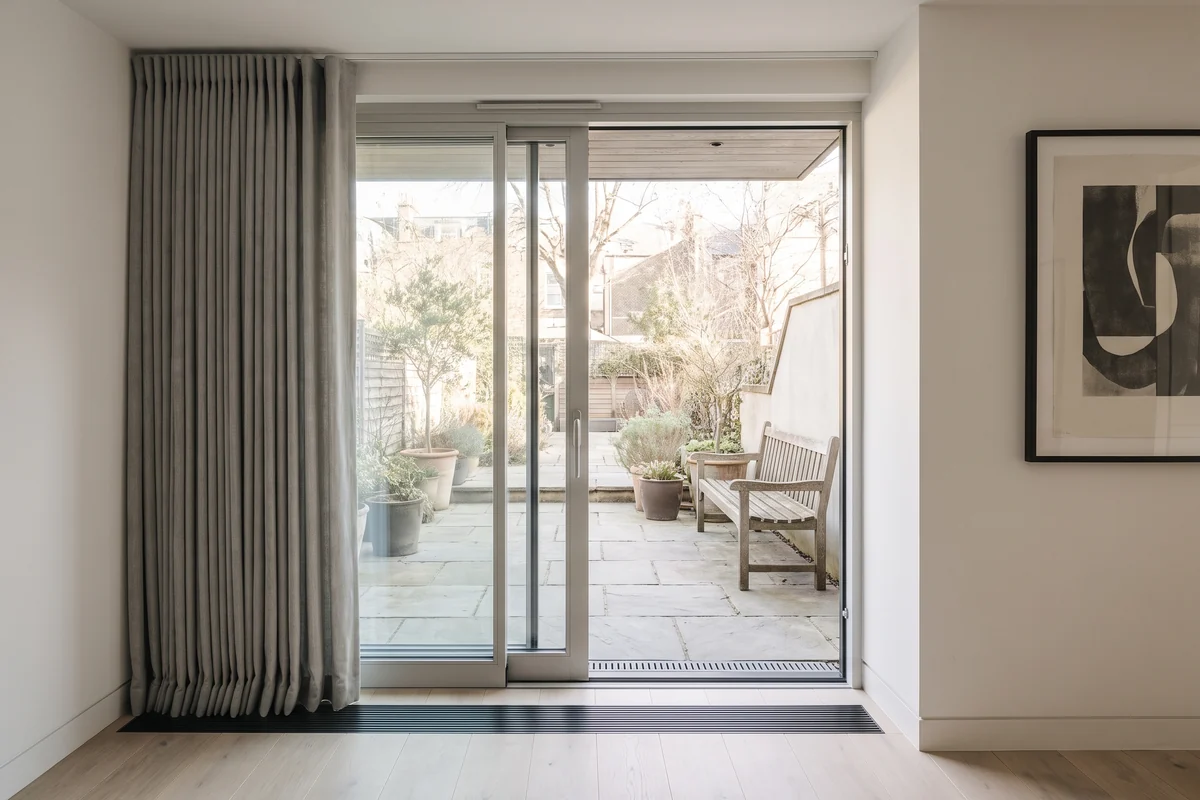
That is the case for sideways-moving coverings. Panel glide, verticals and curtains draw to one end, so the door works with the covering still on the glass you are not walking through. Roller, honeycomb and Roman are either up or down — on a door, a binary you keep operating.
Decide two things before you look at a fabric. Whether you need privacy after dark as well as glare control by day, which usually wants two fabrics. And whether there are small children about — a high-traffic opening is where a hanging cord gets reached, so read the ACCC's guidance on corded window coverings first.
The five coverings that suit a sliding door
All five work. Which is right depends on the width of the opening, the wall beside it, and whether you want the covering seen or gone.
- Panel glide blinds. Wide fabric panels that slide across each other on a top track and stack into a slim pile at one end. The best all-round answer for a wide opening, and the only one here designed for the span rather than adapted to it.
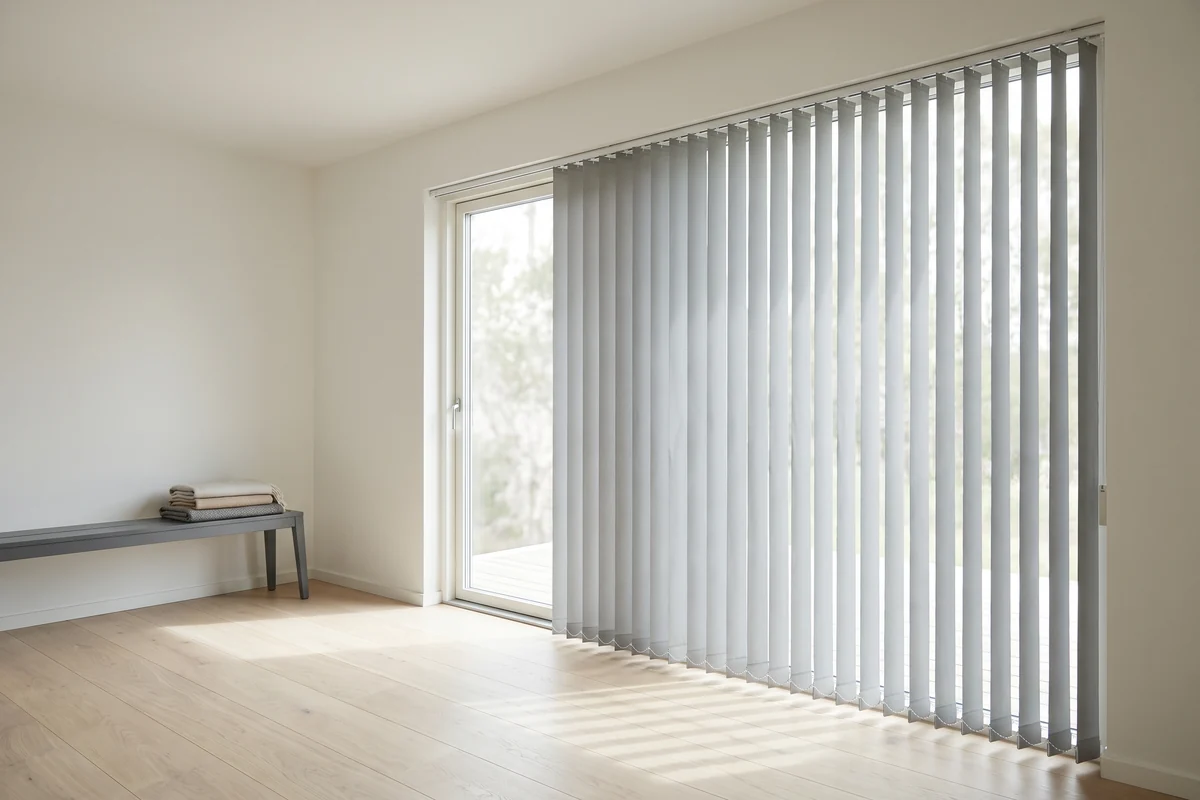
- Vertical blinds. The most adjustable of the five: the vanes rotate to trade view against glare, and draw right back off the glass.
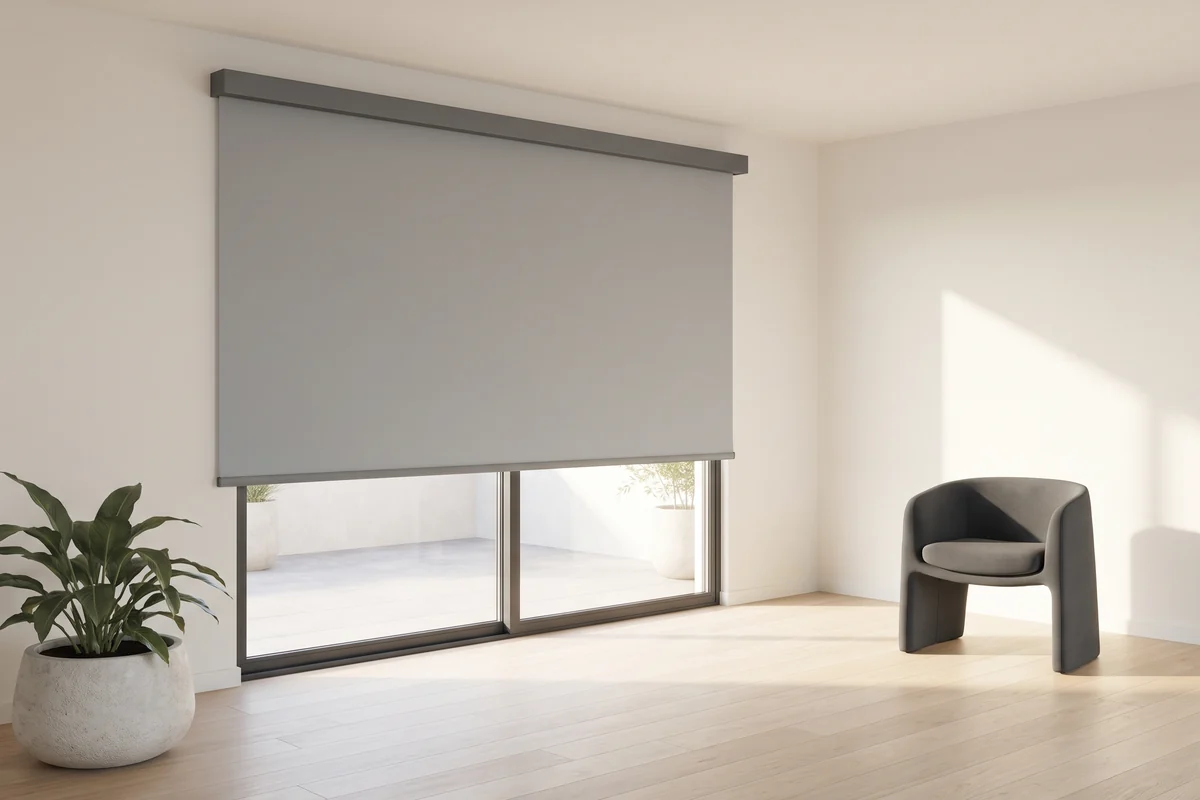
- Roller blinds. The cleanest look and smallest stack, in blockout or sunscreen fabric. Excellent on a two-panel door, constrained by width past that.
- Honeycomb blinds. The cell structure traps still air against the glass — the one covering here with a real thermal argument. Folds into a small stack at the head.
- S-fold curtains. The softest option, and the one that makes a door read as part of the room. Sheer for the day, blockout behind it for the night.
None of it hangs from a rod. Every track we supply runs on runners, decorative ones included — on a door used daily, a curtain dragged along a pole by hand is what wears out first.
| Panel glide | Vertical | Roller | Honeycomb | S-fold curtain | |
|---|---|---|---|---|---|
| Moves | Sideways | Sideways | Up and down | Up and down | Sideways |
| Suits 3m+ opening | Yes | Yes | Two blinds | Check span | Yes |
| Adjustable closed | No | Yes | No | No | No |
| Stack when open | Slim pile | Tight bundle | Roll at head | Small stack | Deepest |
| Lead time | 3–4 weeks | 2–3 weeks | 2–3 weeks | 2–3 weeks | 2–4 weeks |
Where a roller blind runs out of width
A standard roller blind maxes out at about three metres. Some fabrics railroad — turned sideways on the roll so the width runs across the blind — and go wider, but not all of them survive the rotation, so it is a question for the quote. Past three metres we specify a 60mm tube, or it deflects and the fabric tracks off.
Now measure your door. A two-panel slider is often 1.8m to 2.4m, which a roller covers comfortably. A three-panel stacker is routinely 3.6m, and needs two blinds side by side with a join down the middle of the glass, at eye level for the life of the house.
So here is the part that costs us the easier sale: on most three-panel doors, roller blinds are the wrong answer, and being the cheapest quote is exactly why they get specified anyway. Two blinds across one door is not a disaster. Finding out about the join on installation day is.
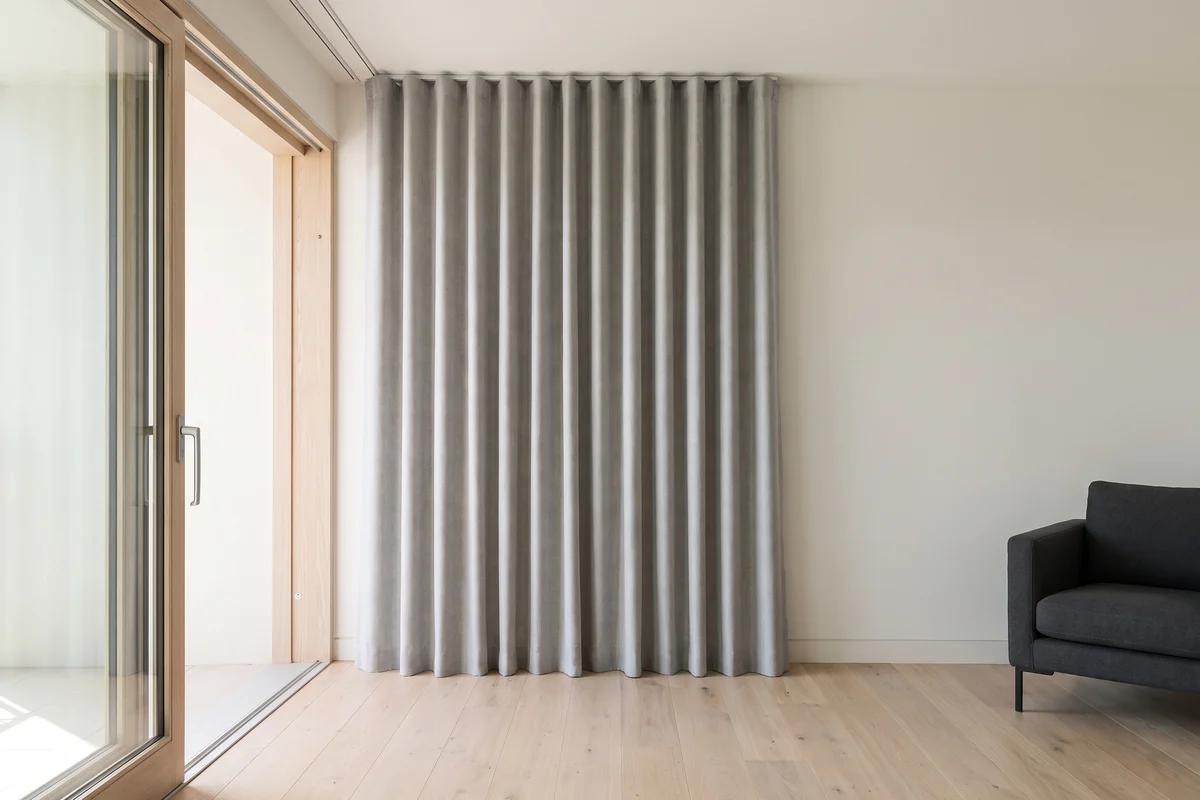
Where it all parks when the door is open
Stackback is the width the covering occupies when fully open, and the measurement people forget. Panels and verticals stack tight. S-fold curtains stack deep enough to need real wall beside the opening — with no wall there, the fabric parks on the glass and you have paid for a view you are covering.
The other half is which side. Only some panes move, and the covering should stack over one that does not. Curtains parked across the only pane that opens are a daily annoyance, and it is a five-second decision at the measure that cannot be fixed afterwards without remaking the covering.
Raise two smaller things at the same measure. A pelmet across the head closes the gap where warm air runs down the glass, and shading glass before the heat gets in is the cheapest thermal move on a door this size. And the covering should clear the floor — fabric touching the deck collects whatever comes in from outside.
Not sure which one your door takes?
Send the width and which way the panels slide, and we will tell you what fits. Detailed quote within 24 to 48 hours of the measure, itemised.
Frequently asked questions
What blinds are best for sliding doors?
Panel glide blinds, for most doors. They slide sideways and stack into a slim pile at one end, so the door stays usable with the blind still covering the glass beside it. Verticals are the better pick if you want to rotate the vanes against glare.
Can you put roller blinds on a sliding door?
Yes, and they suit a two-panel door well. The limit is width: a single roller runs to about three metres, so a wider stacker needs two blinds with a join down the middle of the glass. Some fabrics railroad and go wider, but that belongs on the quote.
What is the difference between panel glide blinds and vertical blinds?
Panel glides are wide fabric panels that slide past each other and stack flat. Verticals are narrow vanes that also draw sideways but rotate, adjusting light without opening fully. Panels give the cleaner face; verticals finer control.
Should sliding door blinds be fitted inside or outside the frame?
Outside the frame, in almost every case. Fitting inside the reveal puts the covering in the path of the sliding panel and the handle, and leaves a light gap down both edges. Mounting wider also gives it somewhere to stack that is not over the glass.
Are vertical blinds outdated?
The 1990s plastic vane is. Fabric verticals are a different product, and on a wide door they still do what nothing else does — rotate to trade view against glare without opening anything. If the look is the objection, panel glide is the same mechanism with a flatter face.
What is the best window covering for a west-facing patio door?
A sunscreen fabric, specified by openness factor. We carry 1%, 3%, 5% and 10% — the lower the number, the more of the weave is closed and the more glare it stops. Take 1% or 3% where afternoon sun is the problem, 10% where the view matters more.
Sources Australian Government Your Home — Glazing · ACCC blinds and window fittings mandatory standard · Sleep Health Foundation
Back to the journalKeep reading
Related from the journal
 Guides
Blinds vs curtains: how to choose, room by room
The opening decides it, not the product. What each one does better, why the heat argument is really an installation argument, and the cord rule that settles a child’s room.
Read more Guides
What is a window treatment?
It is the American word for window furnishings, and the search results are American too. The four families explained for an Australian house — which way the window faces, and the cord law that decides a child’s room.
Read more Guides
Curtain rods vs tracks: which should you choose?
One is chosen for how it looks, the other for what it has to hold. What each system carries, which headings fit which, and the fixing question that quietly decides it.
Read more