

Living Room Curtain Ideas
How to choose curtains for a room you live in all day: the light, the wall, the furniture in front of it.
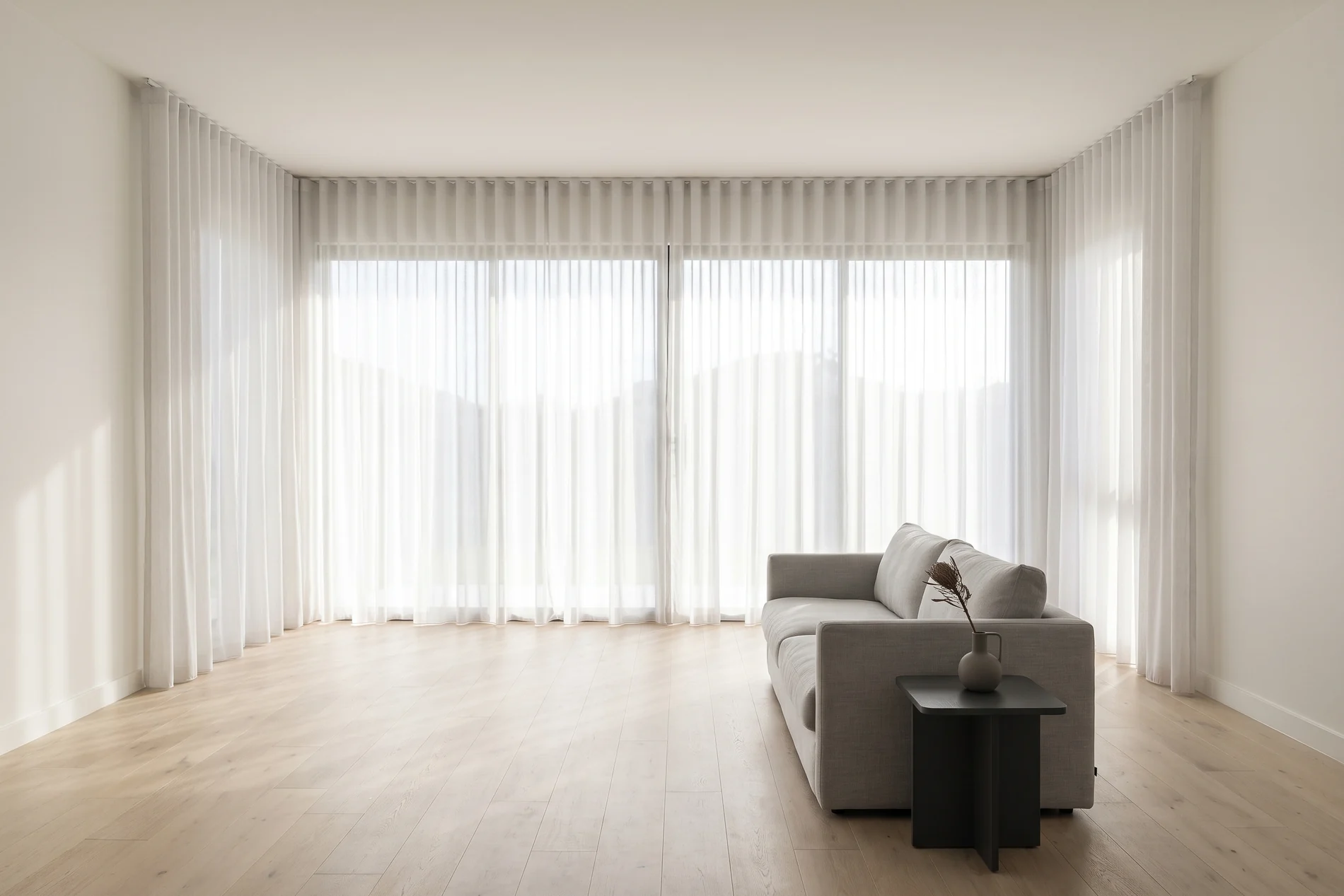
The best living room curtain ideas start with the daylight, not the fabric. A living room is used all day, so the curtain you'll actually draw is usually a sheer, hung from a track that runs wall to wall and drops to the floor. Add a heavier layer only on the windows the street can see into after dark.
Then plan around the sofa and the TV, because they decide more than the swatch does.
Every list of living room curtain ideas is really a list of photographs. They're nice photographs. They just don't tell you how to choose curtains for your own living room, which has a particular aspect, a particular wall, and a couch that is not moving. Here is the order I'd work through it in, after five years of measuring them between Byron Bay and Brisbane.
Design it for two in the afternoon
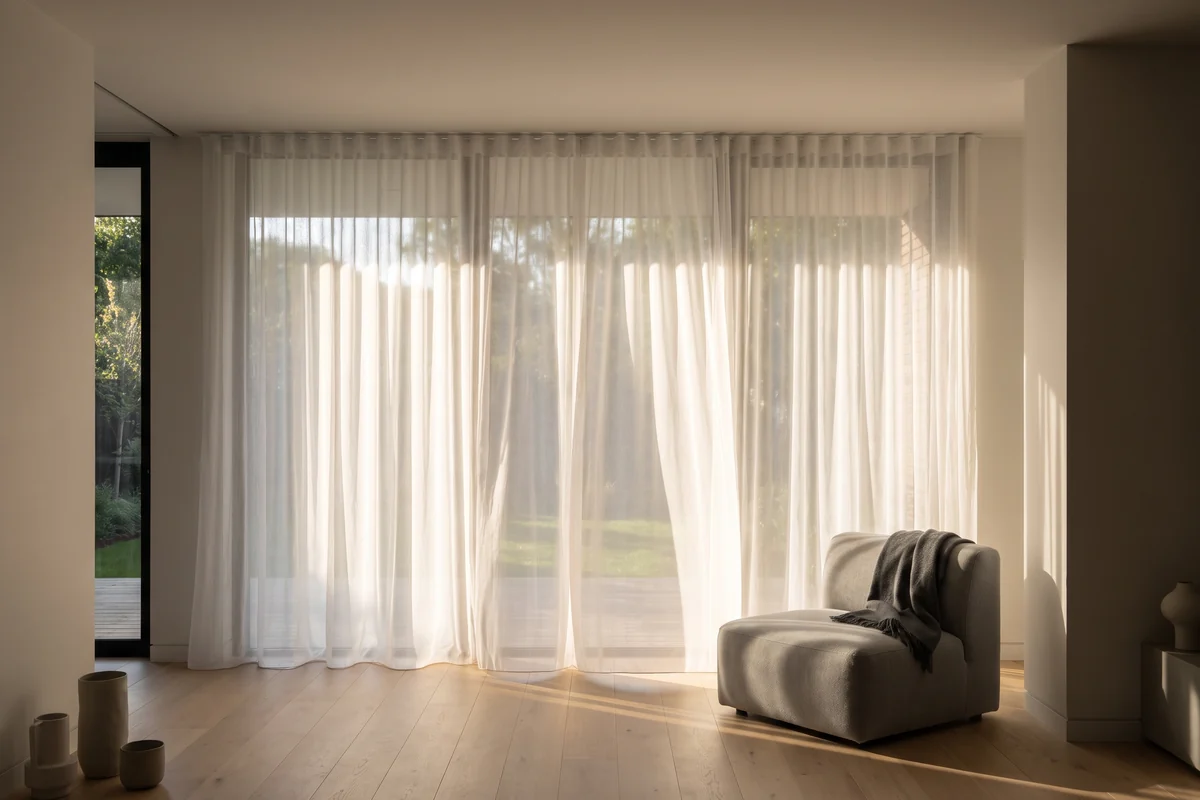
A bedroom curtain is judged at night. A living room curtain is judged at two in the afternoon, when the sun is on the glass, someone is trying to read, and nobody wants to turn a lamp on. That changes which curtain does the work.
In most Queensland living rooms the hard-working layer is a sheer. It takes the edge off the glare, keeps the room bright, and lets you see the garden as a soft shape rather than a blank wall. It also cuts the heat that comes straight through the glass, which the Australian Government's guide to glazing in passive design treats as the weakest point in most homes.
Work out which way the room faces before you look at a single fabric:
- North. Steady light most of the day, and a winter sun you'll want to let in. A light sheer that opens fully.
- West. The hard one. Low, hot afternoon sun straight into the room. A denser sheer, and outside shading if you can get it, because external shading stops heat before it reaches the glass and a curtain only stops it after.
- East. Bright mornings, a gentle afternoon. Almost any sheer works.
- South. Even light and little direct sun. You may only need the curtain for privacy, which is a different job, covered further down.
Most people pick the fabric first and discover the aspect in February.
Measure the wall, not the window
A curtain measured to the window instead of the wall is measured wrong. I'll hold that one against anybody.
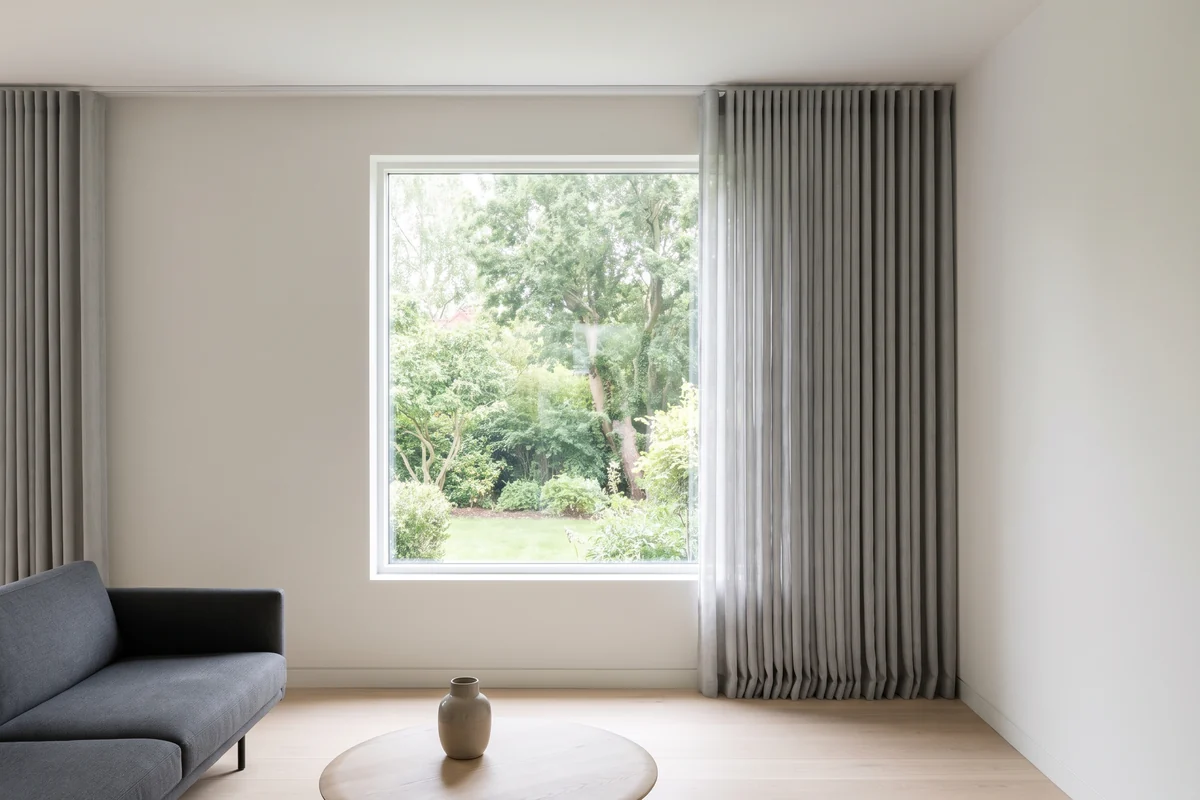
Open curtains have to park somewhere. If the track stops at the window frame, the fabric parks over the glass and takes a third of your view and light with it. Run the track past the frame on both sides and the curtain stacks on the wall instead, so the whole window is clear when it's open. In a living room, where the view is half the point, that matters more than anywhere else in the house.
The amount of fabric is bigger than people expect, and it's worth knowing why. Fullness is the ratio of flat fabric to finished track:
- Wave fold (S fold) is made at 2.3 to 1. A 3 metre track takes 6.9 metres of fabric.
- Reverse pleat, box pleat, gathered and knife pleat are made at 1.8 to 1. The same 3 metre track takes 5.4 metres.
That fabric has to fold back into the stack, which is why a wall-to-wall track is not decoration. Go up as well as out. A track on the ceiling, with the curtain dropping to just clear the floor, makes an ordinary 2.4 metre ceiling read taller. We cover the hardware side of that in what makes a curtain look modern.
Plan around the sofa and the TV
Nobody photographs this part, and it's where most living room curtains go wrong.
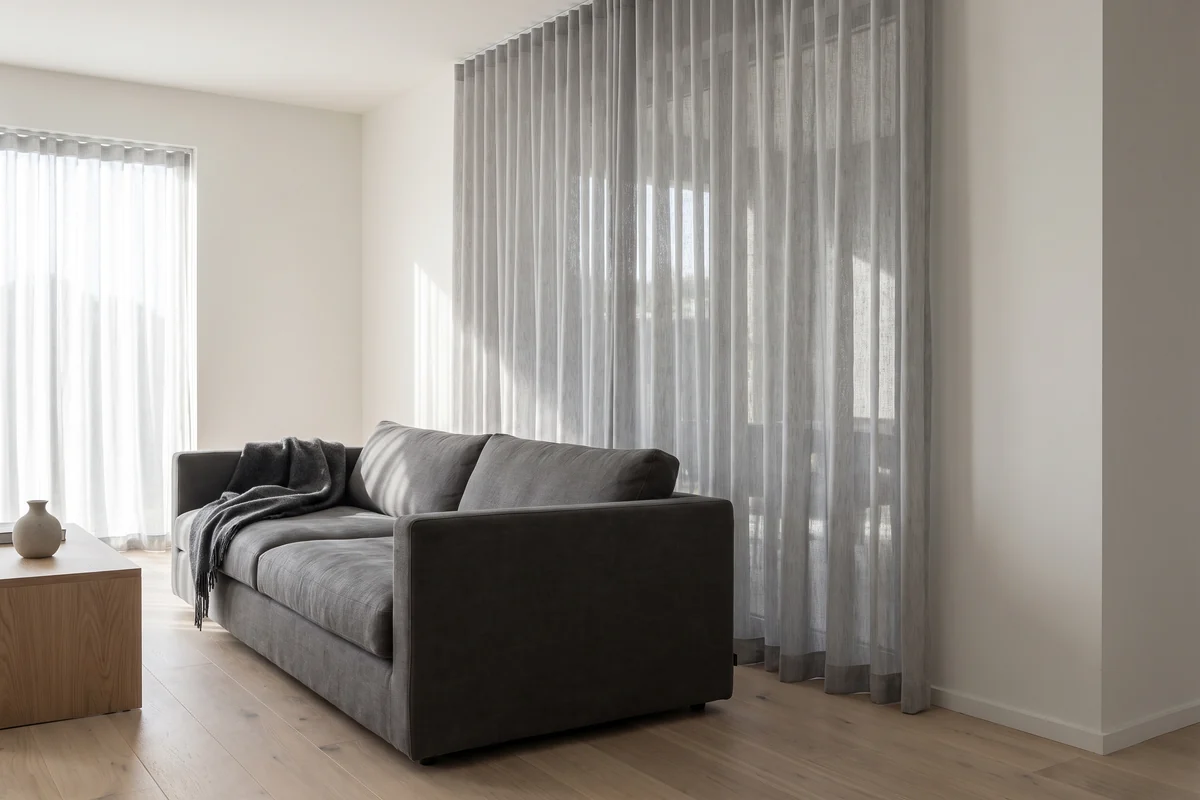
The sofa against the window. In a lot of living rooms the only wall long enough for the couch is the one with the window in it. A floor-length curtain behind a sofa works, but only if there is a gap between them. Push the sofa hard against the glass and the curtain jams behind the cushions, the hem crushes, and nobody can reach across to open it. Leave a hand's width and the curtain runs freely. If the curtain genuinely can't be reached, that is one of the few places where specifying it motorised when it's made earns its keep.
The TV opposite the window. This is a glare problem, and it peaks at exactly the time of day you sit down to watch. A sheer drawn across the window softens the reflection without making the room dark. If the TV faces a west window, you'll want either a denser sheer or a blind behind the curtain for the last hour of the afternoon.
The TV on the window wall. Now the screen is backlit by daylight, and it's harder on the eyes than people expect. A sheer either side, drawn in behind the TV in the afternoon, evens it out.
Bring a photo of the room with the furniture in it to the measure. It's more useful than any swatch you could bring.
Choose a fabric that can take the sun
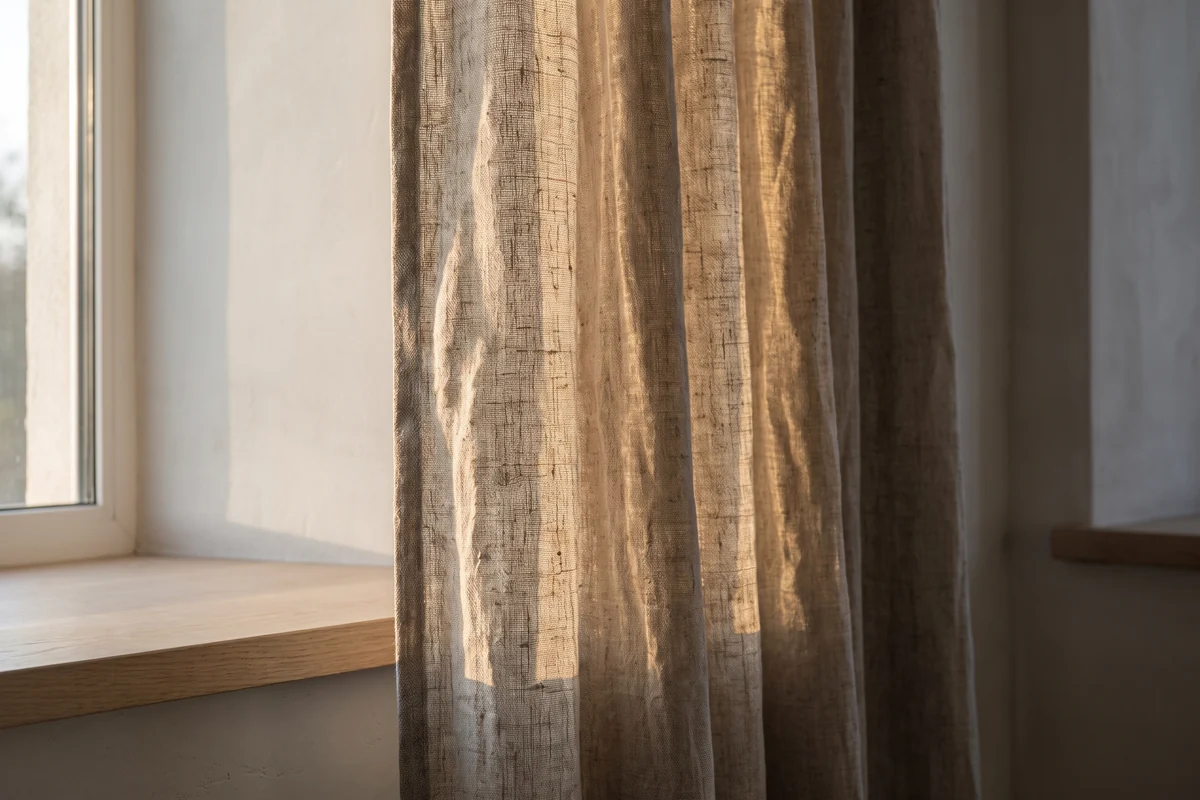
A living room curtain spends years in direct sun, and the sun here is not gentle on fabric. Here is the bit nobody puts in the brochure: fading from sunlight is not covered by our warranty. So in practice, choosing the fabric is choosing how it ages.
- Linen and linen blends look relaxed and breathe well in the heat. Natural linen moves with humidity and can shrink, which is why we don't recommend washing a made-to-measure one. Our linen curtains page covers what that means day to day.
- Polyester sheers hold their colour, resist sun damage well, and don't shrink. Not glamorous, and the right answer on a west window more often than not.
- Heavier decorative fabrics carry colour and pattern, and they need a lining on any window that gets afternoon sun.
Colour fades too, and some colours fade faster than others. The longer version, room by room, is in how to choose curtain colour.
Let the ceiling choose the heading
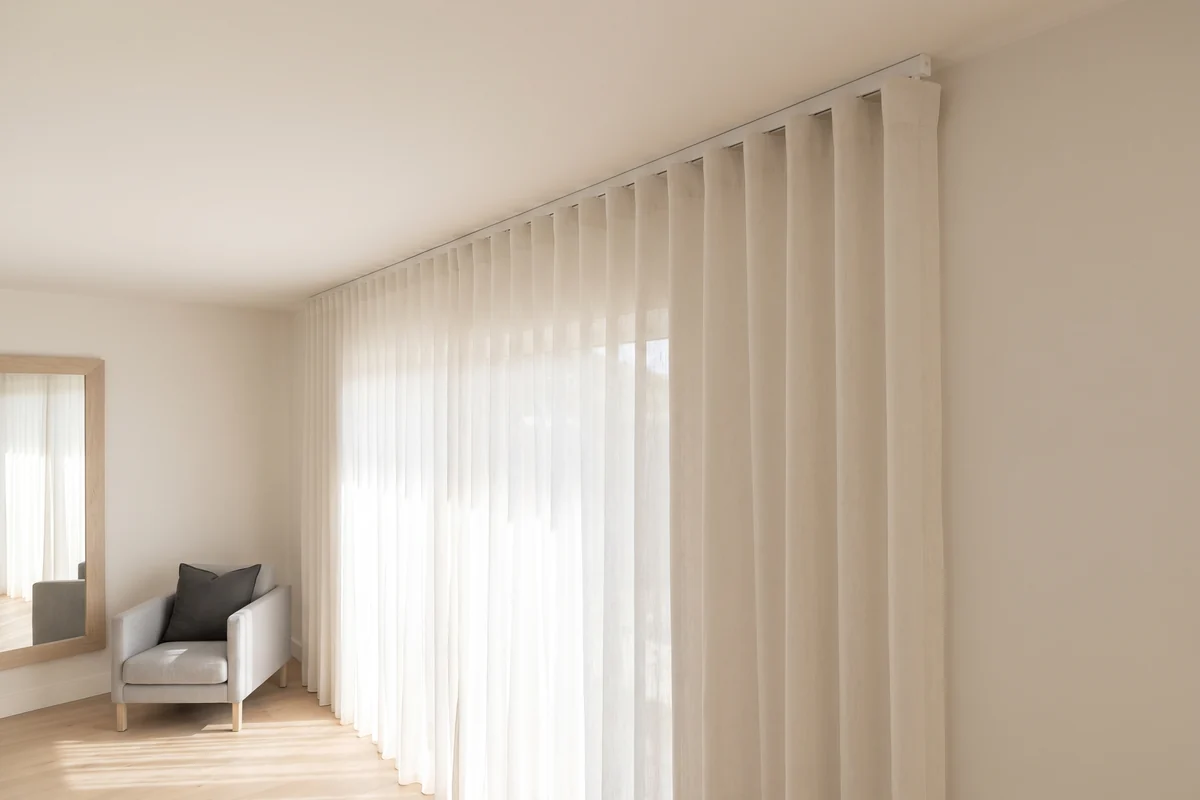
The heading is the way the top of the curtain is made, and it sets the whole character of the room more than the colour does.
Wave fold gives even, rolling folds from top to bottom and sits neatly on a ceiling track. It's the right default for a contemporary living room, especially with a standard ceiling, because the clean vertical lines carry the eye upward. Reverse pleat and box pleat are more tailored. They suit a formal living room with high ceilings and a bit of architecture to match. If you're torn, ask to see both hung at the measure rather than flat in a swatch book.
One thing we won't do in a living room is eyelets on a pole. Every track we fit runs on runners, because the curtain has to be opened and closed twice a day for years, and a runnered track is what lets it slide instead of drag. If you like the look of a pole, a decorative track gives you the look and works like a track.
Add the night layer only where the street can see in
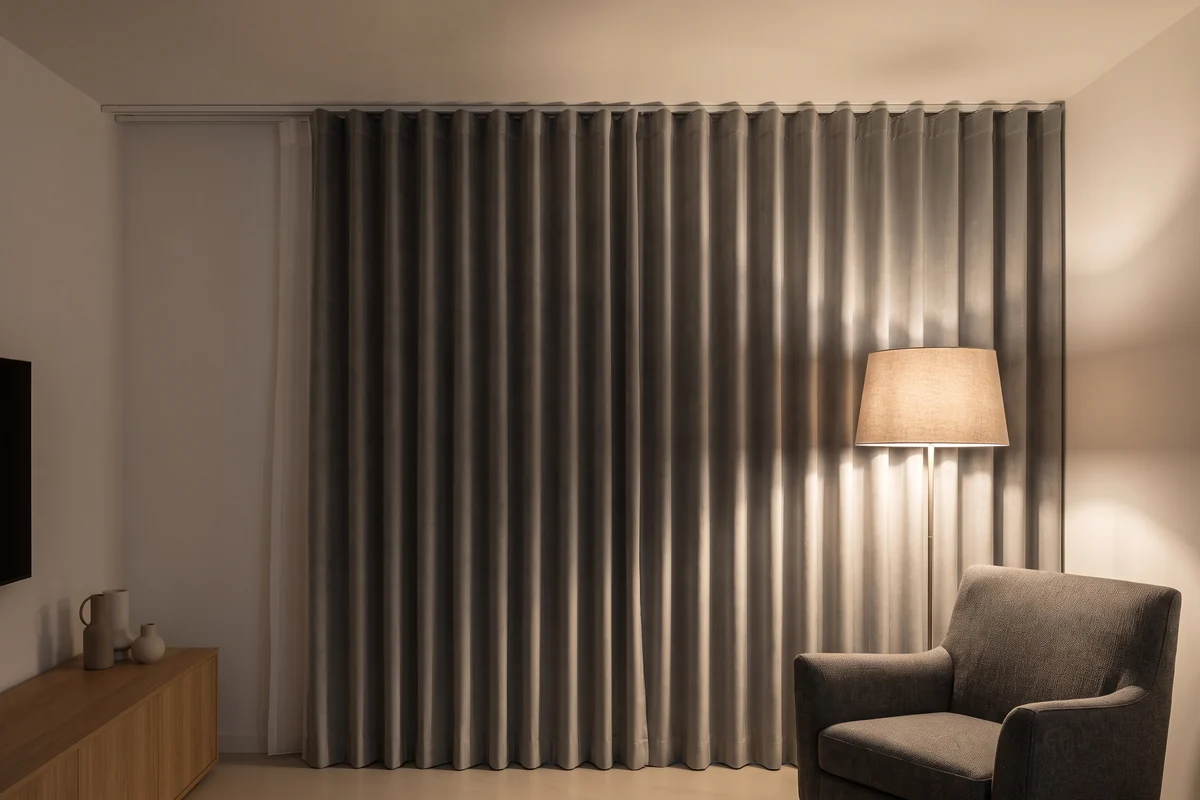
Once the lamps go on, a sheer stops hiding anything. The room is brighter than the street, and from the footpath a sheer reads as a lit window with a light haze over it. If your living room faces the street or a neighbour, you need a second layer for the evening.
The neat way to do it is a sheer and a heavier curtain on one twin track: the sheer runs all day, the heavier one closes over it at night. That arrangement, and when it is worth the extra track, is covered in double curtains.
If the living room looks onto your own back garden and nobody can see in, skip the second layer and spend the money on a better sheer. Most living rooms don't need blockout at all.
| Your living room | Day layer | Night layer | Watch for |
|---|---|---|---|
| North-facing glass | Light sheer | Only if overlooked | Let winter sun in |
| West-facing glass | Denser sheer | Only if overlooked | Afternoon heat and fading |
| Faces the street | Sheer | Heavier curtain, twin track | Privacy after dark |
| Sofa against the window | Sheer | As needed | A hand's width of clearance |
| TV opposite the window | Sheer | As needed | Afternoon glare on the screen |
| Sliding door to the deck | Sheer | As needed | Stack clear of the door |
Not sure which of these is your living room?
We look at the aspect, the wall and the furniture at the measure, then send an itemised quote within 24 to 48 hours.
Know when a living room shouldn't have curtains
Curtains aren't always the answer, and I'd rather say so here than at your front door.
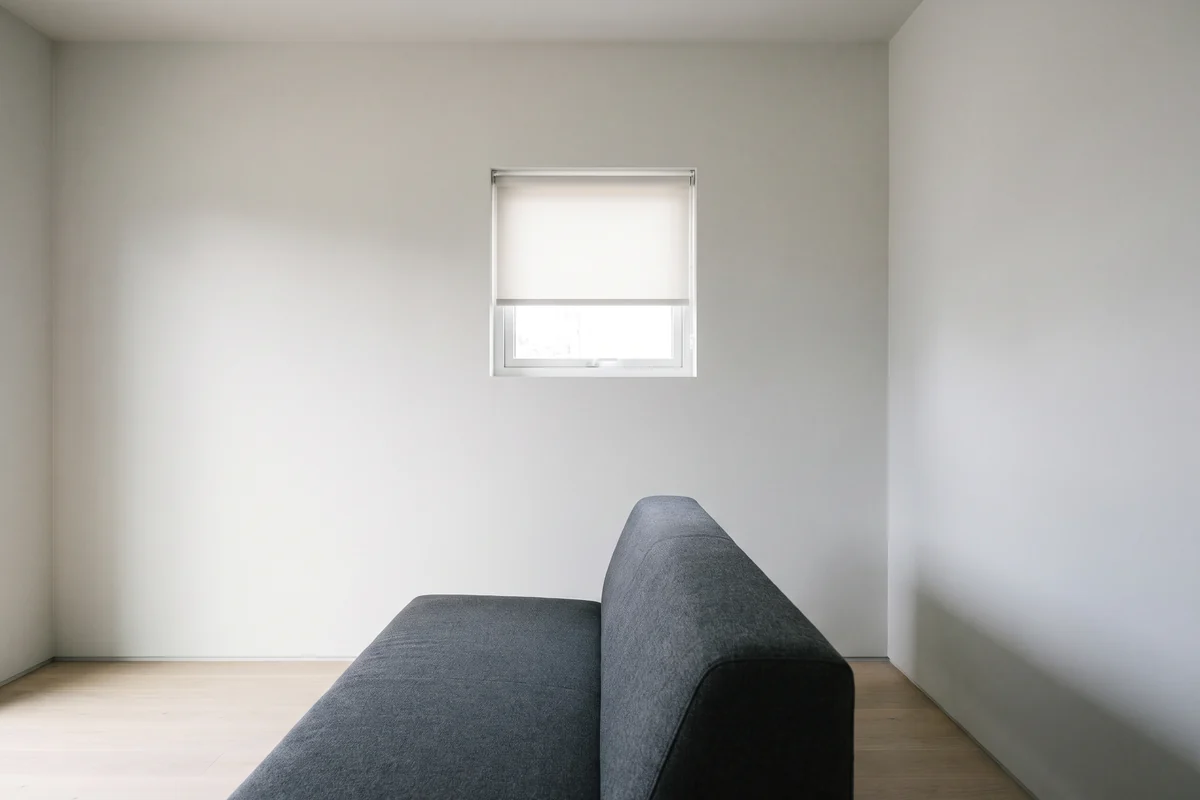
A small window high above a sofa, with no wall either side for a stack, is a blind window. A curtain there just hangs over the back of the couch. A roller blind sits inside the frame, rolls away to almost nothing, and is the better product. The same goes for a window beside a kitchen bench in an open-plan room, where fabric will collect cooking oil.
And if the living room sits under a deep verandah, faces south and isn't overlooked, it may not need anything. Bare glass is allowed. Spend the money on the west side of the house instead.
Frequently asked questions
How high should living room curtains hang?
As high as the room allows, ideally from a track fixed to the ceiling. Hanging the curtain from the ceiling rather than just above the frame makes a standard 2.4 metre ceiling read taller, and it closes the gap at the top where light and heat get in.
Should living room curtains touch the floor?
They should finish just clear of it, so the hem hangs straight without dragging or collecting dust. Curtains that stop at the sill make the window look smaller and leave a gap underneath. Puddling fabric on the floor looks dramatic in a photo and catches everything in real life.
What curtains make a living room look bigger?
Floor-to-ceiling curtains on a track that runs past the window on both sides, in a colour close to the wall. The eye reads the wall and curtain as one surface, the window looks wider than it is, and when they are open the whole glass is clear.
Should living room curtains be sheer or blockout?
Sheer, in most living rooms, because the room is used in daylight and a sheer keeps it bright while cutting glare. Add a heavier curtain on a second track only if the street or a neighbour can see in after dark. Blockout belongs in the bedroom.
What fabric is best for living room curtains in Australia?
Polyester sheers for a west-facing or sun-drenched window, because they hold their colour and do not shrink. Linen or a linen blend where you want texture and the window gets gentler light. Whatever you choose, assume the sun will fade it eventually, because sun fading is not covered by our warranty.
Sources Australian Government Your Home — Glazing · ACCC blinds and window fittings mandatory standard · Sleep Health Foundation
Back to the journalKeep reading
Related from the journal
 Guides
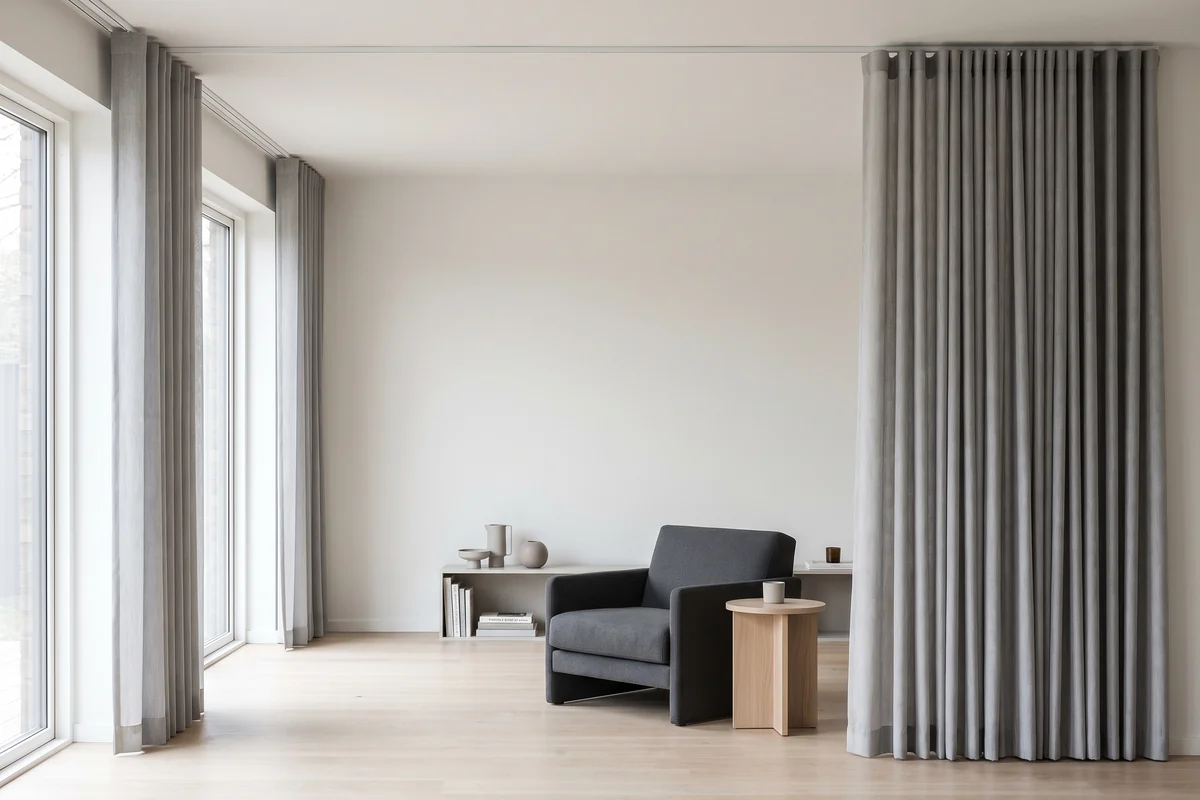
Modern curtains: four decisions, not a fabric
Track height, heading, layering and colour — the four choices that decide whether a curtain reads as modern, what the wave fold costs in fabric, and the three rooms where it is the wrong call.
Read more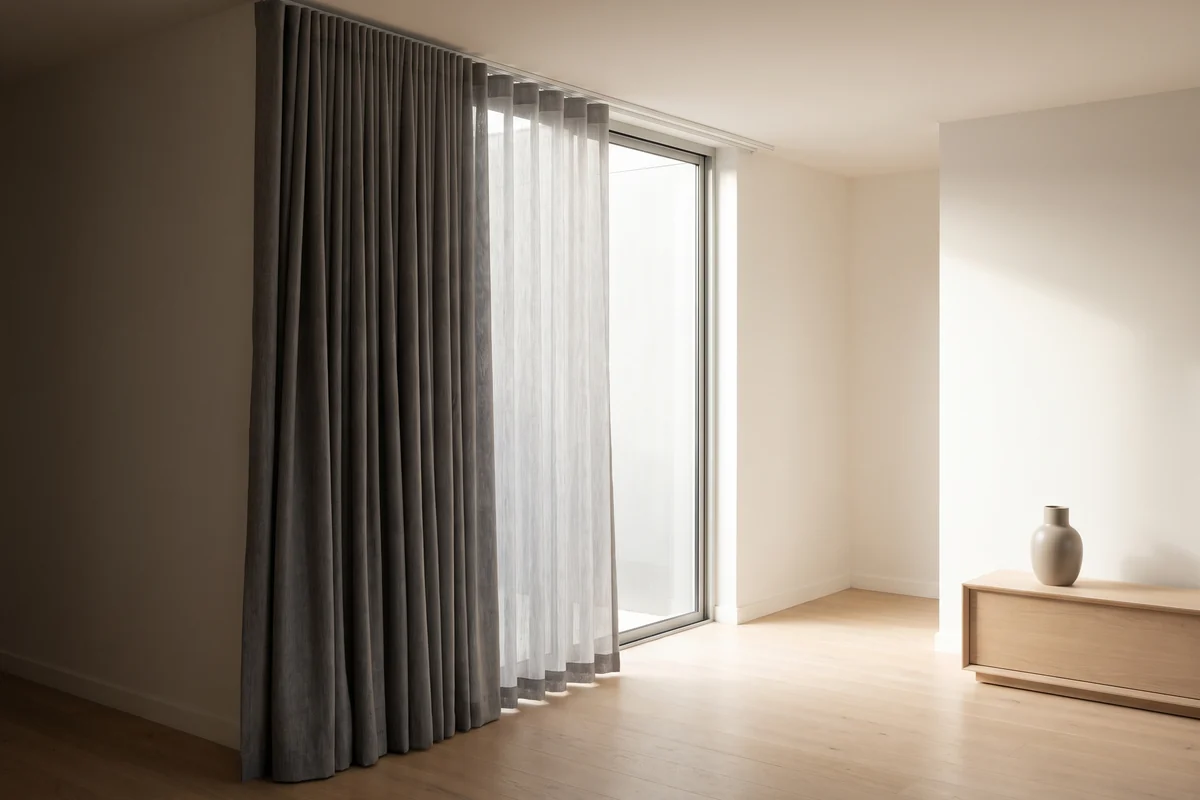 Guides
Double Curtains: How to Hang Two Layers Properly
Double curtains hang a sheer behind a blockout on one track. Which layer goes in front, what the track has to clear, and what the second layer really costs.
Read more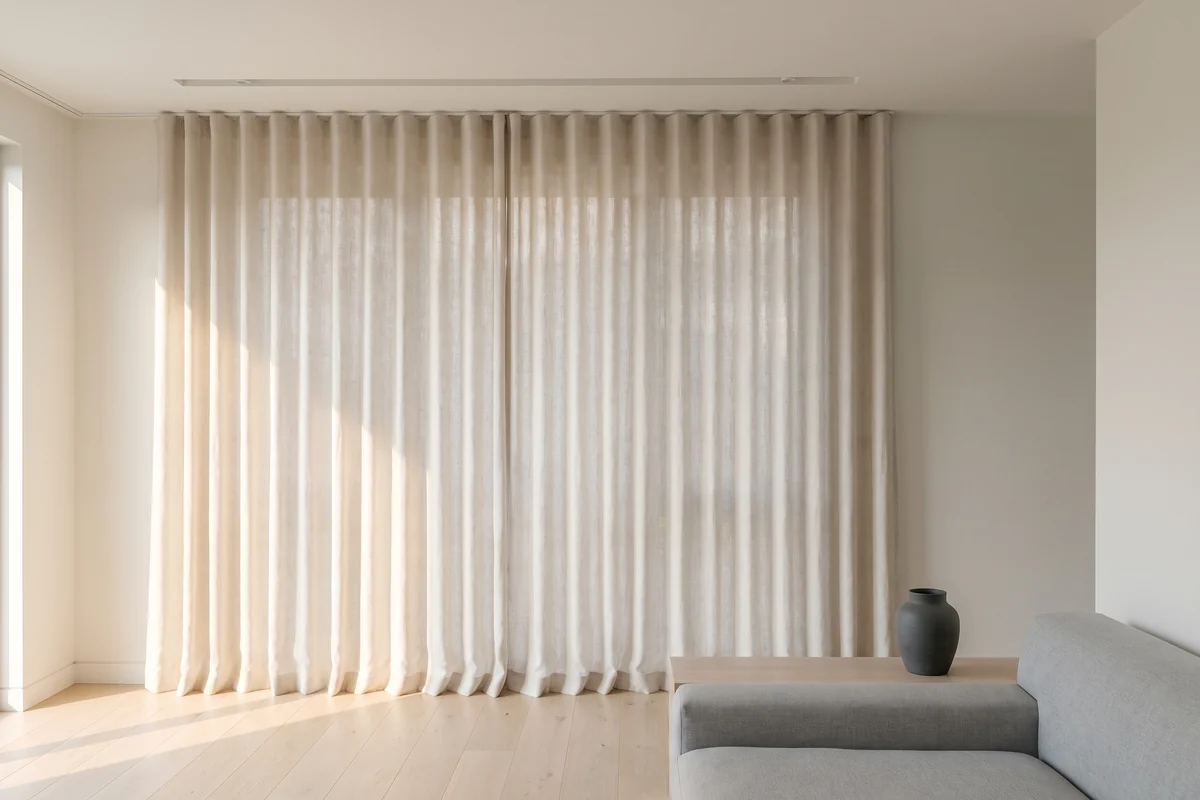 Guides
How to choose curtain colour
Why the swatch in your hand is already lying to you: fullness darkens every colour by a couple of shades, the light your window faces changes it again, and the Australian sun rewrites it a third time. Room by room, plus what the street actually sees.
Read more