

Double Curtains
Two layers, one track, and the three things that decide whether it works.
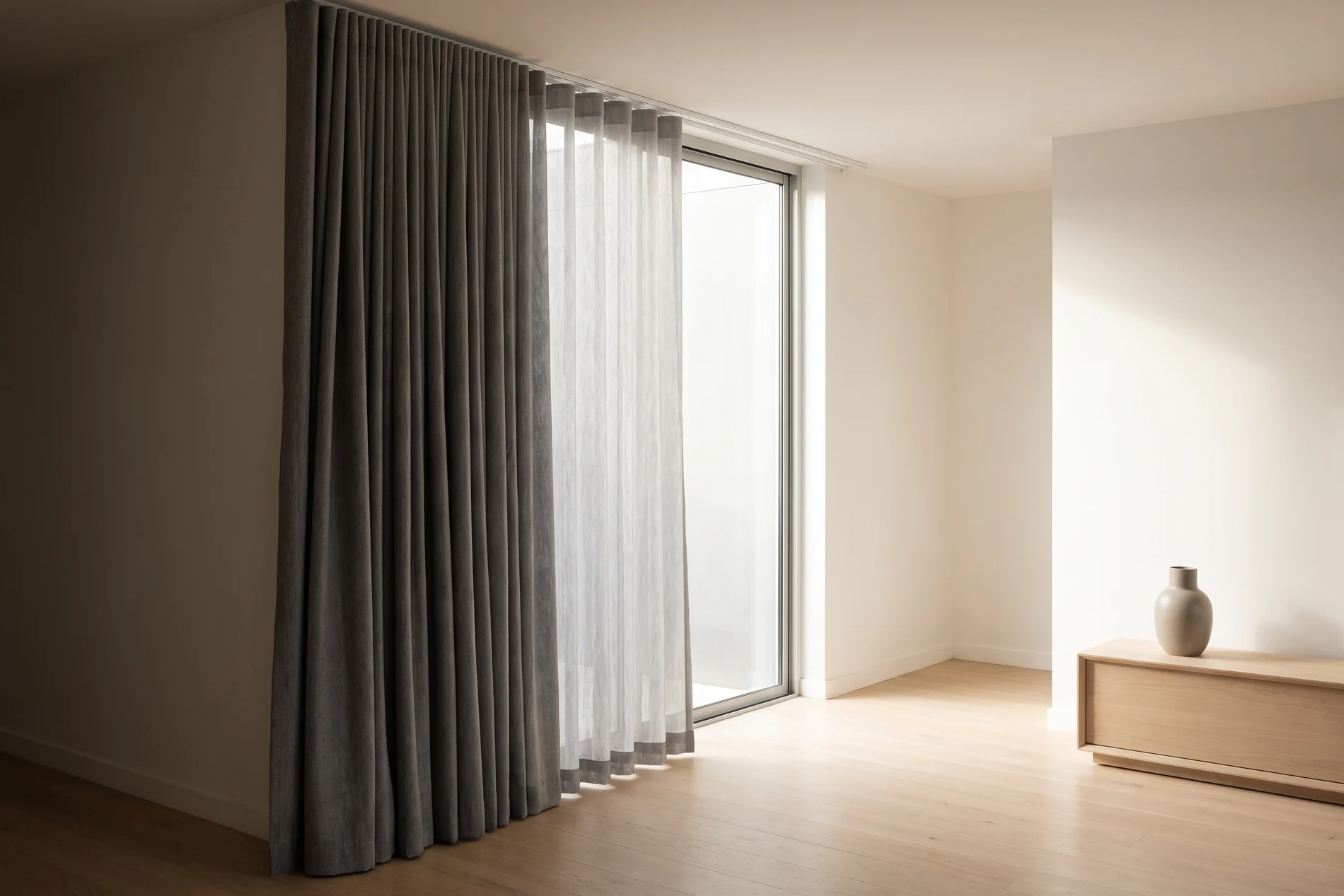
Double curtains are two separate curtains at one window, running on a double track — a sheer on the back channel nearest the glass, and a blockout on the front channel nearest the room. The sheer does the day. The blockout does the night. You operate them independently.
Forced to pick one thing to get right: put the sheer behind, and measure the reveal before you order anything.
Most advice on this treats it as a decorating choice — pick two colours, buy two sets, hang them. It isn't. It's a hardware decision and a measuring decision, and the fabric comes third. This page is how the thing is actually built. If you're still choosing between the two fabrics, read sheer and blockout curtains first.
What a double curtain actually is
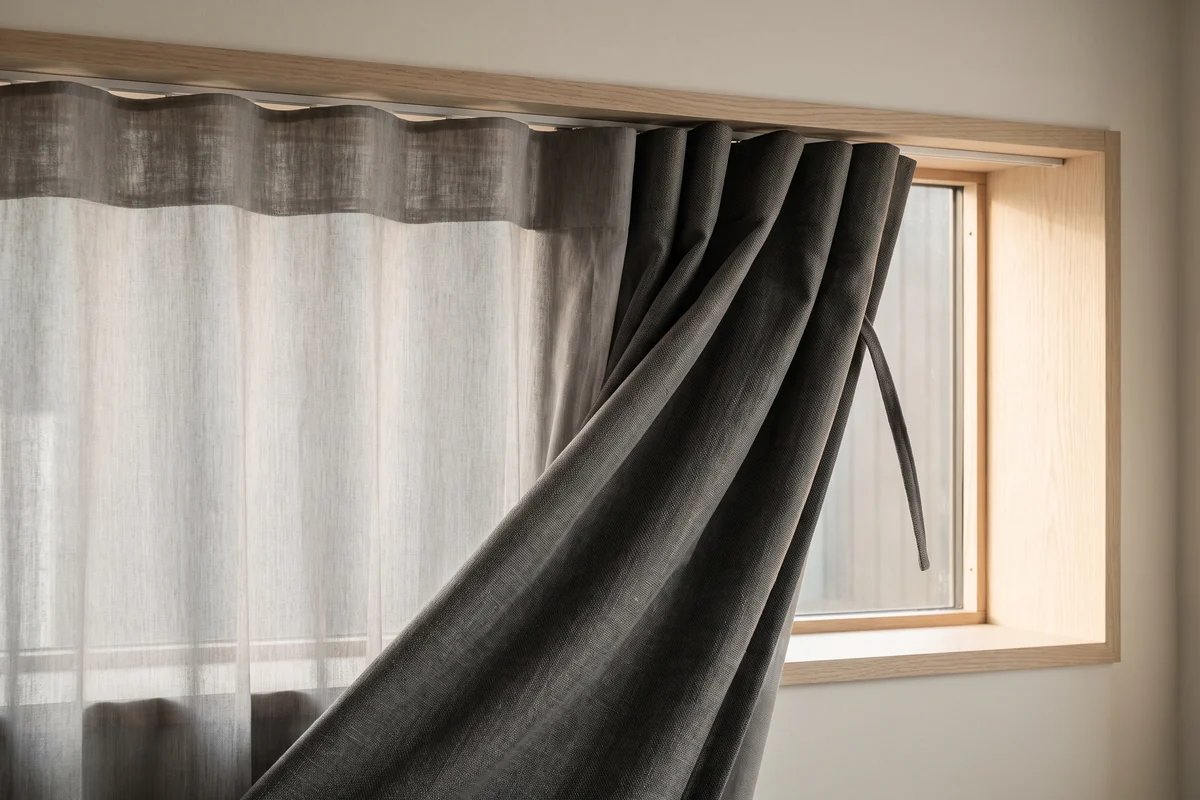
Two curtains. One window. Two channels of track, so each layer moves without dragging the other one with it. That last part is the whole point, and it's what separates a double curtain from a lined one.
A lined curtain is a single curtain with backing fabric sewn to it. It draws as one piece, so you get the blockout or you get nothing. A double curtain gives you three positions instead of two: both open, sheer only, or both closed. In a north-facing living room on the Gold Coast that middle setting is the one you'll use for most of the year.
You'll see the same thing sold under half a dozen names — layered curtains, double curtains with sheer, blockout and sheer curtains, or just "sheers and drapes". The Americans spell it blackout. It is all the same build.
Put the sheer behind, not in front
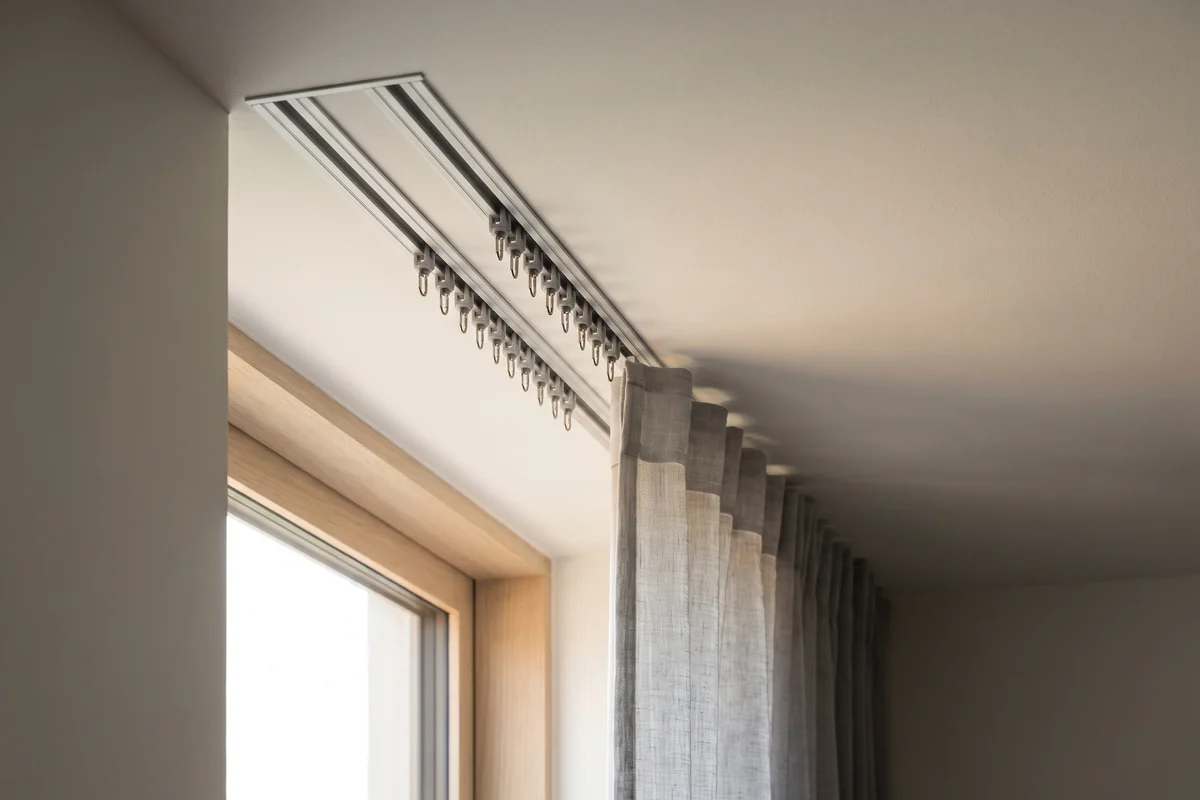
The sheer goes on the back channel, against the glass. The blockout goes on the front channel, against the room.
I'll grant the counter-argument, because it is common in Australian showrooms: a sheer in front looks softer. It hazes the blockout, hides a hard colour, and photographs beautifully. If the window is decorative and neither layer will ever be closed, do it.
For a window you actually operate, it's the wrong way around. The blockout is the layer you close at night, so it should be the one you can reach without pushing fabric aside, and it needs to sit as close to the room as the track allows so it can overlap at the centre and return to the wall. Light escapes around a blockout curtain far more than it comes through one, and a sheer stretched in front does nothing about that. A sheer on the outside channel also takes all the sun. It's the layer that fades.
| Back channel — the sheer | Front channel — the blockout | |
|---|---|---|
| Closed when | Daytime, most of the year | After dark, and to sleep |
| Doing what | Diffusing glare, daytime privacy, softening the view out | Light, heat and night privacy |
| Typical heading | Wave fold, for the even ripple | Wave fold, reverse pleat or pinch pleat |
| Handled | Rarely — set and left | Twice a day, every day |
| Sun exposure | Full, all day | Shielded by the sheer |
One exception worth naming. If the back layer is a blind rather than a curtain — a roller behind a sheer — then the sheer is in front by definition and that is correct. That is a different build with different clearances, and it's covered in blinds with sheer curtains.
Measure the reveal before you order anything
This is where double curtains go wrong, and it goes wrong at the quote stage rather than on install day.
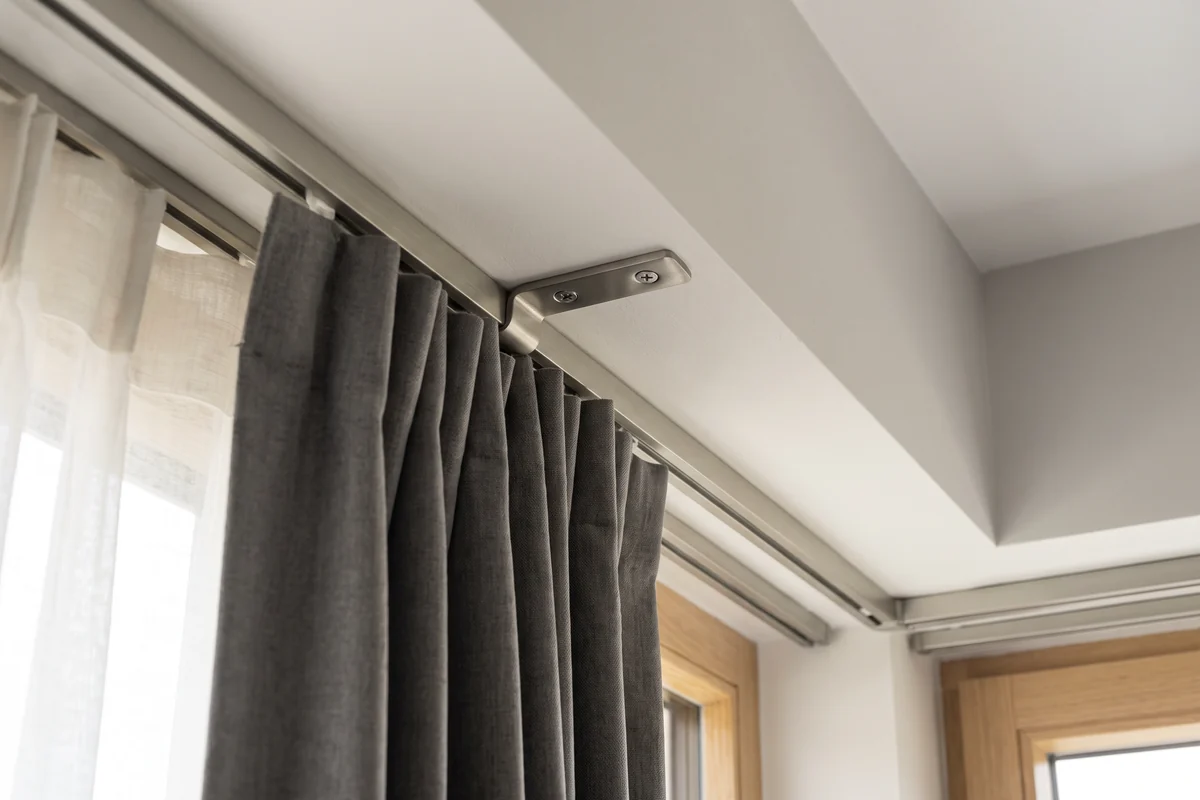
A double track needs more depth than a single one, and the number you need is not the distance between the two channels. It's the distance the front curtain needs to clear the stacked back curtain — the sheer bunched at the end of its run is many times thicker than the sheer hanging flat. Fit the two tracks to each other and the blockout will brush the sheer every time it moves. Over a few years that's a wear mark on the fabric and a hesitation in the glide.
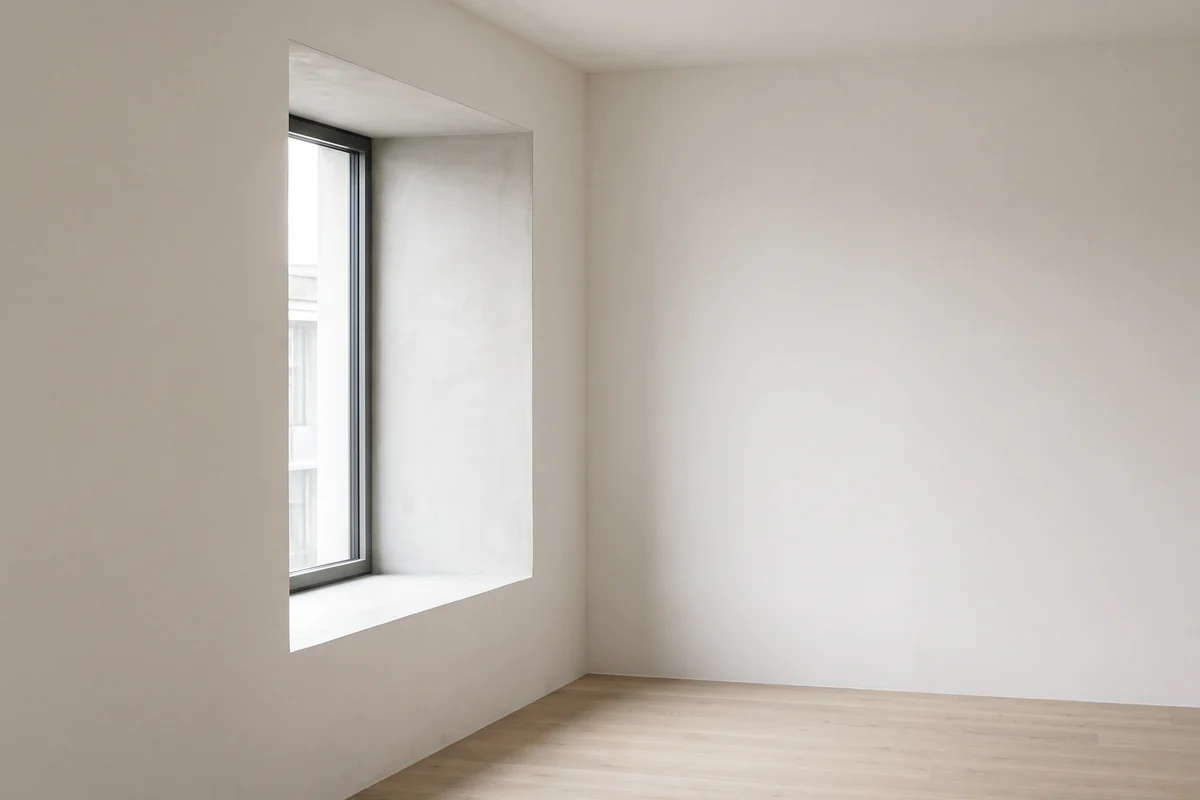
So measure the depth of the reveal, glass to the face of the wall, and tell whoever is quoting you. Three things follow from that one number.
- A deep reveal takes the whole thing inside. Both tracks sit in the recess, the treatment looks built-in, and you lose nothing to the room.
- A shallow reveal pushes the track onto the face of the wall or the ceiling. That's not a failure — a ceiling-fixed track running wall to wall is the better look in most modern rooms anyway. It just has to be decided before anything is made.
- No wall either side means no stack space. Two layers have to park somewhere when they're open. If there's 100mm of wall beside the window, both layers will sit over the glass all day and you will have paid for a view you can't see.
While the tape is out, measure to the wall rather than to the window. A curtain made to the size of the glass leaves a bright halo around the opening at six in the morning, and no amount of fabric weight fixes it. Windows are the weakest thermal point in most Australian homes, and a curtain that seals the whole opening is doing more work than one that covers the pane.
The second layer does not cost you twice
Nobody publishes the arithmetic on this, so here it is.
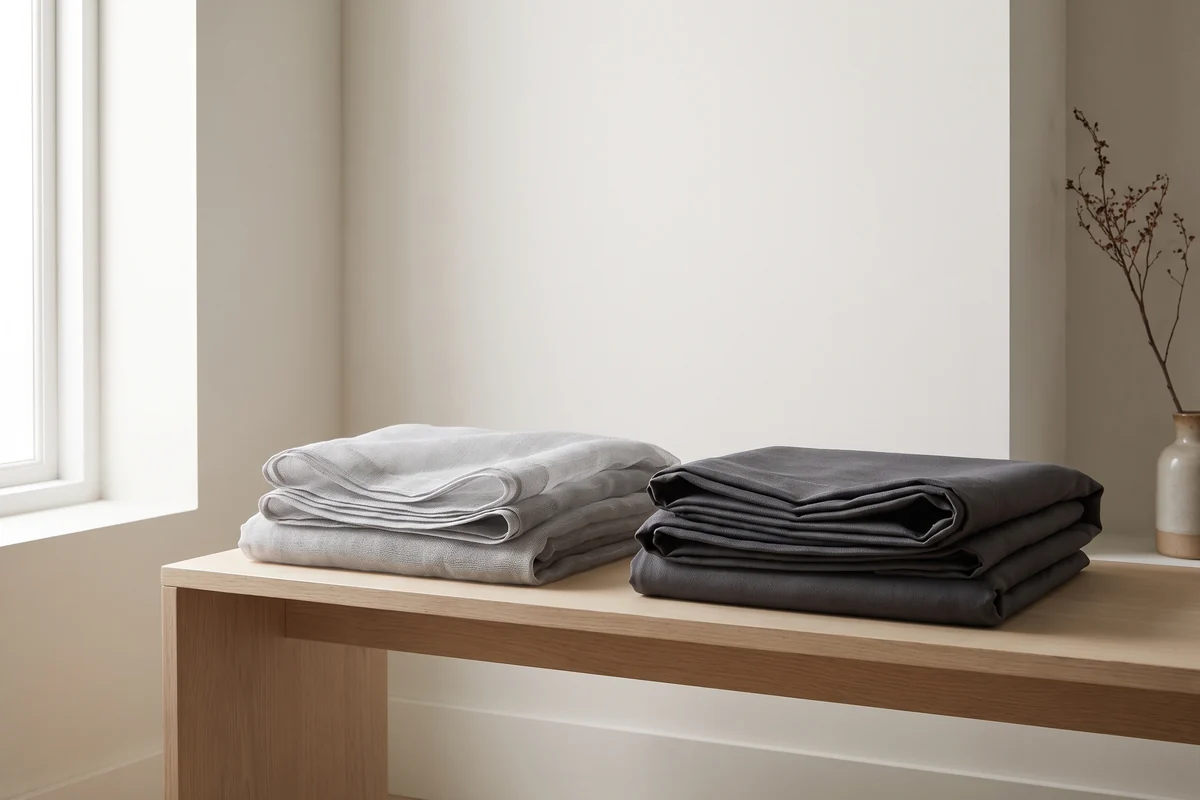
Curtains are priced on the fabric they consume, and fabric consumption is set by the fullness ratio of the heading — how many metres of flat fabric go into one metre of finished track. Ours are fixed. Wave fold runs 2.3 : 1. Box pleat, reverse pleat, gathered and knife pleat all run 1.8 : 1.
Put a 3-metre track in front of that. A wave-fold sheer takes 6.9 metres of fabric. A reverse-pleat blockout on the same track takes 5.4 metres. That's the real number your quote is built on, and it's checkable — ask for it, and if the answer is vague, ask someone else.
What the second layer does not add is a second set of everything. One measure, one track run, one install visit. Sheer and blockout curtains are both 2 to 4 weeks from check-measure to installation depending on the fabric, so the second layer doesn't add a week either. The quote comes back within 24 to 48 hours, itemised component by component — so you can see what the sheer costs on its own and decide whether it earns its place.
What is holding it up matters more than what is hanging
Two layers of fabric across a wide opening is a real load, carried by a handful of screws. And a track fixed into plasterboard alone will fail. Not might — will. It is a question of when, and the answer is usually the winter after the warranty conversation would have been easy.
We've been called out to more than one track that pulled out of a ceiling six months after someone else installed it. The curtains were fine. The fabric was good. The fixing went into 10mm of plasterboard and nothing behind it, and two layers of blockout pulling on it every night found that out.
What that means for you is a job at the measure, not at the install. Whoever quotes should be finding the joists or the batten above your opening before they price the curtain track, and telling you if a batten has to go in. Two layers is exactly the case where that stops being a formality.
The other thing to settle early is operation. Two layers can mean two cords or chains at one opening, and corded window coverings are covered by an ACCC mandatory standard for good reason. In a child's room, specify a wand or motorisation on both layers and remove the question.
Not sure your reveal will take two layers?
We measure the opening, find the fixing and tell you before anything is made. The quote comes back itemised within 24 to 48 hours.
When one layer is enough
Plenty of windows do not need this, and it is a reasonable amount of money to spend on a room that was never going to use the second layer.
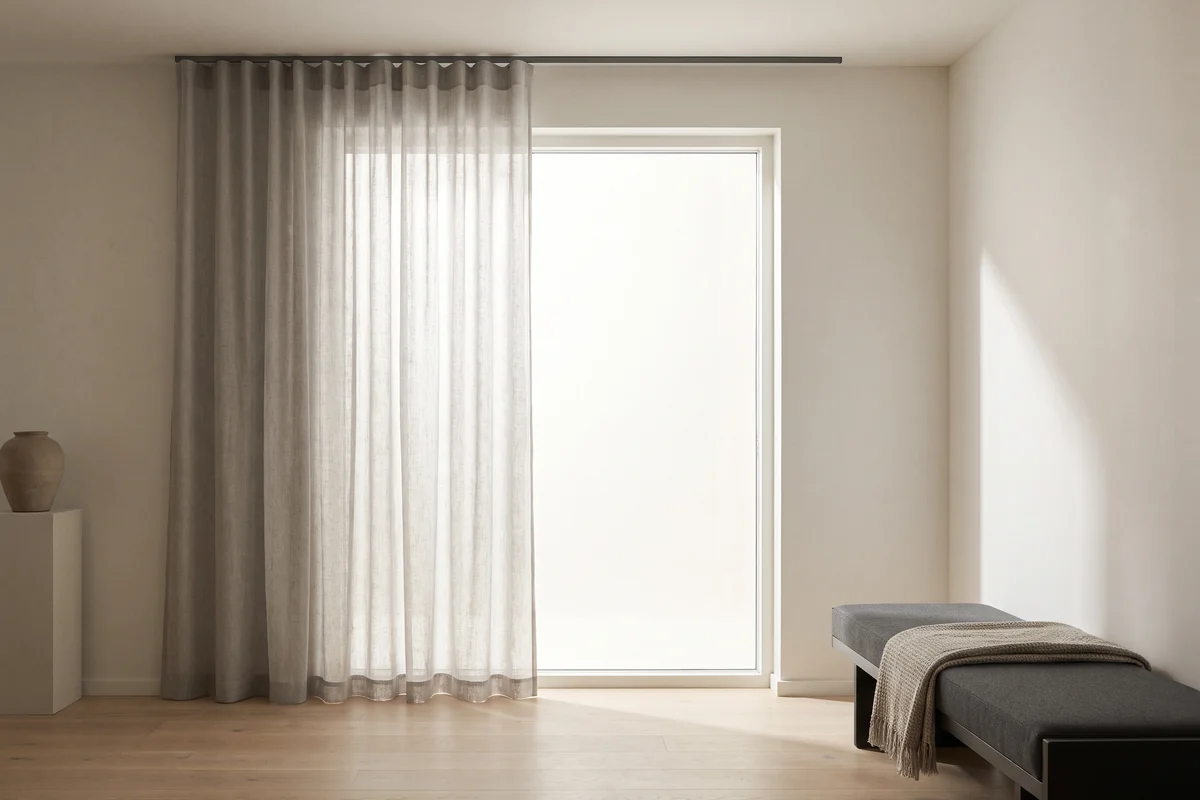
- Rooms you're not in after dark. A study, a hallway, a formal dining room used four times a year. The blockout layer earns its money at night and at 5am in January. If neither of those happens in that room, a sheer on its own is the honest answer.
- Bathrooms and laundries. Fabric and moisture are a poor combination, and two layers of it is twice the problem. Bathroom windows want a shutter or a blind.
- Windows with no stack space and no depth. If the reveal is shallow and there's no wall either side, you are forcing two layers into a space that can hold one well. One layer done properly beats two done badly, every time.
- Where a blind is already doing the blockout job. If there's a blockout roller in the reveal, adding a sheer in front of it is the cheaper and better move.
And on a west-facing window, be realistic about what a sheer is for. It softens glare, it does not stop heat — shading works best on the outside of the glass. If the room is genuinely hot, an external blind or an awning does more than any indoor fabric will.
Frequently asked questions
Should the sheer curtain go in front or behind the blockout?
Behind, on the channel nearest the glass, for any window you actually operate. The blockout is the layer you close every night, so it should be the one closest to the room and easiest to reach, and it needs to sit against the wall to seal the opening. Hanging the sheer in front is a legitimate look for a purely decorative window, but the sheer will take all the sun and fade first.
Do I need a double track for double curtains?
Yes. Two layers on one channel cannot pass each other, so you lose the setting that makes double curtains worth having. Every track we supply runs on runners rather than rings on a pole, including the decorative tracks that give you the look of a pole. A double track is one piece of hardware and one install, not two.
How far apart do the two curtain layers need to be?
Far enough that the front curtain clears the back curtain when the back one is stacked open, which is thicker than most people picture. The exact clearance depends on the fabric and the width of the opening, so it is set at the measure rather than from a chart. Get it wrong and the blockout brushes the sheer every time it moves.
Are double curtains worth it in a bedroom?
A bedroom is the strongest case for them. You want daytime light without being visible from the street, and full darkness to sleep, and no single fabric does both. The one thing to check is that the blockout returns to the wall and overlaps at the centre — most of the light in a bedroom comes around the curtain, not through it.
Can I add a sheer to curtains I already have?
Only if the existing track has a spare channel, which single tracks do not. In practice adding a second layer means new hardware, and the fixing has to be checked for the extra load before anything goes up. It is worth asking at a measure rather than assuming either way.
What is the difference between double curtains and lined curtains?
A lined curtain is one curtain with backing fabric sewn to it, so it draws as a single piece and gives you two positions: open or closed. Double curtains are two independent curtains on two channels, which gives you a third position — sheer closed, blockout open — and that middle setting is the one most rooms live in during the day.
Sources Australian Government Your Home — Glazing · ACCC blinds and window fittings mandatory standard · Sleep Health Foundation
Back to the journalKeep reading
Related from the journal
 Guides
Sheer vs blockout curtains: which should you choose?
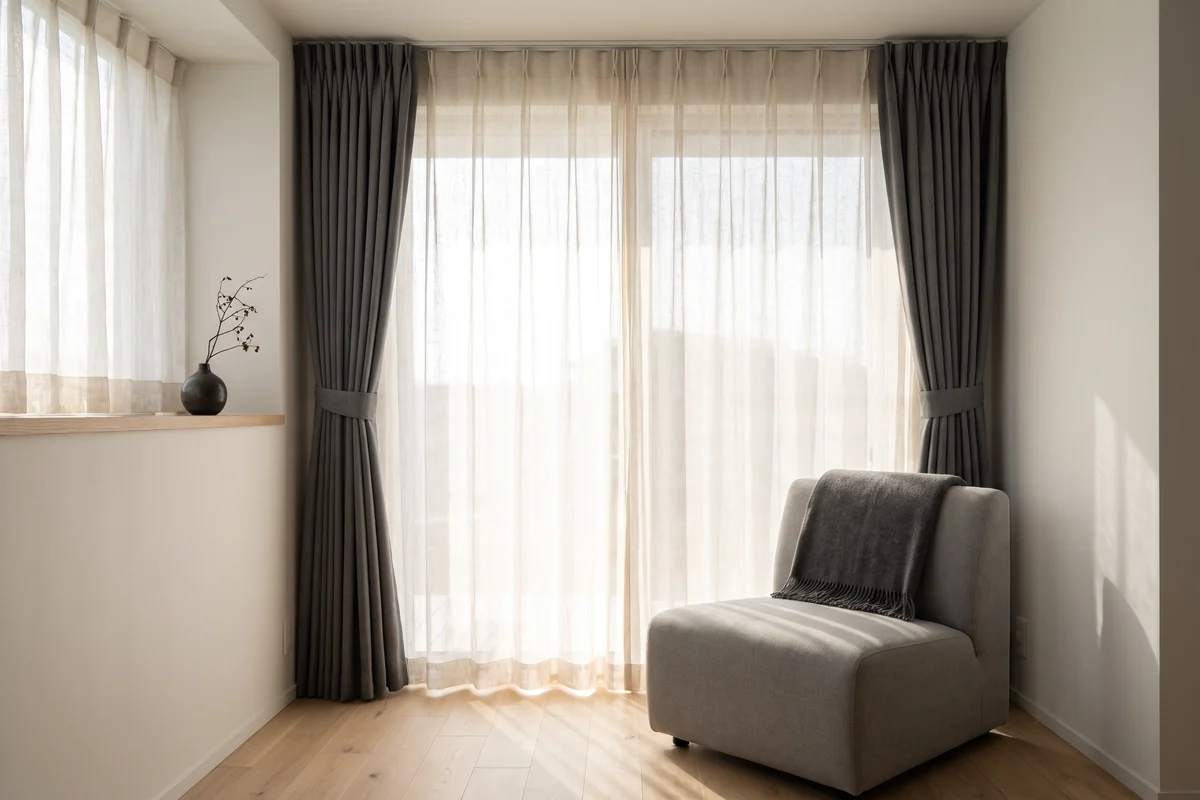
Which fabric does what, why most rooms want both, and the part nobody mentions — light comes around a blockout curtain, not through it.
Read more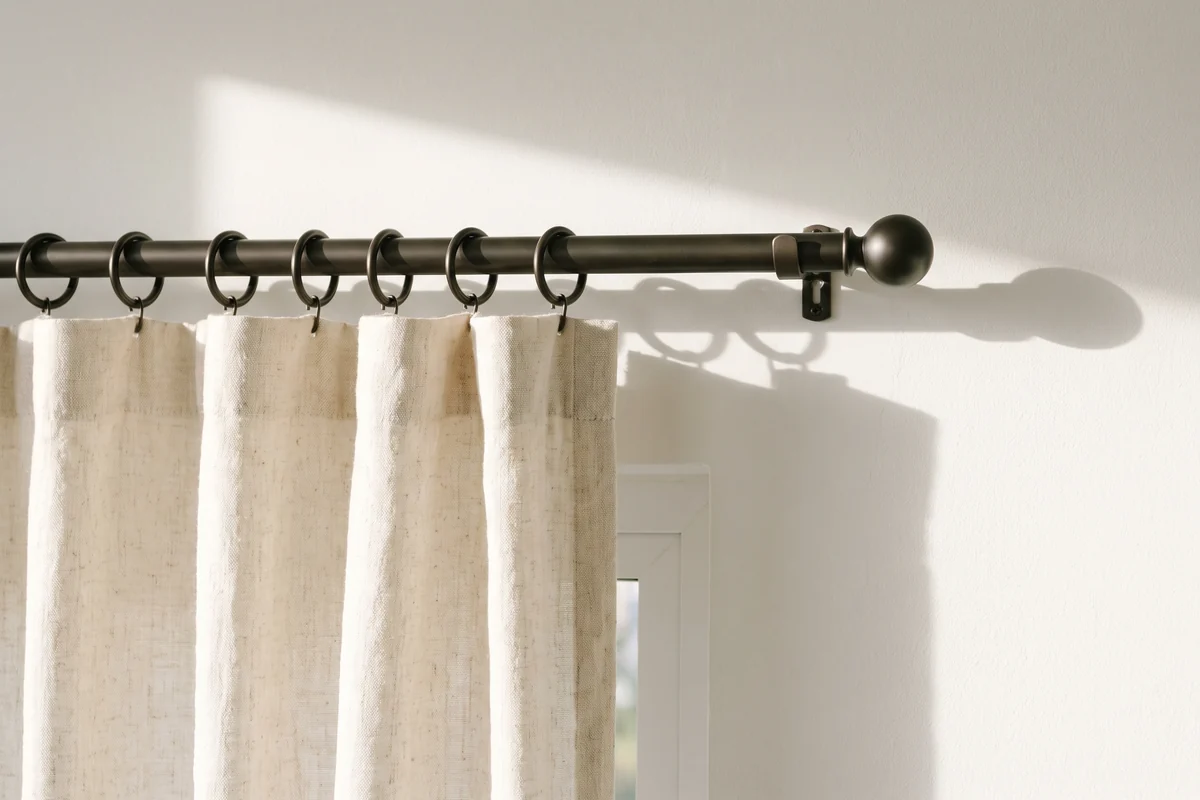 Guides
Curtain rods vs tracks
What each does well, why your heading may have already decided for you, and why the part that fails is the fixing rather than the hardware.
Read more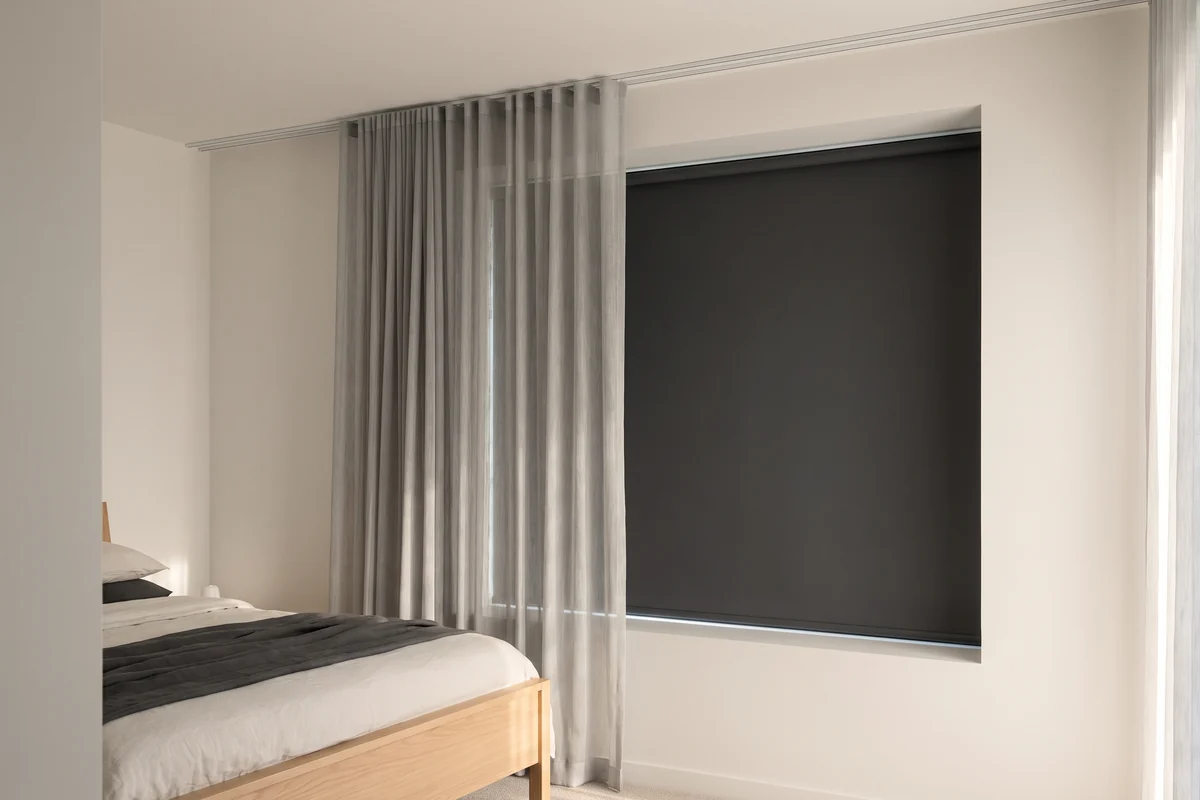 Guides
Blinds with sheer curtains
Layering a sheer over a blind instead of a second curtain — what goes behind, what goes in front, and how not to buy the same job twice.
Read more