

Dining Room Blinds and Curtains
Three problems, in order: the low sun, the street after dark, and the rooms on either side.
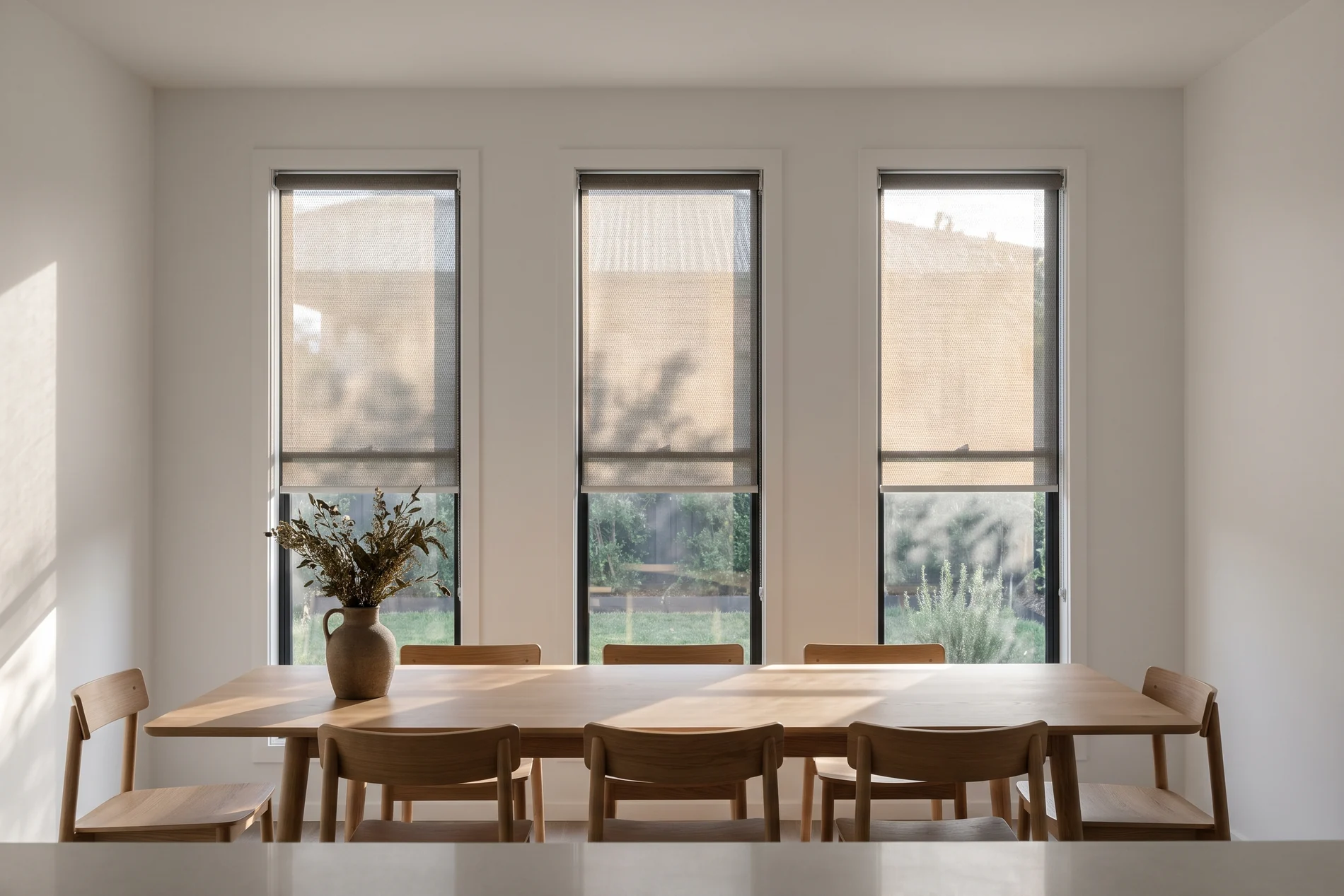
The best dining room blinds stop low sun in the eyes of whoever is sitting at the table, without taking the view or the light. For most Queensland dining rooms that means a sunscreen roller blind, or a sheer curtain where the opening is a sliding door. Add a heavier layer only if the street can see in after dark.
Blockout is rarely the answer in this room.
A dining room has three problems, and they turn up in this order: the sun at dinner time, the street after dark, and the rooms on either side. Solve them in that order and the product picks itself.
Cut the glare at seated eye height
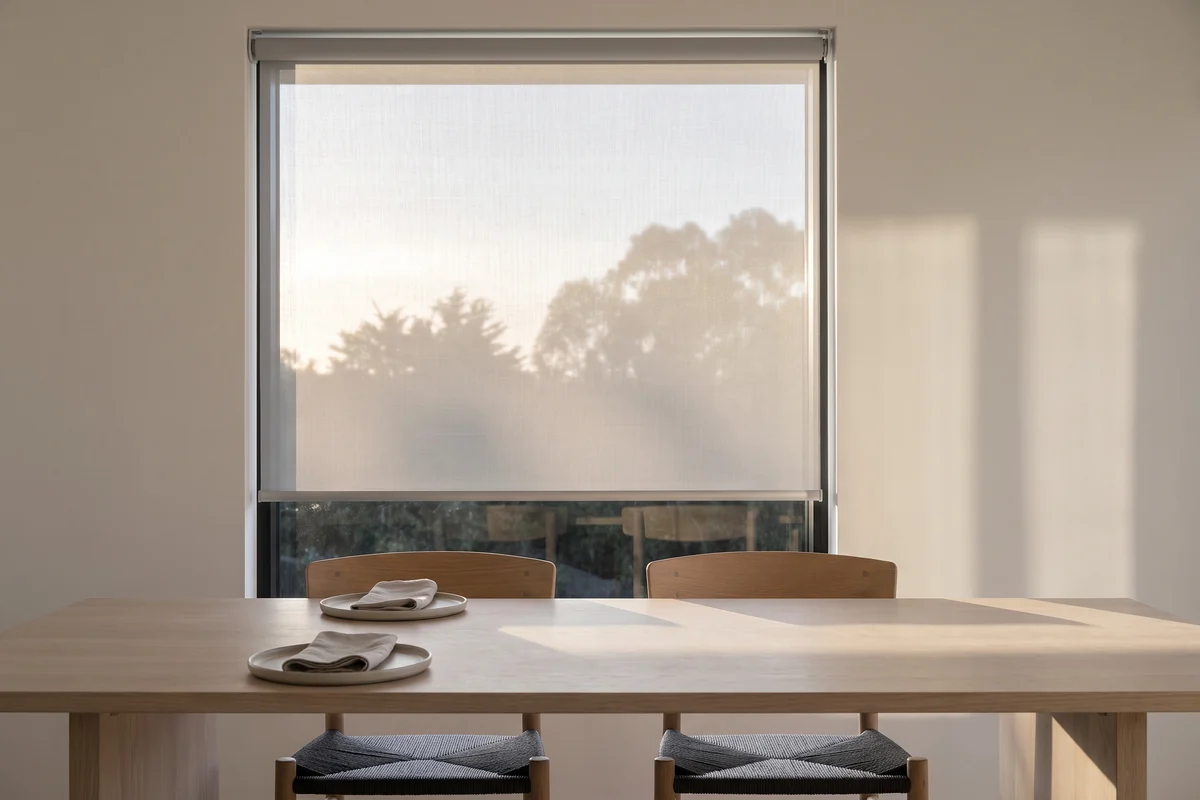
Queensland doesn't run daylight saving, so a summer meal sits right in the last of the sun. In early January Brisbane's sunset is about 6.46pm, and at six o'clock the sun is less than nine degrees above the horizon, according to Geoscience Australia's sunrise and sunset calculator. At that angle it comes in under the eaves and lands straight in the eyes of anyone sitting down.
That's glare, not darkness, and a sunscreen blind's openness factor is the number that controls it. We stock 1%, 3%, 5% and 10%. The lower the number, the more glare it stops and the less view you keep. The person with their back to the window will tell you the room is fine.
Decide what the street sees after dark
Once the lights go on, the room is brighter than the street and everything reverses. A sunscreen or a sheer that hid you at five shows the whole table at eight. We cover the physics in what privacy curtains actually block.
If the window faces a footpath or a neighbour, put something solid behind the day layer:
- A blockout roller behind the sunscreen. Both blinds sit on one bracket, one for each half of the evening.
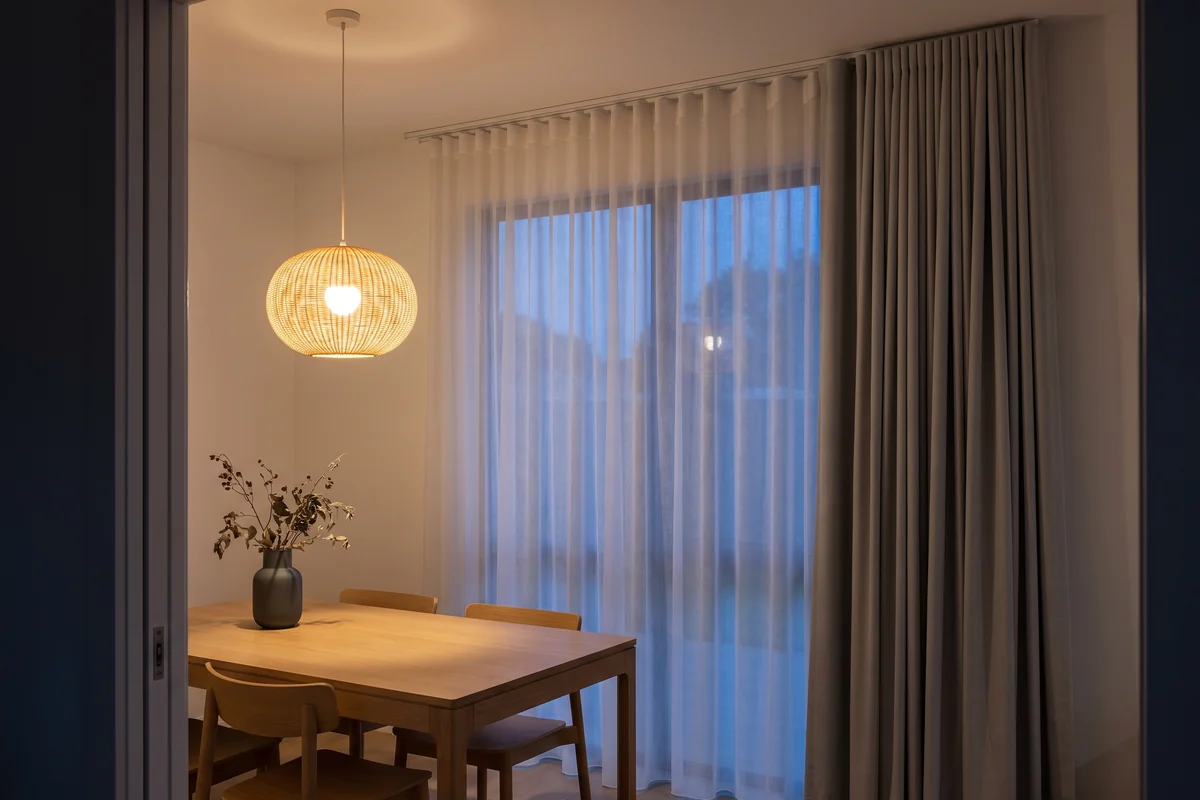
- A sheer and a heavier curtain on a double track. The better fit for a sliding door.
If nobody can see in, skip it. Most homes over-specify blockout, and a room you only use for two hours in the evening is where that money goes furthest to waste.
Match it to the rooms either side
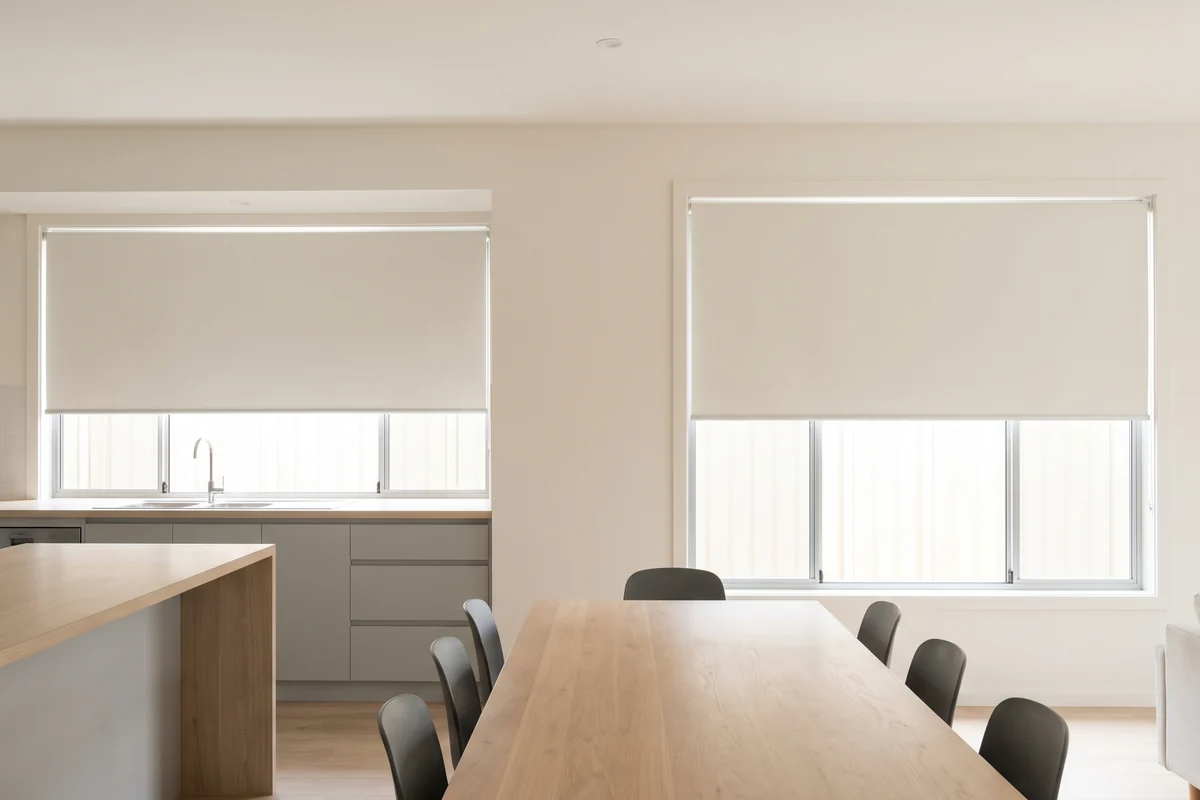
Most dining rooms aren't rooms. They're the middle of a run from the kitchen to the living area, and from the street every window reads as one wall. Keep one fabric family and one head height across the whole run, even where each window needs a different openness.
The dining end also breathes kitchen air. Cooking oil settles across the whole space, which is why kitchen window coverings need to wipe clean. A Roman blind works at the far end of the table and nowhere near the cooktop.
Plan the door before the blind
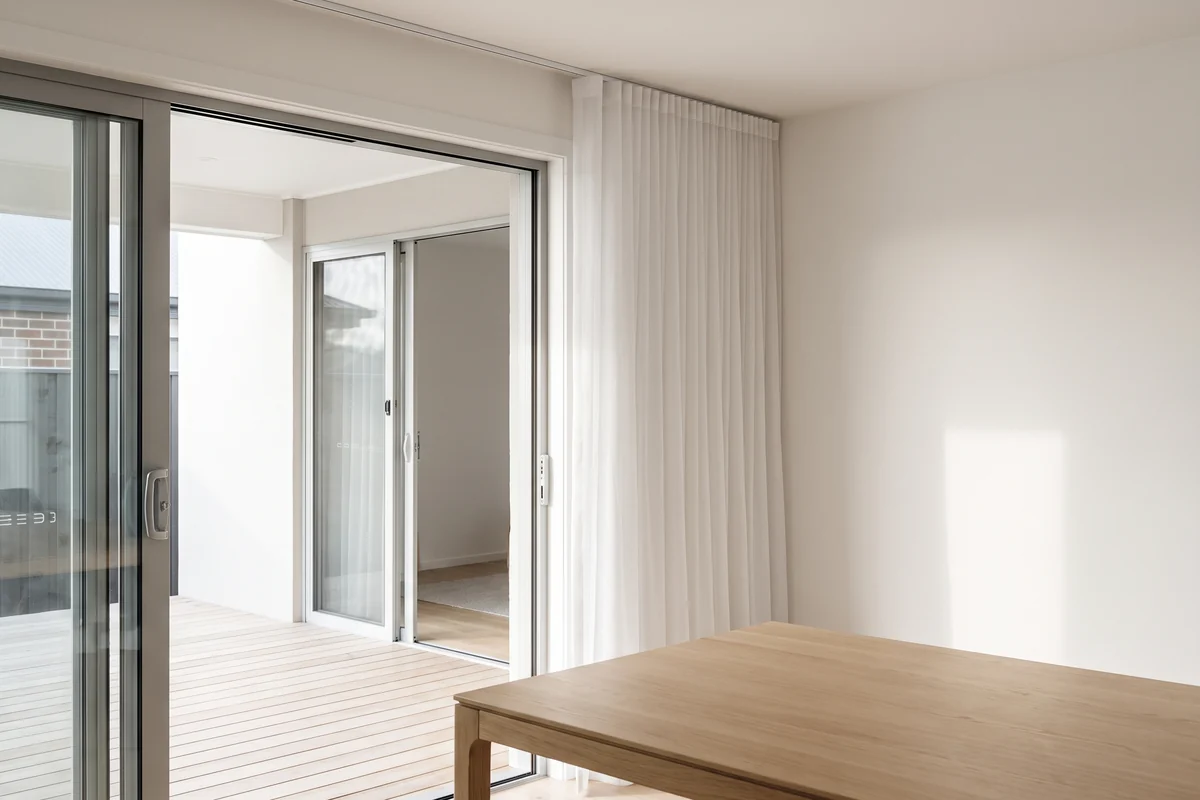
If the dining room opens onto the alfresco, the door decides more than the window does. A roller blind tops out at about 3 metres on most fabrics, so a wide slider becomes two blinds with a gap. Curtains or panel glides on a track stack clear of the opening instead. Blinds for sliding doors goes through all five options.
| Sunscreen roller | Sheer curtain | Roman blind | Sheer + blockout curtain | |
|---|---|---|---|---|
| Evening glare | Strong | Good | Only when fully down | Good |
| View with it down | Yes | Softened | No | Softened |
| Privacy after dark | Limited | None | Yes | Yes |
| Wide sliding door | Splits past about 3m | Yes | Better on windows | Yes |
If your dining window faces south under a deep verandah and nobody can see in, leave it bare and spend the money on the living room.
Not sure where the sun lands at six?
We check the aspect at the measure and send an itemised quote within 24 to 48 hours.
Frequently asked questions
What are the best blinds for a dining room?
A sunscreen roller blind suits most dining windows, because it stops low evening glare and keeps the view. A Roman blind suits a window well away from the kitchen where the look matters more. For a wide sliding door, curtains or panel glides on a track work better than a roller.
Should a dining room have blinds or curtains?
Blinds suit a window with a sideboard or bench seat under it, where a curtain can't reach the floor. Curtains suit sliding doors and formal rooms, and they soften a hard-surfaced space. Plenty of dining rooms have both.
Do you need blockout blinds in a dining room?
Usually not. The room is mostly used in the evening, so the job is glare by day and privacy at night. Blockout earns its place only if the street can see straight in after dark.
Should dining room blinds match the living room?
In an open-plan space, yes. Keep the same fabric family and head height across the run, because from outside it reads as one wall of windows. The openness can still change window by window.
Sources Australian Government Your Home — Glazing · ACCC blinds and window fittings mandatory standard · Sleep Health Foundation
Back to the journalKeep reading
Related from the journal
 Guides
Kitchen window coverings: grease, heat and cleaning
Cooking aerosolises oil, so the film reaches the whole room, not just the wall behind the hob. What belongs at a kitchen window, and where a roman blind is still fine.
Read more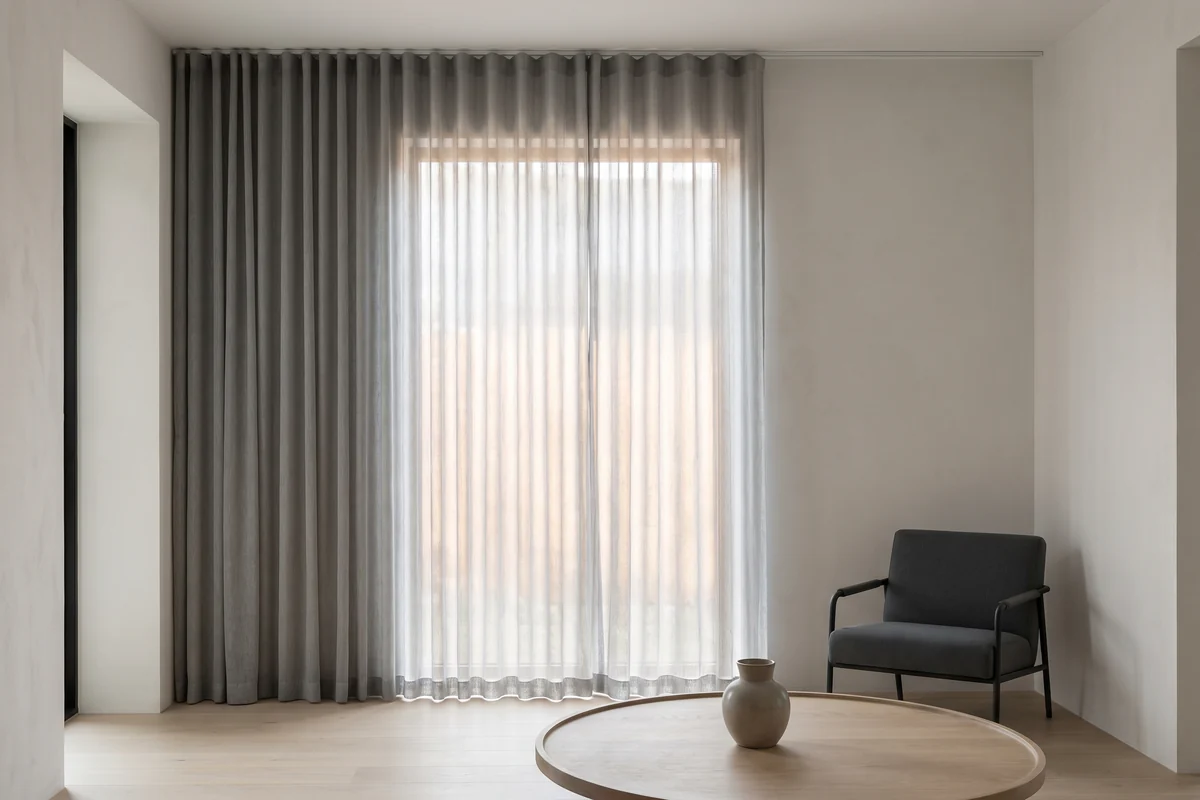 Guides
Privacy Curtains: What Actually Blocks the View
Which fabrics and linings stop a view, why fullness barely helps, and the four edges where the privacy you paid for actually leaks out.
Read more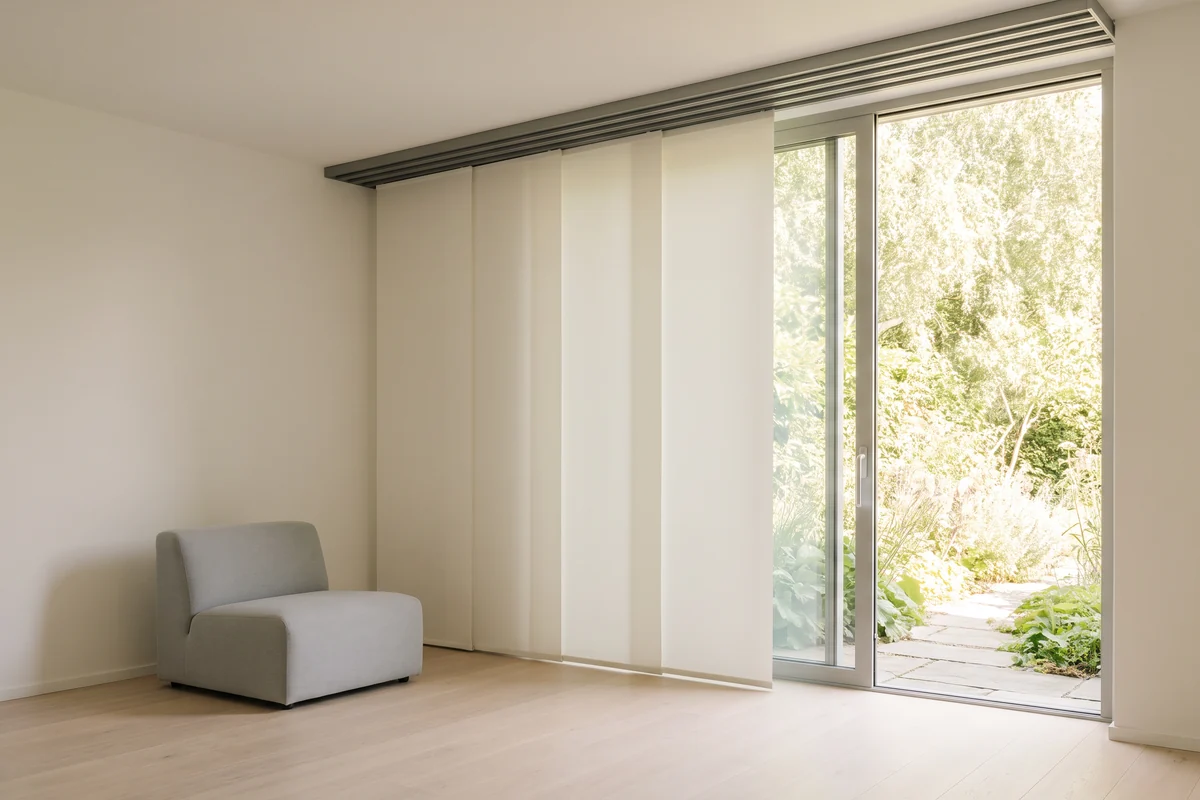 Guides
Blinds for sliding doors: what actually works
The covering has to survive being walked through several times a day. Which of the five options suits your opening, where a roller blind runs out of width, and the stackback decision nobody can fix afterwards.
Read more