Local conditions
Burleigh is two suburbs with one name
The Glare Arrives Early Here
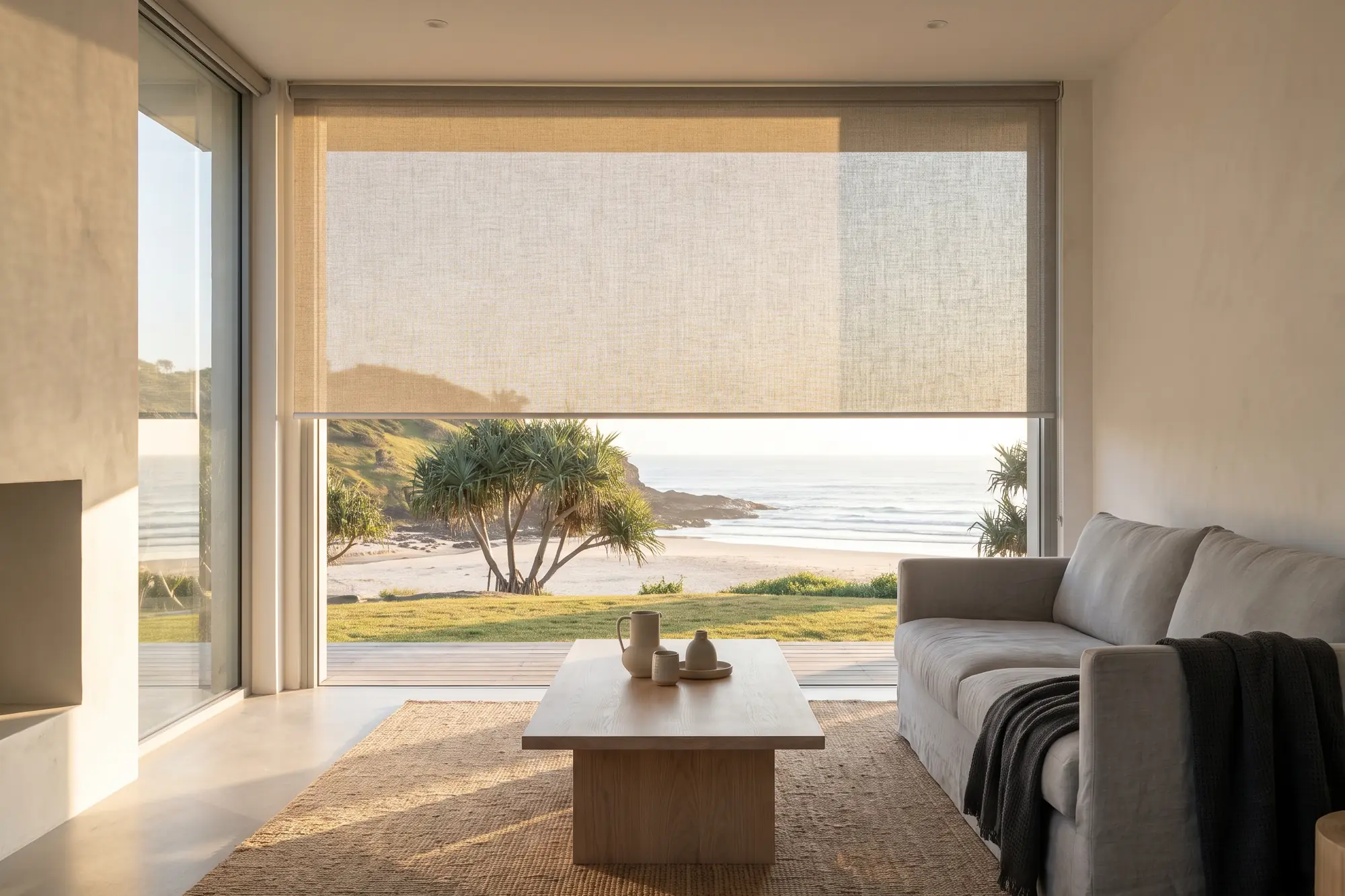
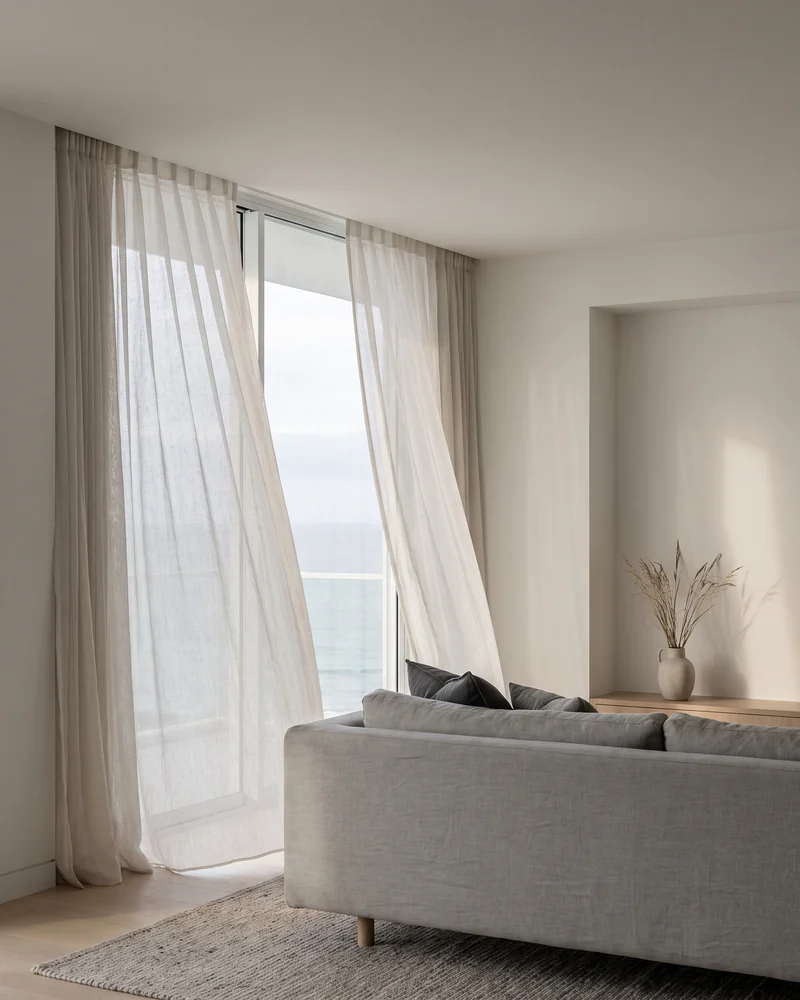
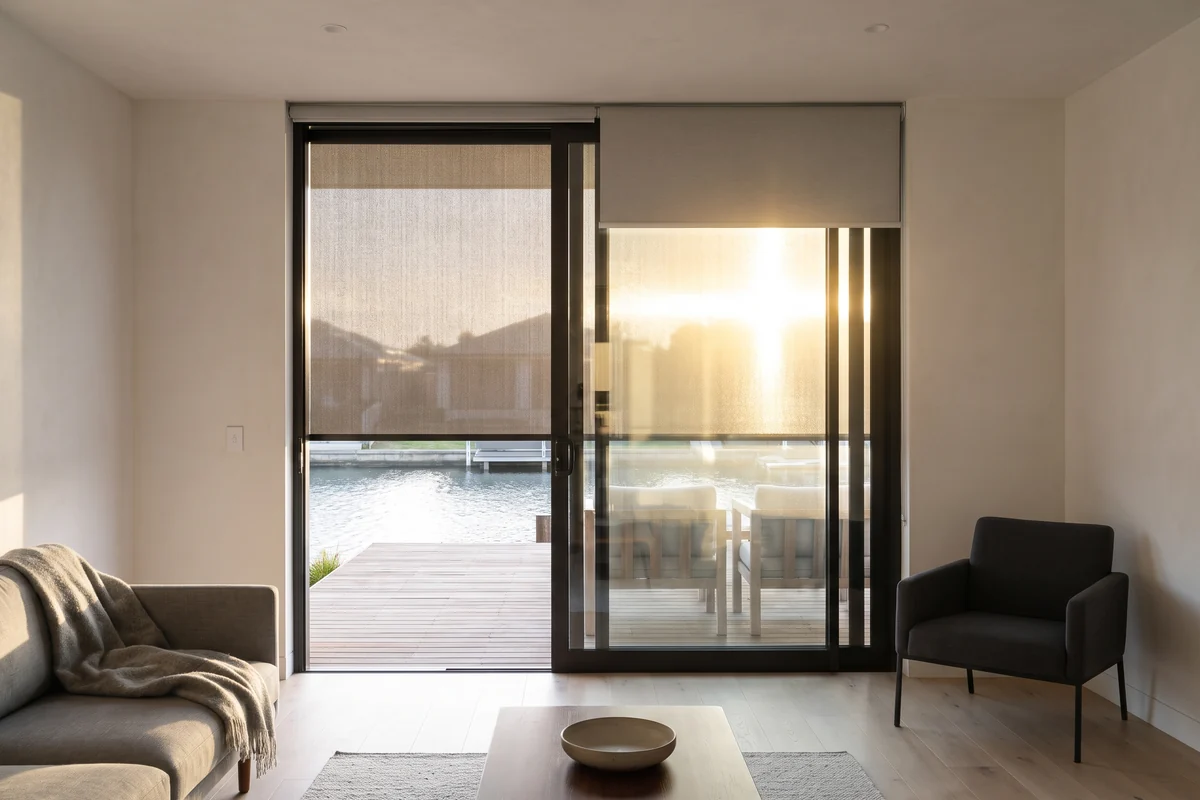
On the beach side the main glass looks out over the water to the east and north-east, which is the opposite problem to the one most blind advice is written for. The sun comes up out of the sea, low and level with the window, and doubles itself off the surface. By nine it is off the glass entirely. That is a glare problem for two or three hours, not a heat problem all day, and the honest answer is usually a sunscreen fabric rather than the blockout people ask for — a blockout solves an eight o’clock problem by making the room dark.
The hill behind it turns that again. North-facing living rooms up there get sun across the whole year, and north is the aspect that behaves: high in summer, where an eave or an awning can hold it off, low and welcome in winter. It is the one orientation where the building can do most of the work and the blind only has to finish the job.
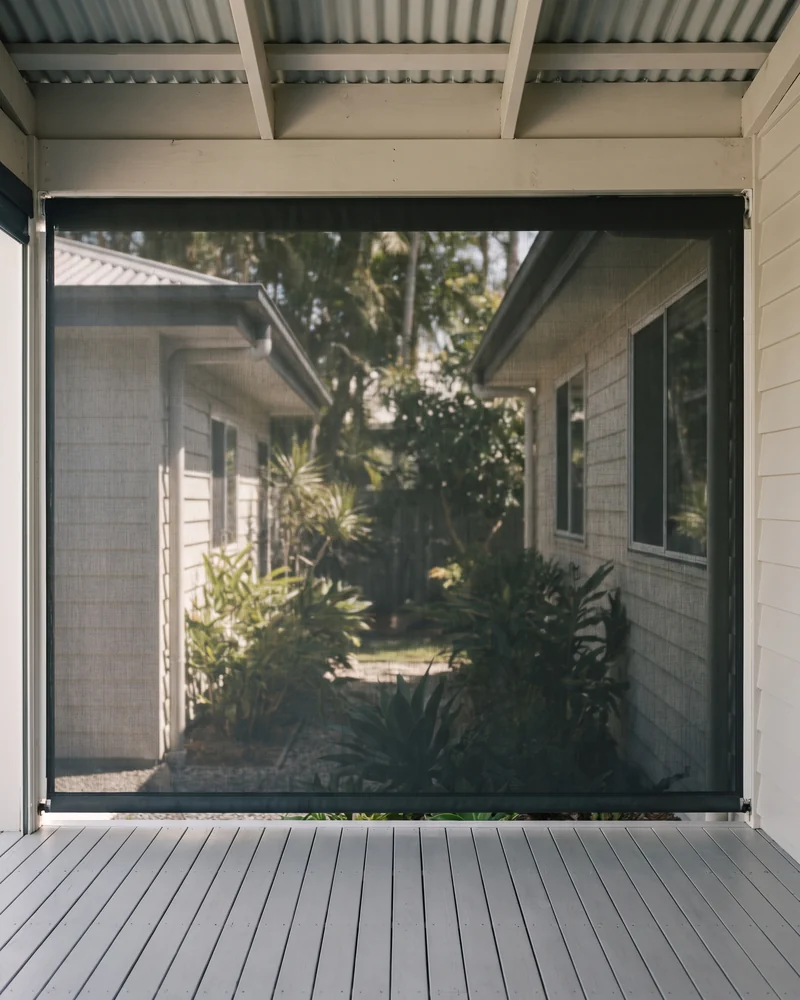
Then you cross the highway into Burleigh Waters and everything inverts. Those streets are built around canals, so the good view faces the water and a great many of those wide sliders face west over it. A western sun in the last two hours of the day sits at eye level, comes in under every eave, and bounces off flat water on the way. No internal blind wins that fight on its own, which is why shading the glass on the outside beats fighting the heat once it is in the room — an outdoor blind or an awning on the deck, and the internal blind for privacy after dark.
Two more things worth knowing here. Salt reaches the working parts of a blind before it touches the fabric, which is covered properly on our Gold Coast roller blinds page. And if you are in one of the towers or walk-ups along the front, your building may have a by-law about what the street sees, the same way they do in Southport — worth reading before you fall for a fabric, because the backing is fixed at order time.