

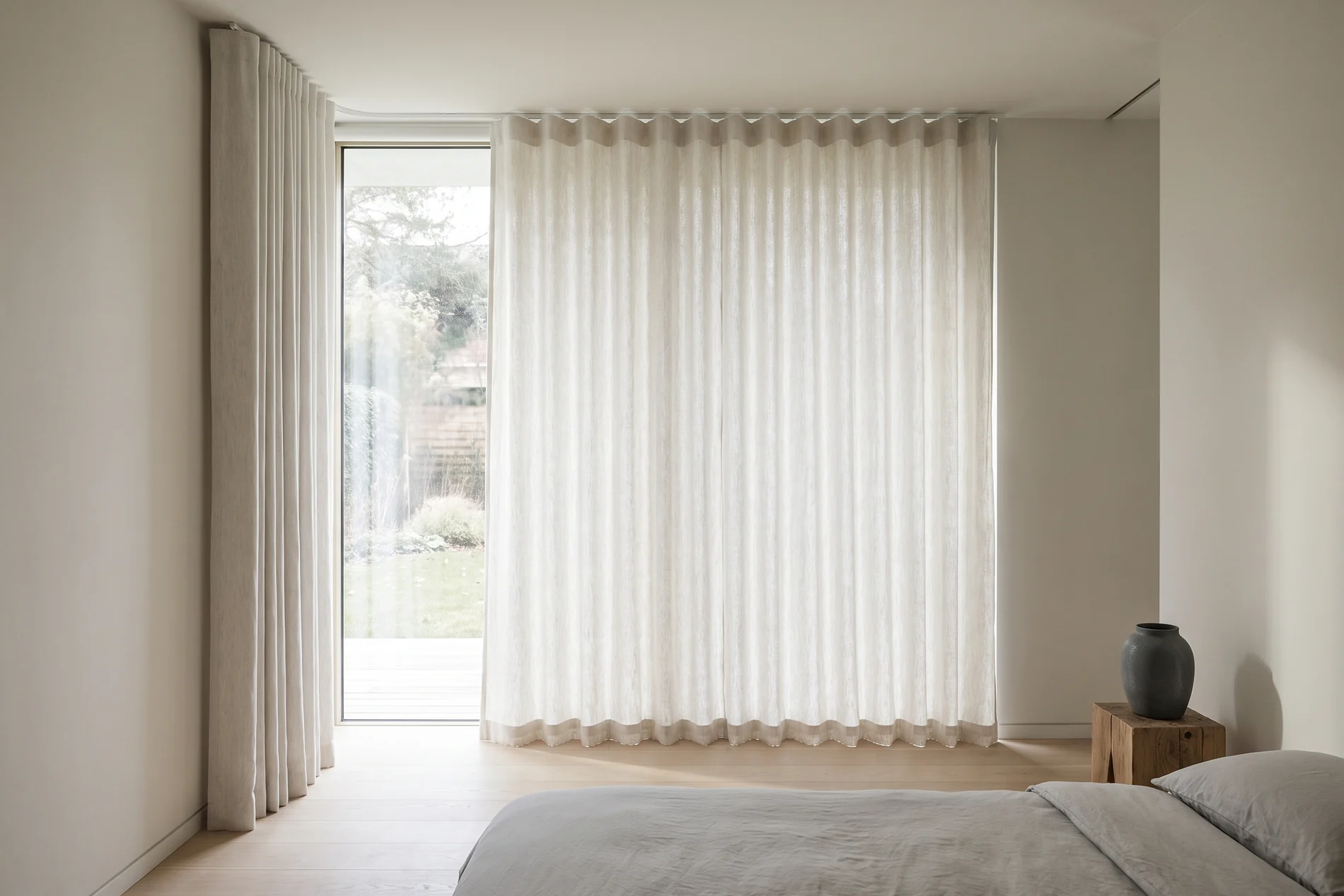
Bedroom curtain ideas that actually darken a room
Start with how dark the room has to be. The styling is the easy part, and it is the part every other guide starts with.
The bedroom curtain ideas worth acting on all start with light, not fabric. Decide how dark the room has to be at 6am, then choose a blockout for the night, a sheer behind it for the day, and a track that runs wall to wall rather than window to window.
Forced to pick one thing to get right: the curtain has to be wider and taller than the window, or none of the rest matters.
Most bedroom curtain guides are colour boards — twenty-one swatches, a note about boho, and nothing about why the room is still light enough to read in. Having measured a lot of bedrooms across the Gold Coast and Brisbane, the complaint is almost never "I chose the wrong grey". It is that the room does not go dark, or the curtain looks mean against the wall.
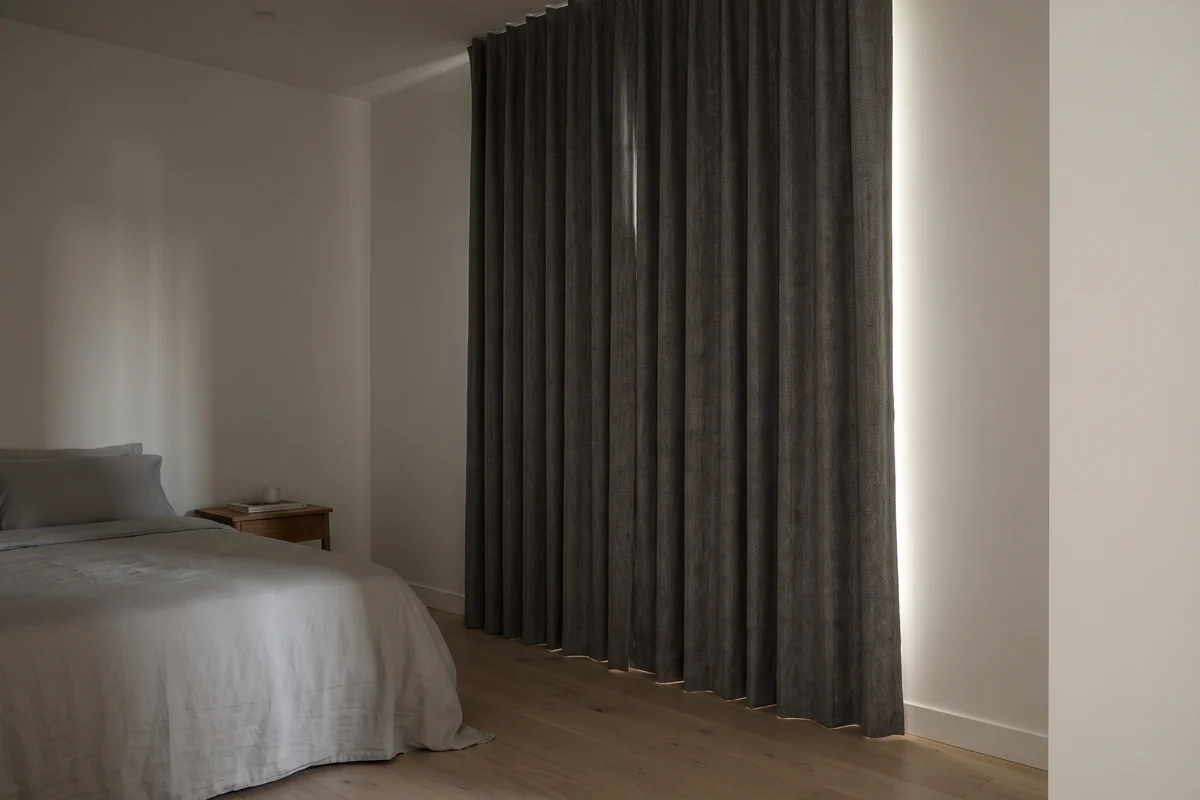
Decide how dark the room has to be
This is the only question that changes what you buy, and there are three useful answers. They are not marketing tiers — they are genuinely different products.
- Light filtering. A sheer. You keep daylight and lose the view in. Fine for a guest room nobody sleeps in past eight.
- Room darkening. A dense weave with no coating. Takes the room to dusk, not to black. Enough for most adults.
- Blockout. A coated or lined fabric that stops light passing through the cloth. What you want for shift work, a west-facing window, or a child who wakes at first light.
Here is the part the swatch books leave out. Blockout describes the fabric, not the room. The heaviest blockout money can buy will still glow around its edges at 6am in January, because the light comes past the curtain rather than through it. No fabric weight fixes that. How it is fitted does.
Worth saying plainly: most homes over-specify blockout and under-specify sheers. A bedroom window is a night-time problem for about eight hours a day and a daytime one for the other sixteen, and a blockout has nothing to offer in daylight except being open or shut.
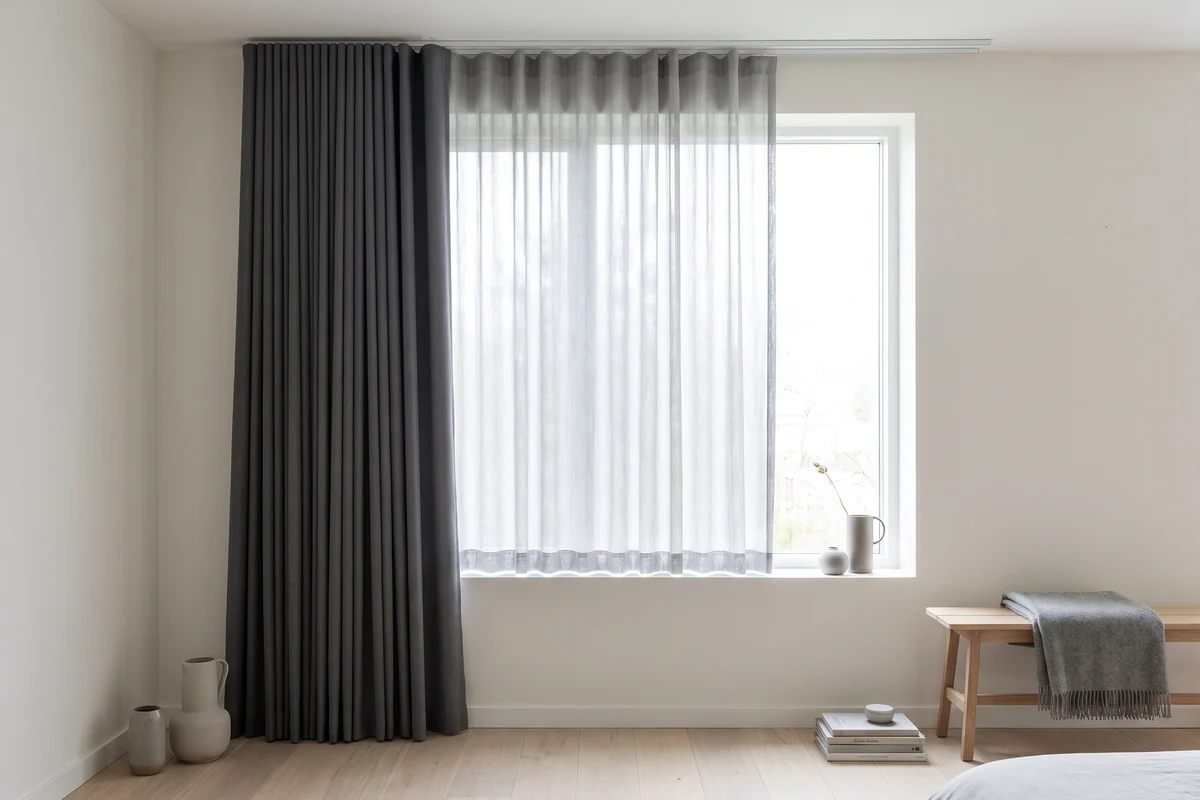
Put the sheer behind the blockout
The best bedroom curtain idea is not an idea at all, it is hardware: a double track. Two channels, two curtains, operated independently. The sheer goes on the back channel nearest the glass; the blockout on the front channel nearest the room.
That order is not decorative. The sheer is the layer you use most — closed all day, giving you daylight and softening the view in — so it belongs against the window where nothing is in its way. Put it in front instead and you get a curtain you can never close properly. The mechanics are covered in the guide to hanging double curtains.
You can also run a blind and a curtain together, and in a small bedroom that is often the better answer: a blockout roller in the reveal darkening, a single curtain either side softening. It costs less than two curtain layers and uses less wall.
| Sheer only | Blockout only | Sheer + blockout | Blind + curtain | |
|---|---|---|---|---|
| Daytime privacy | Good | Open or shut | Good | Good |
| Privacy after dark | None | Full | Full | Full |
| Darkens for sleep | No | Yes | Yes | Yes |
| Wall space needed | Low | Low | High | Low |
| Best for | Guest rooms | Shift work | Main bedrooms | Small bedrooms |
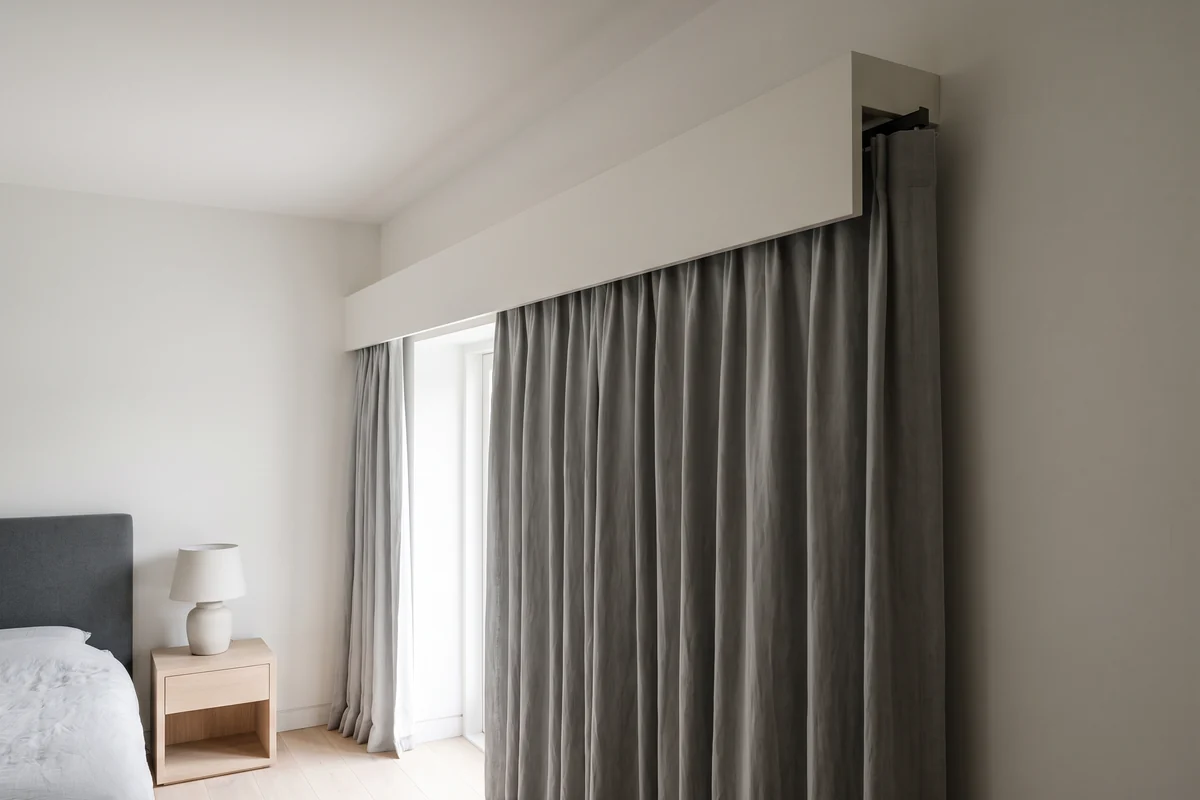
Where the light actually gets in
If the room is not dark, the fabric is almost never the culprit. Light gets in at three places, each an installation decision rather than a purchase.
- The top. A track fixed to the wall leaves a gap behind the curtain that light pours down through. A pelmet closes it off and does a second job: trapping still air against the glass. Windows are the weakest thermal point in most Australian homes, and a pelmet is the cheapest answer to that.
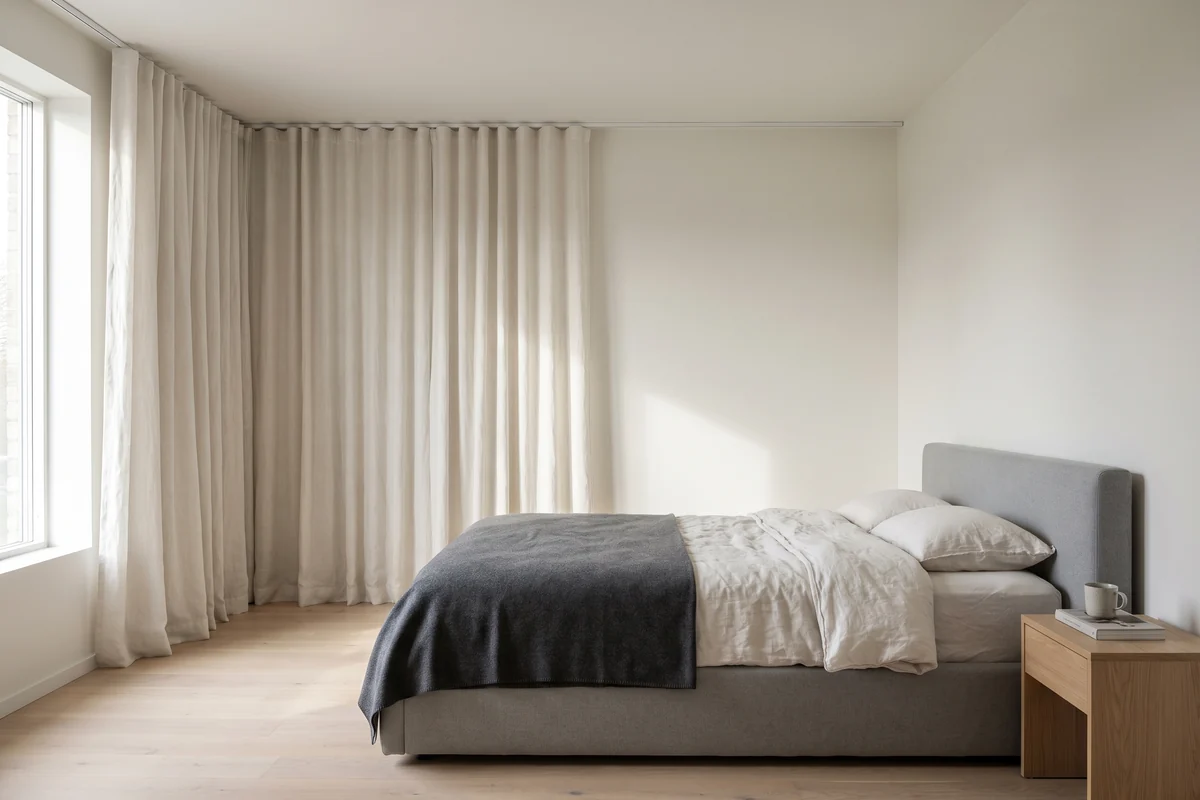
- The sides. A curtain made to the width of the glass is made to the wrong measurement. It wants to extend 15–20cm past the opening each side, with a return — the end of the track bending back to touch the wall — so there is no channel of light down the edge.
- The centre. Two curtains meeting in the middle leave a seam unless the tracks overlap. An overlap arm carries one curtain about 10cm past the other, so the panels cross rather than kiss.
None of that is exotic, and none of it costs much on top of curtains you were buying anyway. It is the difference between a curtain made to the size of the window and one made to the size of the problem — and why a ready-made panel struggles in a bedroom.
Hang them high and run them to the floor
Now the styling, which is easier than the internet makes it look. Modern curtains in a bedroom follow two rules of proportion, and most of "how did they make that room look like that" comes down to one of them.
Fix the track high. Not just above the window — as close to the ceiling as the structure allows. The eye reads the curtain as the height of the window, so a track at ceiling level makes a standard bedroom window look tall. Running it into the ceiling itself is neater again, and removes the top light gap at once.
Run the fabric to the floor. Sill-length curtains in a bedroom look unfinished. Aim for the hem to sit about 1cm clear of the floor if you want it crisp and easy to keep clean, or a centimetre of break if you want it soft. Puddling looks wonderful in a photograph and collects dust in a house.
Colour is the last decision, not the first. Curtains a shade or two off your wall colour look considered in almost any bedroom; if you want to think about it properly, we wrote a guide to choosing a curtain colour.
Choose the heading before the fabric
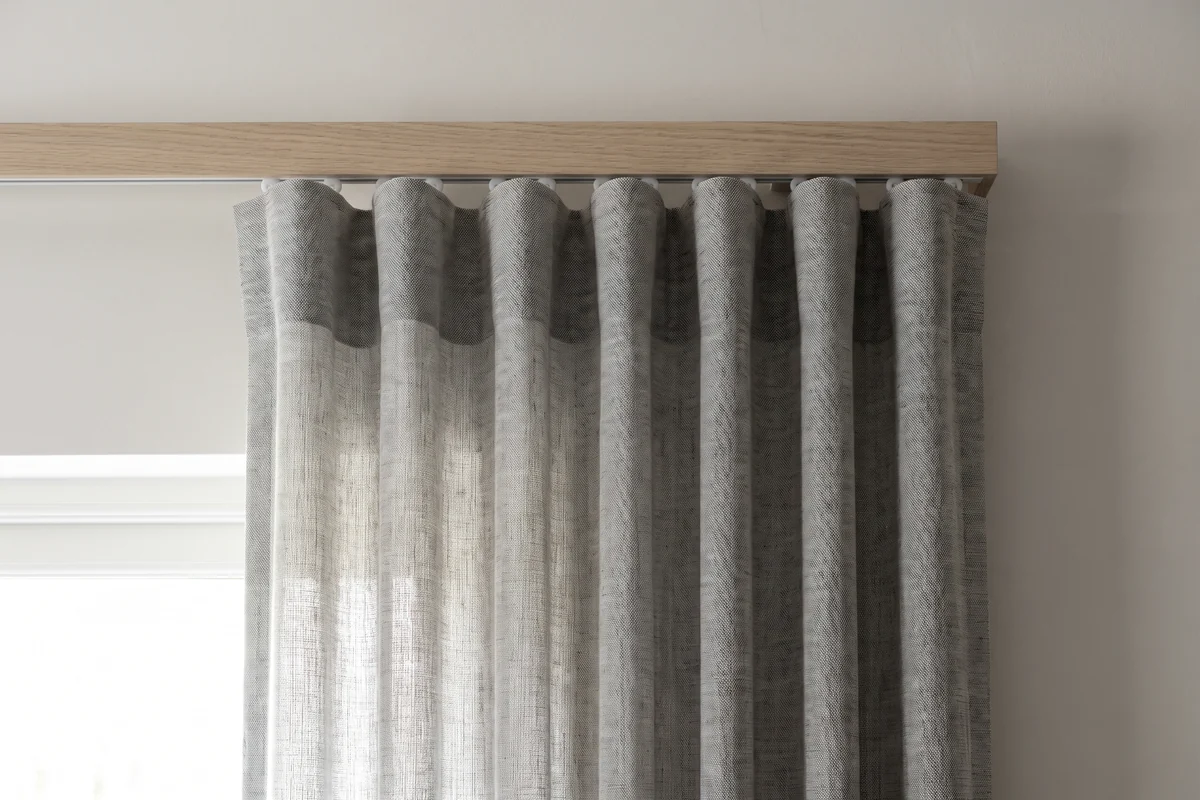
The heading is the top of the curtain — how the fabric gathers onto the track. It decides how the curtain hangs, how much fabric you need, and much of what it costs. People leave it until last, which is backwards.
Fullness is the ratio of flat fabric to finished track width, and it is where the real numbers live:
- Wave fold, also called S fold, runs 2.3 : 1. A 3 metre track takes 6.9 metres of fabric. It gives the soft, even vertical wave you see in every contemporary bedroom, and stacks back tidily.
- Box, reverse, gathered and knife pleat all run 1.8 : 1. The same 3 metre track takes 5.4 metres — more structure at the top, and a fifth less fabric.
One thing we do not do, worth knowing before you fall in love with a photograph: we do not supply curtain rods, poles or eyelet curtains. Every track we fit runs on runners. If you want the look of a pole, the answer is a decorative track — it reads as a pole and works as a fully runnered track underneath, which is why it still draws smoothly in ten years. The rods versus tracks comparison covers the trade.
Not sure which of these your bedroom actually needs?
We measure the room, check what the track can be fixed into, and send an itemised quote within 24 to 48 hours. Curtains run 2–4 weeks from check-measure to installation.
In a child's bedroom, specify cordless
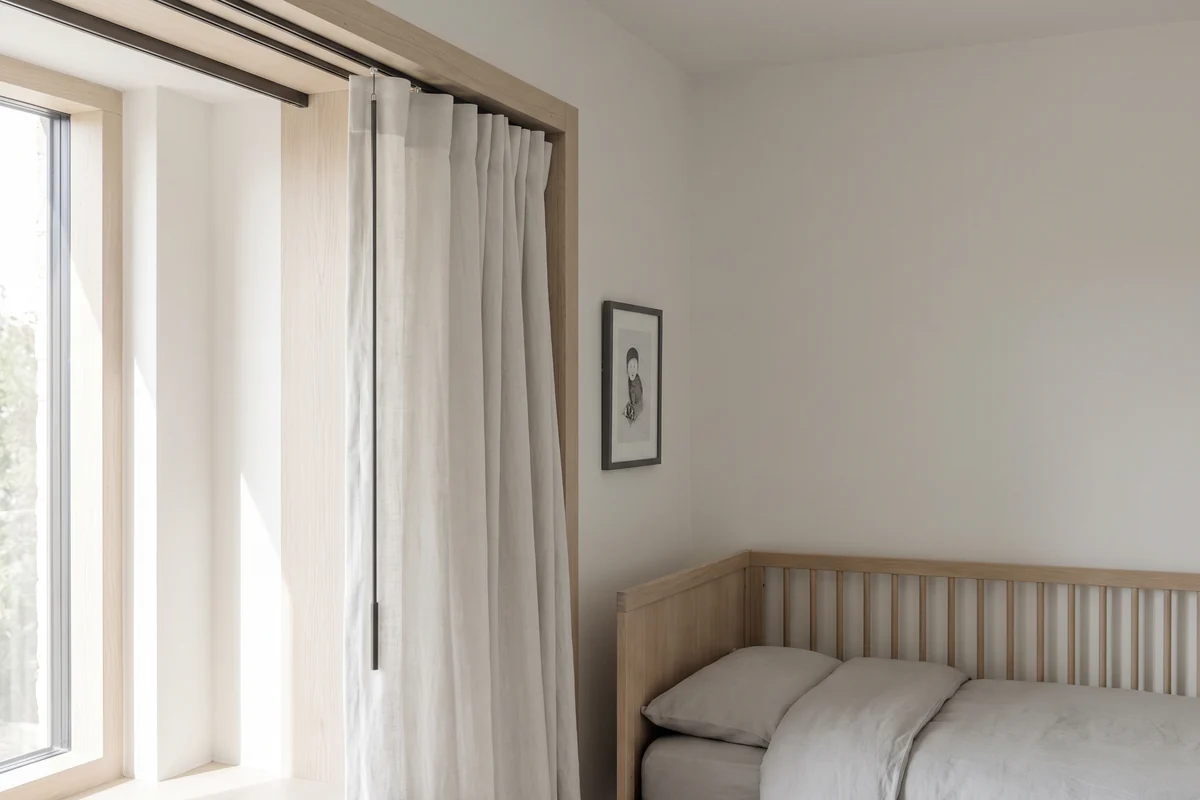
This is the one section here that is not a matter of taste. Corded internal window coverings fall under a mandatory Australian standard, because a loose cord near a cot is a strangulation hazard. The ACCC publishes a plain-English guide to blind and curtain cord safety, worth five minutes before ordering anything for a nursery.
The practical version: specify a wand-operated or motorised curtain and a cordless blind, and keep cots and beds away from the window regardless. Curtains are already the safer choice — a runnered track with a wand has no loop to catch anything. As members of the Window Shading Association of Australia we work to its child-safety standards on every job, which mostly means we raise this before you do.
When curtains are the wrong answer
Not every bedroom wants curtains, and we would rather say so before the deposit.
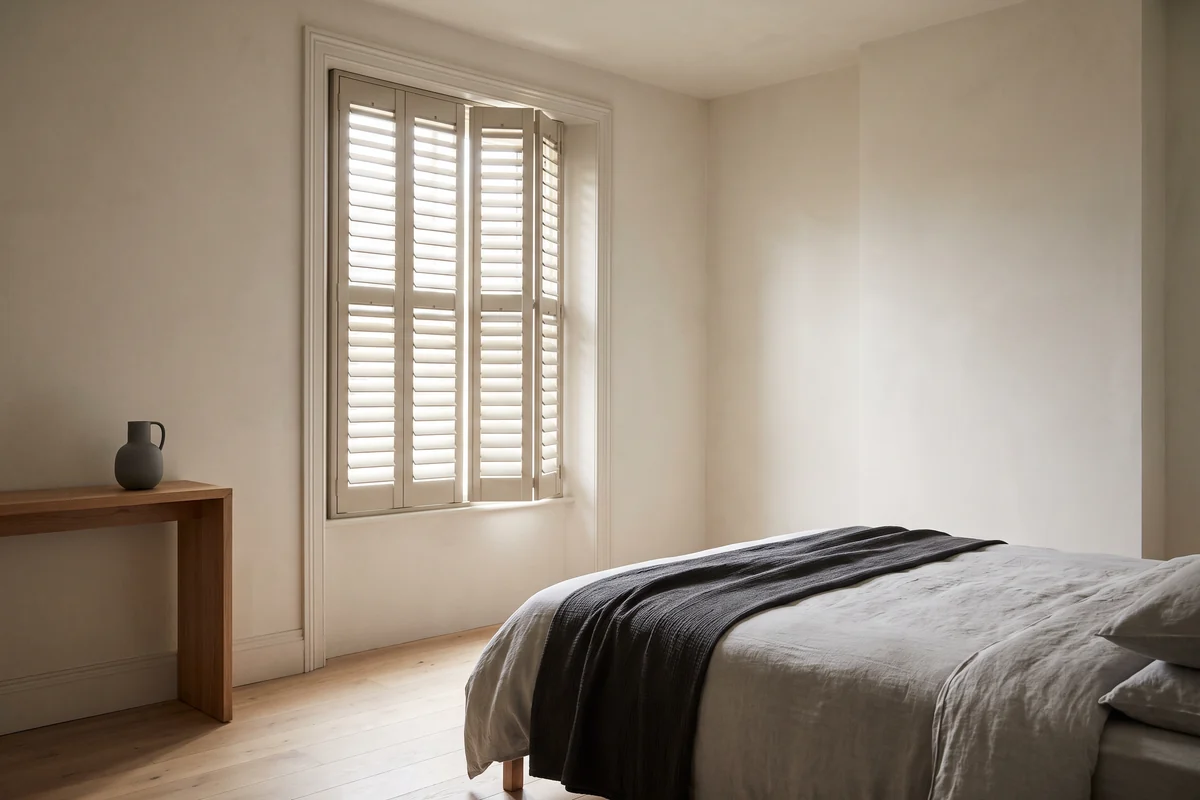
If there is no wall either side of the window, a curtain has nowhere to stack. You end up with fabric permanently covering a third of the glass, which is a strange thing to pay for. A blind or shutter in the reveal is the better product.
If the window sits over a wet area, fabric and moisture are a poor combination. That is a shutter job.
If the real problem is road noise, be realistic. Heavy fabric takes the edge off reflected sound inside the room. It does not fix single glazing, and anyone telling you otherwise is selling something.
And if you are motorising a window you walk past every morning, ask what the remote is saving you. Motorisation earns its money on windows you cannot reach.
Frequently asked questions
What type of curtains are best for a bedroom?
A blockout curtain with a sheer behind it, on a double track. The sheer handles daytime privacy and softens the light; the blockout handles sleep. If you can only fit one layer, choose the blockout — but fit it wider and taller than the window, because that is what actually darkens the room.
Should bedroom curtains be lighter or darker than the walls?
Either works — the choice sets the mood, not the standard. Curtains a shade or two lighter than the wall make a bedroom feel airier; a shade or two darker make it feel enclosed and restful. What looks unresolved is a near-match that is not quite a match, so commit to one direction.
Can you have blinds and curtains together in a bedroom?
Yes, and in a small bedroom it is often the smarter option. A blockout roller in the reveal does the darkening while a single curtain either side does the softening, which costs less than two curtain layers and uses less wall. The trade-off is that a blind stacks at the top of the window, so you never get the full opening back.
How long should bedroom curtains be?
To the floor. Aim for the hem to sit about 1cm clear if you want a crisp hang that stays clean, or add a centimetre of break for a softer look. Sill-length curtains read as unfinished in a bedroom, and puddled fabric photographs beautifully but collects dust.
Do sheer curtains give you privacy in a bedroom at night?
No, and no weave density changes that. Once it is darker outside than in, anyone outside sees through a sheer as though it were not there. Sheers are a daytime layer — pair one with a blockout on the second channel and both conditions are covered.
Are blockout curtains worth it in a bedroom?
Yes, provided they are fitted properly. Blockout fabric on an undersized track leaves a bright halo around the window. Extend the track 15–20cm past the opening each side, add a return to the wall and an overlap in the centre, and consider a pelmet to close the top.
Sources Australian Government Your Home — Glazing · ACCC blinds and window fittings mandatory standard · Sleep Health Foundation
Back to the journalKeep reading
Related from the journal
 Guides
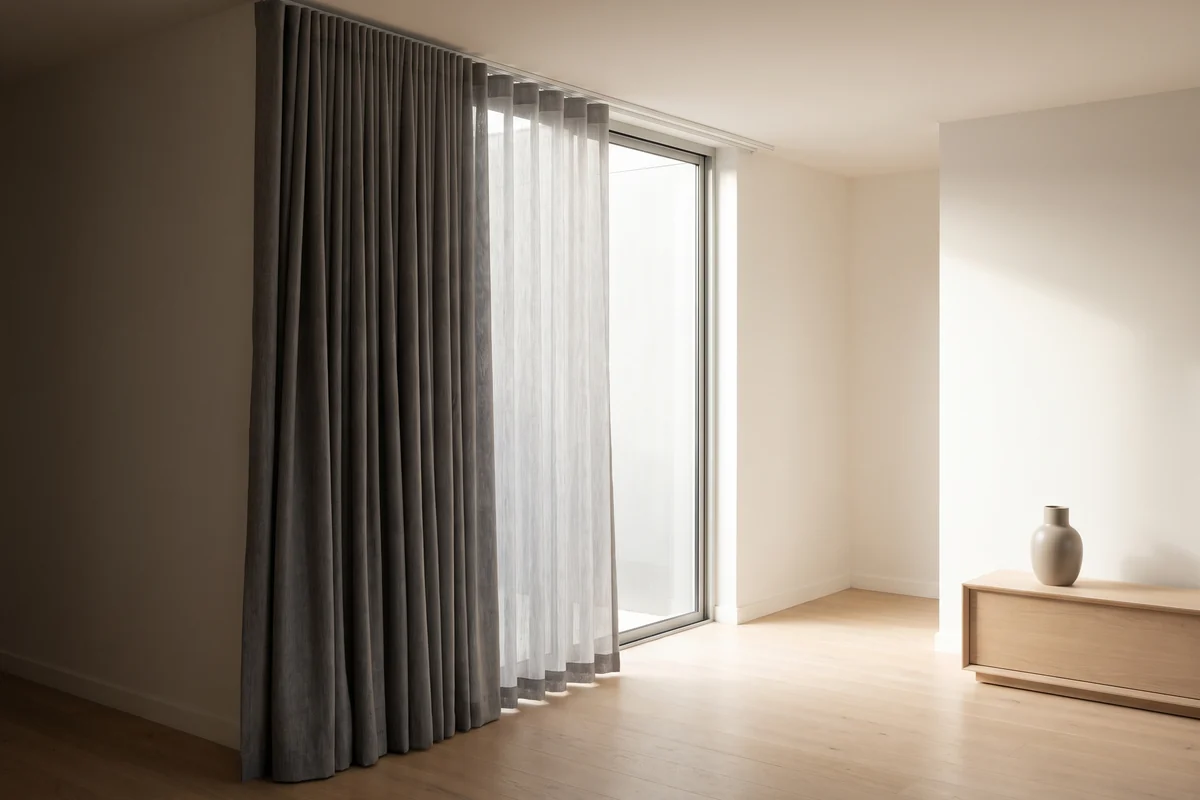
Double curtains: how to hang two layers properly
A sheer behind, a blockout in front, both on one twin track. Which layer goes where, what the reveal has to clear, and the fullness arithmetic that tells you what the second layer really costs.
Read more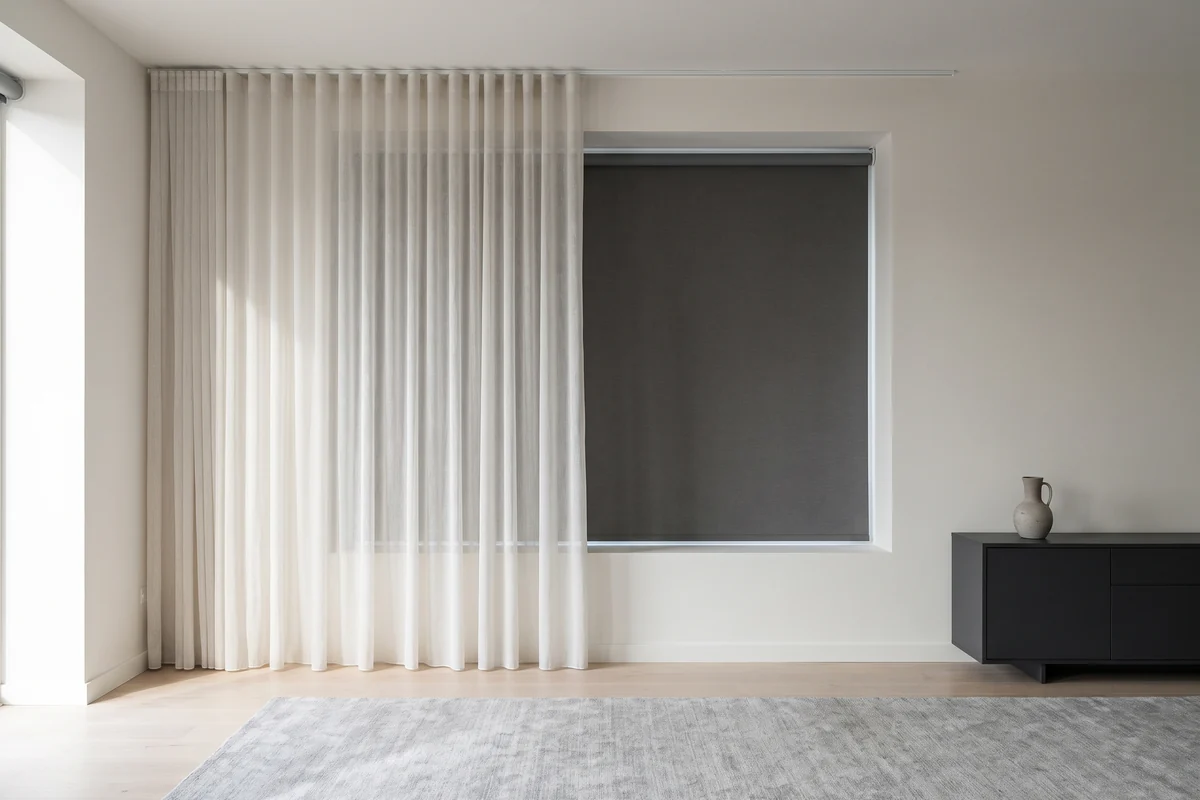 Guides
Blinds with sheer curtains: how to layer both
Each layer does the job the other does badly. What goes in front, what the opening has to give you, and why the rod advice on every other page does not apply here.
Read more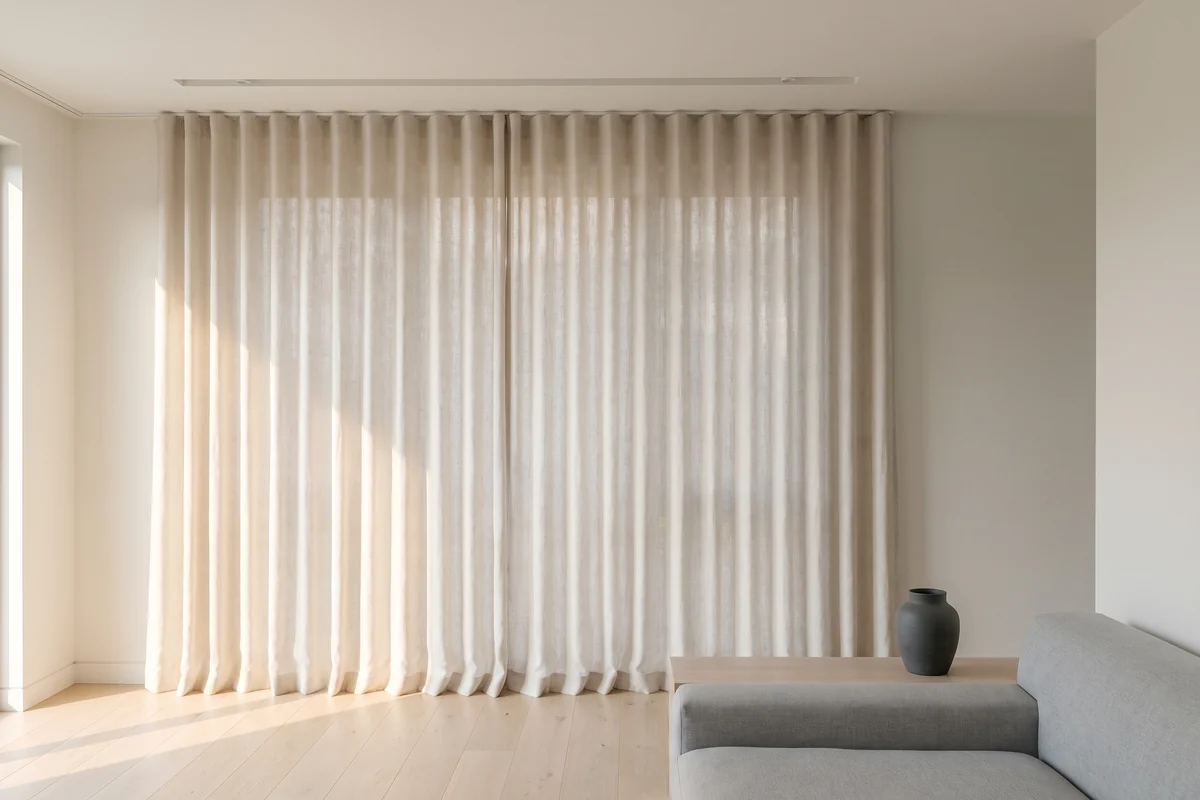 Guides
How to choose curtain colour
Why the swatch in your hand is already lying to you: fullness darkens every colour by a couple of shades, the light your window faces changes it again, and the Australian sun rewrites it a third time. Room by room, plus what the street actually sees.
Read more