

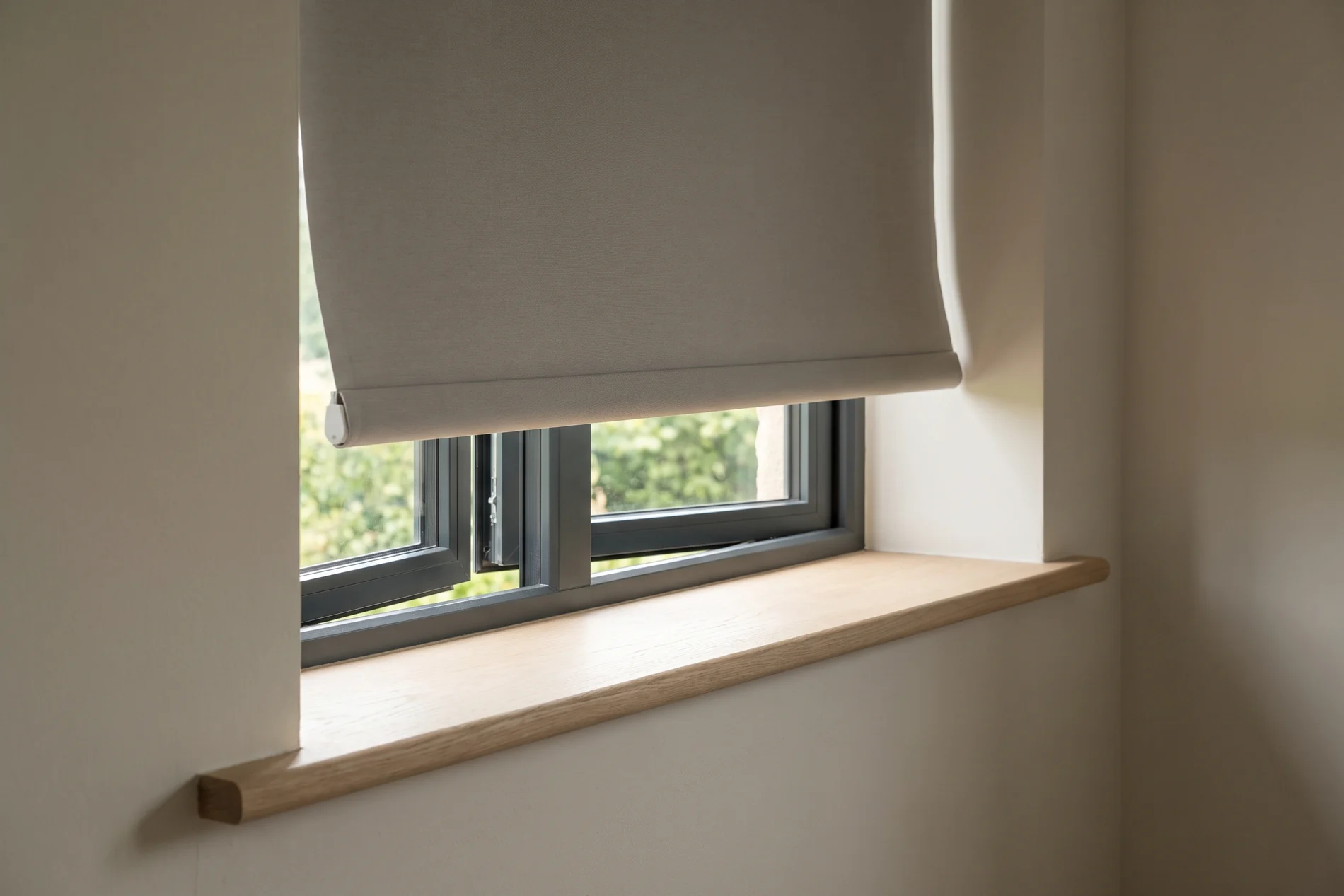
How to stop blinds banging in the wind
Every fix you will find online is a patch on the same underlying problem. Here is what is actually happening at the window, and what makes it stop for good.
To stop blinds banging in the wind you have to stop the bottom of the blind moving, not just soften what it hits. Felt pads and foam strips quieten the knock; hold-down brackets, a reveal fit or side channels stop the movement itself.
Forced to pick one: magnetic hold-downs indoors, side channels outdoors.
Every article on this lists the same six tricks. Most of them work, some of them last, and none of them explain why the blind is moving in the first place — which is a shame, because once you understand that, choosing between the fixes takes about ten seconds.
Why blinds bang at all
A blind is held at two points: the head, where it is fixed, and the bottom bar, which hangs free. Everything between those two points is fabric or slats, and none of it is restrained sideways.
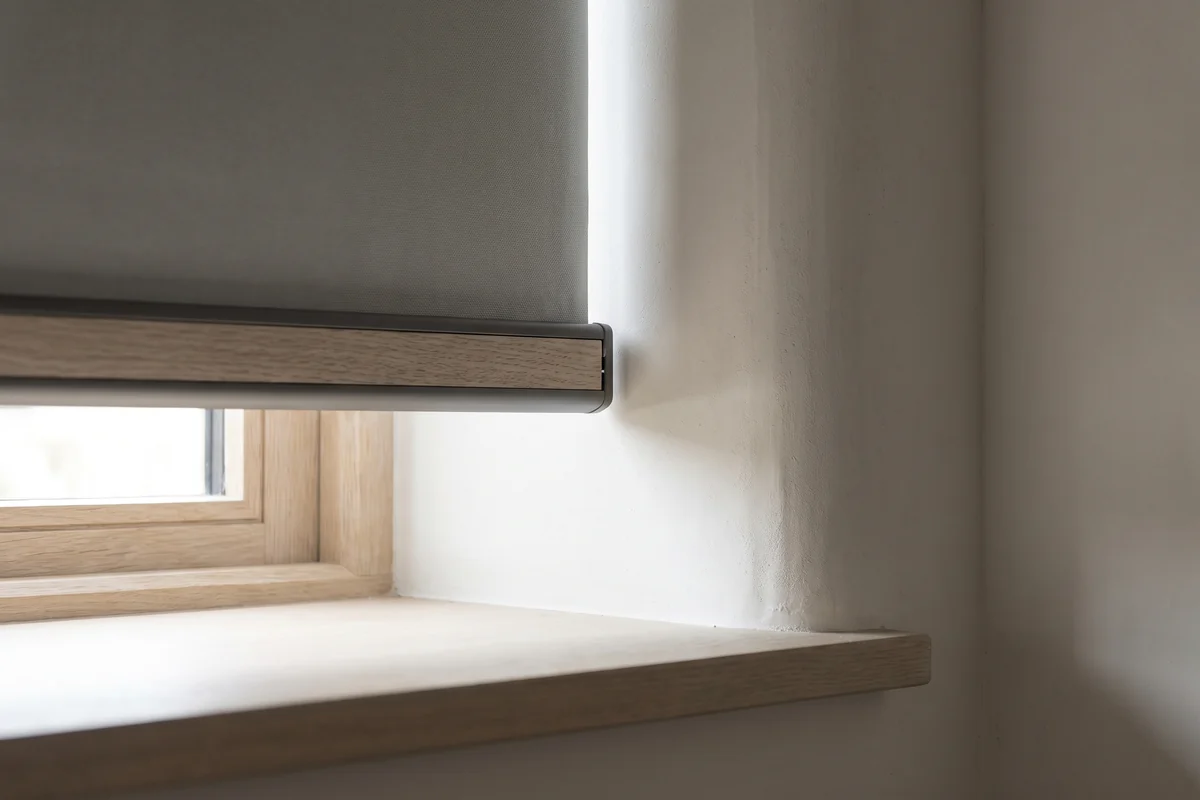
Open a window and you introduce moving air on both faces of that blind. The pressure is not even — it gusts — so the free bottom bar swings, and swings back, and hits whatever is nearest. On an inside-mounted blind that is usually the reveal or the sill. On a face-fixed one it is the glass or the architrave. The knock is the bottom bar; the rattle is the slats moving against each other on the way.
That is the whole mechanism, and it tells you there are only two categories of fix: soften the impact, or remove the movement. Almost every tip online is the first kind, which is why people end up doing three of them and still being annoyed.
The quick fixes, honestly ranked
All of these are legitimate, and if you are renting they may be the whole answer. Ranked by how long they keep working:
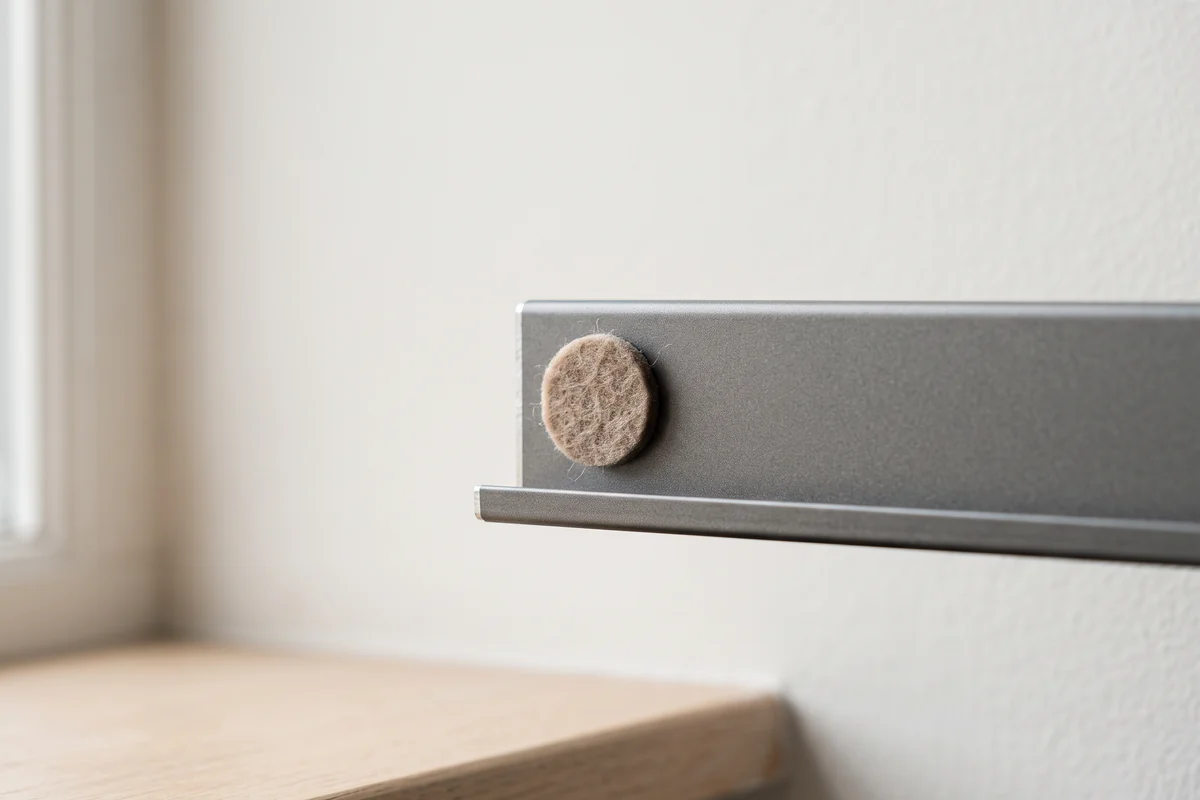
- Magnetic hold-downs. A magnet on the frame, a small plate on the bottom bar. This is the only retrofit that removes the movement rather than muffling it. Excellent on light roller and roman blinds; unreliable on anything heavy, and useless if you like the blind halfway down.
- Hold-down brackets. Small clips screwed to the sill that grip the bottom bar. Permanent, effective, and they commit you to the blind being fully lowered to be silent. Common on caravans and boats for exactly this reason.
- Felt or foam pads. Cheap, invisible, and they turn a crack into a thud. They do nothing about the swinging, so you still get the movement and the shadow of the noise. The most common fix and the most commonly re-applied.
- Foam weather strip on the frame. Same principle, applied to the thing being hit rather than the thing hitting it. Slightly tidier, slightly longer-lived, same limitation.
- A heavier bottom bar. Sometimes offered as an upgrade. It reduces how far the blind swings without stopping it, and on a wide roller blind it can make the fabric hang better anyway.
Notice that four of the five are treating the symptom. That is fine if the cause is not worth fixing — and often it genuinely is not.
| Stops movement | Blind can be part-raised | How long it lasts | |
|---|---|---|---|
| Felt or foam pads | No | Yes | Months |
| Weather strip on frame | No | Yes | A year or two |
| Heavier bottom bar | Partly | Yes | Life of the blind |
| Magnetic hold-downs | Yes | No | Years, on light blinds |
| Hold-down brackets | Yes | No | Life of the blind |
| Reveal fit | Mostly | Yes | Life of the blind |
| Side channels | Completely | Yes | Life of the blind |
The real fix indoors is decided at the measure
Where a blind is mounted changes how much it can move, and that decision is made before anything is manufactured.
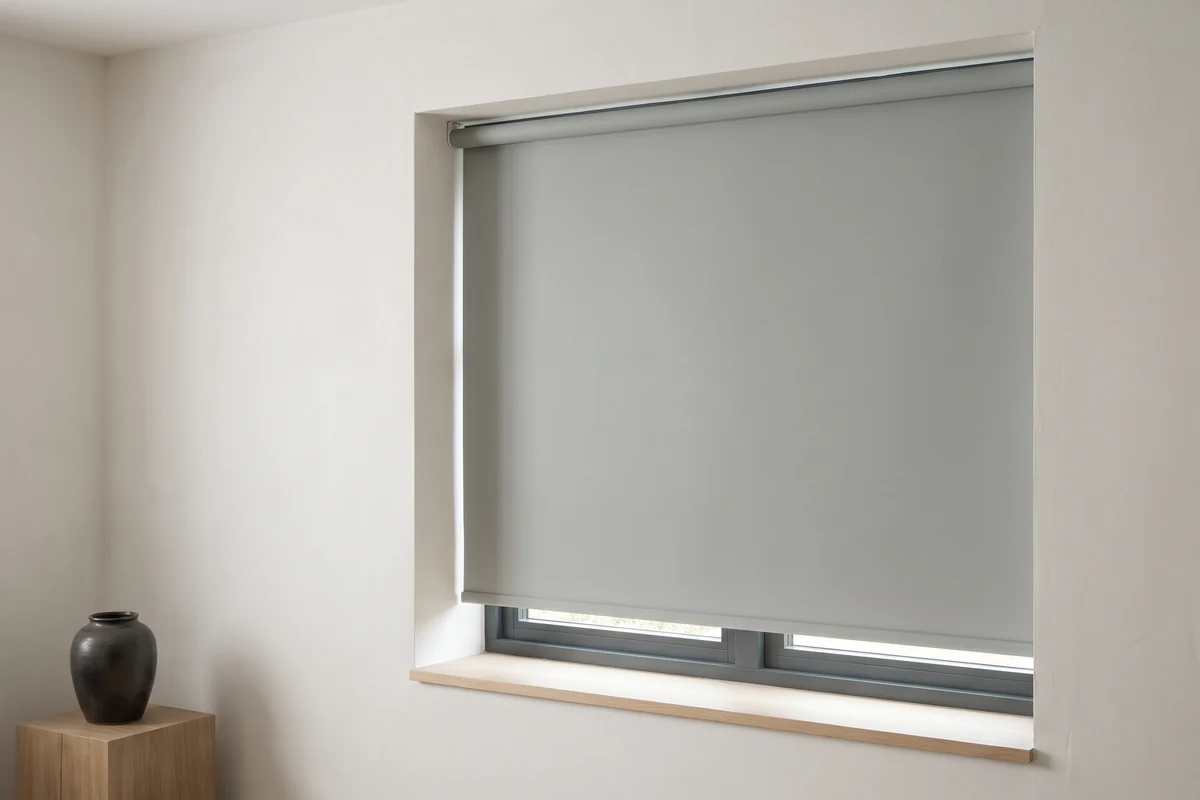
A reveal fit puts the blind inside the window recess, with the frame close on both sides and only a few millimetres of clearance. There is very little room to swing, so there is very little noise. A face fit hangs the blind on the wall outside the opening, where it has the whole room to move into. Face fitting is often the right call for other reasons — a shallow reveal, better light seal, covering an ugly frame — but it is the noisier of the two, and nobody tells you that at the quote.
If you already have a face-fitted blind and it drives you mad, hold-down brackets are the honest retrofit. If you are ordering new and the window is one you like open, say so at the measure. It costs nothing to specify and it is the difference between solving this now and reading articles like this one in two years.
Tired of the one blind that keeps you awake?
Tell us which window it is. Half the time the fix is a bracket; the rest of the time it is how the blind was mounted, and that is worth knowing before you replace it.
Outdoors, the answer is a channel
Outdoor blinds are the worst offenders, because they are bigger, more exposed and generally hanging in the exact spot the wind funnels through. They are also the easiest to fix properly, because the fix is built into one of the formats.
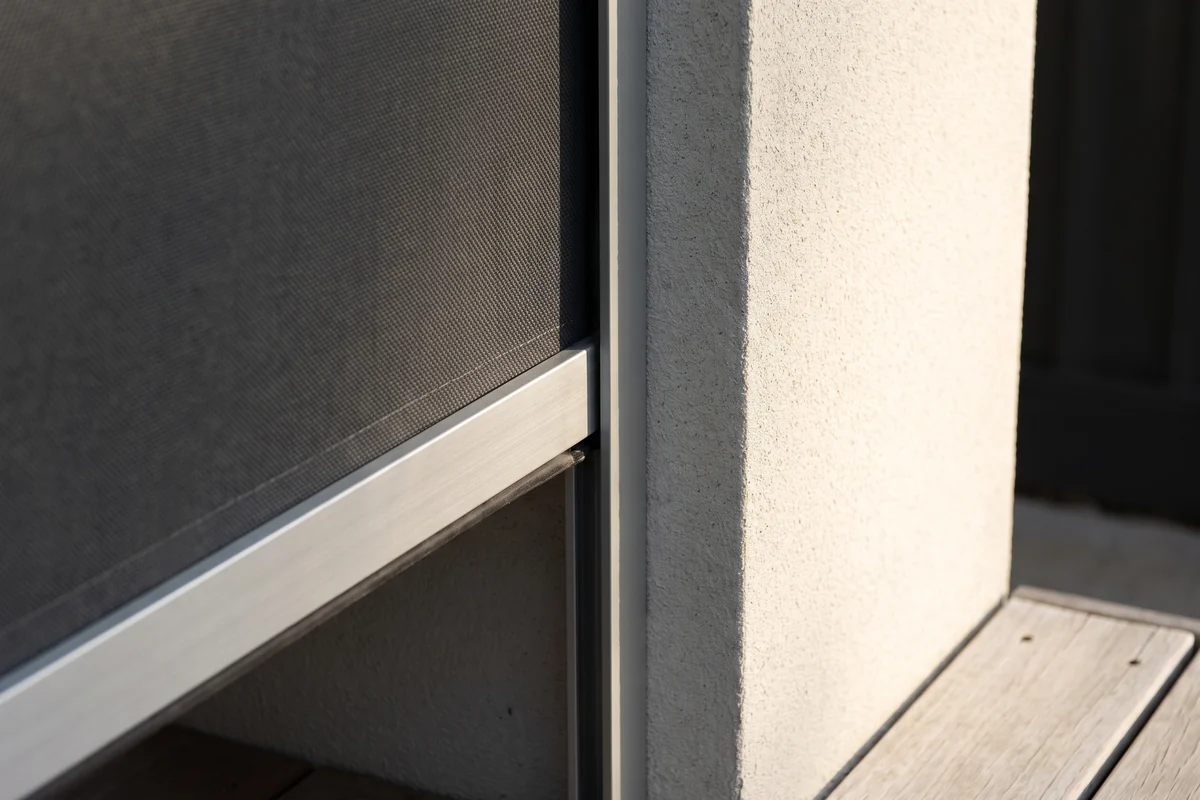
A zip track blind runs the fabric edge captive inside an aluminium channel down both sides. On the ZipScreen system we fit that is a 52mm precision-extruded channel with a concealed zip and zero gap between fabric and channel. There is nothing loose anywhere on the blind, so there is nothing to move and nothing to knock. It is silent in wind that would have an unguided blind slapping against the posts.
Cable-guided blinds are the halfway house: tensioned wire down each side through eyelets in the fabric edge. Better than nothing, and the fabric can still move between the cables. An unguided café blind or straight drop in an exposed position will always move, and no amount of felt will change that — the comparison between the three outdoor formats comes down to this more than anything else.

When not to bother
Here is the part the rest of the internet leaves out, because it does not sell anything.
If the noise happens on a handful of nights a year, in one wind direction, put a felt pad on it and close the window on those nights. Re-specifying a blind — or replacing a working one — to solve an occasional problem is a poor trade, and we will say so if you ring us about it.
Where it is worth acting is when it is stopping you doing something you want to do. A bedroom you cannot sleep in with the window open in summer is a real cost, and on the coast that is most of the year. Cross-ventilation is one of the cheapest things a house can do for comfort — the government's own guidance treats it as a primary cooling strategy — and a noisy blind that makes you shut the window is quietly costing you that.
One last thing, unrelated to noise but worth saying whenever bottom bars and cords come up: if there is a looped cord anywhere near where a child sleeps or plays, deal with that first. It is covered by a mandatory Australian standard, and it matters considerably more than the rattling.
Frequently asked questions
Why do my blinds bang when the window is open?
Because the blind is only held at the top and the bottom. The fabric or the slats catch moving air, the bottom bar swings, and it knocks against the glass, the frame or the sill. Nothing in the middle of the blind is restraining it, so any draught through the opening becomes movement.
What is the cheapest way to stop blinds banging?
Self-adhesive felt or foam pads on the back of the bottom bar, at each end where it strikes the frame. It costs a few dollars and it does genuinely quieten the knock. It does not stop the swinging — it just softens the landing.
Do magnetic hold-downs work?
Yes, on light blinds, and they are the best of the retrofit fixes because they stop the movement rather than muffling it. A magnet on the frame and a plate on the bottom bar holds the blind against the reveal. On anything heavy, or a blind that is often part-raised, they let go.
Will fitting the blind inside the reveal stop the noise?
It helps a great deal, because a reveal-fitted blind sits inside the recess with the frame close on both sides, so there is much less room to swing. It is the single biggest difference on an indoor blind, and it is decided at the measure — not something you can change later without new brackets.
What actually stops an outdoor blind rattling?
Side channels. If the fabric edge runs captive inside a track down both sides there is nothing loose for wind to move, so the blind is silent and stays put. Cable-guided blinds are the halfway version. An unguided outdoor blind in an exposed spot will always move.
Should I just close the window?
Sometimes, yes, and nobody selling blinds wants to say it. If the noise only happens in a southerly and you sleep with the window open twice a year, a felt pad and a closed window on those nights is a proportionate answer. Re-specifying a blind to solve a two-night-a-year problem is not.
Sources Australian Government Your Home — Glazing · ACCC blinds and window fittings mandatory standard · Sleep Health Foundation
Back to the journalKeep reading
Related from the journal
 Guides
Alfresco blinds compared
Three ways to hang fabric across an outdoor opening, and only one of them seals the sides. What that changes in wind, rain and insects — with the numbers most pages leave out.
Read more Guides
Roller blinds Brisbane & Gold Coast
A dual bracket carries both fabrics on one window, which is why it is the system we fit most often: glare control and the view during the day, full privacy after dark. Blockout on its…
Read more Blinds
How to clean blinds without wrecking them
Dust weekly, wash rarely, and never soak a blockout roller. A type-by-type guide from the Gold Coast.
Read more