

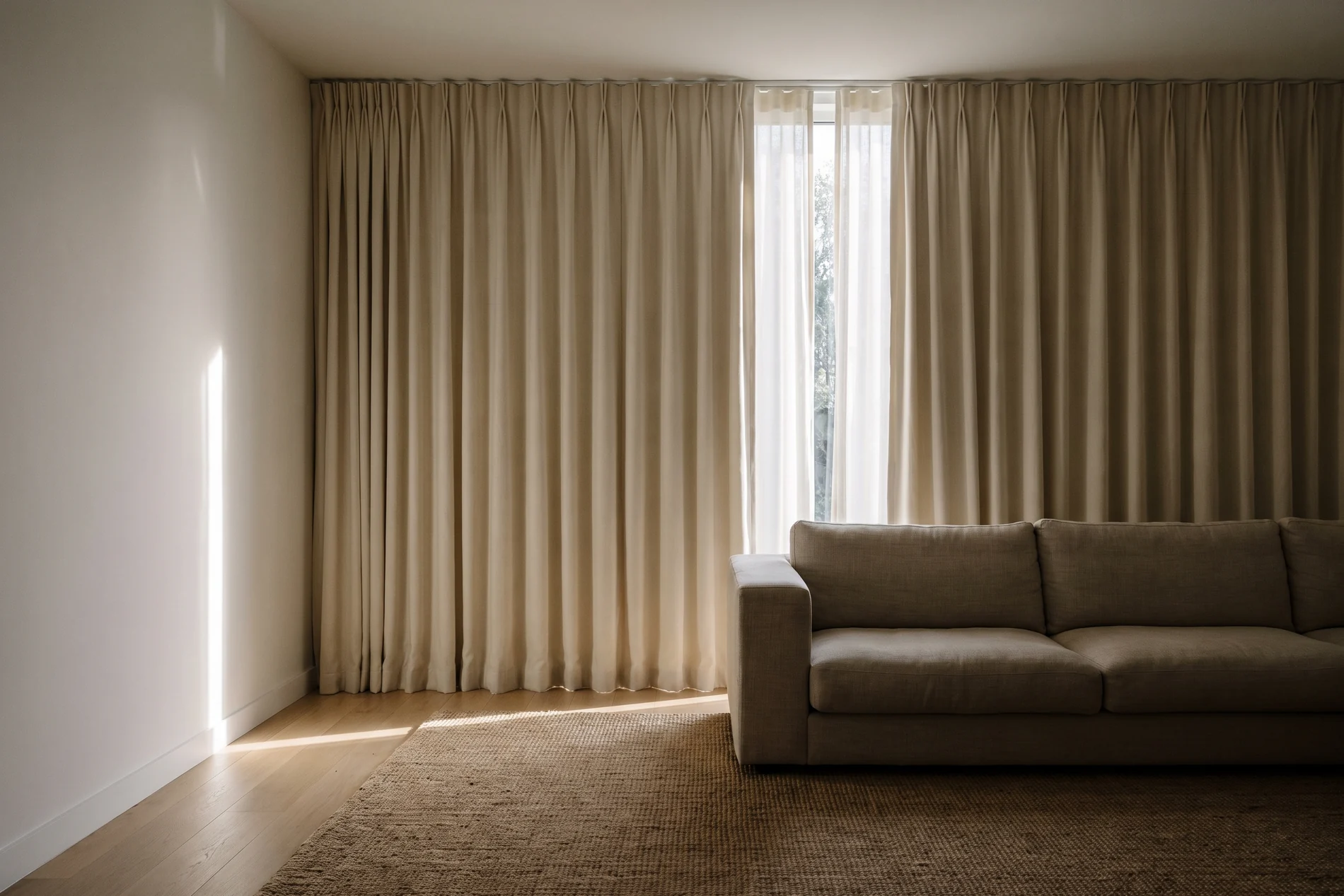
Do Acoustic Curtains Actually Work?
They do something. They do not do what the swing tag implies — and the difference depends on which noise is actually bothering you.
Acoustic curtains genuinely reduce noise — but only the kind you hear, not the kind you feel. Heavy, lined, generously sized fabric takes the edge off traffic hiss, voices and a television next door. It will not touch a truck, a bass line or a plane, because soundproof curtains are not soundproof and nothing made of fabric is.
Forced to one rule: if the window rattles, buy glazing. If it doesn't, buy fabric.
This is the question we get asked most often by people living on a main road, and it's the one where the industry behaves worst. So here's what a curtain actually does to sound, and how to work out in about ten seconds whether yours will help.
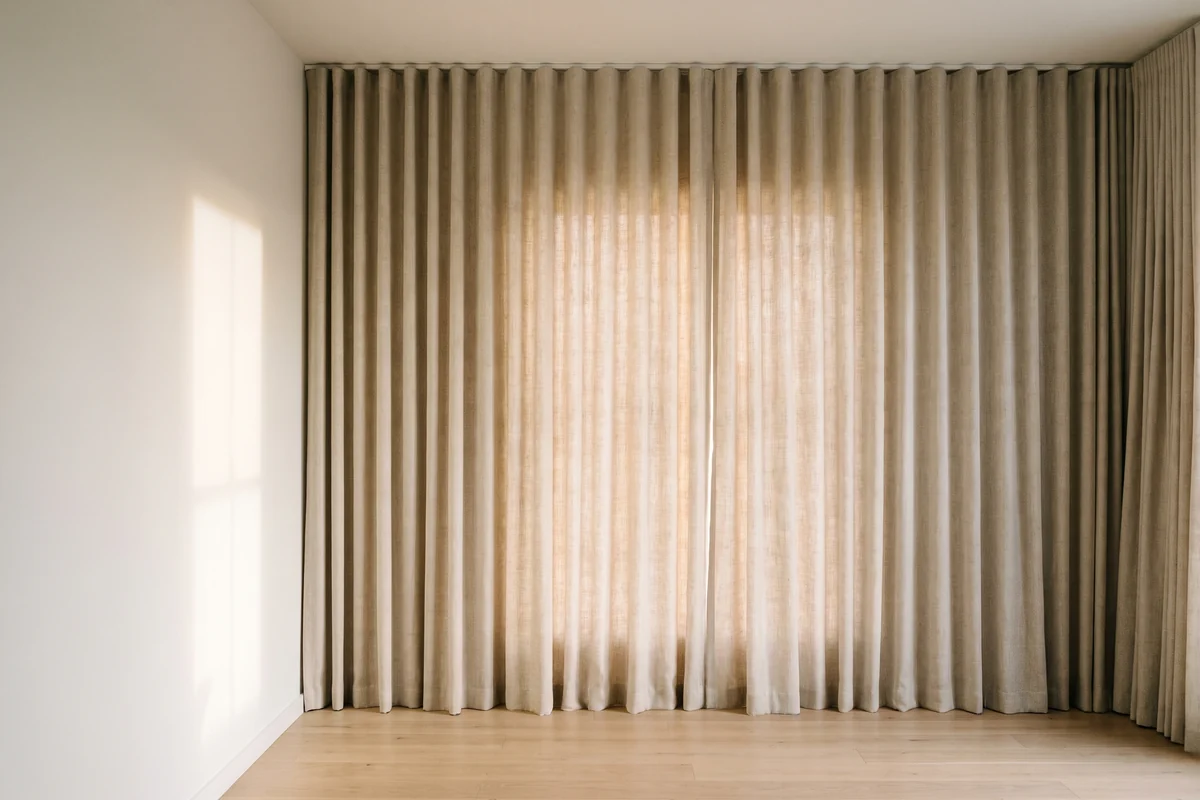
What a curtain actually does to sound
Two different jobs get muddled together here, and the confusion is where most of the disappointment comes from.
Absorbing is soaking up sound already inside the room so it stops bouncing. Soft, deep, folded fabric is genuinely good at this — it's why a room with heavy curtains, a rug and a sofa sounds calm and the same room empty sounds like a stairwell. If your complaint is echo, harshness, or hearing every footstep in an open-plan space, curtains fix it properly.
Blocking is stopping sound getting in from outside. That's a question of mass and sealing, and fabric has very little mass compared with glass or brick. A curtain will reduce what comes through. It cannot stop it, and any product promising otherwise is describing a wall.
The useful way to hold it: fabric works on the frequencies that irritate you, and does almost nothing to the ones that wake you up.
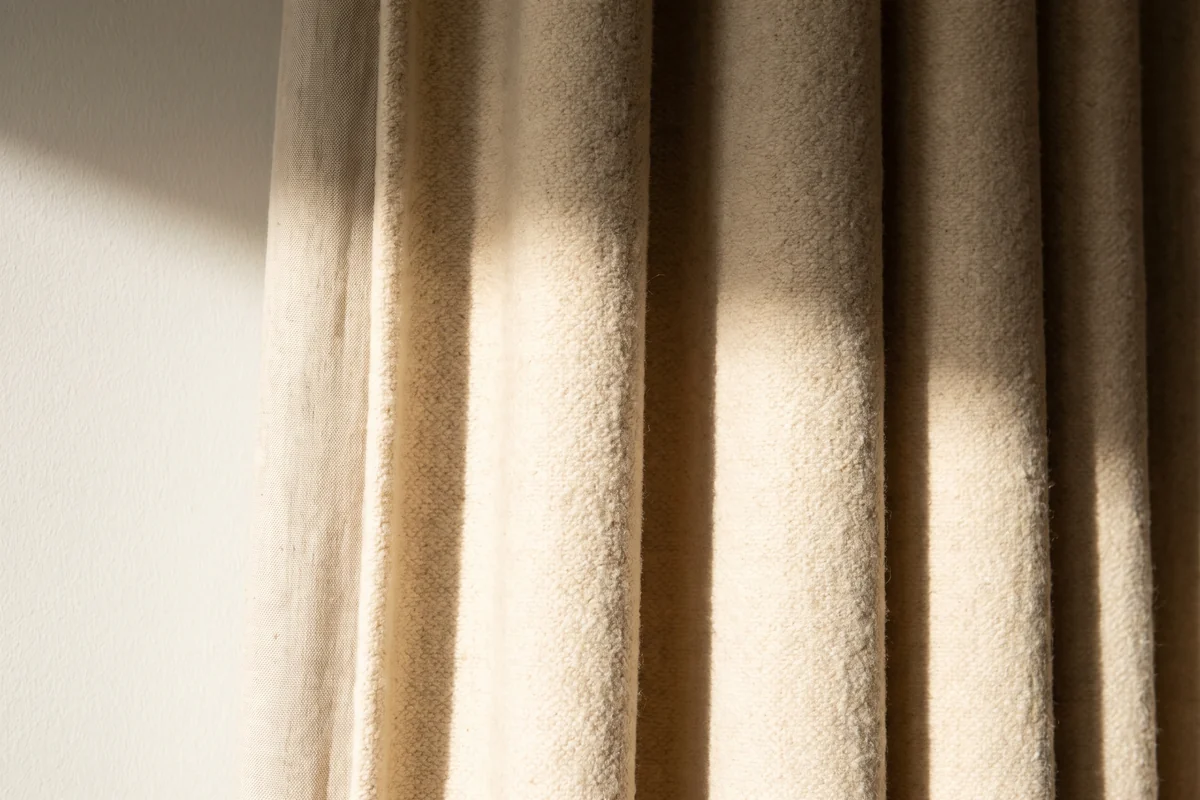
Why the decibel claims don't help — and what to check instead
Every page selling these quotes a number. Collected in one place, the published claims for the same category of product run from 5 dB to more than 25 dB — a four-fold spread for what is nominally the same thing.
Not one of them states the conditions. What was the source noise, and at what frequency? What glazing sat behind the curtain? Was it sealed at the edges or hanging free? Each of those moves the result more than the fabric choice does, so a decibel figure with no test conditions attached is a decoration, not a specification.
What is settled is how we perceive the scale, and it's worth knowing before you spend:
- 3 dB is about the smallest change most people notice at all.
- 5 dB is clearly audible — you'd say the room got quieter.
- 10 dB is perceived as roughly halving the loudness.
So a real, well-made, well-fitted curtain making a genuine difference is a modest number that feels bigger than it reads. That's the honest pitch. We'd rather make it than quote you a figure we can't stand behind.
Which noise have you actually got?
Skip the product pages and go and stand at the window that bothers you. You are sorting the noise into two piles.
- Can you feel it? The glass buzzes, a picture frame ticks against the wall, the bass arrives before the tune does. That's low-frequency energy, it moves through structure as much as air, and fabric is the wrong tool. Trucks, buses, aircraft, a neighbour's subwoofer, a heat pump.
- Can you only hear it? Tyre hiss, conversation on the footpath, a television through a wall, a mower two doors down, birds at 5am. Mid and high frequencies, carried by air, and this is exactly where soft mass earns its money.
Most homes have both, and the mix is what decides the outcome. A quiet suburban street with a barking dog is a curtain problem. A six-lane road is a glazing problem with a curtain sitting in front of it. If the picture frames move, stop shopping for curtains.
Being blunt about it: curtains will not fix single glazing on a main road, and windows are the weakest point in most Australian homes for heat and sound alike. The government's own guidance on controlling noise at home puts the building fabric first for the same reason.
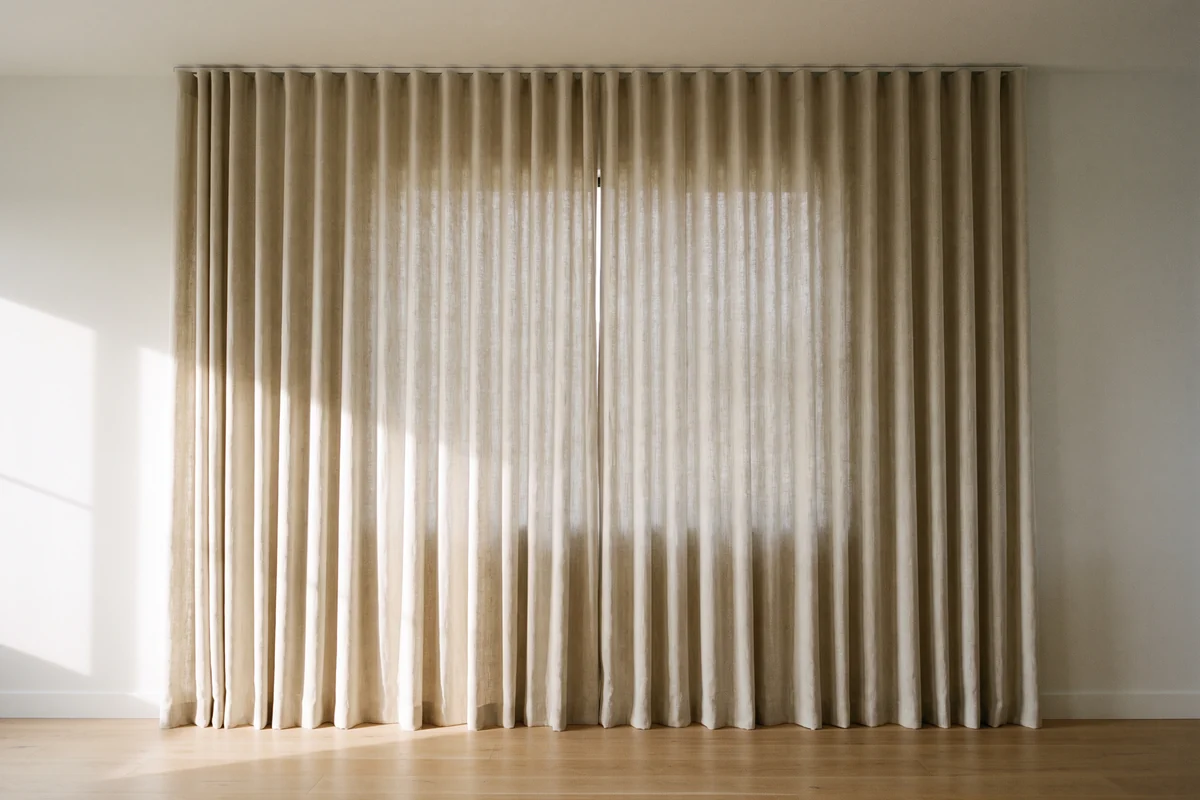
What actually makes one work
Assuming you've got the noise curtains can help with, four things matter, roughly in this order.
| Does little | Does the work | |
|---|---|---|
| Weight | Light unlined fabric | Heavy fabric, lined or interlined |
| Fullness | Flat, 1.5× the width | Deep folds, 2.5–3× the width |
| Coverage | Made to the glass | Past the opening, floor to ceiling |
| Perimeter | Open at top and sides | Pelmet, side returns to the wall |
| Layers | One curtain | Sheer plus a lined drape |
Weight is the one specification that can't be faked with a marketing name — pick the fabric up. Fullness matters more than people expect, because deep folds present far more surface area to the room than the same fabric hung flat, which is why a generous pleated heading outperforms a skimpy one made from identical cloth. And two layers beat one: a sheer behind a lined blockout curtain gives you an air gap, and air gaps are doing real acoustic work.
Not sure whether fabric will fix your street?
We'd rather tell you it won't than sell you a curtain that disappoints. We measure the opening and the aspect before recommending anything, and the quote comes back itemised within 24 to 48 hours.
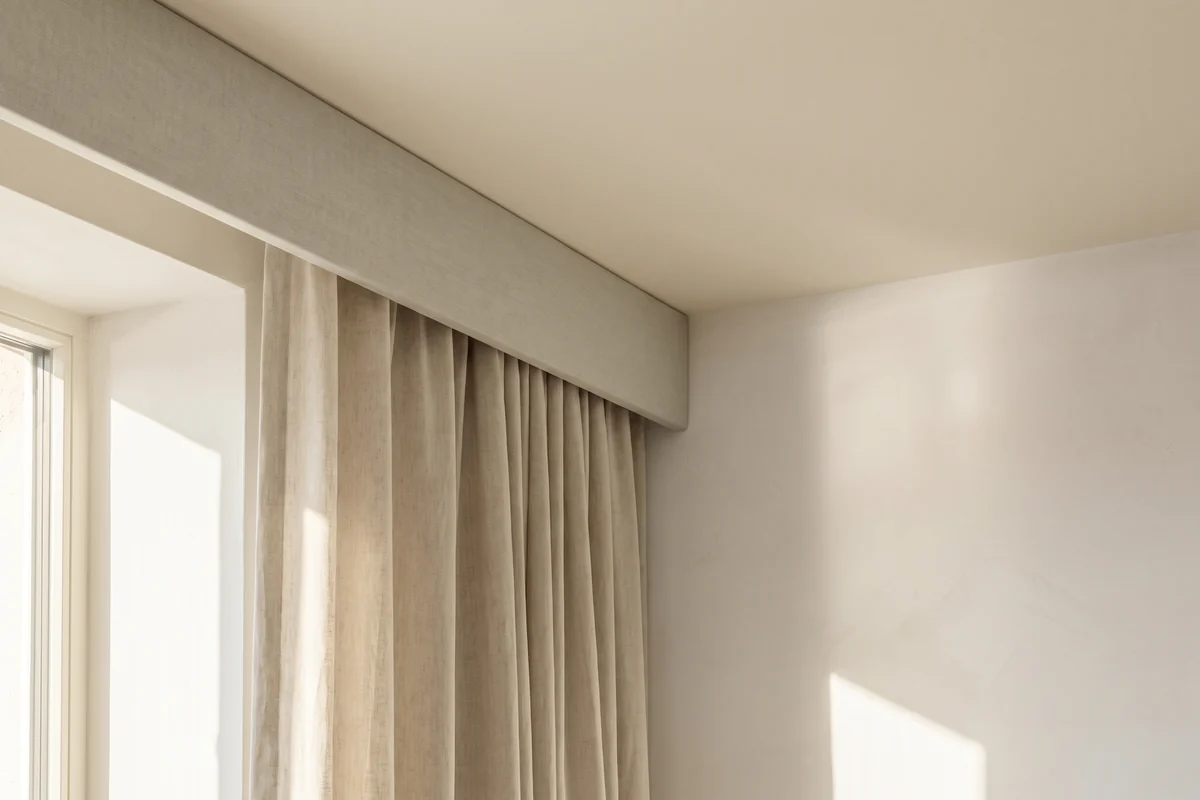
The sound gets in around the curtain, not through it
This is the part that decides whether the money was well spent, and it is almost never on the product page — because it isn't a fabric decision, it's an installation one.
Air carries sound, so any path air can take, sound takes. A curtain hung inside the window reveal leaves an open gap at the top, down both sides and along the floor. That perimeter passes far more noise than the equivalent area of fabric, so a modest curtain fitted tight will beat an expensive one fitted loose. It's the same argument as the halo of light around a badly made blockout curtain, and the physics is less forgiving.
What closes it:
- A pelmet, or a ceiling-fixed track, to shut the gap above the heading where warm air and noise both escape.
- Side returns that carry the fabric back to the wall rather than stopping at the reveal.
- Width past the opening — well beyond the glass on both sides, not made to the size of the window.
- A floor-length drop, near enough to touch, instead of finishing at the sill.
None of that is exotic and none of it costs much next to the fabric. It does have to be decided at the measure, which is the whole reason we want the dimensions and the aspect of a room before quoting rather than after.
Frequently asked questions
Do soundproof curtains actually work?
They reduce noise; they don't soundproof anything. Heavy lined fabric hung generously will noticeably soften traffic hiss, voices and television through a wall. It will not stop low-frequency noise like trucks or bass, and no fabric product will.
What is the difference between acoustic curtains and soundproof curtains?
In practice, nothing — the two names describe the same products and neither term is regulated. "Acoustic" is the more honest of the two, because "soundproof" implies a result fabric cannot deliver. Judge the curtain on its weight, lining and how it's fitted rather than on what it's called.
How many decibels do acoustic curtains reduce?
Published claims run from about 5 dB to more than 25 dB, and almost none state the test conditions, so the figures aren't comparable. For scale, 3 dB is barely noticeable, 5 dB is clearly audible and 10 dB is perceived as about half as loud. Treat any number without stated conditions as marketing.
Will curtains block traffic noise from a main road?
They'll take the edge off the tyre hiss, which is the part of traffic noise that sits in the mid and high frequencies. The heavy end — trucks, buses, engine braking — is low-frequency and will come straight through. On a genuinely busy road, glazing is the fix and curtains are the improvement you make afterwards.
Do acoustic curtains help with a noisy neighbour's TV?
Often yes, if the sound is arriving through a window rather than the party wall. Dialogue sits in exactly the frequency range fabric handles well. If it's coming through the wall itself, a curtain on the window won't be in the sound's path at all.
Are thicker curtains always better for noise?
Heavier is generally better, but only up to the point where fit takes over. A mid-weight curtain that runs floor to ceiling, extends well past the opening and has a pelmet will beat a very heavy one hung inside the reveal with gaps all round. Mass first, then fit — and fit is what most people get wrong.
Do I need double glazing as well?
If you can feel the noise as much as hear it, yes — that's the structural fix and curtains are cosmetic against it. If you can only hear it, curtains alone will probably be enough. Doing both works well, because the curtain also handles the echo inside the room that glazing does nothing about.
Do acoustic curtains help you sleep?
Usually, though often for a reason people don't expect: the same heavy lined curtain that dampens sound also blocks light, and light is frequently the bigger disruptor. If early sun and street noise both wake you, one well-fitted lined curtain addresses both at once.
Sources Australian Government Your Home — Glazing · ACCC blinds and window fittings mandatory standard · Sleep Health Foundation
Back to the journalKeep reading
Related from the journal
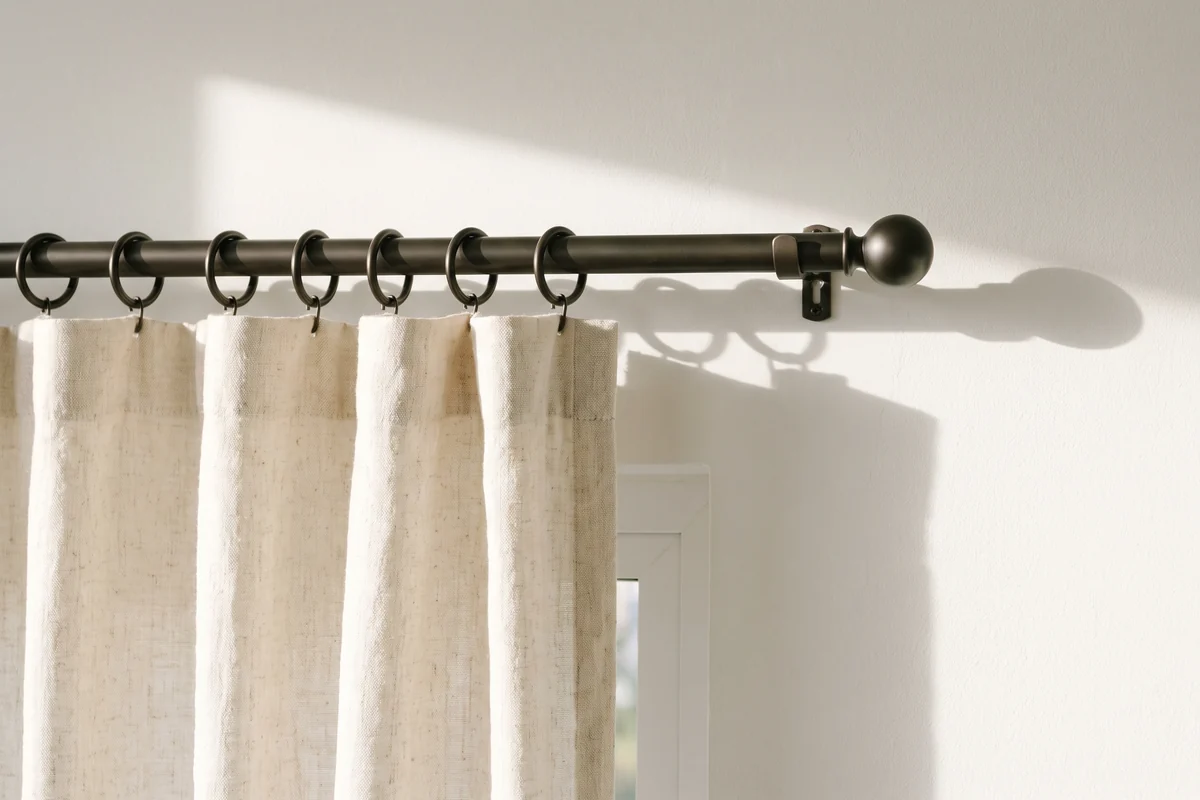 Guides
Curtain rods vs tracks: which should you choose?
A pelmet and a ceiling-fixed track are half of what makes a curtain work acoustically. Here is what each hardware system carries, and the fixing question behind it.
Read more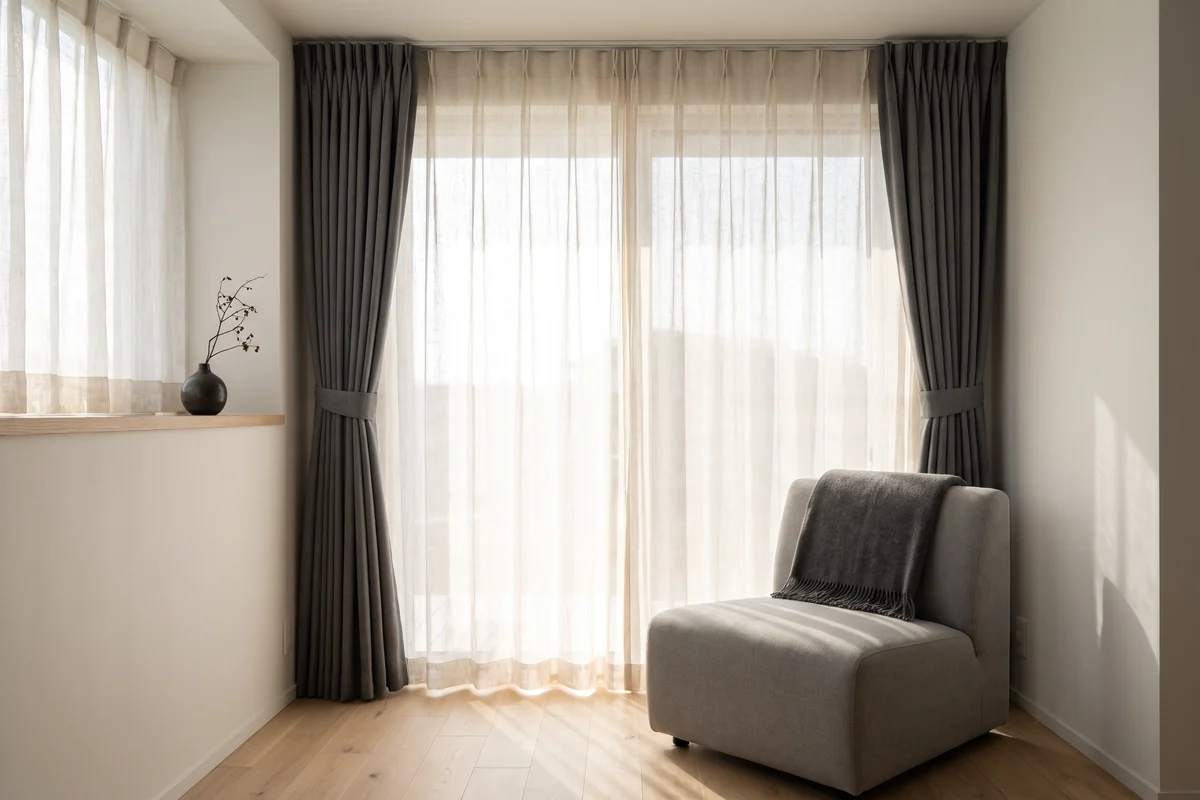 Styling
Sheer vs blockout curtains: which should you choose?
Two layers beat one for noise, and they beat one for light and heat too. How sheers and blockouts divide the work across a single window.
Read more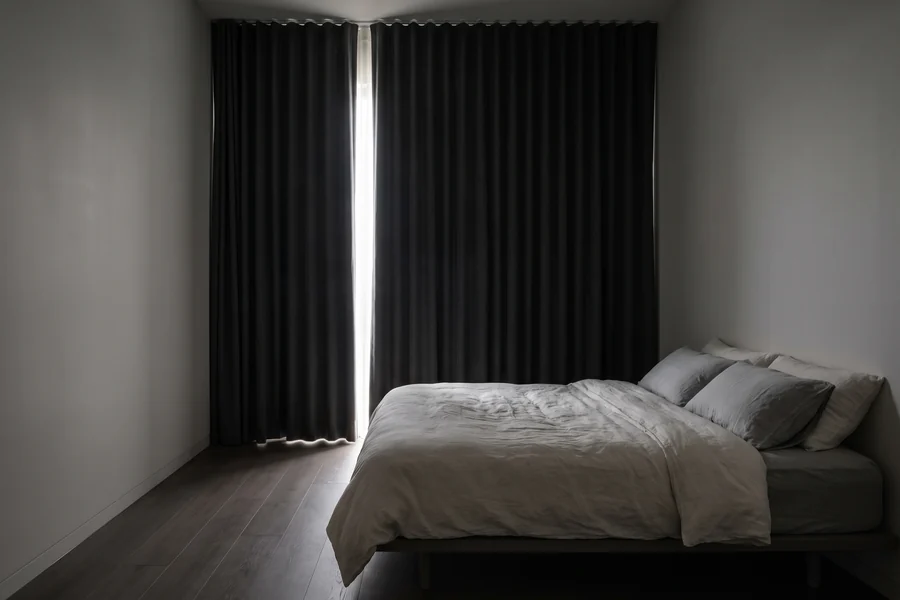 Curtains
Blockout curtains, Brisbane & Gold Coast
The lined, interlined and full-height options that do the acoustic work, and how we measure so the fabric actually covers the opening.
Read more