

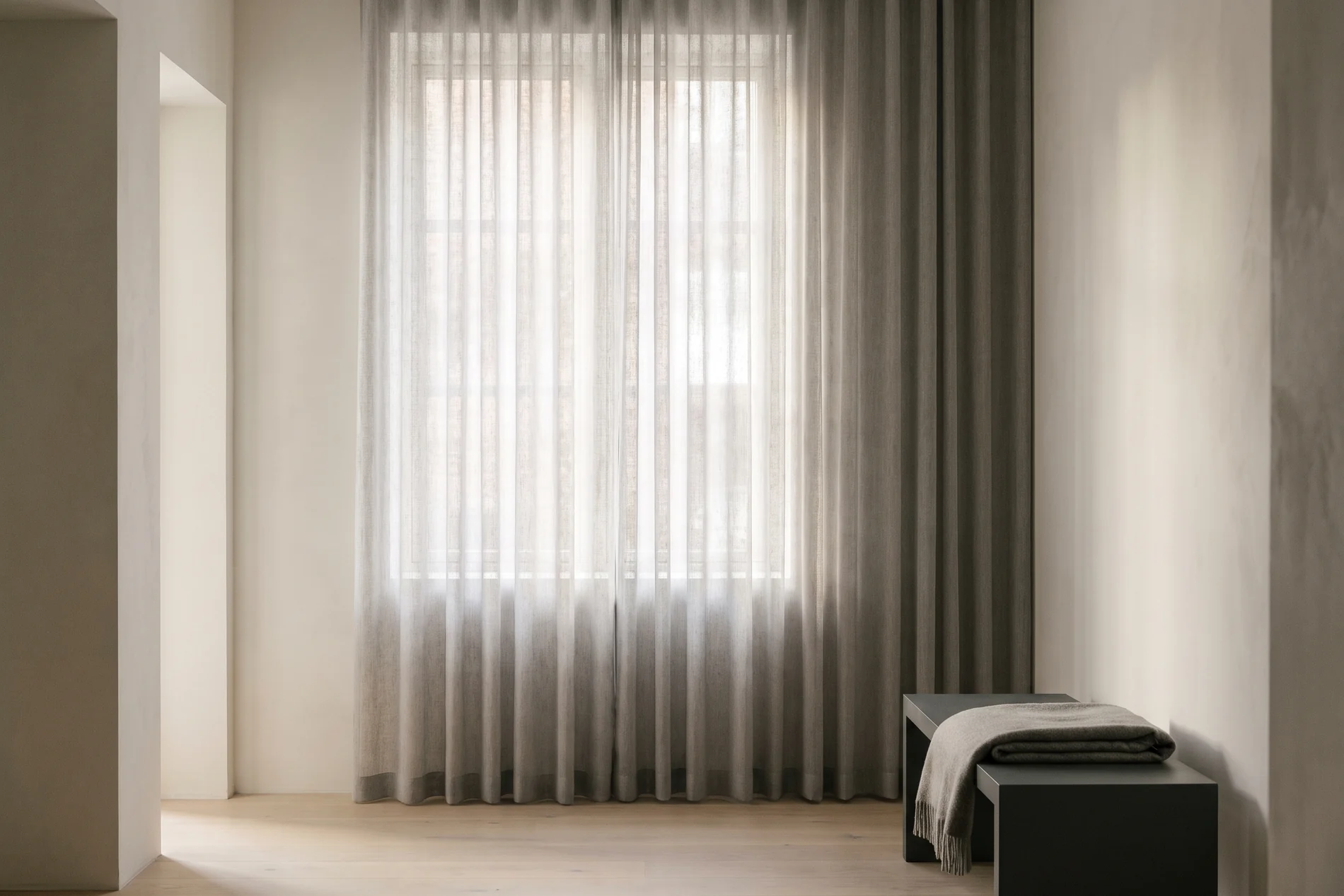
Sheer curtain fabric
Voile, linen and the blends between them do genuinely different things to light. Here is how to tell them apart, and the factor that matters more than any of it.
Sheer curtain fabric comes down to three families: voile, a smooth high-thread-count weave; linen and linen-look, textured and slubbed; and open weaves, where you can see the structure. Voile diffuses light evenly, linen scatters it, open weaves keep more view.
Forced to give one rule: get the fullness right before you agonise over the fabric. It changes the result more.
Most guides to this are written by fabric retailers listing what they stock. Useful up to a point, but they skip the two things that decide whether you like the curtain in five years — how much fabric is actually in it, and how the fibre copes with Australian light.
The three families
Every sheer on a sample board is a variation on one of these.
- Voile. Tightly woven, smooth, fairly high thread count. It diffuses light into an even glow rather than letting you see the shapes behind it, and it hangs with a soft crispness that holds a fold. This is the default and, for most rooms, the right one.
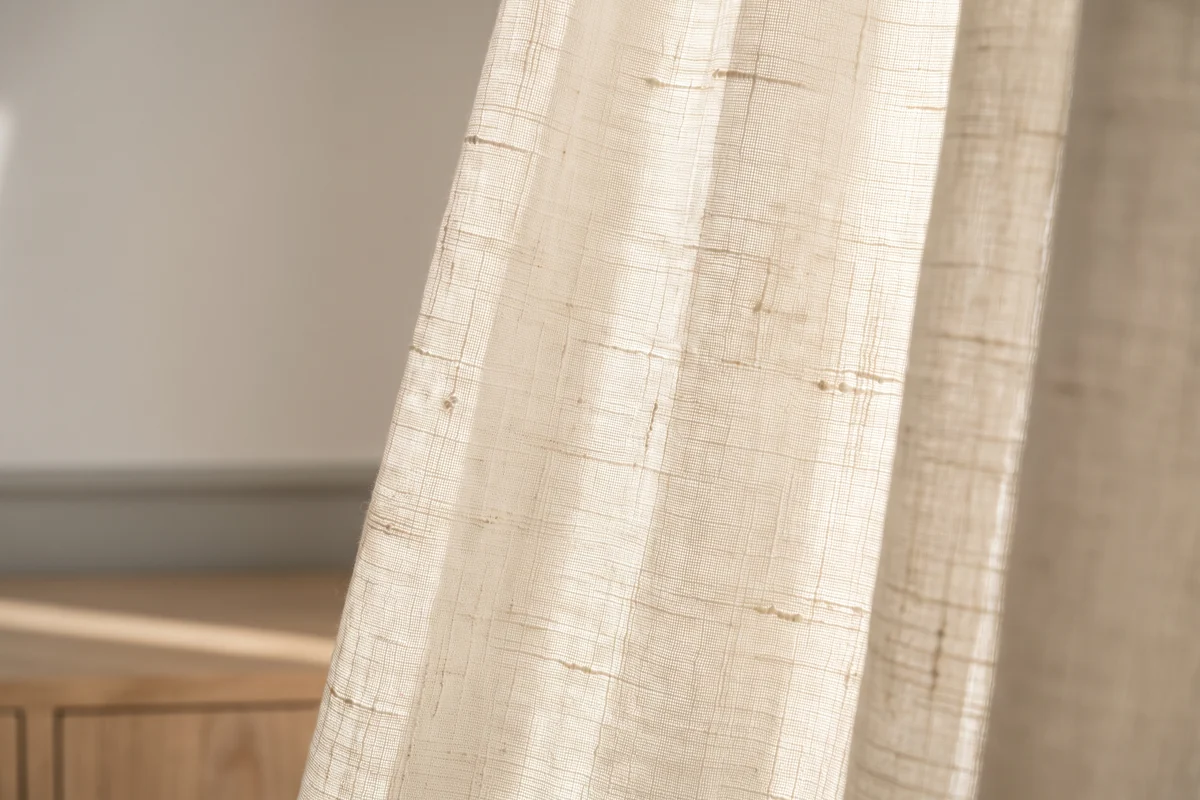
- Linen and linen-look. Slubbed and textured, with visible irregularity in the yarn. Light passes unevenly, which is the appeal — it reads as a natural material rather than a manufactured one. Heavier drape, more casual, and it gives a little more daytime privacy than a comparable voile because the texture breaks up the sightline.
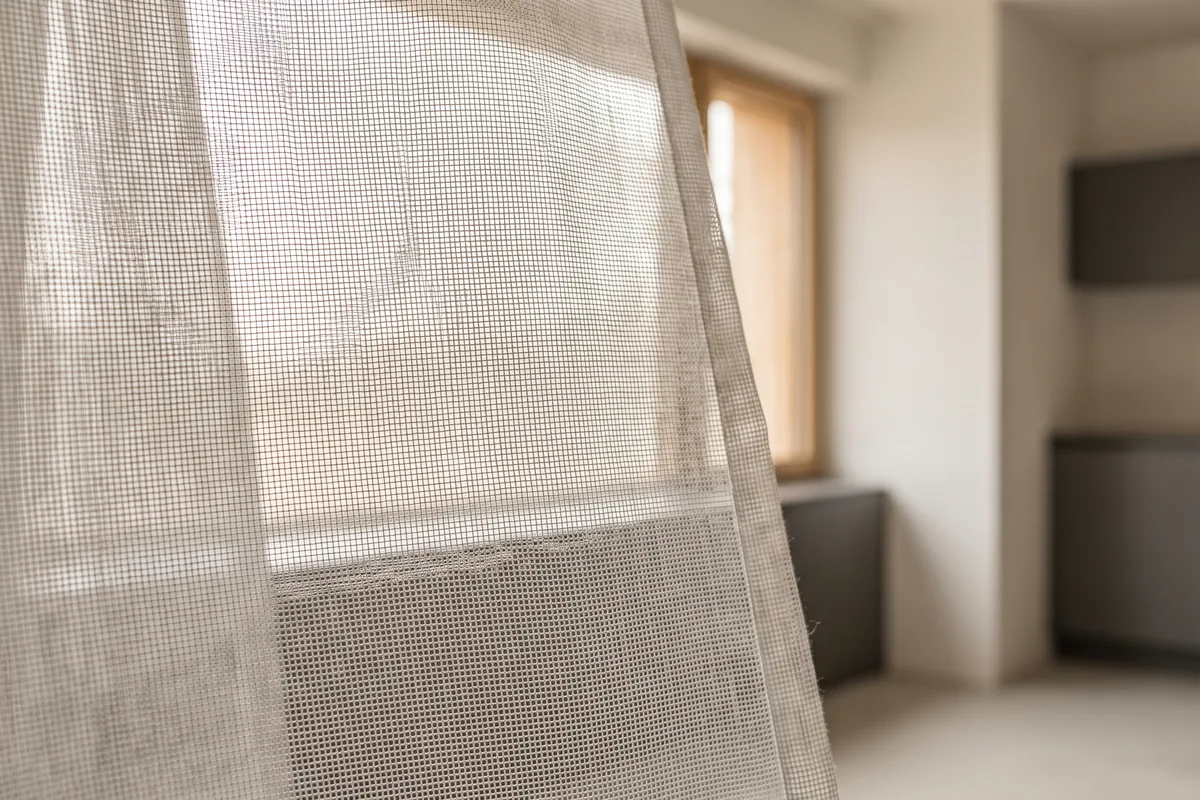
- Open weaves. Where the structure of the weave is the look, with visible gaps between yarns. Most view retained, least privacy, and the most contemporary of the three. Closer in behaviour to a sunscreen blind fabric than to a traditional curtain.
Within each family the fibre is a separate question, and that is where Australian conditions start to matter.
Fibre, and what our sun does to it
This is the part the overseas guides underweight, because their light is not our light.
A sheer curtain is, by definition, the layer taking the most direct sun in the room — there is nothing in front of it, and it spends every daylight hour in the beam. Australian UV levels are high for a large part of the year, and sustained UV weakens fibres and shifts colour.
- Polyester voile. The workhorse. Holds colour, resists UV degradation well, does not shrink, washes without drama. If someone tells you polyester is the cheap option, the honest answer is that it is also the durable one in this climate.
- Linen-look polyester. The texture of linen with the behaviour of polyester. This is what most people actually want when they say they want linen sheers, and it is the fabric we specify most often.
- Natural linen and cotton. Genuinely lovely, more expensive, and the more demanding choice. They can weaken and yellow under sustained sun, and they move with humidity — a natural-fibre sheer in a coastal house will not hang identically in February and July.
- Metallised sheers. Worth knowing they exist. Verosol SilverScreen, which we supply as a curtain fabric, carries a fine metallised backing that reflects solar radiation rather than absorbing it. We are deliberately not quoting a performance figure — the mechanism is the point, and the manufacturer's numbers are theirs, not ours.
| Voile | Linen-look | Open weave | Natural linen | |
|---|---|---|---|---|
| Light | Even glow | Scattered | Most passes | Scattered |
| Daytime privacy | Good | Best | Least | Best |
| View retained | Little | Little | Most | Little |
| Holds up to UV | Well | Well | Depends on fibre | Least |
| Washing | Easy | Easy | Depends | Care needed |
Fullness beats fabric
If you take one thing from this page, take this. The most common reason a sheer looks disappointing is not the fabric — it is that there is not enough of it.
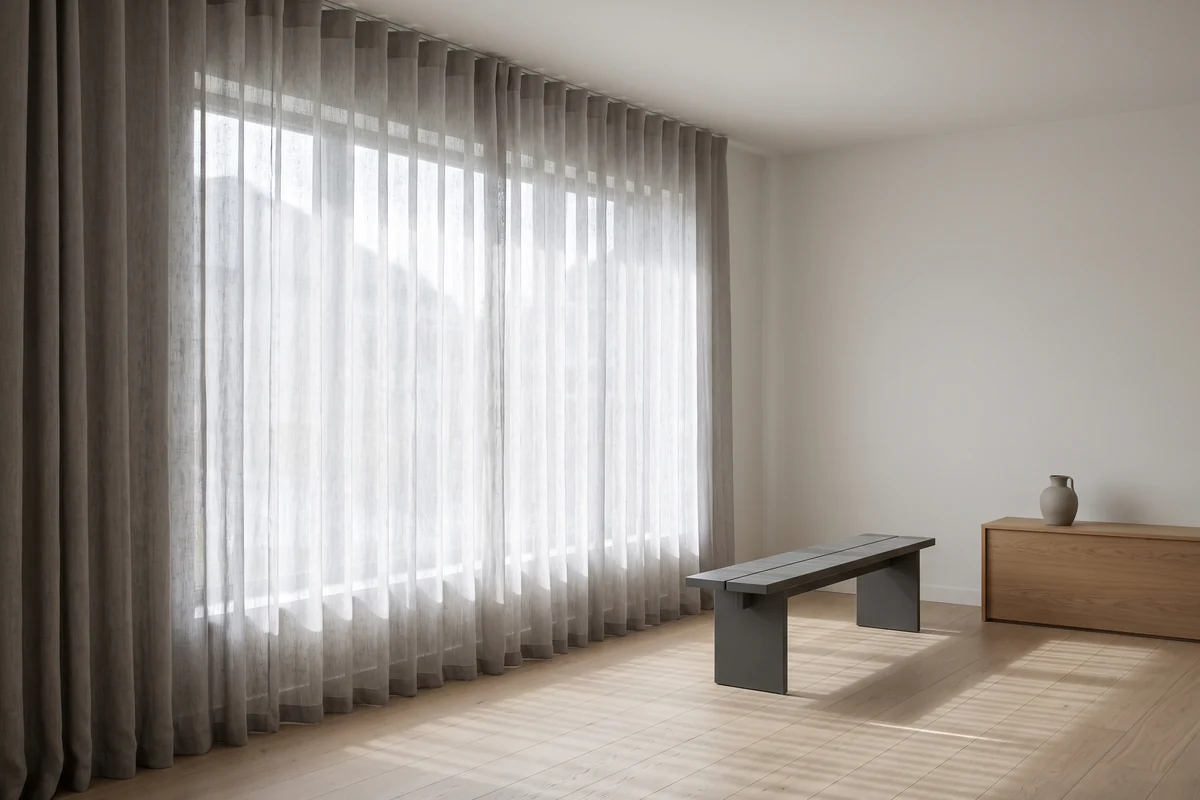
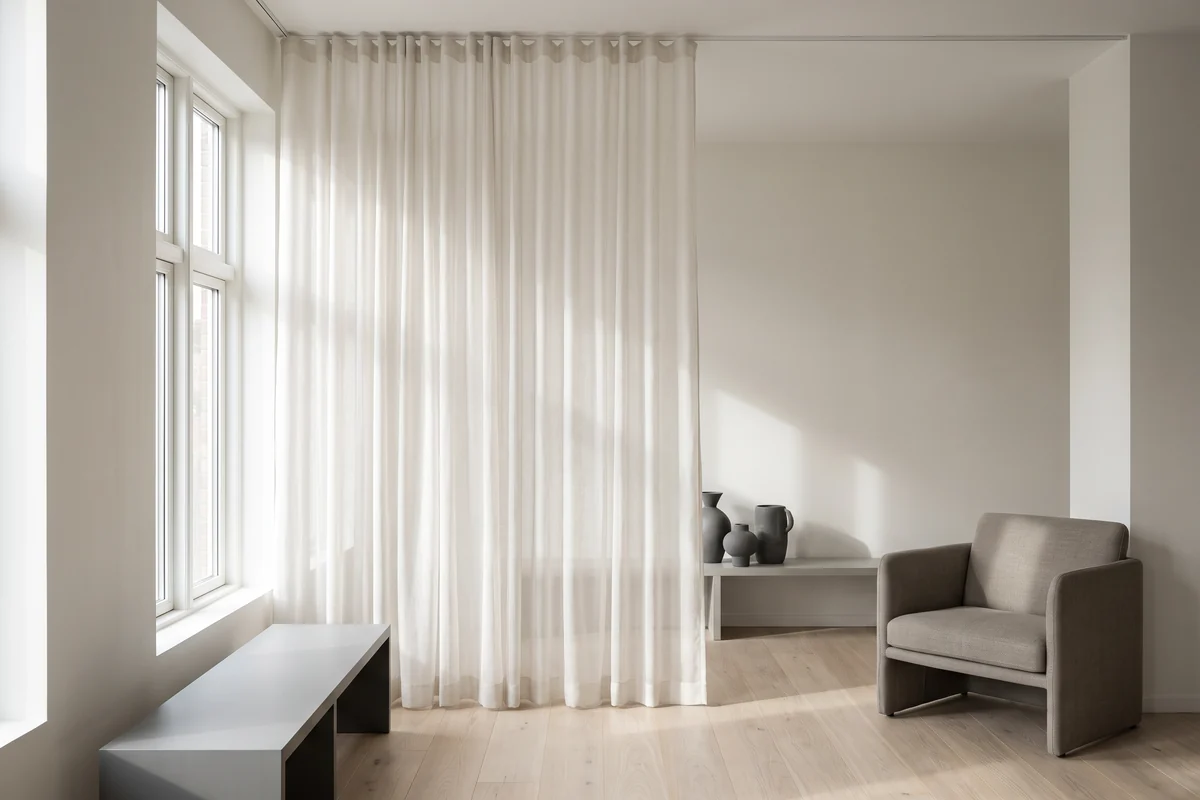
A sheer hung close to flat reads as a panel of fabric stretched across a window. The same fabric, gathered generously, reads as a curtain: deep even folds, a soft vertical rhythm, and light that changes as it passes through the thicker and thinner parts of the gather. That effect is entirely a function of how much wider than the opening the fabric is cut.
The numbers we work to: a wave fold runs 2.3 to 1, and a box pleat, reverse pleat, gathered or knife pleat heading runs 1.8 to 1. That ratio is flat fabric width against finished track width, so a 3-metre track in wave fold takes 6.9 metres of sheer across it, and the same track in a 1.8:1 heading takes 5.4. If a quote you are comparing does not state a ratio, that is the number to ask for — it is the difference between the two quotes far more often than the fabric is.
It is also the cheapest decision in the job to get right and the most expensive to fix, because fixing it means new curtains. Sheer fabric is generally the least costly component of a curtain, so buying more of it is a small increase for a large difference. Where people economise instead is exactly where they should not.
The heading works with the fullness rather than against it. An S-fold gives one continuous wave and is the most common choice for sheers now; a pinch or reverse pleat gives a more structured, traditional fold. All of ours run on a runnered track — no rods, no eyelets — which is what lets the folds stay even along the whole run.
Want to see how a fabric actually hangs?
Samples come to you, in the room and against your own light. A sheer looks completely different on a sample board and at a window.
The question nobody asks: which way the fabric runs
Curtain fabric comes off a roll at a fixed width, and that width decides whether your curtain has a horizontal seam across it.
On a standard-width fabric, a curtain taller than the roll width needs pieces joined, and on a sheer that join is visible because light passes straight through it. The way around it is fabric woven wide enough to be turned on its side — railroaded — so the width of the roll becomes the drop of the curtain and a full-height sheer has no horizontal seam anywhere in it.
This matters most on the openings people care about most: full-height glass, stairwell windows, anything from ceiling to floor. It is worth asking about specifically, because it is decided when the fabric is chosen and cannot be changed afterwards. We check the drop against the fabric width before we recommend anything for a tall opening.
What a sheer will not do
Two limits, both of which get people into trouble.
No night privacy, at any weight. A sheer works on the difference in brightness between inside and outside. During the day that difference protects you. After dark, with lamps on, it reverses exactly — and a heavier sheer does not fix it, it just makes the room dimmer while you are still visible. If the window faces a street or a neighbour, plan the second layer from the start: a blockout curtain on the same track, or a blind behind. How that pairing works is covered in layering blinds with sheer curtains.
Very little thermal benefit. A sheer is one thin layer of fabric with air moving freely around it, so it is not doing meaningful insulation. It does cut glare and it does reduce direct solar gain on the floor and furniture, which is worth having. But if the room is genuinely hot, the intervention that works is shading the outside of the glass, not a heavier sheer inside it.
Neither of those is an argument against sheers. They are an argument for knowing what you are buying — which is diffused light, daytime privacy and a window that looks finished, and those are good enough reasons on their own.
Frequently asked questions
What is the best fabric for sheer curtains?
A polyester voile or a linen-look polyester, for most Australian houses. Both hold colour and shape under strong sun, both drape well, and neither shrinks when washed. Natural linen and cotton look beautiful and are the more demanding choice in our light.
What is the difference between voile and sheer?
Voile is a type of sheer, not an alternative to one. Sheer describes any fabric you can see through; voile is a specific smooth, high-thread-count weave. Linen-look sheers, open weaves and organzas are all sheers too, and they behave differently to voile.
Do sheer curtains give privacy at night?
No. A sheer works on the light difference between inside and out, so once your lamps are on it reverses and the room is more visible than the street. Anything that needs night privacy needs a second layer — a blockout curtain or a blind behind the sheer.
Will sheer curtains fade in the Australian sun?
Some will. Polyester voiles and linen-look polyesters hold colour well; natural cotton and linen are more prone to weakening and yellowing under sustained UV. Australian UV levels are high enough for long enough that this is a durability question, not a theoretical one.
How much fullness do sheer curtains need?
We make wave fold at 2.3 to 1, and box, reverse, gathered and knife pleat headings at 1.8 to 1 — that is flat fabric width against finished track width, so a 3-metre track in wave fold carries 6.9 metres of sheer. Fullness does more for how a sheer looks than the fabric you choose, and it is the cheapest thing to get right.
Can you wash sheer curtains?
Usually, gently and cold, but check before you assume. Polyester is forgiving; natural linen can shrink and cotton can too. The bigger risk is hanging them wet or in the sun to dry, which is how a sheer gets a permanent distortion at the hem. The full method is in how to clean curtains.
Sources Australian Government Your Home — Glazing · ACCC blinds and window fittings mandatory standard · Sleep Health Foundation
Back to the journalKeep reading
Related from the journal
 Guides
Sheer curtains Brisbane & Gold Coast
A sheer earns its place in the hours you are actually in the room: it takes the hard edge off the daylight, keeps the outlook and gives you privacy from the street without shutting the…
Read more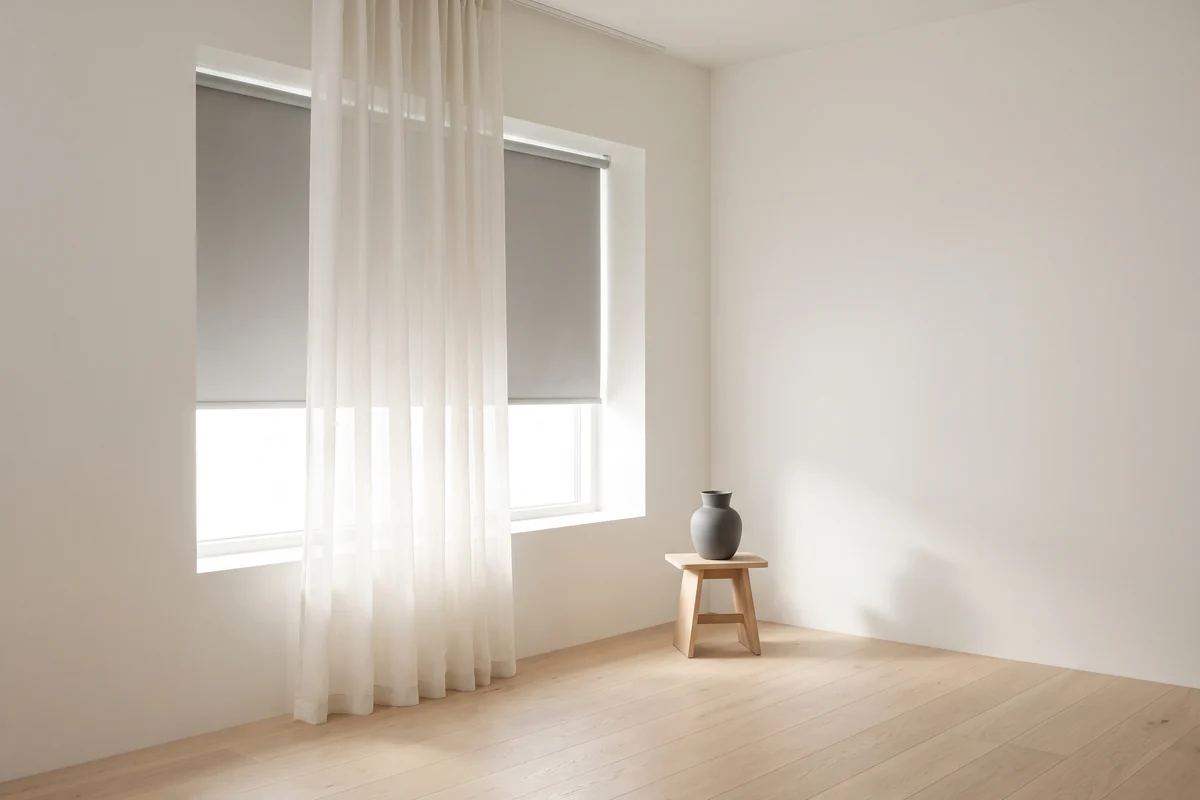 Guides
Blinds with sheer curtains
Layering a sheer over a blind is the most useful thing you can do to a window. Here is what actually goes where, and why the rod advice everywhere else does not apply.
Read more Guides
Sheer vs Blockout Curtains
Which one your room actually needs — and why the honest answer, most of the time, is both.
Read more