


How to Clean Curtains Without Shrinking Them
Vacuum often, wash rarely, and know what a hem can and cannot give back.
How to clean curtains: vacuum them on the rail with a soft brush head, top to bottom, and spot-clean marks with a barely damp cloth. Wash only what is unlined and only cold. Lined and blockout curtains go to a dry cleaner, because the face fabric and the lining shrink at different rates and the curtain comes back puckered.
The thing you are risking is not the fabric. It is the hem.
Every guide to this treats washing as the default and vacuuming as the warm-up. For a made-to-measure curtain it is the other way round, and the reason is arithmetic rather than fussiness.
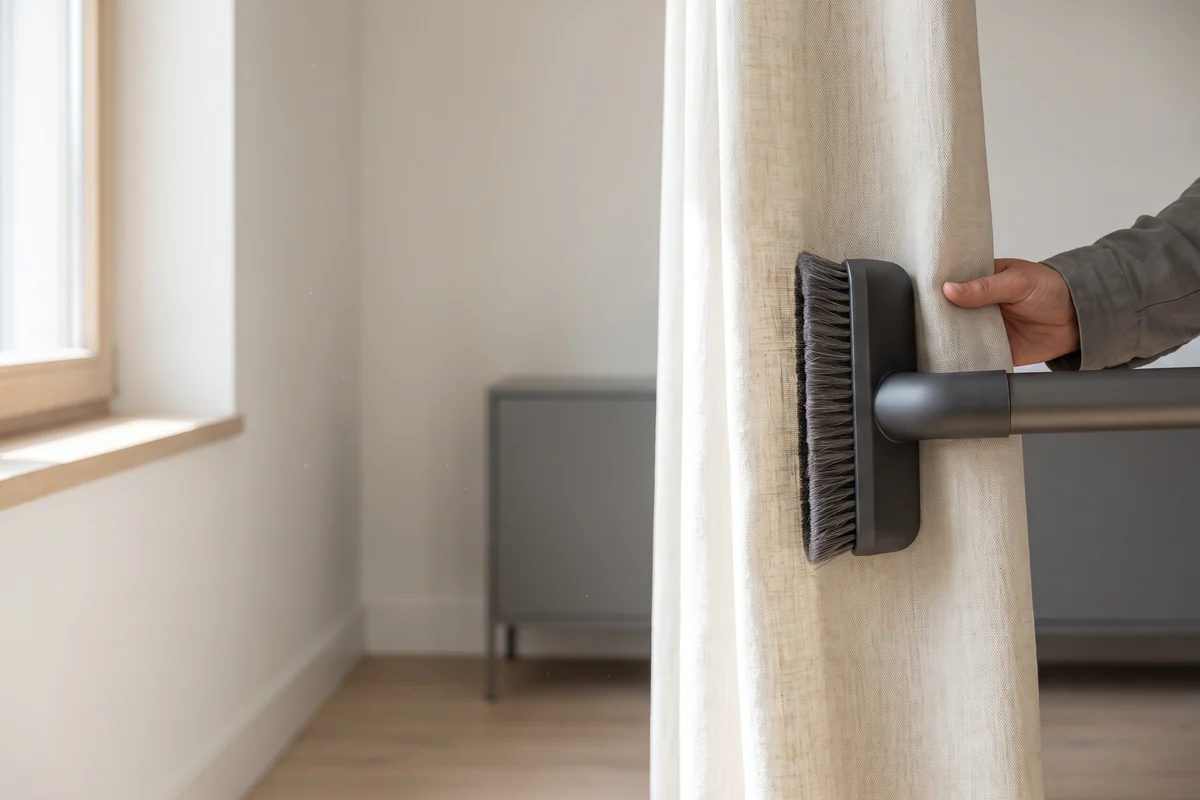
Vacuum them, and most of the time stop there
Run the vacuum’s upholstery brush down the curtain on the rail, working top to bottom, holding the fabric flat with your other hand so it does not get sucked into the head. Do the leading edge and the back of the hem, which is where the dust actually collects. Once a month is plenty.
That is not a lesser version of cleaning them. Dust is abrasive, and a curtain that gets dusted rarely needs anything more.
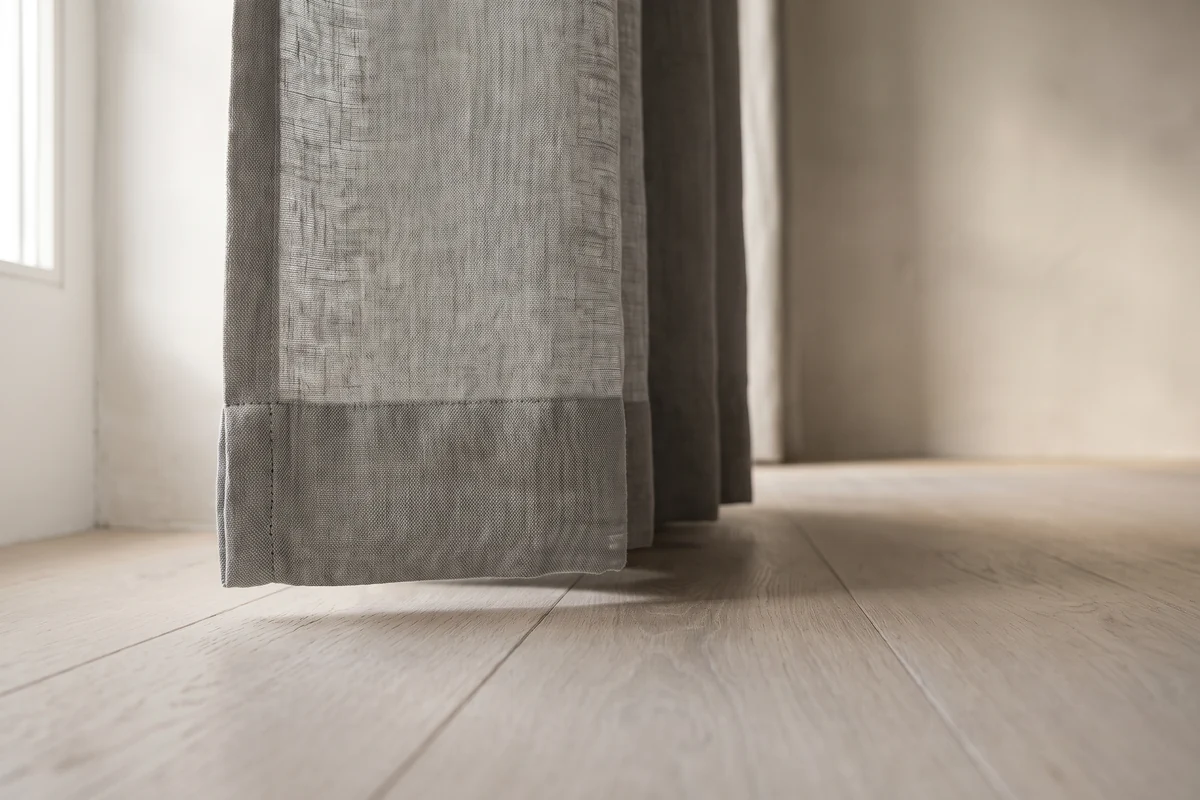
Washing a curtain is a decision about the hem
A ready-made curtain is cut to a standard drop and hemmed with room to spare. A made-to-measure curtain is cut to your window. If the fabric moves, the hem is where you find out, and the fix is re-hemming rather than a rewash.
Fabric moves here more than most places. Brisbane and the Gold Coast sit under mean 9am humidity at 65% or higher for most of the year, and natural fibres take up moisture and give it back with the weather. A wash accelerates what the climate already does slowly.
| Vacuum | Machine wash | Dry clean | |
|---|---|---|---|
| Unlined cotton or polyester | Monthly | Cold, gentle | Optional |
| Sheers | Monthly | Cold, in a bag | Optional |
| Lined or blockout | Monthly | No | Yes |
| Heavy decorative or textured | Monthly | No | Yes |
We do not offer interlining, so that column is not on the table — but if yours are interlined, treat them as dry-clean-only and do not experiment.

Sheers are the exception, and only just
A sheer is usually the one curtain in the house that genuinely tolerates a machine. Cold water, gentle cycle, a mesh bag, mild detergent, and skip the spin if you can. Then hang it damp and let its own weight pull the creases out — which works far better than an iron and cannot scorch the weave.
What kills a sheer is heat. Tumble drying shrinks it, ironing a synthetic sheer glazes it, and neither is reversible. Which sheer fabric you have decides how much margin you are working with.
Washed them and now they are short?
A hem that has pulled up is a re-hem, not a rewash, and it is worth knowing whether the fabric has more to give before anyone unpicks anything. We will look at them and tell you honestly if they are not worth saving.
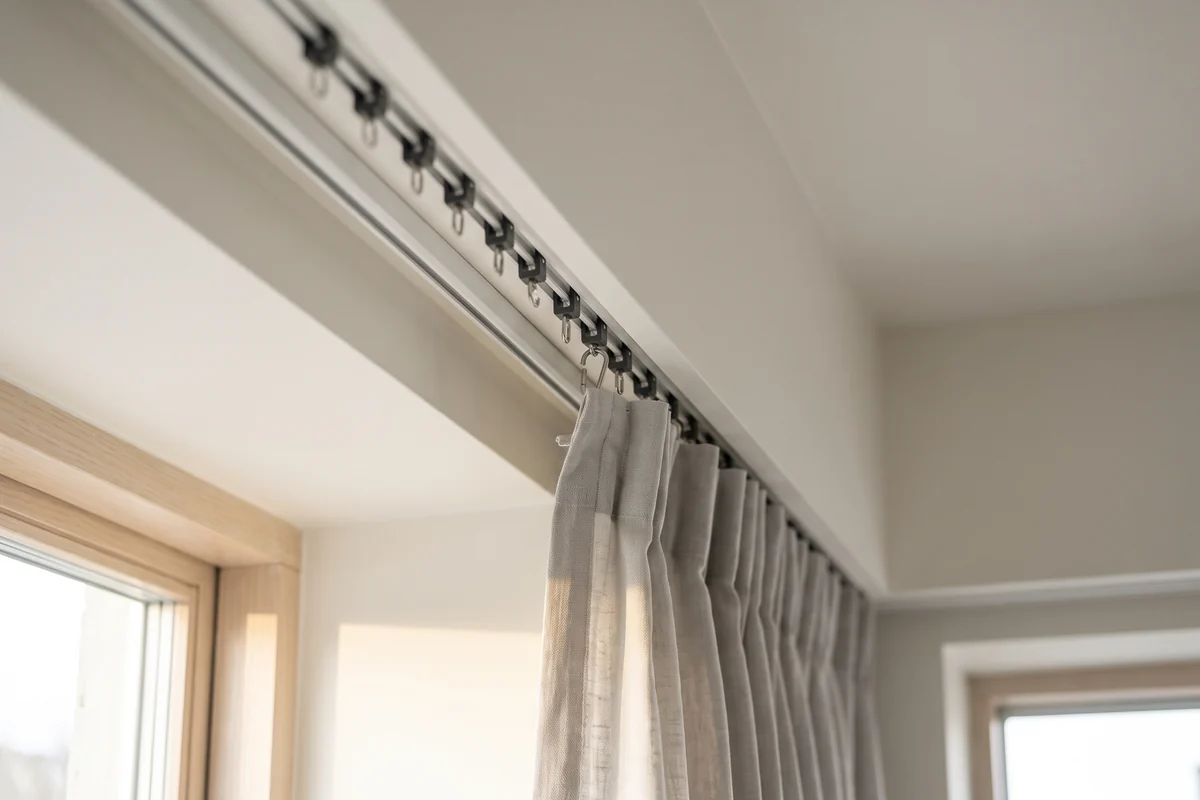
Getting them off a runnered track
Most instructions tell you to unhook the curtain from rings on a pole. We do not fit rods or eyelets, so on our work the curtain hangs from runners in a fully runnered track, and it comes off differently.
- Draw the curtain fully closed so the runners spread out along the track.
- Unhook from the leading edge back. Each hook lifts out of its runner; the runner stays in the track.
- Leave the runners alone. They are easier to lose than to replace, and a track one runner short hangs unevenly.
- Count the hooks. The return end and the overlap arm usually take a different hook to the rest.
Work along the track rather than yanking. Your Home is blunt about east and west glass, and a curtain that has taken four summers on a western window is weaker at the leading edge than it looks.
Frequently asked questions
Can you machine wash curtains?
Some of them. An unlined cotton or polyester curtain will usually survive a cold, gentle cycle. A lined or blockout curtain will not, because the face fabric and the lining do not move at the same rate and the curtain comes back puckered along the seams.
Do curtains shrink when you wash them?
Natural fibres do, and blends can. It matters more on a made-to-measure curtain than a ready-made one, because the drop was cut to your window rather than to a standard length, and putting a short hem right costs more than the clean did.
How do you clean curtains without taking them down?
Vacuum them on the rail with an upholstery brush, top to bottom, with the curtain held flat by your other hand. Spot-clean marks with a barely damp cloth. For most curtains in most houses that is the whole job.
Should curtains be dry cleaned?
Lined, blockout and heavy decorative curtains, yes — it is the only method that cleans the face and the lining without either one shrinking away from the other. Take them to a cleaner who handles curtains rather than posting them off, and say what the lining is.
How often should you clean curtains?
Vacuum monthly. Beyond that, clean them when they need it rather than on a schedule — a curtain in a closed-up bedroom can go years, and one above a kitchen bench cannot.
How do you wash sheer curtains?
Cold water, gentle cycle, mesh laundry bag, mild detergent and no spin if the machine will let you skip it. Hang them damp and let their own weight pull the creases out. Never tumble dry a sheer — the heat is what shrinks it.
Sources Australian Government Your Home — Glazing · ACCC blinds and window fittings mandatory standard · Sleep Health Foundation
Back to the journalKeep reading
Related from the journal
 Curtains
Curtains, made to measure
Sheer, blockout and decorative, on fully runnered track. What decides how a curtain hangs, and what it costs to get wrong.
Read more Fabrics
Sheer curtain fabric
Voile, linen and the blends between them. What each does to light, and which ones survive an Australian summer.
Read more Guides
How to clean blinds
Dust first, wet second. The method for every blind in the house, and the mistake that ruins each one.
Read more