

Plantation shutters on doors
A door is not a window. It swings, it slams, and it has a handle in the way — which is why the shutter that works on the window beside it often will not fit.
Plantation shutters on doors work, and on a sliding door they often work better than anything else. Two things decide it: the handle and the swing. The panel has to clear the door hardware, and it has to have somewhere to go when the door opens.
Forced to pick one configuration: a bypass track on a sliding door, hinged panels on a French door.
A door is not a window with a handle on it. It moves, it gets slammed, and somebody walks through it forty times a day, so the shutter that suits the window beside it does not simply scale up. Most questions about what a plantation shutter actually is become door questions within a minute.
Which doors take a shutter, and which fight back
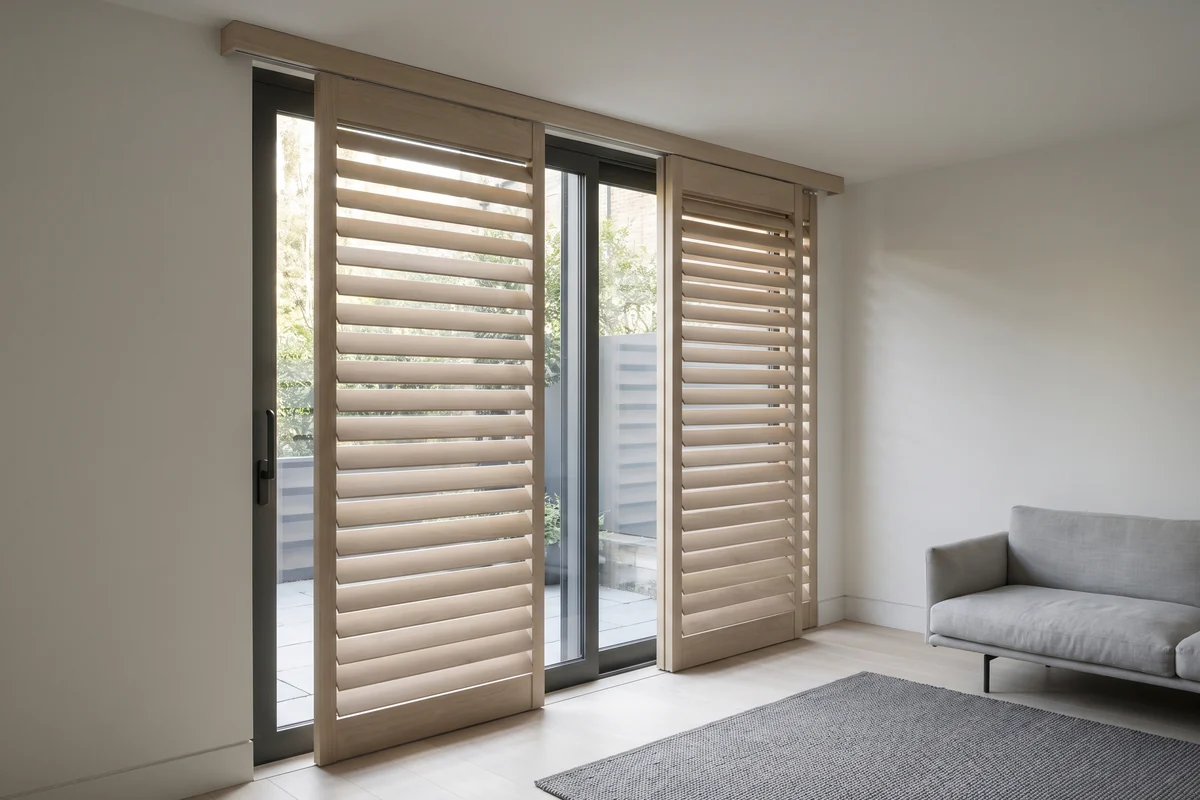
- Sliding and stacker doors. The best case. The door does not swing, so the shutter runs on its own track in front of the glass.
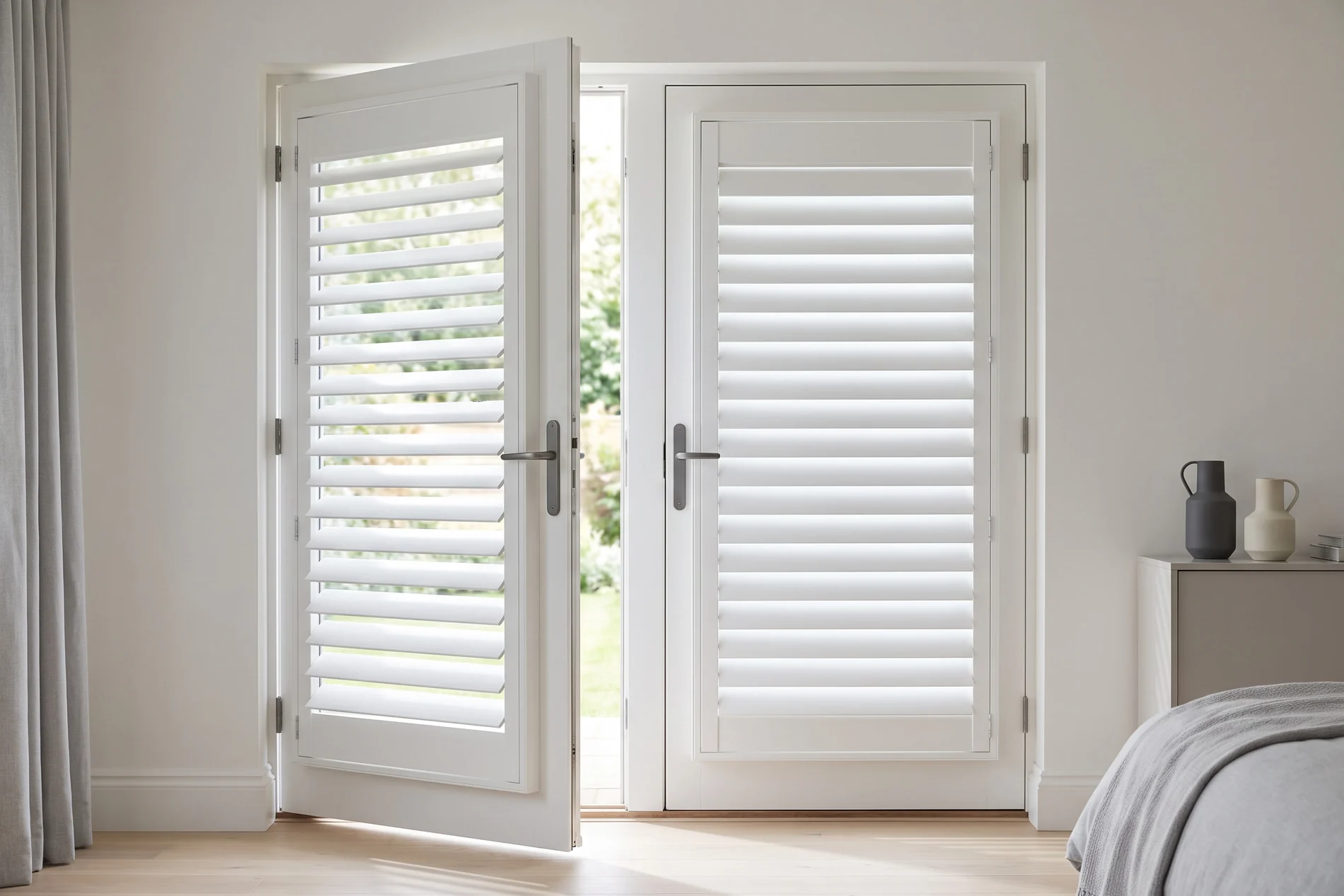
- French doors. The classic look. Panels mount on the leaves and travel with them, so the job is hardware clearance and weight.
- Bi-fold doors. The hard one. A panel on each leaf multiplies the depth of the stack until the doors will not fold flat.
- Solid doors with a glass panel. Laundry and back doors. A small fixed or hinged panel over the glass — the one constraint being that doors get slammed, and shutters do not enjoy that.
If your opening is a bi-fold and you want the doors themselves shuttered, the honest answer is usually no. That is the one we talk people out of.
The four ways a shutter covers a door
Whatever the showroom calls it, every quote is one of these four.
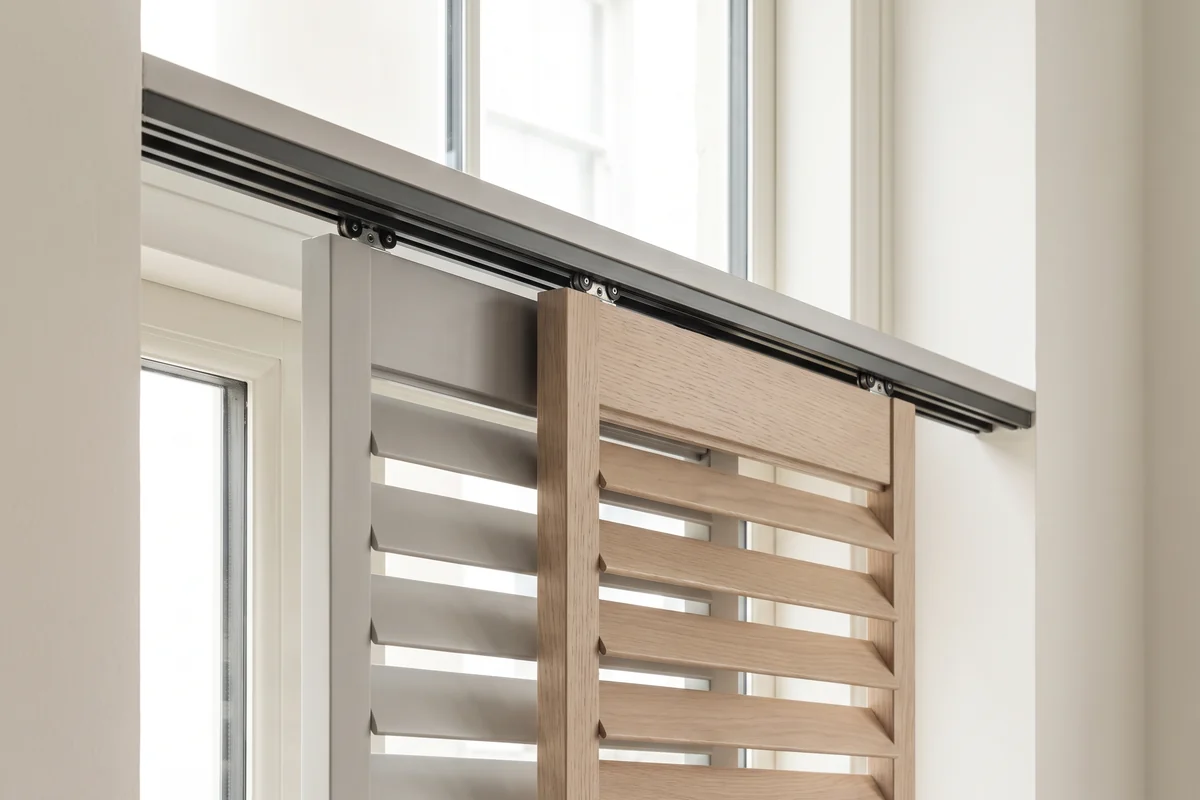
- Bypass track. Panels slide on a head track, passing in front of each other like the door beneath. Nothing projects into the room.
- Bi-fold track. Panels hinged in pairs, folding concertina-style against the wall. Clears far more of the opening, at the cost of a stack in the room.
- Hinged panels. Fixed to the frame or the leaf and swung open like a cupboard. The right answer on a French door and anything narrow.
- Fixed panel. Screwed over the glass and never opened, the louvres doing the work. Ideal for a side light or a laundry door.
| Bypass | Bi-fold | Hinged | |
|---|---|---|---|
| Opening it can clear | About half | Nearly all | All of it |
| Projects into the room | No | Yes, stacked | Yes, when open |
| Needs clear wall beside | No | Yes | Yes |
| Suits | Sliders, stackers | Wide spans | French doors |
| Walk-through traffic | Best | Awkward | Awkward |
The handle decides the panel
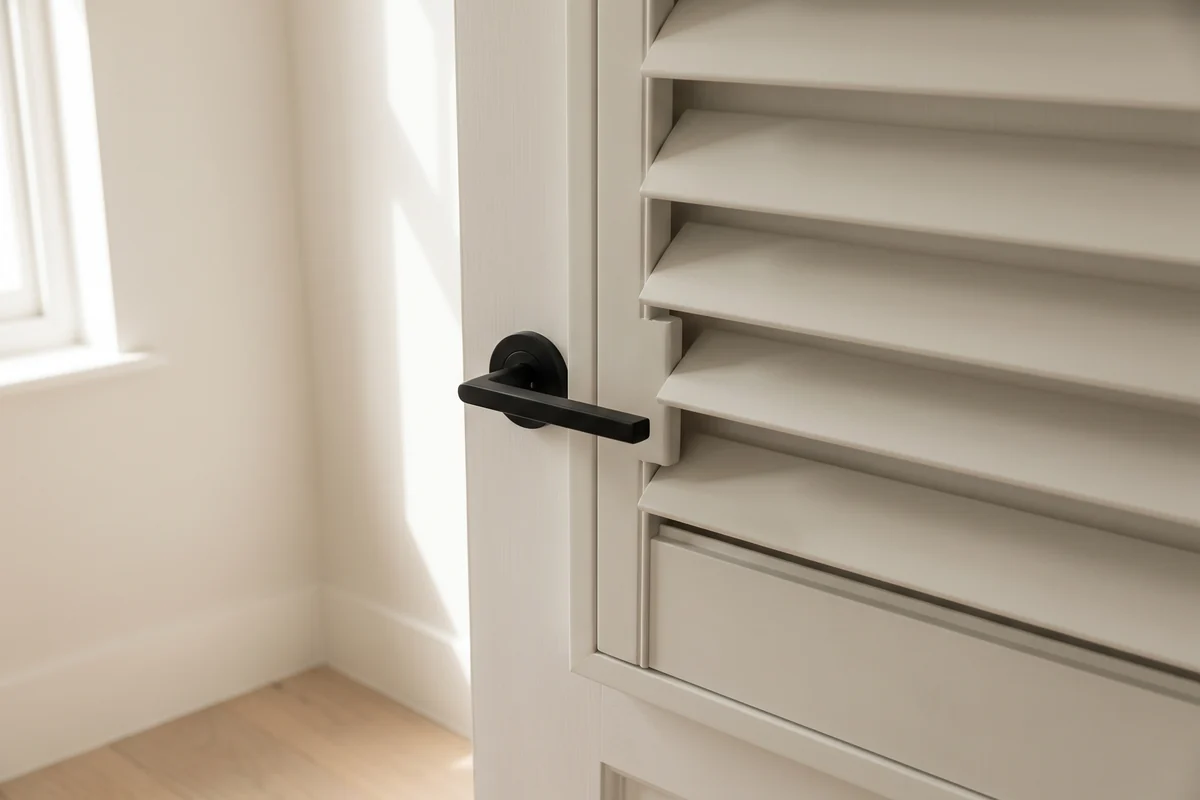
On a French door the shutter sits on the leaf, and the leaf already has a lever, an escutcheon and sometimes a deadbolt sticking out of it. That leaves three options and no fourth: a shaped recess cut into the back of the panel, a panel narrow enough to stop short of the handle, or a low-profile lever with a full-width panel over it.
The narrow panel is worth understanding, because it does a second job. A shutter panel is not light, and every gram hangs off hinges specified for a door rather than a door plus a shutter. Trimming the width is how you keep a French door from dropping in a couple of years.
Hinged panels need somewhere to swing
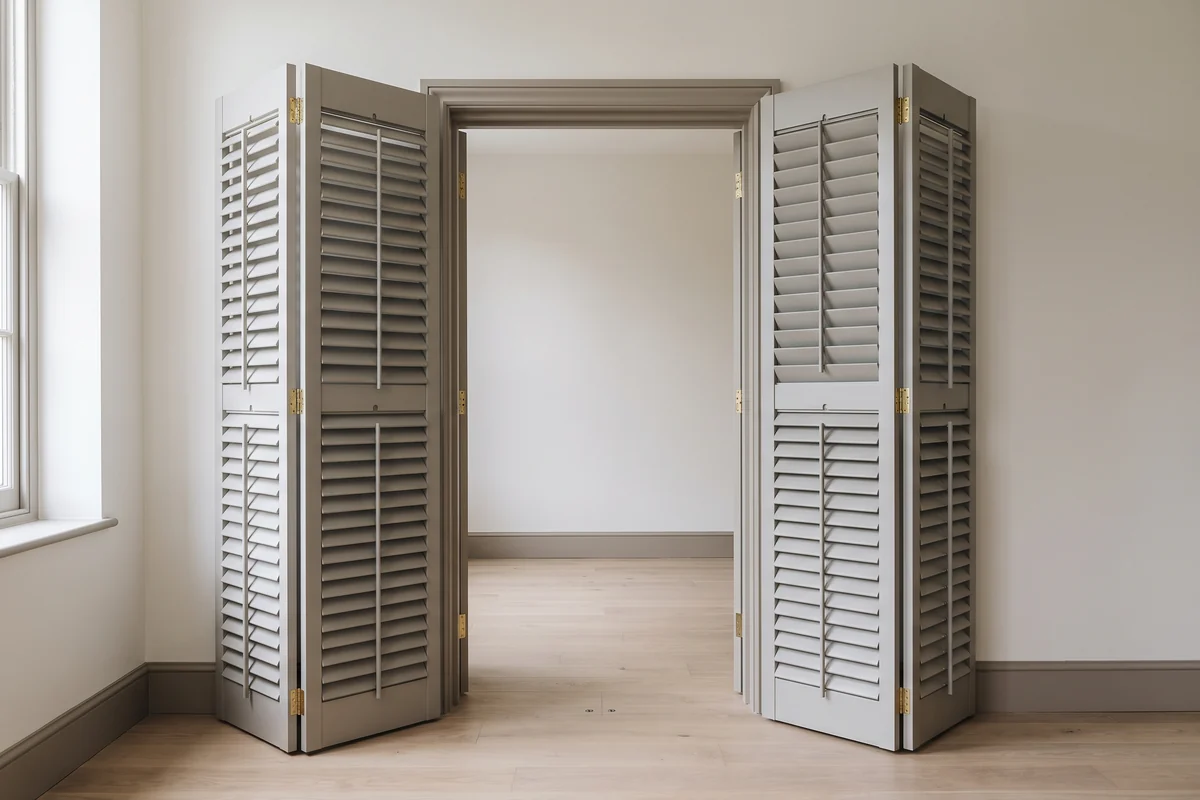
This is the constraint people forget until fit day. A hinged panel opens into the room and needs a clear arc — no console table, and no second panel coming the other way. On French doors, two panels swinging towards each other meet in the middle, and one loses.
Same rule as Thermalite polymer shutters on windows: sliding panels on wide spans, hinged under about a metre and a half. Measure the arc, not just the opening. A shutter that cannot open fully is a fixed panel you paid a hinge premium for.
Sliding doors, and the half you never get back
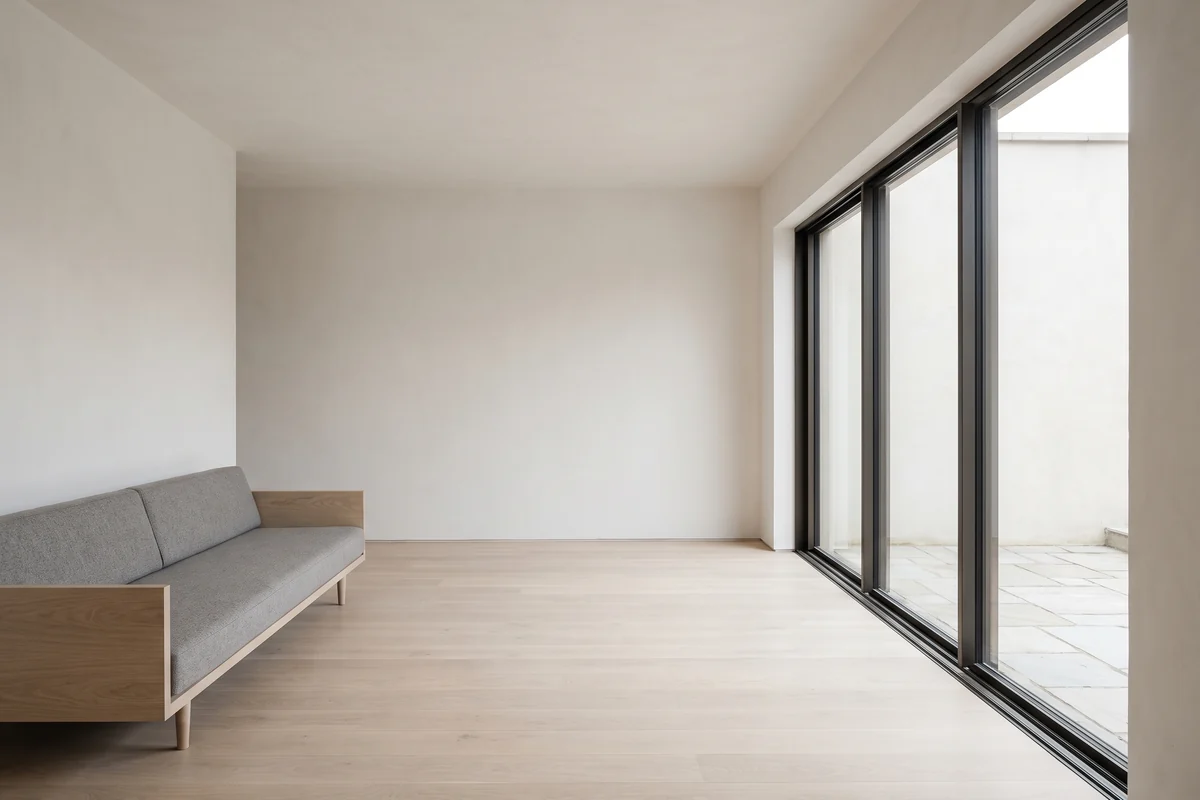
The best answer of the four, by some distance. A bypass shutter sits flat against the glass, needs no floor or wall space, has no cord, and gives you a tilt position — covered but light, which a curtain cannot do.
Now the part the showroom leads with last. A bypass shutter on a two-track door can never uncover more than about half the opening, because one panel has to park in front of the other. That is arithmetic, not a brand difference. On a three- or four-panel stacker that opens to a full glass wall, a bypass hands back half of it and no more.
That door is also the biggest single sheet of glass in the house, and glazing is the weakest thermal point in most Australian homes. A shutter is a layer over it, but it sits inside, so the heat is already through. On a west-facing door, external shading does more.
If half is not enough, panel glide blinds or a curtain on a runnered track clear all of it — both in blinds for sliding doors.
Not sure your door will take one?
Send us the opening and we will tell you which configuration fits before anyone measures. Itemised quote within 24 to 48 hours, valid for 30 days.
On a door, the hardware fails first
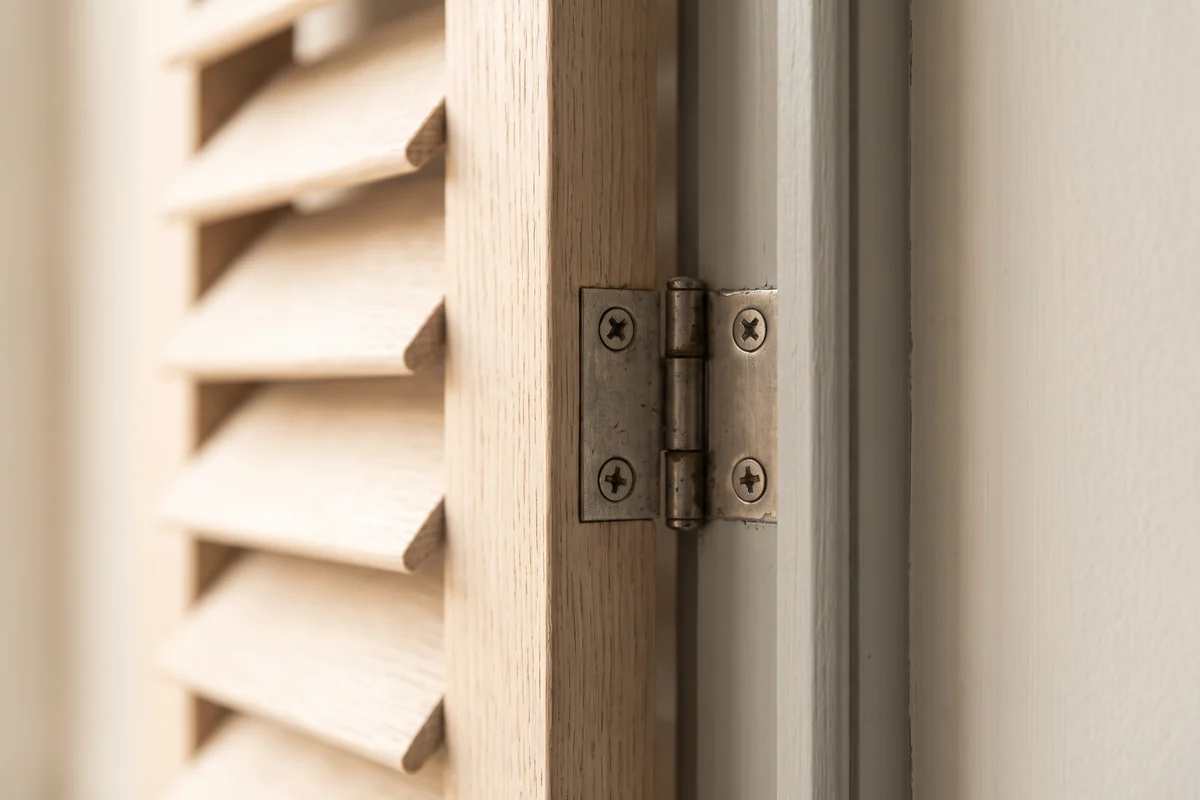
Shutter pages argue about louvre colour. On a door, almost nothing that goes wrong is the louvre — it is the hinge, the magnet, the roller and the screws, because those are the parts worked several times a day.
Two things make that worse here. Timber moves with humidity, and Brisbane and the Gold Coast run months of it; a louvre that binds on a window becomes the reason you stop opening a door. And airborne salt goes for hinges and fixings long before the panel. Within a few streets of the water, ask what the hardware is made of, not the blade.
One thing shutters get right without trying: no cord and no chain, so the mandatory Australian standard for corded internal window coverings is sidestepped. On the door a toddler uses to reach the yard, that beats any fabric.
What we fit instead, and what we do not sell
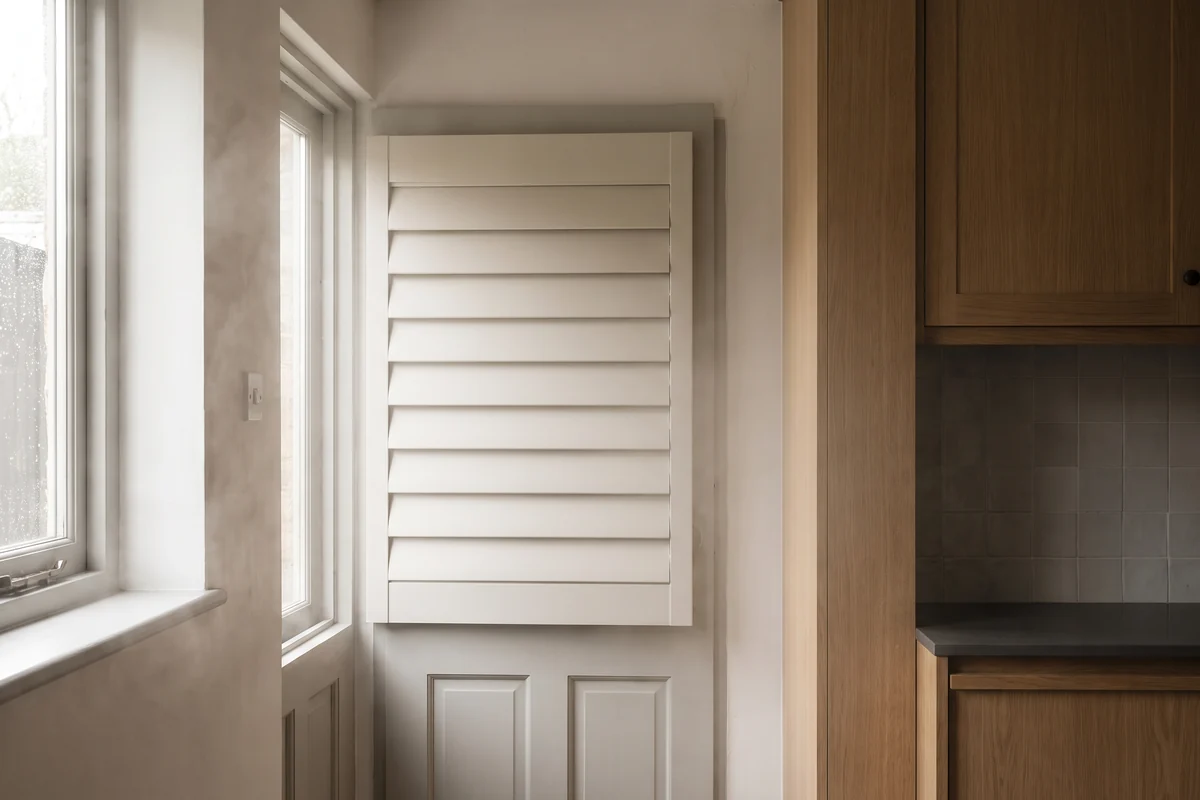
Plainly: Lusso does not sell plantation shutters or timber shutters. If you read this far expecting a plantation quote, we are not the people. What we make is Thermalite, an advanced polymer shutter, in hinged, sliding and fixed panels — the same configurations above, in a material that does not swell or split its finish when the air sits at eighty per cent for a fortnight.
The trade-off runs both ways. Painted timber looks better in a dry, air-conditioned room, and anybody telling you otherwise is selling polymer. It just will not survive a laundry door two streets from the water.
We are a third-generation family business, trading since 1978, and a member of the Window Shading Association of Australia. Thermalite runs 4 to 6 weeks from check-measure to installation. For what the plantation version costs, see what plantation shutters cost — market figures, not ours.
Frequently asked questions
Can you put plantation shutters on French doors?
Yes, and it is what French doors were made for. Panels mount on the leaves and travel with them, so the two things to settle are handle clearance and weight. Expect a cut-out around the lever, a narrower panel, or a low-profile handle.
Do plantation shutters work on sliding doors?
Very well, on a bypass track running in front of the glass. Nothing projects into the room and there is no cord to catch. The limit is that a bypass uncovers only about half the opening, because one panel parks in front of the other.
How much clearance do shutters need on a door?
Enough depth in front of the glass for the panel and frame, plus clearance for the handle, and head room above for a bypass track. No single number covers every system, so have the opening measured first.
Will shutters stop a door closing properly?
They should not, but it is the most common thing that goes wrong. On French doors, two panels swinging towards each other meet before the doors are fully open. On a bi-fold, they add enough depth that the doors will not fold flat. Both are measuring problems.
Bypass or bi-fold for a sliding door?
Bypass if you want nothing projecting into the room and accept clearing half the opening. Bi-fold if you open the door fully and have clear wall for the stack. On a three or four panel stacker, bi-fold is the only version that keeps the point of a stacker.
Do plantation shutters damage door hinges?
They can, over time, if the panel is heavy and the hinges were specified for a bare door. That is why a good fitter makes the panel narrower than the leaf — less weight, further from the hinge. Ask whether the hinges are being upgraded.
Sources Australian Government Your Home — Glazing · ACCC blinds and window fittings mandatory standard · Sleep Health Foundation
Back to the journalKeep reading
Related from the journal
 Guides
What are plantation shutters?
Wide louvres, a solid frame, and the two things nobody writes down: what actually fails first near the water, and why we do not sell them.
Read more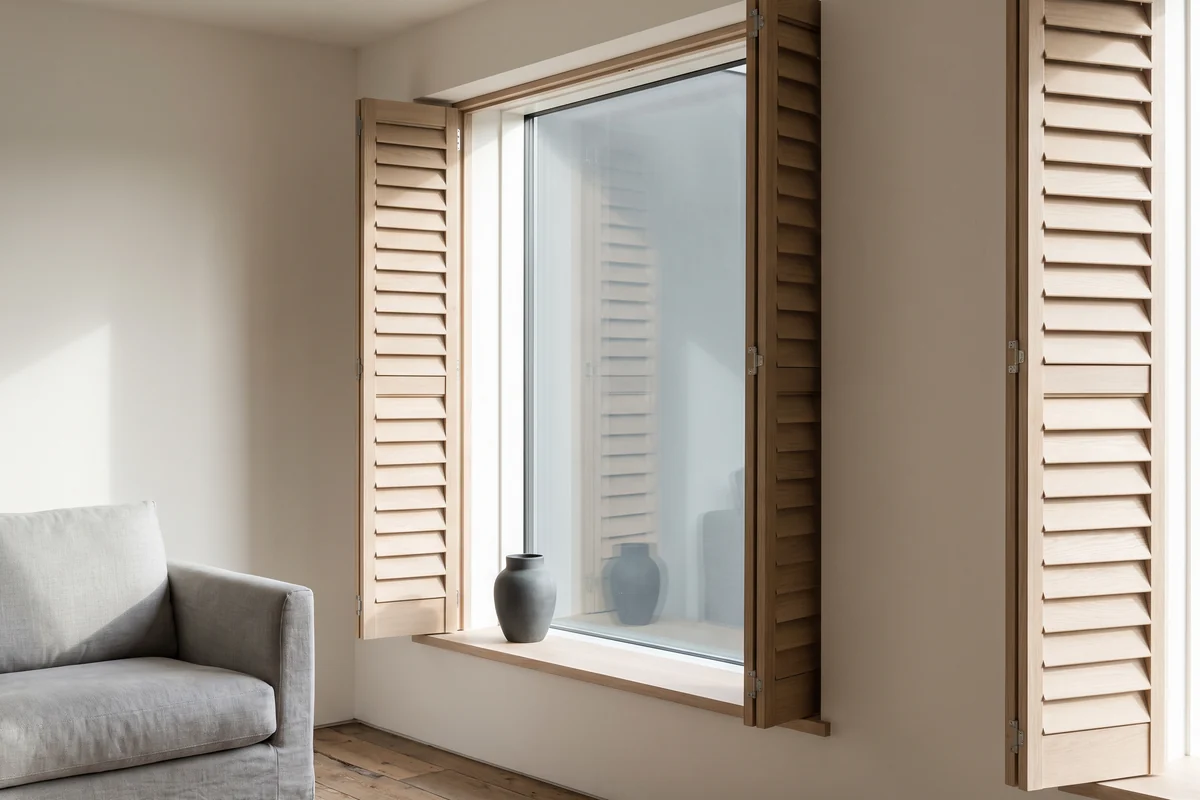 Guides
How much do plantation shutters cost?
The published ranges disagree by a factor of five, and the reason is arithmetic rather than margin. What a panel costs, and the lines that never make the advertised price.
Read more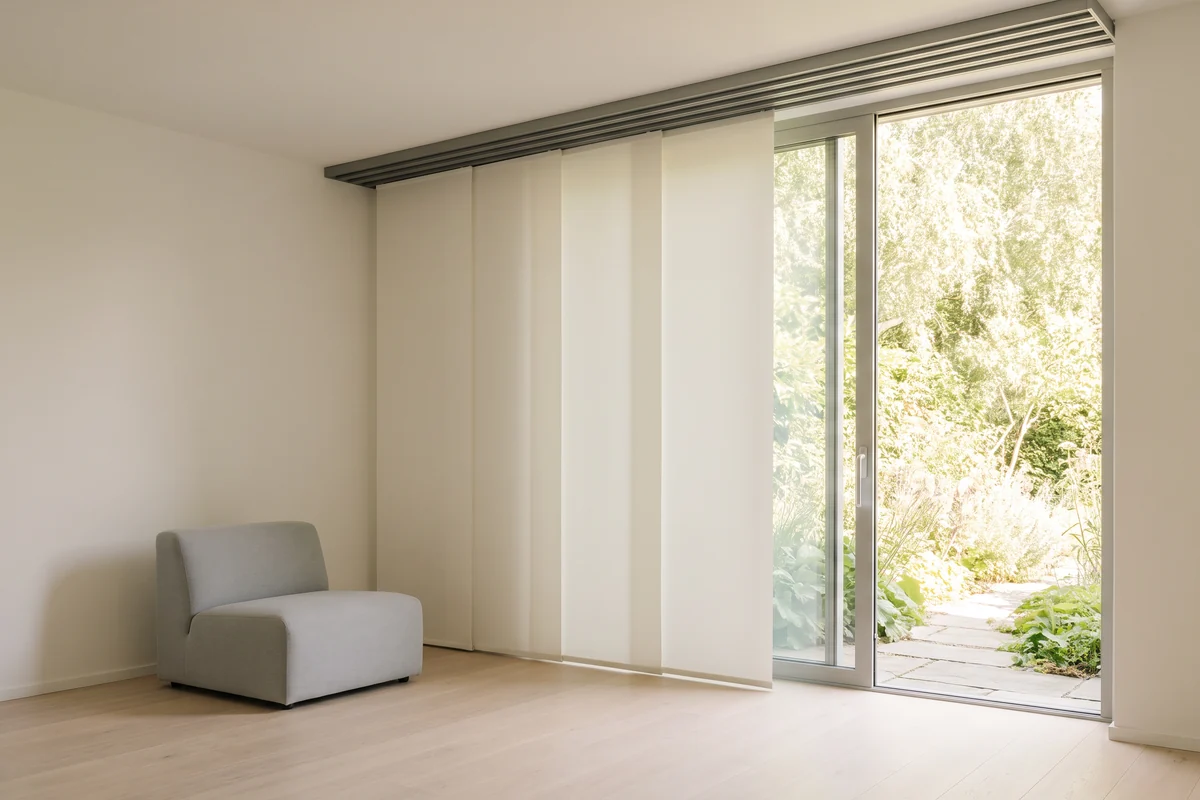 Guides
Blinds for sliding doors: what actually works
The covering has to survive being walked through several times a day. Which of the five options suits your opening, and the stackback decision nobody can fix afterwards.
Read more