

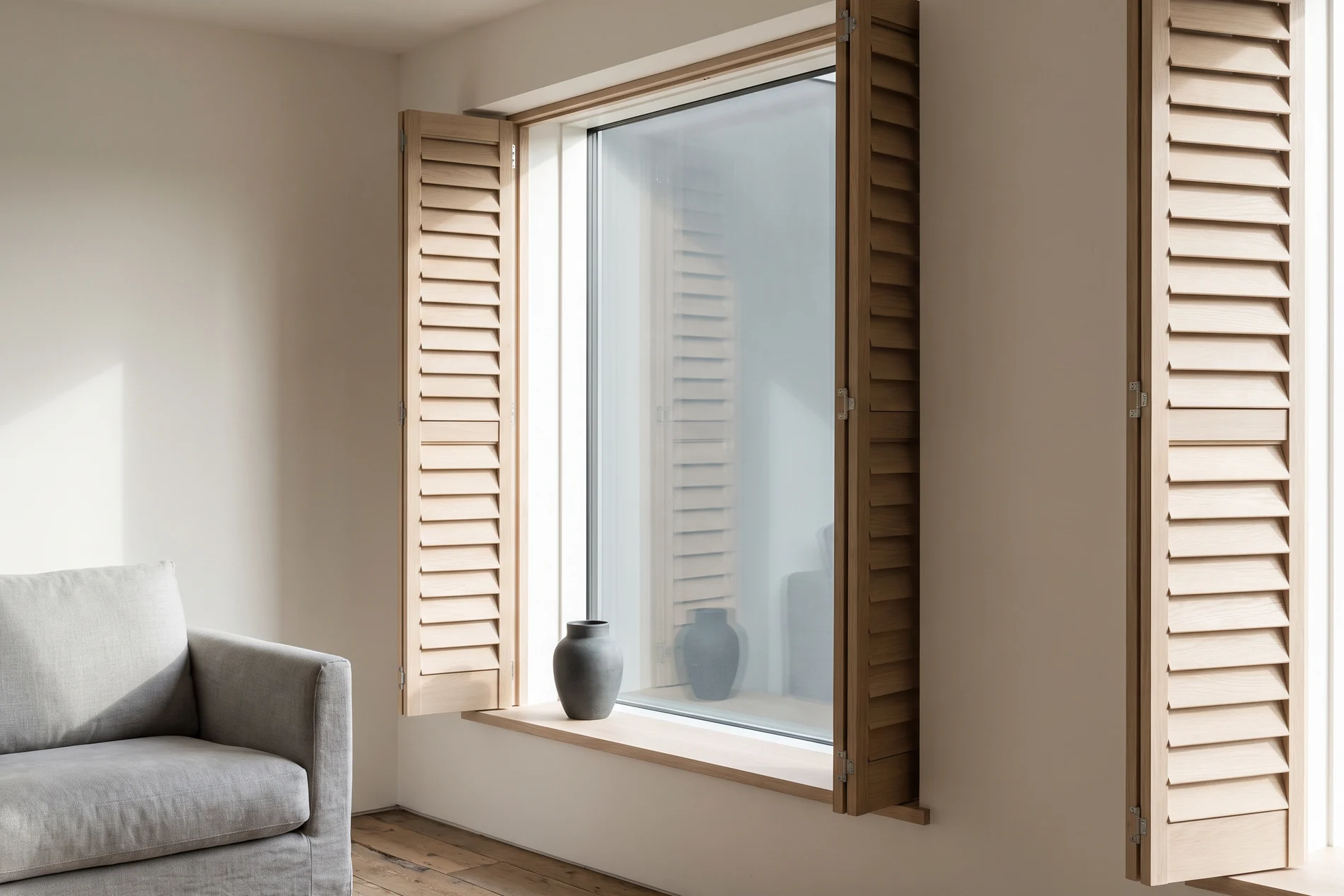
How much do plantation shutters cost?
The published ranges disagree by a factor of five. That is an arithmetic problem, not a market one.
How much do plantation shutters cost in Australia depends on how many panels the opening is split into, not how many windows you have. Published market figures run from about $300 a window for a small single-panel opening to $800–$1,500 and up for a wide multi-panel one, with installed rates of roughly $300–$600 per square metre in PVC and $400–$800 in timber.
Both ends of that range are correct. A window is one panel or it is four, and the panel is what you are actually buying.
Worth saying before you read any further: we do not sell plantation shutters. We fit Thermalite polymer shutters, which are the same wide-louvre product in a material that survives this climate. So there is no number on this page that I am trying to make look good, and every dollar figure below is attributed to whoever published it. What I can tell you is how the pricing actually works, because the arithmetic is the same regardless of whose name is on the quote.
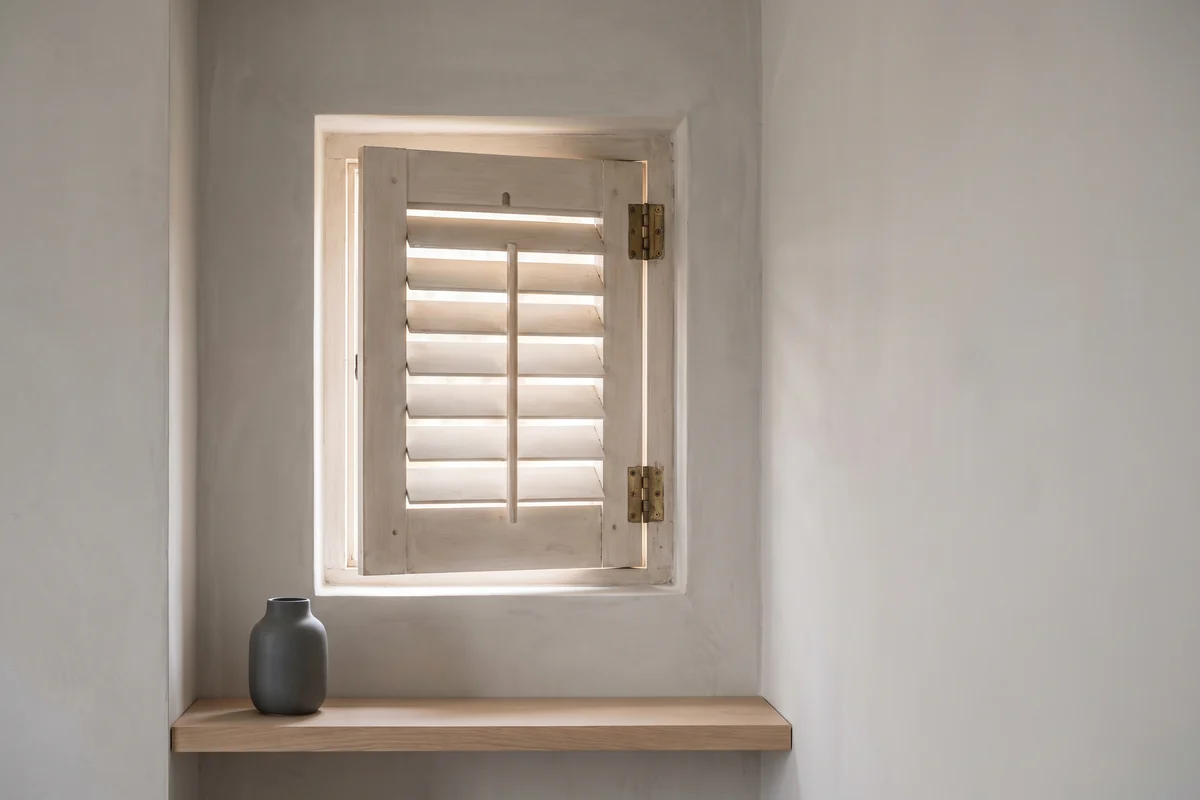
Why the published ranges disagree by a factor of five
Search this question and you will get two answers that cannot both be right. Canstar puts a standard window at $300 to $500, citing retailer pricing. A price guide from Classic Roller Shutters puts the same product at $800 to $1,500 and up. Same country, same year, same shutter.
Neither of them is wrong. They are measuring different things, because “per window” is not a unit of anything. A shutter is built as a set of hinged, sliding or fixed leaves, and the number of leaves is a design decision taken at the measure. One small bathroom window might be a single panel. A 2.4 metre sliding door might be four, or six if it folds back on itself.
Once you look at it per panel, the two figures reconcile immediately. Luxe Shutters publishes installed PVC at roughly $250 to $450 per panel and timber at $600 to $900 or more. Multiply the low end by one and you get Canstar's small-window number. Multiply it by four and you get Classic's wide-window number. The market is not confused. The unit is.
This is why a quote from a supplier who has been to your house will differ from a website estimator by more than you expect, in either direction. The estimator is guessing at panel count. The measure is not.
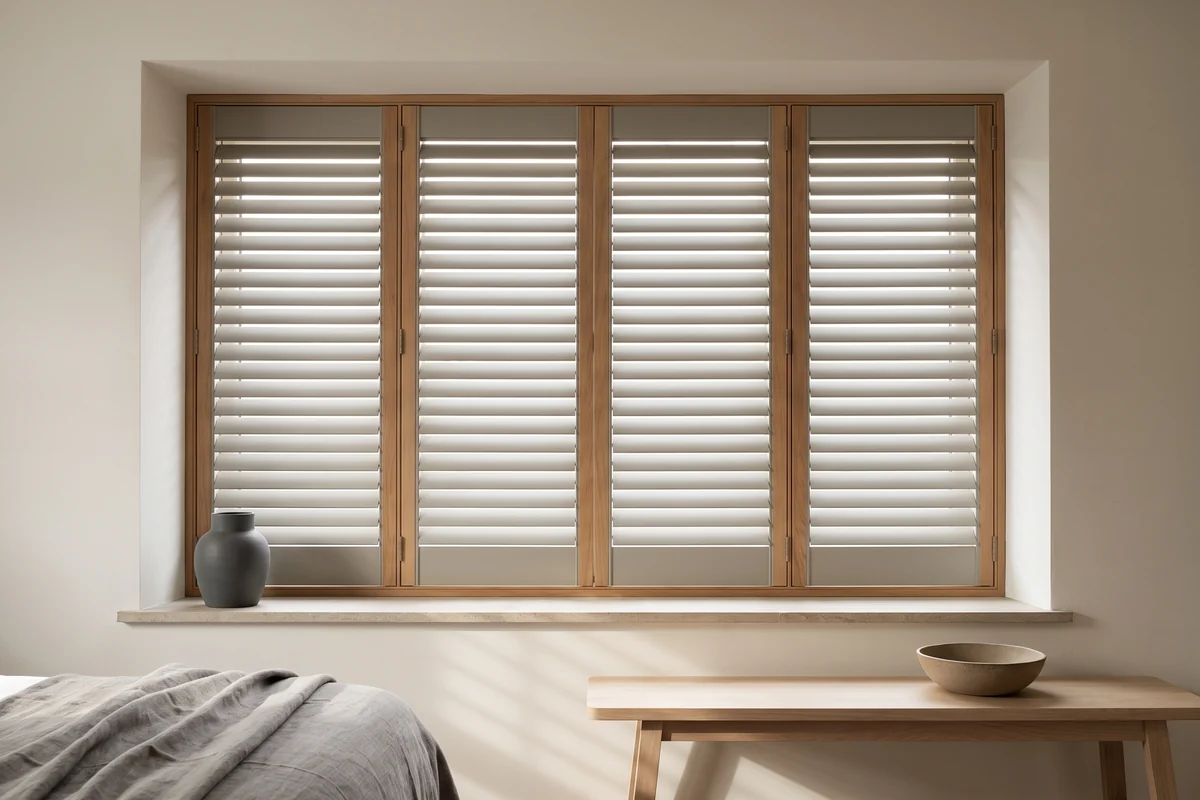
Per panel, per window, per square metre
Here are the three units the Australian market quotes in, with the published figures behind each. All of these are market prices from the sources named, not ours.
| Unit | PVC / polymer | Timber or aluminium | Published by |
|---|---|---|---|
| Per panel, installed | $250–$450 | $600–$900+ | Luxe Shutters |
| Per window, small | $300–$500 | — | Canstar |
| Per window, wide | $800–$1,400 | $900–$1,800+ | Classic Roller Shutters |
| Per square metre | $300–$600 | $400–$800 | Classic Roller Shutters |
| Installation labour | $70–$150 per hour | Canstar, Classic | |
The square-metre rate is the most useful of the three, because it is the only one that scales honestly. Take a common 1200 × 1500 mm bedroom window: that is 1.8 square metres, so $540 to $1,080 in PVC. A 2400 × 2100 mm sliding door is 5.04 square metres, so $1,512 to $3,024. Those numbers are four hours apart in labour and about six times apart in material, and calling both of them “a window” is how the published guides end up contradicting each other.
Run your own openings through that before you ring anyone. It takes ten minutes with a tape and it turns a quote from a number you have to trust into a number you can check.
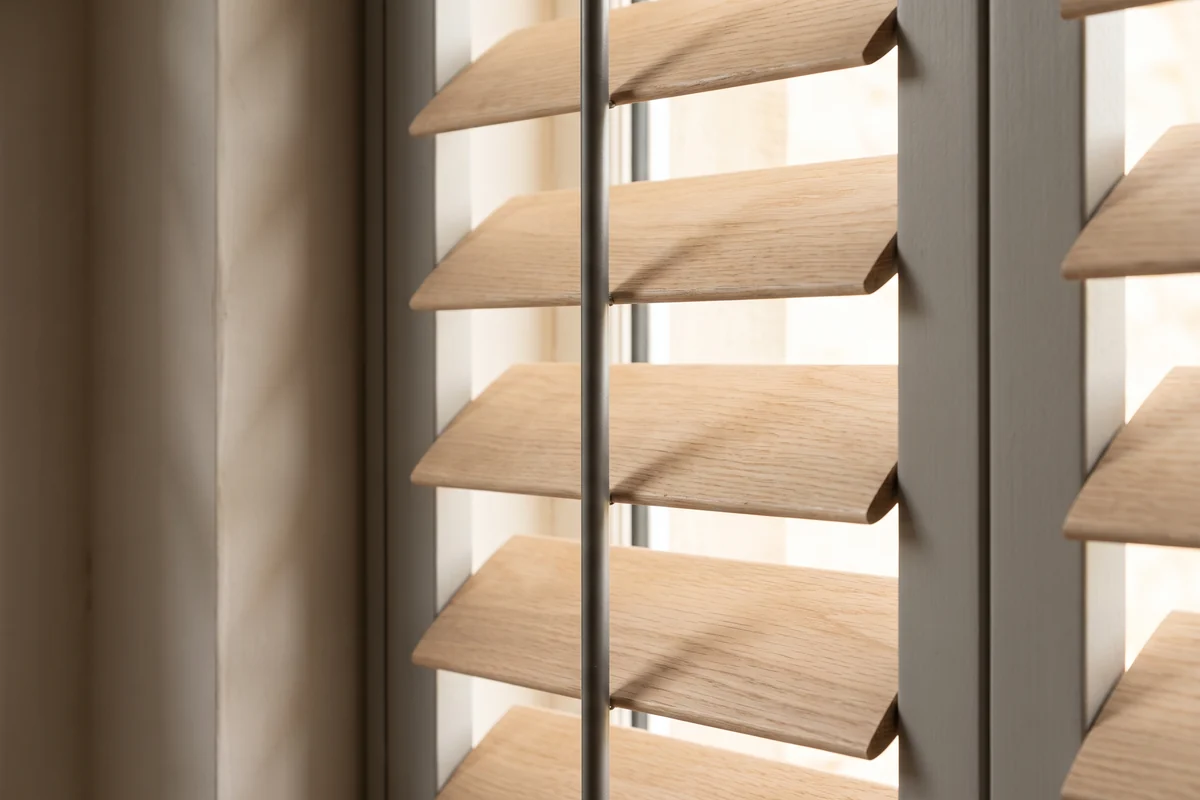
What the material does to the price
Material is the second-biggest lever after panel count, and it moves the square-metre rate by roughly a third. The published spread is $300 to $600 for PVC and polymer against $400 to $800 for timber and engineered wood, with Western Red Cedar and aluminium sitting at the top of that.
In a Queensland house the material question is not really about money. Timber and sustained humidity are a poor combination, and a louvre that has taken up moisture does not close flat again. That is a durability argument, not a price one, and I have made it at length in the guide to what plantation shutters actually are. The relevance here is that the cheaper material is also the one that behaves better in this climate, which is an unusual thing to be able to say about anything.
The one place the extra spend genuinely buys something is span. Aluminium holds a wider leaf without flexing, which means fewer panels across a big opening, which means fewer stiles interrupting the view. You are paying more per square metre for a better-looking result, not a longer-lasting one.
The lines that are not in the advertised price
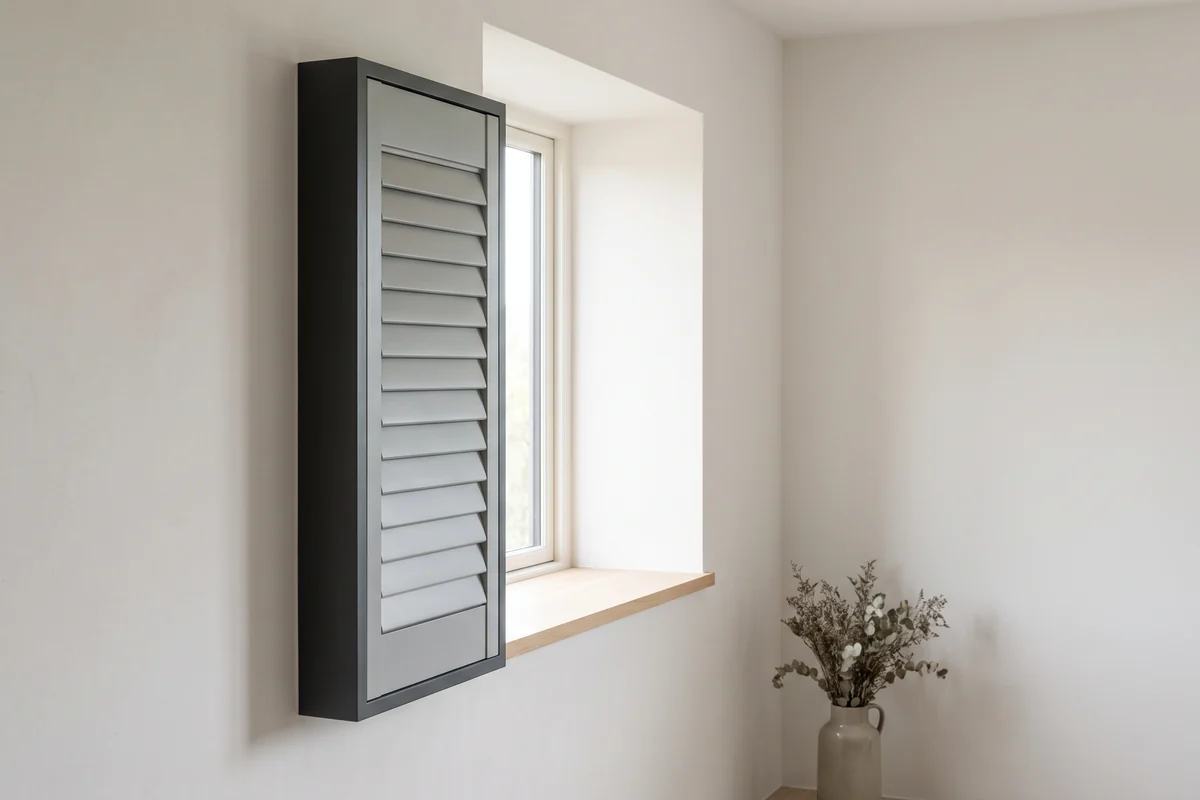
Advertised rates describe a rectangular opening with a flat reveal deep enough to take a frame. Plenty of Australian houses do not have one. These are the additions that turn a $600 estimate into a $900 quote, and none of them are a supplier being opportunistic:
- Build-out frames. If the reveal is too shallow to house the panel, the frame has to be packed forward off the wall. Extra material, extra fixing, extra time.
- Mid-rails. A tall window gets a horizontal rail so the top and bottom louvres tilt independently. It is what lets you shut the bottom half for privacy and leave the top open for light, and it adds a component to every panel it appears in.
- Splits and configurations. Bi-folding a run of panels back against the wall needs more hinges and a track. Sliding needs a track and bottom guide. Fixed is cheapest and does not open.
- Out-of-square allowance. Older houses move. A shutter is a rigid panel in a rigid frame, so an opening that is 8 mm out at one corner has to be made to the smallest dimension and packed, or scribed.
- Hardware near the water. Within a few streets of the beach the honest question is what the hinges, magnets and screws are made of. Airborne salt goes for the metal long before it touches the blade.
Ask for the quote itemised component by component. Ours are, and any supplier worth using will do the same, because it is the only way to see whether a cheaper number is a better price or a shorter list.
What a four-bedroom house comes to
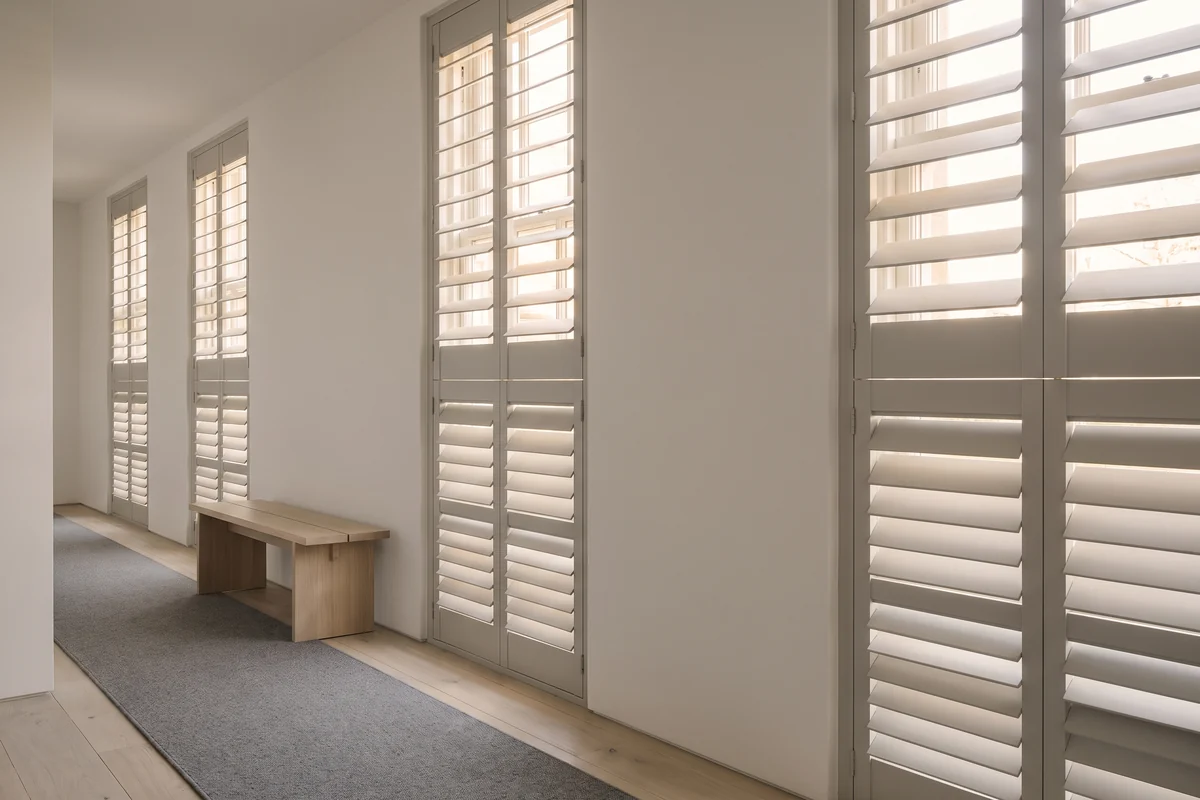
This is where the published numbers get furthest apart, and it is worth understanding why before you set a budget. Canstar quotes a whole-home benchmark of $2,200 to $3,600. Screen & Blind Master says $2,500 to $4,000. Luxe Shutters, working from panel count rather than window count, says a three-bedroom home needs 20 to 35 panels and lands between $6,500 and $22,000.
The gap is not a disagreement about price. At $250 to $450 an installed PVC panel, 20 to 35 panels is $5,000 to $15,750 before you have touched timber or a single sliding door. A $2,200 whole-home figure is not a cheaper supplier. It is fewer windows.
So here is the position, and it will cost me nothing to say because we do not sell the product: the cheapest quote in the pile is usually the one with things taken out of it. Not louvres removed — scope removed. Three windows instead of eleven, fixed panels where you wanted bi-fold, no mid-rails, no build-outs. A four-bedroom house done properly is a five-figure job in shutters, and the honest version of that conversation happens before the measure, not after it.
If the number is more than the room is worth, the answer is not thinner shutters. It is doing the front of the house in shutters and the back in something else, which is how most people actually end up living with them.
How that compares with blinds and curtains
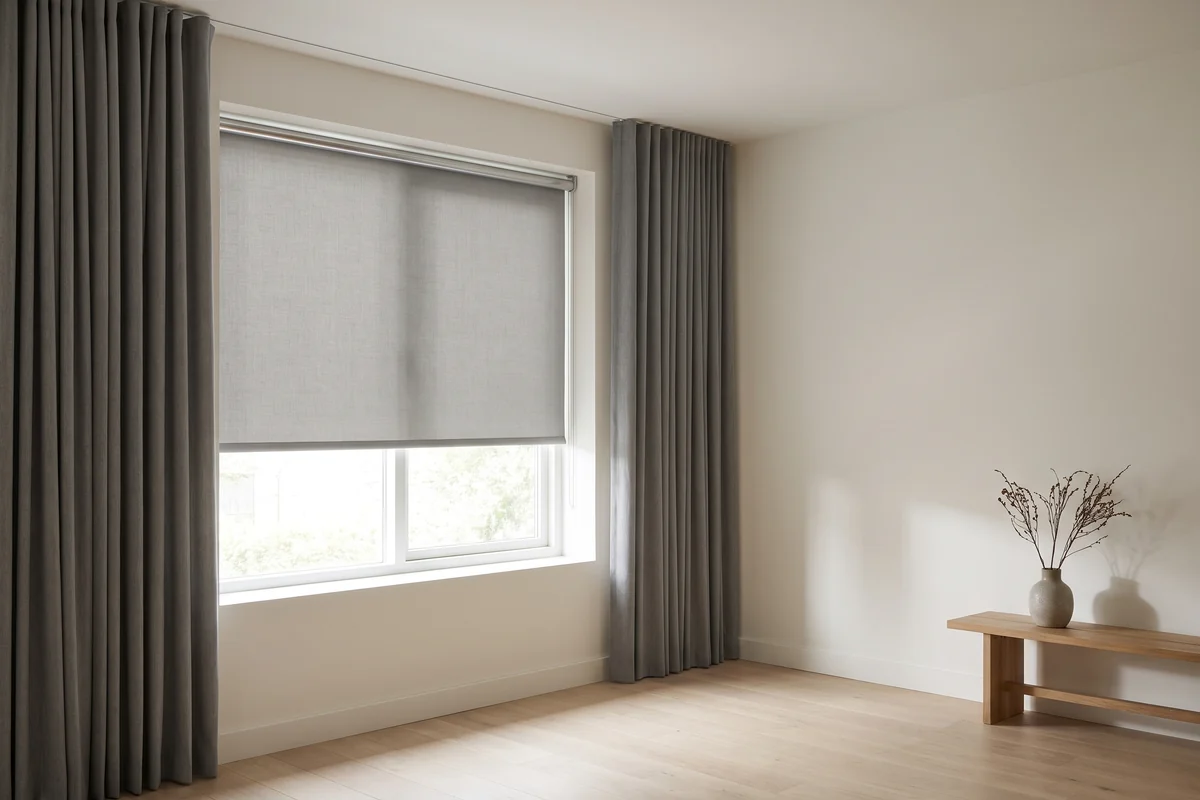
Shutters are the most expensive line on almost every quote, and the comparison is worth having in front of you rather than in your head. These per-window figures are Screen & Blind Master's published comparison set.
| Per window | Cords or chains | Light control | |
|---|---|---|---|
| Plantation shutters | $300–$1,500+ | None | Tilt by degree, no blockout |
| Roller blinds | $150–$350 | Usually chain | Up or down, blockout available |
| Venetian blinds | $120–$300 | Cord and wand | Tilt by degree, no blockout |
| Curtains | $200–$500 | None on a runnered track | Open or closed, blockout available |
Two things that table does not price. A shutter has no cord and no chain at all, which matters in a child's room — corded internal window coverings carry a mandatory safety standard in Australia for a reason. And a shutter is a rigid layer sitting over the glass rather than a fabric one, which does more for heat than any of the others; glazing is the weakest thermal point in most Australian homes.
What it does not do is black a room out. Closed louvres still leave a fine line of light at every blade. If you want a dark bedroom you are pairing the shutter with a blockout roller blind behind it, and that is a second product on the same window.
Want a number for your actual windows?
We measure, we quote in 24 to 48 hours, and the quote is itemised component by component so you can see exactly what each opening costs. There is no charge and no deposit to get a price.
What you are owed before you pay anything
Nobody writing about the cost of plantation blinds seems to cover the part that is actually regulated, which is odd, because it is the part where money leaves your account.
- A quote costs nothing. There is no deposit to get a price. If someone wants money before you have a written figure, that is a signal, not a policy.
- Get it in writing, itemised. A quote broken down component by component is what lets you compare two suppliers honestly. Two totals side by side tell you nothing about scope.
- Check how long it stands. Ours are valid for 30 days. A quote with no expiry on it is not a quote.
- Know the deposit convention. The usual split is 50% on accepting the quote and the remaining 50% on the day of installation. Nothing should be ordered or manufactured before the deposit clears, and nothing should be owing after the fitter leaves.
- Domestic building work has a statutory cap. Where the job falls under Schedule 1B of the Queensland Building and Construction Commission Act 1991, the deposit is capped by law and the supplier has to tell you the applicable amount first. Queensland Fair Trading is the place to check your position if a supplier will not.
Lead times are the other half of this. Anything made to measure is weeks, not days — ours run four to six weeks from check-measure to installation on shutters, and motorisation on other products adds about a week. Treat any number as a good-faith estimate rather than a guarantee, because that is what it legally is.
What we fit instead, and what it changes
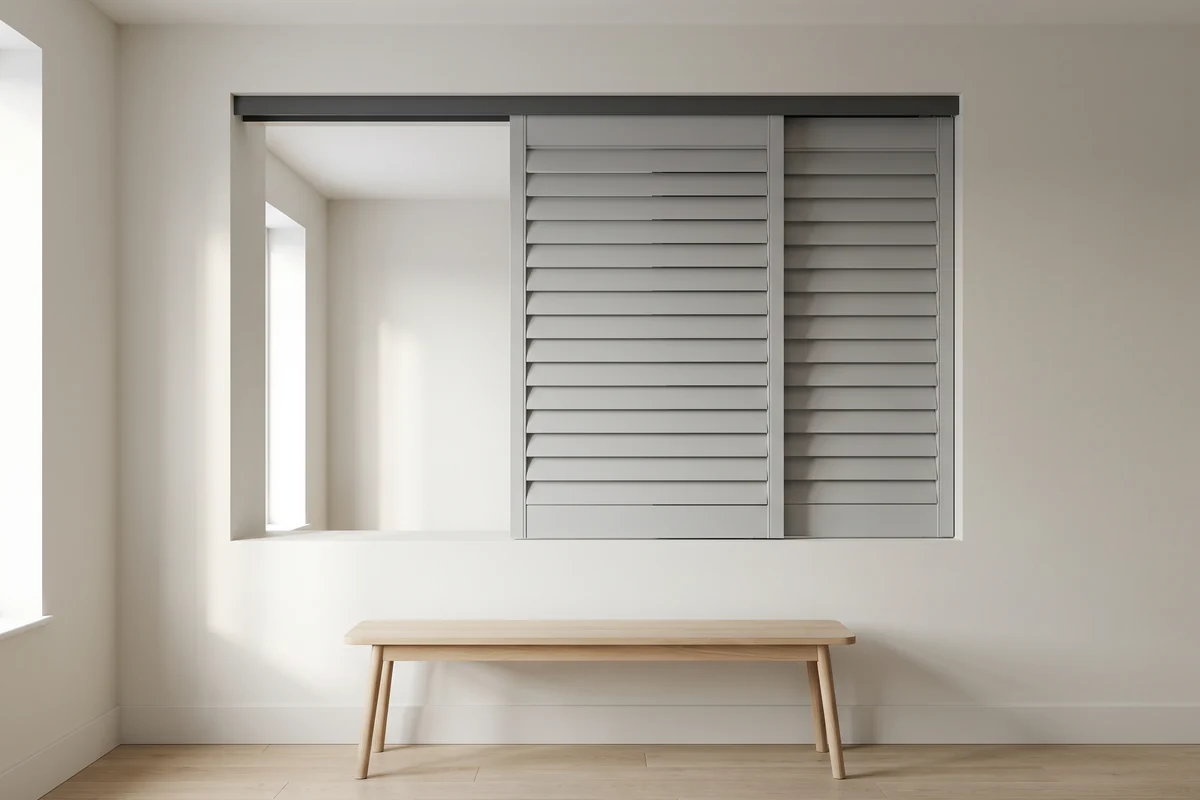
To be plain about it: Lusso does not supply plantation shutters, timber shutters or aluminium shutters, and you cannot order one from us. We fit Thermalite — an advanced polymer shutter in the same wide-louvre style, in hinged, sliding and fixed panels.
Nearly everything on this page still applies to it. Panel count is the lever. Build-outs, mid-rails, splits and out-of-square all cost what they cost. The square-metre logic is identical. The one line that moves is the material, and it moves in the direction the published figures already show — polymer sits at the lower end of the range and does not swell, warp or take up moisture in a wet season, which is the entire reason we settled on it for this coast rather than stocking timber and hoping.
I am not going to publish a Thermalite rate here. Not because it is embarrassing, but because a square-metre figure on a web page is a number someone will hold us to on an opening we have not seen, and every honest thing on this page has been about how much the opening changes the answer. What I will do is measure it and put it in writing within 48 hours. If you want the product detail first, the Thermalite shutter page covers the range and how it goes in.
We have been fitting window furnishings on this coast since 1978, three generations of it, and we are members of the Window Shading Association of Australia. None of which makes our number lower. It just means you will get the same number twice.
Frequently asked questions
How much do plantation shutters cost per window in Australia?
Between about $300 and $1,500, and the spread is real rather than a hedge. Canstar puts a standard single-panel window at $300 to $500, while Classic Roller Shutters puts a wide multi-panel opening at $800 to $1,500 or more. The difference is panel count, not supplier margin. Working in square metres is more reliable: roughly $300 to $600 for PVC and $400 to $800 for timber, installed.
Why are plantation shutters so expensive?
Because every panel is made to the measured opening and then hung in a frame that also has to be made. A shutter is closer to joinery than to a blind, so the labour is in the frame, the hinges and the fit rather than in the fabric. Installation alone runs $70 to $150 an hour on published rates, and a wide opening is several panels rather than one.
Are plantation shutters cheaper than curtains or blinds?
No, they are usually the dearest option on a quote. Published per-window comparisons put venetian blinds at $120 to $300, roller blinds at $150 to $350 and curtains at $200 to $500 against $300 to $1,500 for shutters. What you get for the difference is a rigid layer over the glass, no cords or chains, and something that does not need replacing when the fabric fades.
How much do plantation shutters cost for a 4 bedroom house?
Count panels, not bedrooms. A three-bedroom home is commonly 20 to 35 panels, which at $250 to $450 an installed PVC panel is $5,000 to $15,750, and a four-bedroom house sits above that. The $2,200 to $4,000 whole-home figures published elsewhere describe a partial fit-out rather than a cheaper supplier, so check how many openings the number covers before you compare it with anything.
Are plantation blinds and plantation shutters the same thing?
Yes. Australians search both terms in roughly equal numbers for the same product, and the industry uses them interchangeably. It is a shutter in the strict sense — a rigid louvred panel in a fixed frame, not a fabric covering on a roller or a cord. If a supplier quotes plantation blinds cost against a competitor's plantation shutters cost, they are pricing the same thing.
Do plantation shutters add value to a house?
They are one of the few window furnishings that stay with the house and read as part of the building rather than as decoration, which is why agents like them. Whether that returns the spend depends entirely on the house and the market, and anyone quoting you a percentage is guessing. Buy them because you want to live behind them, not as an investment.
Do I have to pay for a measure and quote?
Not with us, and not with most established suppliers. The measure and the written quote are free and carry no deposit — the 50% deposit falls due on order, with the balance on the day of installation. Our quotes are itemised component by component and valid for 30 days, which is what lets you put two of them side by side and see the difference in scope.
Sources Australian Government Your Home — Glazing · ACCC blinds and window fittings mandatory standard · Sleep Health Foundation
Back to the journalKeep reading
Related from the journal
 Guides
What are plantation shutters?
Wide louvres, a solid frame, and the two things nobody writes down: what actually fails first near the water, and why we do not sell them.
Read more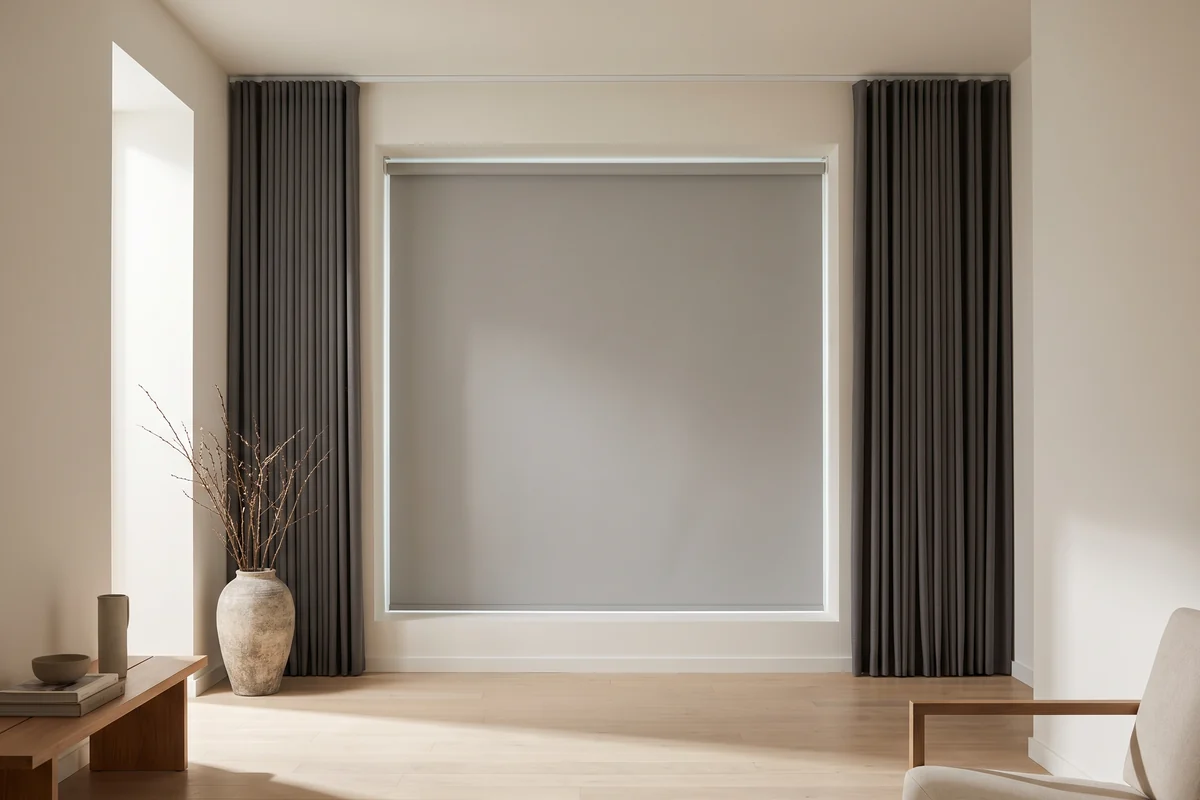 Guides
Blinds vs curtains: how to choose, room by room
The opening decides it, not the product. What each one does better, why the heat argument is really an installation argument, and the cord rule that settles a child’s room.
Read more Guides
What is a window treatment?
It is the American word for window furnishings, and the search results are American too. The four families explained for an Australian house — which way the window faces, and the cord law that decides a child’s room.
Read more