

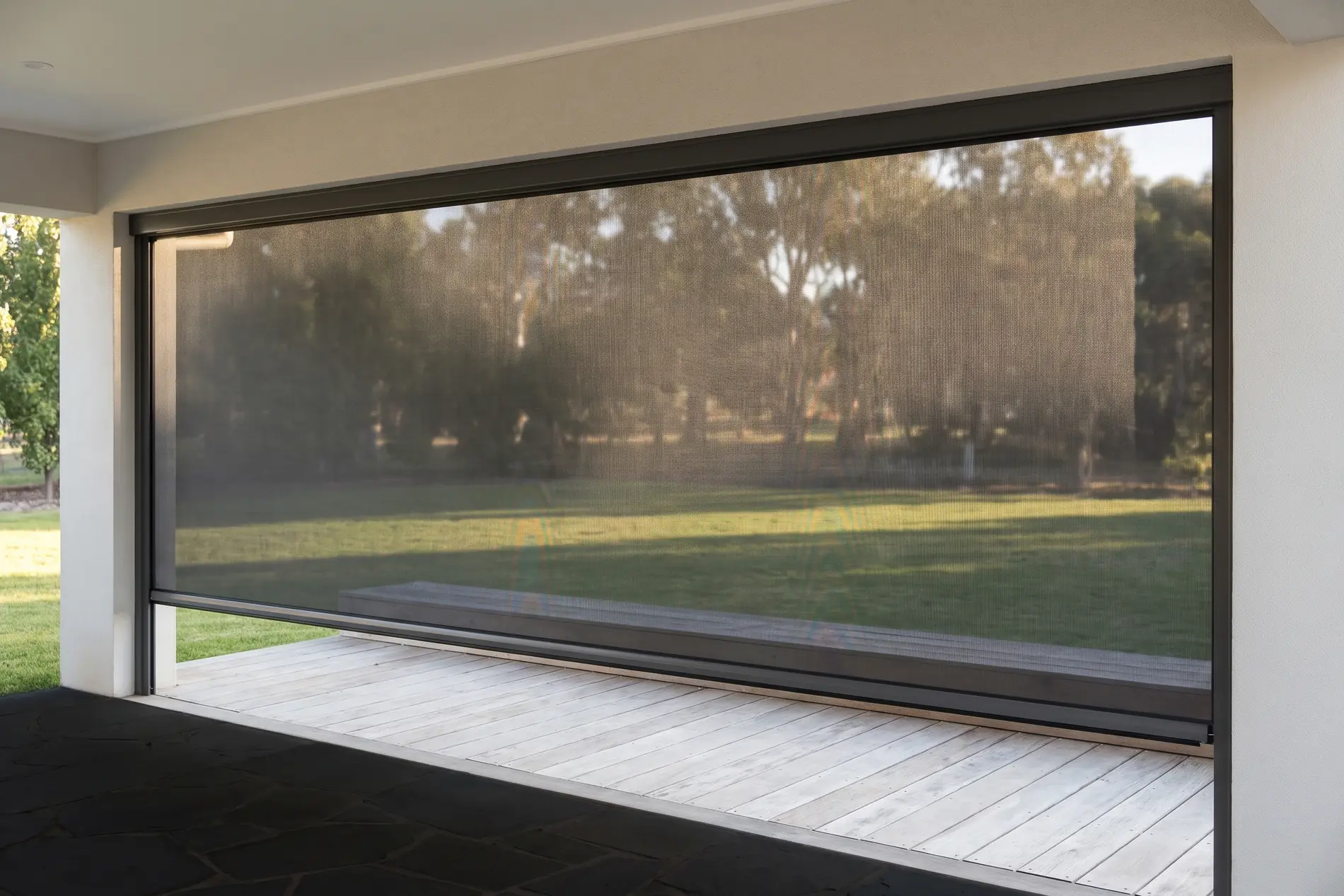
Insect mesh: why it isn't sunscreen mesh
One keeps the bugs out and lets the breeze in. The other keeps the sun out. Buy the wrong one and you get neither.
Insect mesh is the open woven screen that keeps mosquitoes and flies out while letting the breeze through. Standard 18×14 mesh is about 58 per cent open. Sunscreen mesh is a shade fabric, usually 1 to 10 per cent open, chosen for the glare it stops rather than the bug.
If the problem is mosquitoes at dinner, you want insect mesh. At Lusso it comes in one product only: the Phantom Executive retractable screen.
Both get called “mesh”, both roll down across an outdoor opening, and held up against a window they look much the same. They do opposite jobs. I’ll go through what each one is for, which insect mesh stops what, and where we fit it. One thing first, because it saves some of you a phone call: we don’t sell mesh by the roll and we don’t rescreen windows or doors. Insect mesh at Lusso comes only in the Phantom Executive, a motorised screen for patios, alfresco areas, balconies and other large openings.
Know which job the mesh is doing
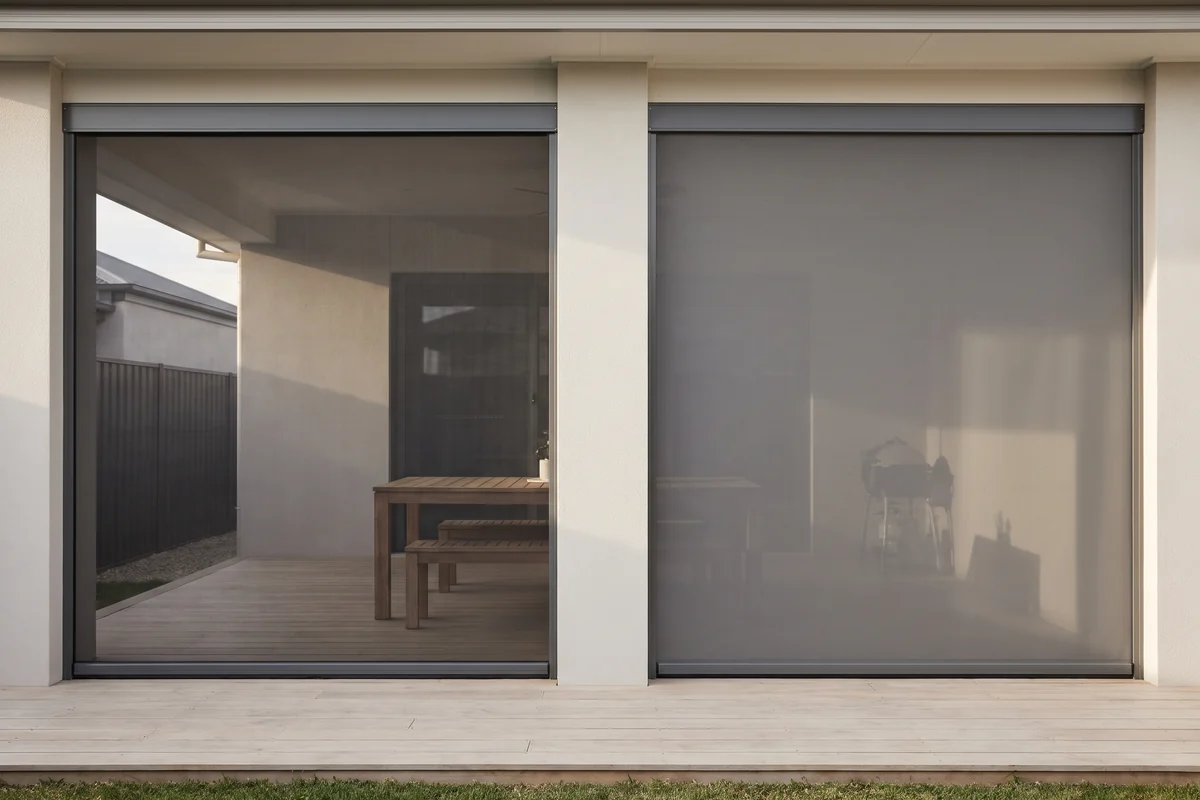
The difference is in the holes. Phantom puts its standard 18×14 insect mesh at about 58 per cent open, so more than half the screen is air. A sunscreen fabric runs the other way. On the roller blinds we fit, the range is 1, 3, 5 and 10 per cent open, which means even the most open one is 90 per cent thread. Our guide to openness factor explains what each of those numbers does.
That one number decides almost everything else. An insect mesh is built to keep the breeze and the view and stop a mosquito, so it’s specified by the size of the gap. A sunscreen fabric is built to stop glare and heat before they reach you, so it’s specified by how little light gets through. Ask either one to do the other’s job and you get a weak version of both. A sunscreen fabric across the alfresco takes the evening breeze with it, and an insect mesh on a west-facing patio leaves you squinting at four o’clock.
On most alfresco areas the two problems turn up at different times of day. The glare is a mid-afternoon problem, and only on the western side. The mosquitoes arrive around dusk, which is exactly when you want the breeze. Decide which hour you’re trying to rescue, and the choice of fabric usually makes itself.
| Insect mesh | Sunscreen fabric | |
|---|---|---|
| What it’s for | Keeping insects out | Cutting glare and heat |
| Specified by | Weave count, such as 18×14 | Openness factor, such as 5% |
| Open area | About 58% (standard) | Usually 1–10% |
| Breeze | Most of it gets through | Much less |
| Sun blocked (Phantom figures) | Up to 40% of UV | Up to 90% (E-Screen 10%) |
| At Lusso | Phantom Executive only | Roller blinds, and as E-Screen on the Executive |
Held up against the light, both are a grey rectangle you can see through, which is how so many people end up with the wrong one.
Read the weave count as a gap size
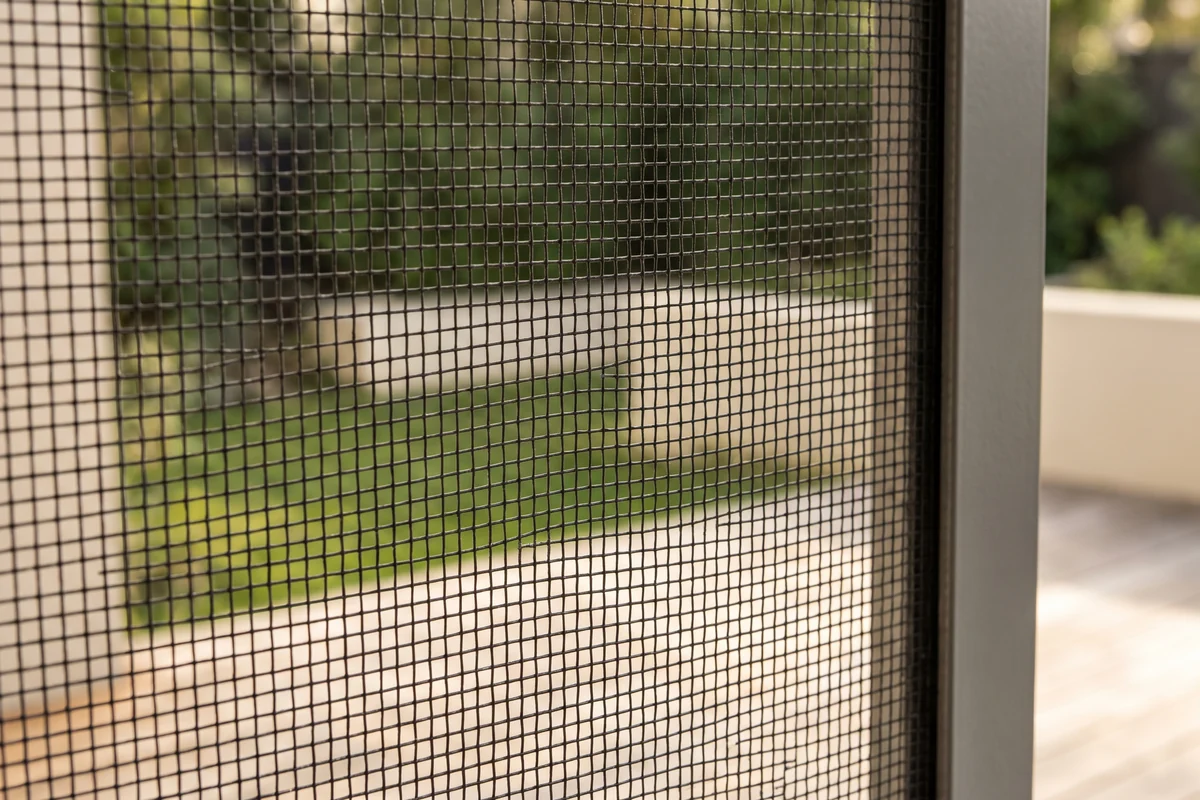
18×14 means 18 strands per inch one way and 14 the other. More strands mean smaller holes and less air. That’s all the number is, and it’s the most useful thing on the spec sheet, because the insect you’re trying to stop decides how small the hole has to be.
Standard 18×14 is the default for a reason. It stops mosquitoes and flies and keeps more than half the screen open. In south-east Queensland that’s the job most people are hiring a screen for. Brisbane City Council’s mosquito fact sheet notes the saltmarsh mosquito travels at least 10 kilometres to feed, and healthdirect lists flyscreens among the ways to avoid Ross River virus, for which there is no vaccine.
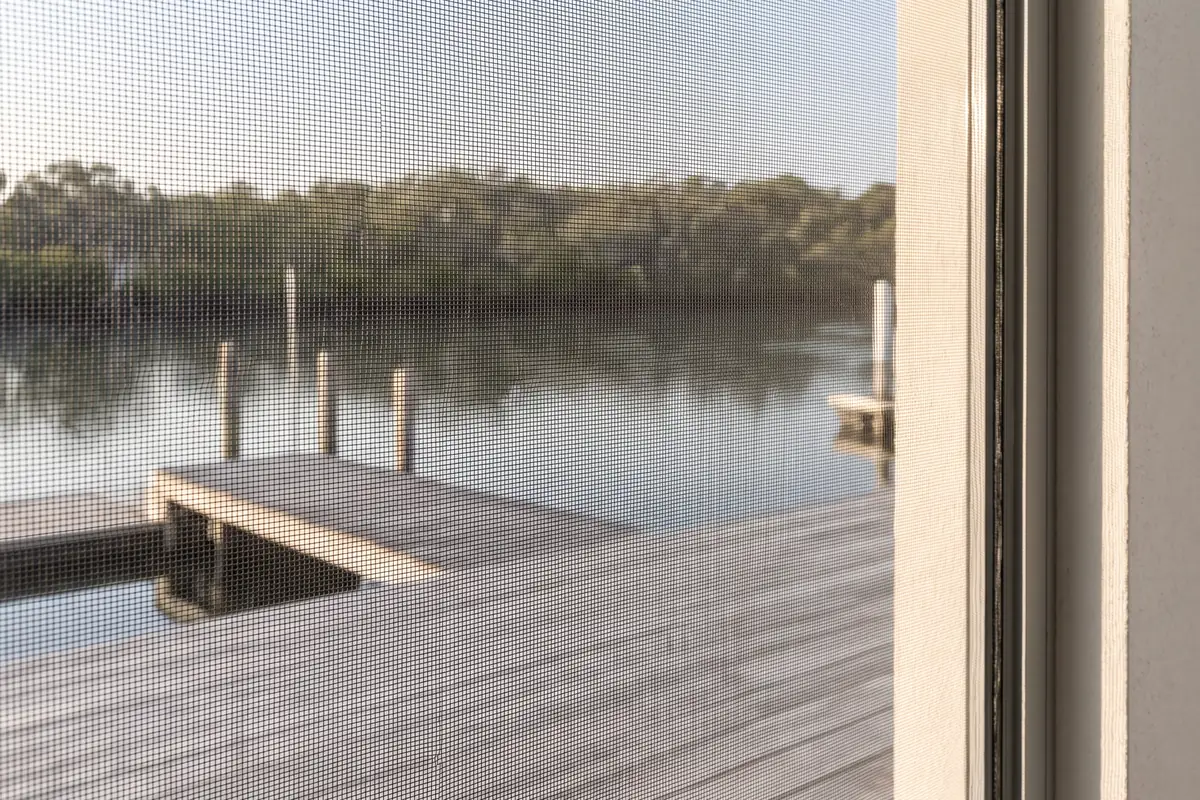
Biting midges are the exception. They’re small enough to get through a standard fly screen, as WA Health puts it, which is what the finer 18×18 midge mesh is for. It costs about ten points of openness, and whether that’s worth paying is a question of its own. The midge mesh guide answers it house by house.
Colour isn’t on this list. Phantom’s insect meshes come mainly in charcoal and grey, and a mosquito has no opinion on either.
Match the mesh to what’s getting in
The Phantom Executive carries four insect meshes. The openness and UV figures are Phantom’s own, not something we’ve tested.
- 18×14 insect mesh, about 58% open. Up to 40% of UV blocked. Mosquitoes and flies, the most breeze and the clearest view. The default.
- 18×18 midge mesh, about 48% open. For canals, mangroves and bayside homes, where the midges are.
- PetScreen Lite, about 45% open. Up to 55% of UV blocked. Made for dogs and cats that lean on the screen, and only available on the Executive.
- 30×20 insect mesh, about 32% open. Up to 65% of UV blocked. Insects and a hard afternoon sun at the same time.
Past those you’re into the solar fabrics: Sunbloc 80 at about 25 per cent open, and E-Screen at 10 or 6 per cent. They hang in the same screen, but they’re sunscreen fabrics, and you choose them for shade.
If I had to pick one mesh for a south-east Queensland alfresco without seeing it, it would be the plain 18×14. Most people who ask for something denser are trying to fix a sun problem with an insect screen, and the 30×20 has a little over half the open area of the standard mesh: 32 per cent against 58. If the sun really is the problem, choose the 30×20 or a solar fabric on purpose, knowing what it costs you in breeze.
Not sure which mesh your opening needs?
We bring the samples to the measure, so you can hold them up against your own view and your own afternoon sun. The quote follows within 24 to 48 hours, itemised, and valid for 30 days.
Expect to be seen through it at night
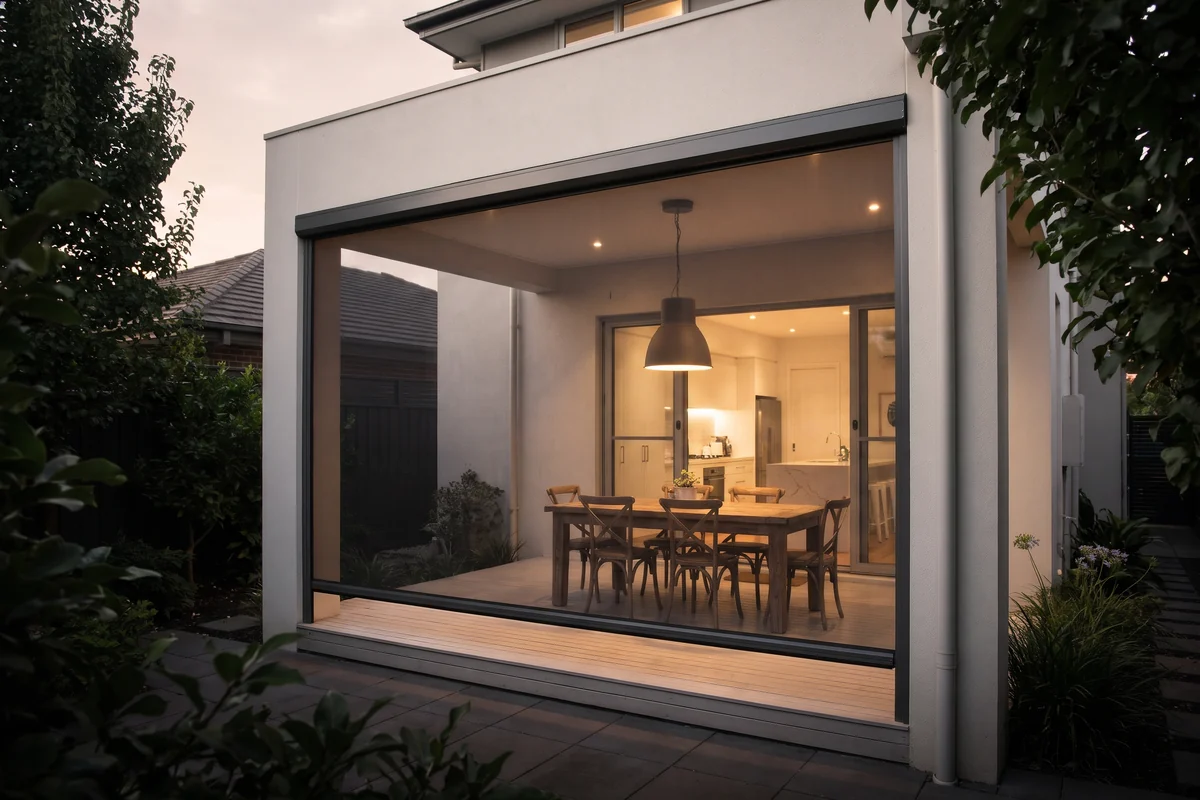
Insect mesh is not privacy after dark. Once the lights are on inside and it’s dark outside, anyone in the garden can see the table through the mesh, the same way you see out through it during the day. That’s the open weave doing its job.
It’s the same physics that catches people out with sheer curtains, and the fix is the same: another layer. If the alfresco faces a neighbour, the Executive can carry a privacy fabric instead, or run mesh and clear vinyl on a double roller for the cooler months. A privacy fabric isn’t an insect mesh, so it’s a decision for the measure rather than the first dinner party.
Rinse the mesh, don’t scrub it
Insect mesh asks very little. Brush or hose off the dust, pollen and salt every so often, use mild soapy water when it needs more than that, and let it dry before you roll it up. That last part matters more than it sounds, because a damp screen rolled into its housing stays damp. Keep the side channels and the floor of the opening clear of leaves, too. The bottom bar has to sit flat for its brush seal to close the gap at the floor. It’s a hose and a soft brush, not a weekend.
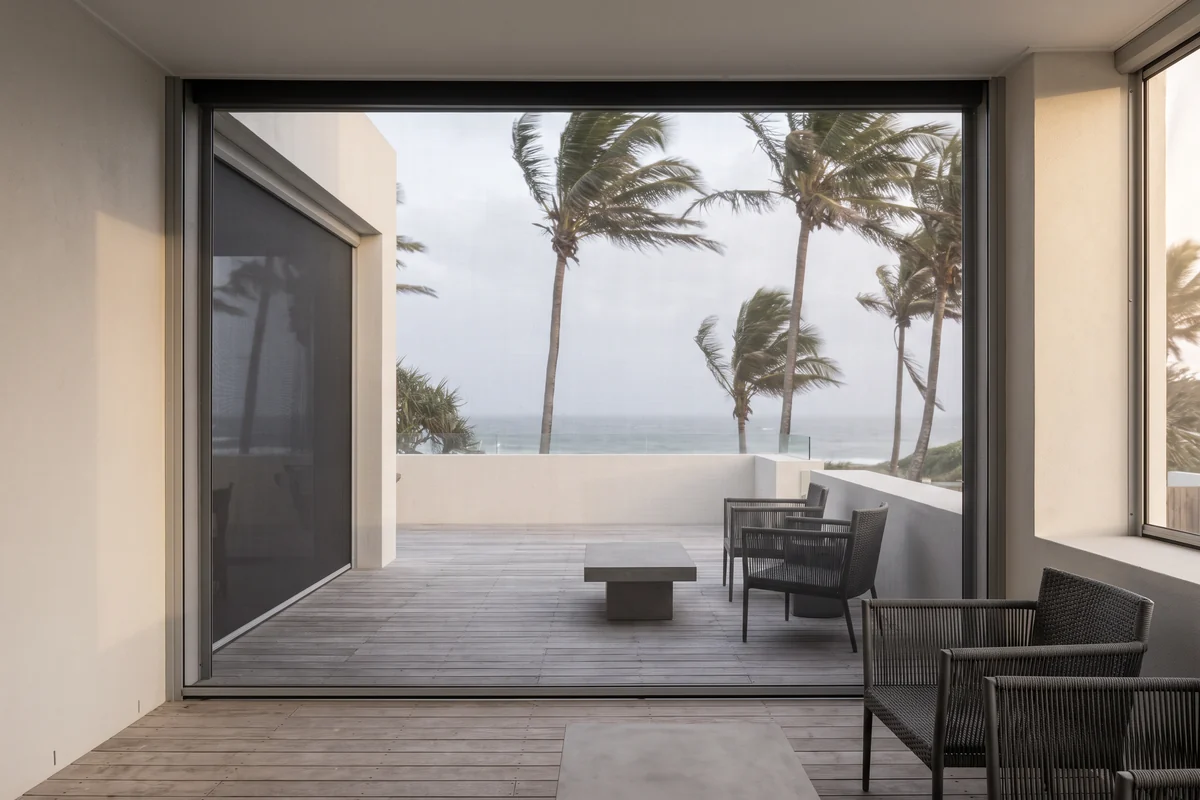
Wind is the other thing to know. In a breeze the side channels hold the mesh taut and it can stay down. In strong wind it should be fully down or fully up, never half-way, which is the position it likes least, and it should come up in severe weather. A wind sensor can raise it for you. Rolled up, the mesh sits inside the housing, out of the sun and the storms.
If a dog or a stray branch does get through it, the mesh is replaceable, so a tear is a repair rather than a new screen.
Know where we fit it, and where we don’t
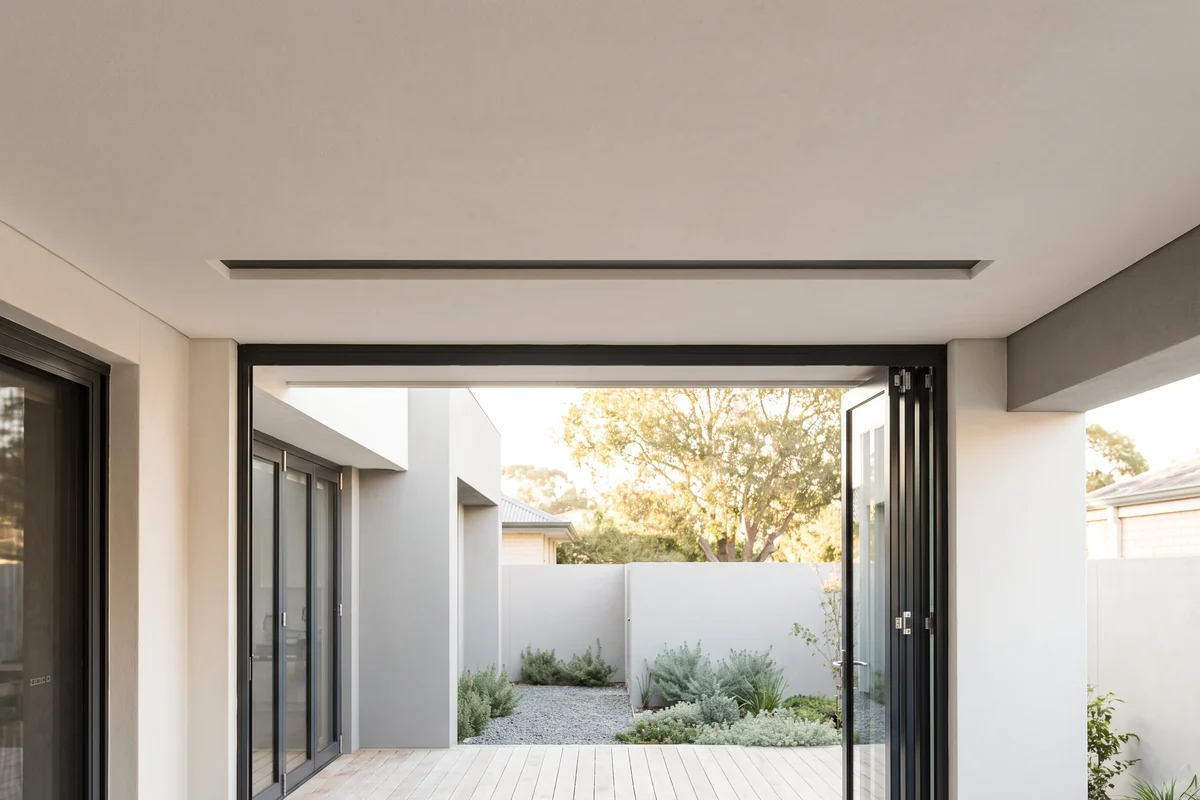
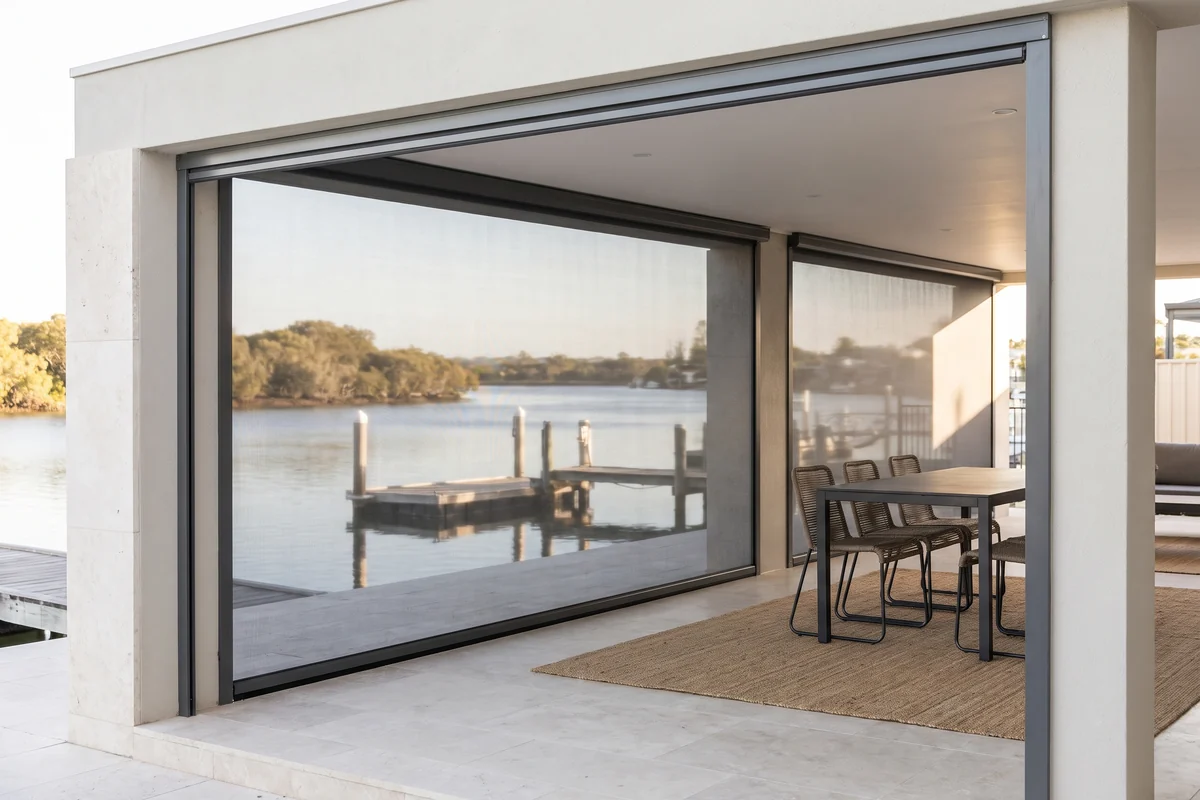
We fit insect mesh in one product, the Phantom Executive: a motorised, track-guided screen for patios, alfresco areas, balconies and large openings, up to 12 metres wide in a single span. The mesh is zipped into captured side channels, with a brush seal along the bottom bar, so the edges are as closed as the face. Rolled up, it disappears into a housing that can be recessed into the beam.
Every Executive sold in Australia is motorised and hardwired, so it needs power at the housing. If you’re building or renovating, tell the electrician early. We fit them across Brisbane and the Gold Coast, and the alfresco screens page goes through what we’d specify for each kind of outdoor room.
Here’s what we don’t do. We don’t sell mesh by the roll, we don’t rescreen windows or doors, and we don’t fit a fly screen to a single back door. That’s a different product, and I’d rather tell you now than send someone out to measure it.
Frequently asked questions
What is insect mesh?
A woven screen fabric open enough to let air and light through, with gaps too small for mosquitoes and flies. On an outdoor screen it hangs across the opening and rolls away when you don’t need it. The standard weave is 18×14.
What size is standard insect mesh?
18×14, which means 18 strands per inch one way and 14 the other. Phantom puts it at about 58 per cent open. The finer 18×18 midge mesh is about 48 per cent open.
Is insect mesh the same as sunscreen mesh?
No. Insect mesh is about 58 per cent open and is chosen for the insect it stops. Sunscreen fabric is usually 1 to 10 per cent open and is chosen for the glare it stops, so it takes much of the breeze with it.
Does insect mesh block UV?
Some. Phantom rates its standard 18×14 mesh at up to 40 per cent of UV blocked and its denser 30×20 at up to 65 per cent. For real shade you want a solar fabric, such as Phantom’s E-Screen.
Will insect mesh keep midges out?
Standard insect mesh won’t reliably stop biting midges, which are small enough to get through a standard fly screen. That is what the finer 18×18 midge mesh is for, and we specify it on canal, river and bayside homes.
Can I get insect mesh for my windows from Lusso?
No. We supply insect mesh only in the Phantom Executive, for patios, alfresco areas, balconies and other large openings. We don’t sell mesh by the roll or rescreen windows and doors.
Sources Brisbane City Council Mosquitoes in Brisbane · healthdirect, Ross River virus · WA Health Biting midge (sand flies) · Phantom Screens Australia mesh brochure and outdoor blinds
Back to the journalKeep reading
Related from the journal
 Guides
Midge mesh: does it work, and do you need it?
The finer weave stops sandflies, but only if the edges seal. What it costs you in airflow, and the houses that are better off without it.
Read more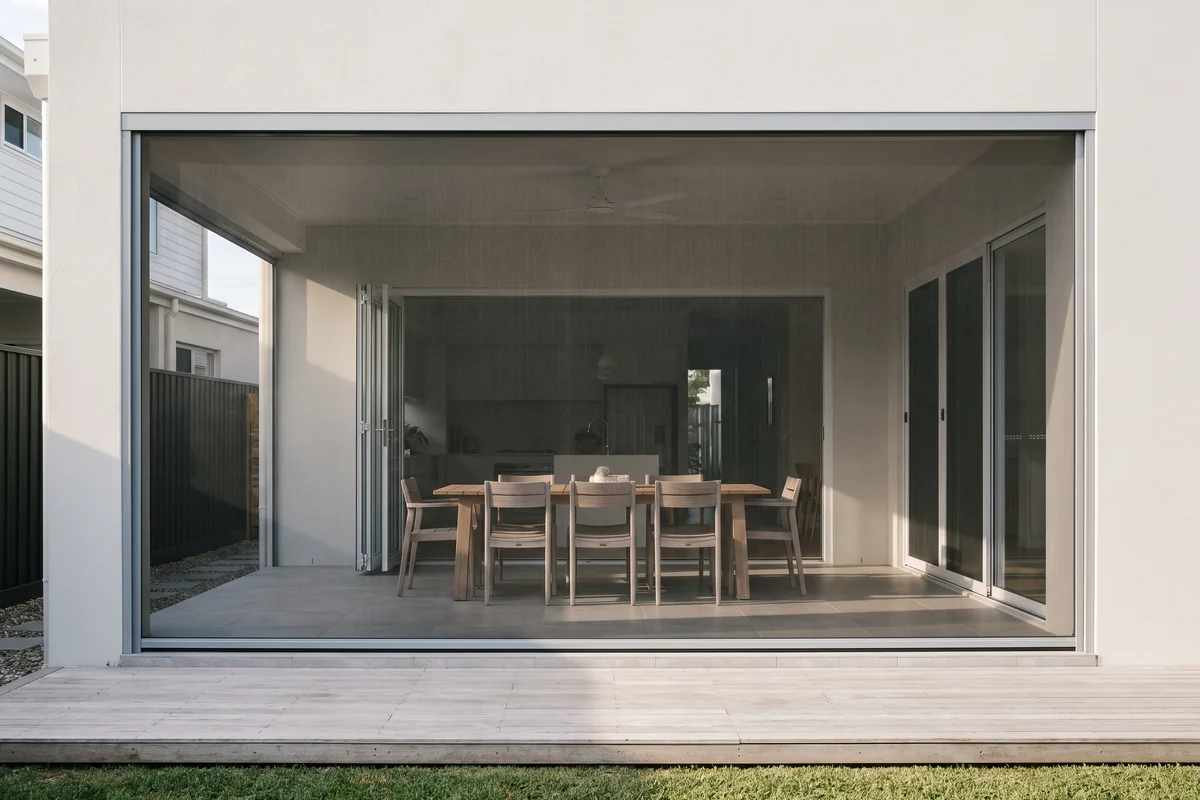 Guides
Phantom Executive screens: sizes, mesh and fitting
One motorised screen across 12 metres. Which housing, which mesh keeps sandflies out, when to plan the ceiling recess, and when a ZipScreen is the better buy.
Read more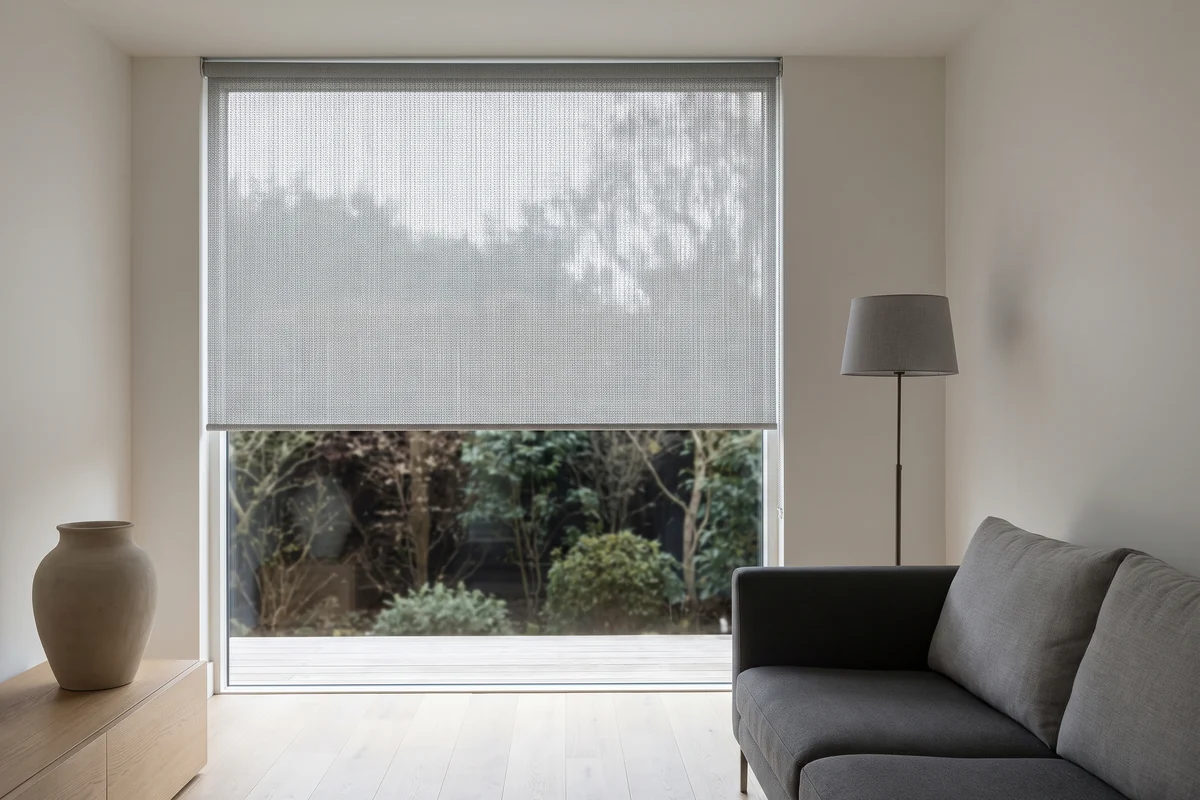 Guides
Sunscreen blinds and openness factor
Openness is the one number that decides how the blind behaves. What 1%, 3%, 5% and 10% each do — and why the American advice about north-facing windows is backwards here.
Read more