

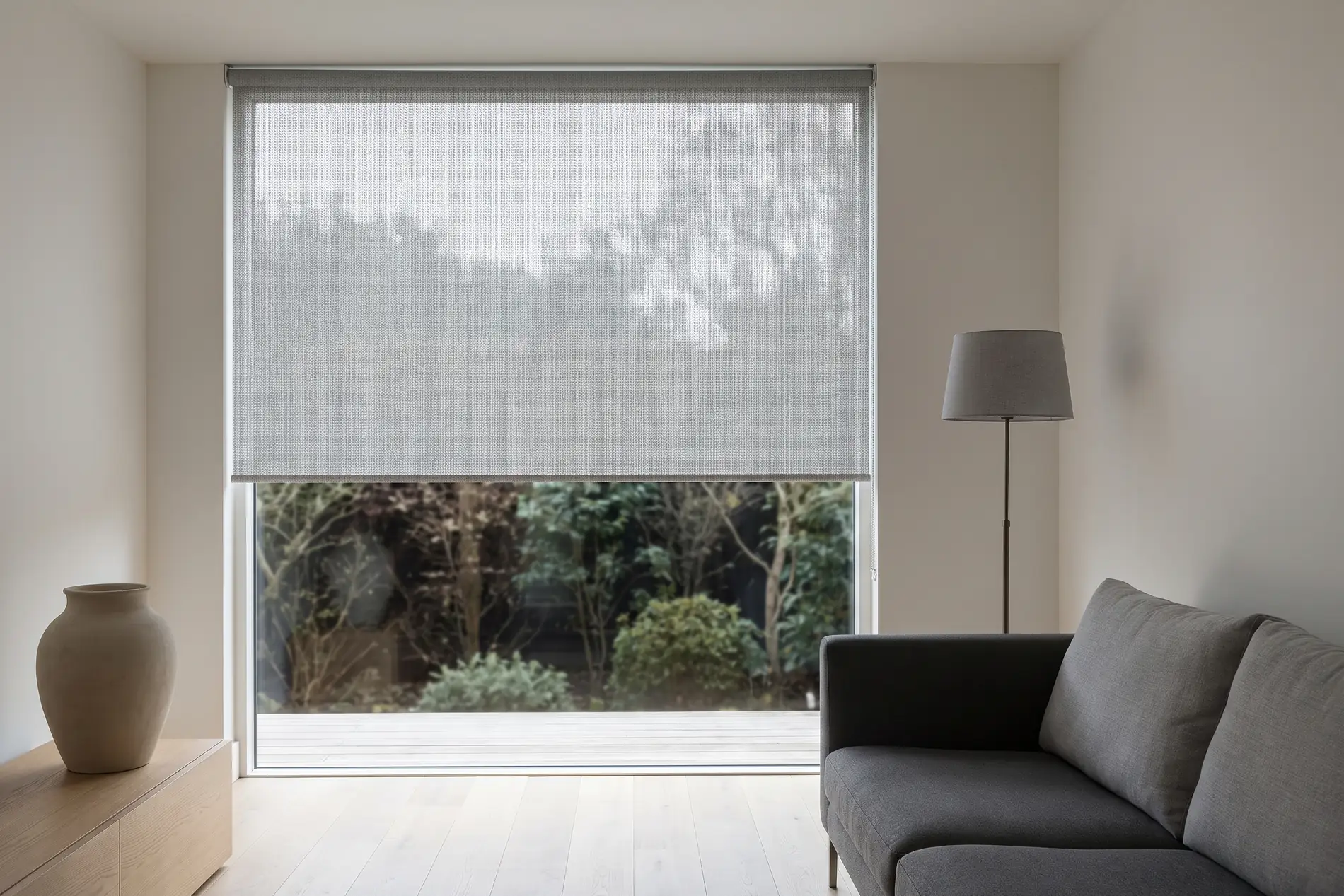
How to Measure for Roller Blinds, Step by Step
How to measure for roller blinds like an installer: reveal fit vs face fix, three widths, the drop, bracket clearance, roll direction and cord-safety rules.
To measure for roller blinds, first decide whether the blind sits inside the window recess or on the wall in front of it. For a reveal fit, measure the recess width in three places and use the narrowest, then the drop in three places and use the longest. For a face fix, measure the opening and add overlap — at least 70mm above and 50mm each side. Millimetres only.
And say on the order which one you have given: the recess size, or the blind size. Getting those two mixed up causes more remakes than bad tape work ever will.
Every made-to-measure blind we quote gets measured by us, so strictly speaking you never have to do this. But plenty of people want to know the number before they call, or want to sanity-check a quote, or are ordering something online for a laundry window and would rather not pay for it twice. So here is the method, including the parts the UK and US retailer guides leave out because they do not apply to a Queensland aluminium slider with a security screen on it.
Decide reveal fit or face fix before you touch the tape
This decision changes every number you write down, so make it first. A reveal fit (inside mount) sits within the window recess. A face fix (outside mount) fixes to the wall, the architrave or the ceiling in front of the opening.
Reveal fits look tidier and leave the sill free. Face fixes control light. If the room is a bedroom, or you are buying blockout roller blinds for a west-facing living room, face fix and overlap generously — most of the light that annoys you comes around the edges of a blind, not through the fabric. A reveal-fitted blockout blind in a bright room will still draw a bright line down each side at 6am in January.
| Reveal fit (inside) | Face fix (outside) | |
|---|---|---|
| What you measure | The recess, three places | The opening, plus overlap |
| Light gap down the sides | Unavoidable — a few millimetres each side | Effectively none if overlapped |
| Needs reveal depth? | Yes, enough to clear the tube and glass | No |
| Out-of-square windows | Punishing — the gap shows | Forgiving — the overlap hides it |
| Best for | Sunscreen, kitchens, tiled reveals, keeping the sill | Bedrooms, blockout, shallow or obstructed reveals |
Measure the width three times and trust the smallest
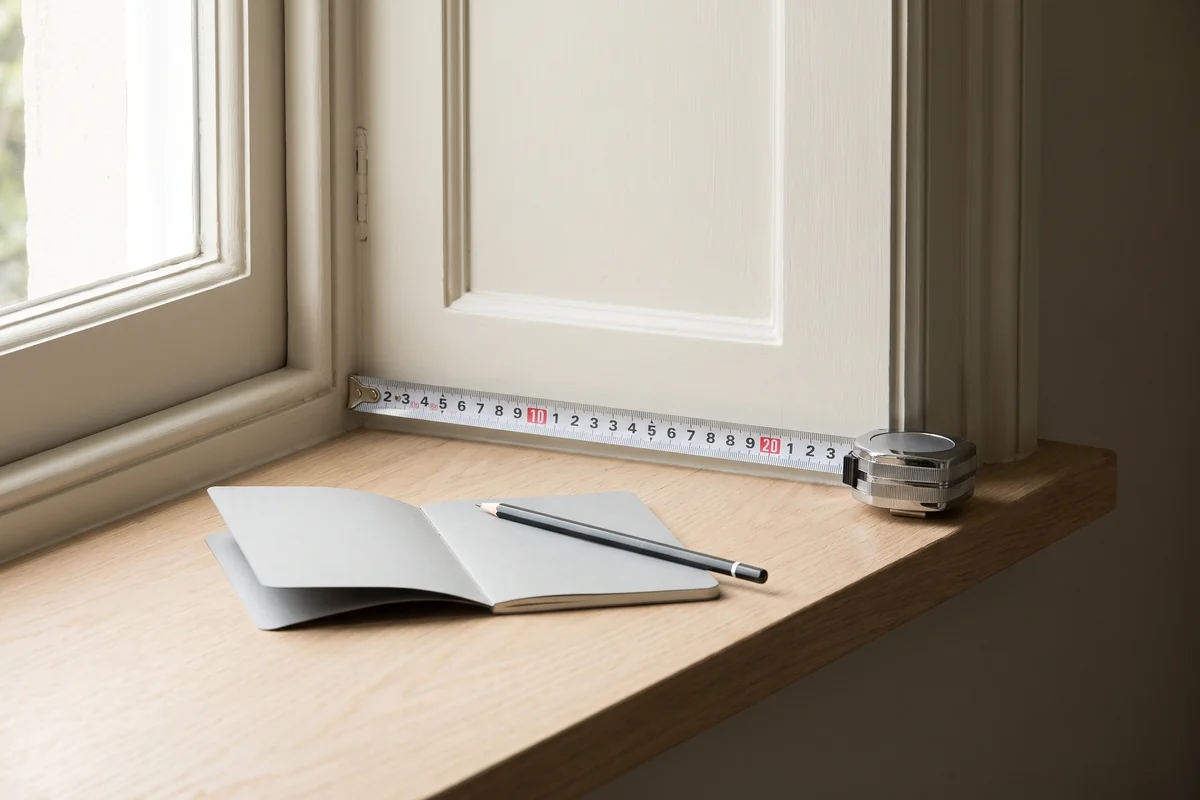
Use a steel tape, not a dressmaker's tape. Measure the recess width at the top, the middle and the bottom, and write all three down. Almost no window in a house more than five years old is square, and the difference between top and bottom is often 5–15mm.
- Top, middle, bottom. Take all three across the full recess, plaster to plaster or tile to tile.
- Use the narrowest for a reveal fit. A blind made to the widest measurement will jam somewhere on the way down.
- Flag a difference over 20mm. That is not a measuring problem, it is a wall problem, and it usually means face fixing is the better answer.
- Width first, then drop. Every order form in the country reads width × drop. The remakes are nearly always the jobs where someone typed them the other way round.
Check for obstructions while you are in there — tiled returns that stop halfway down, a window winder, a sliding security screen, a picture rail. Measure between the obstacles as well as at the top, and give both figures to whoever is making the blind.
Measure the drop to where you want the blind to stop
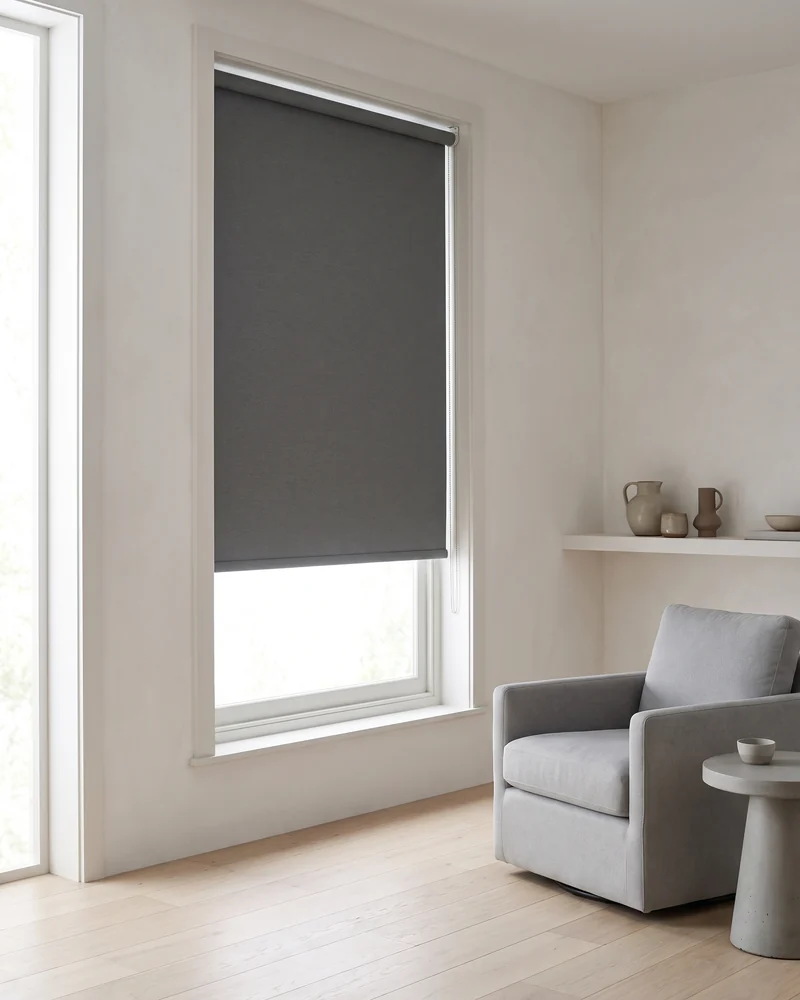
For a reveal fit, measure from the top of the recess to the sill, in three places, and use the longest. Fabric that stops 8mm short of the sill looks like a mistake because it is one.
For a face fix, the drop is a choice rather than a measurement. Start at the fixing height — at least 70mm above the opening, more if you want the roll hidden behind a pelmet line — and finish either 20–30mm below the sill for a neat stop, or run it to the floor if there is no sill and the blind is doing blockout duty. Watch for a heater, a bench return or a power point in the path.
On sliding doors, the drop is nearly always to the floor and the width nearly always needs splitting. That has its own rules, which we cover in blinds for sliding doors.
Understand the gap you cannot measure away
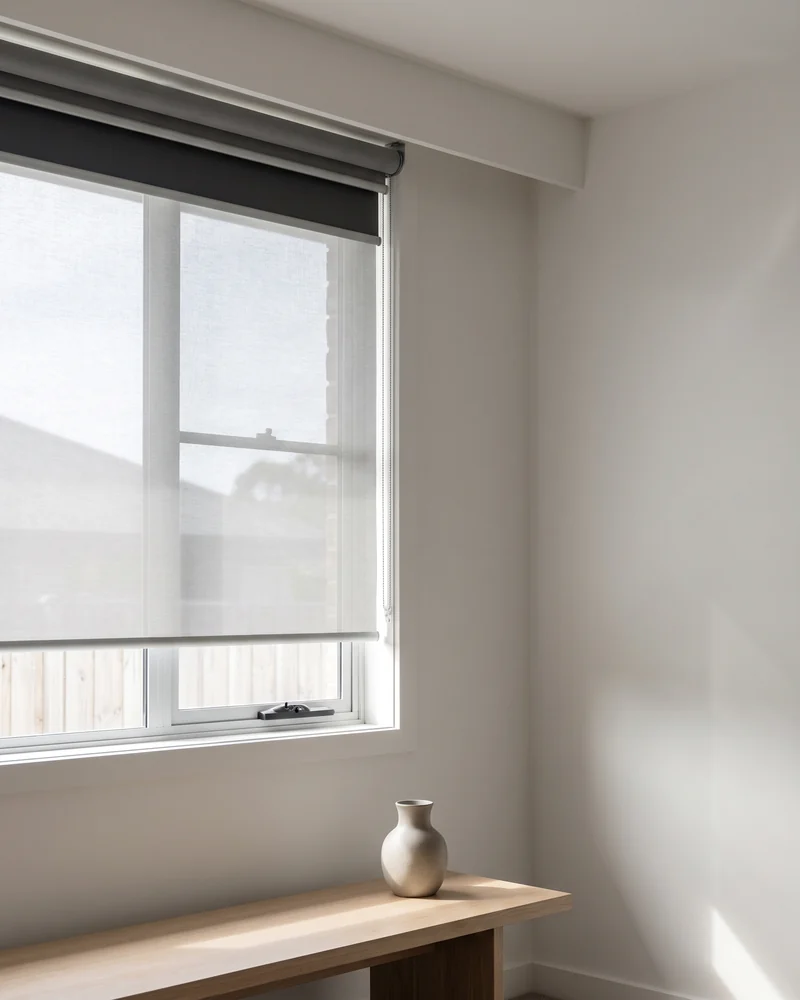
Here is what the overseas guides skip. The number you order is the overall blind width — bracket to bracket. The fabric is narrower than that, because the control end and the idle end both take up space inside the brackets. So a reveal-fitted roller blind always shows a small light gap down each side, and no amount of careful measuring removes it. The size of that deduction depends on the bracket system, which is why it sits on the quote instead of in an article.
Depth matters too. The rolled-up fabric needs to clear the glass, the winder and the flyscreen frame, and a bigger blind needs a bigger tube — we specify a 60mm tube on anything wider than about 3 metres, and a 60mm tube with 2.4 metres of fabric wrapped around it is a fat roll. A shallow reveal on a slider is often the moment a reveal fit quietly becomes a face fix.
If you are pairing a sunscreen and a blockout on one bracket, the depth question gets sharper again — dual roller blinds carry two tubes, not one.
Choose standard roll or reverse roll deliberately
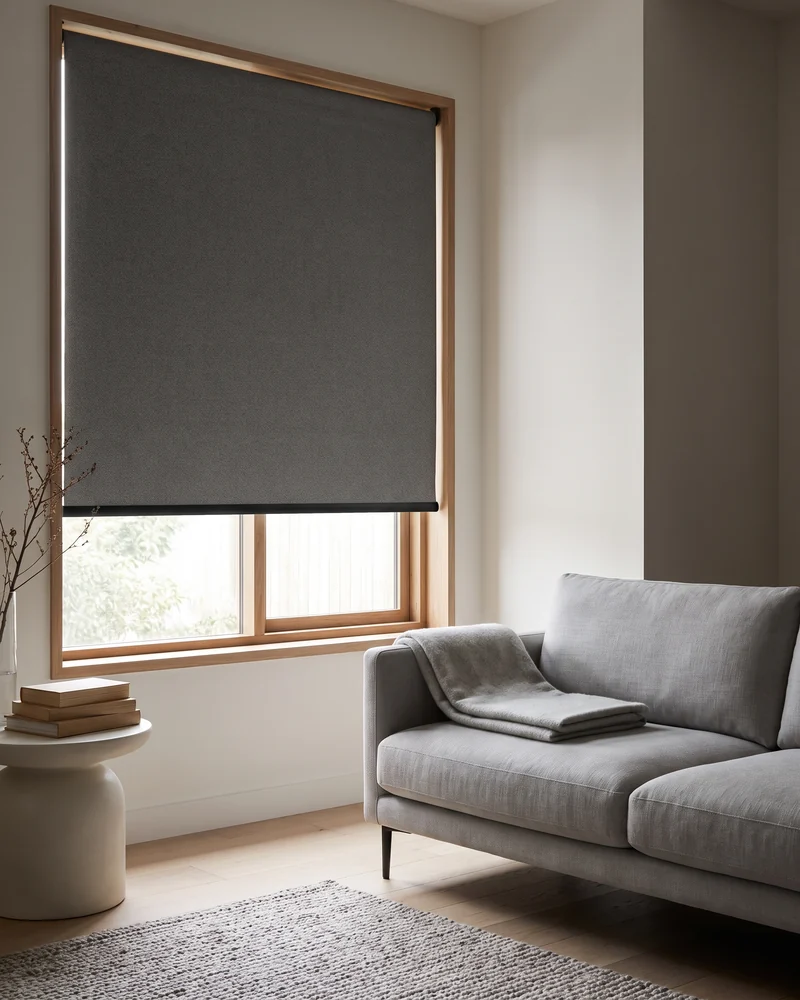
Standard roll means the fabric comes off the back of the tube, closest to the glass. It gives the smallest light gap and looks cleanest, and it is the default. Reverse roll brings the fabric off the front of the tube, over the top of the roll.
Reverse roll exists for clearance. If you have a window winder, a chunky architrave, a security screen frame or a sliding-door track in the way, reverse roll moves the fabric forward and past it. The cost is a slightly larger gap at the top and a marginally more visible roll. Decide this at the measure, not after — it is built into the blind, not adjusted later.
Fabric choice interacts with all of it. A 1% openness sunscreen and a 10% openness sunscreen behave very differently in the same reveal, which is the subject of openness factors on sunscreen blinds.
Would you rather not be responsible for the number?
We measure every opening ourselves, itemise the quote component by component, and send it back within 24 to 48 hours. If we measured it and it does not fit, that is ours to sort out.
Measure for the chain, not just the fabric
Australia has a mandatory safety standard for corded internal window coverings, and it affects a measurement most guides never mention: the control chain. Loose cords and chains have to be secured so they cannot form a hazardous loop within reach of a child — the standard sets a clearance above floor level and requires a tension device or cleat to be supplied and installed. The rule itself is the Competition and Consumer (Corded Internal Window Coverings) Safety Standard 2014, and the ACCC's product safety guidance sets out what it means in practice.
Practically, that means a tall window gets a longer chain, the cleat position gets marked at install, and in a child's room the right answer is often no chain at all — spring or motorised. As a member of the Window Shading Association of Australia, we work to those child-safety and compliance standards as a condition of membership, not as an optional extra.
Two more site realities worth checking before you commit a number. Fixing substrate: brick, timber architrave, plasterboard and aluminium all take different fixings, and a bracket screwed into plasterboard alone will pull out eventually — it is a matter of when. Out-of-square reveals: packers behind one bracket keep the tube level so the fabric tracks straight instead of creeping to one side over a year. Neither shows up on a tape measure, and both decide whether the blind still works in 2035. If you want the wider view on where rollers earn their keep against the alternatives, the roller blind range covers the fabrics that decide it.
Frequently asked questions
How much smaller should a roller blind be than the window?
For a reveal fit, the finished blind sits a few millimetres narrower than the recess so it can turn without rubbing, and the fabric itself is narrower again because the brackets and control end take up room at each end. The exact deduction depends on the bracket system, so it belongs on the quote rather than in a blog. For a face fix, the blind should be wider than the opening, not narrower.
Do you measure roller blinds inside or outside the recess?
Both are valid, and the choice comes before the tape measure. Inside the recess looks neater and keeps the sill usable. Outside the recess — face fixing to the wall or architrave — gives you far better light control, so it is the right call for bedrooms and anywhere you want blockout to actually behave like blockout.
Should I measure in millimetres or centimetres?
Millimetres, always. Every Australian order form runs in millimetres, and centimetres with a decimal point are the single easiest way to lose or gain a centimetre in transcription. Write 1842, not 184.2.
What is the minimum depth needed for an inside-mount roller blind?
It depends on the bracket and the tube. A wider or longer blind needs a bigger tube, and the rolled-up fabric on that tube needs somewhere to sit clear of the glass and the window furniture. Rather than quote a number that may not match the system you end up with, we check the reveal depth at the measure and tell you then whether it will fit.
What is the maximum width for a single roller blind?
About 3 metres as a working maximum, and wider on some fabrics that can be railroaded — turned sideways on the roll. Past that, or where a fabric will not take railroading, we split the opening into two or three blinds. They can sit on a shared bracket so the joins read as deliberate.
What happens if I ordered wrong and the blind does not fit?
A made-to-measure blind cut to a customer-supplied size is not a warranty matter — it was made correctly to the wrong number. That is the whole reason we measure before quoting rather than after. If we measured it and it does not fit, that is ours to fix.
Do you measure the window or the frame for roller blinds?
Neither, exactly. For a reveal fit you measure the recess — the finished opening, tile to tile or plaster to plaster. For a face fix you measure the frame or the glass and then add overlap on top of it. Measuring the glass and ordering that size is how you get a bright halo around a blockout blind.
Sources Australian Government Your Home — Glazing · ACCC blinds and window fittings mandatory standard · Sleep Health Foundation
Back to the journal