

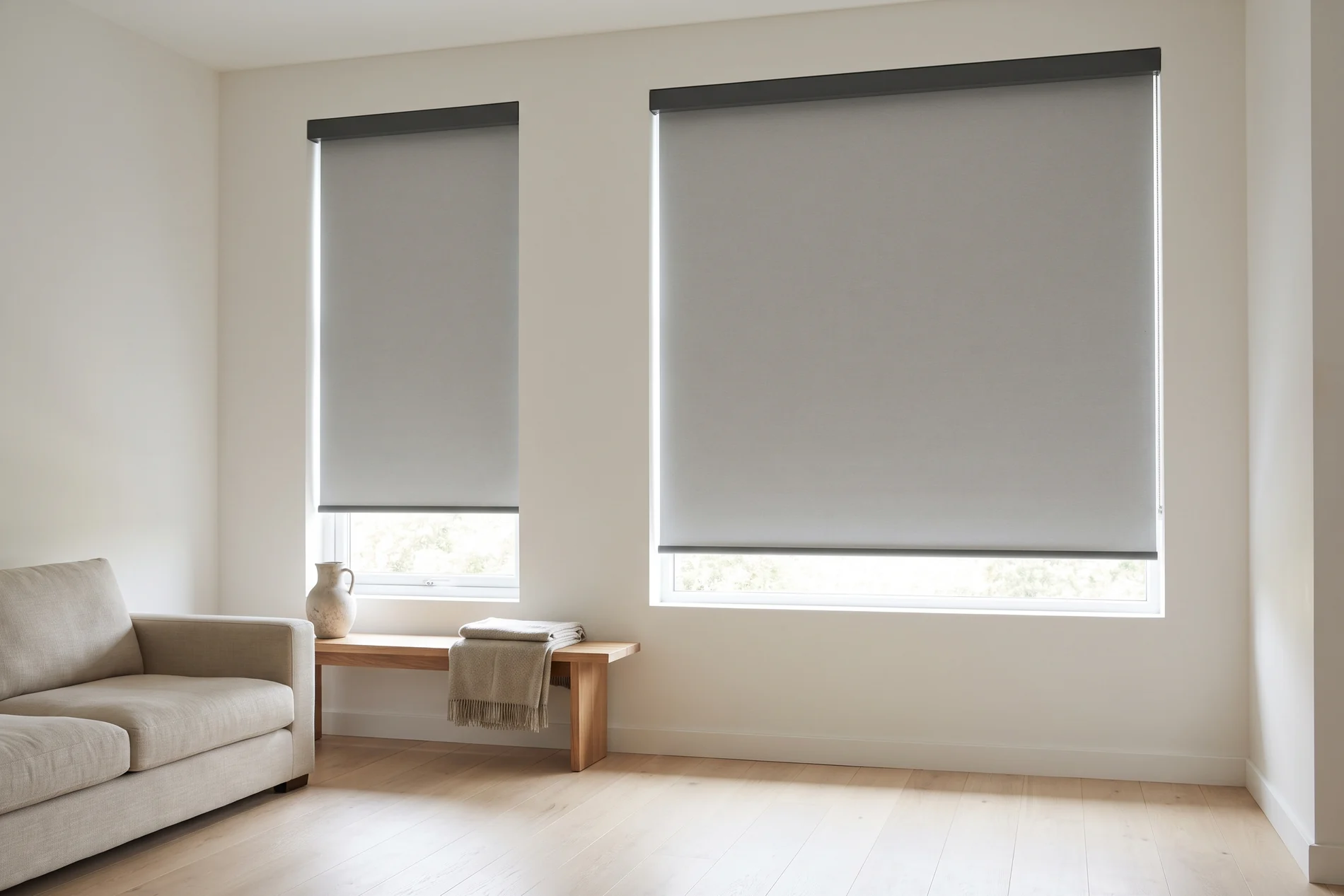
How much do blinds cost?
The published ranges span thirty to one. Most of that gap is three different things being called the same word.
How much do blinds cost depends on which of three things you are pricing. A ready-made blind off a shelf starts around $50 a window. A blind supplied and installed averages $200 to $400 for a standard window. Fitting labour on its own is $30 to $150 a blind. Australian cost guides call all three “the cost of blinds”, which is why the published ranges look thirty to one.
Forced to give one number: budget $200 to $400 a window for made to measure, and expect the wide openings to break it.
Every figure on this page belongs to somebody else. Lusso does not publish a price list, for reasons I get to at the end, so what follows is the Australian market as three independent cost guides report it — plus the parts of a quote that decide where inside those ranges you land, which is the half nobody writes down.

Why the published ranges disagree by ten times
Airtasker’s curtain and blind fitting cost guide opens by saying fitters charge between $400 and $1,100 per window. Further down the same page it lists venetian blind installation at $36 to $72 and roller blind installation at $40 to $150. Both numbers are correct. They are measuring different things — the first is a whole fitting job across a house, the second is the labour on one blind — and nothing on the page tells you that.
That is the entire reason this question is hard to answer. Three separate products share one search term:
- The blind on its own. A stock-size roller off a shelf, or a made-to-measure blind supplied but not fitted. Trade Heroes prices a roller here at $60 to $200.
- The blind supplied and installed. ServiceTasker puts the Australian average at $200 to $400 a window, and a roller specifically at $50 to $350.
- The fitting labour alone, where you have already bought the blinds. $30 to $120 for a Roman, $36 to $72 for a venetian, per Airtasker.
So before you compare two numbers, ask what each one includes. A range with no unit attached is not a price. It is decoration.

What each type costs, by the published figures
Here are the three guides side by side. Read across a row and you can see the unit problem in one line.
| Supplied & installed, per window (ServiceTasker) | Blind only, per window (Trade Heroes) | Fitting labour, per blind (Airtasker) | |
|---|---|---|---|
| Roller | $50–$350 | $60–$200 | $40–$150 |
| Venetian (aluminium or PVC) | $80–$600 | $80–$250 | $36–$72 |
| Venetian (timber) | — | $300+ | — |
| Vertical | $100–$450 | $50–$150 | $40–$65 |
| Roman | $120–$800 | $180–$400 | $30–$120 |
| Honeycomb | $150–$450 | $200–$400 | — |
| Double roller | — | $180–$350 | — |
| Panel glide | — | $200–$500 | — |
The pattern under all that noise is consistent. The bottom of every range is a stock-size blind in a standard window, in the plainest fabric the range offers. The top is a wide opening, a specialty fabric, or a slat that is real timber instead of aluminium. Roller blinds come out cheapest across all three guides because a roller is the simplest mechanism in the category — one tube, one bracket each end, one fabric. Venetian blinds spread widest because “venetian” covers both an aluminium slat and a timber one under the same word, and the published figures put daylight between them — $80 to $250 against $300 and up.

What “installed” actually adds
Fitters bill by the hour or by the blind, and the hourly rate varies more by city than most people expect. Airtasker’s averages are $55 an hour in Brisbane, $60 in Adelaide, $50 in Sydney, $44.50 in Perth and $40 in Melbourne. Trade Heroes quotes installation at $20 to $50 per square metre, and a measuring visit at $50 to $100. ServiceTasker adds $30 to $100 to take the old blinds down and cart them away.
Two of those line items are worth arguing about. The measuring visit is one. If you are buying made to measure, a check-measure is not a service fee, it is the insurance policy on the whole order — a blind cut eight millimetres wide is not a blind, it is a very expensive parcel. Ours is free and carries no deposit, and we want the dimensions and the aspect of the room before we quote anything, which is why the measure comes first rather than after you have chosen a fabric.
The other is the removal charge. Getting old blinds off is fifteen minutes with a drill. If it appears as a three-figure line, ask what is in it.

The line items that actually move a quote
None of the three guides covers this, and it is where the money is. A quote moves on the opening, not on the product name.
- Width, and the cliff at about three metres. A single roller blind runs to roughly three metres. Some fabrics go wider — railroaded, meaning the fabric is turned sideways so its width runs across the blind instead of down it — but not all of them take the rotation. Past that limit one opening becomes two blinds: two tubes, two sets of brackets, two controls, and a join down the middle you will see for the life of the room. A 3.4 metre stacker is not fifteen per cent more than a 2.9 metre one. It is nearly double.
- Tube diameter. Anything wider than three metres goes on a 60mm tube rather than the standard one, because a thin tube over a long span deflects and the fabric tracks off centre. That is a componentry change, and it is a line on the quote.
- Fabric family. Sunscreen and blockout are different price points before you get to colour, and inside sunscreen the openness factor moves it again — we stock 1%, 3%, 5% and 10%, and 1% is a denser weave than 10%. That is a performance decision rather than a taste one, because glazing is the weakest thermal point in most Australian homes and the fabric is what you are asking to fix it.
- Number of openings, not number of windows. A bay of three sashes under one head is three blinds. A single wide window is one. Count what has to be covered separately, not what the plan calls a window.
- Square and plumb. Old Queenslanders and anything renovated twice are rarely square. An out-of-square reveal is either packed and scribed on site or the blind is face-fixed to hide it, and both take longer than the standard fit.
This is also why an itemised quote is worth insisting on. Ours breaks down component by component, which is less about transparency theatre and more about the fact that you cannot compare two single-line quotes at all.

What motorisation adds, and when it is worth it
Trade Heroes prices a motorised roller blind at $700 to $1,500, against $60 to $200 for the same blind with a chain, and puts motor installation on its own at $150 to $300. High-end automated systems reach around $3,000. Take the midpoints and you are paying somewhere near $970 more per window than the manual version.
On a bedroom window you walk past every morning, that is $970 to avoid a two-second reach, and I will talk you out of it. Motorisation earns its money on the openings you cannot get to — a stairwell, a high clerestory, a run of six across a living room that nobody is ever going to operate one at a time — and it stops being a luxury the moment the alternative is a ladder.
Three practical notes that do not appear in any price guide. Motorisation is chosen when the blind is specified, because the motor and hardware are built into the product; it is rarely possible to add later. It adds about a week to the lead time, more if power has to be run to the opening, and hard-wired power is a licensed electrician’s job at your cost. And batteries are consumables — no manufacturer warranty covers them, ours included.
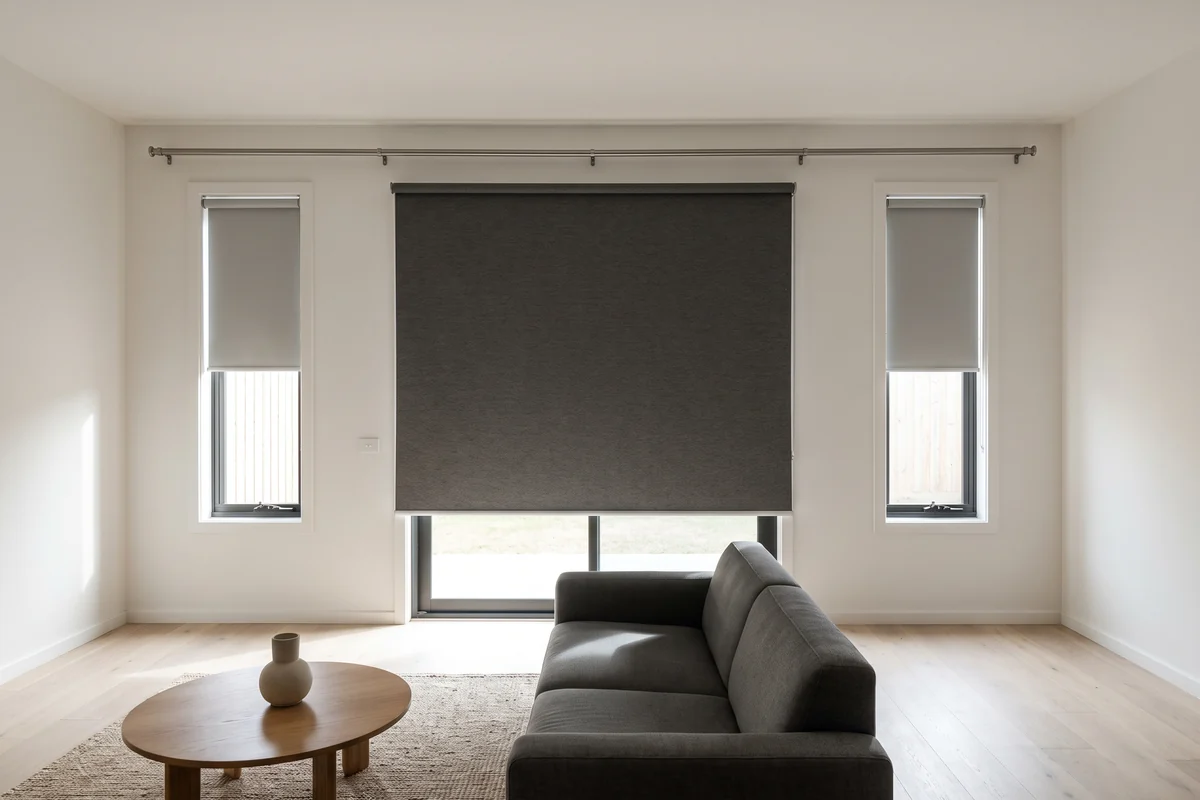
What a whole house comes to
Trade Heroes gives the whole-home figures most people are actually after: $200 to $600 for a one-bedroom apartment, $700 to $1,800 for a three-bedroom house, and $1,200 to $2,500 and up for a four-bedroom. It also says, on the same page, that covering all the windows in a home runs $200 to $1,200. Those two statements cannot both describe the same house, which tells you how much load the phrase “a three-bedroom house” is being asked to carry.
Count openings and widths instead. A three-bedroom house with nine standard windows and a laundry is a genuinely cheap job. A three-bedroom house with a 4.2 metre stacker off the living room, two 2.4 metre sliders and a void above the entry is not, and the difference is not the bedrooms — it is that the stacker alone will cost more than the three bedrooms put together, for the reasons in the section above.
If you are pricing a whole house, it is also the moment to work out where fabric stops being the answer. We cover that in the room-by-room comparison of blinds against curtains, and it changes budgets more than any per-window figure on this page.
Want the real number for your windows?
We measure, then quote in writing within 24 to 48 hours, itemised component by component. It costs nothing and there is no deposit to get a price.

What to check before you pay a deposit
This part is not in any of the three cost guides, and it is worth more to you than another dollar range. In Queensland, window furnishings fitted to a home can fall under domestic building work, which brings contract and deposit rules with it, and the general consumer rules from Queensland fair trading apply either way.
- A quote should cost nothing. No deposit buys a price. If someone wants money before you have seen a figure, that is a sales tactic, not a trade practice.
- It should be itemised. Component by component, so you can see what the fabric costs, what the componentry costs and what the install costs. Ours arrives within 24 to 48 hours of the measure.
- Check how long it stands. Thirty days is the convention and it is ours. A quote with no expiry is a quote nobody expects to honour.
- Know the payment split. Fifty per cent on accepting the quote, the remaining fifty on the day of installation, is the standard shape. Where domestic building work applies, Schedule 1B of the QBCC Act 1991 caps the deposit at a statutory maximum and you should be told the applicable amount before you pay it.
- Get the lead time on the quote, not after the deposit clears. Ours run two to three weeks for roller, venetian, vertical and honeycomb blinds, measured from check-measure to installation rather than from your first phone call.
- Ask what cancellation costs. It should be the costs actually incurred with an itemised statement, not a flat percentage someone made up.
- Separate the two warranties. Workmanship and product are different things with different clocks. We warrant our installation for 12 months from the day it goes in, and the products carry their manufacturer’s warranty — between 12 months and 7 years depending on the system, componentry and fabric.
Why there is no Lusso price list on this page
Because it would be wrong for most windows, and a wrong price is worse than no price. Made to measure means the width, the drop, the fabric, the control and the fixing decide the number between them, and a published figure would only be accurate for the imaginary standard window nobody has. The one thing I can promise about a price list is that yours would not be on it.
What we do commit to instead: the measure and the quote are free, the quote lands within 24 to 48 hours, it is itemised, and it stands for 30 days. Nothing is ordered until you are happy with it.
And the honest limit, since this is a cost page. If you are covering eight standard windows in a rental you do not own, ready-made blinds from a big-box store will do the job and we are not going to pretend otherwise — at $50 a window you are buying a stock size and a compromise on fit, and for a rental that is the right trade. Made to measure earns its money on the openings that are not standard, which in most Australian houses is the ones you actually live in front of. The same logic runs the other way on the premium end, which is why what plantation shutters cost is a separate conversation again.
Frequently asked questions
How much do blinds cost per window in Australia?
ServiceTasker puts the average at $200 to $400 a window supplied and installed, with rollers from $50 and Roman blinds reaching $800. Trade Heroes prices the blind alone at $60 to $200 for a roller and $180 to $400 for a Roman. The gap between the two sets of figures is installation, not disagreement.
How much do blinds cost for a 3 bedroom house?
Trade Heroes puts a three-bedroom house at $700 to $1,800. Treat that as a floor rather than a forecast, because it assumes standard windows. One 4 metre stacker door can add more than all three bedrooms combined, since anything past about three metres wide becomes two blinds and two sets of hardware.
How much does it cost to install blinds?
Airtasker puts fitting labour at $36 to $72 for a venetian, $40 to $150 for a roller and $30 to $120 for a Roman, with hourly rates from $40 in Melbourne to $60 in Adelaide. Trade Heroes quotes $20 to $50 per square metre. Where blinds are supplied and installed by the same company, that labour is usually already inside the per-window price.
How much do motorised or electric blinds cost?
Trade Heroes prices a motorised roller blind at $700 to $1,500 against $60 to $200 for the manual equivalent, with motor installation alone at $150 to $300 and high-end automated systems near $3,000. Motorised and electric blinds are the same thing under two names. Budget about a week of extra lead time, and an electrician if the motor is hard-wired rather than battery powered.
Are custom made blinds worth it over ready-made?
On a standard-sized window in a place you do not own, often not — ServiceTasker prices ready-made at $50 to $100 a window and custom at 20 to 40 per cent above the equivalent. On anything wide, tall, out of square, or in a room you look at every day, made to measure is the difference between a blind that fits the opening and one that nearly does. Light gaps down the side are almost always a fit problem, not a fabric one.
Do I have to pay for a measure and quote?
Not with us. The check-measure and the written quote are free and carry no deposit, and the quote arrives within 24 to 48 hours of the measure. Some suppliers do charge $50 to $100 for a measuring visit, per Trade Heroes, so it is worth asking before you book one.
How much deposit should I pay for blinds?
Fifty per cent on accepting the quote and the remaining fifty on the day of installation is the standard shape, and it is ours. Where the job counts as domestic building work in Queensland, Schedule 1B of the QBCC Act 1991 caps the deposit at a statutory maximum and the supplier should tell you that amount before taking payment.
Sources Australian Government Your Home — Glazing · ACCC blinds and window fittings mandatory standard · Sleep Health Foundation
Back to the journalKeep reading
Related from the journal
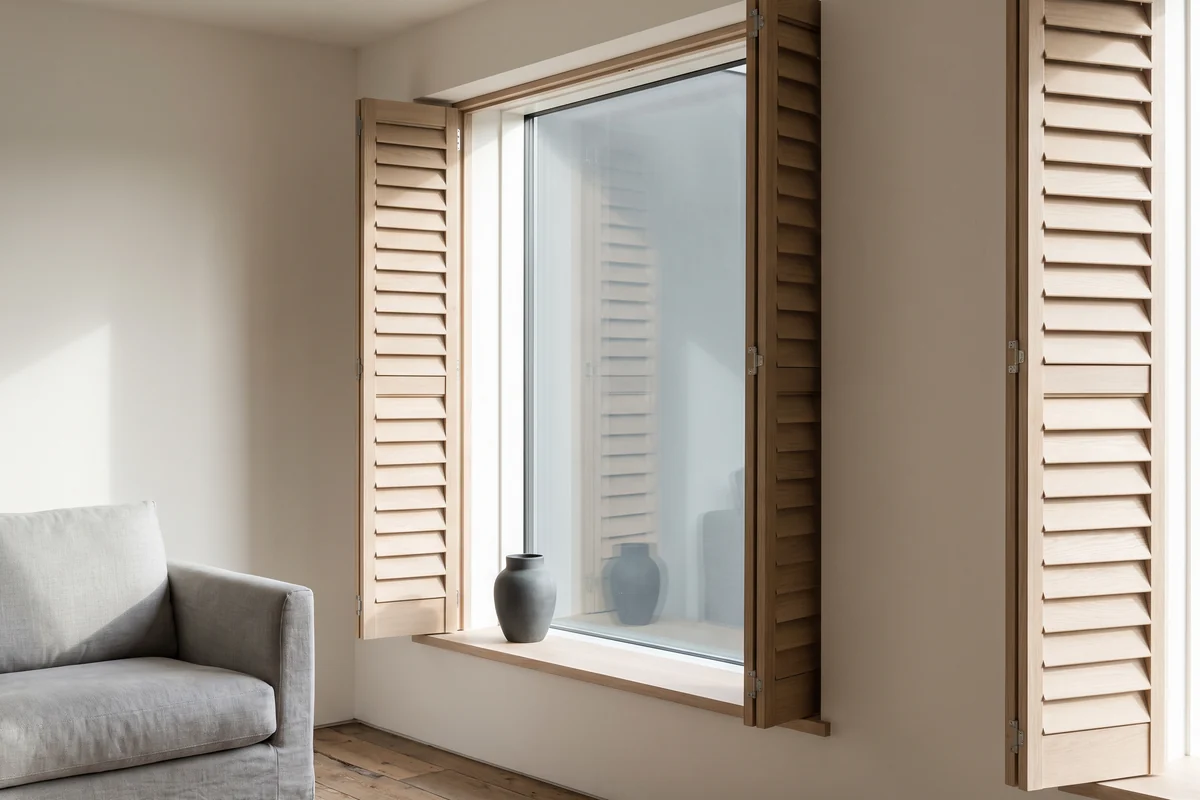 Guides
How much do plantation shutters cost?
Plantation shutters cost $300 to $1,500 a window in Australia, and both ends are true. Here is why, what a whole house comes to, and what the quote leaves out.
Read more Guides
Blinds vs curtains: how to choose, room by room
The opening decides it, not the product. What each one does better, why the heat argument is really an installation argument, and the cord rule that settles a child’s room.
Read more Guides
Types of curtains and blinds
Nine kinds of blind, three curtain headings, two fabric families and one shutter — what each is genuinely good at, and the two categories we deliberately do not sell.
Read more