

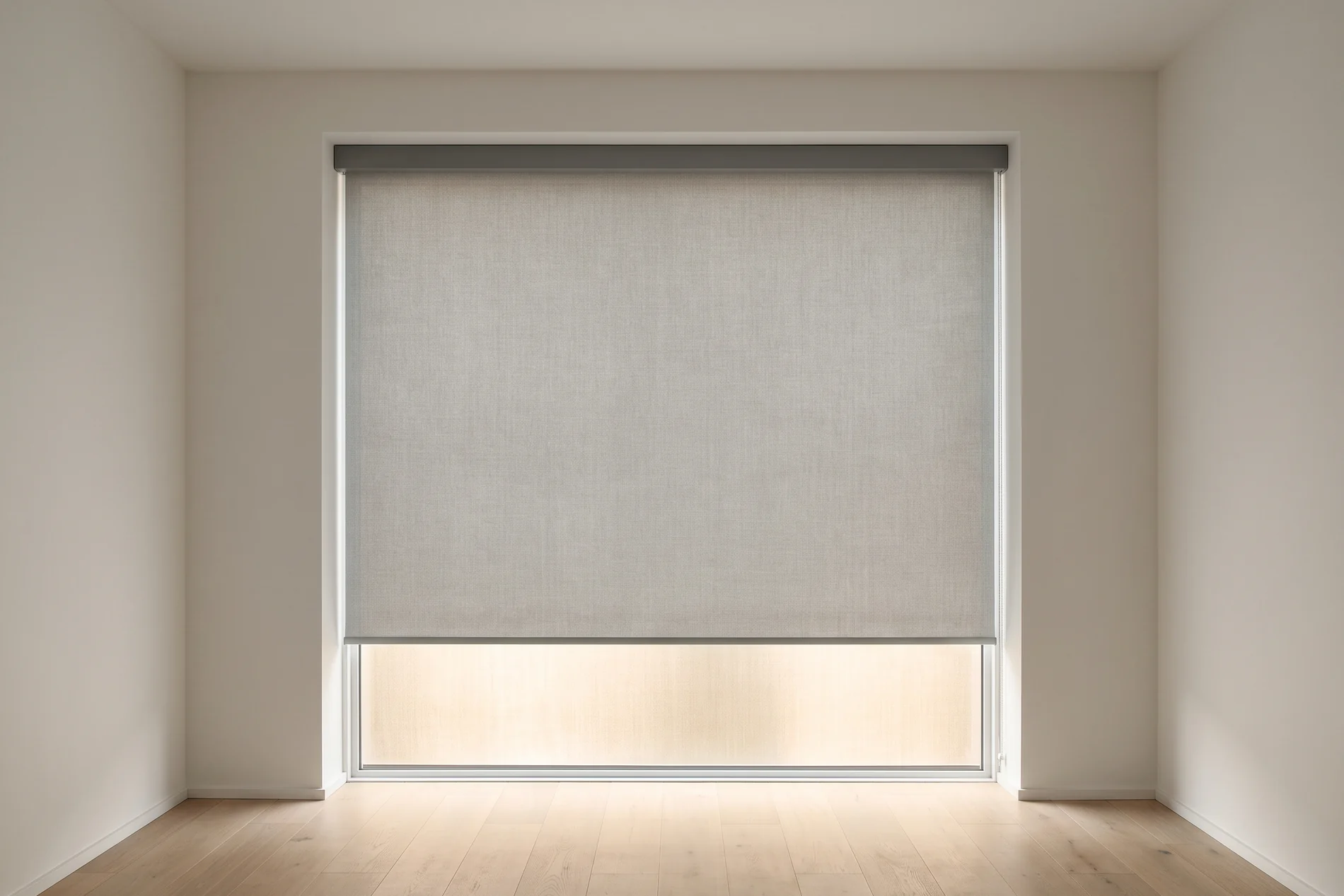
What is a Holland blind?
It is a roller blind. The interesting part is why we ever called it anything else — and which of the real choices actually change how the blind performs.
A Holland blind is a roller blind. Same flat panel of fabric, same single tube, same brackets — Holland blind is simply the older Australian name for it, and much of the trade still says it.
Forced to give one instruction: ignore which word your quote uses and read the fabric line instead.
Both names sit on the same product. If one quote says Holland and the other says roller, you are comparing the same blind, described by two generations of the trade.
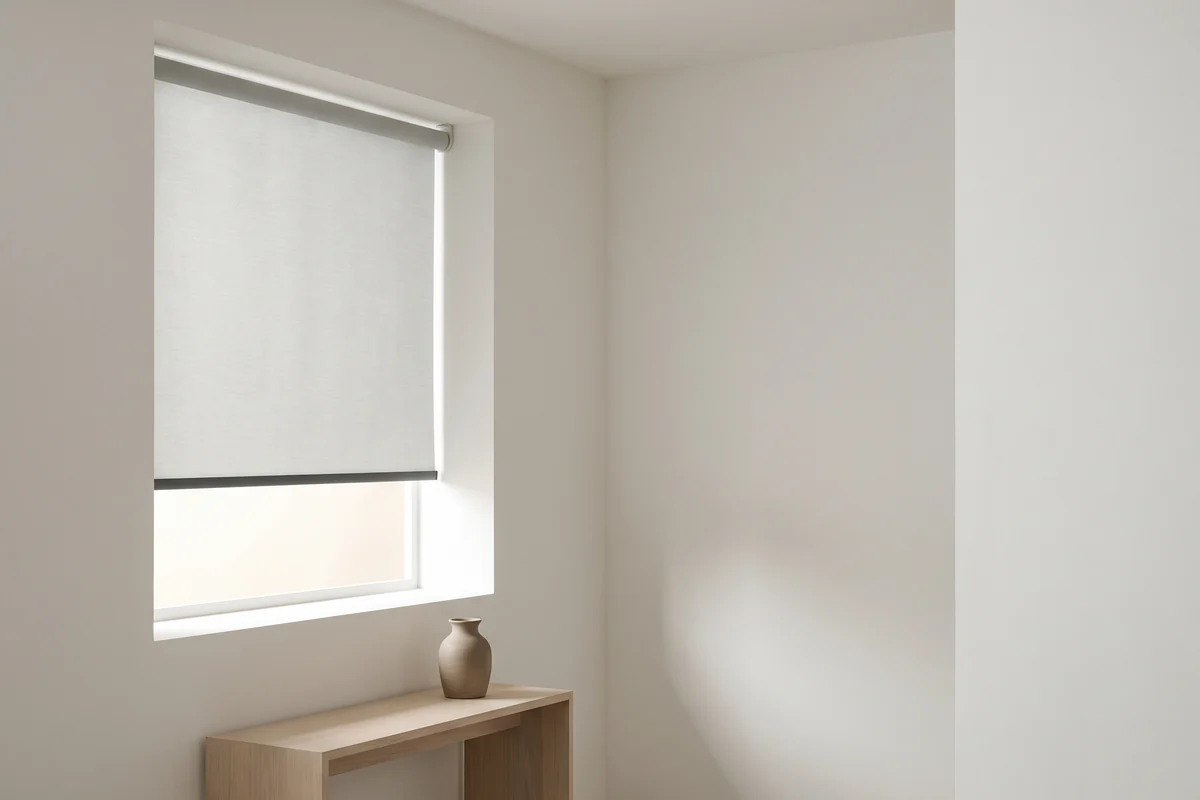
One product, two names
Strip a Holland blind back to its mechanism: one flat width of fabric wound onto an aluminium tube, a bracket at each end, and a control that turns it — a chain, a spring, or a motor.
Nothing in that description changes when the word does. No second mechanism, no different bracket, no separate range of fabric. The blinds we quote as roller blinds are the ones an older customer rings up and calls Hollands.
The only thing that reliably changes between the two words is how long the person saying them has been in the trade.
Where the name actually comes from
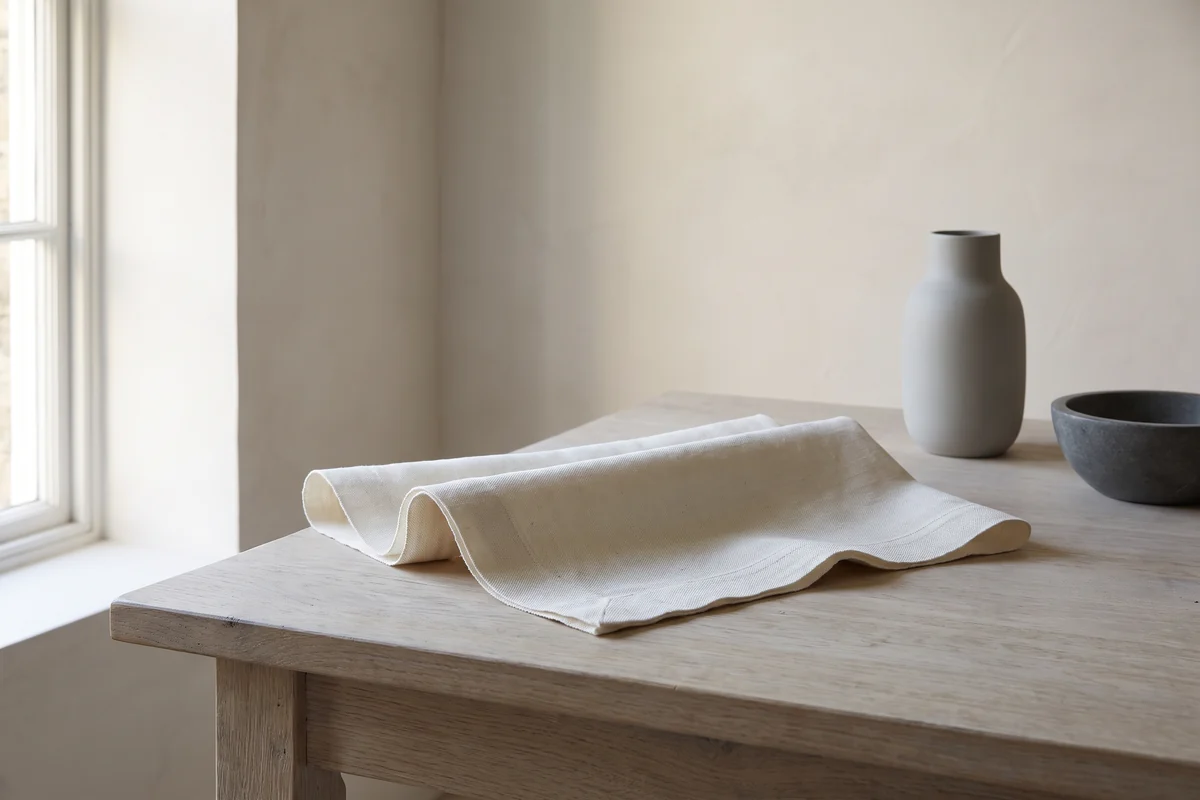
Here is the part every competing page skips. Holland cloth is a real material — a plain-weave linen or cotton, stiffened with oil, sizing or starch until it turned opaque, and named for the Netherlands, where it was woven. It was made, among other things, for window blinds.
So a Holland blind was originally a blind made from Holland cloth: the name described the material, not the mechanism. That is why it survived as a synonym rather than a category of its own.
Modern fabric is nothing like it: woven or knitted polyester, coated to control how much light passes. The cloth the name refers to has not been on an Australian window in a very long time.
The difference the internet invented
Search the two terms together and you will find pages separating them with confidence: Holland blinds use a spring, roller blinds use a chain, Holland blinds are made from thicker textiles. It reads authoritative. It is not true.
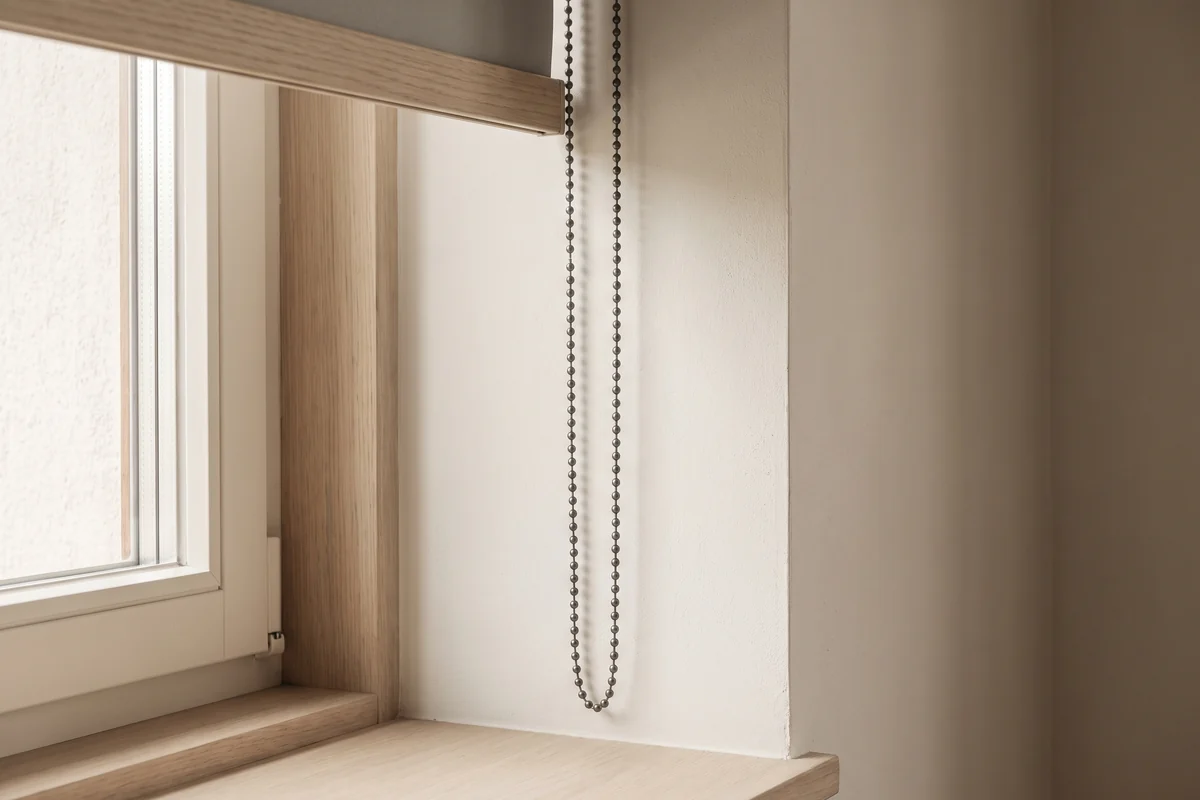
Spring, chain and motor are control options you choose on the same blind, the way you choose a colour. A sprung blind and a chain-driven blind come off the same tube, from the same roll, on the same day. Fabric weight is a fabric choice in exactly the same way.
The honest half of it: the claim is not malicious. The pages making it are filling in a comparison template that happens to be comparing a product with itself.
Choose the fabric, not the name
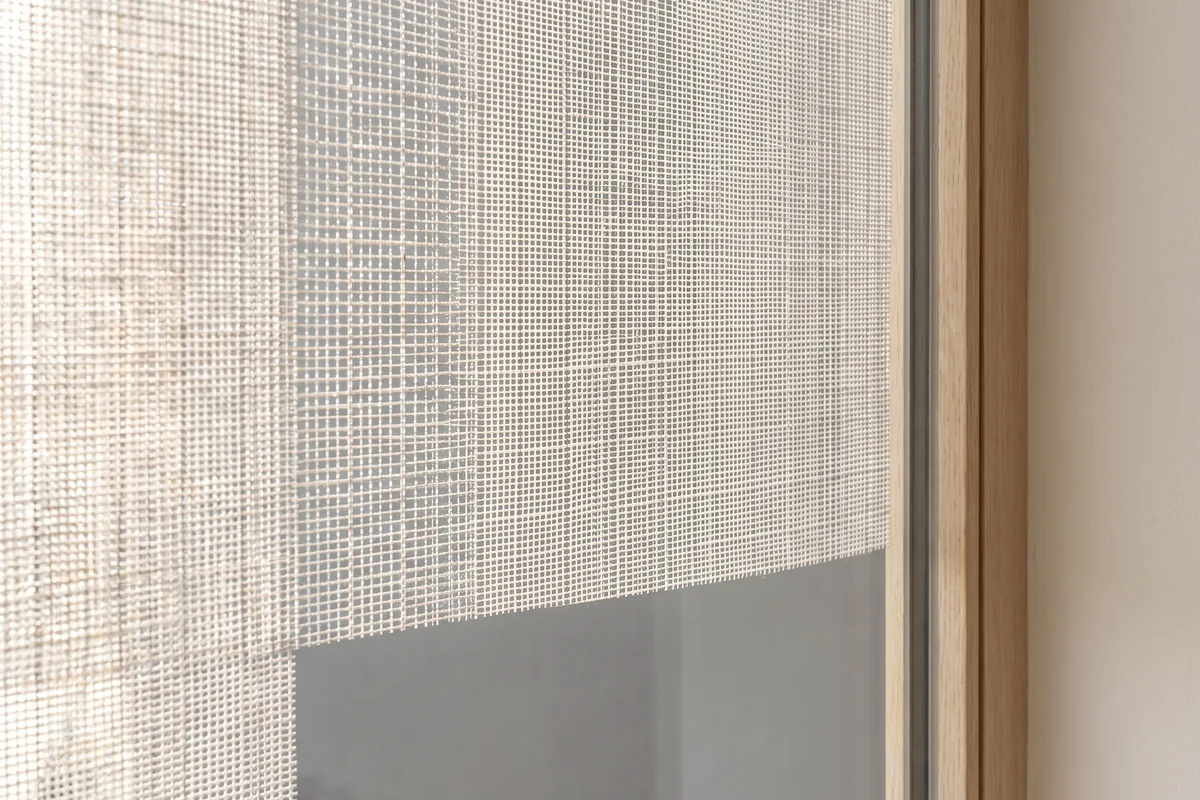
This is where the decision actually lives. Three fabric families do different jobs.
Blockout carries a coated backing that passes no light at all — the right answer in a bedroom, and a blockout roller blind whatever your quote calls it. Translucent fabric sits in the middle: it diffuses daylight but gives you no view out, which suits a bathroom and frustrates anyone who wanted the garden.
Sunscreen is an open weave that cuts glare and UV while keeping your view, and the number that matters is openness factor — the percentage of the weave that is literally open. Lower blocks more. We carry 1%, 3%, 5% and 10%, the full range, so this is a trade-off you control, not one you are handed.
| Openness | What you still see out | Where it earns its keep |
|---|---|---|
| 1% | A greyed impression of shape and movement | Hard western glare, or a close boundary |
| 3% | Outlines and colour, no fine detail | Living rooms on a sunny aspect |
| 5% | A usable view, softened | Where the outlook beats the glare |
| 10% | Close to an unobstructed view | Shaded or southern glass |
Aspect drives that choice more than the room does, and shading outside the glass beats shading inside it — which is why an outdoor blind and a sunscreen roller are not interchangeable. Verosol SilverScreen goes further, with a metallised backing that reflects solar radiation rather than absorbing it. Full detail is in our guide to sunscreen blinds and openness factor.
Not sure which fabric your window actually needs?
Tell us the room and its aspect and we will measure it. Itemised quote within 24 to 48 hours, valid 30 days.
Where a Holland blind runs out of road
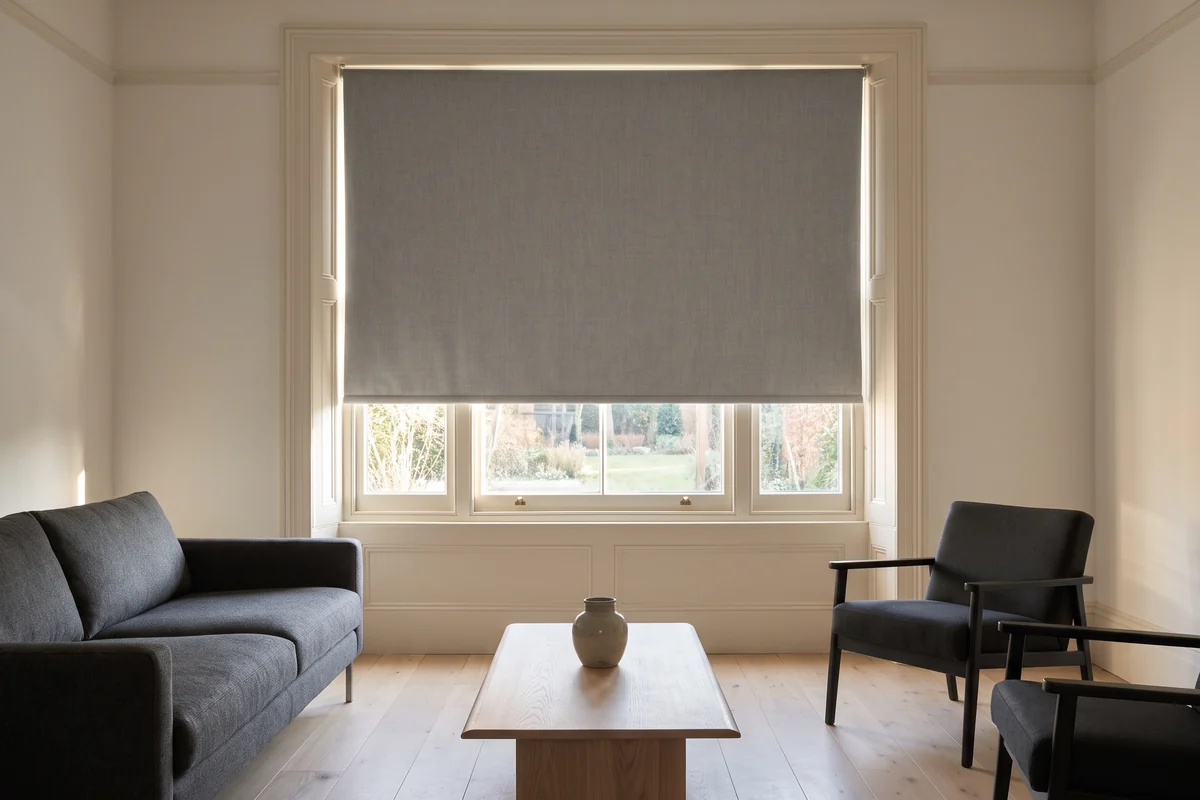
One tube carrying one flat panel sets the limits.
- Width. A single blind runs to about three metres on a standard make-up, wider on fabrics that can be railroaded — turned sideways so the roll's width runs across the blind. Past three metres we specify a 60mm tube, because a slimmer one deflects over that span and the fabric tracks off-centre.
- Light at the edges. The fabric is always narrower than the gap between the brackets, so even a blockout leaves a thin line down each side. Fitting to the face of the wall rather than the reveal closes it.
- One fabric, one job. A sunscreen gives you nothing after dark; a blockout gives you nothing during the day. A dual roller blind carries both on one bracket, at a cost of 115mm to 122mm of projection — so measure your reveal depth first.
Lead time is two to three weeks from check-measure to installation, which is the argument for buying locally made. Offshore manufacture is why lead times blow out and why one failed component becomes a months-long wait — a warranty is only as good as the supply chain behind it. Ours runs 12 months on installation workmanship, 12 months to 7 years on the product.
One thing that is not a preference: in a child's room, specify cordless or motorised. Corded internal window coverings carry a mandatory standard in Australia, and a loose chain within reach of a cot is a hazard no fabric offsets.
Frequently asked questions
Are Holland blinds the same as roller blinds?
Yes. Same product — one width of fabric on a single tube — and Holland blind is just the older name. Any page claiming a mechanical difference is describing control options, not two blinds.
Why are they called Holland blinds?
Holland cloth was a plain-weave linen or cotton stiffened with oil, sizing or starch to make it opaque, named after the Netherlands where it was woven and used for window blinds. The blind took the name of its fabric. Coated polyester replaced the cloth; the name stayed.
How does a Holland blind work?
The fabric is fixed to an aluminium tube sitting on a bracket at each end, and turning the tube winds the fabric on or off it. That turn comes from a side chain, an internal spring, or a motor — your choice, and it does not change the blind.
What is the widest a Holland blind can be made?
About three metres as a single blind on a standard make-up, wider on fabrics that can be railroaded. Past three metres it wants a 60mm tube so the span does not deflect. Very wide openings are better answered with two blinds than one.
Are Holland blinds safe around children?
Only if you specify them that way. A side chain is a strangulation hazard in a child's room, and corded internal window coverings carry a mandatory standard in Australia. In a nursery, go cordless.
How do you clean a Holland blind?
Lower it fully and dust top to bottom with a soft brush or vacuum head. Spot-clean with a barely damp cloth and let it dry unrolled — rolling a damp blind up is how you get mould lines. Our guide to cleaning blinds has the detail.
Sources Australian Government Your Home — Glazing · ACCC blinds and window fittings mandatory standard · Sleep Health Foundation
Back to the journalKeep reading
Related from the journal
 Guides
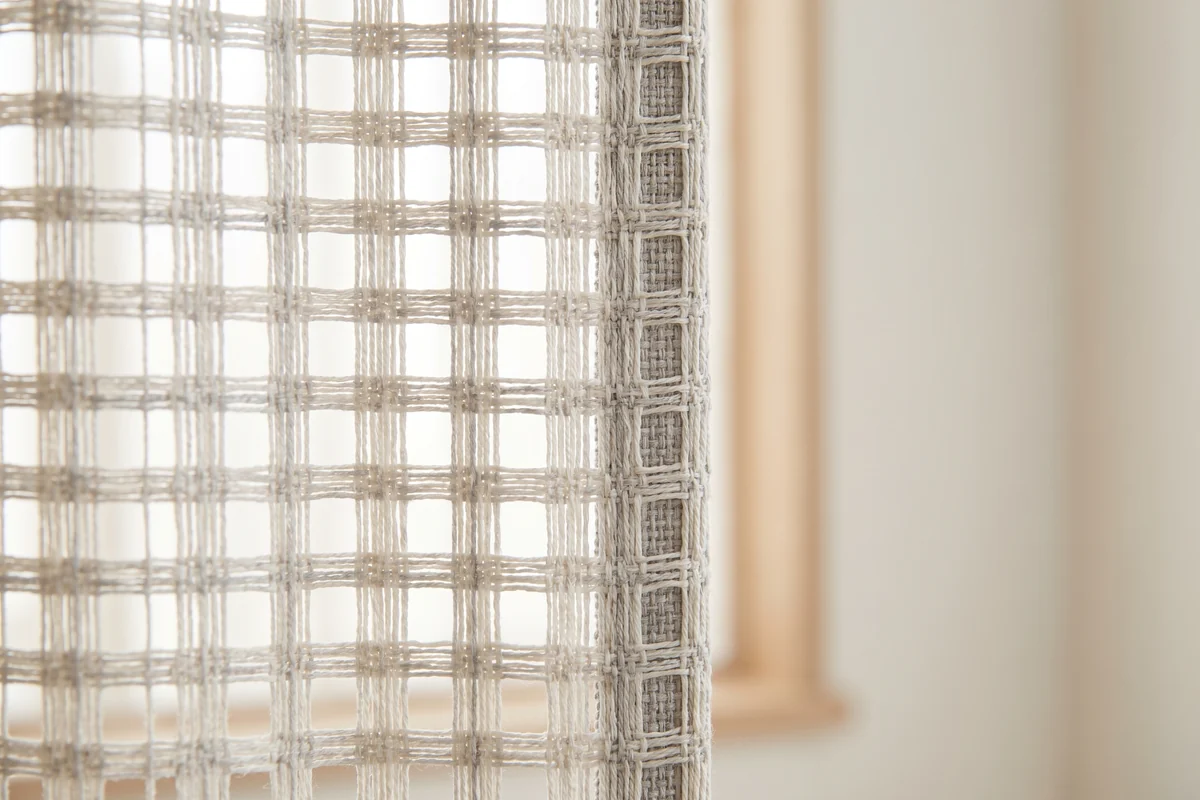
Sunscreen blinds and openness factor
Openness is the one number that decides how a sunscreen blind behaves. What each percentage does in a room, and why most of the advice online was written for the wrong hemisphere.
Read more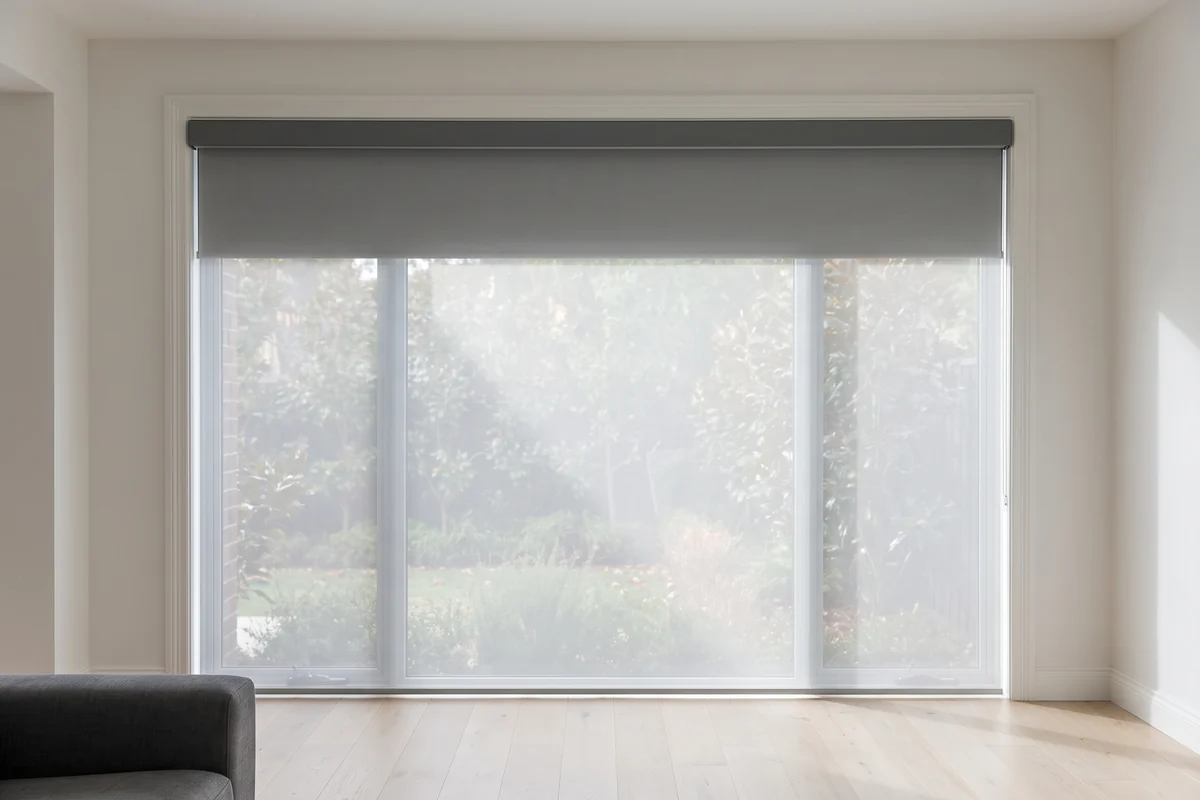 Guides
Dual roller blinds: day and night on one bracket
Two blinds, one bracket, four settings. Which fabrics to pair, the reveal depth it needs, and when to buy something else instead.
Read more Guides
Blockout roller blinds
Coated fabric that passes no light, made to measure with side channels for true darkness. Where blockout earns its money and where it is overkill.
Read more