

External awnings: which type suits your window
Fixed, folding arm or straight drop — and why the direction your window faces settles it before fabric ever comes up.
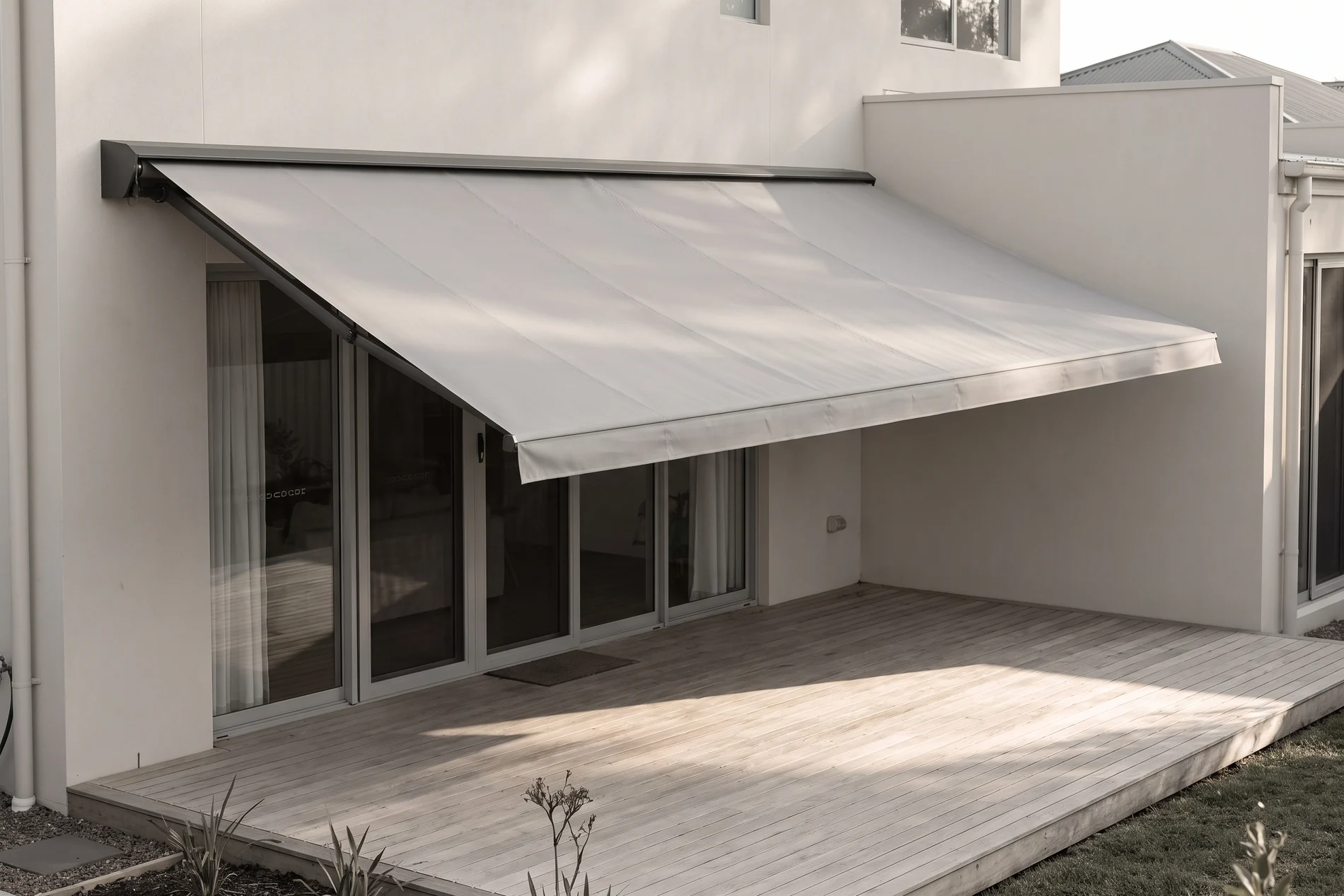
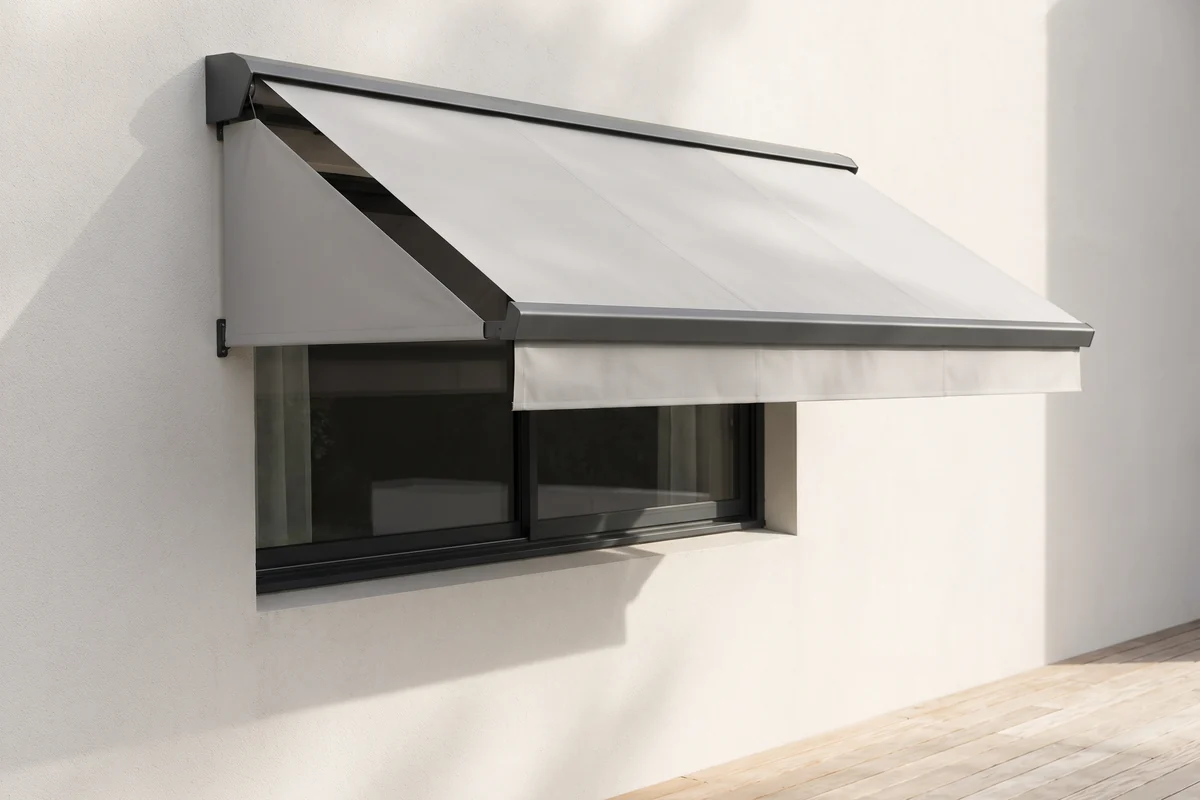
External awnings come in three shapes. A fixed awning sits permanently above a window. A folding arm awning projects out over a deck and folds back to the wall. A straight drop awning falls vertically down the face of the opening.
Which one you need is decided by the direction your window faces, not by the fabric range.
Every awning guide online is a list of types with a photo beside each one, and none tells you how to choose. Having measured a lot of these across the Gold Coast and Brisbane, what goes wrong is almost never the fabric. It is a horizontal shade bought for a window that wanted a vertical one.
The three external awnings, and what each is for
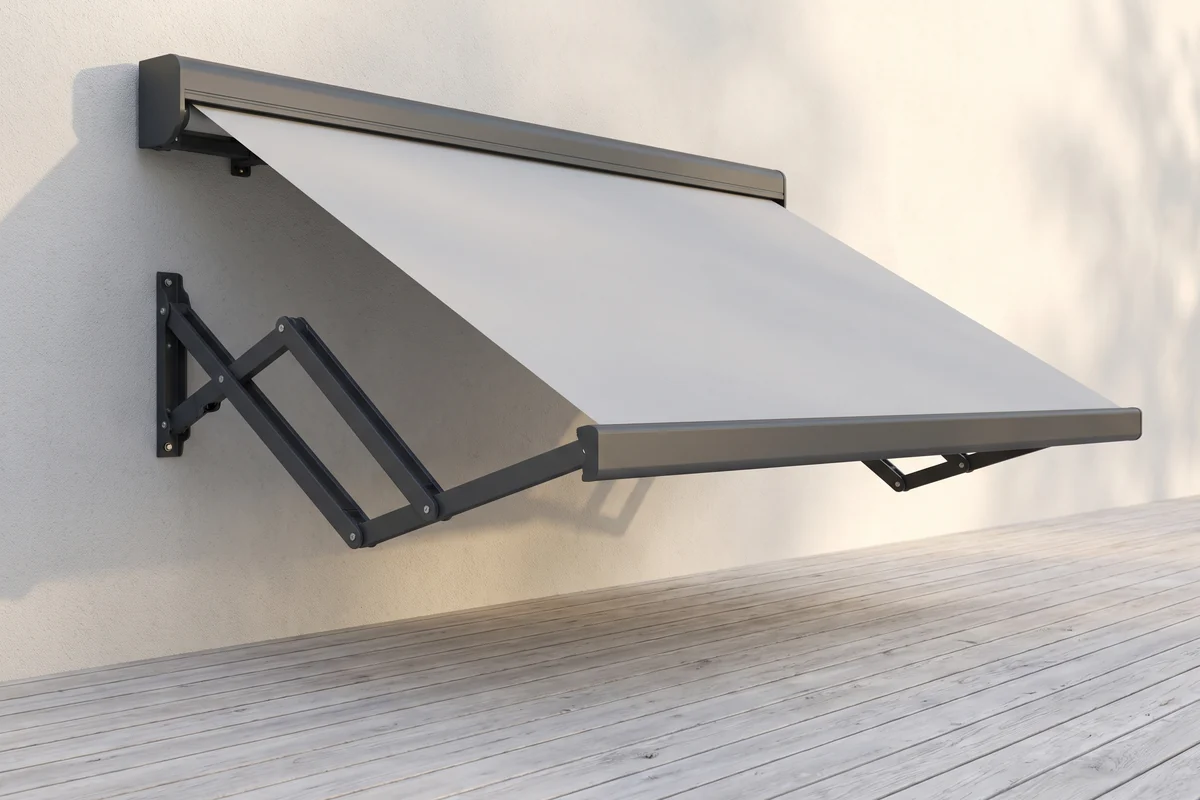
Strip out the marketing names and there are three mechanisms. Everything else on a competitor's list is one of them with a different valance.
- Fixed awnings. A permanent hood over an opening, usually a window rather than an outdoor room. Nothing to operate, nothing to break. It works whether you are home or not — the point, and the limitation, because it also shades the window in July.
- Folding arm awnings. Articulated arms push fabric out horizontally from the wall and fold it back when you are done — the one people picture when they say retractable awnings. It covers an outdoor living space rather than a window, and gives the winter sun back.
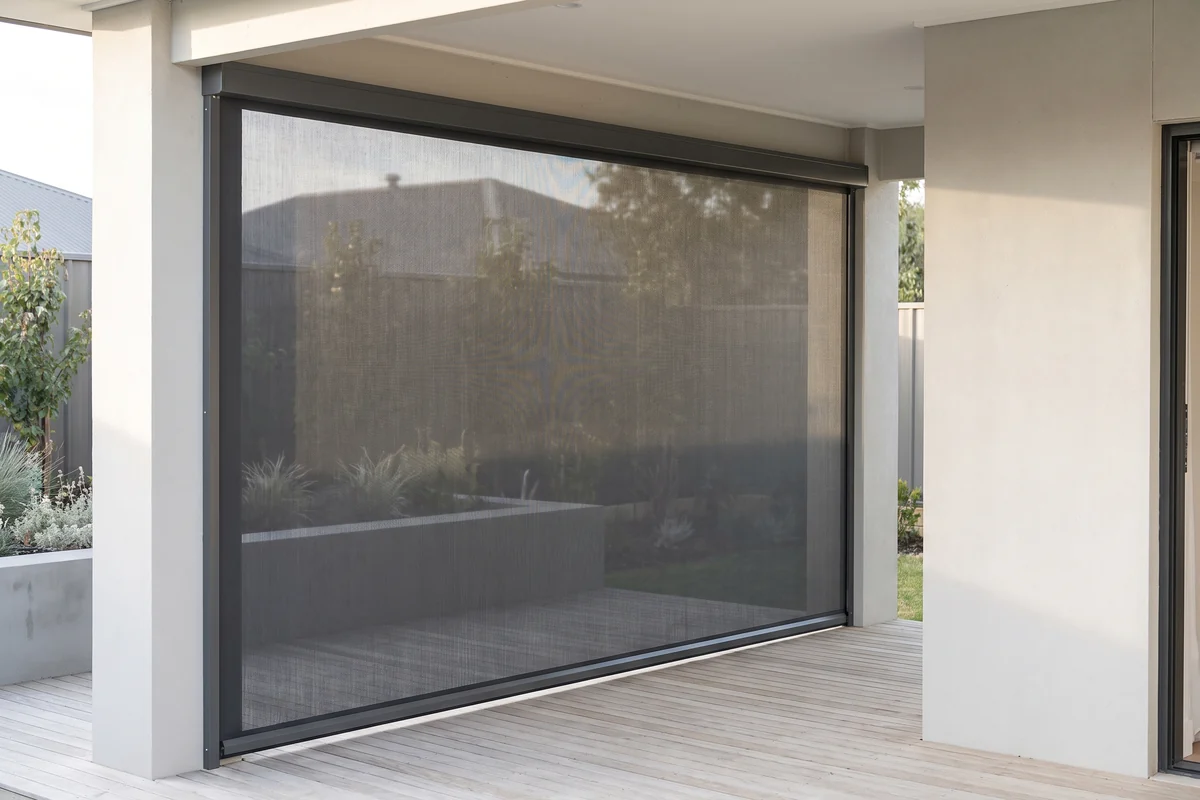
- Straight drop awnings. The fabric comes vertically down the face of the opening on a roller, like an outdoor blind. This is the shape that handles low sun, and why outdoor window awnings and outdoor blinds blur together in the search results. The pivot or drop arm awning some lists carry is this with an angle on it.
| Fixed | Folding arm | Straight drop | |
|---|---|---|---|
| Shade direction | Horizontal | Horizontal | Vertical |
| Best orientation | North | North | East and west |
| Covers | A window | An outdoor room | Either |
| Winter sun back? | No | Yes | Yes |
| Needs operating | Never | Every time | Every time |
| Blocks the view | Top of glass only | No | Yes, when down |
Which way the window faces settles it
This is the part the type-lists skip, and it is the whole decision. A projecting awning is a horizontal shade: it stands between the glass and a sun high in the sky, which is what the summer sun does on a northern elevation.
Go around to the west and the geometry stops working. The afternoon sun that makes a room unbearable arrives low, and goes under a horizontal projection however far it reaches. Government guidance is blunt: adjustable vertical shading is the optimum solution for east and west elevations, while north-facing openings need only a narrow overhead device.
So, the honest version — which costs us the bigger sale about as often as it wins one. If your problem is the western afternoon, you want a drop, not a projection: a straight drop awning, or a track-guided outdoor blind, the same vertical geometry with the fabric locked into a channel down both edges.
Getting the shape right is worth real money. Direct sun delivers roughly the heat of a single-bar radiator per square metre, and effective shading blocks up to 90% of it — but only where the shade sits between the sun and the glass. That is the case for any external product over an internal blind, and we have put numbers on that separately.
Wind lifts an awning, it does not push it down
Every awning page says the product handles wind and rain. None says which direction the load comes from, which is the only part that matters.
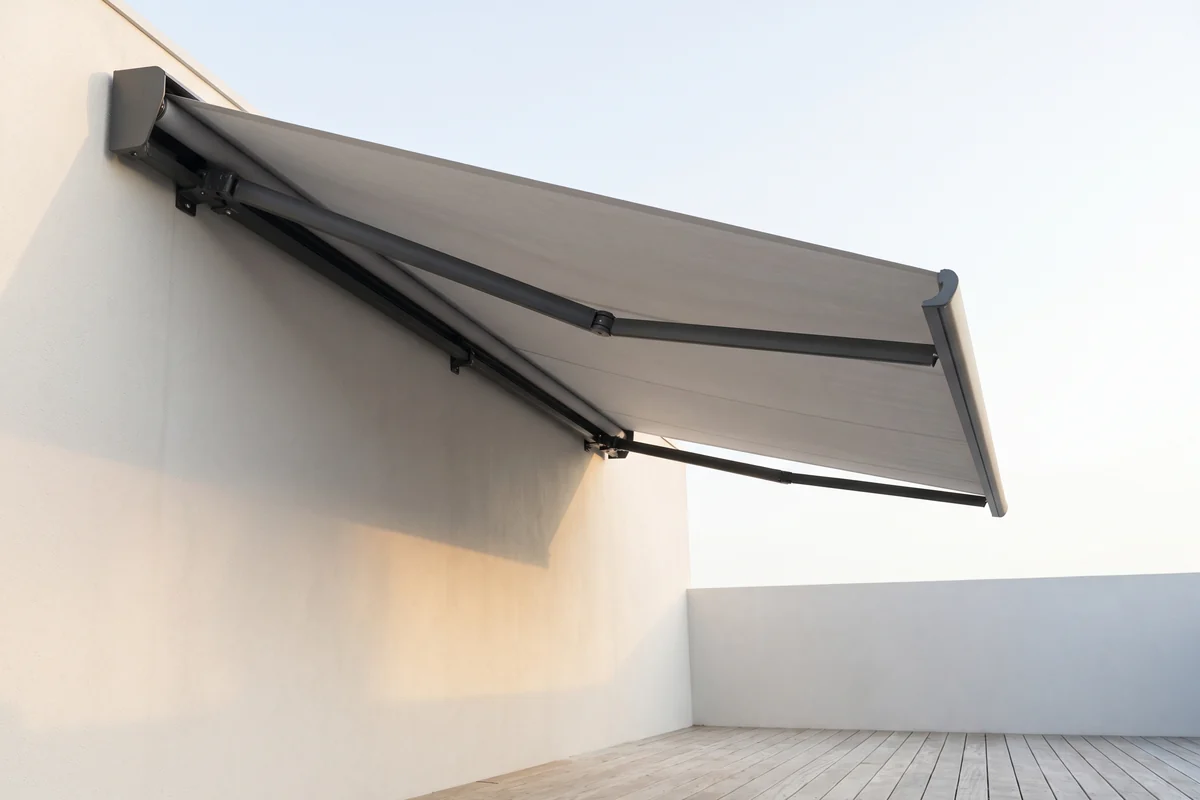
A folding arm awning is a cantilever. No posts at the front — that is the entire appeal — so the fabric is a sail held at one edge. Wind gets underneath and lifts. The failure is rarely the fabric tearing; it is the load travelling back down the arms into the wall fixings. So what decides whether your awning survives a summer is the substrate it is bolted into and whether you retract it, and neither is on a spec sheet.
Wind actions on Australian structures are set out in AS/NZS 1170.2, published by Standards Australia, and the loads a coastal site allows for are not small. In practice it is a habit, not a calculation: an awning wants to be in before the front arrives, not while it is overhead. Manufacturers publish an operating wind speed for retracting, and it is lower than people assume.
A fixed awning has none of this and never needs a thought — worth remembering when a folding arm is being sold to you on flexibility. Flexibility you have to remember to use is not flexibility.
Not sure whether yours is a projection or a drop?
We measure the opening, check which way it faces and what the fixings bolt into, then send an itemised quote within 24 to 48 hours. No deposit to get a price.
When an external awning is the wrong answer
Better said before the measure than after the deposit.
If there is nothing solid to fix into, stop. A cantilevered awning puts everything it catches through a handful of bolts. Rendered infill, or a wall that turns out hollow where the bracket lands, is a structural problem rather than a fabric one. It is the first thing we check.
If you want shade and privacy in one product, an awning gives the first and none of the second. A projection over a deck does nothing about being overlooked from the side. That is a drop, usually track-guided.
If the space has to be all-weather, be realistic about fabric. An awning is a sun product that copes with light rain. It is not a roof, and heavy rain on a large span belongs under something solid.
If you want a quote rather than a decision, we make and fit both — the awnings page is where that detail lives.
Frequently asked questions
What is the difference between a fixed awning and a retractable awning?
A fixed awning is permanently in place, shading the opening year round with nothing to operate. A retractable awning — usually a folding arm — extends when you want shade and folds back when you do not, letting the low winter sun into the same space. Fixed suits a window hammered every morning; retractable suits an outdoor area you use differently through the year.
Are retractable awnings waterproof?
Water-resistant rather than waterproof, and the distinction matters. Awning fabrics shed light rain and keep you dry through a shower, but the pitch is shallow, so water finds the lowest point and pools. Pooled water is heavy enough to distort arms and stretch fabric, which is why you retract in sustained rain rather than shelter under it.
How much clearance is needed for a retractable awning?
Enough height above the opening for the cassette and arms to fold, plus enough fall for the front bar. A folding arm awning pitches downward as it extends, so the leading edge finishes lower than its mounting point — set it too low and you duck under your own awning at the far end. It is a site measurement, not a brochure number, so we check head height and fixing line before quoting.
Do external awnings work better than internal blinds for heat?
Yes, and by a wide margin, because they stop solar radiation before it reaches the glass. Once sunlight is through the window it has already become heat in the room, and an internal blind can only manage where that heat goes. Government guidance puts effective shading at up to 90% of the heat from direct sun, provided it sits between sun and glazing.
Will an awning stop the western afternoon sun?
A projecting one will not, and it is the most common mistake we see. Late afternoon sun on a west wall arrives low and travels underneath a horizontal awning however far it projects. East and west openings want vertical shading — a straight drop or a track-guided outdoor blind. A projection is the right answer on a northern elevation.
What is the difference between an external awning and an outdoor blind?
Mostly the direction the fabric travels. An awning projects outward from the wall; an outdoor blind drops down the face of an opening. Straight drop awnings sit on that line, which is why the terms overlap in search. The practical difference is at the edges: an outdoor blind can run in side channels holding the fabric down both sides, and an awning cannot.
Sources Australian Government Your Home — Shading · Australian Government Your Home — Glazing · Standards Australia (AS/NZS 1170.2 wind actions)
Back to the journalKeep reading
Related from the journal
 Guides
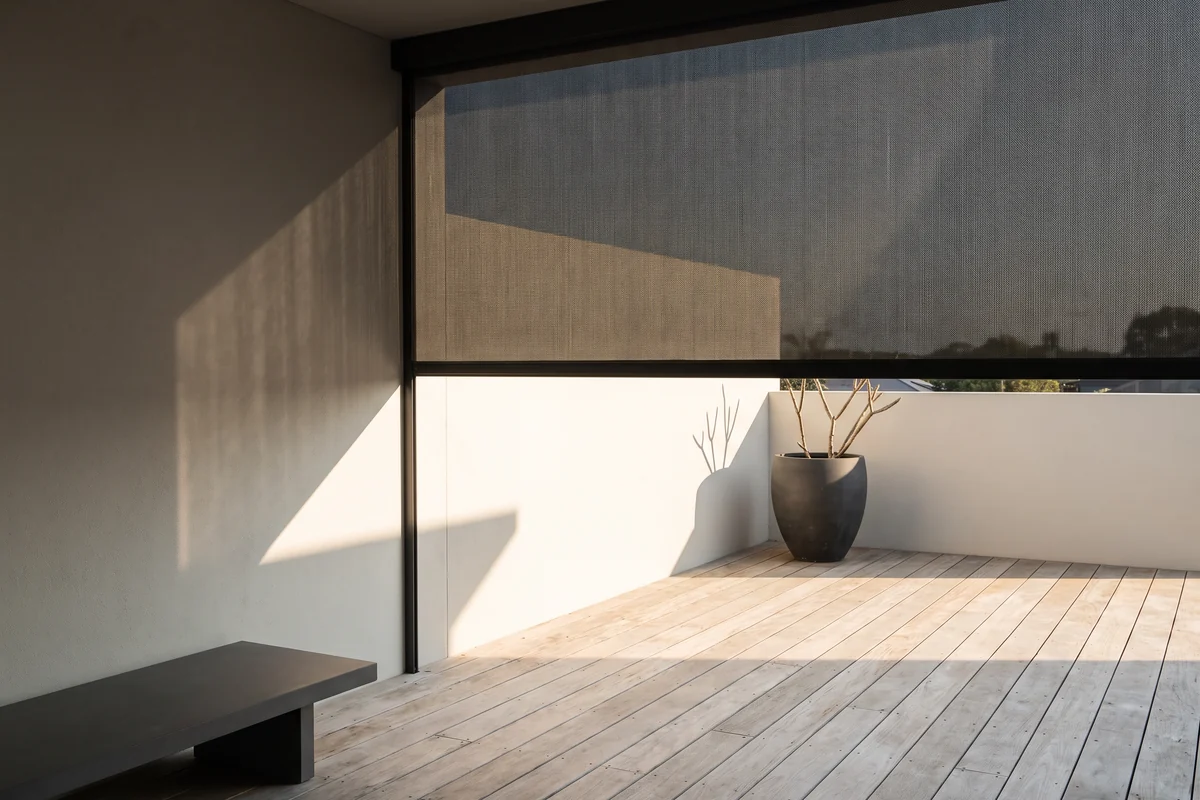
Do outdoor blinds reduce heat?
The 90% everyone quotes comes from a government shading guide, not a product test. What outdoor blinds actually do about heat, and the wind and rain numbers no competitor prints.
Read more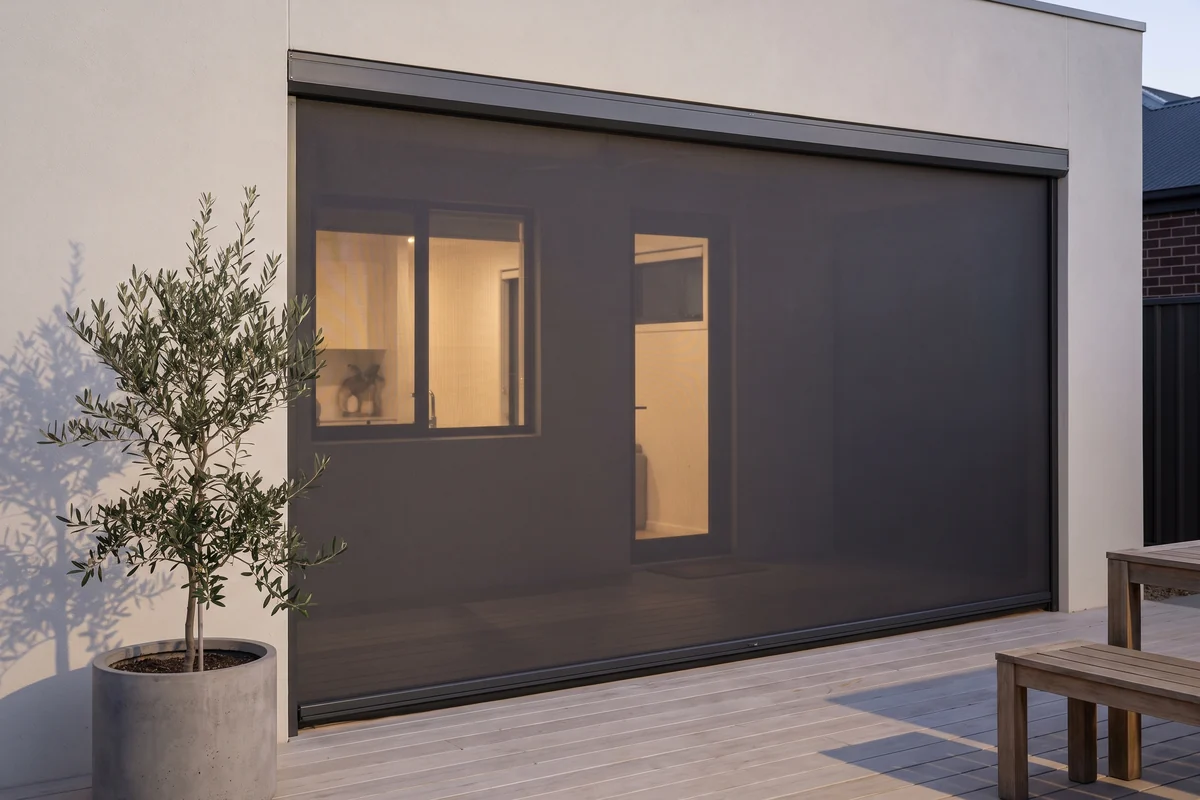 Guides
Alfresco blinds compared: cafe, straight drop and zip track
Three ways to hang fabric across an outdoor opening, and only one seals the sides. What that changes in wind, rain and insects — with the wind-tunnel figure quoted properly.
Read more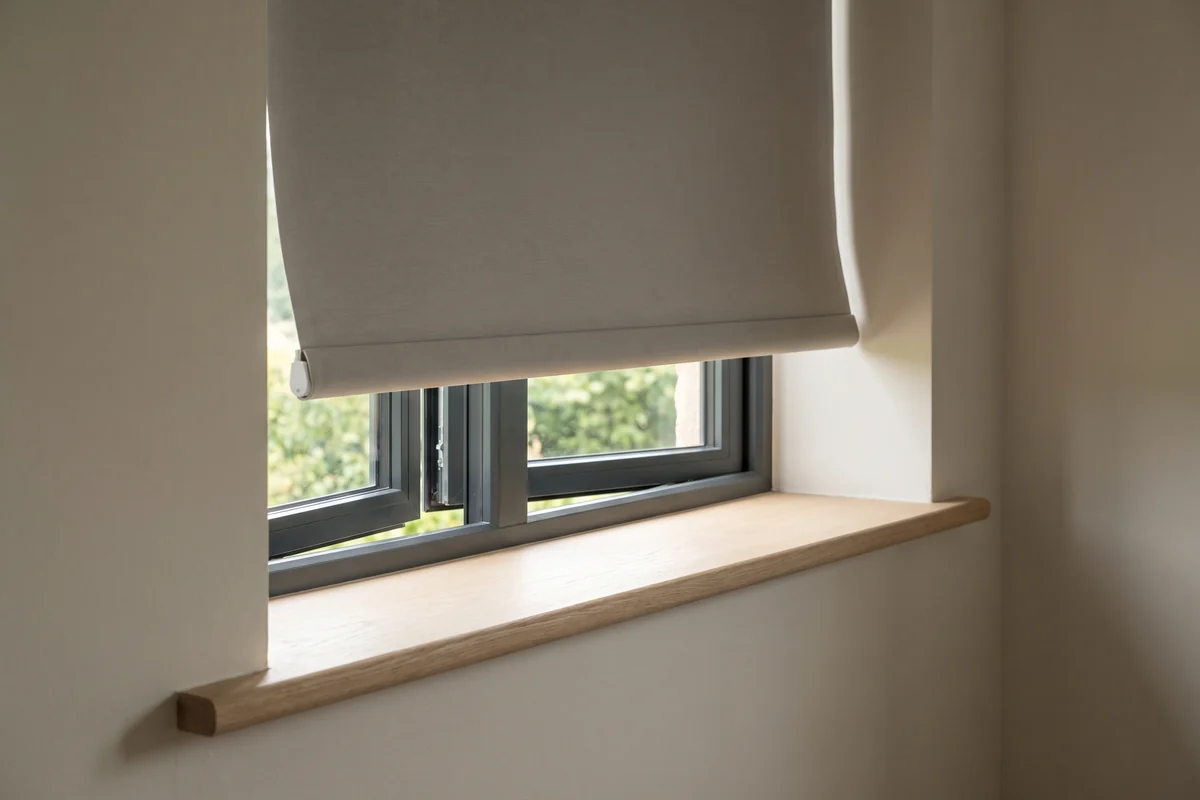 Guides
How to stop blinds banging in the wind
Every fix online is a patch on the same problem: the blind is held at the top and bottom only. The quick fixes ranked by how long they last, and the change that ends it.
Read more