

Curtain tiebacks and holdbacks
One wraps around the curtain, the other is hardware it tucks behind. What each is for, where they go, and the honest reason most curtains we hang never get one.
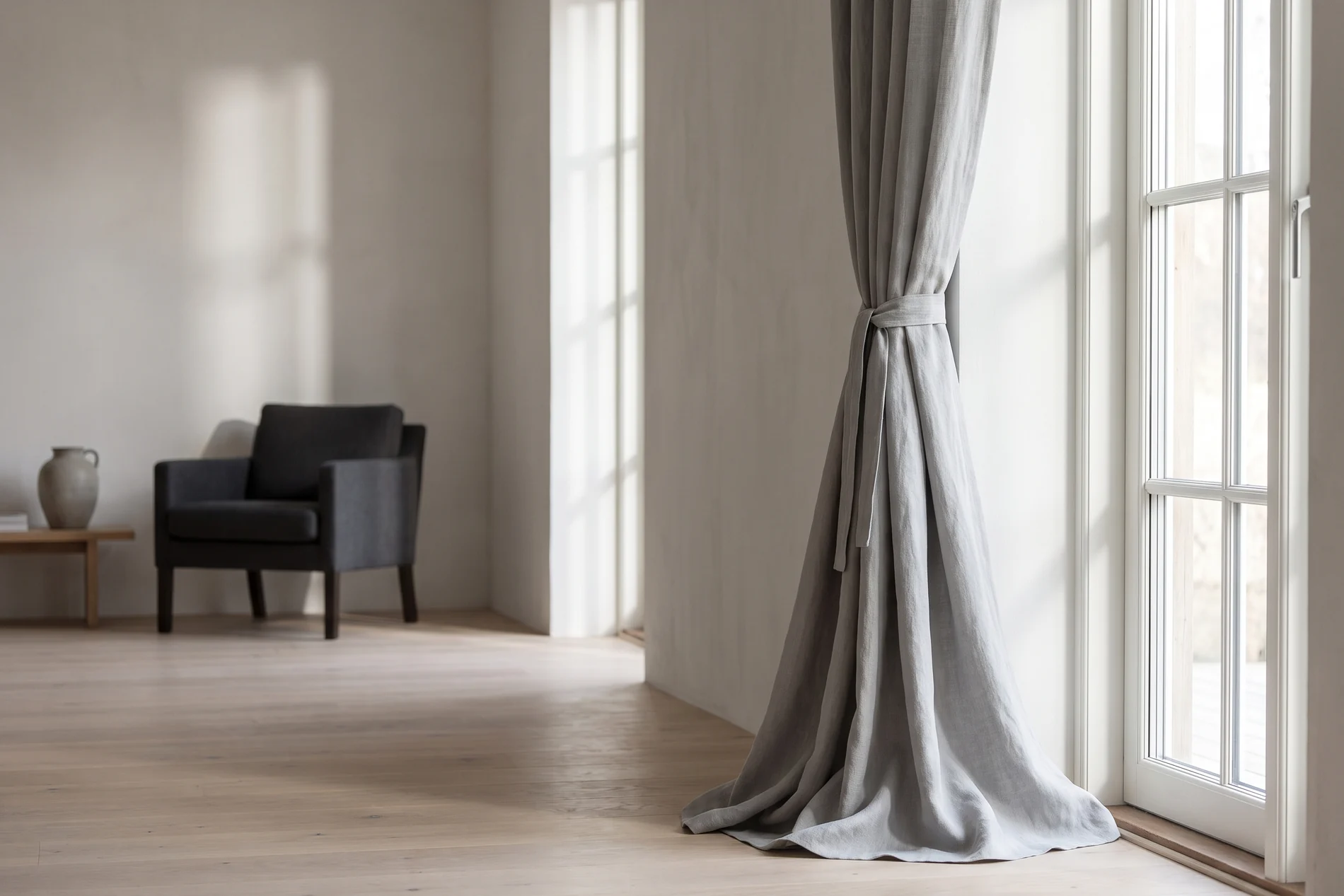
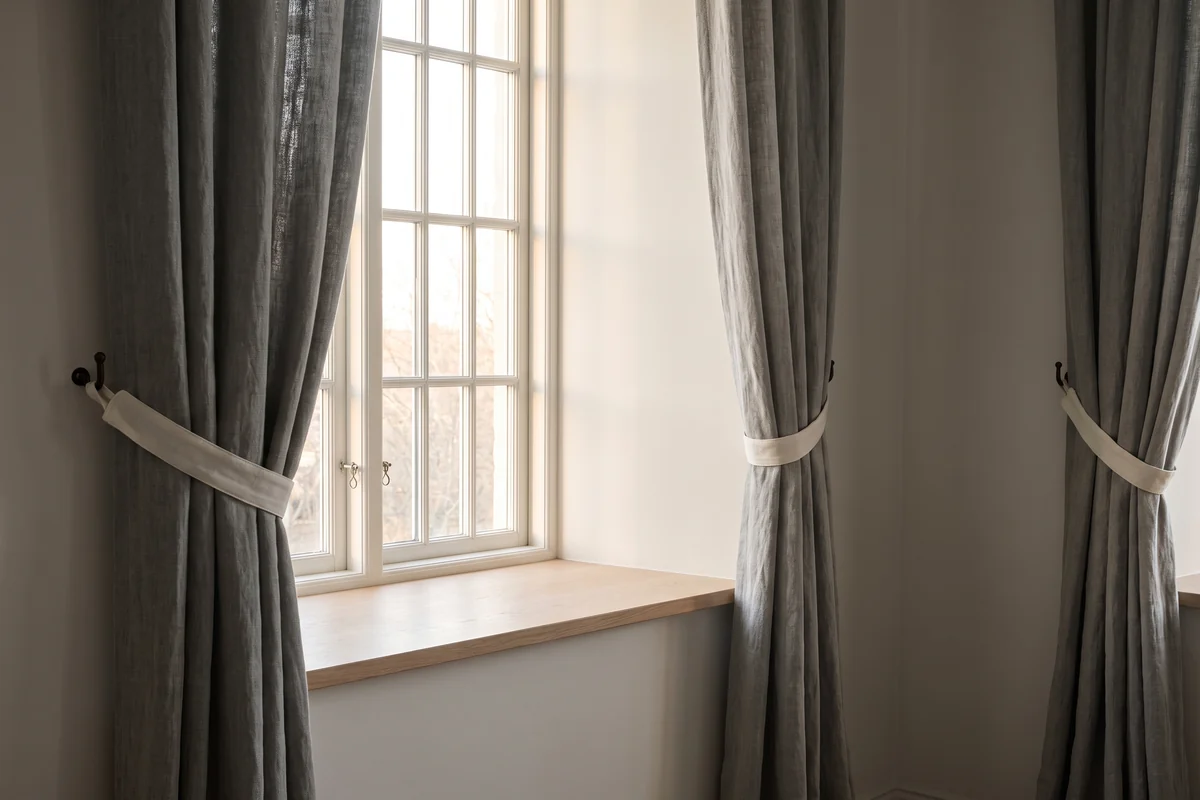
A curtain tieback is soft — fabric or cord that wraps the curtain and hooks to the wall. A holdback is rigid hardware the curtain tucks behind. Both do the same job: hold the fabric clear of the glass so light comes in and the drape is on show.
Forced to be blunt: if your curtain is on a properly specified track, it already stacks clear of the window and a tieback is decoration rather than a fix.
This is a topic where nearly all the advice is American, written around a curtain hanging on a pole, and measured in inches. The underlying geometry is the same everywhere, so it is worth translating properly — and then saying the thing none of those pages will, which is that most curtains do not need one.
Tieback or holdback
They are not the same thing, and the difference decides which one suits your room.
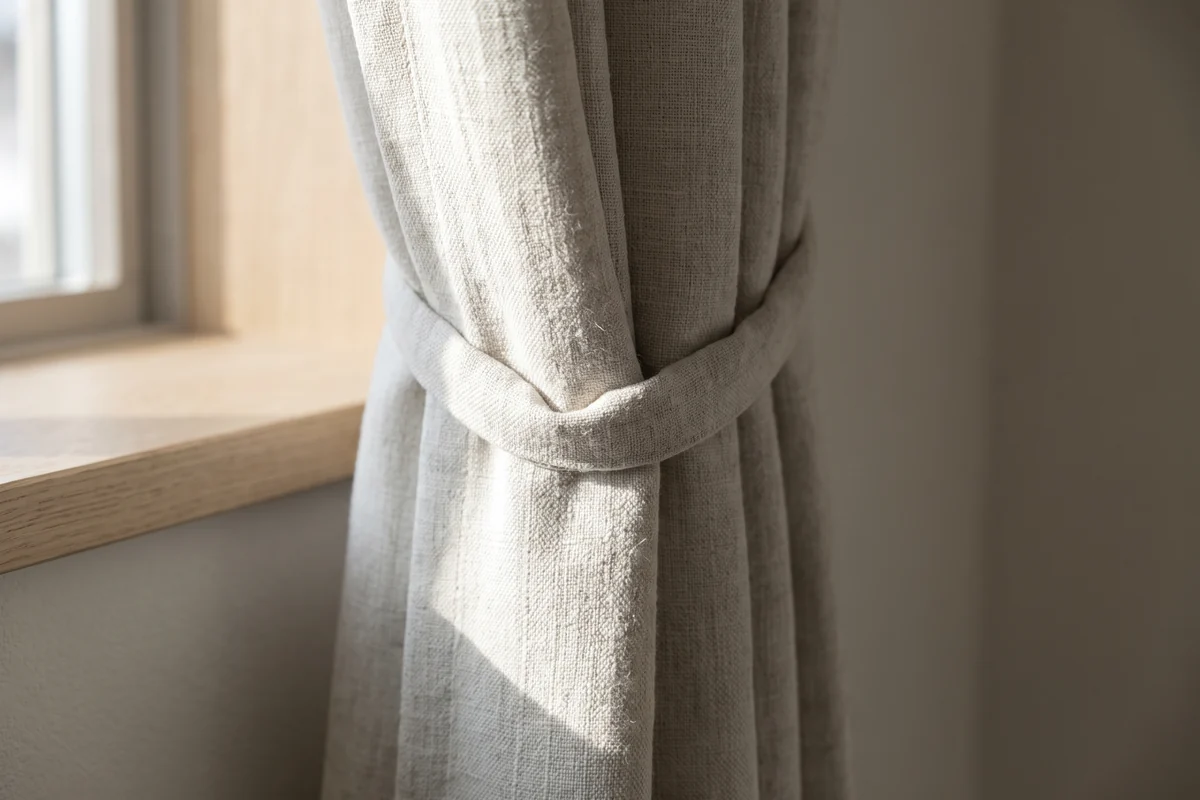
- Tieback. Soft. A band, sash, cord or rope that goes around the gathered curtain and loops onto a small hook fixed to the wall. It is the more decorative of the two and the more fiddly — you are handling fabric with both hands every time.
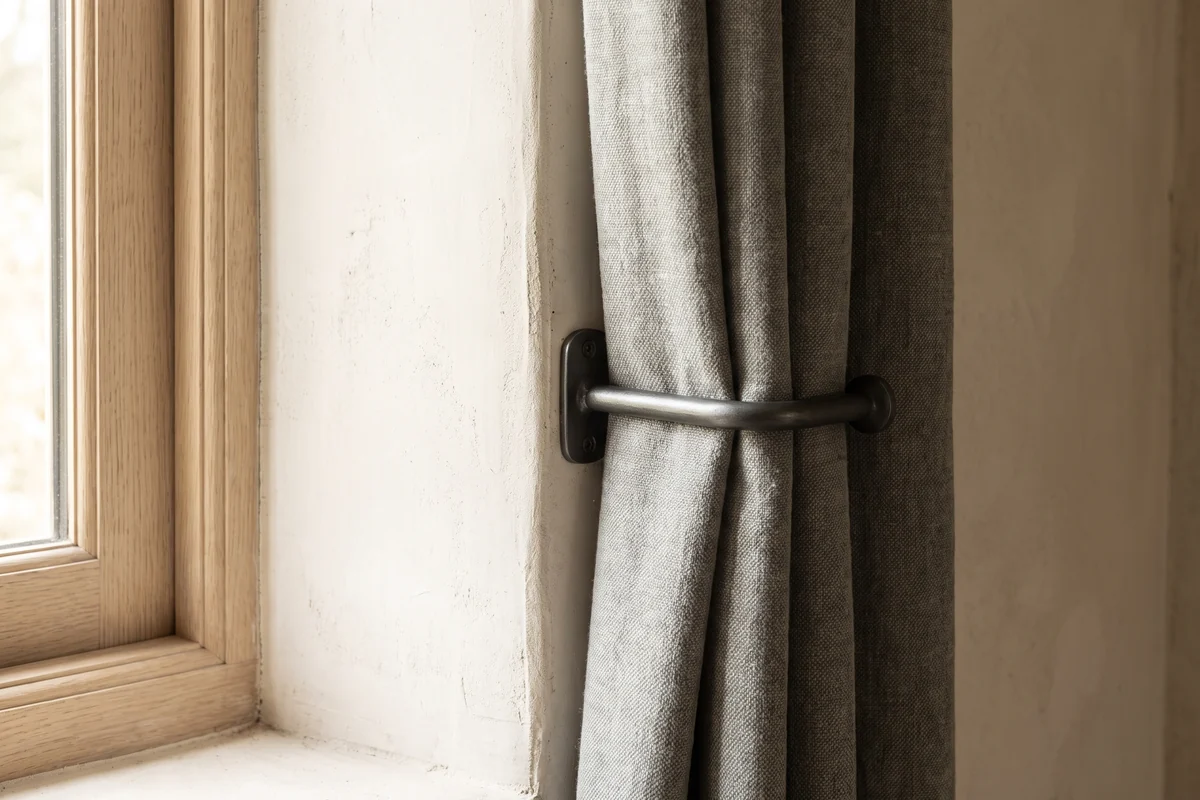
- Holdback. Rigid. A knob, hook or short arm screwed to the wall; you push the curtain behind it and walk away. Quicker, plainer, and far better on a curtain that gets opened and closed daily.
The practical rule: tiebacks for curtains that are mostly ornamental, holdbacks for curtains that work. A heavy blockout you open every morning will make you resent a tieback within a fortnight.
Where they go, in millimetres
The standard guidance is a third of the way up from the bottom of the curtain, and it is good guidance — it produces the soft bell shape that makes the drop look tall and lets the most light past. Every page states it in inches, so here it is in the units the curtain was actually made in.
- Height. On a floor-length curtain of about 2,100mm, that puts the hook around 700mm off the floor. A 2,400mm drop moves it to roughly 800mm. Measure from the floor, not from the sill, because the sill is not where the curtain ends.
- Horizontal position. Past the edge of the window, not on the architrave. The whole point is to hold the fabric off the glass; fixing the hook inside the opening drags it back over the light.
- Depth. Far enough out from the wall that the gathered curtain is not crushed flat. A full-height curtain has real bulk when it is stacked, and a holdback set tight to the wall will pinch it.
Two adjustments worth knowing. On a very tall window, going slightly higher than the third looks better than going lower. And where two curtains meet at a corner, keep both hooks at the same height even if the windows are not — the eye reads the line between them, not the windows.
| Tieback | Holdback | Well-specified track | |
|---|---|---|---|
| Daily use | Fiddly | Quick | Nothing to do |
| Holds fabric off the glass | Yes | Yes | Yes |
| Creases the fabric | Most | Some | No |
| Adds decoration | Yes | A little | No |
| Extra hardware in the wall | Yes | Yes | No |

Why most of our curtains never get one
Here is the position that loses us hardware sales.
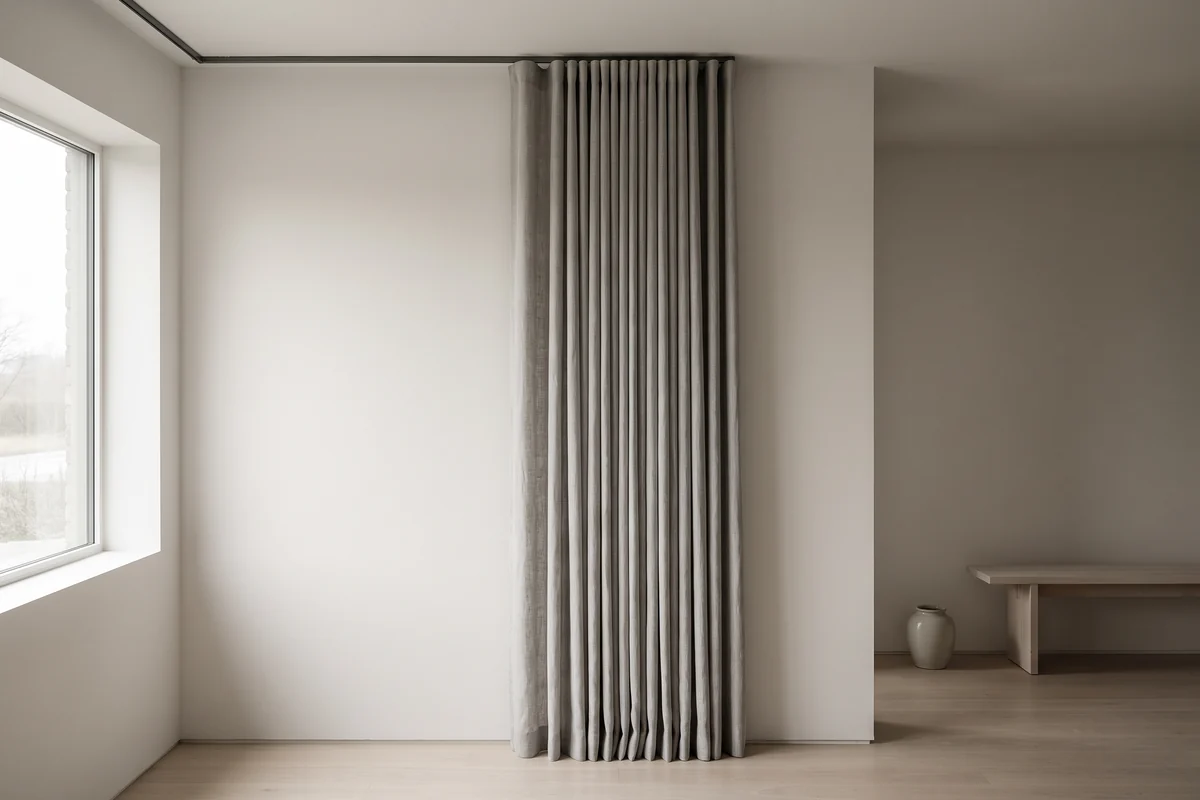
A tieback is a manual fix for a curtain that does not stack out of the way on its own. That is a real problem on a curtain hung from a pole, where the fabric slides on rings and bunches wherever it lands. It is much less of a problem on a runnered track, where every fold is carried on its own runner and the curtain stacks into a tight, even column at the end of the run.
Every track we supply runs on runners, and where a customer wants the look of a pole the answer is a decorative track — pole appearance, runner mechanism. So the stacking problem tiebacks exist to solve mostly does not arise on the curtains we hang, and we would rather fix it at the specification than sell you two hooks.
The specification that does it is simple: run the track past the window on both sides, far enough that the stacked curtain sits on the wall rather than over the glass. That is the same instinct as a holdback — get the fabric off the window — applied at the point where it costs nothing. The difference between rods and tracks is largely this difference.
Curtains that bunch over the glass?
Nine times in ten the track is too short for the opening, not the curtain too full. We can tell you which at the measure.
When they genuinely earn their place
There are cases where a tieback or holdback is the right answer, and it would be dishonest to pretend otherwise.
- Decorative side panels. Curtains that never close, hung either side of a window for softness. There is no stacking problem to solve, so the tieback is purely styling — and styling is a legitimate reason.
- Period rooms. On a Queenslander or a Federation interior, a fabric tieback with a tassel is part of the language of the room. Fighting that with a minimalist track is a losing argument.
- Where the wall genuinely runs out. Sometimes there is no room to extend the track — a return wall, a door, a corner window. A holdback pulls the fabric further back than the track alone can.
- Very full or very heavy curtains. A triple-fullness pinch pleat in a heavy fabric has bulk even stacked. A holdback keeps it compressed and off the light.
Where I would not use one: on sheers. A sheer is meant to be drawn across and left alone — that is what a fabric you can see through is for. Tying it back turns your daytime privacy into a decorative column at the edge of the window.
Two catches nobody mentions
Creasing. Fabric held in the same fold for months remembers it. On a light curtain the crease drops out in a few days once released; on a heavy or coated fabric it can stay visible far longer, and a hard fold repeated in the same place year after year is genuine wear. If you tie back permanently, it is worth swapping which side gets gathered occasionally — it costs nothing and it spreads the fold.
Light and heat. Holding a curtain back is the opposite of what the curtain does thermally. A curtain closed against the glass, ideally with a pelmet above it to stop air circulating over the top, is doing real work — shading and sealing a window is one of the cheaper comfort interventions in a house. A curtain held back all summer is decoration. That is fine if you know you are choosing it; less fine if you bought blockout for the heat and then tied it open.
One safety note while we are on hardware near windows. If there is a corded blind behind the curtain, the cord is the thing to deal with first — looped cords near where a child sleeps or plays are covered by a mandatory Australian standard, and a tieback hook is not a cord cleat.
Frequently asked questions
What is the difference between a tieback and a holdback?
A tieback is soft — a cord, a sash or a band of fabric that wraps around the curtain and hooks to the wall. A holdback is rigid hardware, usually a knob or an arm fixed to the wall, that the curtain is simply tucked behind. Tiebacks are fiddlier and more decorative; holdbacks are quicker for a curtain you open every day.
How high should curtain tiebacks be?
About a third of the way up from the floor. On a standard 2,100mm floor-length curtain that lands roughly 700mm off the floor. Higher makes the drop look shorter and the fold harsher; lower gathers too much fabric at the bottom and blocks light you were trying to let in.
Do I need tiebacks if my curtains are on a track?
Usually not. A curtain on a runnered track with enough track past the window stacks itself tightly against the wall, which is what a tieback is trying to achieve by hand. Tiebacks solve a stacking problem, and a well-specified track has already solved it.
Do tiebacks damage curtains?
They can crease them, particularly on heavier or coated fabrics that are held in the same folded position for months. The crease usually hangs out over a few days once released, but a hard fold in the same place year after year is not doing the fabric any favours. Rotating which side you tie back helps more than people expect.
Should sheer curtains have tiebacks?
Rarely. Sheers are meant to be drawn across and left there — that is the whole point of a fabric you can see through. Tying a sheer back turns it into a decorative column at the edge of the window and gives up the daytime privacy it was bought for.
Where do you fix a holdback?
Beyond the edge of the window, not on the architrave, so the curtain sits clear of the glass when it is held back. That is the same principle as running the track past the reveal — you are trying to get the fabric off the window, and a holdback fixed inside the opening does the opposite.
Sources Australian Government Your Home — Glazing · ACCC blinds and window fittings mandatory standard · Sleep Health Foundation
Back to the journalKeep reading
Related from the journal
 Guides
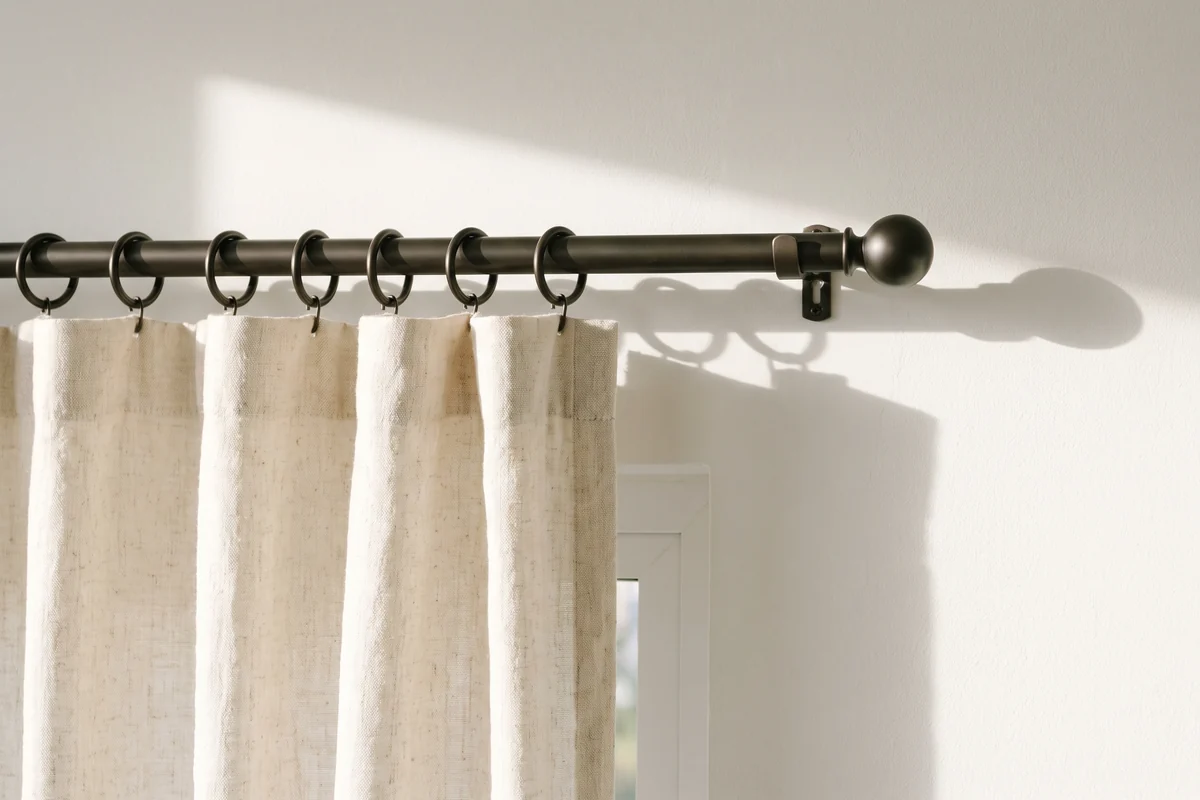
Curtain Rods vs Tracks
One of them is chosen for how it looks. The other is chosen for what it has to hold — and that is usually the decision that matters.
Read more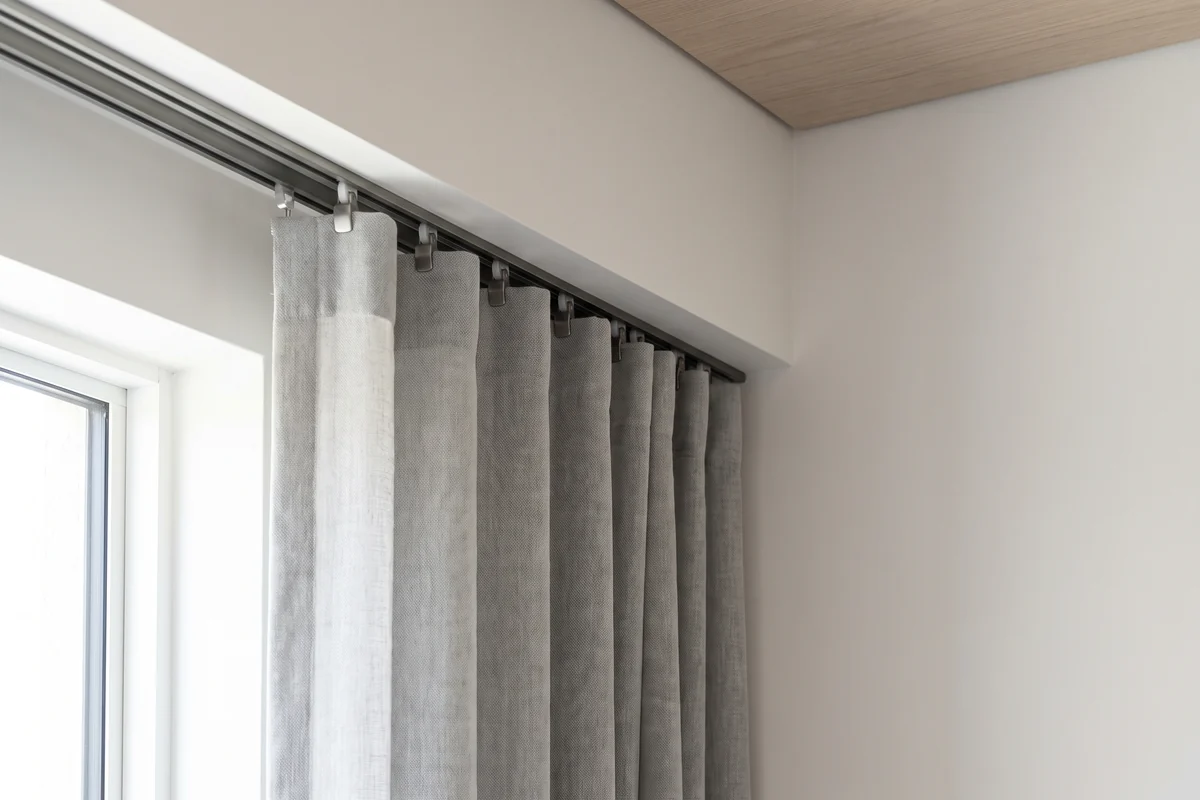 Guides
Types of curtains and blinds
Nine kinds of blind, three curtain headings, two fabric families and one shutter. What each one is genuinely good at, and the two categories we do not sell at all.
Read more Guides
Sheer vs Blockout Curtains
Which one your room actually needs — and why the honest answer, most of the time, is both.
Read more