

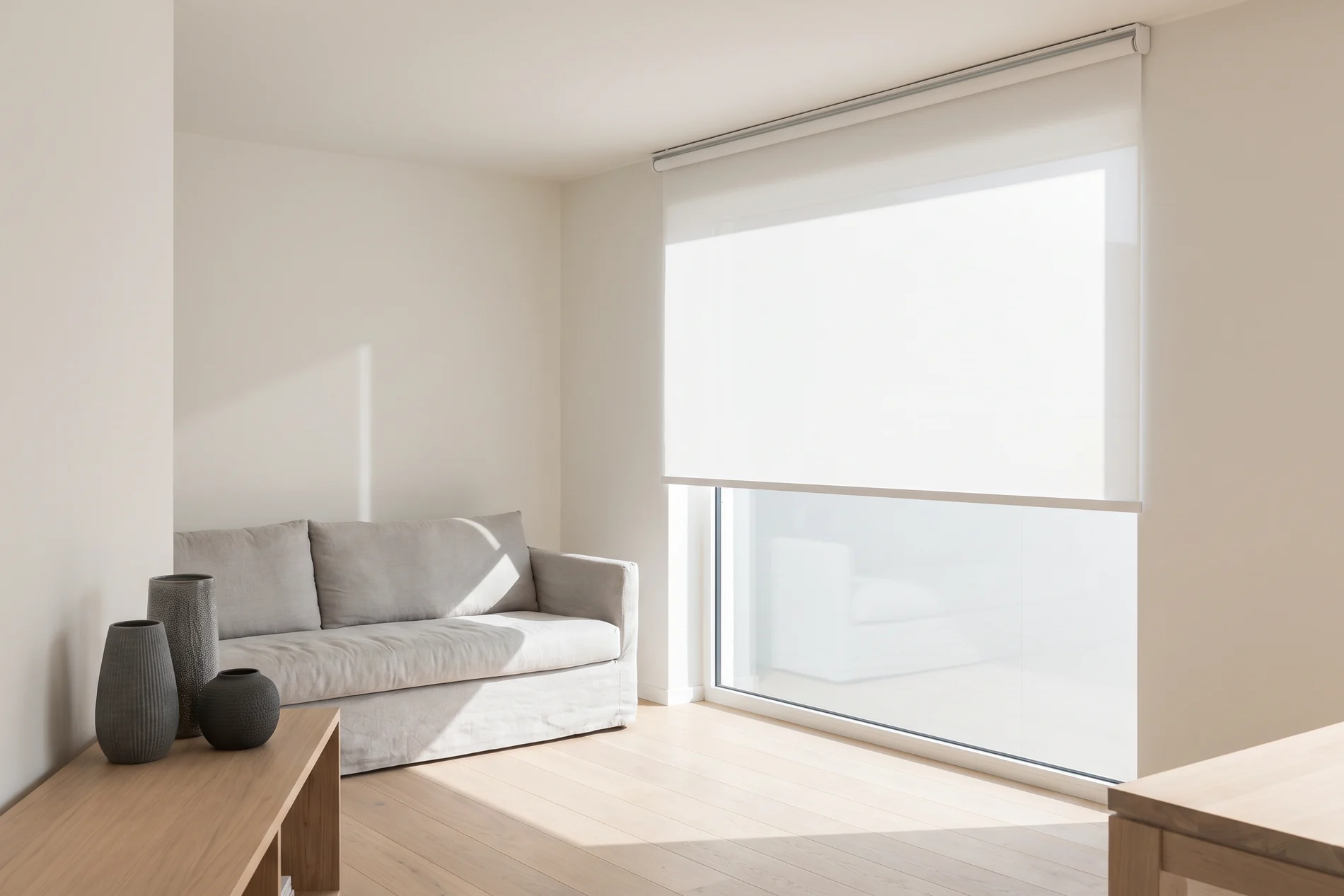
Blind Colours: How to Choose the Right One
White, grey, black or cream: what each one does at the window, and why the frame matters more than the wall.
The safest blind colours are white, off-white and warm grey, and the way to choose between them is to match the window frame, not the wall. A blind sits inside the frame and reads as part of it. Go to charcoal or black when the frames are dark, or when the view out matters more than a bright room.
Choose the colour last, after the blind type and the fabric. Both change how it looks.
Most advice on blind colours assumes every blind is a roller and every window sits in a white wall. Neither is true here, where plenty of newer homes have black aluminium frames and one open-plan room can hold three kinds of blind. This is the order I'd make the decision in, after five years of measuring windows between Byron Bay and Brisbane.
Match the frame, not the wall
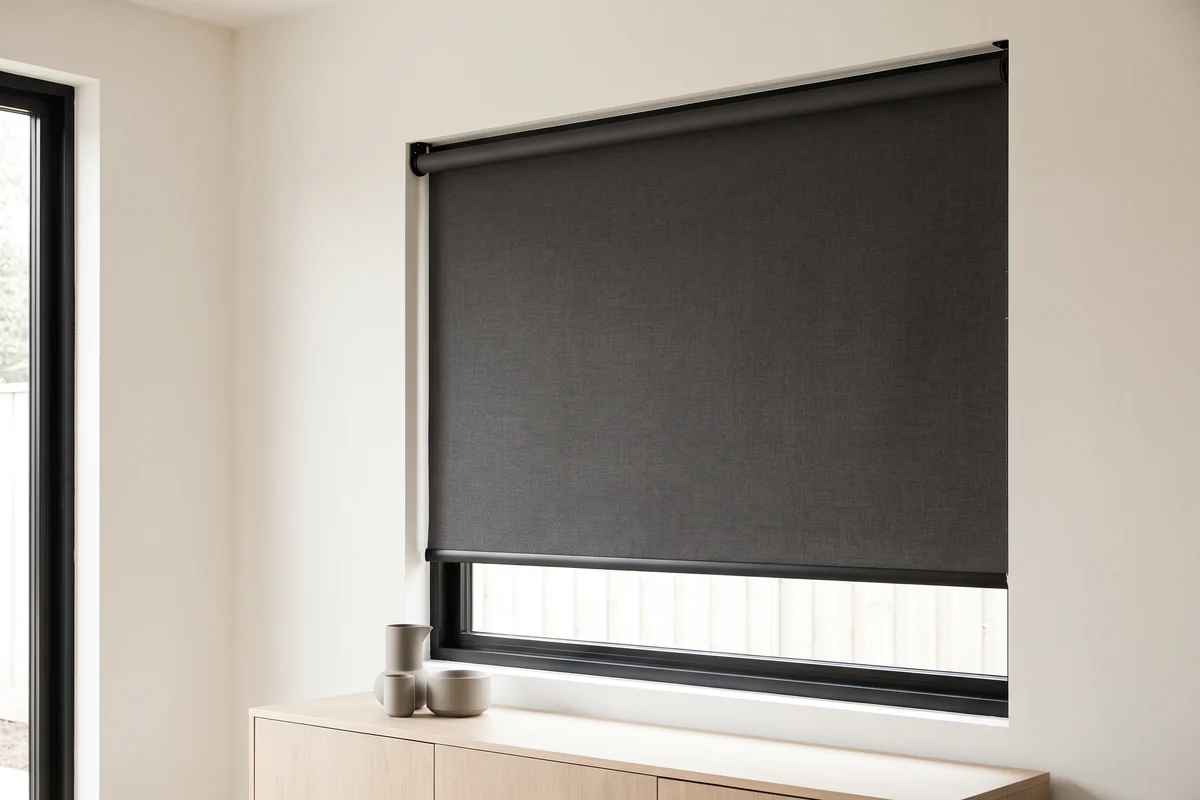
Curtains are furnishing. Blinds are closer to joinery: they sit in the reveal, right against the frame, so the frame is the colour they have to agree with. The wall is often a metre away from where your eye actually lands. Curtains work the other way round, which I go into in how to choose curtain colour.
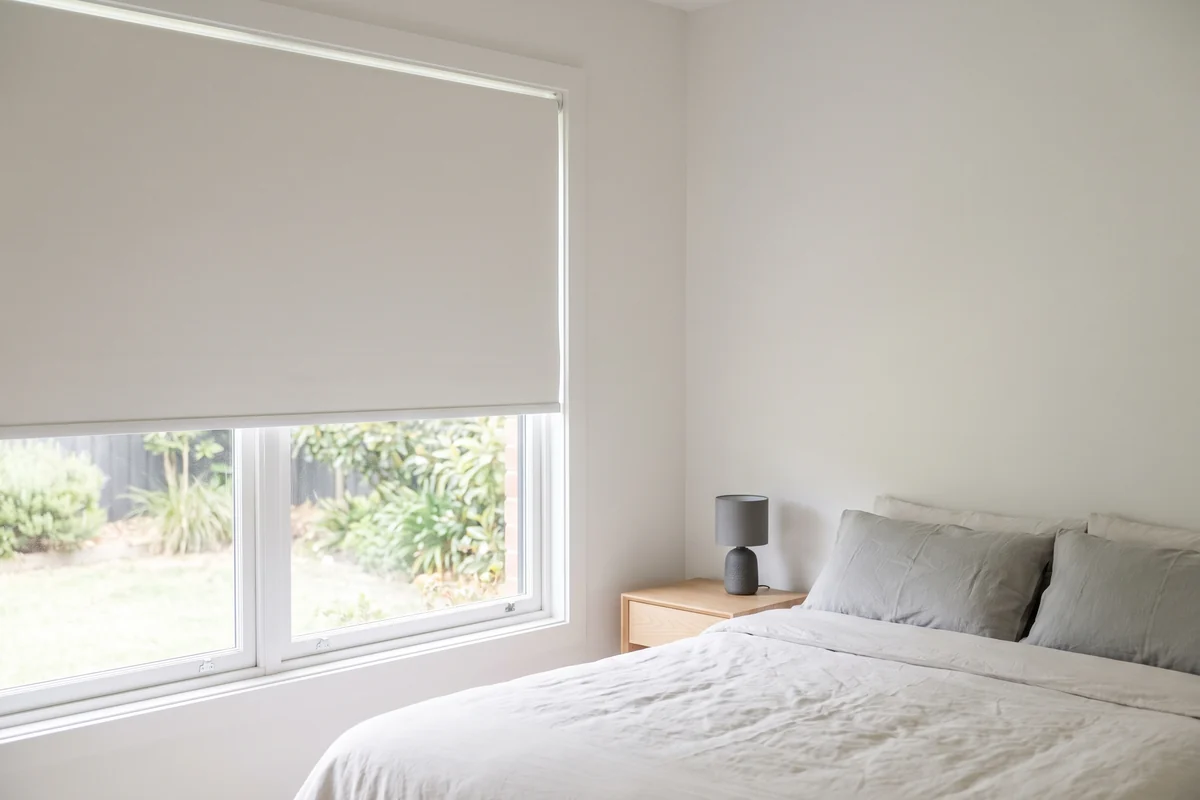
- White or off-white frames. A white or warm white blind. It disappears into the window, which is the point.
- Black or dark frames. Charcoal or black. A white blind in a black frame looks like a sheet of paper taped to the glass.
- Silver anodised frames. A mid grey, which picks up the metal without trying to match it.
- Timber frames. Match the warmth, not the timber. Cream, stone or a warm grey. A printed wood colour next to real wood always loses.
The hardware has a colour too. The bracket range we fit roller blinds with comes in black, pure white, sandstone and silver grey, so the part you see at the top of the window can match the frame even when the fabric doesn't. It's a small decision, and very hard to unsee once it's wrong.
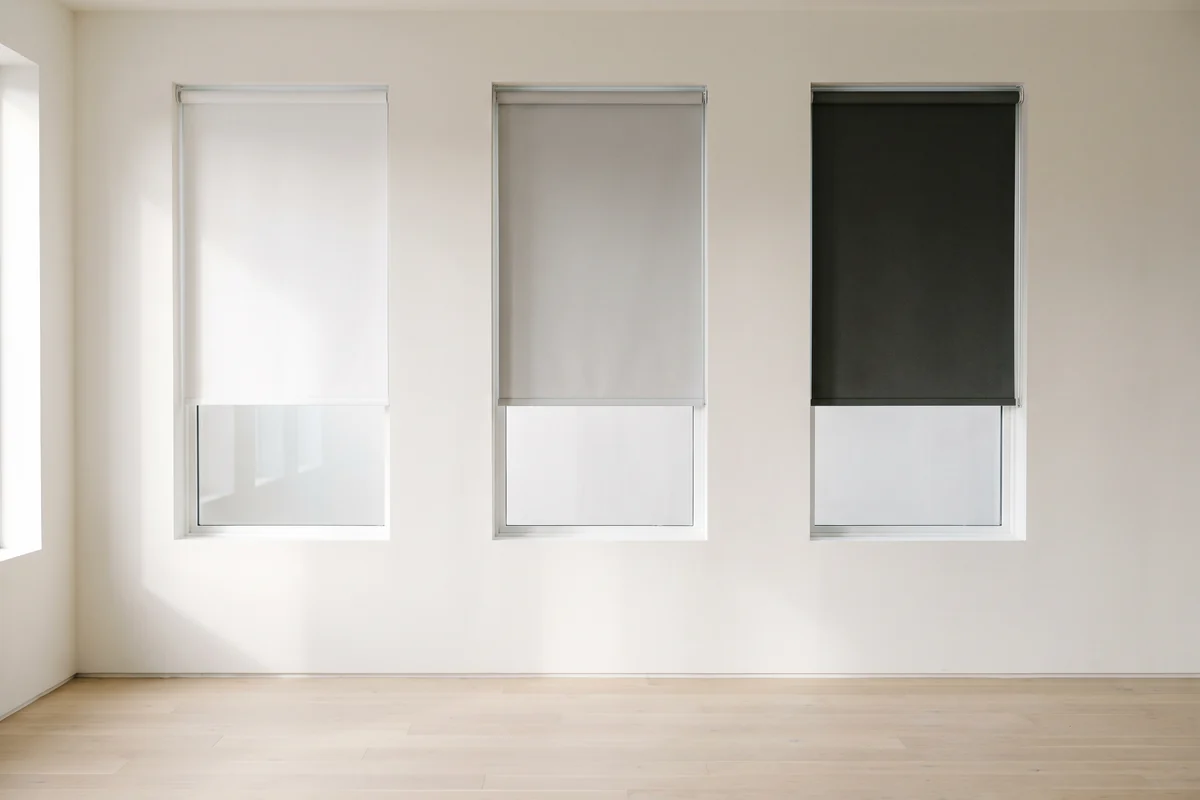
Choose the colour family before the shade
White and off-white blinds
White blinds are the default for good reasons. They bounce light back into the room, suit almost any frame and rarely date. The catch is undertone. A cool, blue-white blind against a warm off-white wall makes the wall look tired. Hold the sample against the wall and the frame together in daylight. If one of them suddenly looks grubby, the undertones don't match.
Grey and charcoal blinds
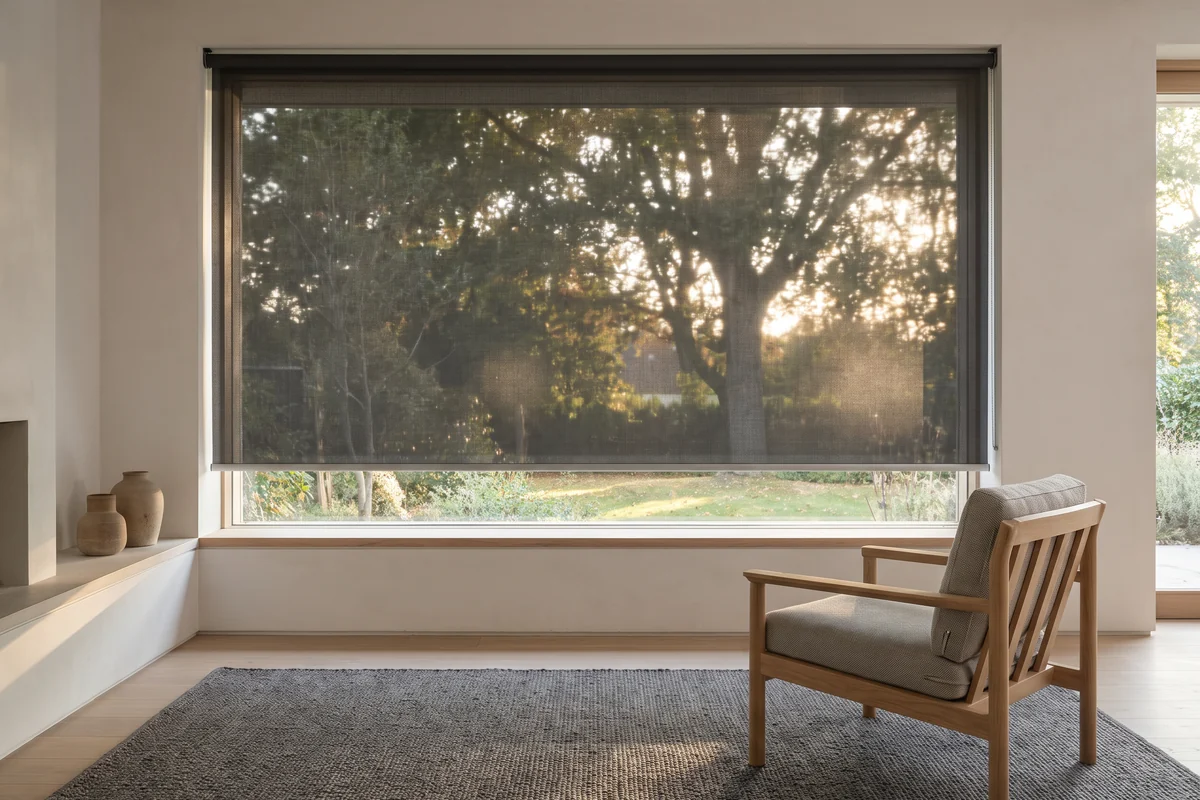
Grey blinds are the forgiving choice in a house with mixed frames or a lot of glass. Light grey reads as soft white from across the room. Charcoal reads as modern, hides the dust and marks that show on white, and on a sunscreen fabric gives a clearer view out.
Black blinds
Black blinds belong in black frames, media rooms and bedrooms where you want the window to vanish at night. In a small room with white walls, a black blind becomes the only thing you see. That isn't a reason to avoid it, just a reason to be sure.
Cream, beige and stone
The warm neutrals suit older homes, timber floors and rooms where the light is already golden. They're also kinder than bright white on a west window, which glows hard in the afternoon sun.
Bold colours
Navy, green, a deep terracotta. Possible, and occasionally right in a child's room or a study. I'd still put the colour in the cushions. A cushion costs a fraction of a blind, and you can swap it when you change your mind.
Let the blind type change the answer
The same colour behaves differently depending on what it's sitting on.
- Roller blinds. One flat plane of fabric, so the sample is close to what you'll get. The fabric type moves it more than the shade does: blockout reads solid, sunscreen reads a touch darker and lets the view through.
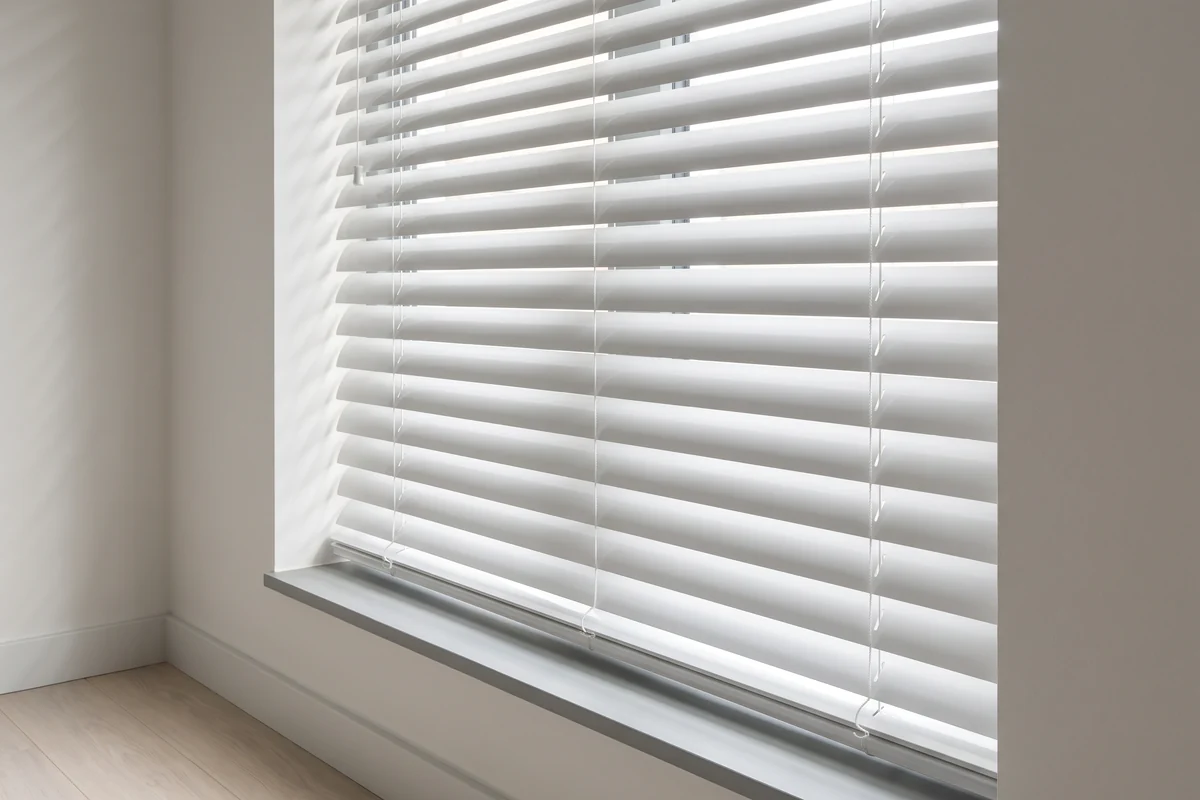
- Venetian blinds. You see the colour on every slat edge and on the ladder cord running down each row, so check the cord matches the slats. In aluminium venetian blinds, white and silver tones look crisp. In timber the grain does most of the work, so match the stain to the floor or the furniture, not the frame.
- Roman blinds. These are furnishing fabric folded into pleats, so treat the colour as you would a curtain. Pattern is allowed here.
- Vertical and panel glide blinds. Wide panels of colour across a whole sliding door. A strong colour there is a feature wall you can't repaint, so go a step lighter than the sample you first liked.
Decide how much view you want first
On a sunscreen blind, colour changes what the fabric does. A dark fabric cuts glare and gives a much clearer view out, because your eye isn't fighting a bright surface. A light one glows when the sun hits it, and you end up looking at the blind instead of through it. The cost is heat: dark fabric absorbs more of the sun and warms the room behind it. A charcoal blind on a west window in February gives you an excellent view and a fairly good radiator.
I've covered that trade-off, and what the 1%, 3%, 5% and 10% weaves each do, in the sunscreen openness factor guide. If heat is the real problem, no colour will fix it from inside. The Australian Government's Your Home guide to shading explains why stopping the sun outside the glass does far more.
Check the side the street sees
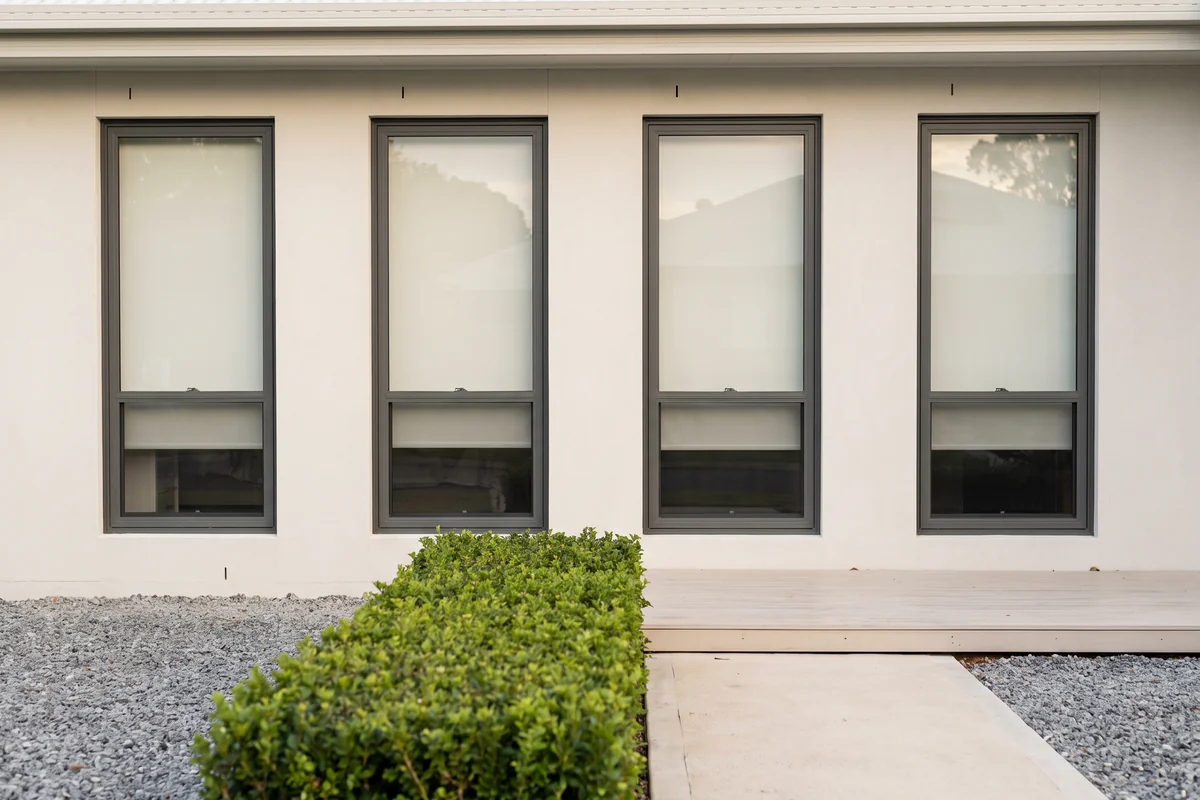
The back of every blind faces the street. On a single-fabric roller it's the same colour as the front, but some coated blockouts have a back in a different colour entirely. Turn the sample over before you sign off on it.
From the footpath, the front of the house reads as one surface. Keep every street-facing window the same colour, even when the rooms behind them differ. The rooms can disagree; the facade shouldn't. If you're in a complex or an estate, check the by-laws or covenants too, because some of them specify what the windows look like from outside.
Whichever colour you pick, the side facing the glass takes the full sun. Check ARPANSA's UV index for where you live, then choose a colour you'd still like a shade lighter in a few years.
Want to see the colours against your own frames?
We measure from Byron Bay to Brisbane and send an itemised quote within 24 to 48 hours of the measure. Roller blinds take about 2 to 3 weeks from check-measure to installation.
Don't replace a working blind for its colour
If your blinds work and you're just tired of the colour, I'd leave them where they are. A well-made blind outlasts most colour trends, and a painted wall or new cushions will change the room for a lot less.
Replace them when the fabric has faded, the mechanism is failing, or the fabric is wrong for the room, like a sunscreen in a bedroom that needed blockout. Then colour is the bonus decision, not the reason. A colour you've stopped noticing is usually a colour that works.
Frequently asked questions
What colour blinds go with grey walls?
White, or a light grey a shade or two paler than the wall, matched to the window frame. Charcoal suits a mid-grey wall with dark frames. Avoid cream against a cool grey, because the undertones fight and both look dull.
What colour blinds go with white walls?
Match the frame first. With white frames, a soft or warm white keeps the window clean. With black frames, charcoal or black. Check the undertone, because a cool white blind on a warm white wall looks dingy.
What colour blinds go with cream walls?
Cream, stone or a warm grey. A bright white blind against cream makes the wall look yellow, while a warm neutral sits comfortably with it.
What is the best colour for blinds?
For most homes, white or off-white matched to the window frame. Choose charcoal where the frames are dark or the view out matters more than a bright room. The frame narrows the choice faster than any colour chart.
Do dark blinds make a room hotter?
Slightly, yes. Dark fabric absorbs more of the sun that hits it and radiates some of that warmth into the room. On a sunscreen fabric it also gives a clearer view out, so it's a trade-off. For real heat control, shade the outside of the glass.
Should all the blinds in a house be the same colour?
The street-facing ones should, so the front of the house reads as one. Inside, rooms can differ, but keep one colour within an open-plan space so the glass reads as a single wall.
Sources Australian Government Your Home — Shading · ARPANSA Ultraviolet radiation index · Rollease Acmeda Australia catalogue, August 2026 (bracket colours)
Back to the journalKeep reading
Related from the journal
 Guides
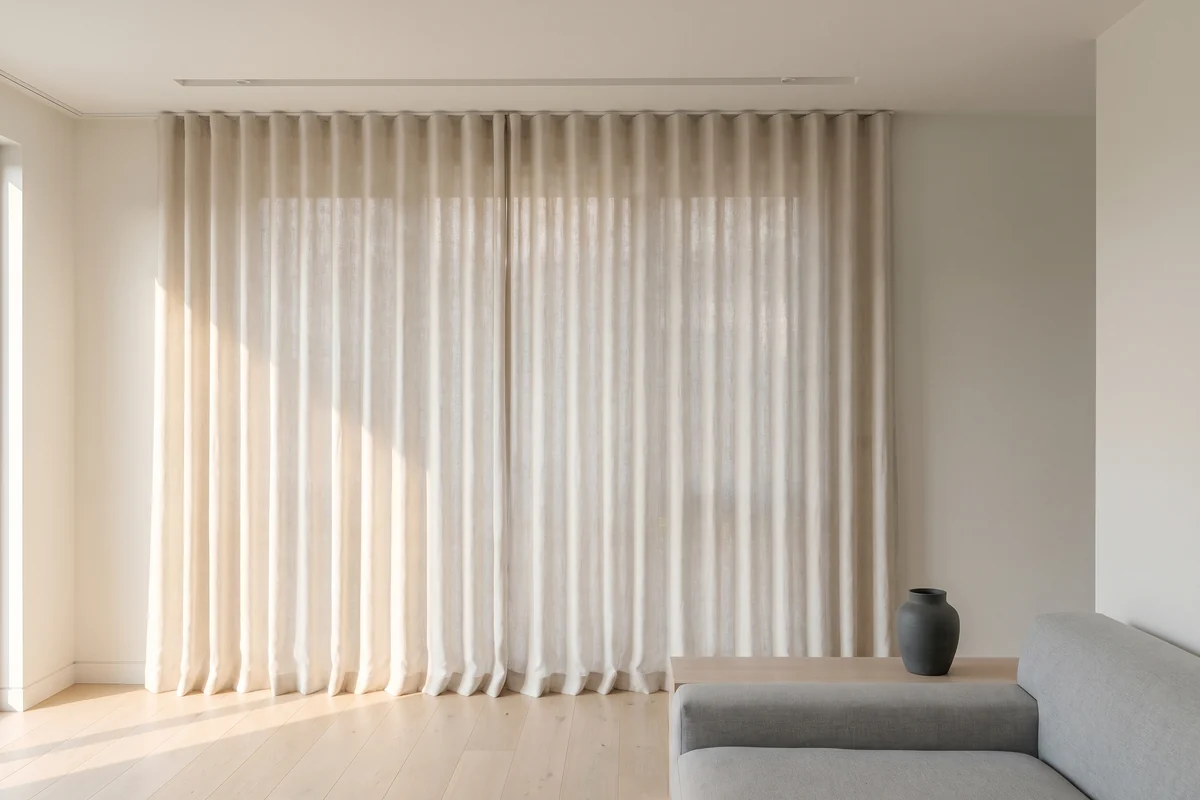
How to choose curtain colour
Why the swatch in your hand is already lying to you: fullness darkens every colour by a couple of shades, the light your window faces changes it again, and the Australian sun rewrites it a third time. Room by room, plus what the street actually sees.
Read more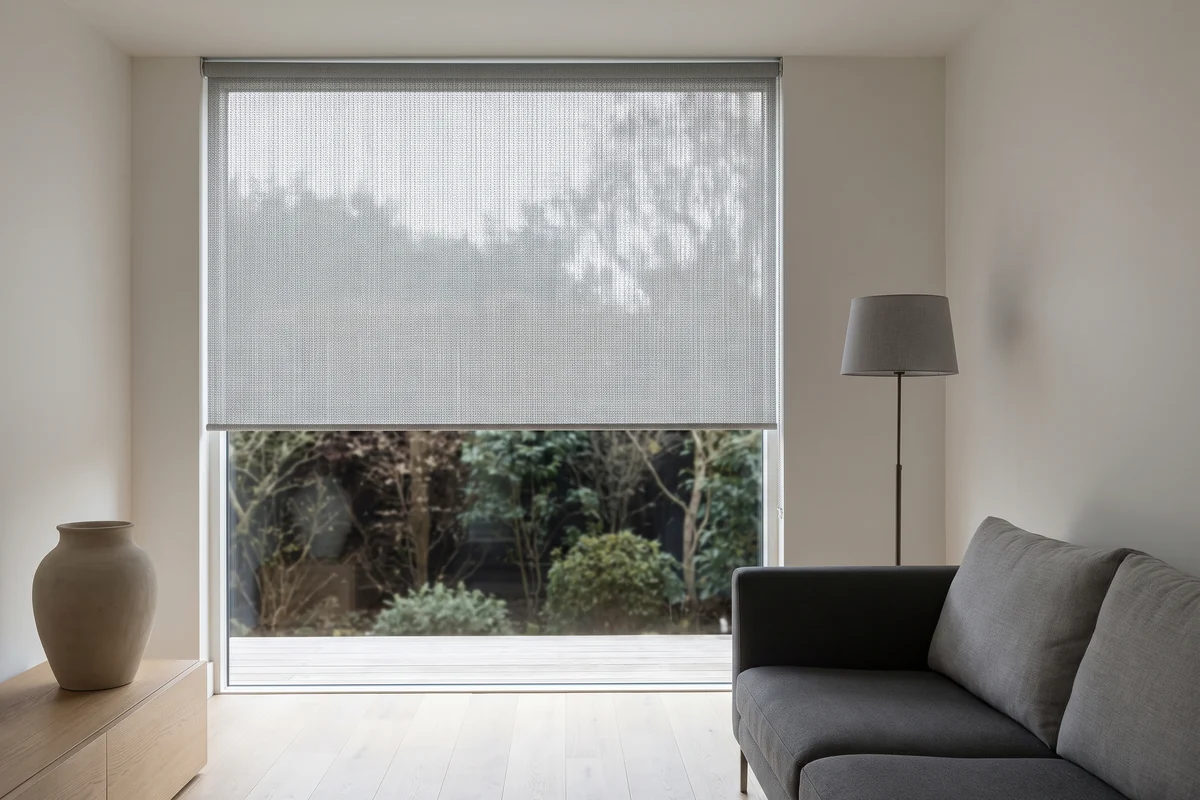 Guides
Sunscreen blinds and openness factor
Openness is the one number that decides how the blind behaves. What 1%, 3%, 5% and 10% each do — and why the American advice about north-facing windows is backwards here.
Read more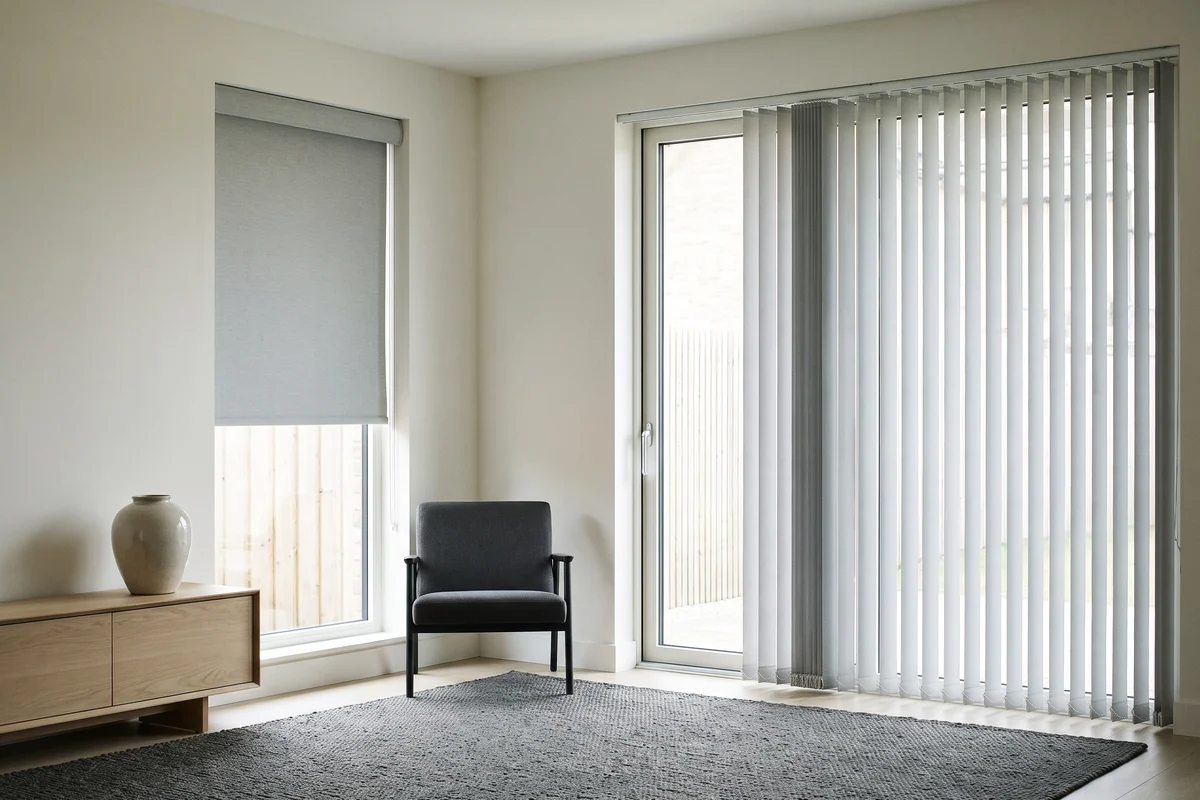 Guides
Roller blinds vs vertical blinds: which fits your opening?
The width of the opening decides it, not the style. Where a roller runs out at about three metres, why a damaged vane is a small job and a damaged roller is a new blind, and which belongs on a sliding door.
Read more