

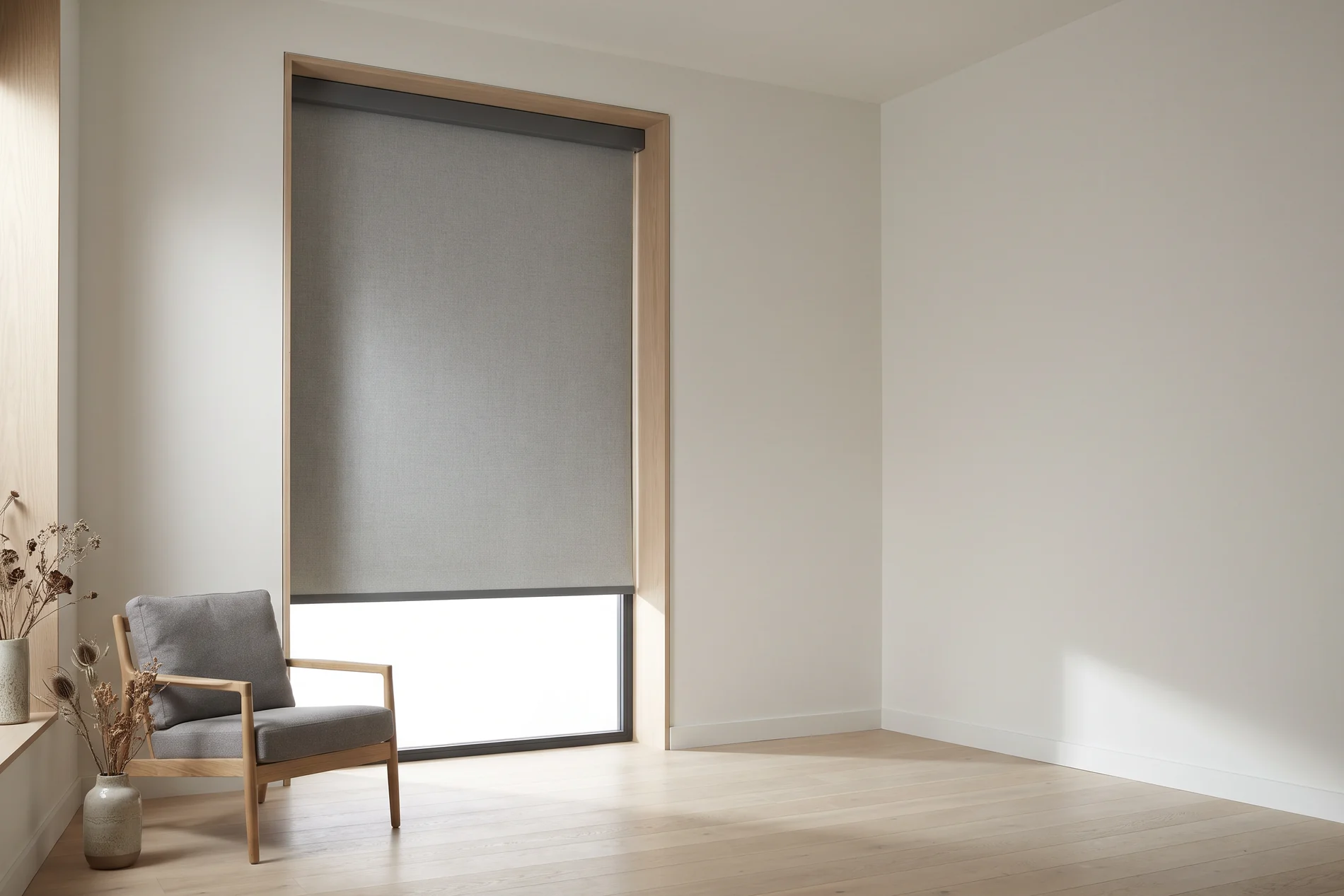
Privacy blinds
Daytime privacy is a weave problem. Night privacy is a contrast problem. Almost nobody tells you they need different answers.
Privacy blinds work in daylight because the weave breaks up a sightline from a brighter outside. After dark that reverses: your lit room becomes the brighter side, and only an opaque fabric keeps a silhouette off the glass.
Forced to pick one blind that does both: a blockout roller, fitted to the wall rather than inside the reveal.
Nearly every guide to privacy blinds lists products against a single axis, as though privacy were one thing you either have or you don't. Daylight privacy and night privacy are different problems, and the fabric that handles one is often wrong for the other.
Privacy is two problems, not one
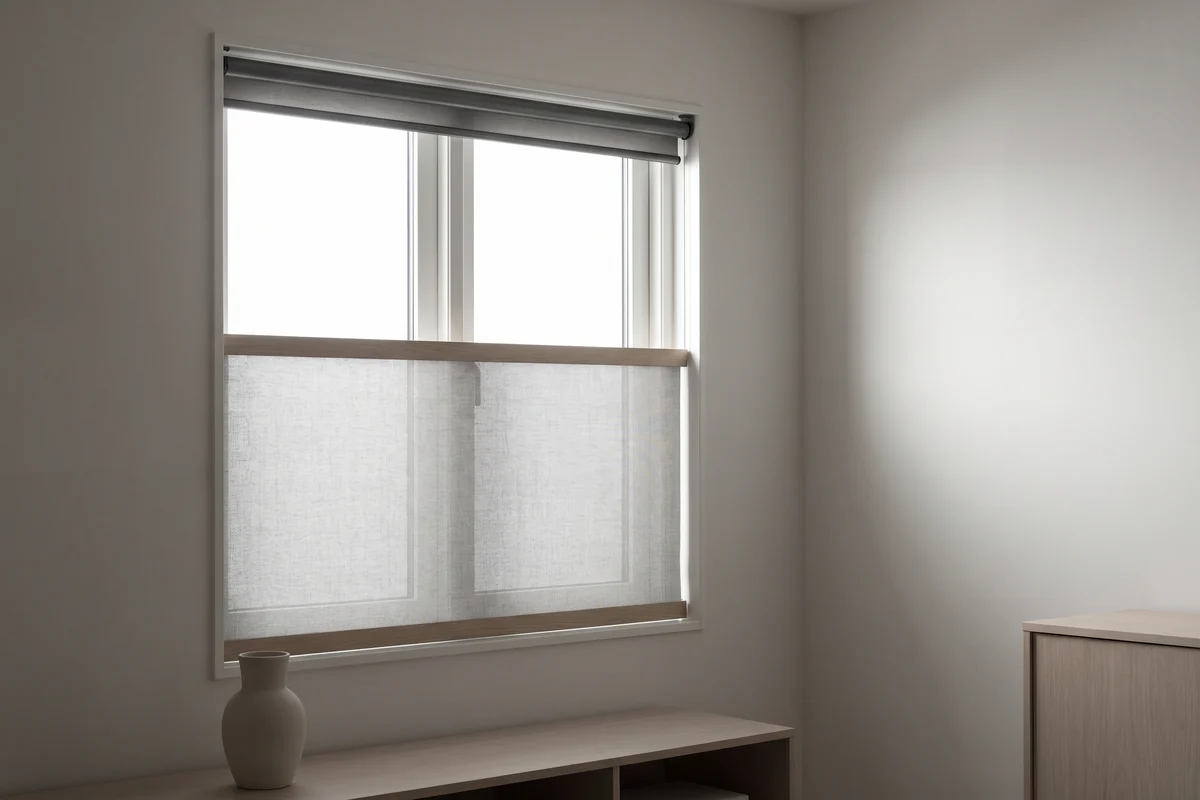
Privacy through a window is decided by which side of the glass is brighter, because whoever stands in the darker space sees into the lighter one. At two in the afternoon that is you, indoors, protected. At eight at night, with a lamp on, it is the person on the footpath.
This is why a fabric can be sold honestly as a privacy blind and still leave you exposed. A sunscreen weave nobody sees through at midday becomes a lit panel after dark.
So there are two specifications hiding inside the one word: how tightly the fabric is woven, and whether it passes any light at all. You can buy one blind that covers both, or two that each do their half well. You cannot buy a single open-weave fabric that does the lot, and anyone telling you otherwise is selling something.
Daylight privacy is a weave problem
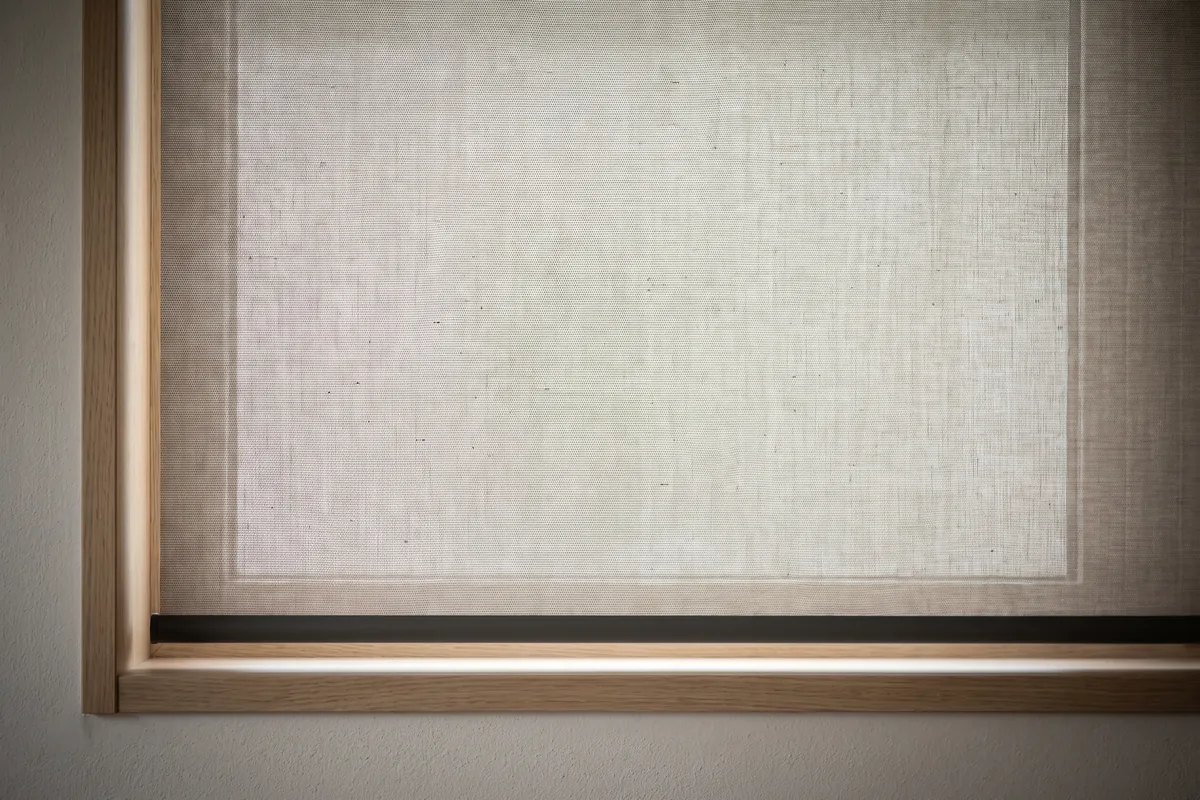
For daytime, the number that matters is openness factor: the percentage of the weave that is literally open. Lower blocks more. We carry 1%, 3%, 5% and 10% — the full range — which makes privacy a trade-off you control rather than a product you're handed.
At 1% the fabric is close to solid: you keep a greyed sense of what's outside and almost nobody sees in. At 10% you keep a genuinely usable view, but somebody on your boundary at midday will make out shapes and movement. Three and five per cent are where most windows land.
Aspect drives the choice more than the room does. In Australia the north face is the sunny one, which trips up a good deal of imported advice — the Australian Government's guidance on orientation and passive design is the sane starting point. A west-facing window taking hard afternoon sun wants a tighter weave than a south-facing one. The full breakdown is in our guide to sunscreen blinds and openness factor.
A translucent fabric is the other daytime option. It diffuses light rather than screening it, so you get brightness with no view out at all — good for a bathroom, frustrating in a living room where you wanted to see the garden.
After dark, your lit room is the display case
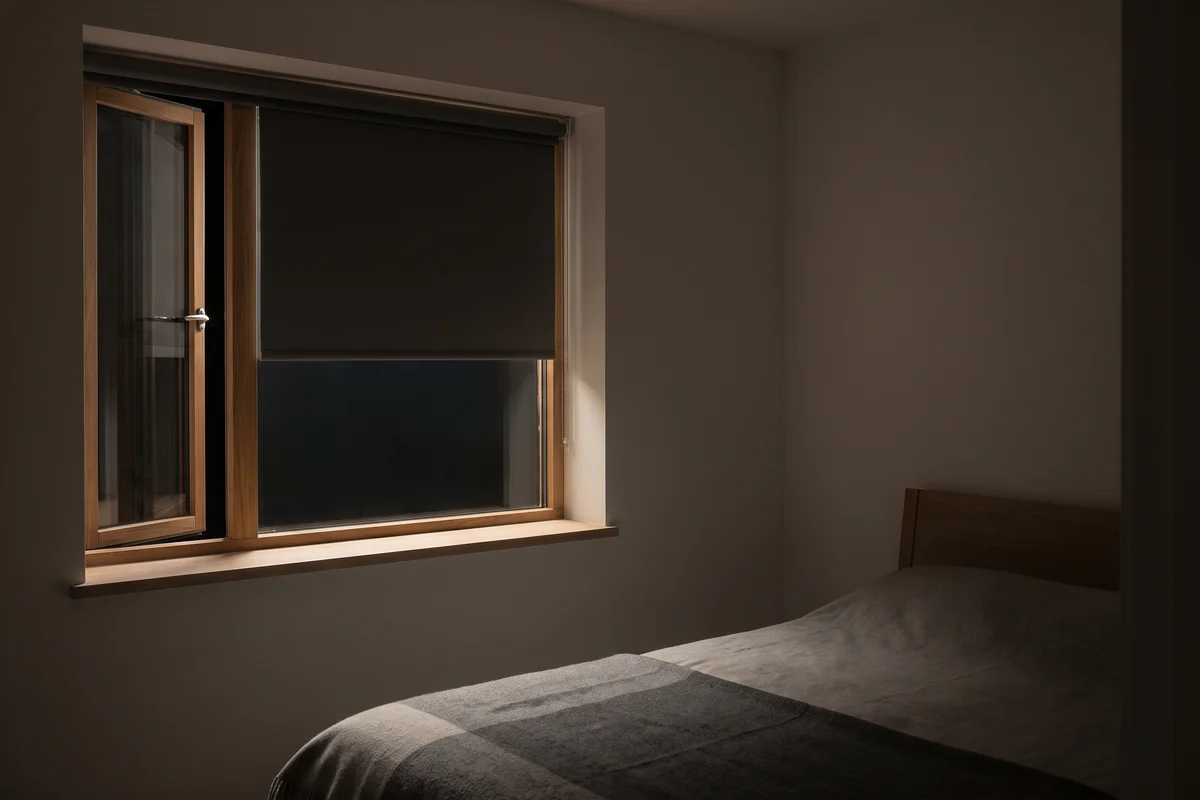
Turn a lamp on and the window stops being a window. It becomes a backlit screen, and anything that passes light passes your outline with it. This is the silhouette effect. The blind is working exactly as designed; the design just wasn't for this.
Only a coated, opaque fabric stops it. A blockout roller blind has a backing that passes no light, so there is no lit panel and no outline. That is why blockout is the honest answer whenever the question is about being seen at night.
The better answer for most rooms is to stop choosing. A dual roller blind carries two fabrics on one bracket — sunscreen in front for the day, blockout behind for the night — and you pull down whichever the hour calls for. The cost is depth: the double brackets we fit run 115mm to 122mm of projection, and the fabric needs clearance on top of that. Measure your reveal first, because a shallow recess pushes the whole assembly onto the face of the wall.
Privacy fails at the edges, not through the fabric
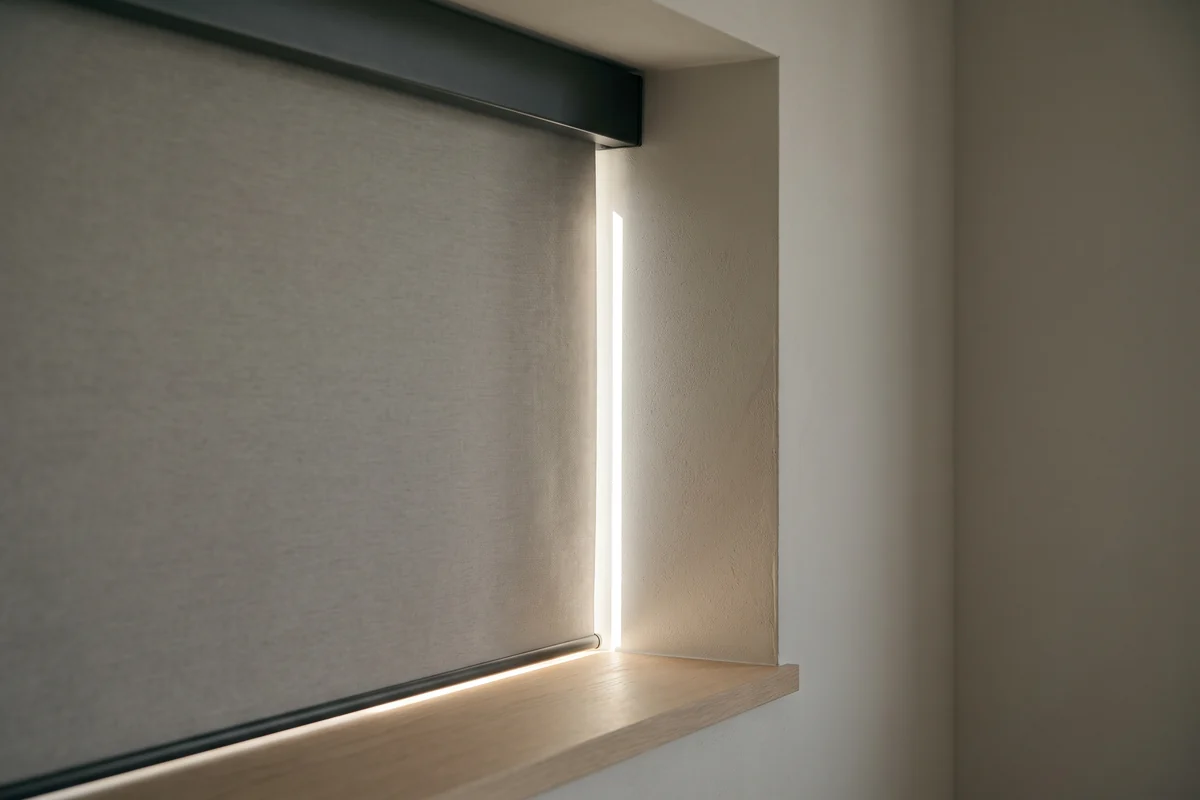
Almost every guide argues about fabric, and almost none mention the part that actually goes wrong: the perimeter. A blind fitted inside the window reveal has to be made narrower than the opening so it can operate without fouling the frame. That clearance is a gap down each side, and a gap is a sightline.
Straight on you'd never notice it. Stand off to one side — where a footpath, a driveway or a neighbour's deck usually is — and the angle through that gap opens up a surprising amount of the room.
The fix is a face fit: mount the blind on the wall above the opening and run it wider than the window so the fabric laps over the frame. You lose a little of the neatness of a recessed blind and gain an unbroken screen. On a bedroom or a bathroom that is a trade worth making.
One limit to know before you plan an opening around a single blind: a roller runs to about 3 metres wide as standard, and past that we either split it into two on one head or check whether the fabric can be railroaded. We're a member of the Window Shading Association of Australia, whose code covers child safety and fire compliance — worth asking any installer whether they're in it.
What to fit, room by room
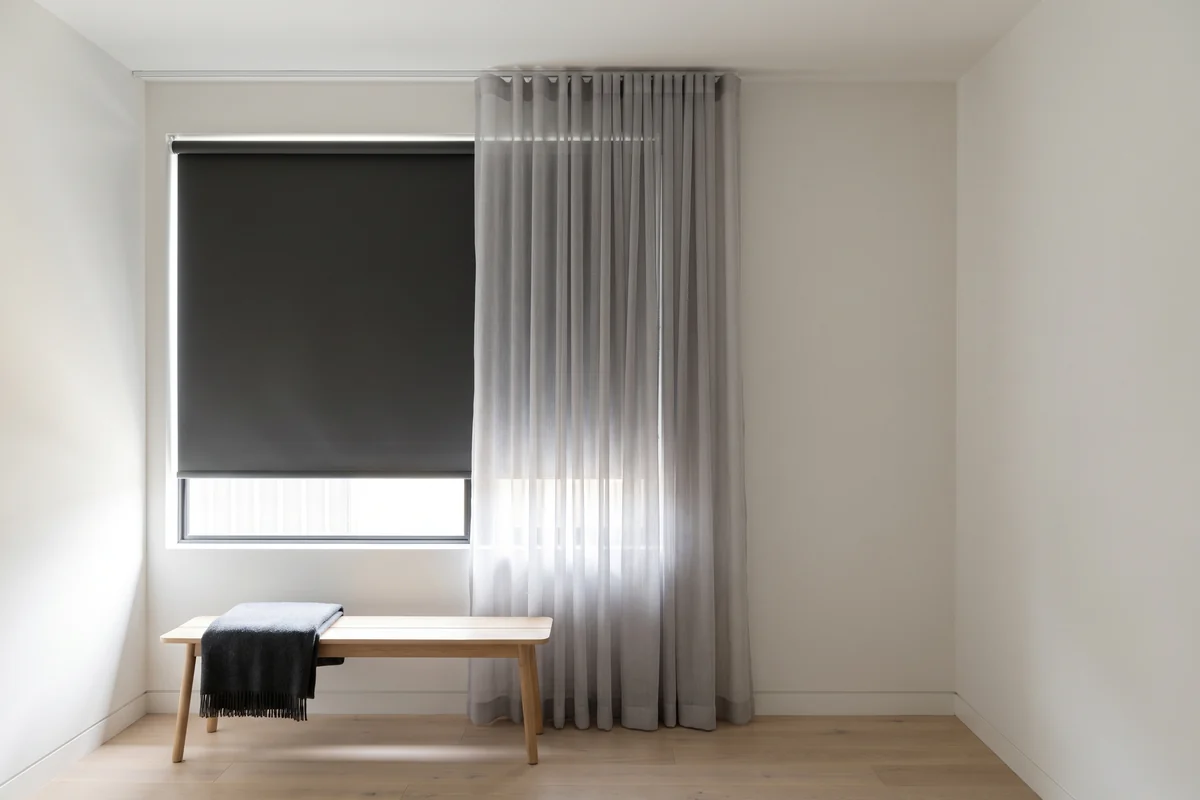
Here's the position that costs us upsells: most homes over-specify blockout and under-specify the daytime layer. People ask for blockout on every window, then live with rooms that are either fully shut or fully exposed. We stock four openness factors from 1% to 10% because the daytime half has more than one right answer, and treating every window as a night-time problem throws that away.
- Bedrooms. The one room where blockout genuinely earns its place, because sleep and night privacy point the same way. Face-fit it.
- Living and dining. Sunscreen, or a dual roller if you want something opaque to pull down in the evening.
- Bathrooms and ensuites. Translucent or blockout, never an open weave. Honeycomb blinds suit narrow, high windows here.
- Street-facing rooms. Layer a blind with sheer curtains in front — privacy curtains on their own look lovely and give you nothing after dark, no matter how dense the weave.
| Sunscreen | Translucent | Blockout | Dual roller | |
|---|---|---|---|---|
| Daytime privacy | Good at 1–3%, partial at 10% | Full | Full | Full |
| Privacy after dark | None | Partial — silhouette shows | Full | Full |
| Keeps the view out | Yes | No | No | Yes, on the front layer |
| Daylight into the room | High | Diffused | None when down | Your choice, hour by hour |
| Lead time | 2–3 weeks | 2–3 weeks | 2–3 weeks | 2–3 weeks |
Not sure which half of the problem you actually have?
We measure, check the aspect and the sightlines from outside, and quote it itemised within 24 to 48 hours. No deposit to get a price.
Frequently asked questions
Can you see through blinds at night?
Through an open-weave or translucent blind, yes — at least as a silhouette. Once your interior light is brighter than the street, any fabric that passes light shows movement and outlines. A coated blockout fabric is the only thing that reliably stops it.
Are there blinds that let in light but give privacy?
Yes, in daylight. A sunscreen blind at 1% to 5% openness keeps a room bright and screens the view in. Neither that nor a translucent fabric holds up after dark, which is why a dual roller pairs one with a blockout.
What blinds give the most privacy?
A blockout roller, face-fitted so the fabric overlaps the frame. Blockout removes the light path and the face fit removes the side gaps — the two ways privacy is actually lost. A dual roller gives the same night performance with a usable daytime layer in front.
Do blinds give privacy during the day?
Most do, because outside is brighter than inside and the fabric only has to break up the sightline. How well depends on the openness factor — a 10% weave lets someone standing close make out shapes, while 1% is close to solid. Venetians screen by slat angle instead.
Are blinds or curtains better for privacy?
Blinds, if you're only buying one thing. A blind sits flat against the opening and covers it completely, where a curtain gathers and moves. Curtains are the better second layer — a blockout blind with sheers in front is what most street-facing rooms want.
Are privacy blinds safe in a child's room?
Only if you specify cordless or motorised. Corded internal blinds are a genuine strangulation hazard covered by a mandatory standard — the ACCC publishes a guide to blinds, curtains and window fittings worth reading first. Ask for cordless in any room a child sleeps in.
Sources Australian Government Your Home — Glazing · ACCC blinds and window fittings mandatory standard · Sleep Health Foundation
Back to the journalKeep reading
Related from the journal
 Guides
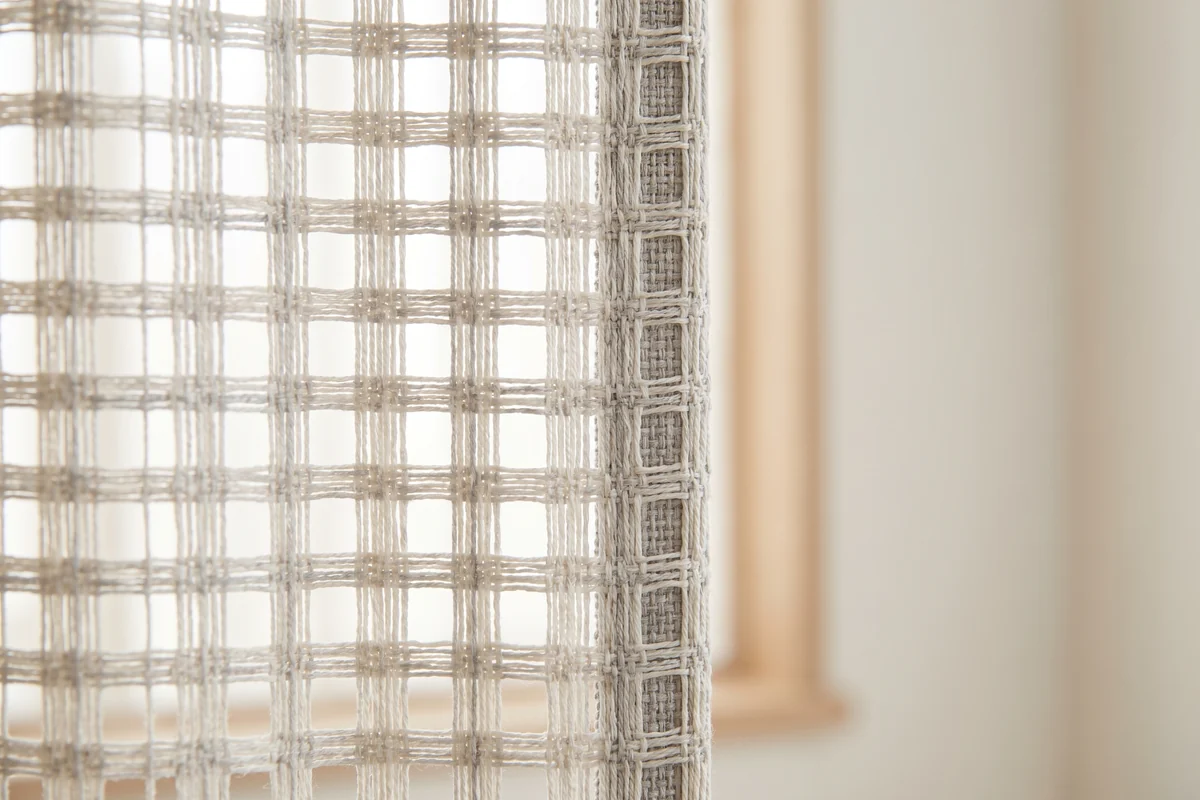
Sunscreen blinds and openness factor
Openness is the one number that decides how a sunscreen blind behaves. What each percentage does in a room, and why most of the advice online was written for the wrong hemisphere.
Read more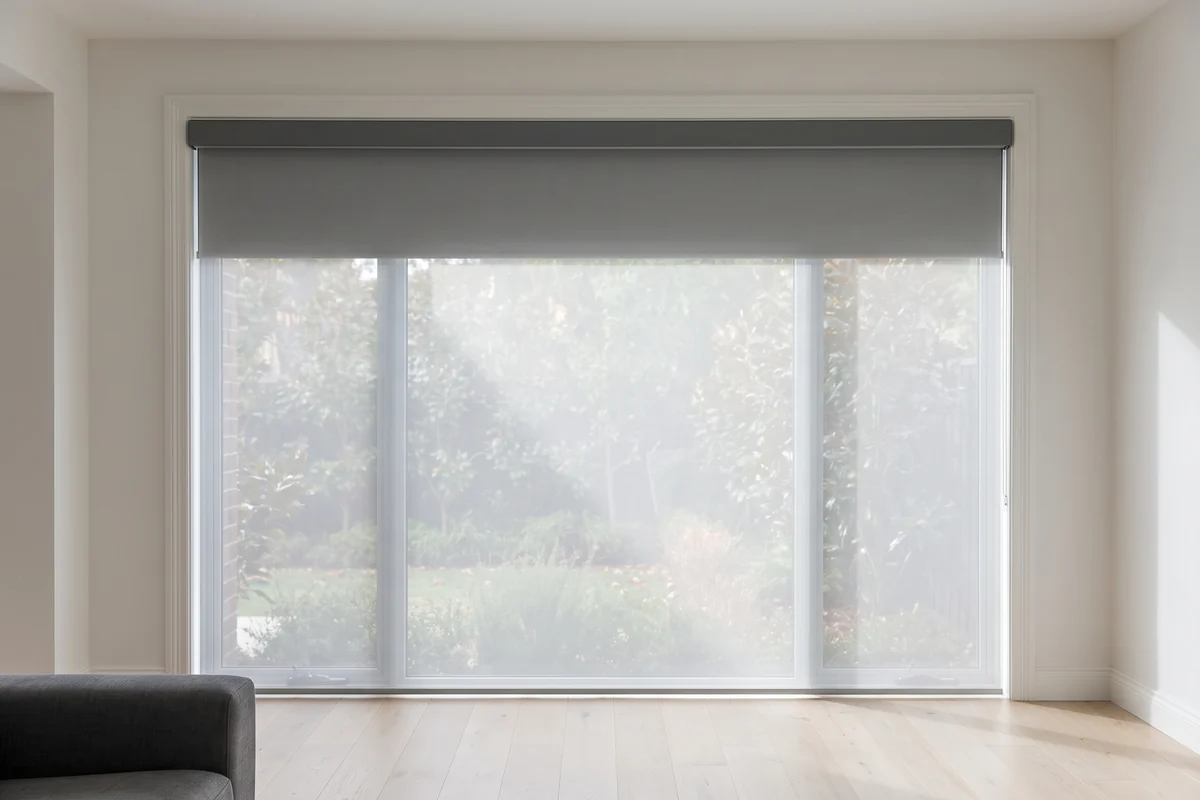 Guides
Dual roller blinds: day and night on one bracket
Two blinds, one bracket, four settings. Which fabrics to pair, the reveal depth it needs, and when to buy something else instead.
Read more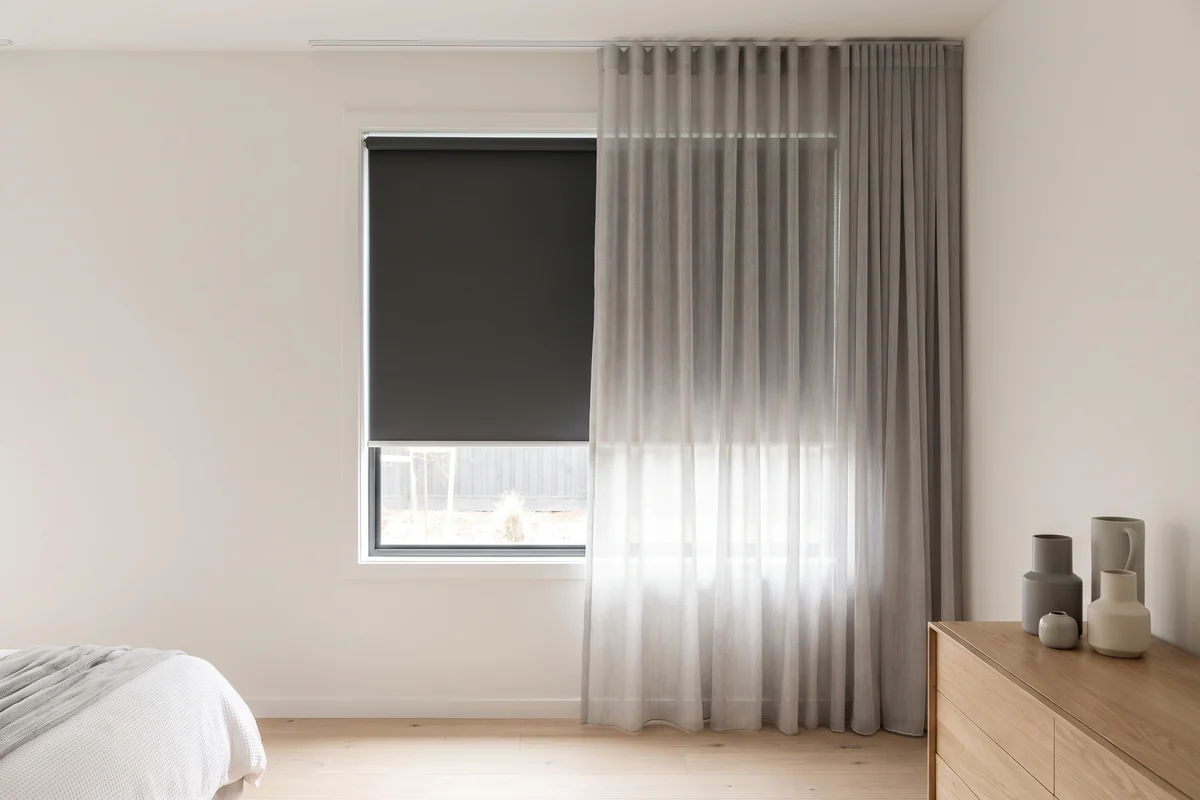 Guides
Blockout roller blinds
Coated fabric that passes no light, made to measure with side channels for true darkness. Where blockout earns its money and where it is overkill.
Read more