


Pelmets: What They Are and When You Need One
What a pelmet does, the types worth knowing, the heat it saves, and the windows that don't need one.
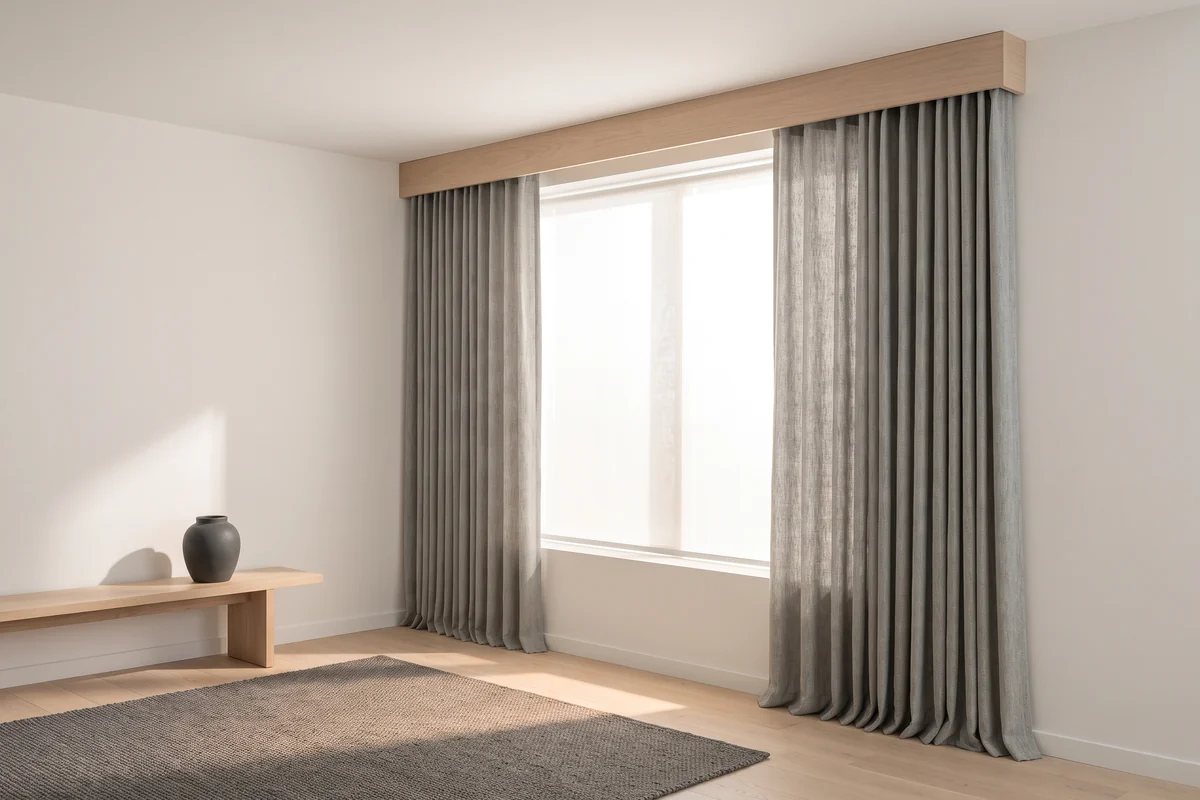
A pelmet is a box or panel fixed above a window to hide the curtain track or blind roll and close the gap at the top. On curtains it also stops warm air spilling over the top of the fabric, which is why energy guides recommend one. Today's pelmets are slim, square and painted, nothing like the frilled ones you're picturing.
If your track is fixed to the ceiling, you probably don't need one at all.
Most pages about pelmets are trying to sell you one. Here's what one is for, which windows need it, and which already have something doing the same job, from someone who supplies them and still talks people out of them.
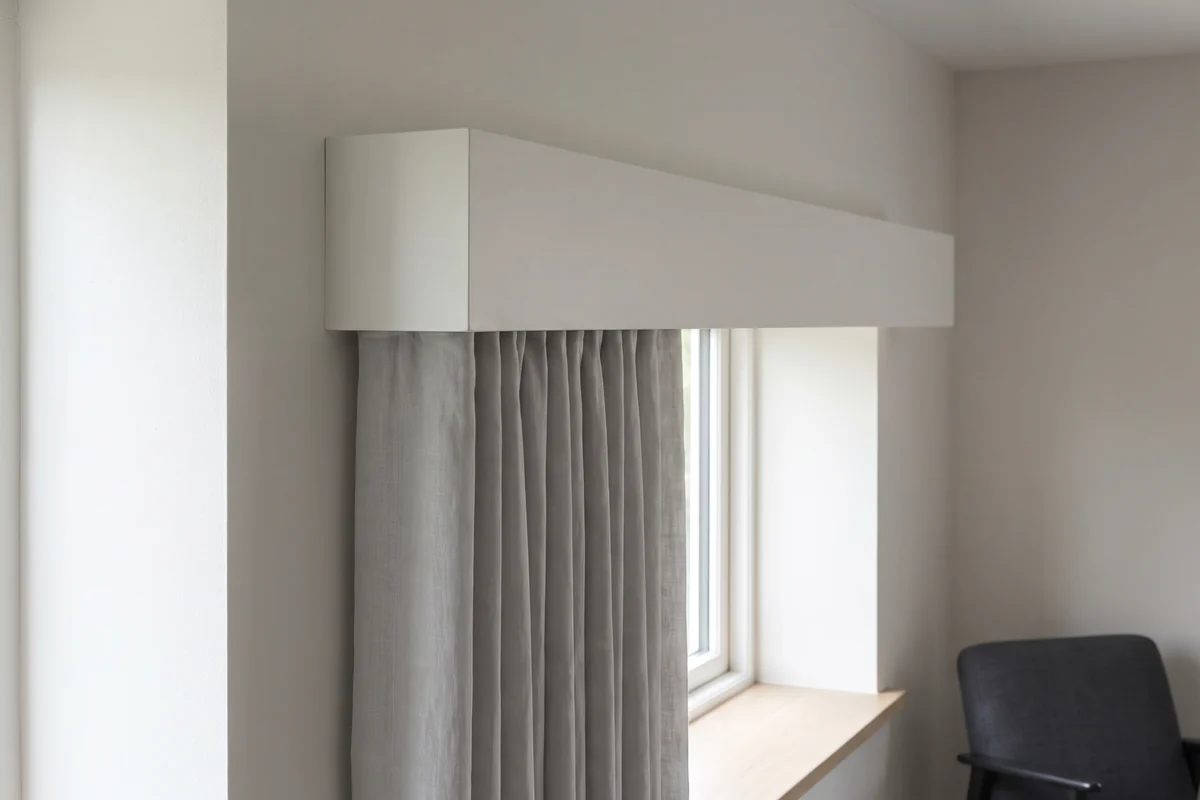
Know what a pelmet actually does
A pelmet does three jobs, and only one of them is decoration.
- It hides the hardware. The track and runners, or the roll and brackets of a blind.
- It closes the top. With nothing above it, a curtain or blind leaves a strip open between its top edge and the wall or ceiling. Light comes through it in the morning and air moves through it all day.
- It frames the window. A pelmet set wider and higher than the frame makes a modest window read larger, the same trick as hanging the curtain past the frame.
A valance is different: gathered fabric hung across the top. A pelmet is the rigid one.

Choose the type by the room
- Box pelmets. A painted timber or MDF box, square-edged, usually the colour of the wall or the ceiling. This is the modern default, and it disappears.
- Upholstered pelmets. The same box wrapped in fabric, often the curtain fabric. Softer, more traditional, right in a formal room.
- Recessed pelmets. A slot built into the ceiling so the track sits up inside it. The cleanest finish of all, and easiest to plan before a ceiling goes in.
- Blind pelmets and fascias. A slim front panel across the top of a roller blind, hiding the tube and brackets.
We supply pelmets, and the right finish is a conversation at the measure. If you're renovating, ask about a recess before the plasterer arrives.
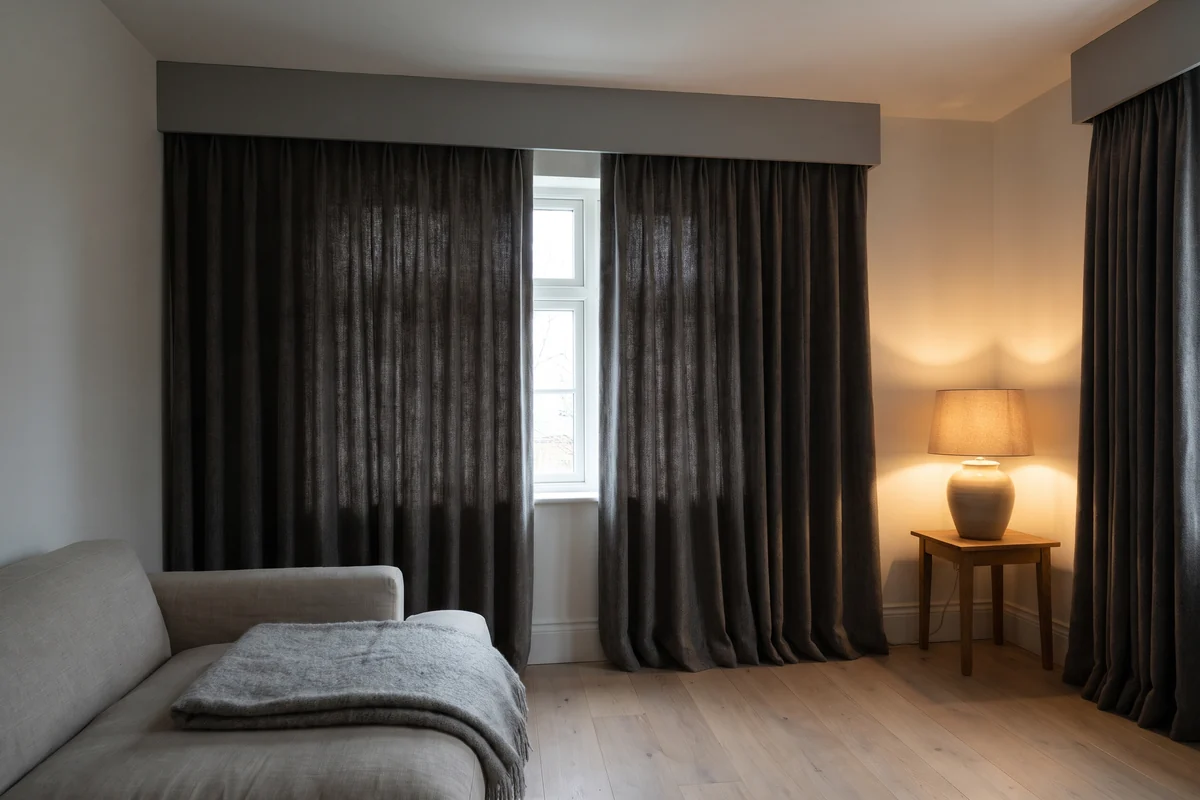
Use one for heat, not just looks
This is the job most people never hear about. A curtain with an open top acts like a chimney: air cooled against the glass drops behind the fabric, spills out at the bottom, and warmer room air is drawn in over the top to replace it. Close the top and the loop stops.
The Australian Government's Your Home guide to glazing recommends exactly that: "snugly fitted blinds and curtains with pelmets that trap a layer of still air next to the window". Renew's guide to high-performance curtains makes the same point. I've gone through why it matters more than the fabric in do thermal curtains work, and the short version is that a pelmet over an ordinary curtain beats an expensive curtain with an open top.
Not sure your window needs one?
We'll tell you at the measure, and quote the track, the curtain and the pelmet line by line within 24 to 48 hours, from Byron Bay to Brisbane.
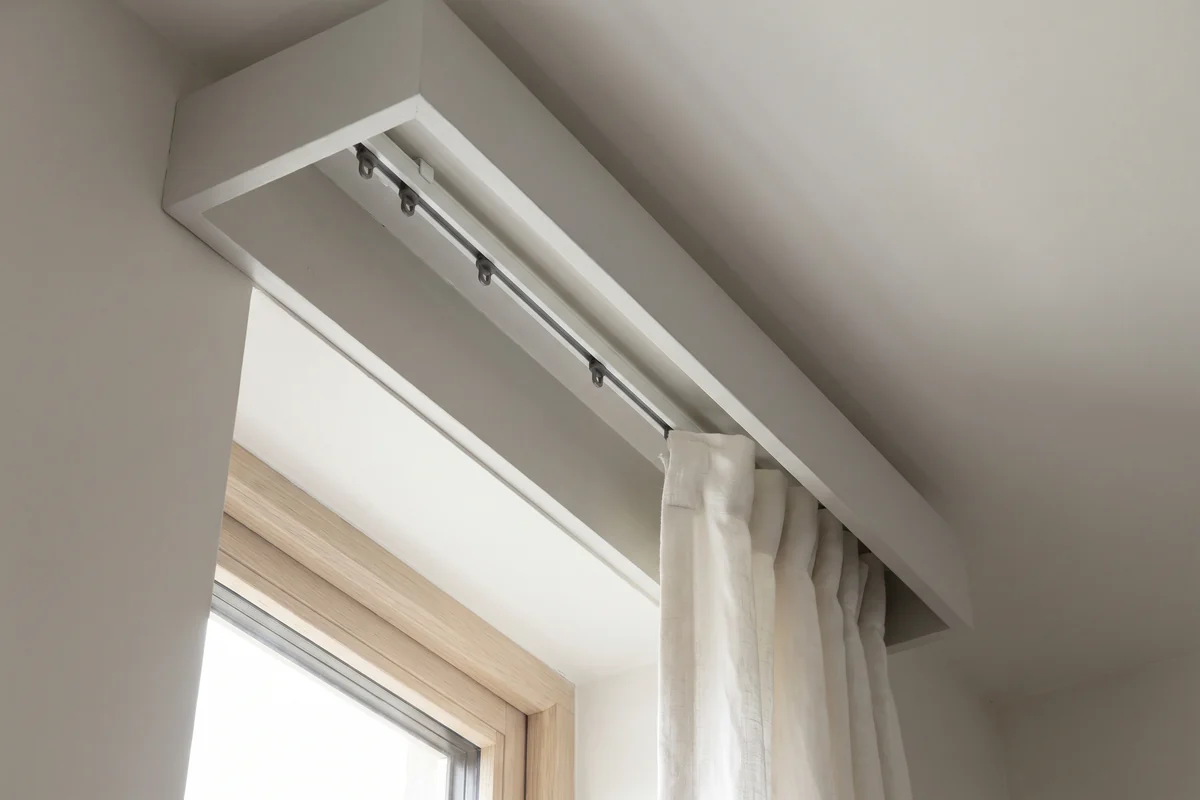
Size it to clear the curtain, not the track
The mistake I see most often is a pelmet built to the depth of the track. The curtain's heading sits in front of the track, and a curtain on a track needs room to run without its folds rubbing the inside of the box. So the pelmet has to clear the track and the full depth of the heading, and on a double track, both layers.
Width matters as much: run it past the frame far enough to cover the curtain stacked open, or the stack hangs out from under it looking slightly lost.
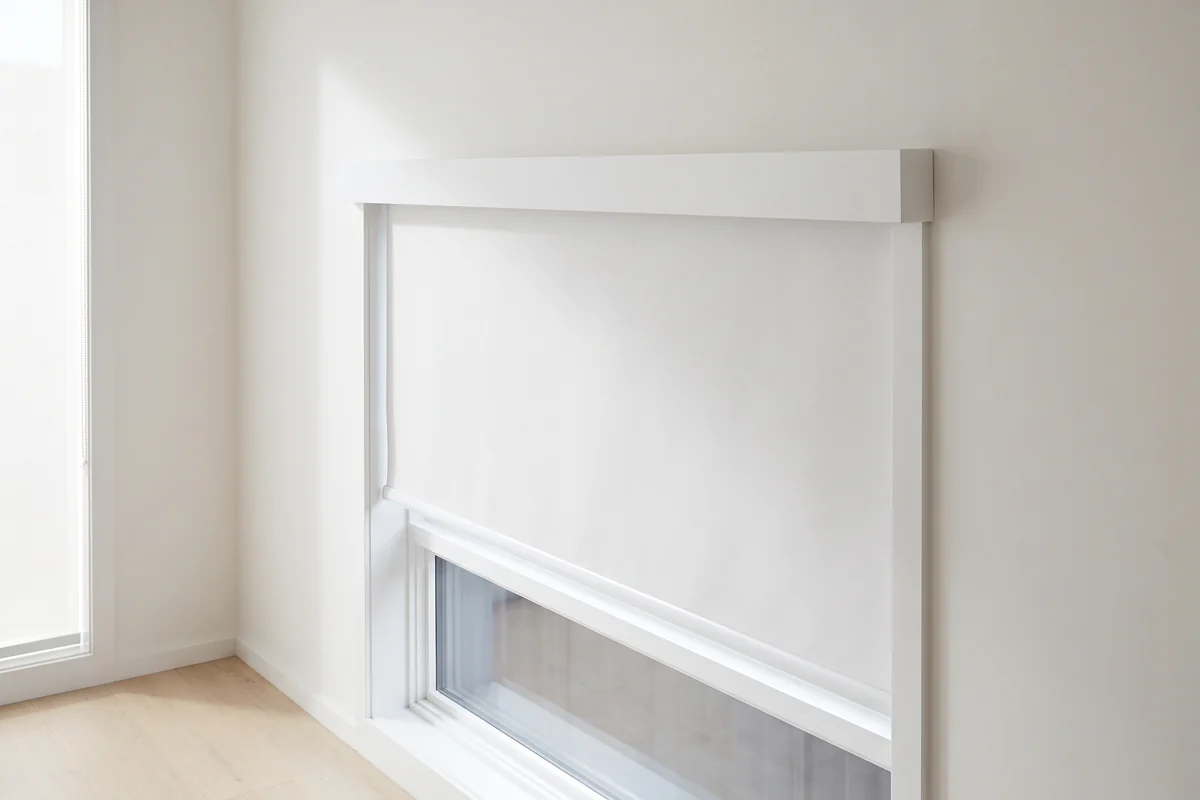
Add one to a blind when you can see the roll
A roller blind fitted inside the window frame rarely needs a pelmet; the frame hides most of the hardware.
Fitted to the face of the wall above the frame, it's different. You see the tube, the fabric wrapped around it and the brackets at each end, and light leaks over the top. A slim pelmet or fascia across the front hides all of it. Whether that's worth it is mostly about how often you look up. In a living room, usually yes. In a laundry, I'd save the money.

Skip the pelmet when the track is in the ceiling
Here's the part a pelmet seller won't lead with. If the track is fixed to the ceiling, or recessed into it, the curtain already drops from the top with no gap above. Renew's guide puts it plainly: an enclosed pelmet at the top, or a curtain that drops straight from the cornice. Either one does the job.
So on a new build or a renovation, I'd usually put the track in the ceiling and skip the box. Pelmets earn their place on existing windows where the track has to go on the wall, on face-fitted blinds, and in rooms where the look is the point. A pelmet that is only there because the last house had one is just joinery to dust.
Frequently asked questions
What is a pelmet?
A box or panel fixed above a window to hide the curtain track or blind roll and close the gap above it. Most are painted timber or MDF, or wrapped in fabric. A valance is the soft, gathered fabric version.
Are pelmets outdated?
The frilled and swagged ones are. A slim, square pelmet painted the colour of the wall or ceiling isn't, and a recessed pelmet built into the ceiling is about as current as a window gets.
Do pelmets save energy?
Yes, when they close the top of a well-fitted curtain. They stop air cooled against the glass circulating back into the room, which the Australian Government's Your Home guide recommends for reducing heat transfer through windows.
Do pelmets block out light?
They block the light that comes over the top of a curtain or blind, which is often the brightest leak in a bedroom. They don't help at the sides or the bottom, so pair one with a curtain that runs past the frame.
How deep should a pelmet be?
Deep enough to clear the track and the full depth of the curtain heading, with room for the folds to move. On a double track it has to clear both layers, so it is measured to the curtain, not just the track.
Do you need a pelmet if the curtain track is on the ceiling?
Usually not. A ceiling-fixed or recessed track lets the curtain drop from the top with no gap above it, which does the same job as a pelmet.
Sources Australian Government Your Home — Glazing · Renew Not just window dressing: high-performance curtains, blinds and shutters
Back to the journalKeep reading
Related from the journal
 Guides
Do thermal curtains actually work?
Up to 87% of an Australian home's heat arrives through the windows. What the lining actually contributes, why the pelmet matters more than the fabric, and the point at which a curtain is the second-best answer.
Read more Guides
Curtains on a track: what works and what doesn't
The track decides the heading, and the heading decides the price. Which curtains run on runners, the fullness ratios nobody publishes, and why an eyelet curtain will never go on one.
Read more Guides
Double curtain track: how to choose the right one
Two channels, one bracket line, and a clearance figure nobody measures properly. One double track or two singles, ceiling or face fix, and why two corded channels is the wrong specification.
Read more