

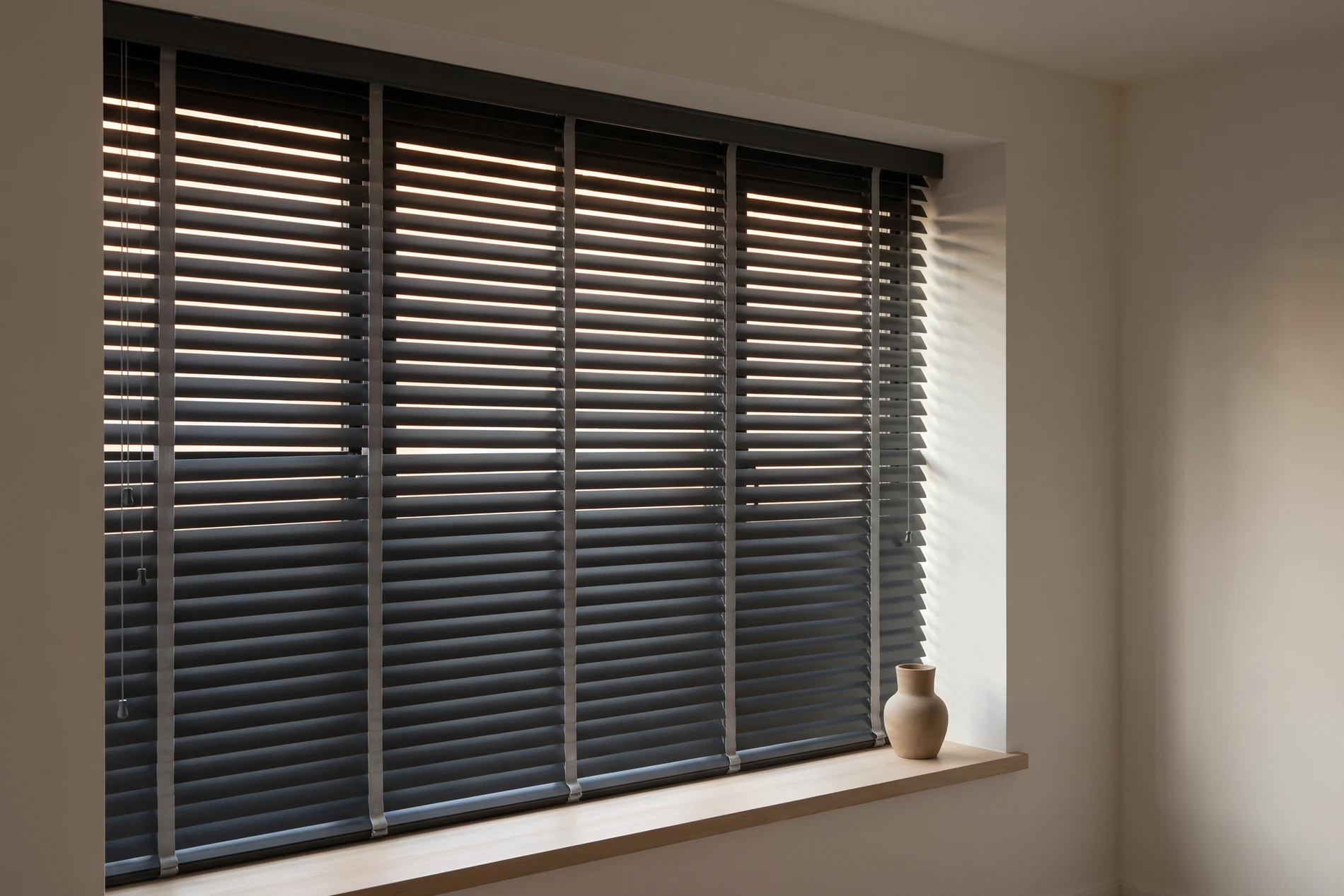
How to Clean Venetian Blinds Without Warping Them
Dust with the slats closed, wet-clean with them open, and keep timber out of water.
How to clean venetian blinds: close the slats into one flat face and vacuum both sides with a soft brush head, then rotate them open and wipe marks with a barely damp cloth. Aluminium and PVC tolerate water; timber does not. Dust fortnightly and the wet clean almost never comes round.
The part that fails first is not the slat. It is the tape holding it.
Venetians are the blind people think they already understand, so they get cleaned on autopilot — usually in a bath, usually all at once. That works on one material and quietly ruins another, and it puts the one component you cannot buy separately underwater.
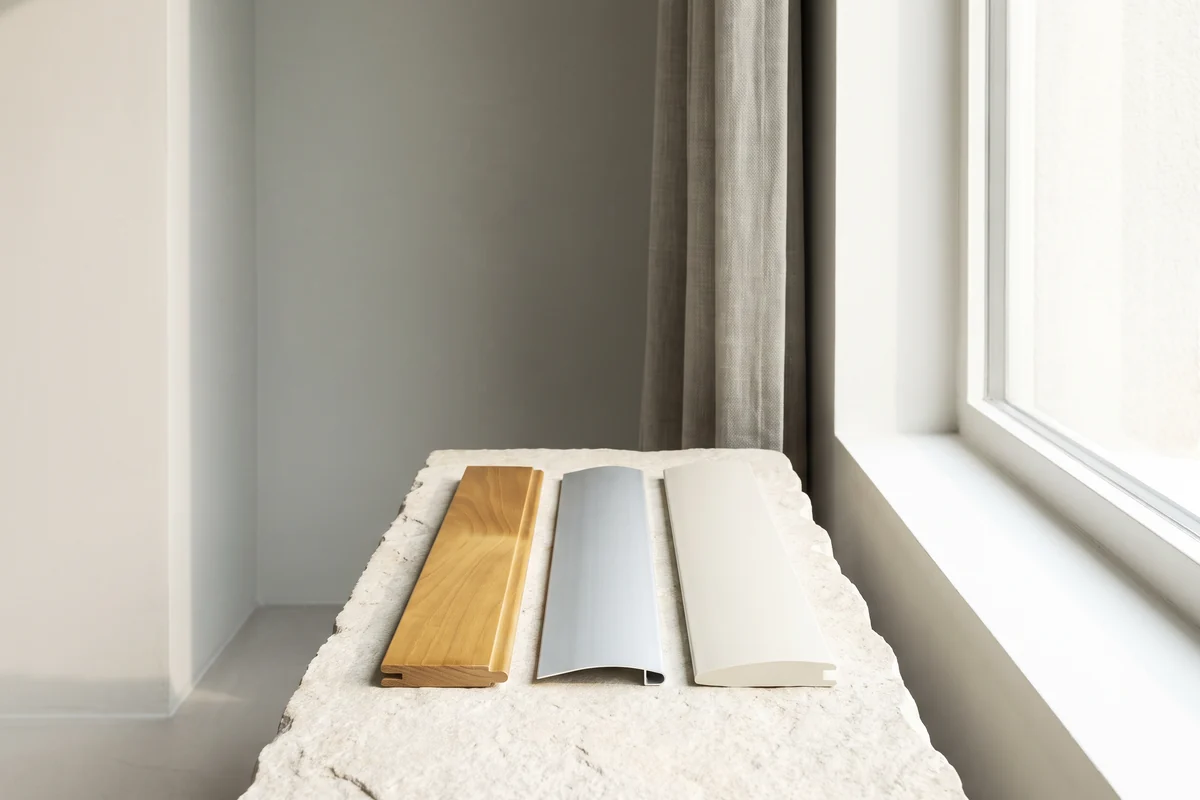
Which slat you have decides everything
Hold a slat to the light. Timber has grain and a finish on it. Aluminium is thin, springy and cold. PVC is thicker, matte and does not flex the same way. The materials sit differently in a house, and they sit differently in water.
| Dust | Wet clean | Never | |
|---|---|---|---|
| Aluminium | Brush head, slats closed | Damp cloth, mild detergent | Bend the slats hosing them outside |
| PVC / faux timber | Brush head, slats closed | Damp cloth, or a careful bath | Solvents and abrasives |
| Timber | Brush head, slats closed | Barely damp, dried at once | Leave water on the ends |
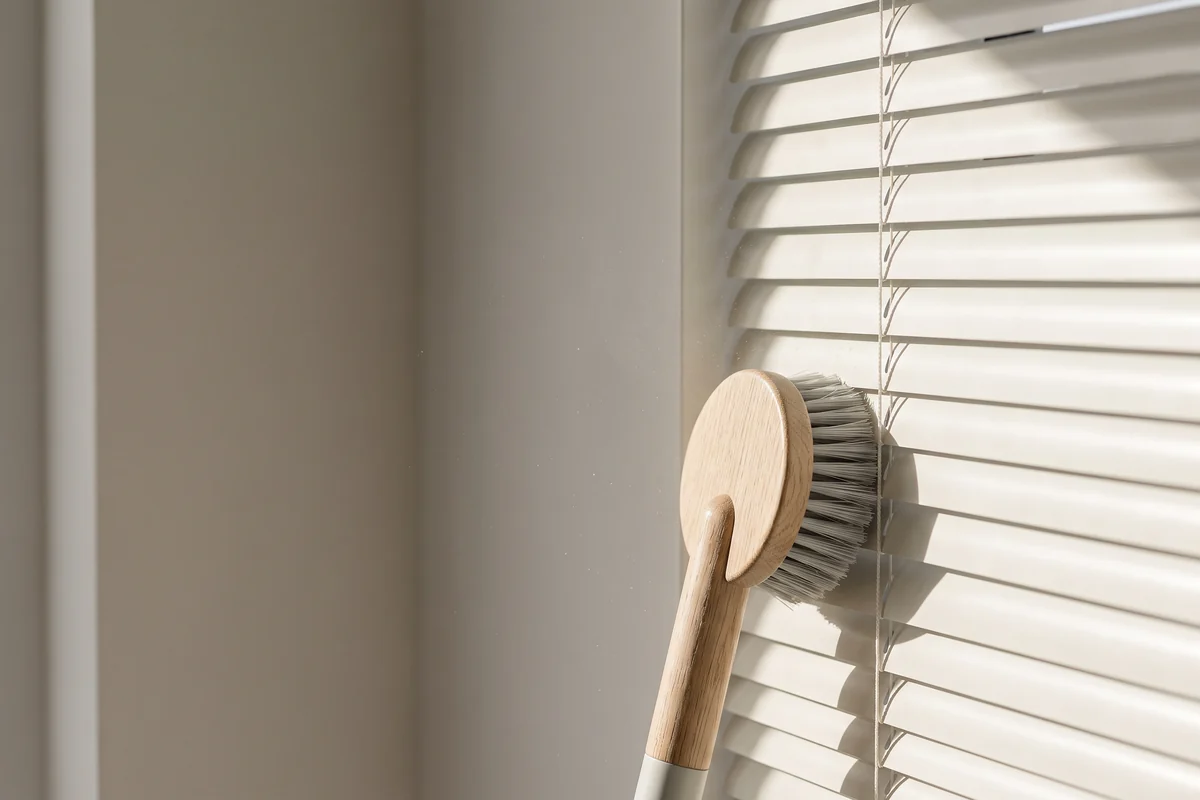
The dust is the whole job, and it takes two minutes
Rotate the slats closed so they overlap into a single flat surface. Run the vacuum’s upholstery brush down it, top to bottom. Rotate them the other way and repeat for the back. Do not try to do individual slats with a cloth wrapped round your fingers — it takes twenty times as long and bends the leading edge.
Fortnightly is plenty in most rooms, and more often within a few streets of the water — Brisbane and the Gold Coast run mean 9am humidity at 65% or higher for most of the year, and damp dust sticks rather than lifts. Keep it up and the wet clean below stops being an annual event, which matters because every wet clean carries risk that dusting does not.
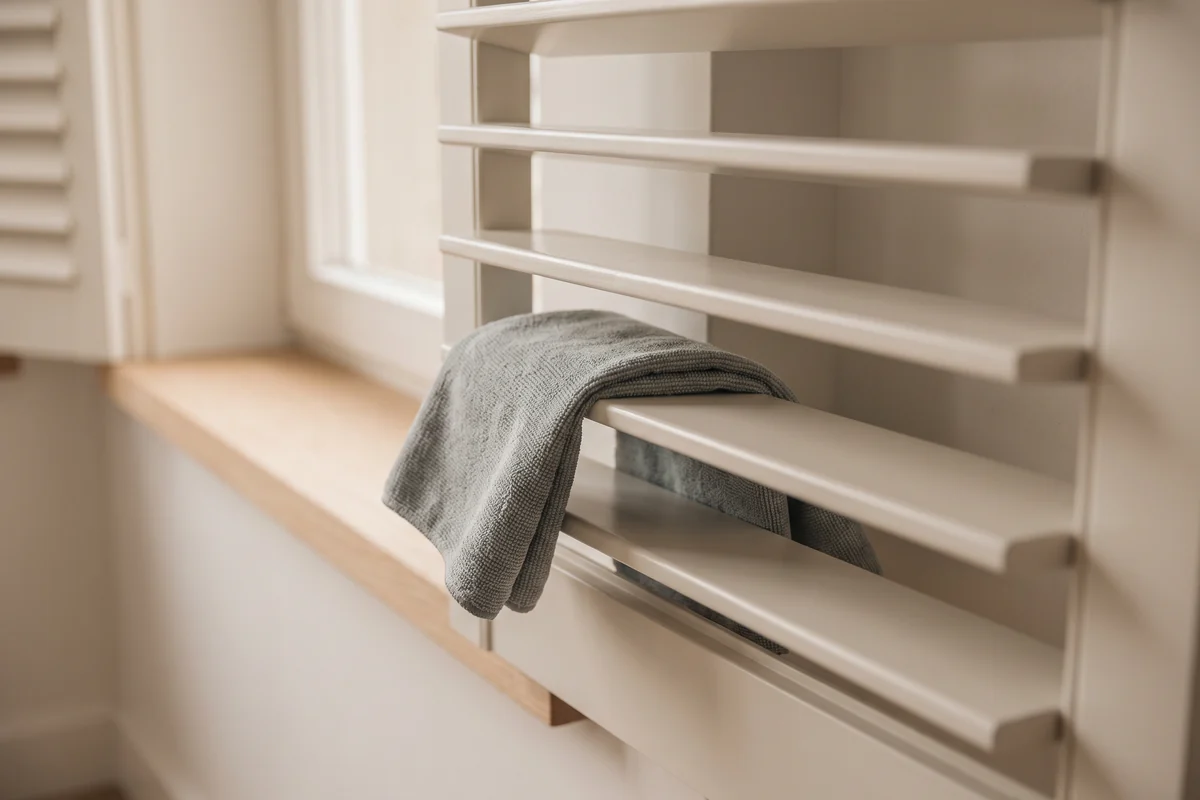
The deep clean, and why not the bath
Most guides — including the one currently ranking first for this question — send you to the bathtub. On aluminium and PVC that is defensible. On timber it is how a good blind is ruined: the cut ends of the slats wick water, the finish lifts, and they dry with a twist no amount of drying flat takes out.
- Rotate the slats fully open so each one sits horizontal.
- Support the slat from underneath with one hand and draw a barely damp cloth along it with the other.
- Work along the slat, never across it. Across is how the leading edge gets bent.
- Dry timber immediately, and the cut ends before anything else.
- Do the tilt-side edge too. That is where the grime you can see from the sofa actually sits.
If they are genuinely filthy and they are aluminium or PVC, a bath is not forbidden — but take the blind down, lay it flat rather than coiling it, and get it bone dry before it goes back up.
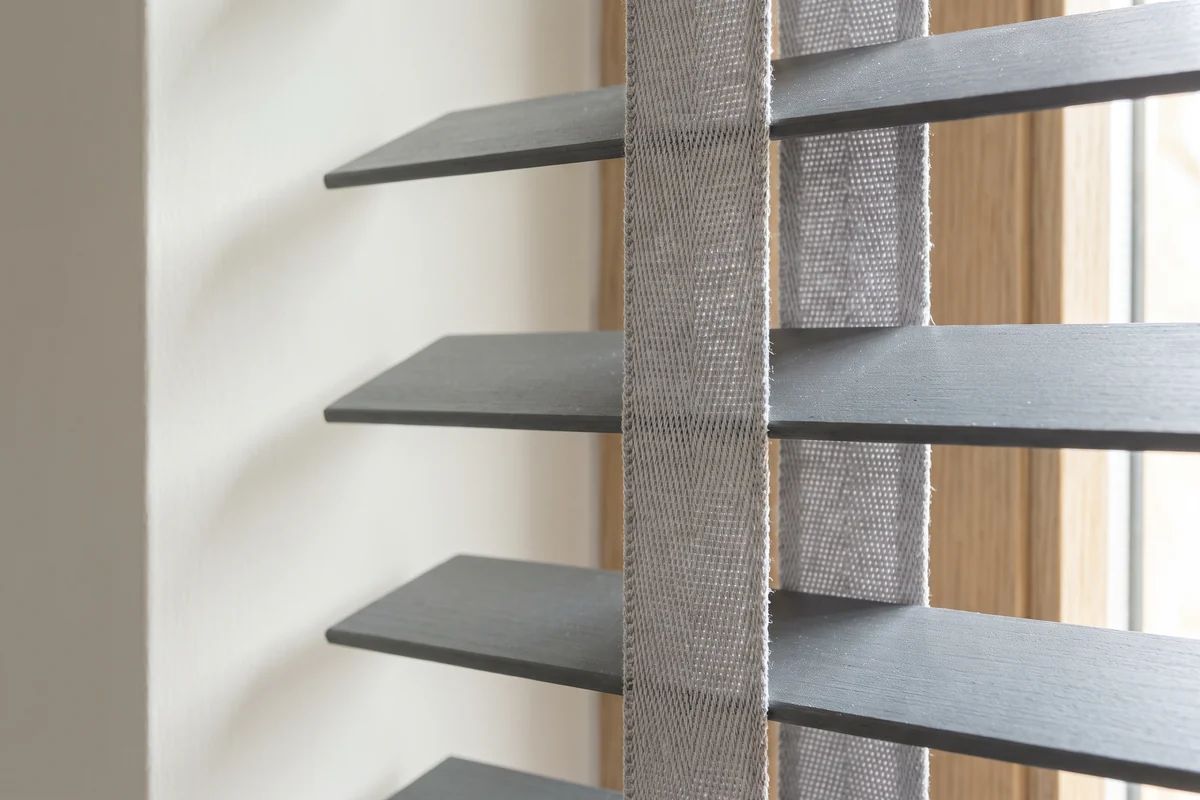
The ladder tape is the part that remembers
Every venetian hangs on a ladder — two strings, or a wider woven tape on a 50mm blind, running down each side with the slats sitting in the rungs. None of the guides ranking for this keyword mentions it, and it is the component that decides whether a clean was a good idea.
Tape is fabric. Soak it and it holds water long after the slats look dry, then dries with a tide line along it that does not come out. Vacuum it with the brush head and spot-clean along its length with a barely damp cloth. If the tape is already marked, that is a re-tape rather than a wash, and on an older blind it is usually the moment to price a new one instead.
Slats bent, or the tape gone past saving?
Individual slats can be replaced without redoing the whole blind, and a tilt mechanism is a part rather than a write-off. We will look at what you have and tell you honestly which side of that line it falls on.
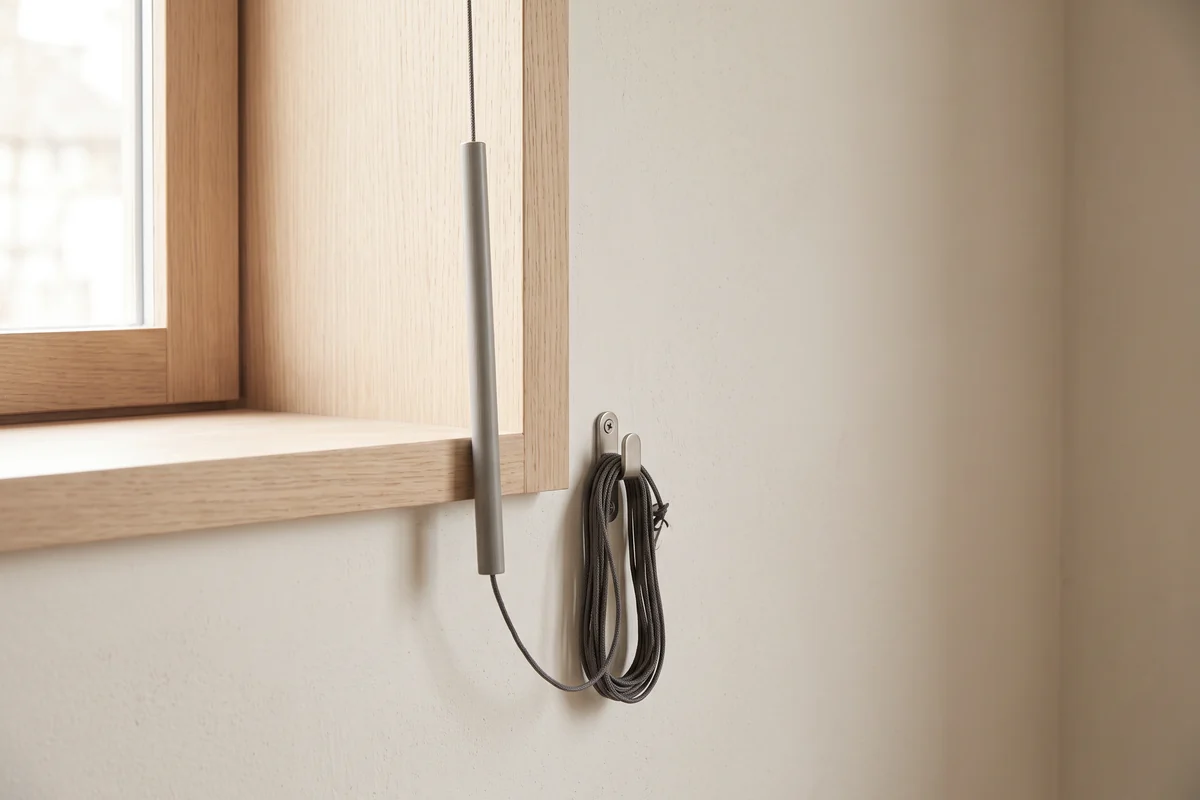
Cords, the tilt wand and the standard
Wipe the tilt wand down with the same cloth — it is the part everyone touches and nobody cleans. Cords take a damp cloth with a drop of detergent, run along their length; never bleach them, because it weakens the cord where you cannot see it.
One thing to put back properly. A corded blind falls under the mandatory standard for corded window coverings: a loose cord must not be able to form a loop 220mm or longer below 1,600mm from the floor. If you unhooked the cleat or the guide to clean behind it, it goes back on before you walk away.
If the tilt has gone stiff, do not oil it. The useful sentence is that the cord lock is slipping, not that the blind is broken. For every other blind in the house, the cleaning guide by blind type has the method, and verticals get their own one because the carriers change the job.
Frequently asked questions
Can you put venetian blinds in the bath?
Aluminium and PVC, yes, if you are careful. Timber, never — the slats swell at the ends, the finish lifts, and they dry warped. The bath also soaks the ladder tape, which holds water long after the slats look dry and marks as it dries.
How do you clean venetian blinds without taking them down?
Close the slats so they overlap into one flat face, run a soft brush vacuum head down it, then rotate them the other way and do the back. Wipe marks with a barely damp cloth on the open slats. That covers almost every blind in almost every house.
How do you clean timber venetian blinds?
Dry, mostly. Dust them closed, and if something has marked them use a barely damp cloth and dry the slat immediately afterwards — especially the ends, where water wicks into the cut edge. Never let water sit on a timber slat and never soak one.
How do you clean the ladder tape?
Vacuum it with the brush head and spot-clean with a barely damp cloth, working along the tape rather than scrubbing across it. It is woven fabric, so it marks like fabric: soak it and you get a tide line that dries in and stays.
How often should you clean venetian blinds?
Dust fortnightly, wet-clean once or twice a year. Kitchens want the wet clean more often because cooking grease holds dust, and anything within a few streets of the water wants dusting more often than that.
Why are my venetian slats bent?
Usually from being pushed apart to see out, or from being hosed or scrubbed flat. A bent aluminium slat can sometimes be eased back by hand; a creased one cannot, and a warped timber slat never comes back. Individual slats can be replaced without redoing the blind.
Sources Australian Government Your Home — Glazing · ACCC blinds and window fittings mandatory standard · Sleep Health Foundation
Back to the journalKeep reading
Related from the journal
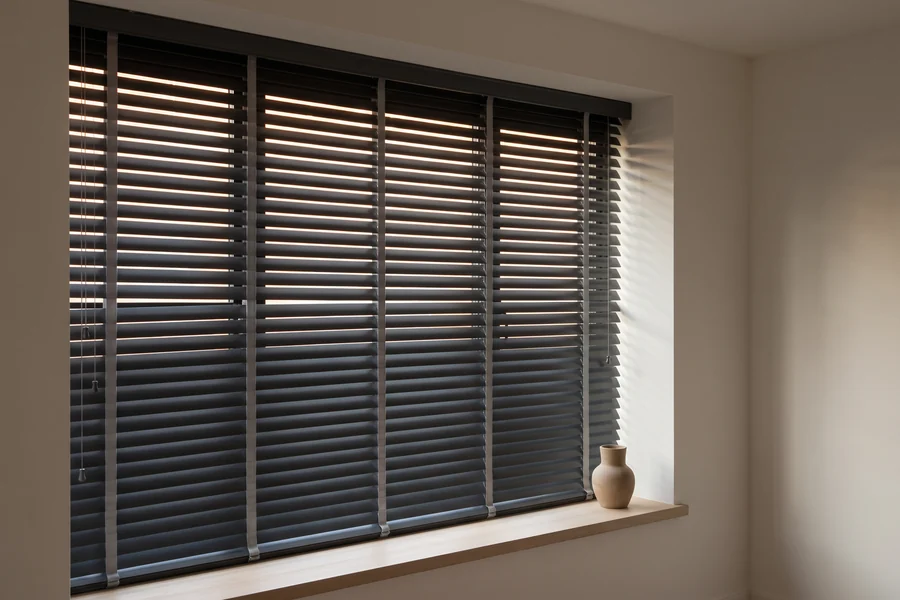 Blinds
Venetian blinds
Timber, aluminium or PVC, and the slat width that decides how much light you keep. The parts that fail, and the ones that do not.
Read more Guides
How to clean blinds
Dust first, wet second. The method for every blind in the house, and the mistake that ruins each one.
Read more Guides
How to clean vertical blinds
Unclip, sponge flat, dry flat. Why soaking leaves the slats wavy, and the carriers nobody else mentions.
Read more