

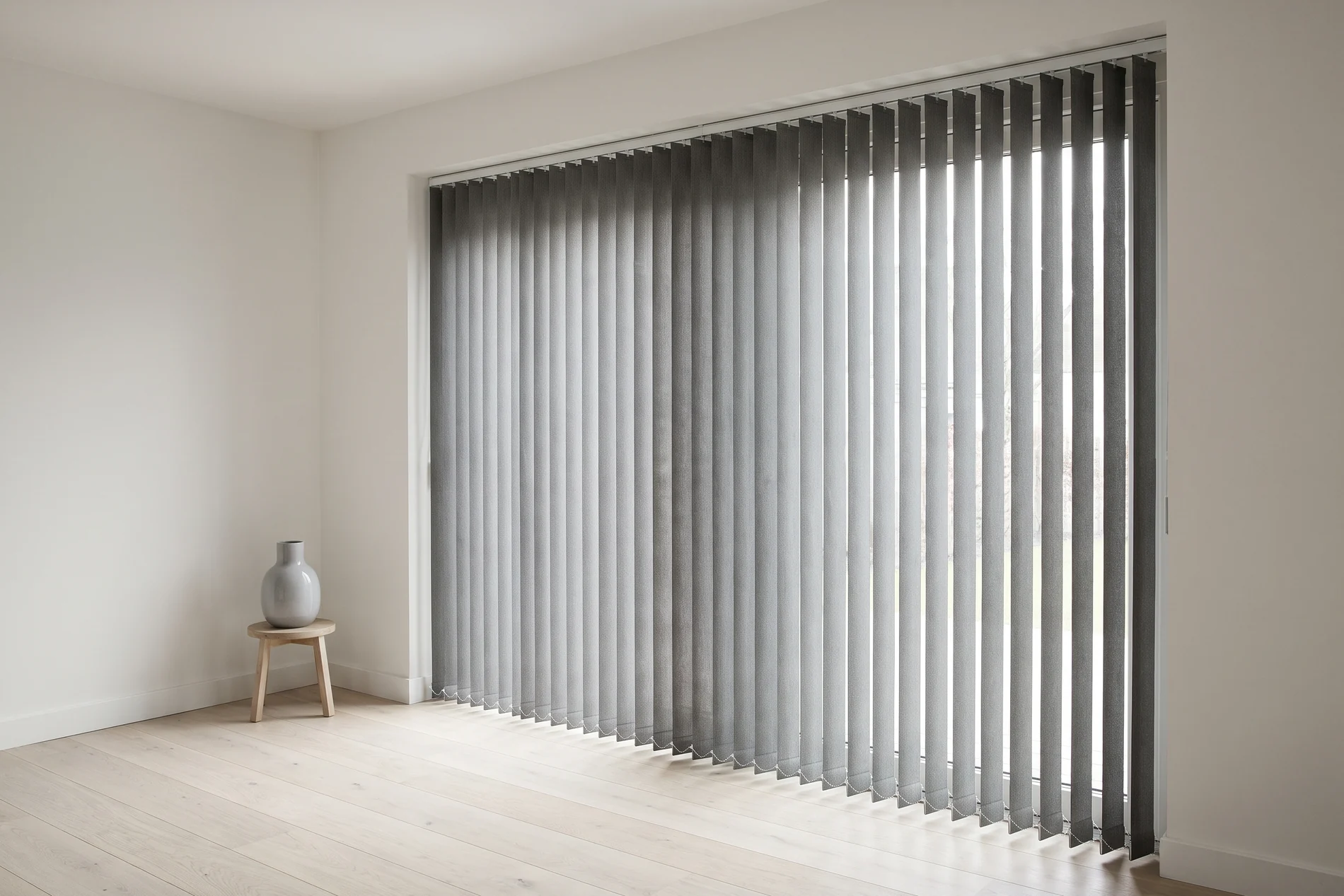
How to Clean Vertical Blinds Without Wavy Slats
Vacuum first, unclip second, and never put a fabric slat in water it can sit in.
How to clean vertical blinds: close the slats flat, vacuum both faces with a soft brush head, then wipe marks with a barely damp microfibre cloth. For a deep clean, unclip the slats, sponge them flat on a towel and dry them flat before rehanging. Never machine wash or soak a fabric slat — the stiffener washes out and it hangs wavy for the rest of its life.
One rule above the rest: if a slat can sit in water, it will remember it.
Most guides treat the slat as the whole product. It isn’t. A vertical blind is a headrail full of plastic carriers, a chain along the bottom, and slats that are only the visible part — and the fabric is rarely what has failed.
Work out which slat you have first
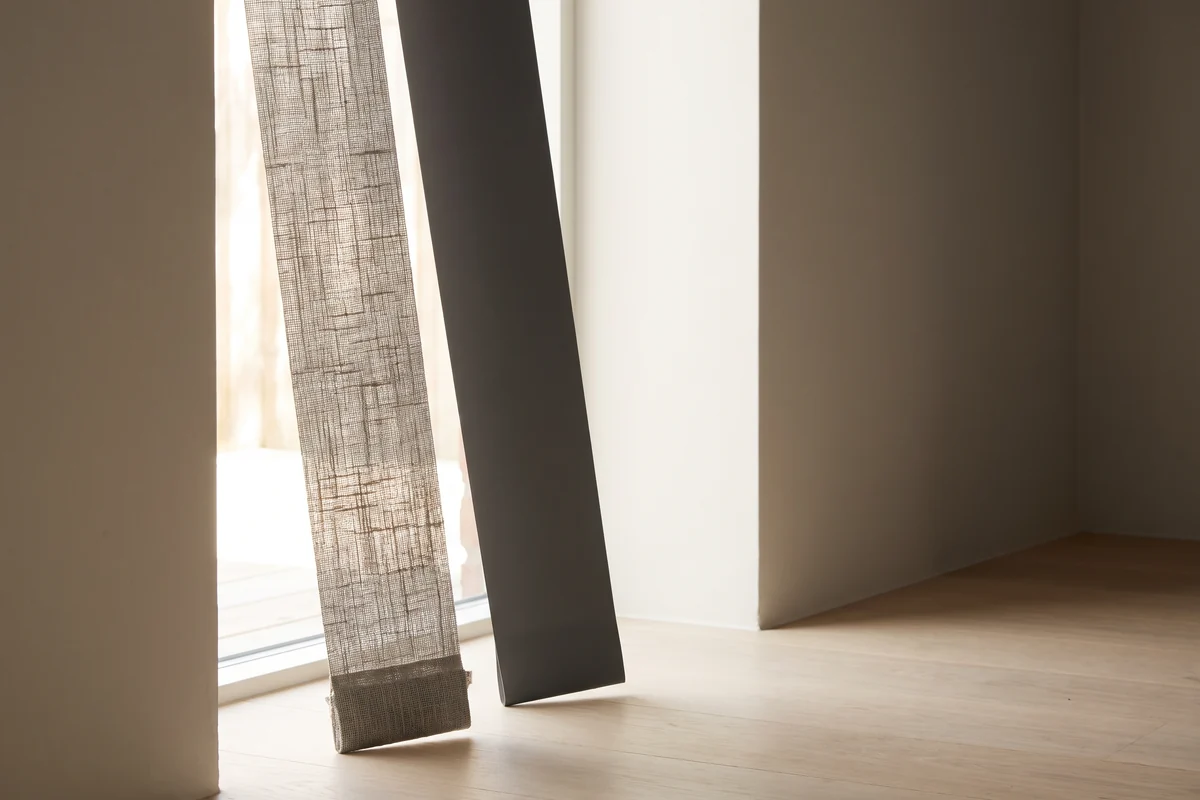
Vertical slats come in two broad families and they do not tolerate the same treatment. Hold one up to the window: if you can see a weave, it is fabric. If the light stops dead and the surface is uniform, it is PVC or vinyl.
| Fabric slats | PVC / vinyl slats | |
|---|---|---|
| Dry clean | Vacuum on the rail, soft brush | Vacuum or dry cloth |
| Wet clean | Sponge flat, off the carriers | Damp cloth, mild detergent |
| Drying | Flat, fully dry before rehanging | Can be rehung damp |
| Never | Machine wash, soak, steam | Bleach, solvents, abrasives |
Fabric slats are stiffened and heat-set so they hang dead straight. That stiffener is a finish, not a property of the cloth, and it is water-soluble — which is the single fact that decides everything below.
The five-minute clean, once a month
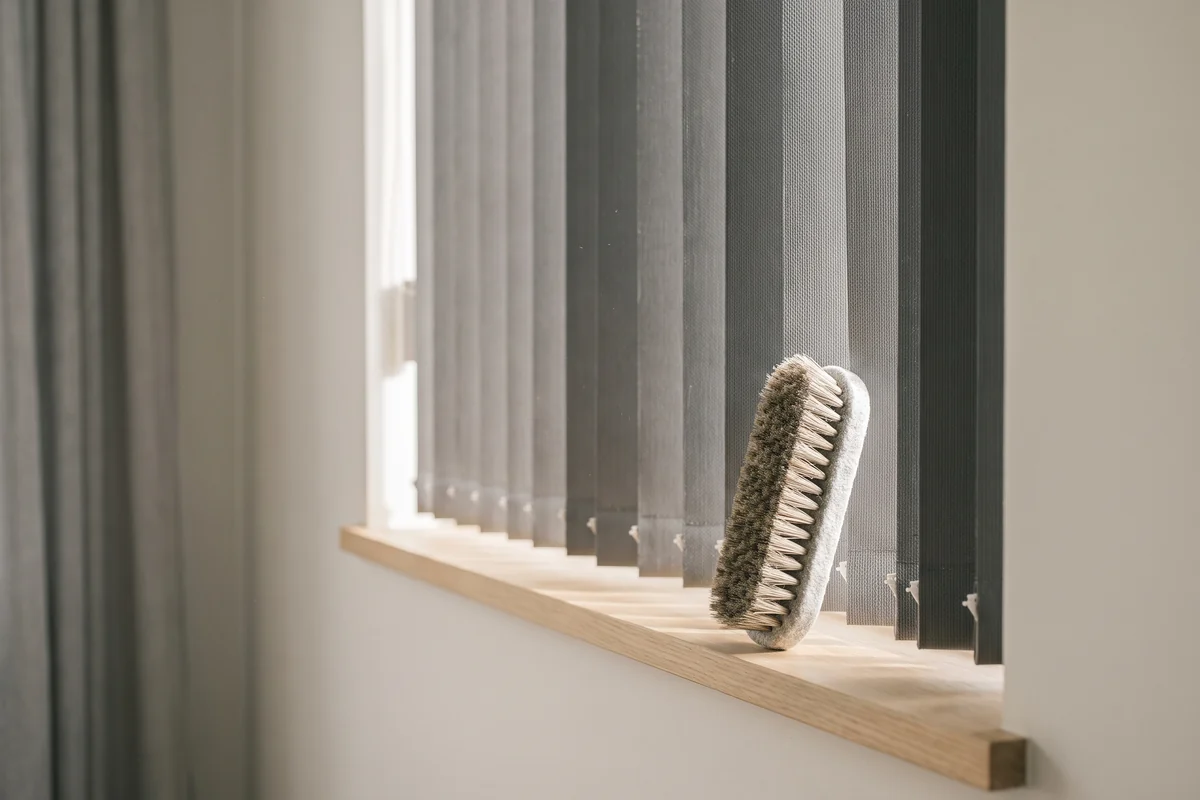
Rotate the slats closed so they overlap into one flat surface. Run the vacuum’s upholstery brush down the face, top to bottom with light pressure, then rotate them and do the back. A dry microfibre glove works just as well and is considerably quieter.
Dust is the whole game. Left alone it binds with humidity and cooking oil into a film that no longer vacuums off, and then you are into wet cleaning and everything that can go wrong there.
The deep clean: unclip, sponge flat, dry flat
Once a year, or when something has actually marked the fabric, the slats come off. This is the part every other guide skips.
- Take the chain and spacer links off the bottom. The slats are joined along the hem; leave the chain on and you are wrestling twelve at once.
- Unclip each slat from its carrier. Support the slat, then ease the clip out — it pivots rather than pulling down. Keep them in order: on a raked or bay window they are cut to different lengths.
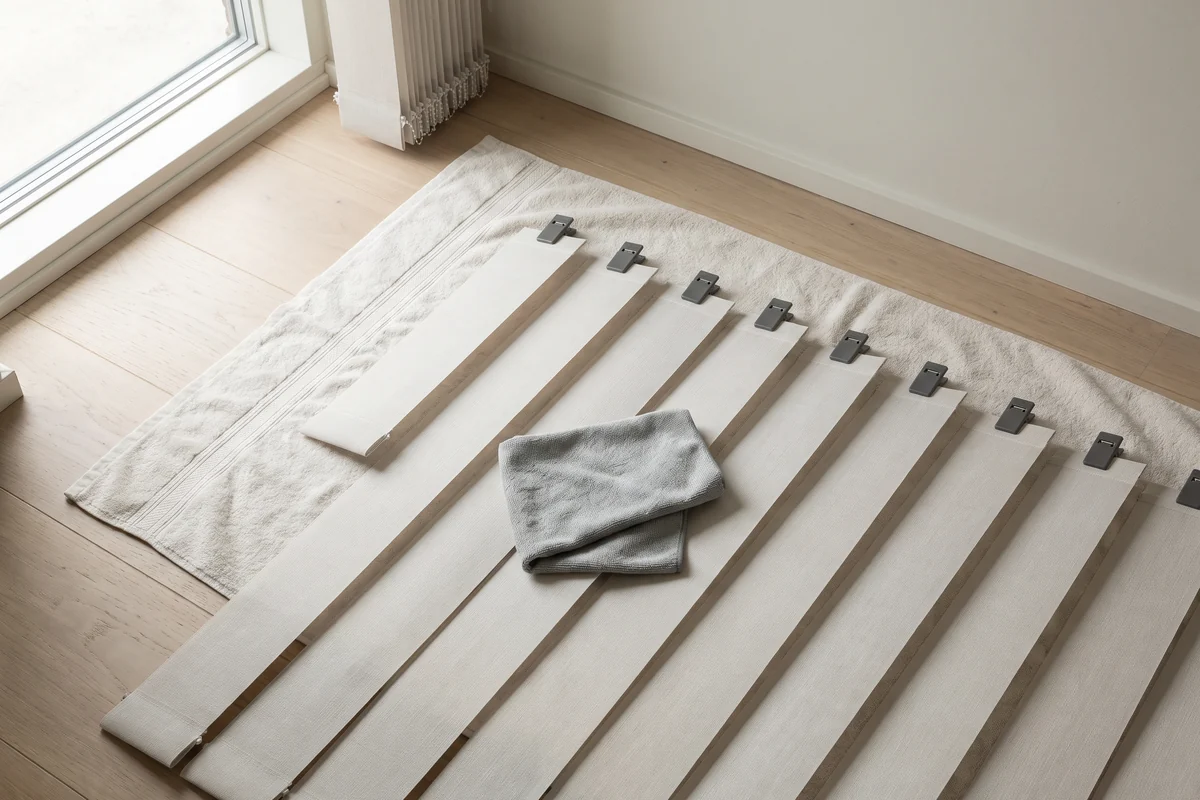
- Lay them flat on a towel. Not in a bath, not in a bucket, not over a line.
- Sponge with barely damp, mild detergent. Work along the slat, and do the second side before the first dries or you get a tide line.
- Rinse with a second cloth. Detergent left in the weave attracts dust faster than what you just removed.
- Dry flat and fully. A slat rehung damp holds moisture against the carrier, and that is where mould starts.
- Rehang in order, then refit the chain. Check they all rotate together before you walk away.
PVC is the exception: wipe it on the rail, and it can go back damp.
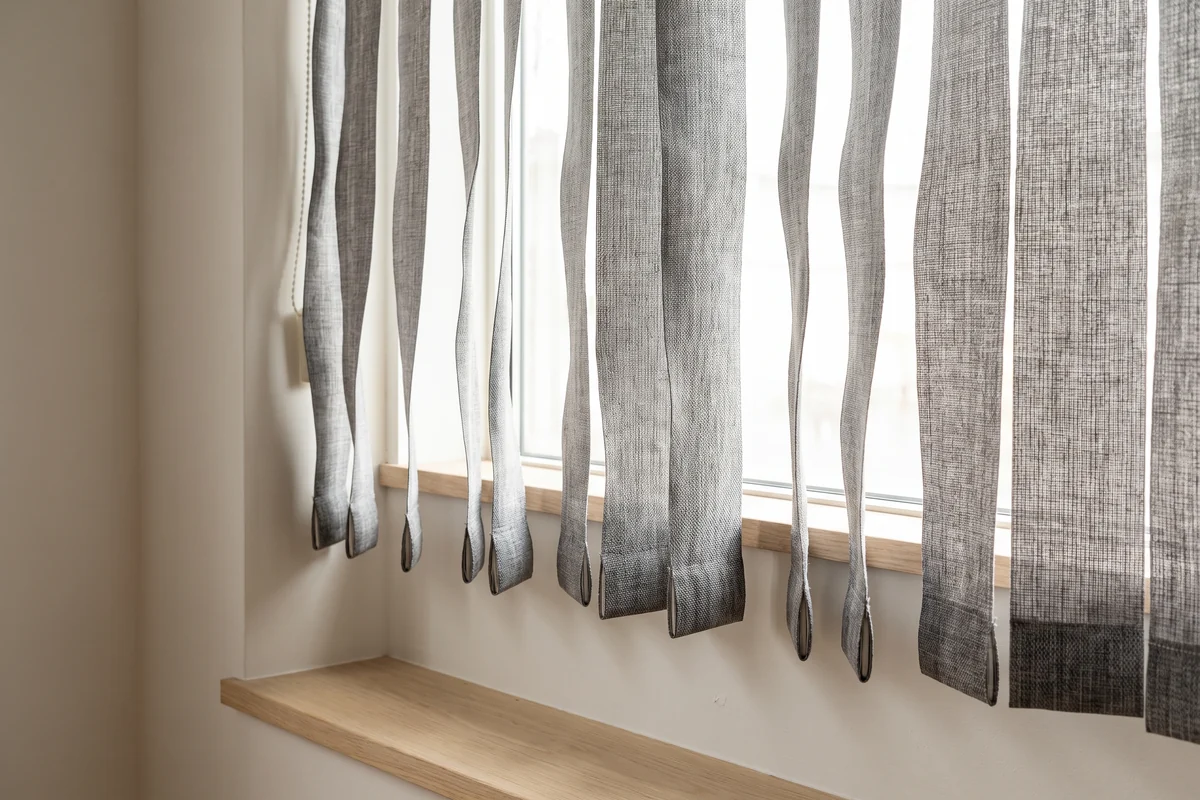
What actually ruins a vertical blind
Here is where this guide parts company with most of the internet, including the article currently ranking first for this question. It recommends soaking fabric slats for half an hour in laundry powder. Do not.
- Soaking and machine washing. The stiffener is a finish. Submerge a fabric slat and it goes. The blind still works; it never looks right again.
- Steam cleaners. Heat plus moisture undoes exactly the process that set the slat.
- Bleach and solvents on PVC. Bleach strips the plasticiser and the slat cracks at the clip within a year or two.
- Scrubbing a stain. On a woven slat that pushes the mark in and roughens the face so it catches more dust.
- Pegging them on a line. Pegs mark, and a wet slat stretches under its own weight.
We have been fitting these since 1978. The blinds we get called back to look at have almost never been worn out — they have been washed.
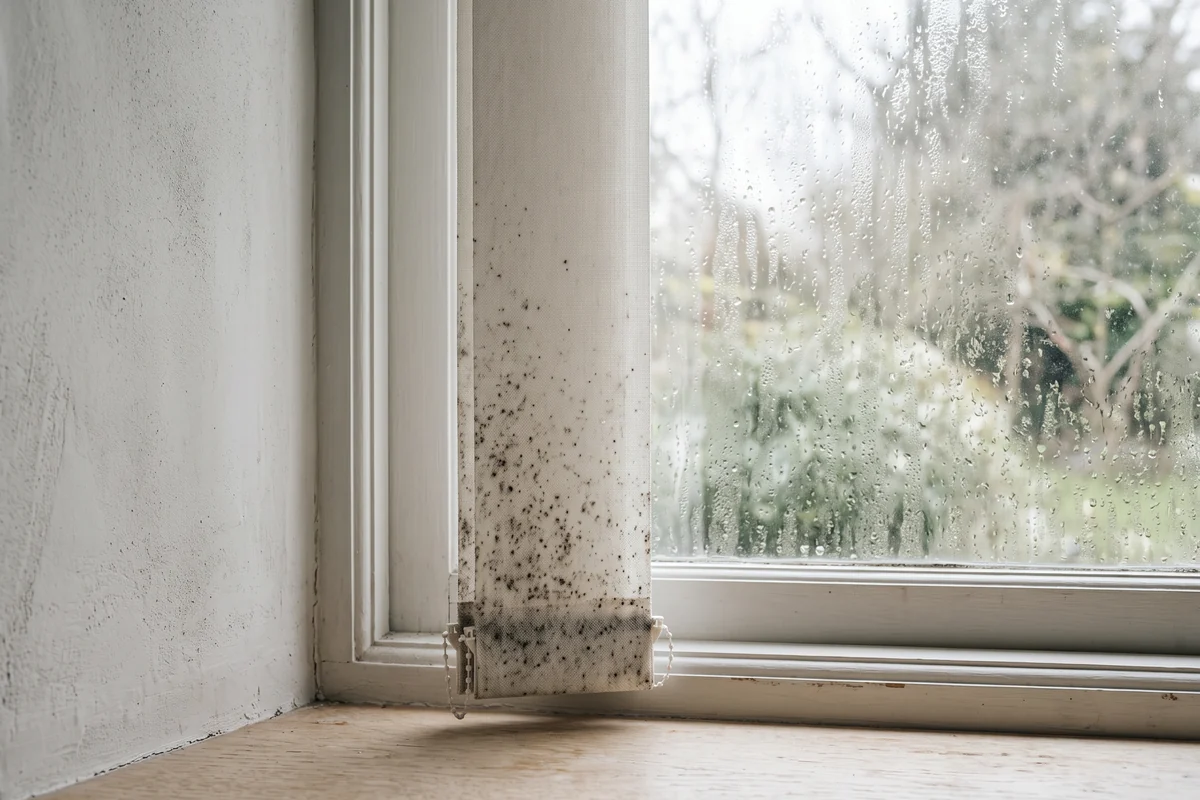
Mould is a ventilation problem wearing a costume
Black speckling near the bottom of a slat, usually in a bathroom or a bedroom that gets shut up all week, is condensation-driven mould. On PVC it sits on the surface and one part white vinegar to four parts water will kill it and lift most of the stain. On fabric it grows into the weave, and after a couple of summers the pigment has stained the cloth even once the mould is dead.
The harder truth is that cleaning it off and changing nothing else buys you a season. Gold Coast and Brisbane sit under mean 9am humidity at 65% or higher for most of the year, and mould needs damp, still air and a surface. Run the exhaust fan after a shower and leave the blind open rather than closed when the room is wet — a blind with air moving through it dries, a closed one holds moisture against the glass.
Cleaned it and it still hangs wrong?
Wavy slats, a carrier that will not rotate or a chain that has stretched are not dirt problems, and no method fixes them. We will measure and quote a replacement, and tell you honestly if you do not need one yet.
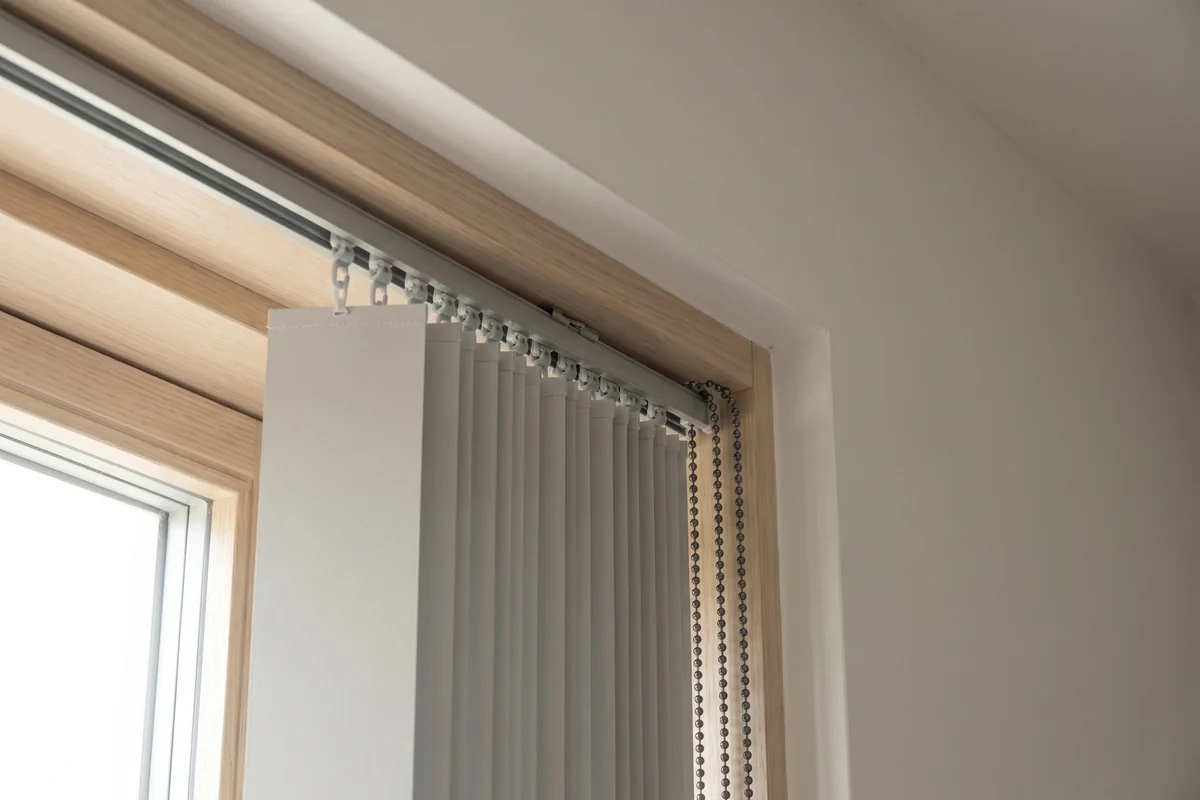
Clean the carriers and the chain, not just the fabric
This is the section every other guide leaves out, and it is the one that matters most over ten years. Almost every vertical blind we are called back to has failed at the carrier, the chain or the stack — and the fabric is usually fine.
With the slats off, wipe the headrail out and get the dust out of the carriers. They are small plastic trolleys running in a track, and grit in that track is what makes a blind rotate unevenly or stick halfway. Do not oil them: most rely on friction, and oil turns a stiff blind into one that will not hold an angle at all.
Check the chain while it is off — a stretched one is why the bottom no longer sits in a line, and it is cheap to replace on its own. If yours is corded it falls under the mandatory standard for corded window coverings: a loose cord must not be able to form a loop 220mm or longer below 1,600mm from the floor, so whatever cleat or guide holds it goes back on after a clean.
For a wide opening, the roller versus vertical comparison covers what each is good at. For everything else in the house, the cleaning guide by blind type has the method.
Frequently asked questions
Can you put vertical blinds in the washing machine?
No, and it is the most common way people ruin them. Fabric slats are stiffened and heat-set, and a wash cycle relaxes both — they come out limp and hang wavy for good. Sponge them flat instead.
How do you clean vertical blinds without taking them down?
Close the slats so they overlap into a flat surface, vacuum both faces with a soft brush head, then wipe marks with a barely damp cloth. That covers most of the year. Only unclip them when something has actually stained.
How do you unclip a vertical slat from the carrier?
Take the chain off the bottom first, then support the slat and ease the clip out of the carrier — it pivots out rather than pulling down. Keep them in order: on a raked or bay window they are cut to different lengths.
How do you get mould off vertical blinds?
One part white vinegar to four parts water, left five minutes and wiped off, kills surface mould and lifts most of the stain. Repeat rather than scrub. If it has sat there through a couple of summers the pigment has stained the weave and it is not coming out.
How often should you clean vertical blinds?
Vacuum monthly, deep-clean once a year. Kitchens want the wet clean every six months because grease traps dust; bathrooms want a monthly mould check rather than a clean.
Can you clean fabric and PVC slats the same way?
Only the dry part. PVC tolerates water and detergent that would wreck a fabric slat, and fabric has to dry flat where PVC can be rehung damp. Hold one to the light: fabric shows a weave, PVC shows nothing.
Sources Australian Government Your Home — Glazing · ACCC blinds and window fittings mandatory standard · Sleep Health Foundation
Back to the journalKeep reading
Related from the journal
 Blinds
Vertical blinds
The slats you unclip to wash, and the carriers that actually fail. Where verticals still beat every other blind on a wide sliding door.
Read more Guides
How to clean blinds
Dust first, wet second. The method for every blind in the house, and the mistakes that ruin each one.
Read more
Guides
Roller blinds vs vertical blinds
Which one suits a wide opening, which tilts, and which is quietly the cheaper mistake.
Read more