

Bay Window Blinds: What Works on Every Angle
One blind per pane, where the gaps fall, and the reveal depth that decides the rest. Corner windows too.
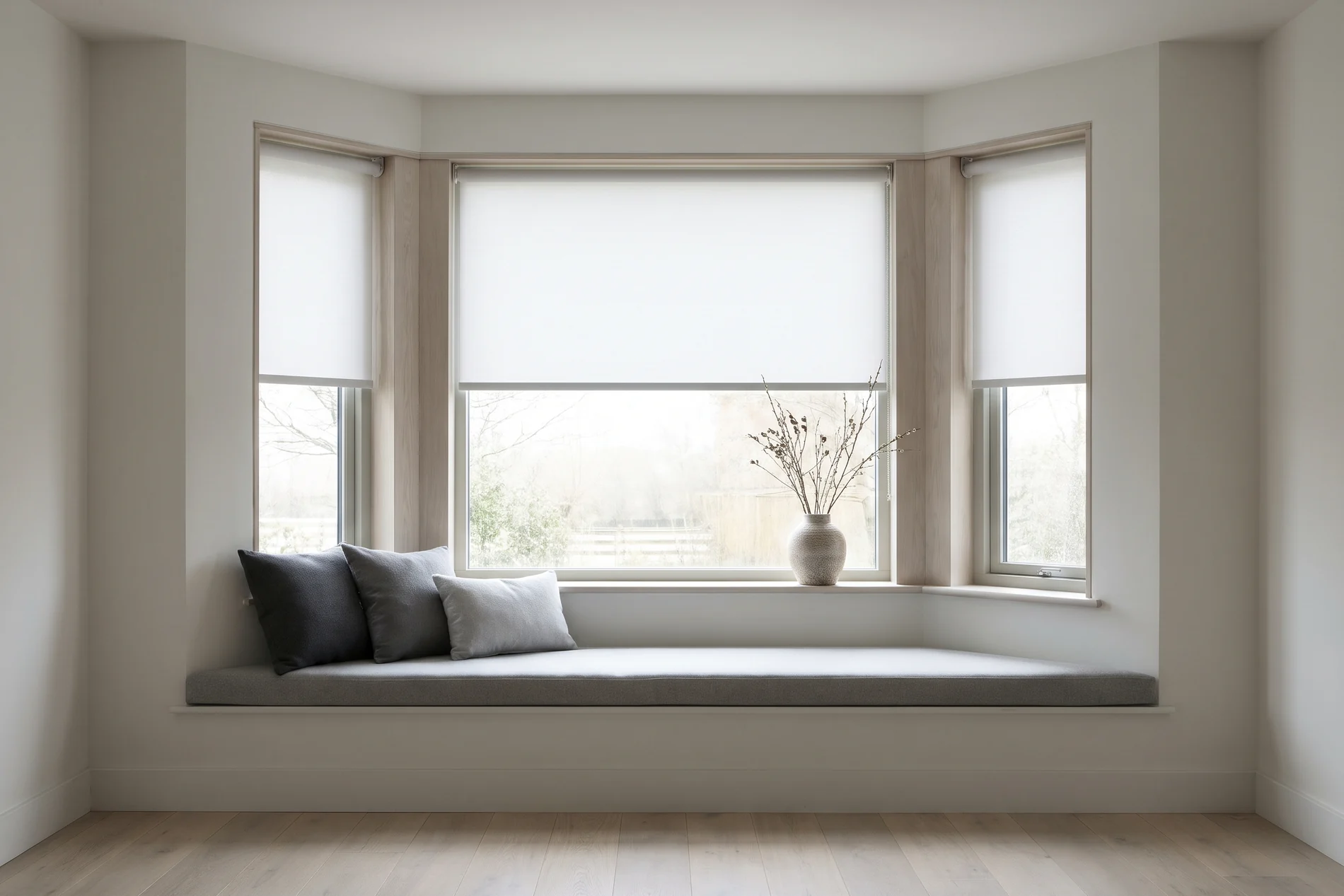
The best bay window blinds are one blind per pane, each fitted to its own face of the bay and operated on its own. Roller, Roman and venetian blinds all work that way. A single blind can't follow the angles, so it either hangs in front of the bay or leaves wide gaps at the sides.
Expect a narrow strip of light where the panes meet. That's the price of being able to raise one side and leave the others down.
A bay window is three or more windows pretending to be one, and that is the whole difficulty. Most advice on blinds for bay windows is a list of blind types. The type matters less than three decisions most people never get asked about: how many blinds, where the gaps go, and whether the reveal is deep enough for what you've chosen. Here they are in the order I'd make them.
Give every face of the bay its own blind
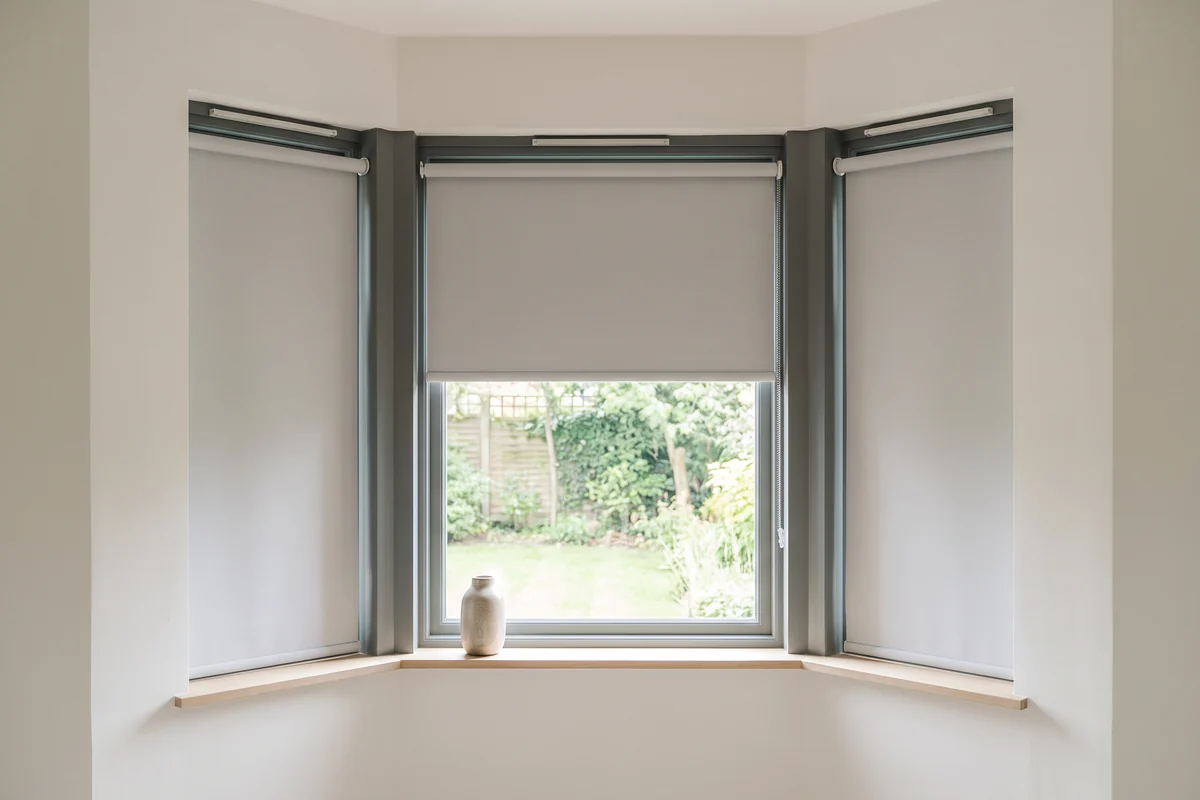
Each pane of a bay sits at an angle to the next, so each one needs its own blind, made to its own width and fitted inside its own face. Three panes, three blinds. A five-sided bay, five.
That sounds like more hardware than one window deserves, and it is. It also gives you the best thing about a bay: control. Raise the centre for the view, keep the two sides down against the neighbours, and the room is still private. One blind across the lot can't do that.
- Same fabric, same roll. Every blind in the bay should be the same fabric, and on rollers the same roll direction, so the bay reads as one window when they're all down.
- Level bottom rails. Make the drops so the bottom rails line up all the way round. One rail a few centimetres lower than its neighbour is the first thing anyone notices.
- Controls on the outside edges. Put chains and wands where your hand reaches them, which is usually the far edge of each side pane, not tangled together at the corners.
Decide where the light gets in
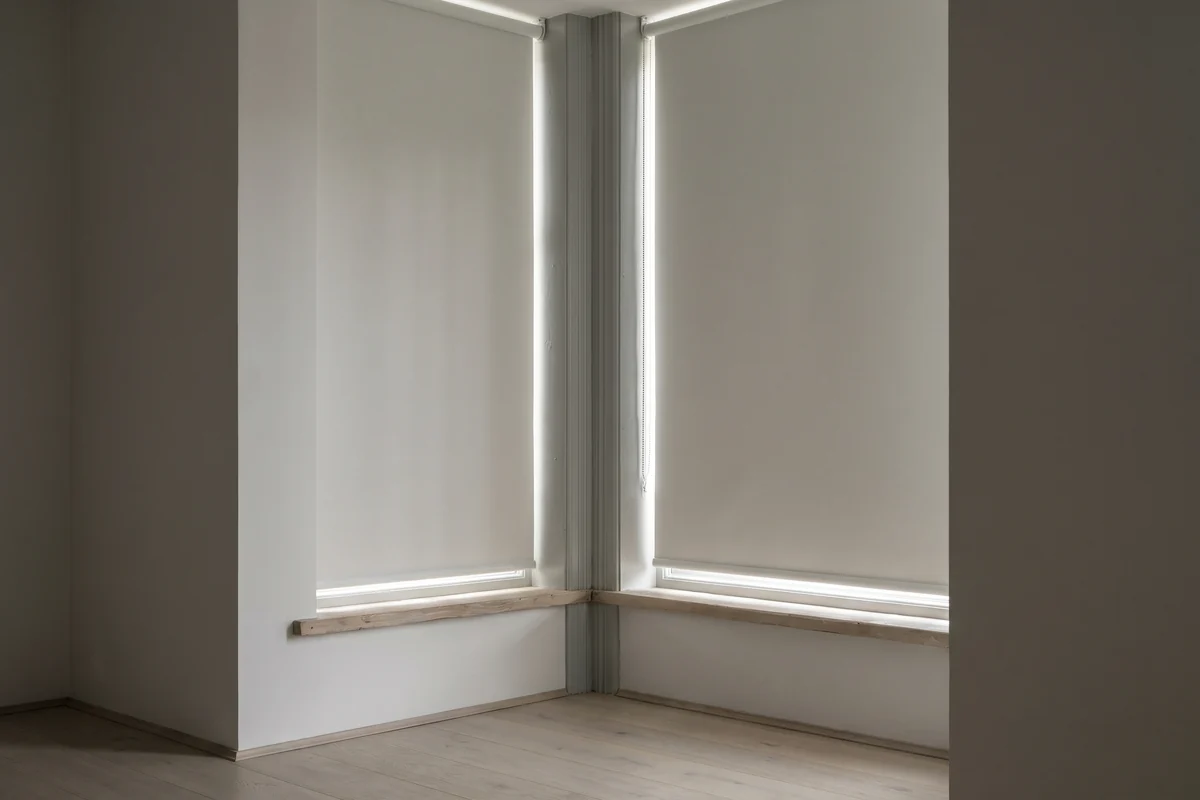
Where two panes meet at an angle, two blinds can't meet perfectly. Fitted inside each face, every blind stops just short of the corner post, and a thin strip of light shows down each join. On most bays the post is wide enough to hide most of it. On a bay with slim aluminium mullions, you'll see it.
Fitted to the face of the wall instead, the blinds can run past the corners and overlap, which closes the strips but brings the brackets into each other's way at the angle. One blind has to sit slightly forward of the next. It works, but it looks fitted rather than built in.
For a living room, I'd take the strip of light and keep the clean inside fit. For a bedroom bay that has to go properly dark, blinds struggle at every corner, and a curtain on a track bent to follow the bay in one continuous run does the job better. A bay is the one window where a curtain beats a blind on darkness without much argument.
Check the reveal depth before you choose
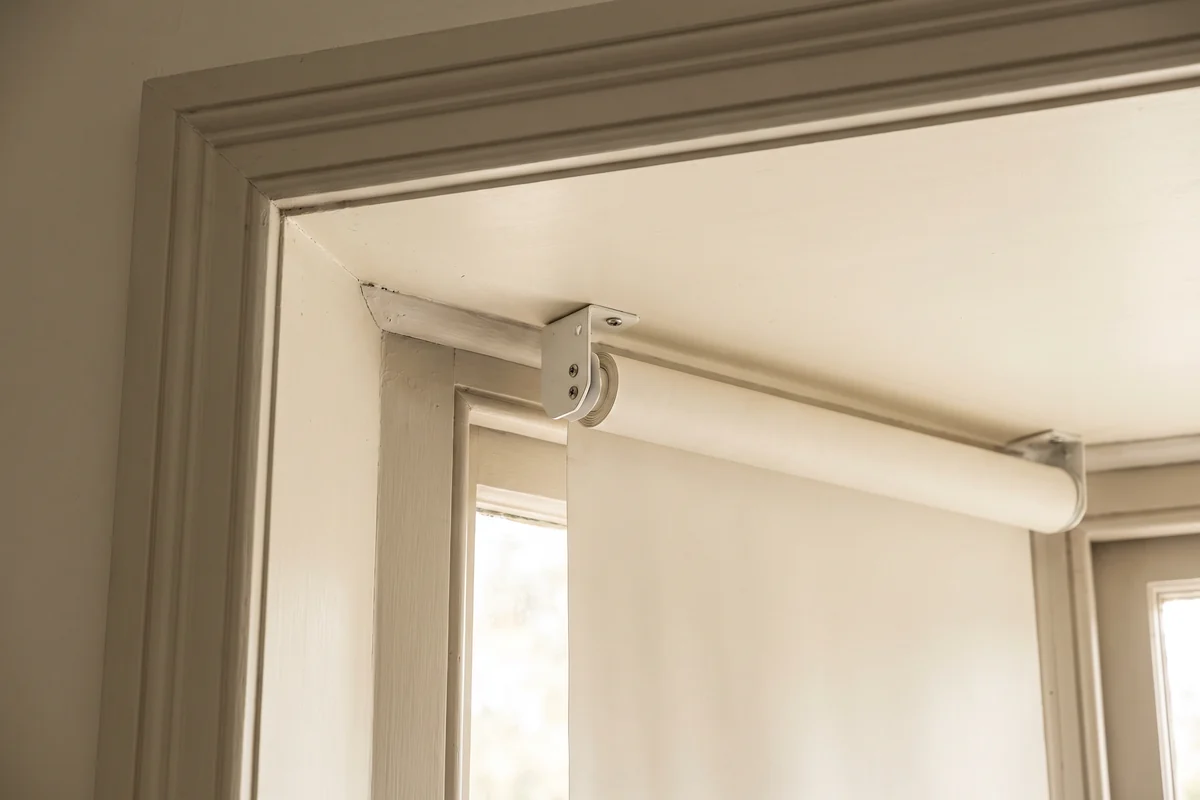
Bays often have shallower reveals than the flat windows around them, especially in older timber homes where the sill and the frame take up most of the depth. That decides more of the shopping list than taste does.
- Single roller blinds need the least room and suit most bays inside the frame.
- Day-and-night rollers run two blinds off one double bracket, and that bracket alone projects 115 to 122mm before the fabric clears it. Plenty of bays don't have that, so check before you fall for a dual roller.
- Venetians stack at the top when raised, so the stack hides part of the glass on a short pane.
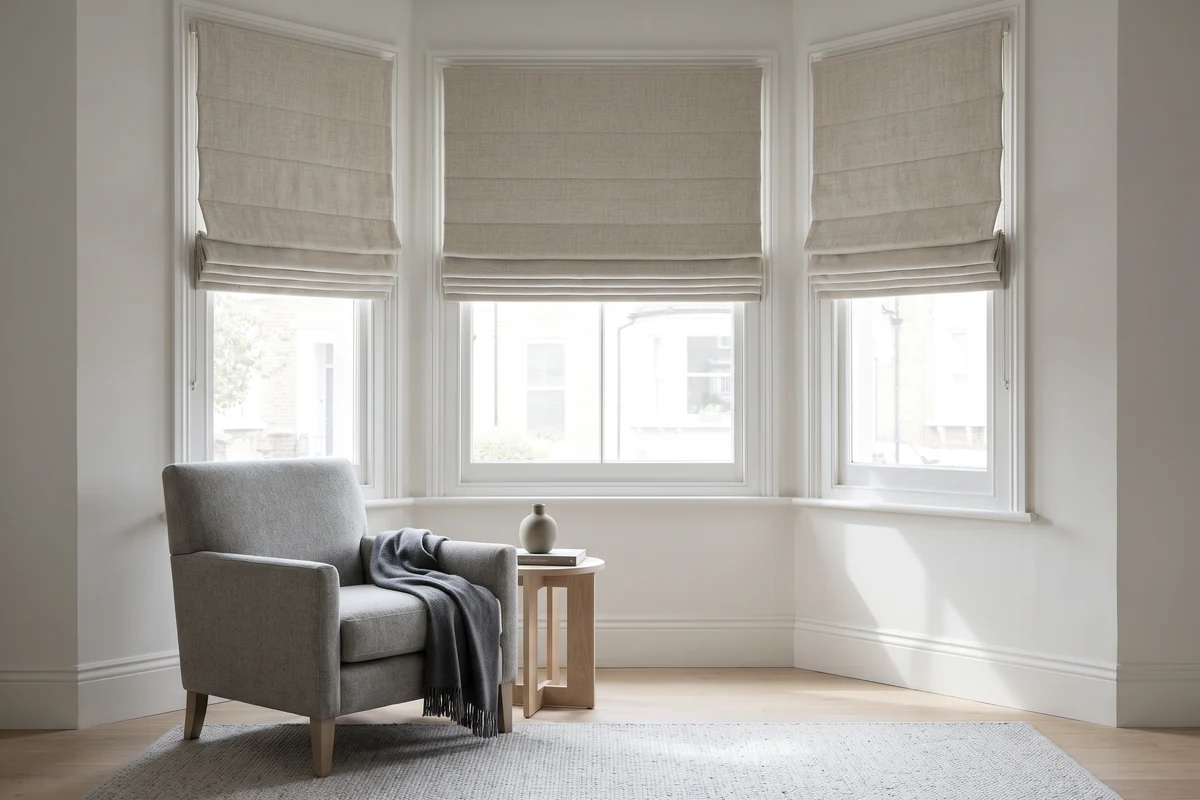
- Roman blinds fold up into a soft stack too, and need height above the glass for it.
If a reveal is too shallow, the blinds can go on the face above each pane instead. You lose a little of the built-in look and gain a blind that actually fits, which is a trade I'll make every time.
Match the blind to the room behind the bay
Once the number of blinds and the fit are settled, the type comes down to the room.
- Living rooms. Roller blinds in sunscreen fabric keep the view and cut the glare. We stock 1%, 3%, 5% and 10% openness, so the side panes can be tighter than the centre if one faces the afternoon sun.
- Bedrooms. Blockout rollers, accepting the strips at the corners, or a curtain on a bent track if dark really means dark.
- Kitchens and breakfast nooks. Aluminium venetians. They tilt for privacy, handle steam and wipe clean.
- Formal rooms. Roman blinds, if there's headroom for the folds. They soften a bay in a way a roller never will.
- Anywhere humid or hard-used. Shutters, fitted face by face. Our Thermalite polymer shutters don't mind moisture, and hinged panels open fully to the view.
Vertical blinds are the one I'd steer you away from. They're made for wide openings, and on a narrow bay pane the vanes look crowded. Bays are also mostly glass, which the Australian Government's Your Home guide to glazing puts among the biggest sources of heat gain and loss in a house. So the blind is doing real work, not just decorating the corner.
Got a bay that won't sit right?
We measure every face of it, from Byron Bay to Brisbane, and send an itemised quote within 24 to 48 hours. Roller blinds take about 2 to 3 weeks from check-measure to installation.
Treat a corner window the same way
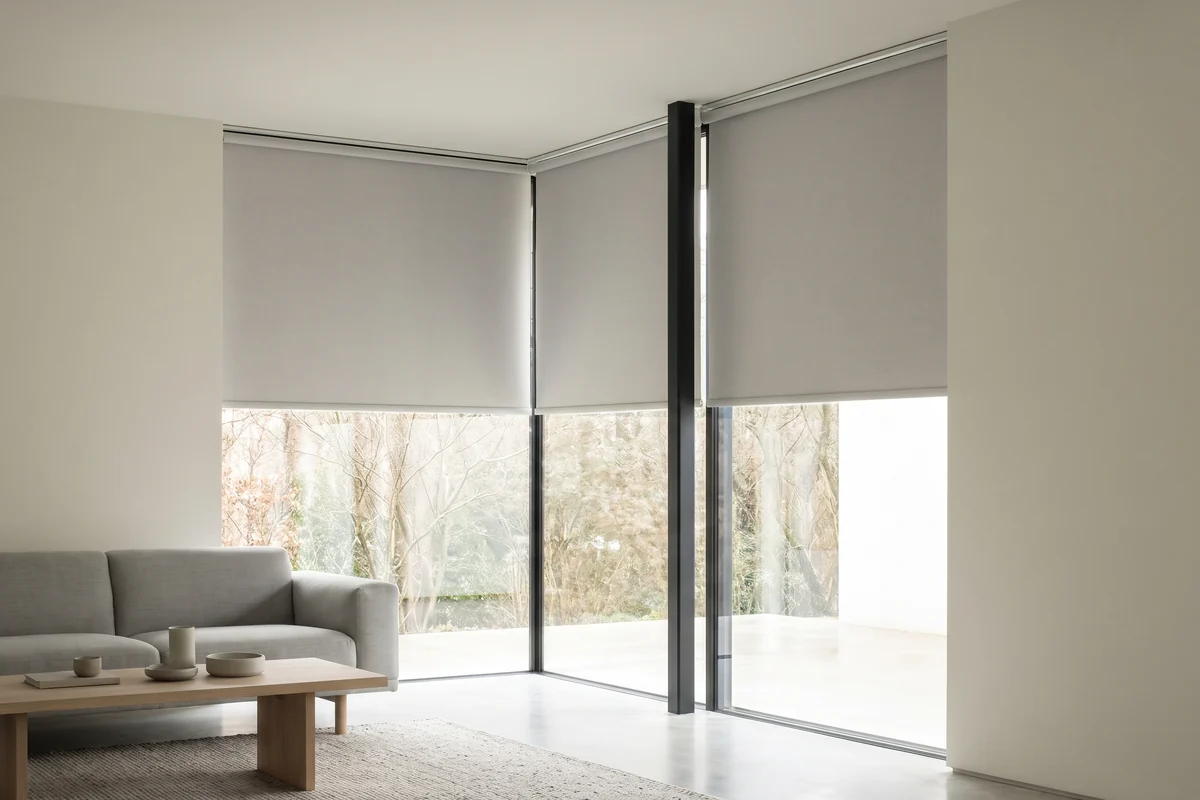
A corner window is a bay with two faces at a right angle, and in newer homes the corner is often bare glass with no post at all. The rule is the same: one blind per side. The extra decision is which blind runs into the corner.
Let one blind run right to the glass corner and stop the other against it. Usually the one on the main view side runs through, because that's the side you look at. The brackets can't share the corner, so the second blind stops a hair short and leaves a thin strip of light. On a frameless glass corner that strip is visible from outside at night, so if privacy matters, choose a tighter fabric rather than trying to engineer the gap away.
Go cordless when the bay has four cords in it
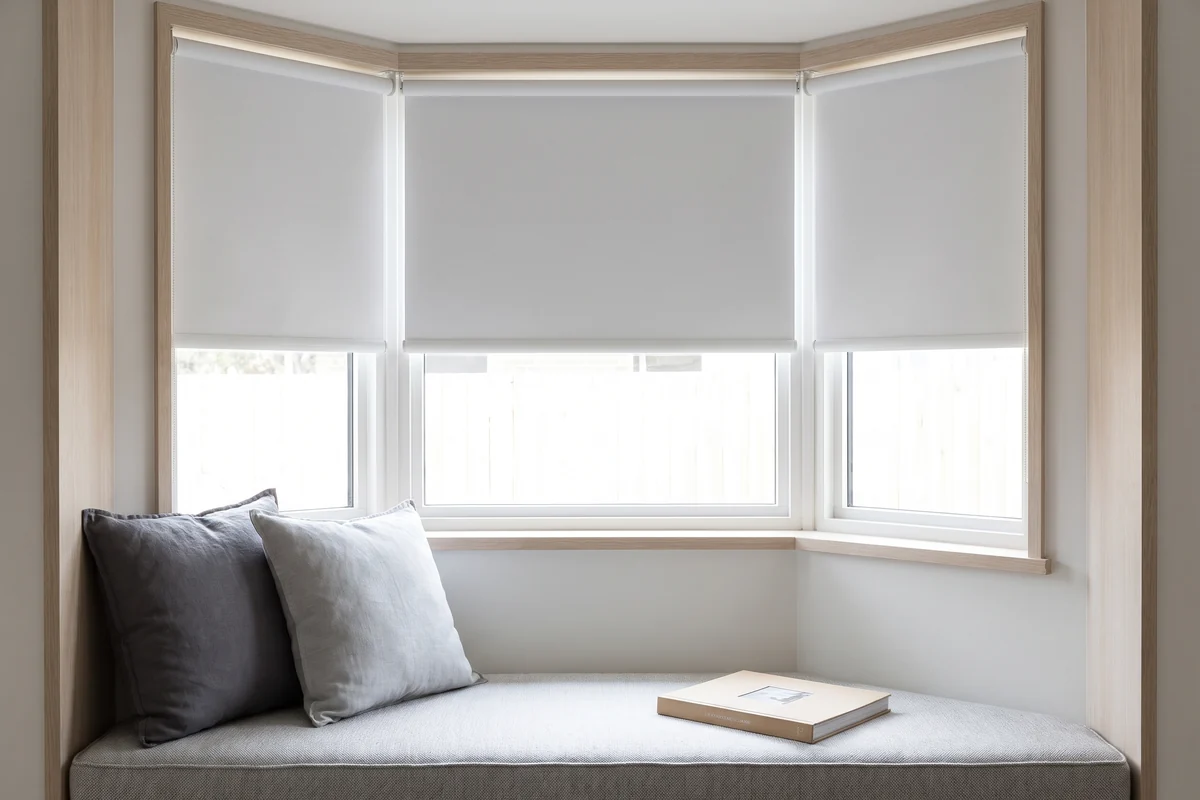
Here's the part nobody mentions. A bay is three to five blinds, which means three to five chains or cords in one window, usually above a window seat that children treat as a climbing frame. Every corded blind has to meet Australia's mandatory safety standard, and we fit the cord guides at installation, not in the bag.
In a bay with a seat, I'd go further and specify cordless, or motorised so the whole bay moves together. A bay is one of the few windows where motorisation earns its keep, because you're operating several blinds at once. The full reasoning is in our child-safe blinds guide. Motorisation adds about a week to the lead time, which is a small price for not having to count loops.
Frequently asked questions
Can you put blinds on a bay window?
Yes. Fit one blind to each pane, made to that pane's width and mounted inside its own face, so every blind follows the angle of the window behind it. Roller, Roman, venetian and honeycomb blinds all work this way.
What are the best blinds for a bay window?
Roller blinds for most bays, because they need the least reveal depth and give the cleanest finish. Roman blinds for a softer look where there's headroom for the folds, and aluminium venetians for a kitchen bay.
Should a bay window have one blind or several?
Several, one per pane. A single blind can't follow the angles, and separate blinds let you raise the centre for the view while the sides stay down for privacy.
Can you put shutters on a bay window?
Yes. Shutters are fitted face by face, with panels made to each pane. Polymer shutters suit a bay in a humid room, and hinged panels fold right back so you keep the whole view.
Can you put curtains on a bay window?
Yes, on a track bent to the shape of the bay in one continuous run, so the curtain travels all the way round without catching. For a bedroom bay that needs to go dark, it usually beats blinds, because there are no gaps at the corners.
What blinds work on a corner window?
Roller blinds or venetians, one per side. Let the blind on the main view side run into the corner and stop the other against it, and expect a thin strip of light where they meet.
Sources Australian Government Your Home — Glazing · Australian Government Your Home — Shading · Rollease Acmeda Australia catalogue, August 2026 (double bracket projection)
Back to the journalKeep reading
Related from the journal
 Guides
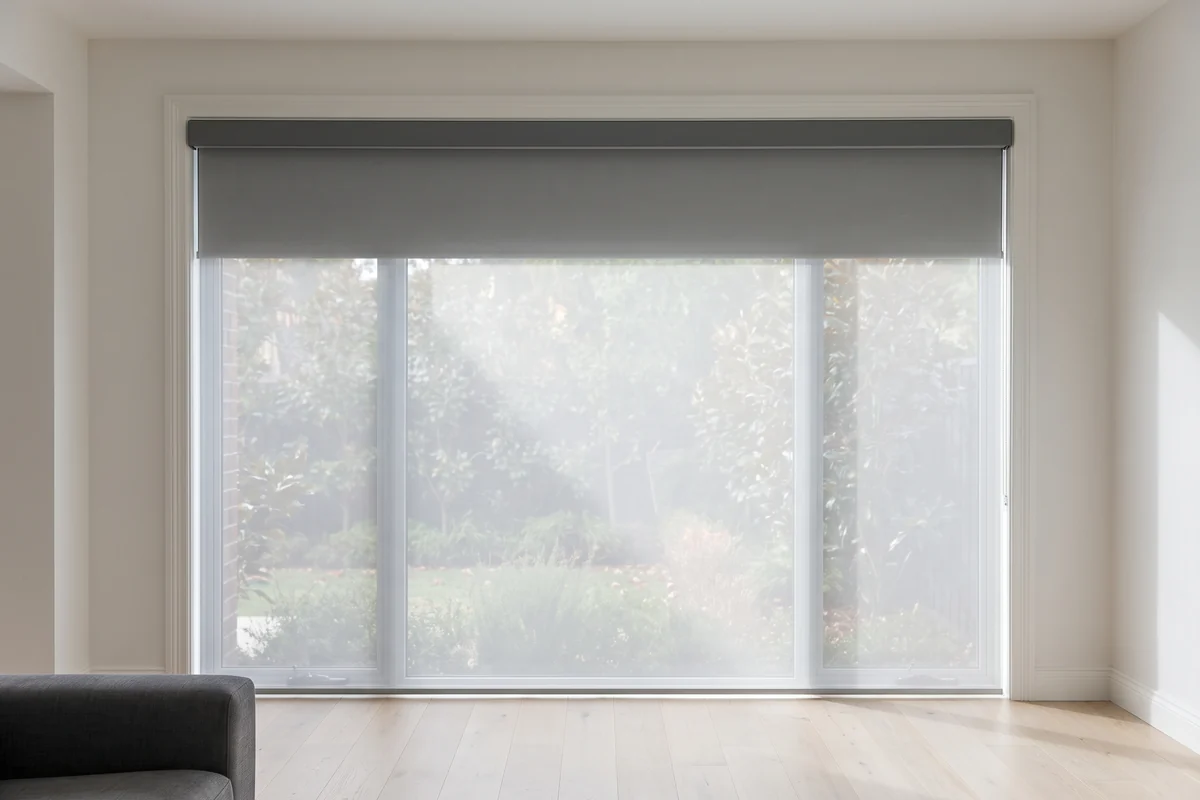
Dual roller blinds: day and night on one bracket
Two blinds, one bracket, four settings. Which fabrics to pair, the reveal-depth constraint no other page mentions, and when a sheer curtain is the better buy.
Read more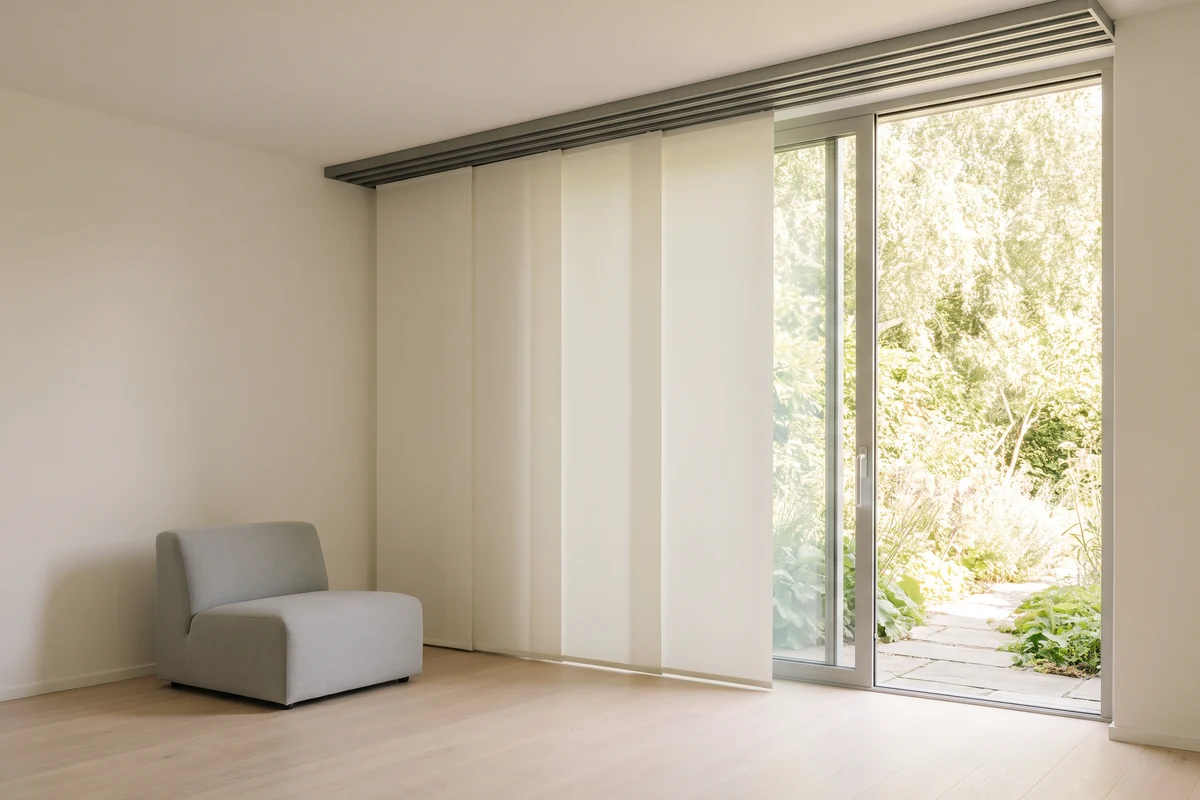 Guides
Blinds for sliding doors: what actually works
The covering has to survive being walked through several times a day. Which of the five options suits your opening, where a roller blind runs out of width, and the stackback decision nobody can fix afterwards.
Read more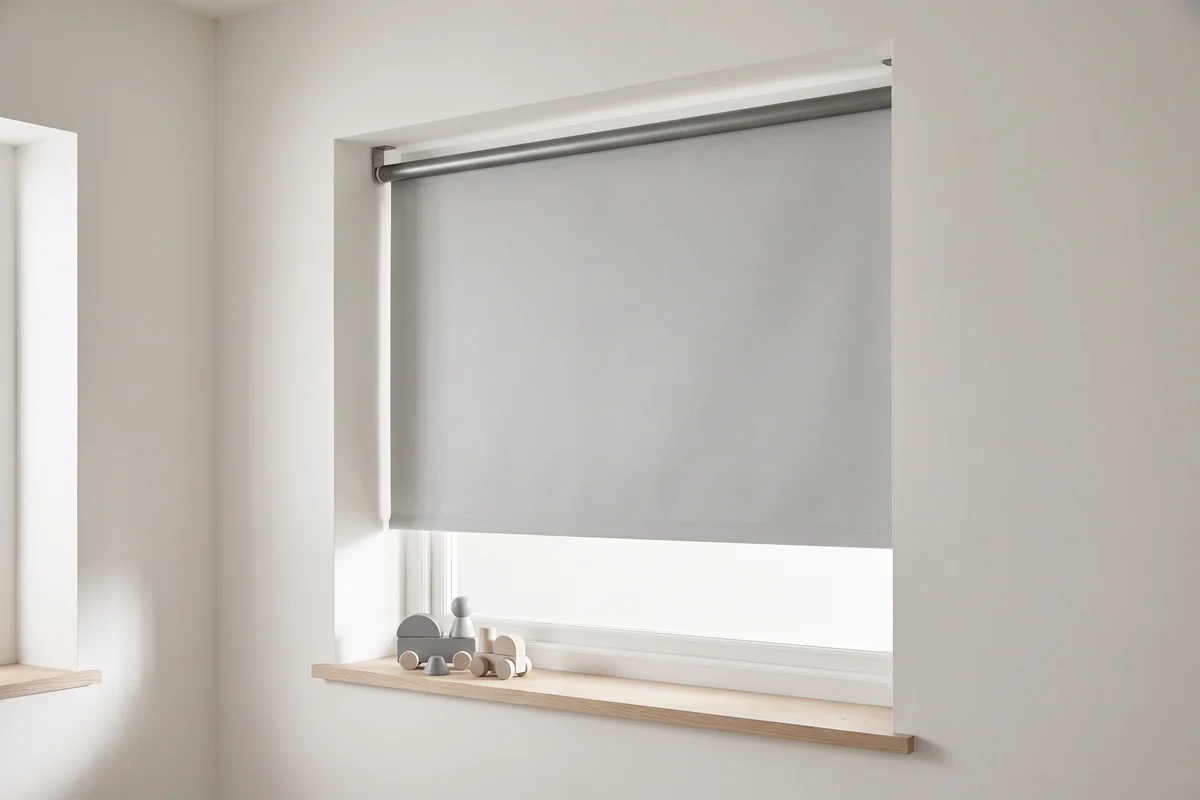 Guides
Child safe blinds: an Australian parent’s guide
The law sets two numbers and one force. Which mechanisms are genuinely cord free, what a tensioner has to be screwed into, and what you can’t retrofit.
Read more